Visited: March 2024
Duration of visit: 9 days
Capital city: São Tomé
Population: 230.000 (2024)
STP travel blog reading time: 19 minutes
Attractions and places I visited in São Tome and Principe:
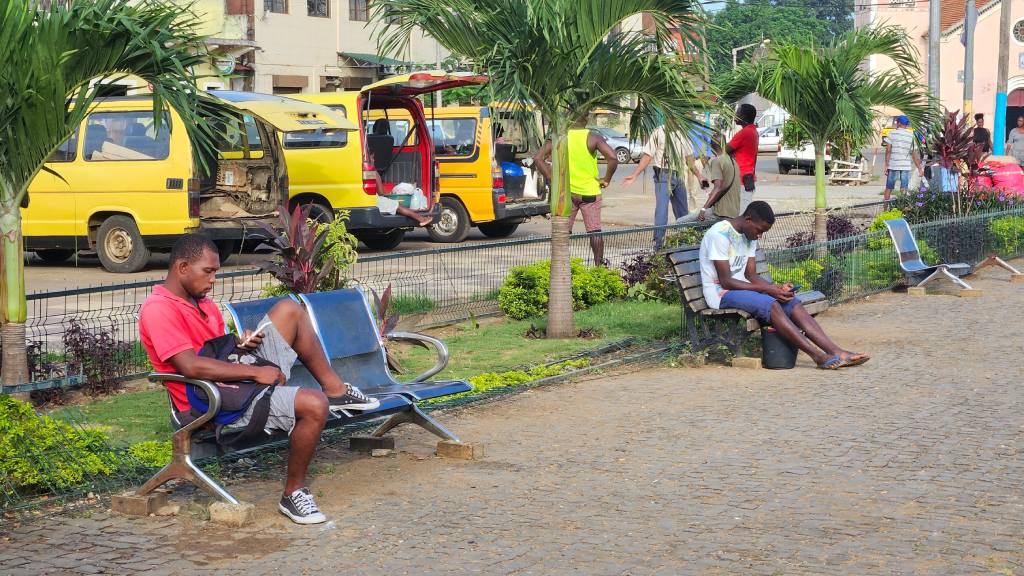
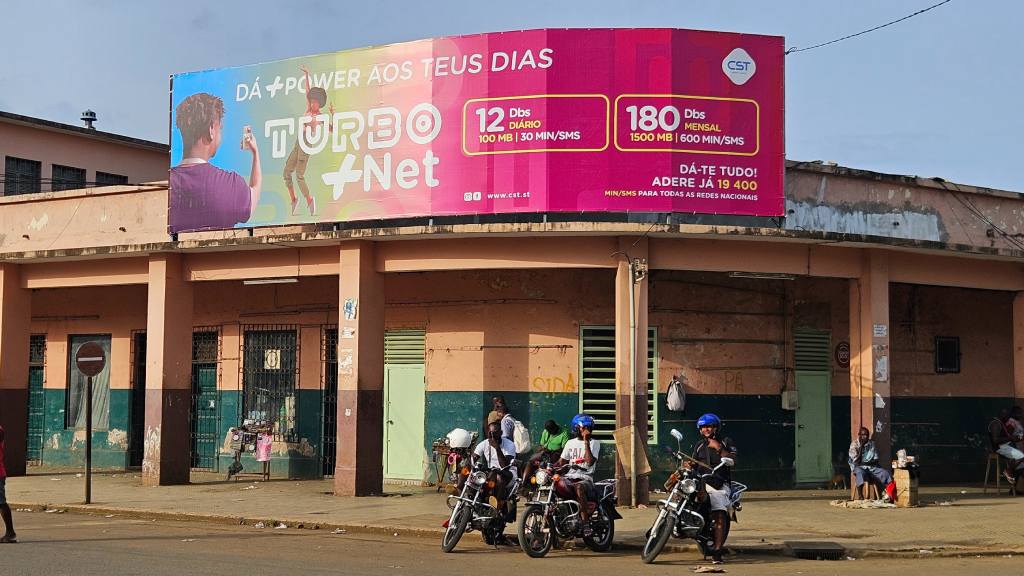
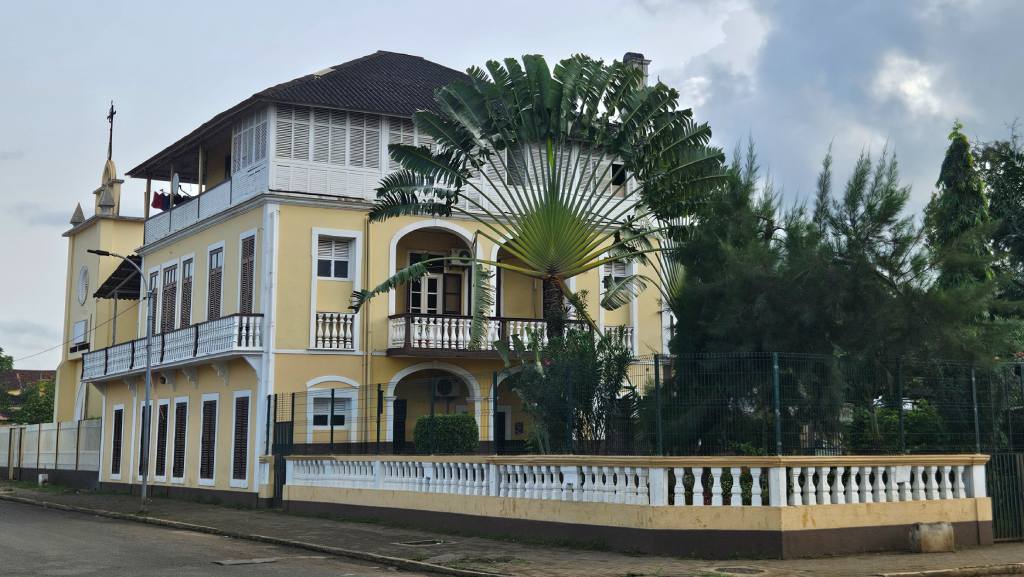
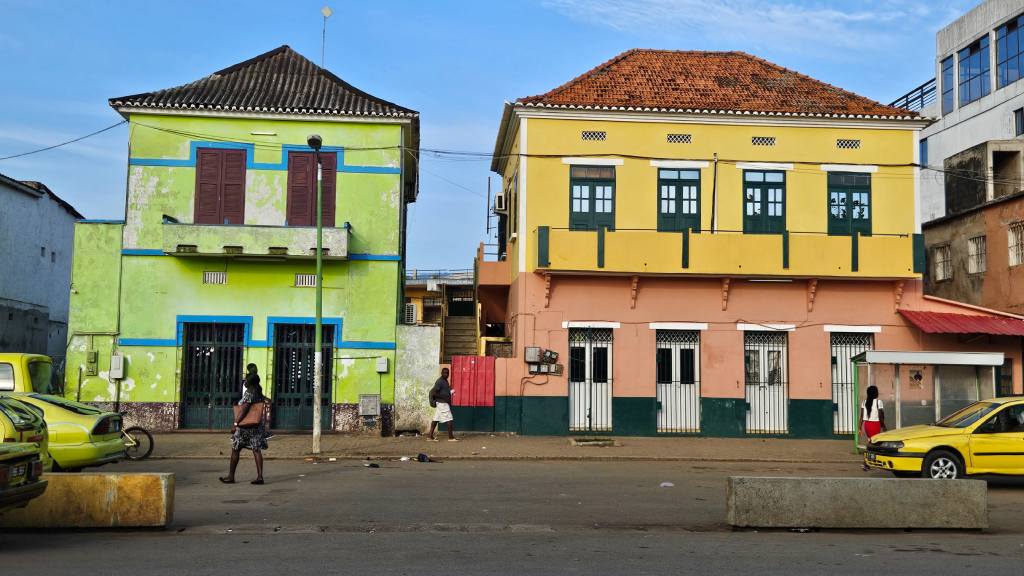
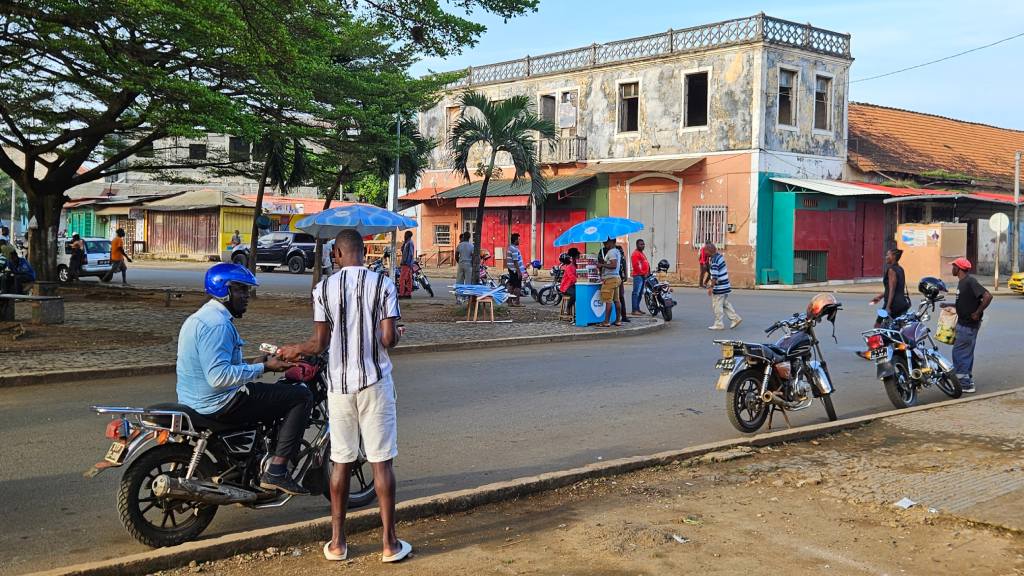
- The capital São Tomé – a pleasant mix of colonial buildings, contemporary supermarkets, street vendors, simple markets, easy going traffic and corniche along the bay.
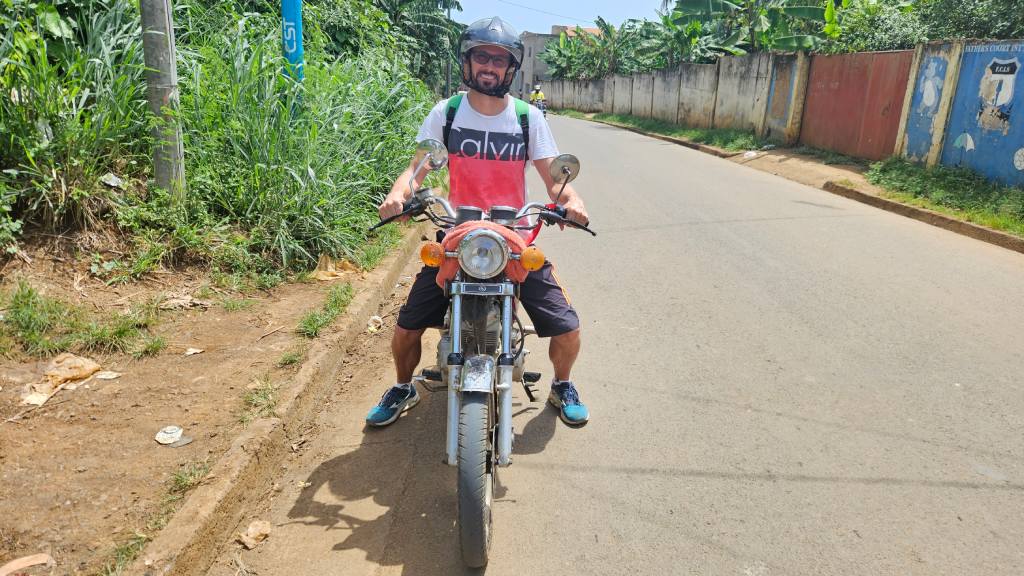
- Exploring the island on a rundown, unstable, Chinese motorbike.
- Staying two days on Ribeira Peixe, learning about life in a local community.
- Visiting Ilheu das Rolas (Roland Islands) – Equator line, pristine beaches and palm wine tasting.
- Principe Island – a heavy, all-day rain when I was planning to visit the most beautiful beaches on the island.
- Tasting local food, drinks and sweets: fish, breadfruits, palm wine, aguardente, beer, pastel de nata and more.

São Tomé and Principe (STP) is a small island off the coast of Africa with a little over 230,000 inhabitants. Not very popular tourist destination that is mostly visited by Portuguese tourists, it received the record number of 35,000 visitors in 2023.
STP was part of my Central African trip to Central African Republic, Cameroon, Gabon and São Tomé & Principe in the beginning of 2024. I extended my visit by a couple of days to secure a better price for my return trip to Europe and also included a visit to the smaller island of Principe.
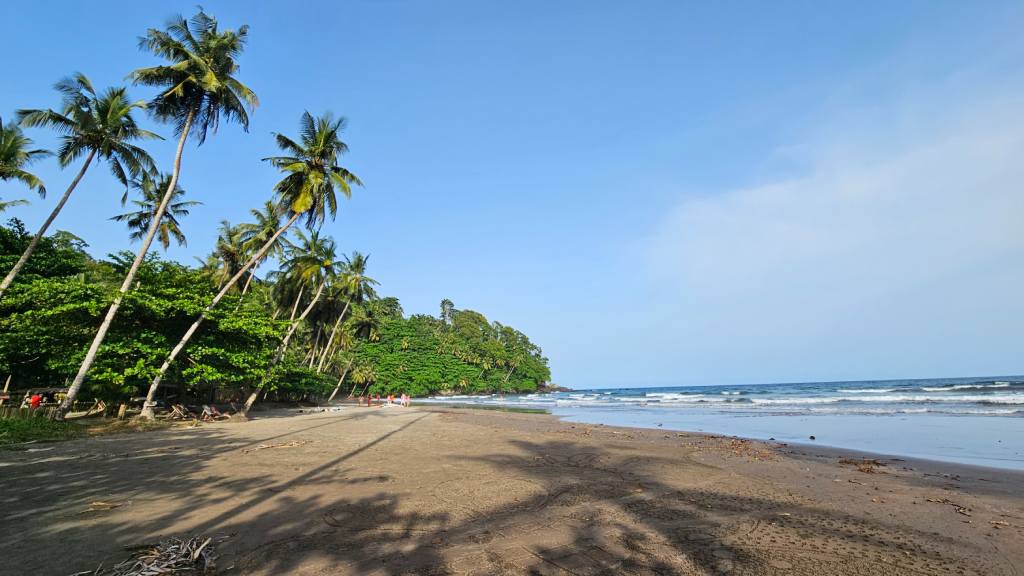
The second smallest country in Africa (after Seychelles) has maintained its natural beauty and diverse history. Lush green tropical interior of the islands combines with the idyllic surroundings of perfect sandy beaches, lofty coconut palm trees, plantations of bananas, palm trees, cocoa and coffee. The island nation has struggled with a number of fundamental issues since its independence in 1974: a high unemployment rate, economical collapse, lack of infrastructure and basic medical service.
São Tomé and Principe was colonized by the Portuguese during the 16th century. They imported slaves to work on the sugar plantations and the island became an important staging post for the slave trade and briefly the world’s largest sugar producer, until the rise of competition in Brazil.
During the 1800s, cocoa was introduced to São Tomé and, by 1908, the island had developed into the world’s largest producer of cocoa with 800 plantations. The industry declined after the Portuguese left and there are only 150 plantations remaining today.
Even though STP does not have a single UNESCO World Heritage Site, it has been nicknamed the African Galápagos due to its high density of endemic species, diverse ecosystems, and natural highlights.
São Tomé town – the capital
After having visited three French speaking countries in Central Africa, I immediately notice a difference when disembarking a plane at the island’s only international airport. Portuguese language should be, in theory, easier for me, since it’s similar to Spanish, but, in practice, it depends of the person in front of me. The exchange office at the airport is out of cash, I cannot purchase a local SIM card. It is Sunday.
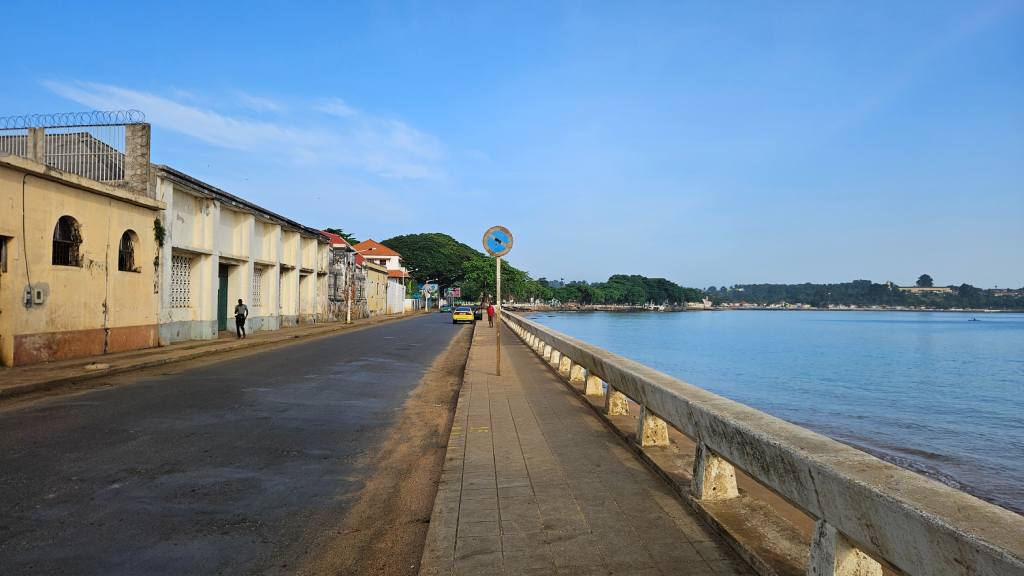
I walk through the airport gate to the main road and quickly catch a ride on a moto-taxi to downtown. We pass the city beach, which is full of people enjoying the weekend in the best way possible in this little paradise; life is a beach here.
The capital city, São Tomé, with a population of 70,000 people appears quiet, with hardly any activities. I settle down in a cozy guesthouse, where I am assigned a comfortable room, with strong AC and solid internet connection. It is really hot and humid. I don’t remember sweating so much during the whole trip.
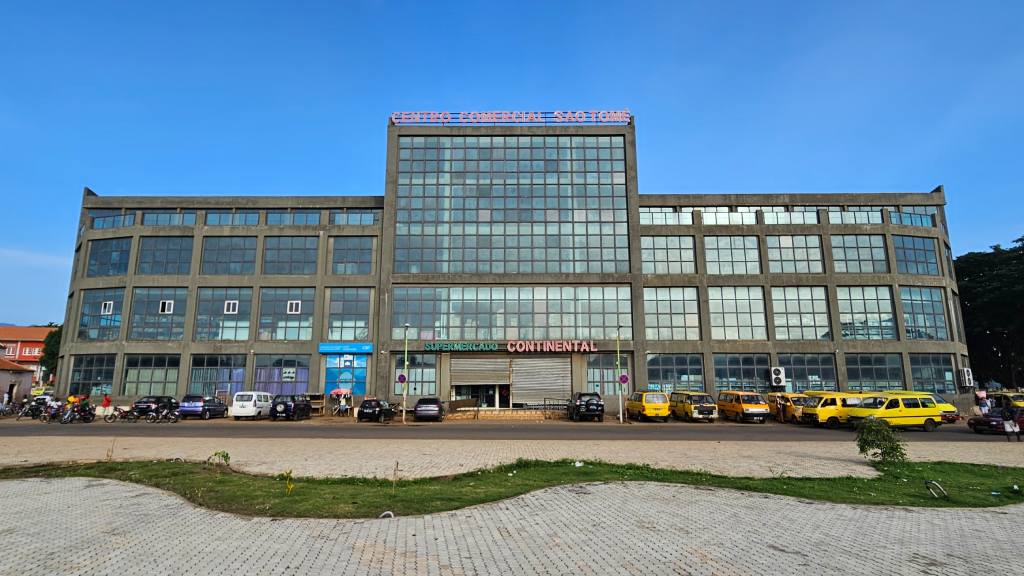
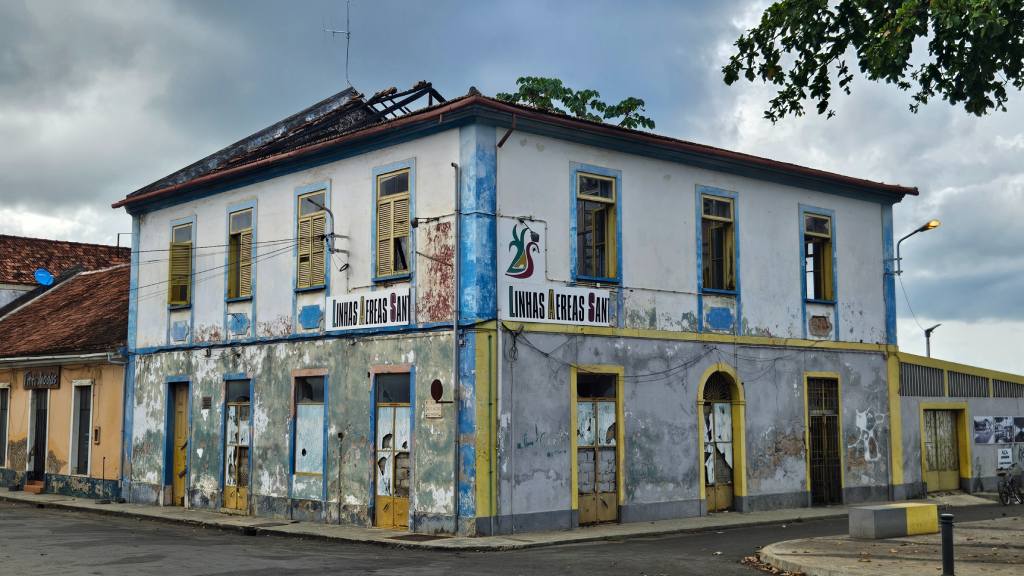
In the afternoon, I walked around the streets of São Tomé to discover city’s landmarks, highlights, and notable places to visit. Banco Internacional de São Tomé e Príncipe, Independence square, Central Post Office, Parque Popular, the National Library and a few other buildings hardly qualify as attractions or landmarks worth highlighting. However, this sprawling town, without modern infrastructure, multi-storey residential buildings or public parks, captivates me with its peaceful character, where everything happens slowly, calmly and without crowds of people.
Leve, leve – slowly, slowly – is a slogan of São Tomé. It is true that today is Sunday, but there were no signs of multitudes in the following days either.
I walk all the way to Fort of Sao Sebastião, built by Portuguese forces in 1575, the first defensive building, hosting the National Museum these days. Instead of the museum, my attention is drawn to families with children who come to swim at the nearby beach.
Exploring the northern part of the island
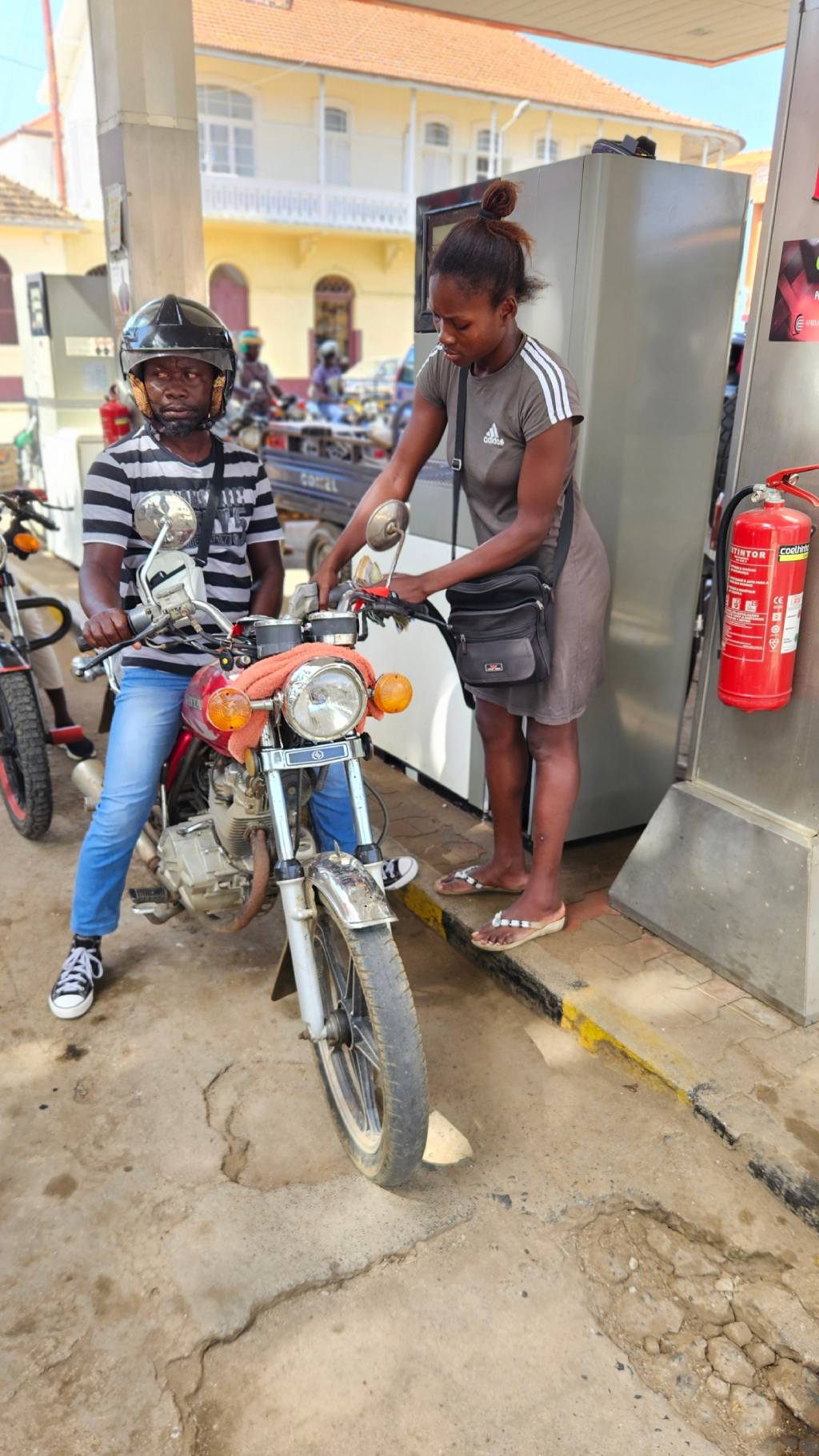
The next morning, I visit the office of a local tourist agency, which should be, according to a previous agreement, renting a motorbike to me. The bike which I am offered is not the same as in the photos I had received previously. The brake is not working properly; the test ride doesn’t convince me. I start looking for other options and somehow, I reach Antonio, an always smiling mid-age man who is ready to rent me his motorbike, which is usually used as a moto taxi. The bike is not better than the previous one, but smiling Antonio keeps saying: “The bike is good. No problem!”
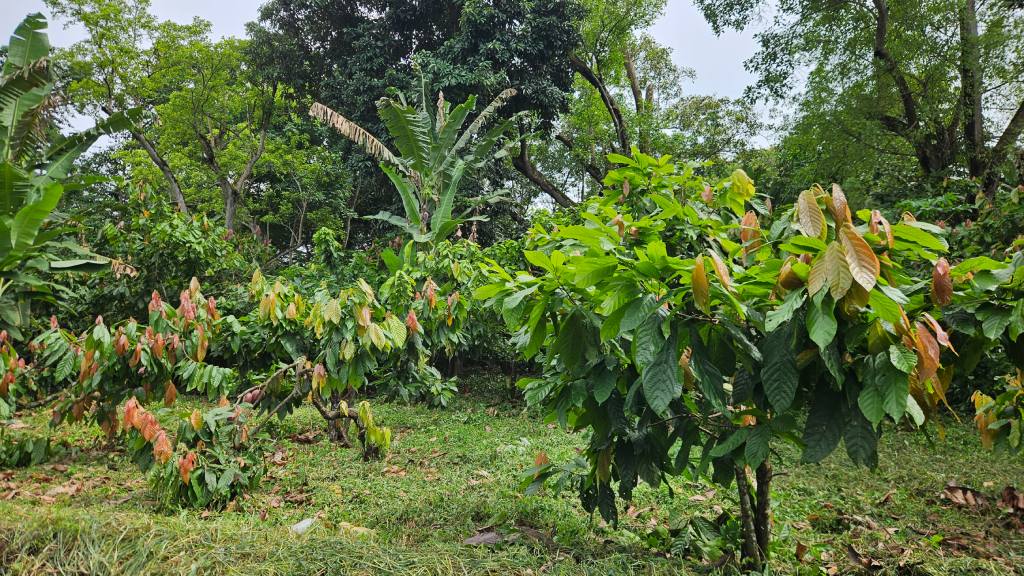
After agreeing on the commercial part, I fill the tank and kick off towards the northern part of the island. The road is newly asphalted, I meet only seldom vehicles. Young men with machetes walk along the road on their way back home from work on cocoa plantations. Bananas, papayas, passion fruit and breadfruit trees fill all areas; tall palms or tropical forest do not abound.
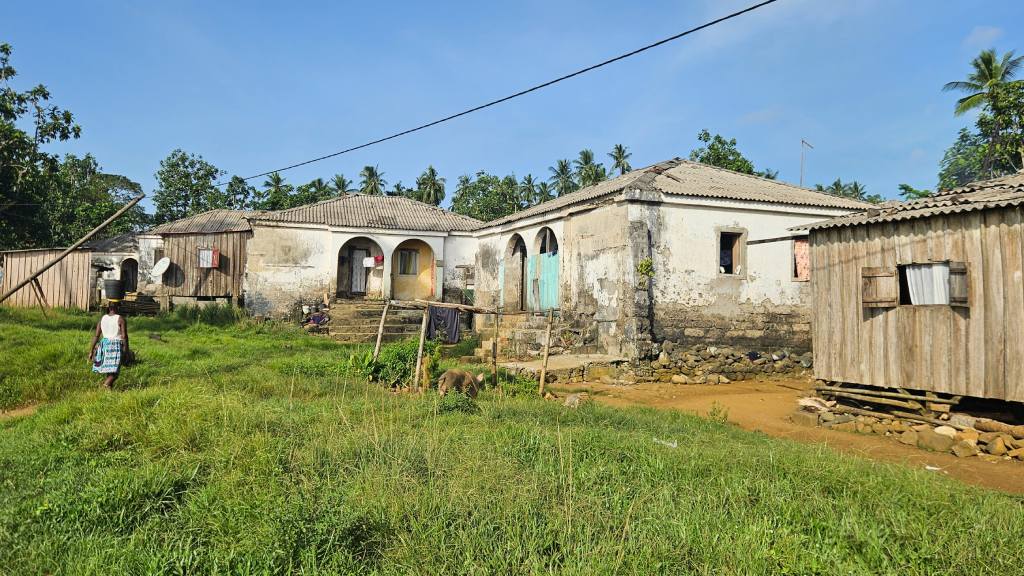
Simple wooden houses combined with centuries-old ruins of the Portuguese colonizers offer a humble home to the majority of families.
Many are in such a bad state that it would be difficult to call them houses suitable for living, but for the locals, they are the only affordable homes.
I stop and ask a group of boys for the road to Tamarindos Beach.
“No problem, I will show you!” one of them joins me on the motorbike and shows me the way.
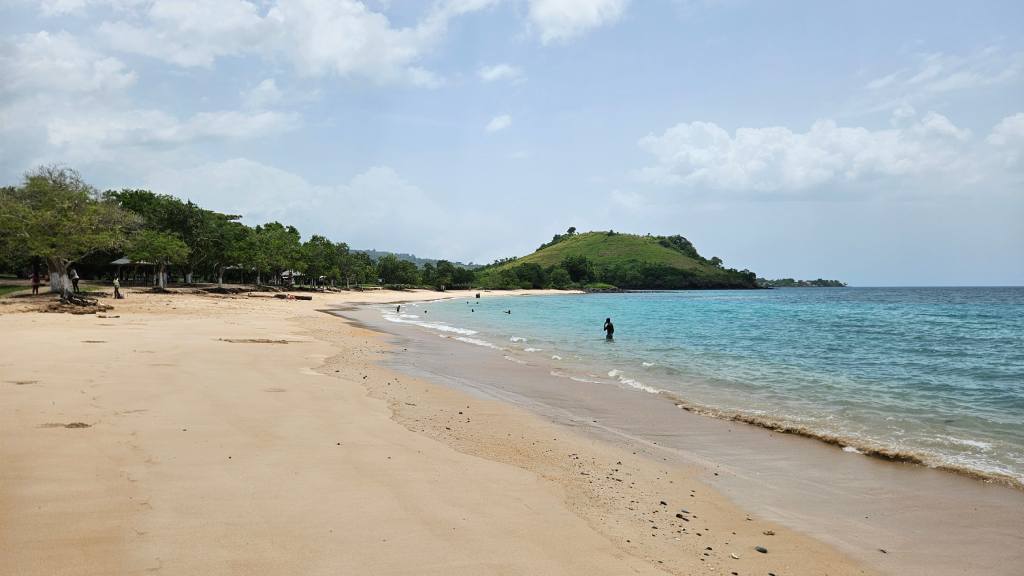
Very warm sea, soft, white sand, a dozen of other tourists, a bunch of locals selling drinks. When I swim in the sea, an elderly woman comes by on the beach, gathering dry wood to cook dinner later.
Is São Tomé a tropical paradise or a pitiful poor island?
I can’t believe how in such a lush, tropical environment with paradise beaches, people could be so poor.
It’s been a long time since I’ve been so sad to see the poverty around me. There are many other places where starvation is a norm, or people live in much worse conditions, but this tropical heaven offers ideal climate conditions to enjoy prosperity.
The sea is rich with fish, the soil is fertile to grow fruits and vegetables, the tourism is growing. How is this possible? STP seems to be another Portuguese colony that completely collapsed after the departure of Portuguese colonizers in the 1970s and it hasn’t recovered yet.
Travelling back to the main road I pick up a guy who turns out to work in the same restaurant which I am planning to visit for lunch – Petisqueira Santola in a town of Neves, on the northwestern part of the island. The road conditions are deteriorating, black clouds are gathering above us.
A few kilometers before the arrival, it starts to rain heavily. A local bus pass by. I leave the boy to change the means of transport, while I return to São Tomé town in order to avoid the rain. Despite the fact that I was completely drenched, after half an hour of driving under the hot sun, I arrive at a restaurant in town completely dry.
In the evening, I find some facts about São Tomé on the web: the collapse of the economic system, almost half of the people infected with HIV, the majority living on less than 2 euros per day, high corruption, the decline of tourism after Covid-19, etc. In short, really bad. I am downhearted, almost crying, unable to understand what has been going wrong here.
Exploring roças – ancient mono culture plantations
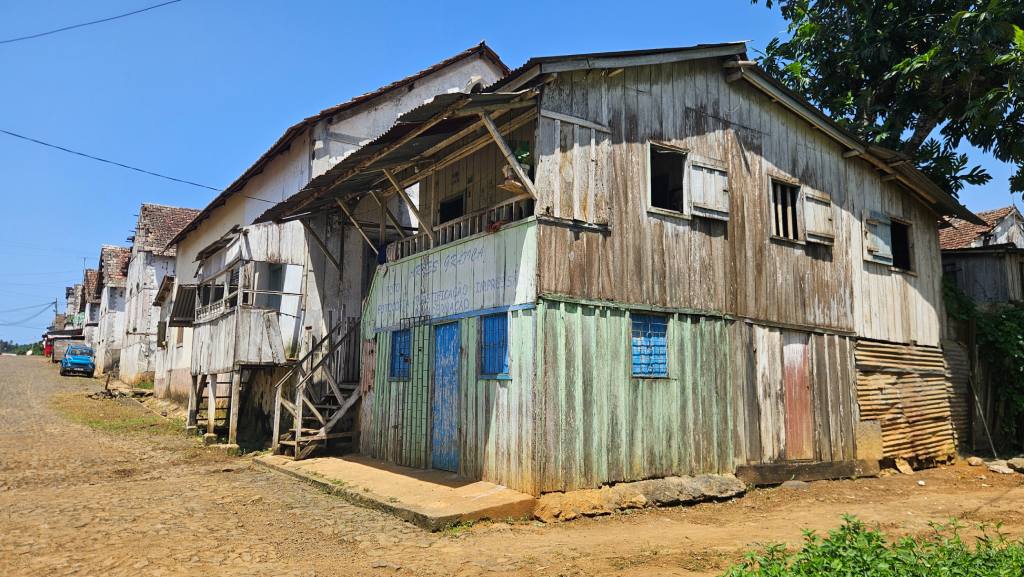
In the following days, I visit the southern part of the island with the same old Chinese motorbike, which would never have been suitable for driving outside of Africa due to malfunctions.
I stop at beaches and roças – farms established by the Portuguese, each dedicated to cultivating a single crop such as sugarcane, cocoa, or coffee.
Employing thousands of people, they used to be autonomous, self-sufficient towns with churches, hospitals, residential buildings providing housing for the workers and even train tracks. The first workers at roças were slaves coming from Central African countries.
When the slavery was abolished, the workers were contracted. During the 19th and 20th centuries, when São Tomé was an important producer of cocoa and coffee beans, there were up to 150 roças in activity on the island.
After the independence of São Tomé and Principe in 1975, most of the roças collapsed due to the loss of capable management, as the Portuguese quickly left the newly created sovereign state, while the local population did not have the knowledge to manage the plantations.
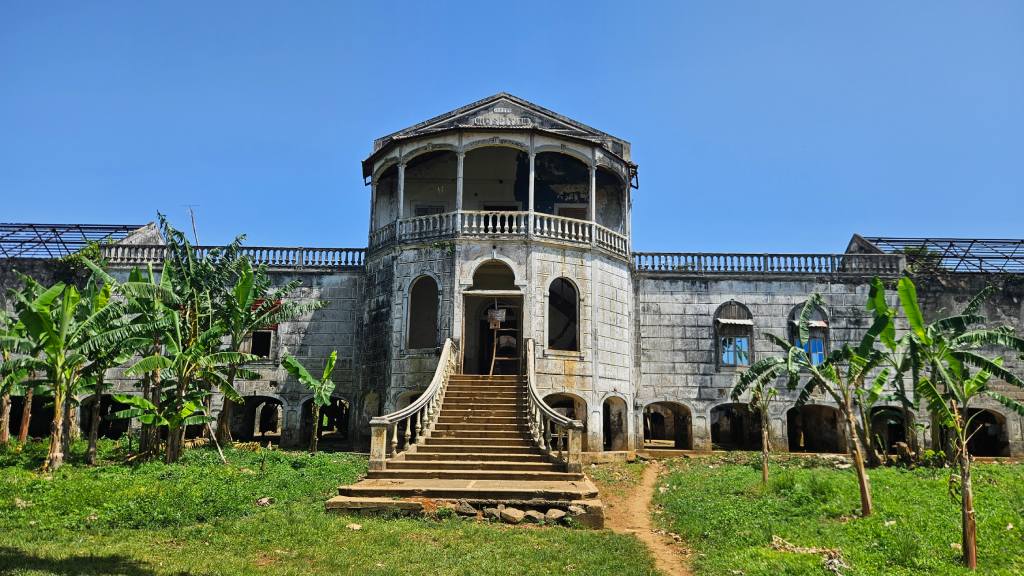
Roça Agua Ize
I stop at Roça Agua Ize, one of the original Big Five roças of São Tomé. A couple of thousand contract workers once worked here at the cocoa plantation, that kicked off the industry in the whole island. I walk around the former plantation complex. A local guide joins me, but I am not in the mood to listen about the glorious pasts, when the factory thrived with production, the hospital on the top of the hill offered the best medical service and at the pier across the main street overseas vessels were anchored.
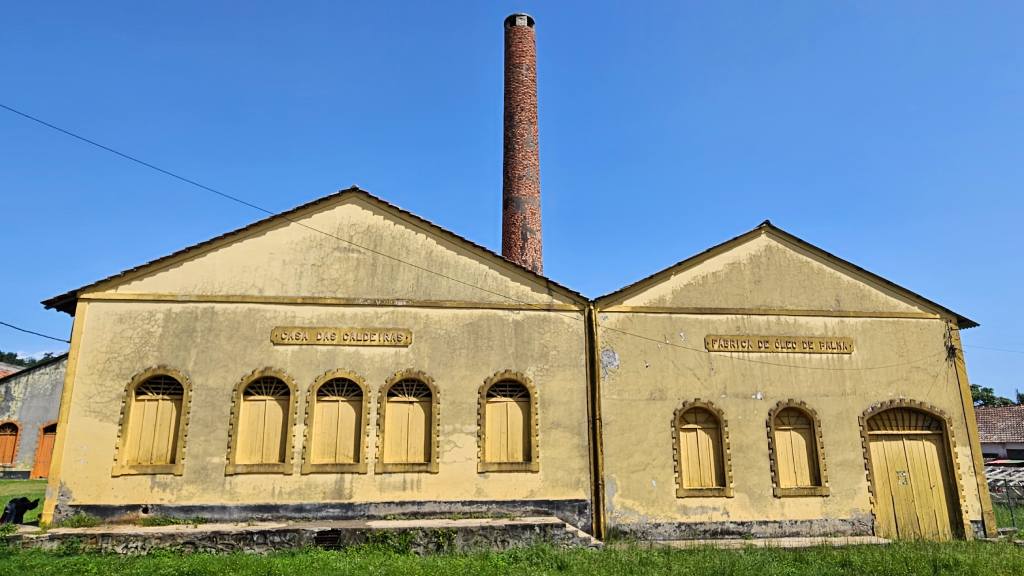
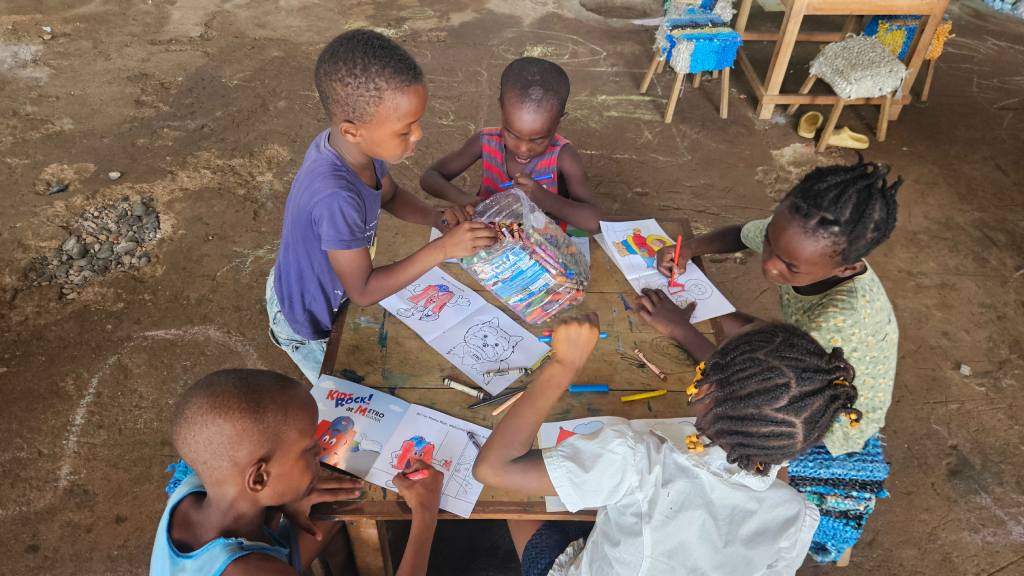
Inside an abandoned palm oil factory, there is an art exhibition showing a combination of dilapidated machinery and contemporary art. In a makeshift library, a group of children draw pictures, while a friendly curator shows me around.
A rare example I found of an unused building being creatively transformed into a useful space, attracting visitors and kids.
I walk through the village where most of the preserved buildings date from the 1910s. People still live here and farm the cocoa beans, albeit at a much lower production level. Just for the basic survival.
The biggest hospital during the colonial time, known for its impressive staircase, is now crumbling down at the highest point in the village. Elizabeth, a girl in her late twenties with four kids, shows me the way to the upper floor, from where a beautiful view to the sea and tropical forest opens. “Here was the surgery room, women were treated in a larger chamber, the area for newborns was on the ground floor!” she explains with the enthusiasm.
I am shocked when she informs me that the hospital is today inhabited by half a dozen families. This is her home now, living under poor conditions, trying to survive. The kids lay lazily down on the neglected floor, watching a movie on a mobile phone. Her husband is working at the small plots, where basic subsistence level crops are harvested.
Roça Sao Joao Angolares
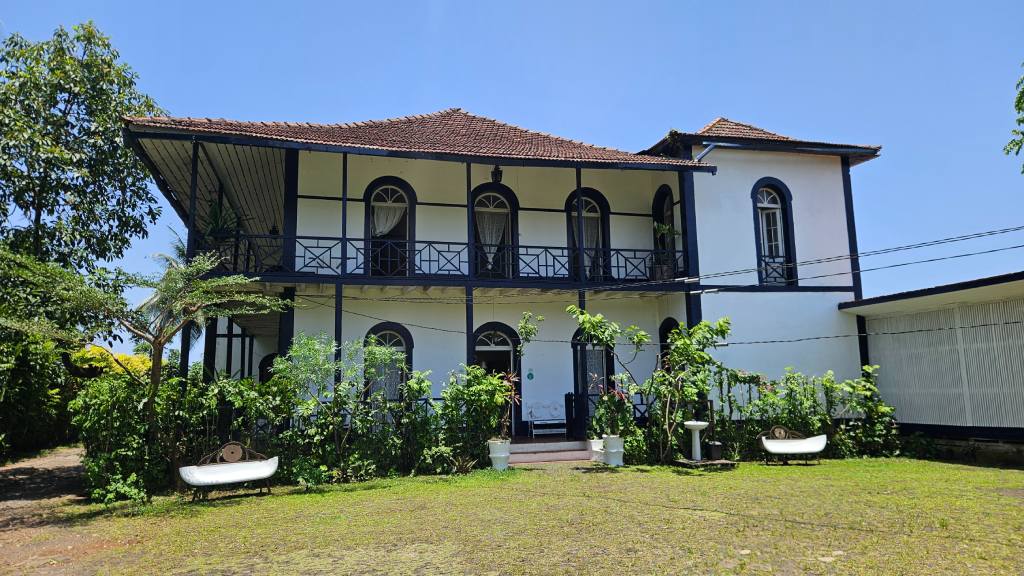
On top of a hill, 25 kilometers further, sits the former colonial plantation administrator’s house of Roça Sao Joao Angolares. The recently renovated traditional farm building enjoys great views to the town below and the black sand beach in the distance. The place is delightfully decorated with a high taste for art, culture, and traditions, making it one of the main tourist attractions in the area.
The two-storey mansion serves as a hotel and a prestigious restaurant, where an internationally recognized chef, Joao Carlos Silva, prepares refined dishes based on ingredients predominantly grown in the garden or the farmyard of the roça.
I am too early for lunch, but a cold drink and a short break with amazing view to unspoiled nature fill my batteries to continue the trip towards the south.
Ribeira Peixe – in coexistence with the locals
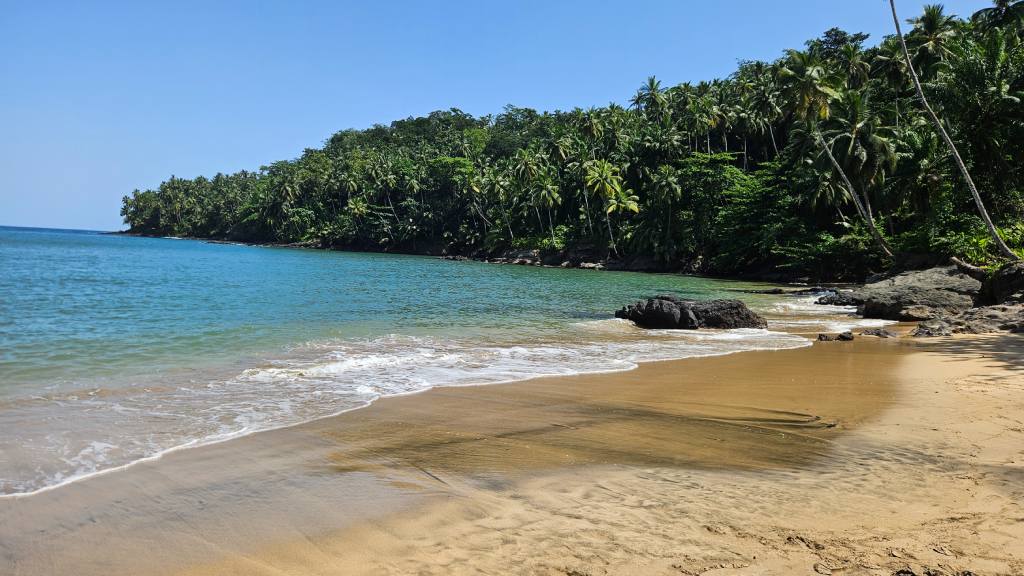
My next destination is the village of Ribeira Peixe, where I settle down in one of the cheapest accommodations available in the southern part of the island. It is still very expensive; 45.00 US$ per night for a room. There is no public transport to the end of the road since the area is so remote. I am glad that I drive around independently on a motorbike. I park in front of a local school and walk the last part accompanied by Piki, who is managing the wooden cabaña, located on a secluded beach.
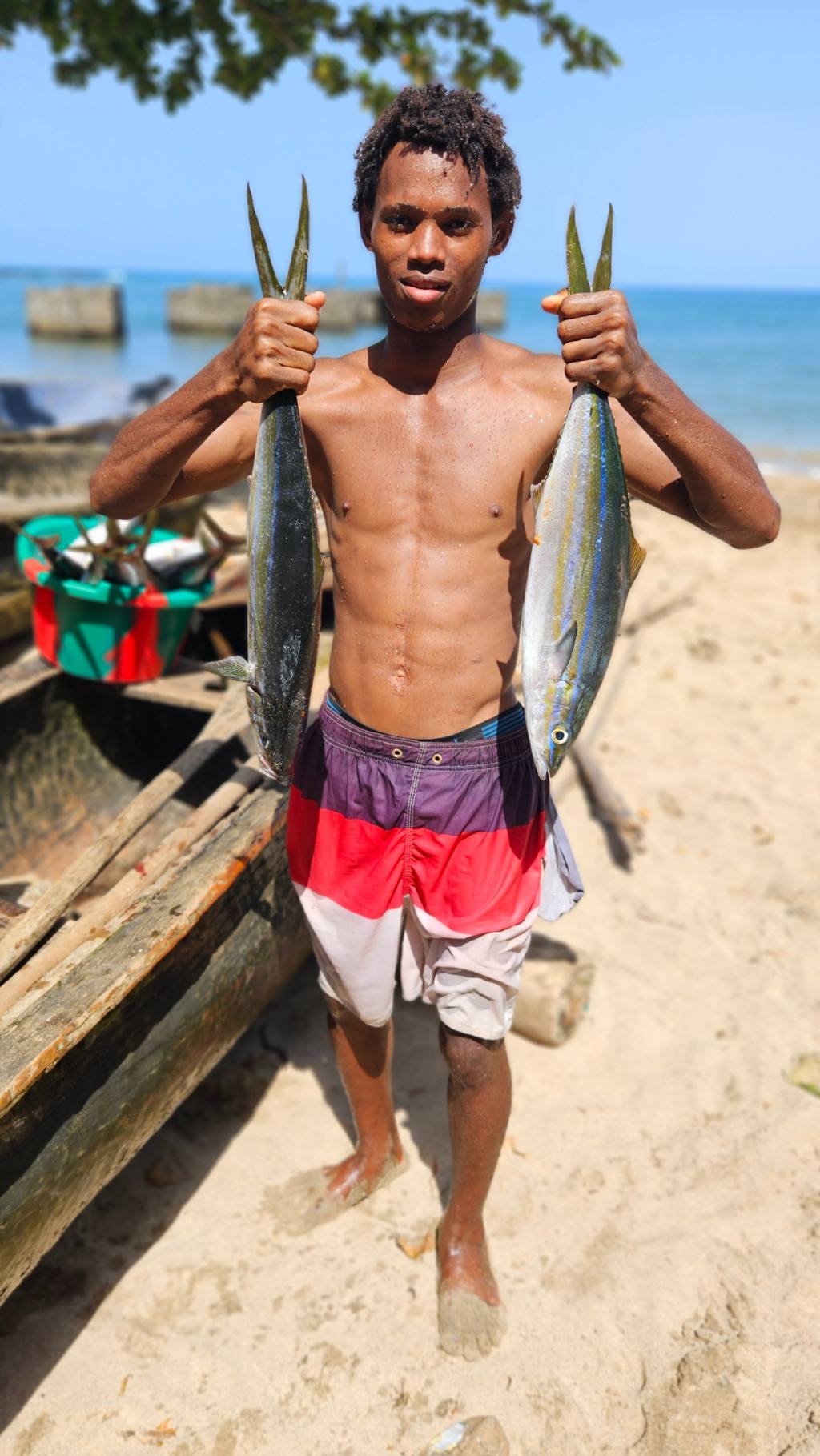
The wooden cottage turns out to be a great starting point to explore the village and the other areas in the southern part of the island. I walk to the beach, make contact with fishermen who are arriving to the shores after hours of fishing in the open sea. The motorized canoes are not heavily loaded, but the majority of the catch is represented by large size of fish.
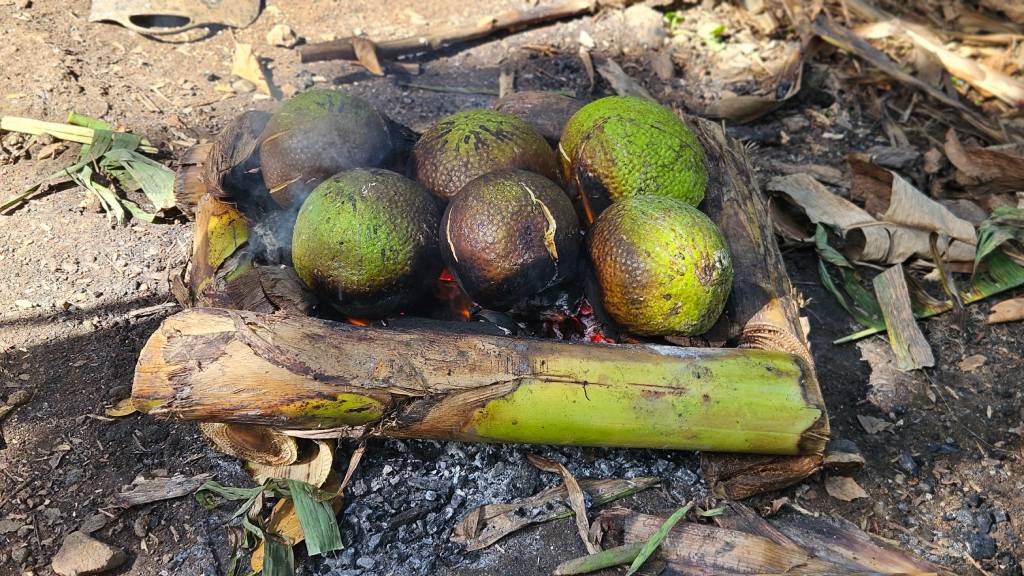
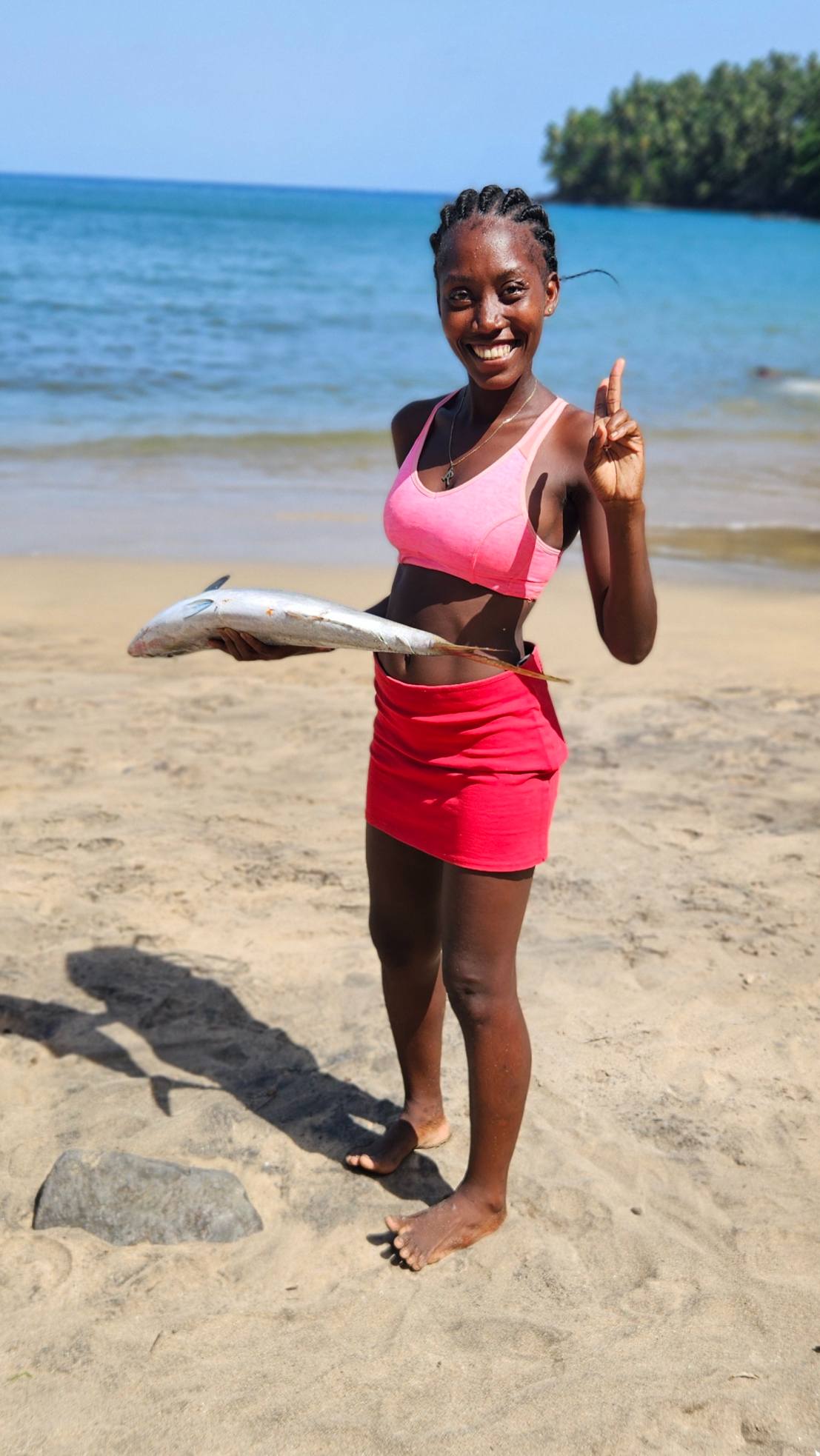
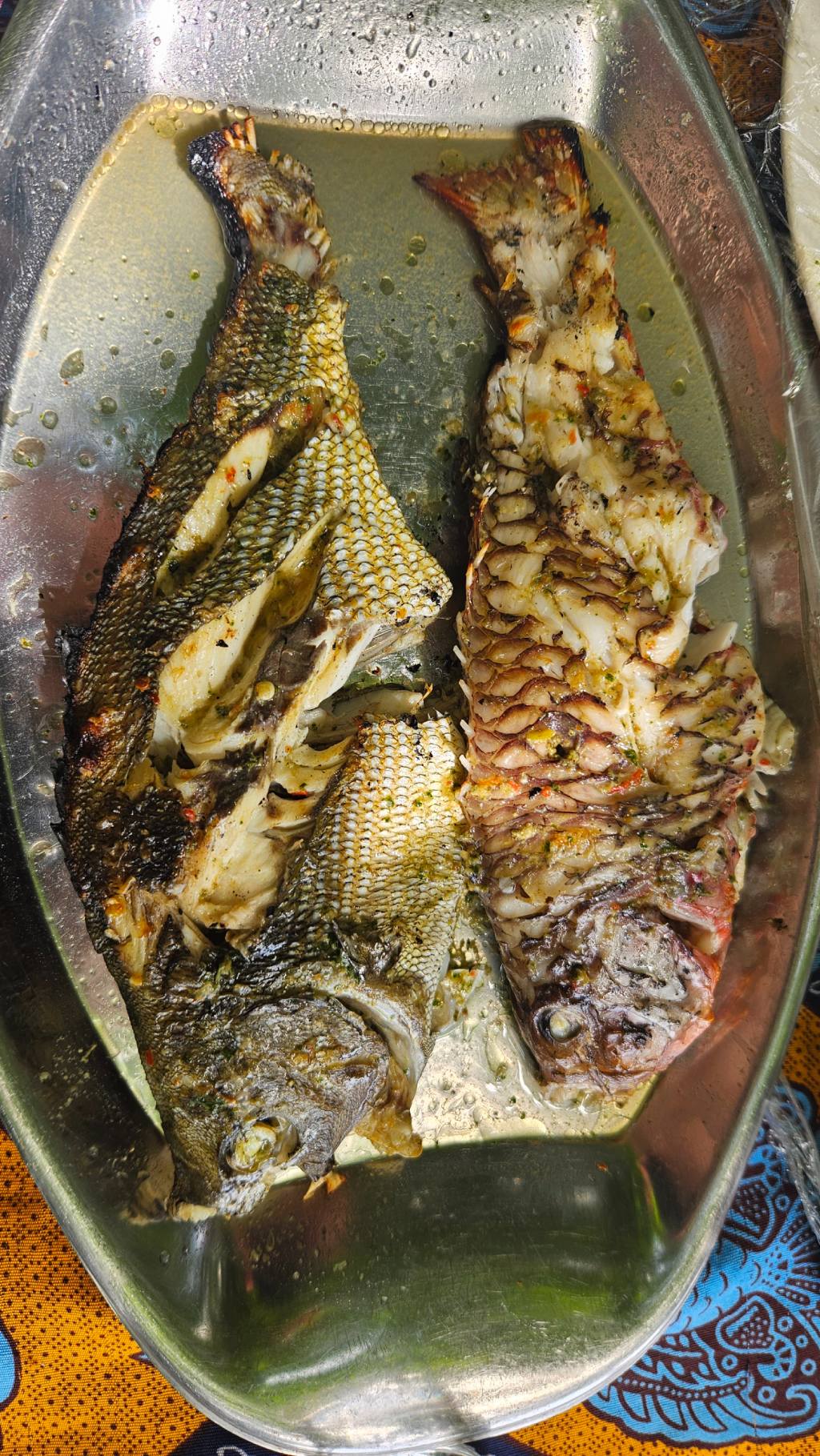
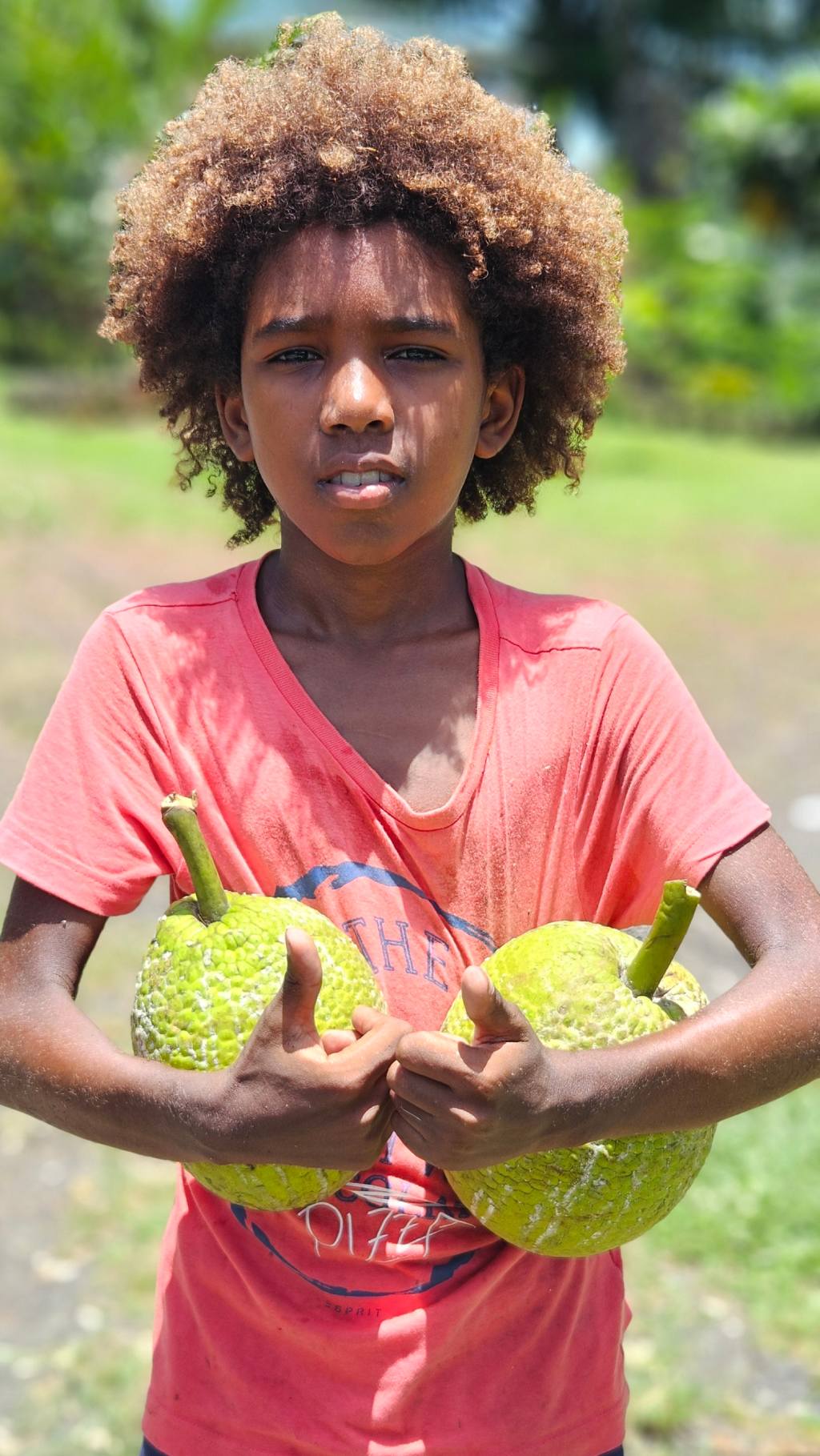
With the administrator of my cottage, Lania, I agree to buy a medium size fish, which is later prepared on a wood fired BBQ in front of her house. Her brother picks up a breadfruit from the tree and puts it on a fire until it turns completely black outside. I am not convinced that it will be eatable at all. Later, it is peeled and served as a delicious side dish to the fish, flavored with red palm oil sauce. There is too much fish for me. I invite Lania and her friends to share it with me.
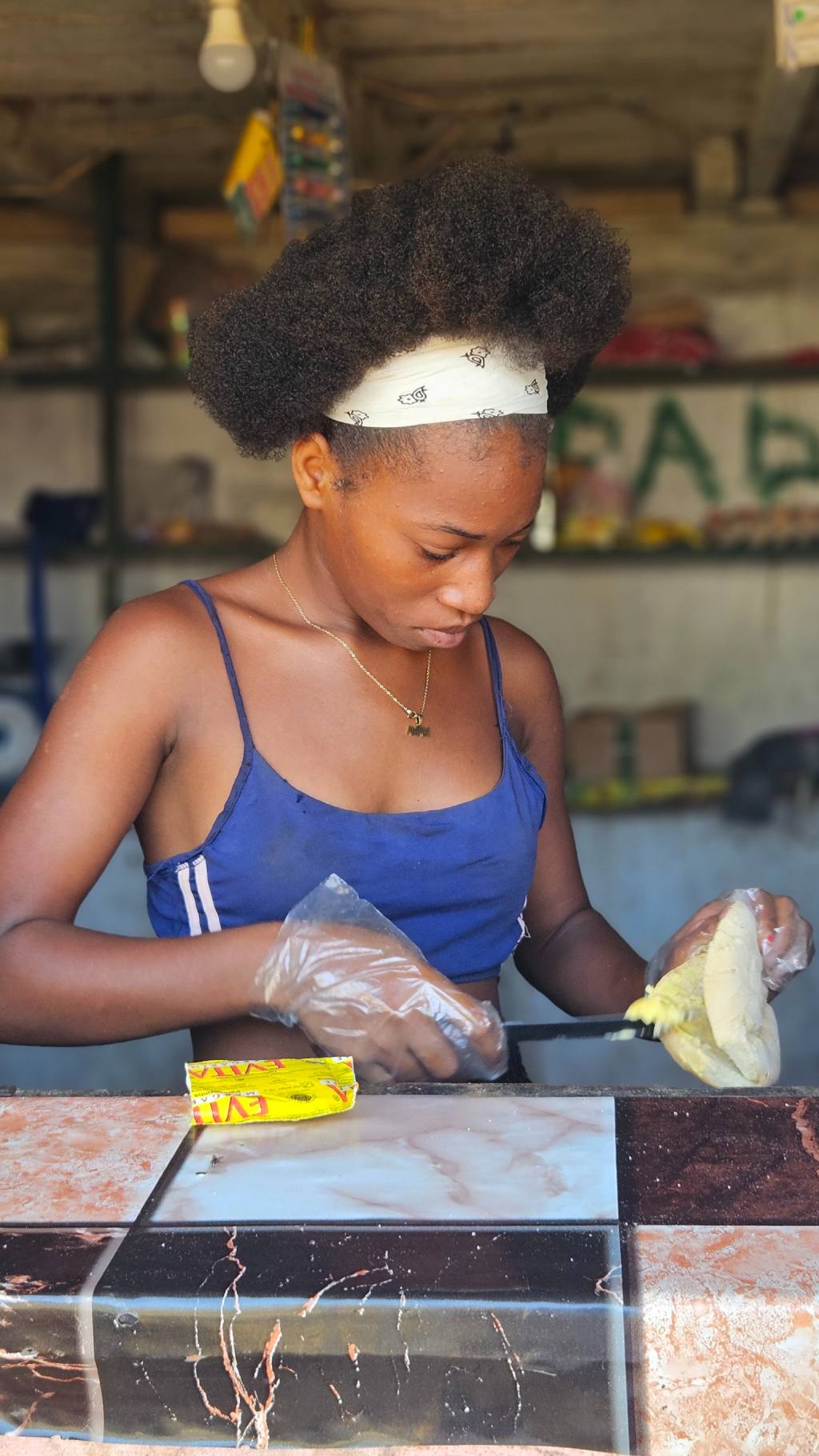
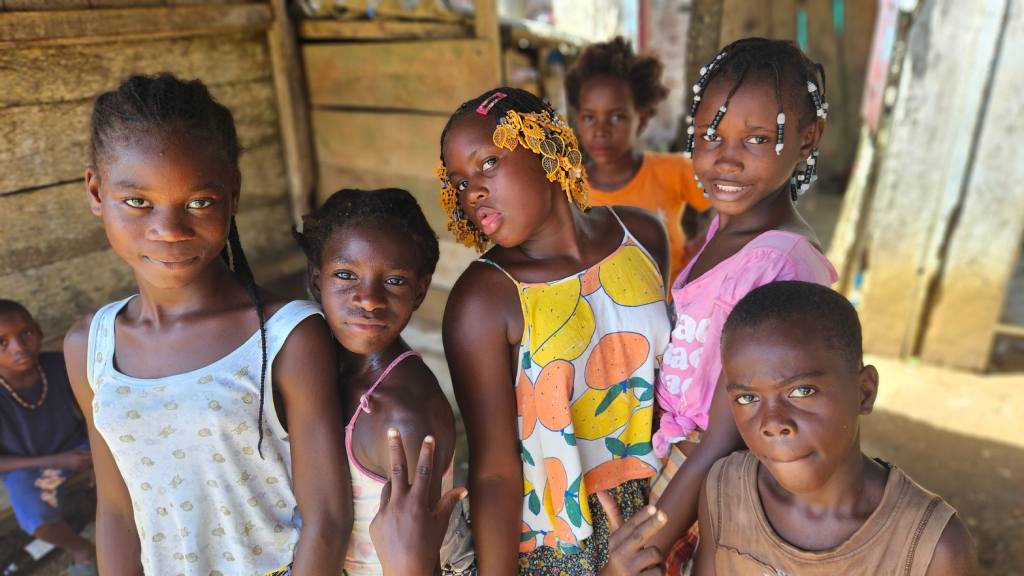
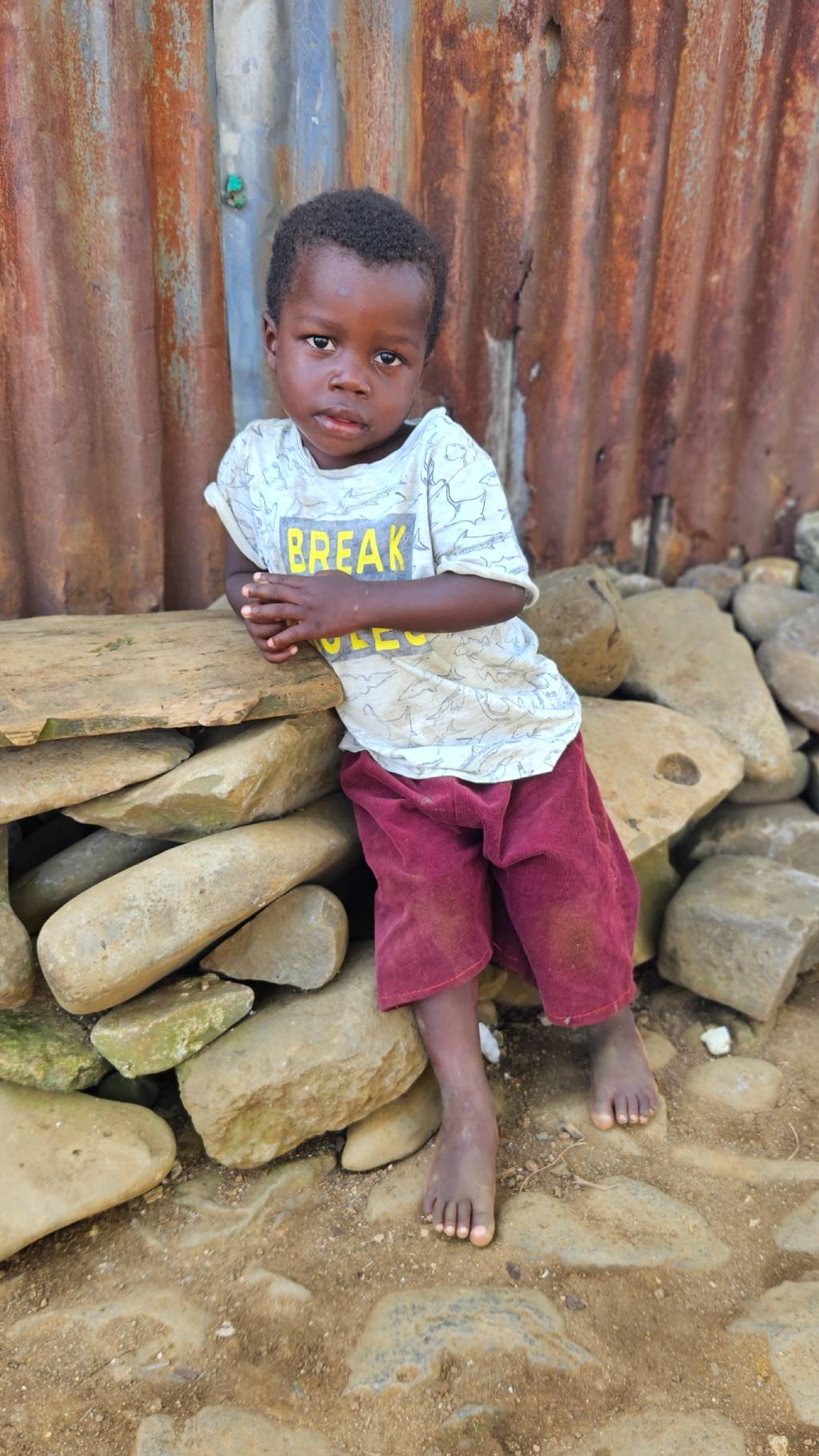
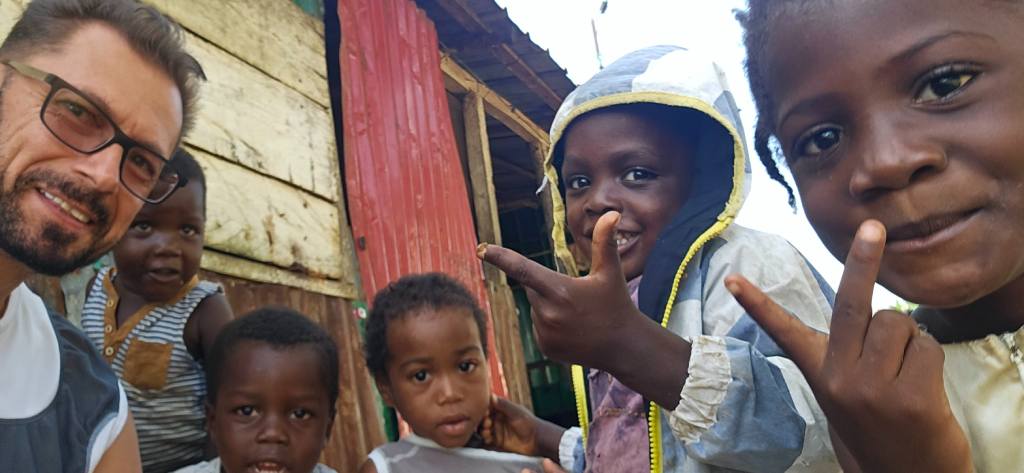
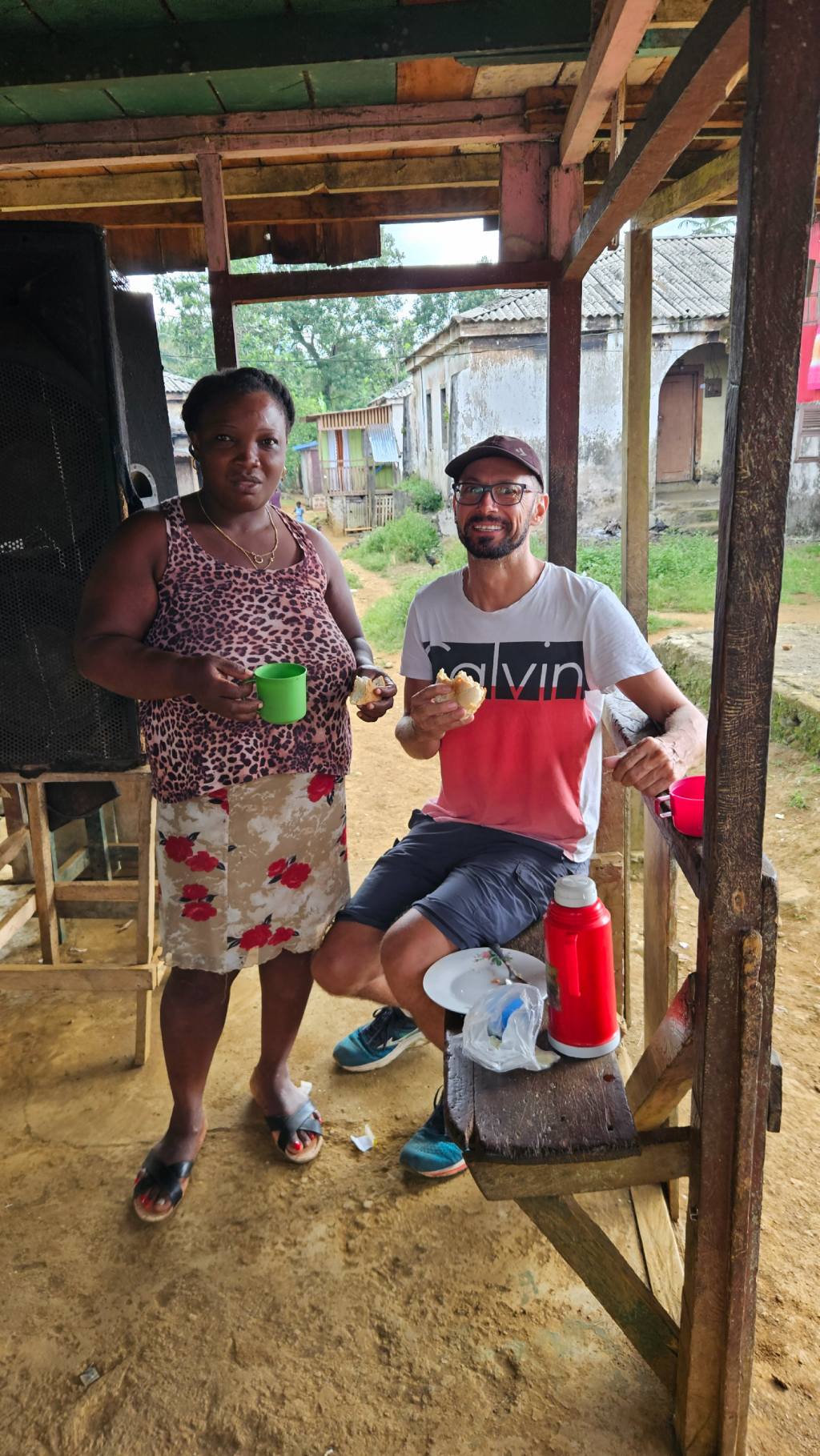
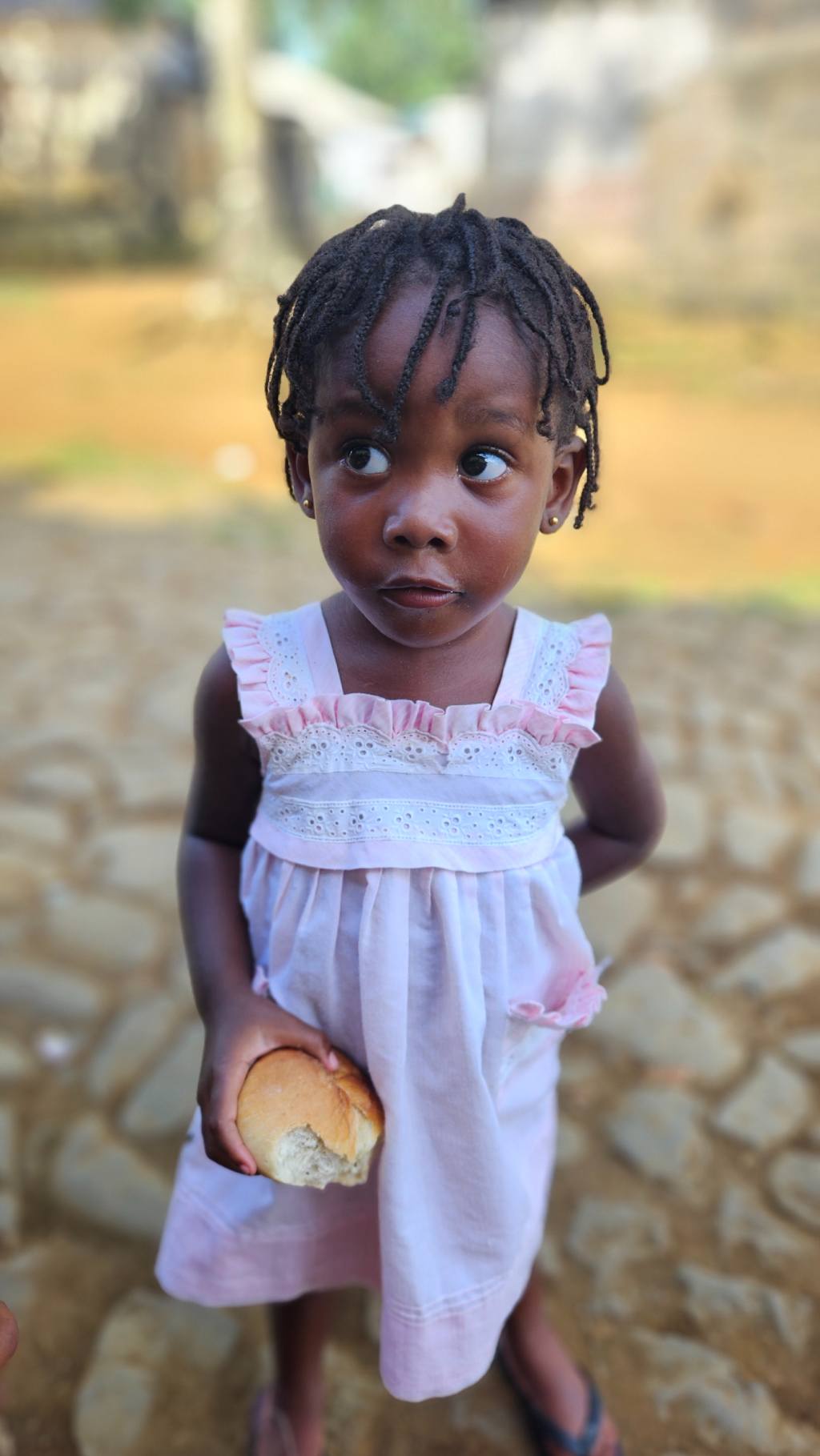
I stay two days in the community, play with children, eat bread and butter in the morning like everyone else, gather around the area where internet signal is the strongest and talk to villagers. After two days, everyone knows me as Rok, greets me from afar, wishes me a nice day and explains that they are my cousins. In São Tomé, everyone is somehow a distant relative, a family member.
My impressions about poverty changes. I notice that people are rather content, relaxed, easy going, pure and happy.
They call this lifestyle leve leve – patient, peaceful and carefree. Some young boys and girls reason that they want to stay in the village forever, and not emigrate to Europe, because they have everything here. This makes me think: fish in the sea, bananas on a tree, fire from dry wood, water from a nearby stream. “We are happy. We have everything we need.”
Delve into the southern part of São Tomé Island
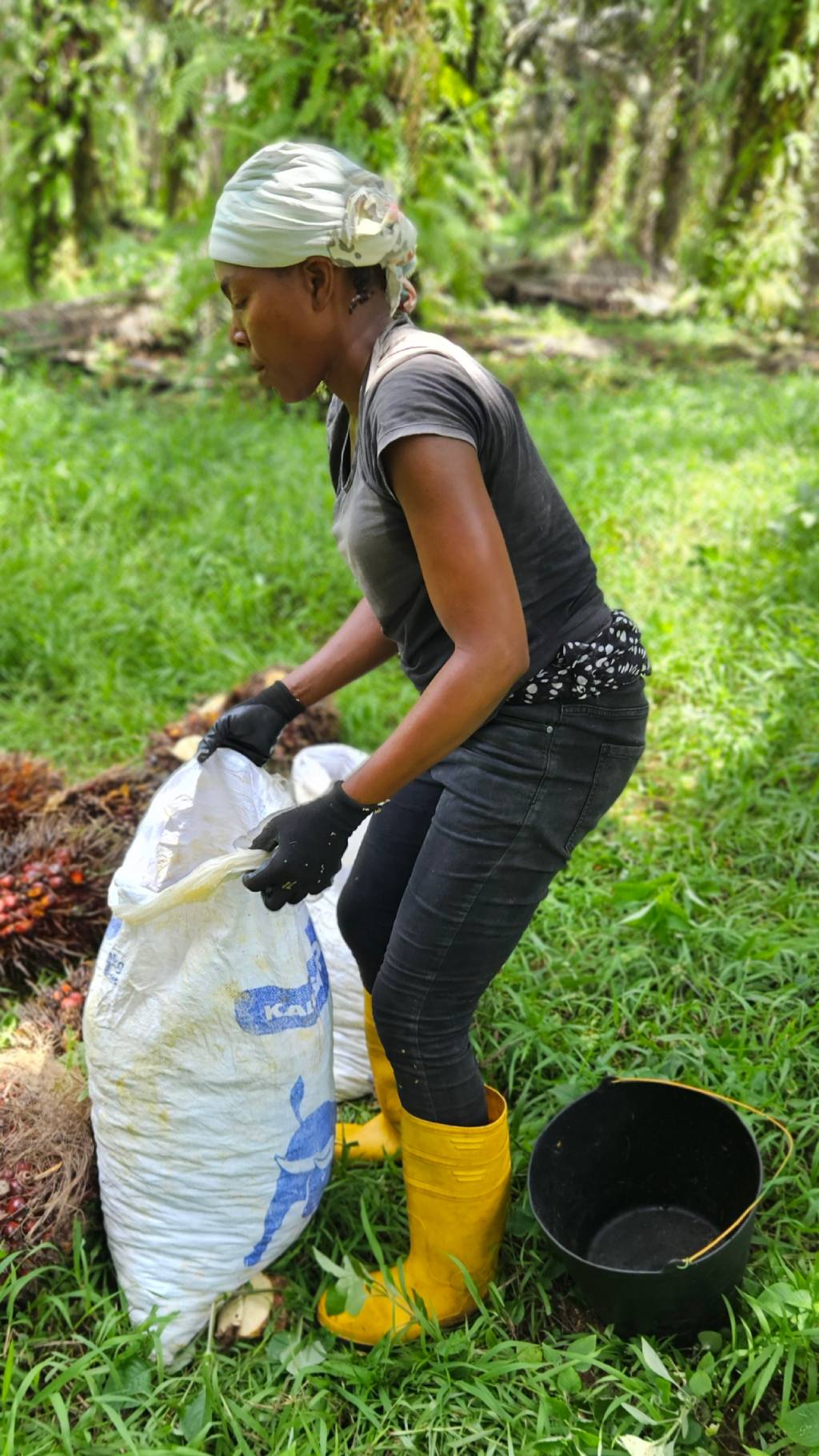
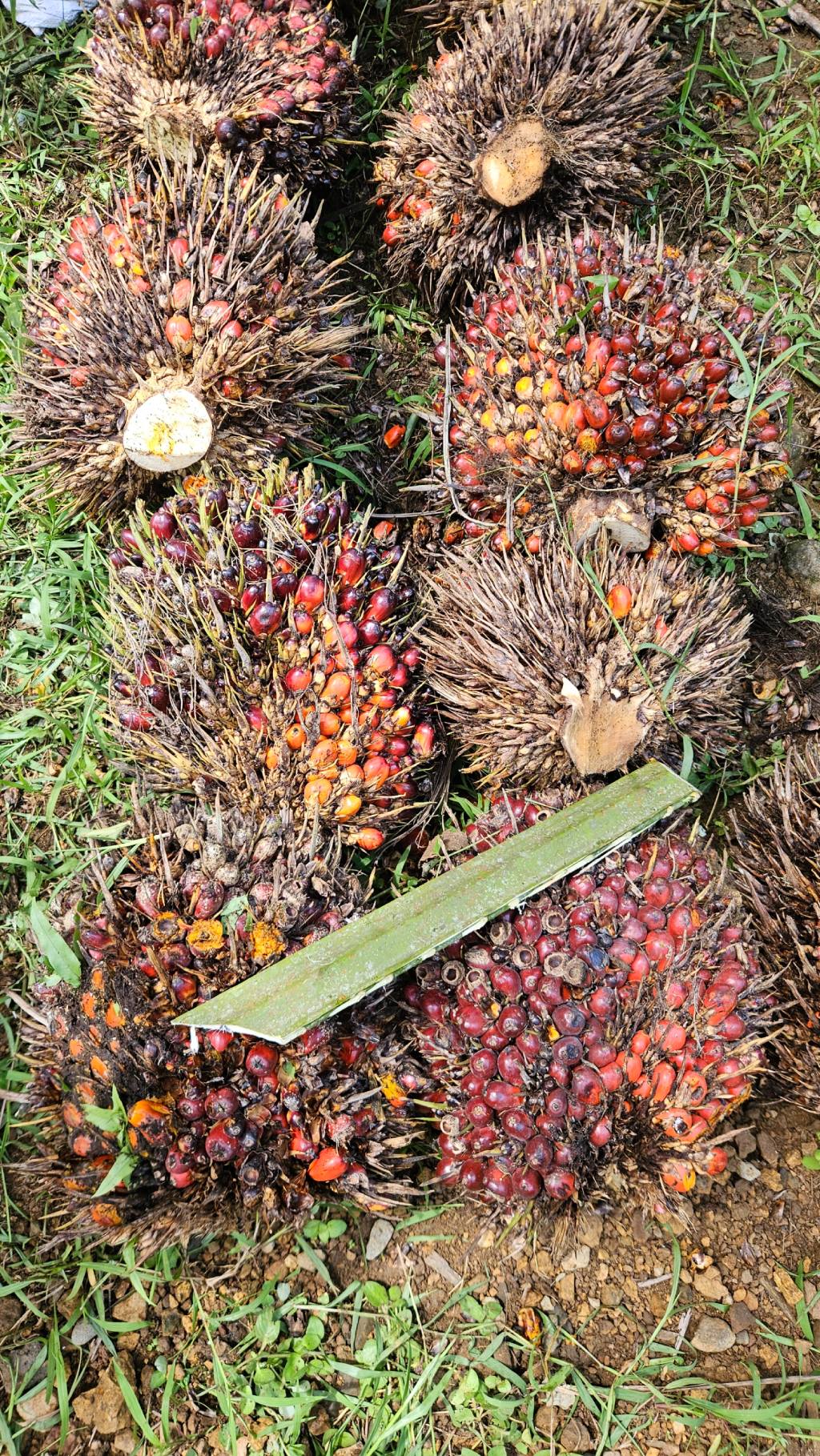
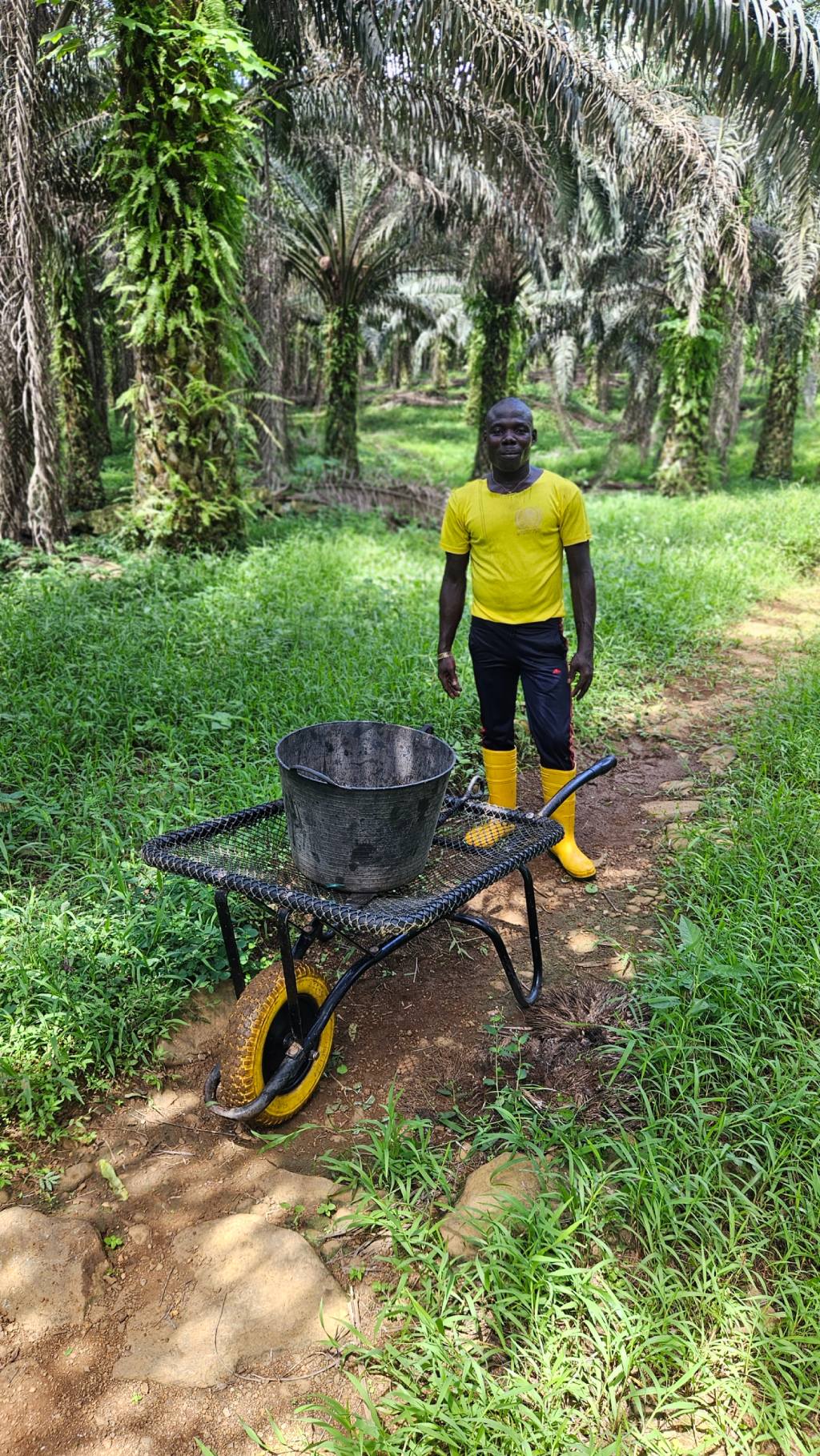
I ask Lania to travel with me as a guide to the Roland Island. She works at the palm tree plantation in the morning, but already finishing at 9:30am. Over 1,500 people work at the Agripalma, the only industrial oil palm plantation which spread for kilometers from the main road. I drive around on a motorbike to find Lania and learn about this successful business operation from a supervisor who is showing me the way.
Men cut the palm fruits from the branches with an extended knife on a long stick, while women pick up individual fruits from the ground. They only work from 7:00am to 10:00am, until they reach the daily target, 6 days per week. Maybe the idea is to give more people work or to avoid the heat that during the day becomes unbearable. Men are supposed to cut 70 palm berry bunches, while women are targeting to fill up four 50-kilos plastic bags.
The salary is approximately 170 US$ per month. Not to bad, considering the amount of working time and possibility to relax for the rest of the day.
The road to Porto Alegre is bad, really bad. The asphalt is gone and the gravel area is extremely difficult to manage on an unstable bike. Concrete banks at the edge of the road are the best option for motorcyclists.
I feel more comfortable every minute I navigate on the 50-centimeters wide banks, but I need to be 100% focused, all the time.
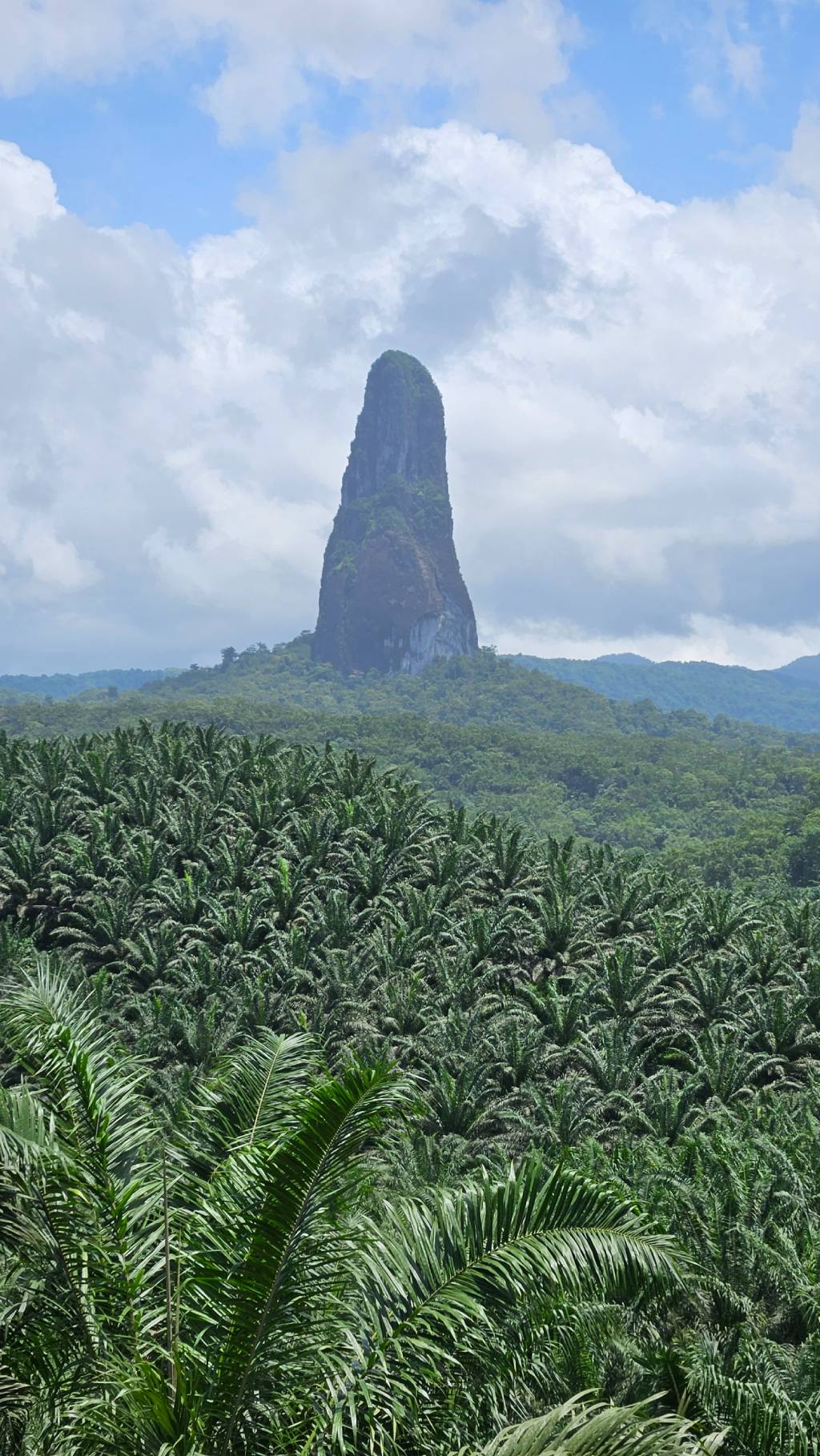
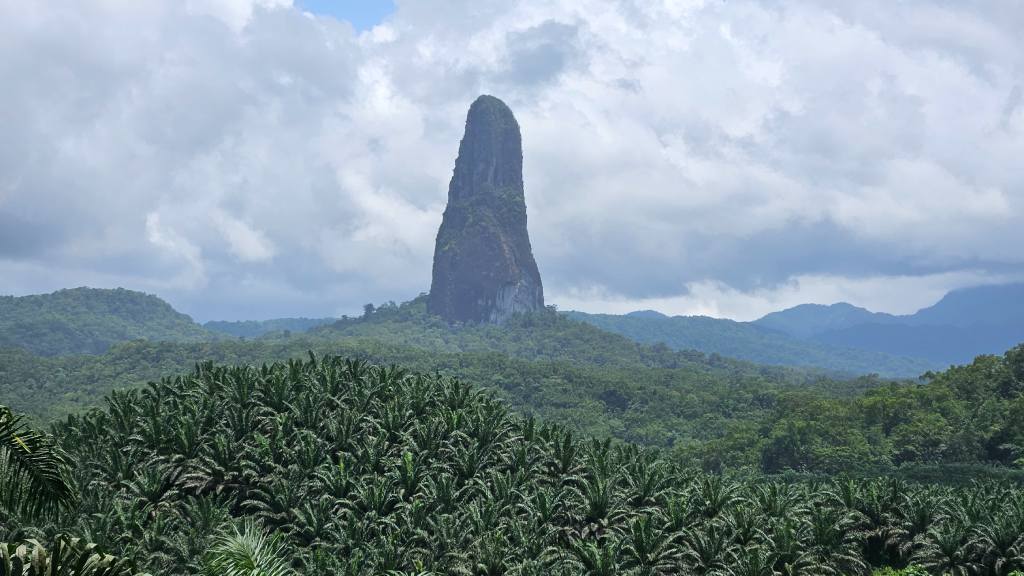
The first stop is Pico Cão Grande View Point. A needle-shaped volcanic plug peak, also known as Great Dog Peak, stands at 663 meters above sea level and it rises dramatically about 370 meters over the surrounding terrain. The volcanic plug was created when the lava of another volcano formed hardened magma over the mouth of an active volcano. The viewpoint is amazing, surrounded by tropical forest and palm tree plantation. I am lucky that the view is clear.
Ilheu das Rolas (Roland Islands)
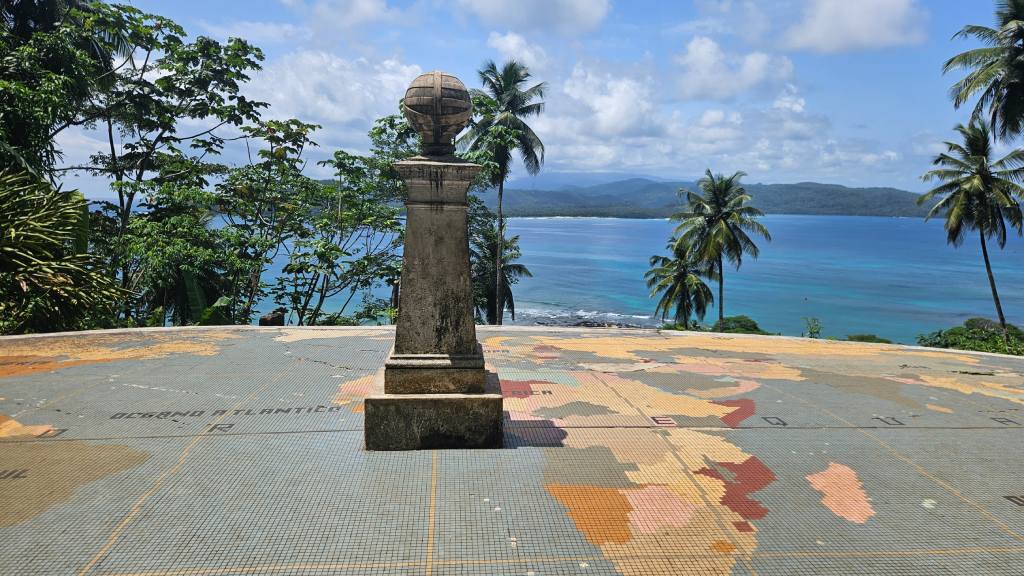
A short boat trip brings us to the Ilheu das Rolas, which is especially popular for the Equatorial lines that crosses it on a small hill.
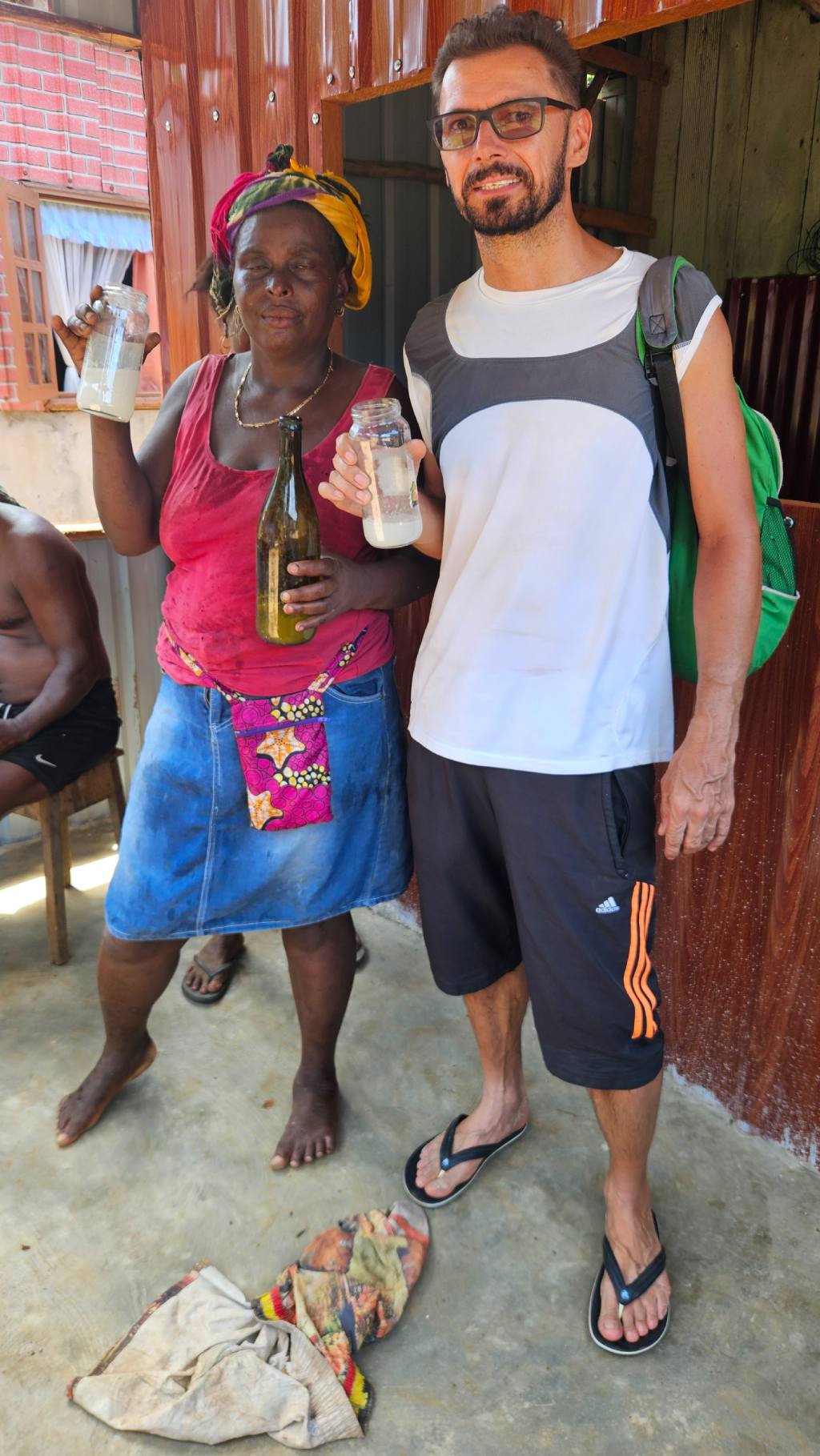
During the hike through the village, I stop at a palm wine stand, which offers nothing more than some plastic canisters, glass bottles and mugs filled with freshly produced liquid.
The famous local drink is almost finished at midday, but people are happy to share the last bottle with me. I don’t think about the possible consequences of superficially washed mugs, when accepting the wine tasting and the conversation with happy locals, who immediately welcome me to their family.
The Equator line is not as strongly marked with a monument as in Ecuador, but it is nevertheless interesting, modest, in the local style. A map of the world is dividing northern and southern hemisphere by a small statue and the equatorial line. The background of clear blue sea in the distance is unique.
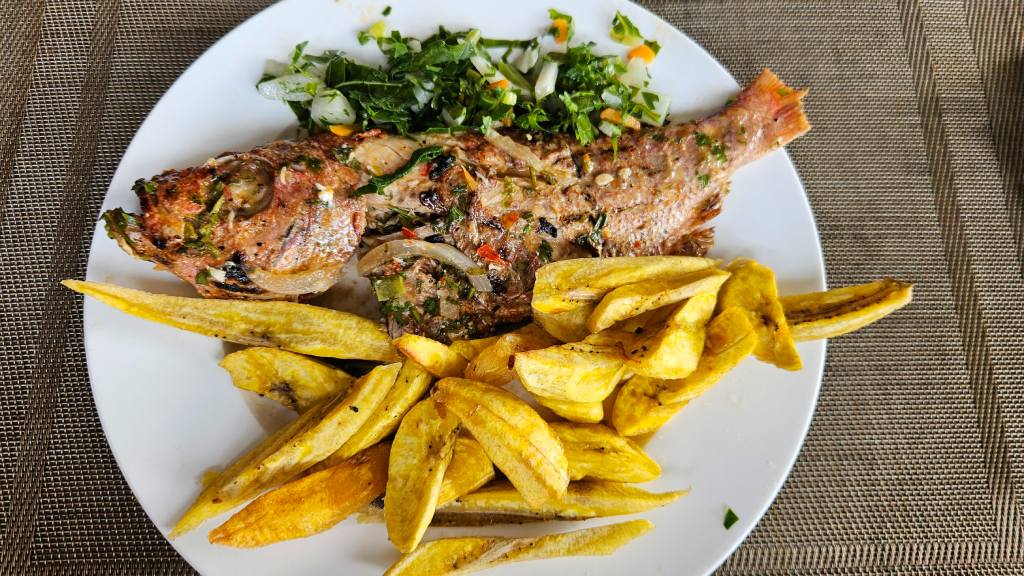
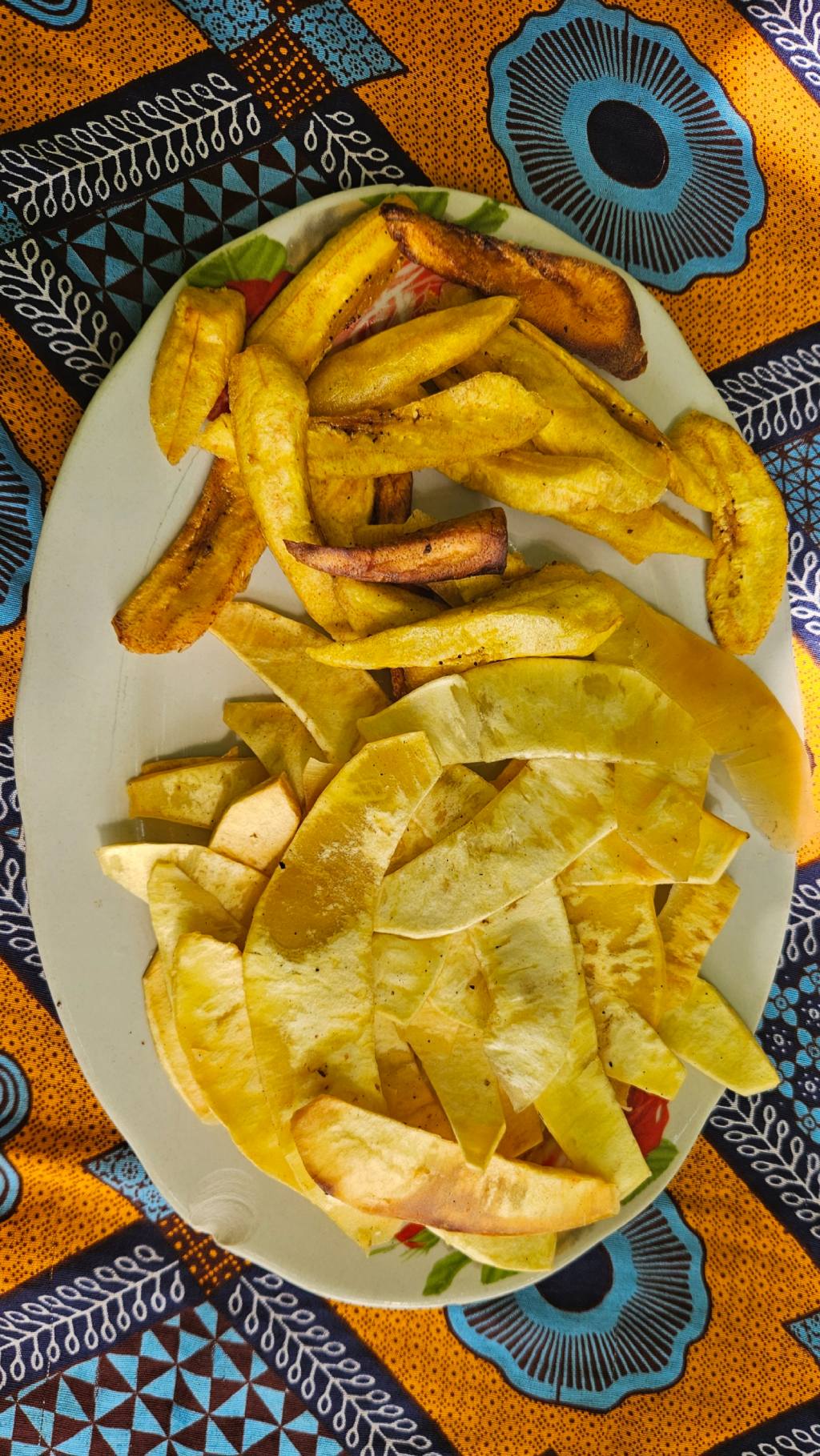
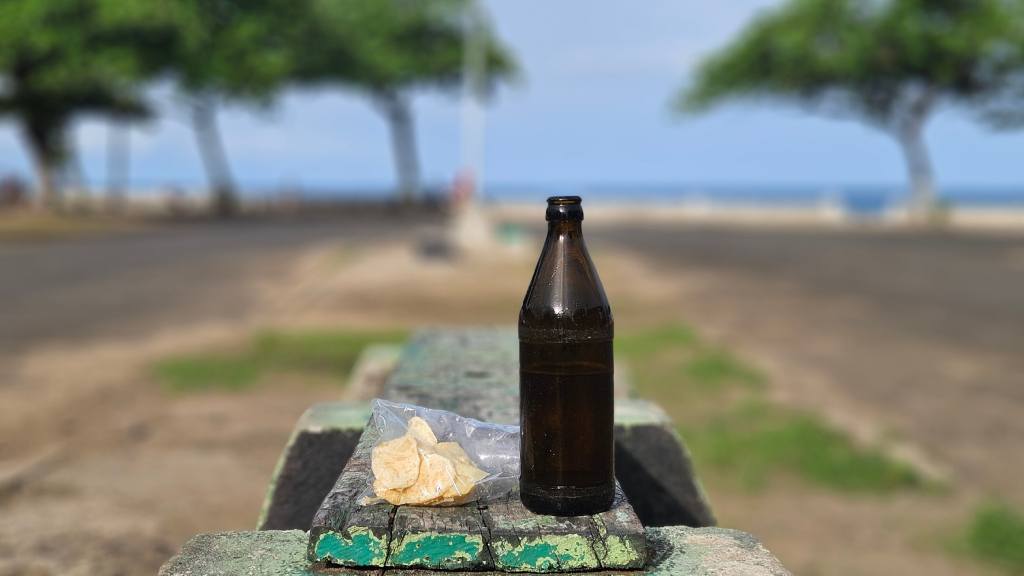
In the afternoon, I enjoy fresh fish with plantain and breadfruit chips that is served right on the Coffee Beach. While waiting for the food, I take a short swim and relax in crystal clear water.
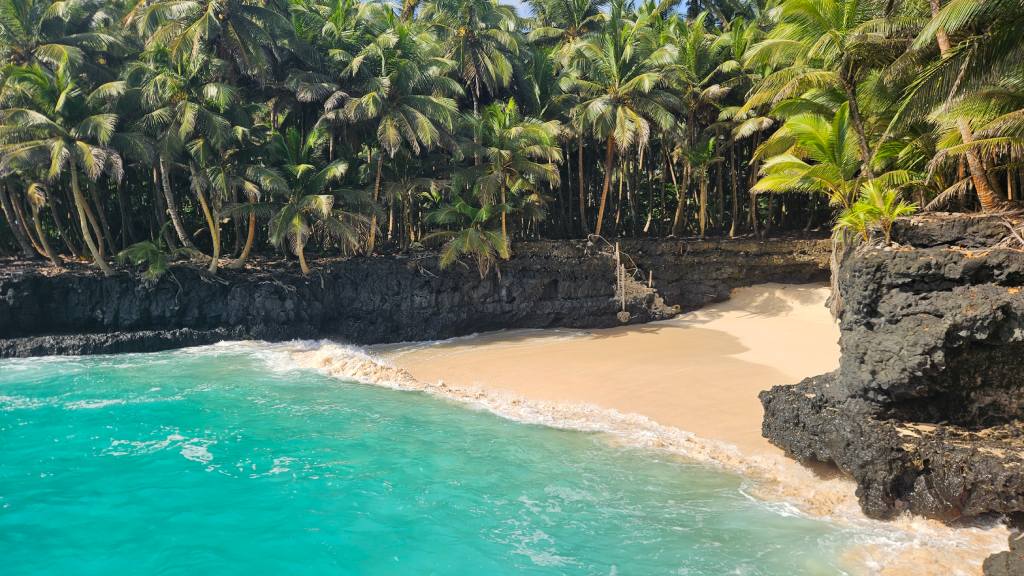
There are other beaches on the island, but I only have enough time to walk to the Battery Beach on the southwest end. A small bay is filled with perfect yellowish sand, surrounded by black volcanic rocks. The waves are strong, first pulling out and then hitting the beach heavily. Not comfortable for swimming but enjoyable for sliding with the waves.
Back on the mainland it is time to return to Ribeira Peixe.
On the way back, I have a minor accident while riding the motorcycle on an extremely bad gravel road and end up in a roadside ditch.
Immediately, two motorcyclists come by out of nowhere, stop, help me to start up the motorcycle and check that everything is OK with me before driving back to my village.
Lania tells a few people about the accident and soon everyone in the village knows what had happened to me. A lady brings a bottle of pure alcohol to clean my wounds with cotton wool. An elderly gentleman provides me a pain-relieving gel to apply it to my sore shoulder. All in the sense of goodwill and help, without any demands.
Leve, leve on the island of Principe
Principe is a much smaller island, only a short 30 minutes flight by airplane. I visit it only for two days to feel the atmosphere and appreciate one of the most famous beaches in the country. With even less infrastructure, only for 10,000 residents, the main landmarks of the island are pristine beaches, tropical forest, some roças, converted to luxury hotels and restaurants.
In the afternoon, I walk around the main settlement on the island – Santo Antonio. The incredibly quiet, clean, small downtown lacks charm or any particular attraction. Old colonial buildings combine with a church, wooden houses and small shops that offer a narrow range of goods. Life seems to be even simpler here than in São Tomé island.
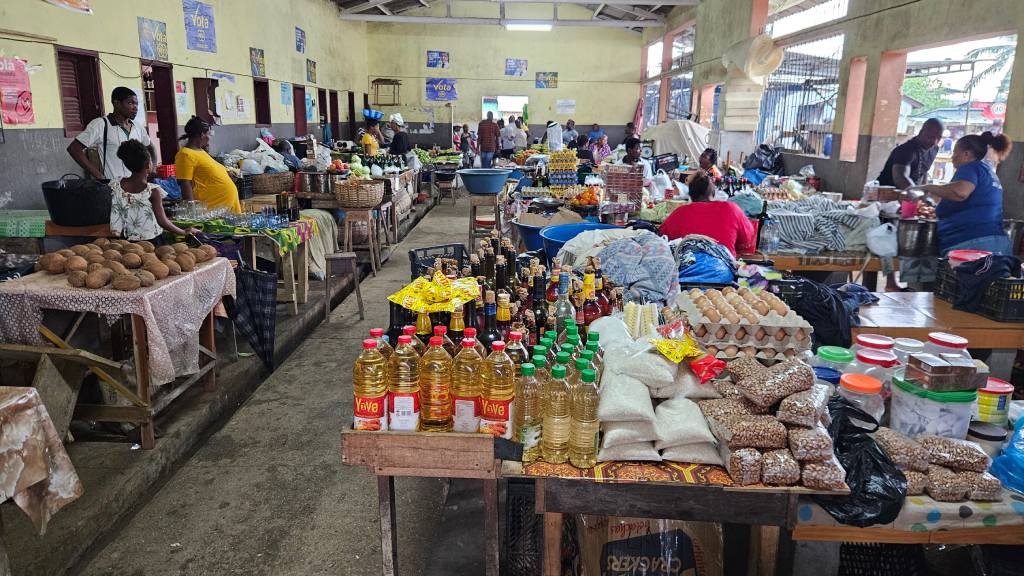
Very little cars, only a couple of decent restaurants, few motorbikes driving up and down empty streets. The central market, organized in a roofed building, provides a limited offer of local products: bananas, papayas, pineapples, some vegetables and fish.
The prices are high, especially for the vegetables that don’t grow locally. Two tomatoes for 1 euro. I don’t understand who can afford that.
Is Banana Beach the best beach on STP?
The next day, I am woken up by thunderstorm before the dawn. It continues raining most of the morning until, finally, at around 10:00am, the sky slowly opens and the clouds disperse. I hope the rain stops for today and I take a moto-taxi to Belo Monte in the northern area of the island.
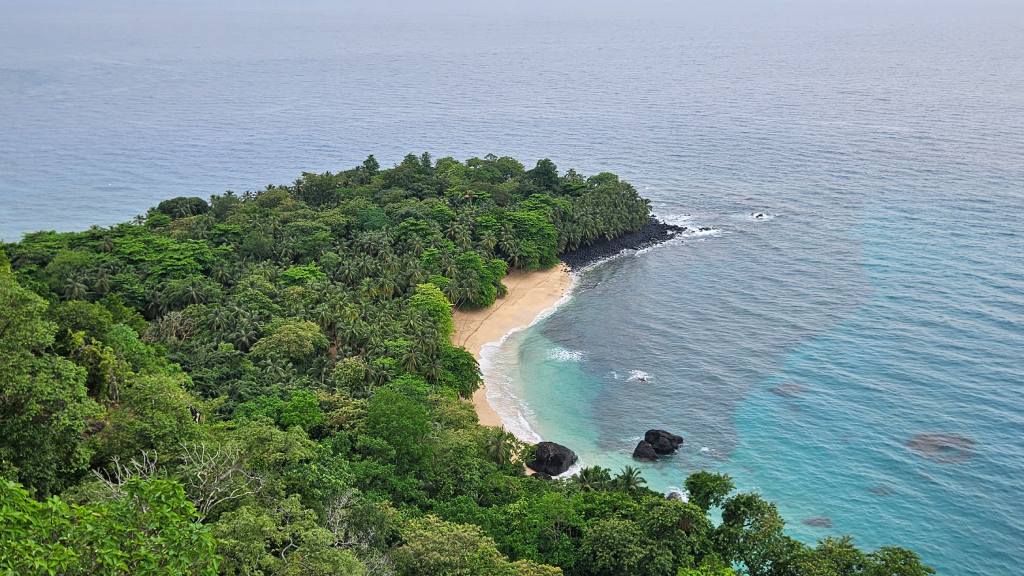
Driving down the steep slope to the Banana Beach viewpoint is challenging, as the large licks and slippery road cause the motorbike to dangerously slide. I walk the last kilometer to the renowned Banana beach (Praia Banana), where in 1991 the popular Bacardi rum commercial was produced.
I have the clear, turquoise, shallow waters only for myself. Other two visitors rest in chic beach huts with wooden benches that are, beside an empty bar, nicely supplementing forest-fringed edges of perfect sandy beach. I order a cold drink and enjoy the nature.
A pick-up truck comes to collect workers from the bar and offers me a lift up to Belo Monte, from where a Portuguese couple takes me to the airport. Everything somehow turns out so easily, without planning. From the airport is hassle-free to catch a ride on a moto-taxi downhill to the town of Santo Antonio.
There is no time nor interest to visit other places around the island, after seeing the best beach on Principe.
In the evening I enjoy delicious fish in one of the few operating restaurants around, Armazém, analyzing if visiting Principe is a waste of time and money, since there are so many spectacular beaches in São Tomé island as well.
People don’t seem to be so friendly on Principe, the food offer is limited. Yeah, I keep São Tomé as my dream destination.
Delicious food and gourmet chocolate
The last day before flying home is dedicated to the capital city São Tomé. The weather is poor; rainy, windy and slightly cooler. I have to abandon my plan to explore more beaches in the north and compensate it by a lazy time, reading and writing.
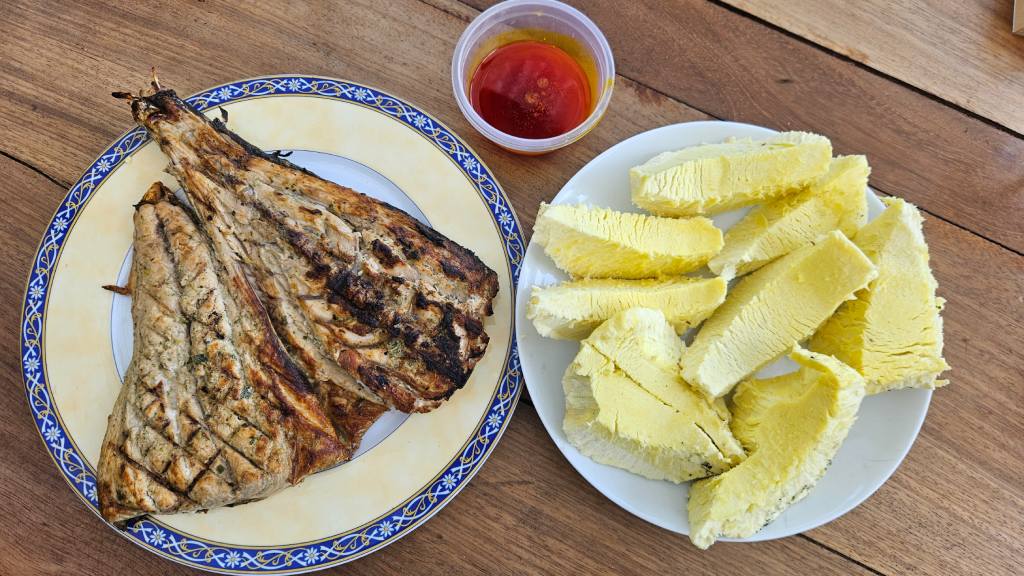
São Tomé is a great place to taste some of the island’s top cuisine and purchase high-quality chocolate. Among a bunch of upscale restaurants, I decide for Pico Mocambo, where I taste contemporary combination of traditional flavors: tuna fish with breadfruit pure.
After choosing breadfruit pure, I manage to taste breadfruit in three forms: cooked in a fire and peeled as a rustic version of Ribeira Peixe, fried in thin slices at Roland Islands and as pure in a gourmet restaurant at São Tomé town. All forms remind of potato or yuca (cassava), but the flavors and textures are very different among themselves.
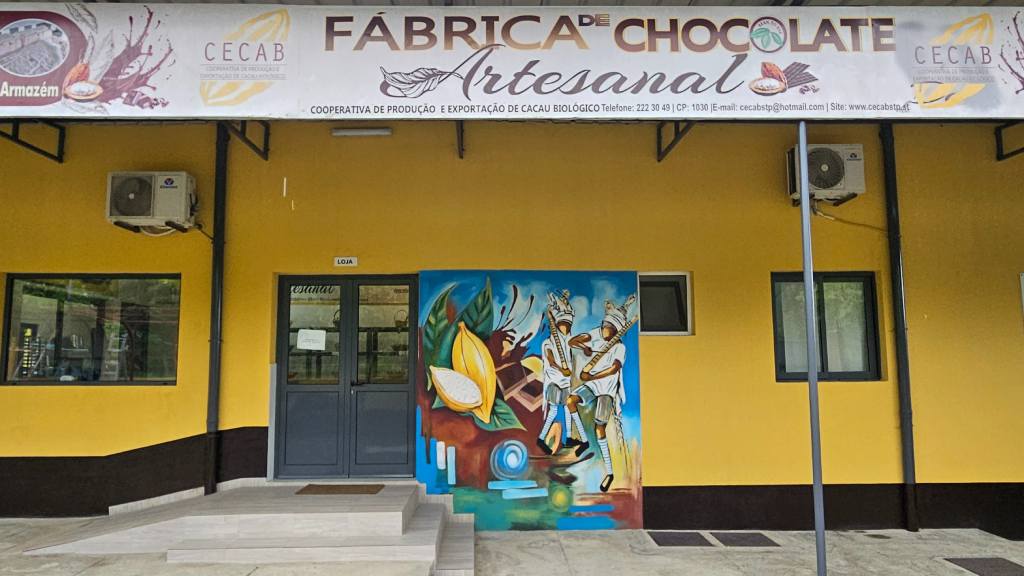
When we talk about quality chocolate in São Tomé, there is not much competition, nor choice. Only two main brands, which are also internationally recognized, are offered in some high-end supermarkets or souvenir specialized stores: Diogo Vaz brand offers wider range of chocolate bars, as well as its own coffee shop with ice cream and cakes, while legendary Claudio Corallo established a museum where through guided tours visitors can learn about the history, development and growth of cocoa in São Tomé. The passion of this Italian emigrant is contagious.
I’m not sure if São Tomé chocolate is appreciated more for its rich legacy, the hard work that goes into making it, and its exotic charm, or because it’s received formal awards from independent international judges.
Both ways, it is the most appropriate souvenir, beside magical wooden masks.
Reflections on my visit to São Tome and Principe
The priceless life experience in São Tomé and Principe concludes my journey of a month and a half in Central Africa. I can proudly write that I am mature enough as a traveler to enjoy and experience unique moments that Africa offers.
STP is a relatively unknown country, promoted predominantly as a destination of endless natural beauty. Visitors are encouraged to focus mainly on discovering scenic beaches, exploring the remains of colonial plantations known as roças, tasting delicious food in upscale restaurants, and lodging in luxury seaside resorts. Most of the recommended places to visit and things to do center around nature and relaxation.
By immersing myself in independent exploration of the island, mingling with São Tomé residents, staying in guesthouses nestled within local communities, and enjoying traditional dishes at informal eateries or prepared by locals, I had a truly authentic and unforgettable experience of STP.
Driving around by motorbike exponentially increased my connection with the local community, which turned out to be the most rewarding surprise that added to my incredible experience and high appreciation of lifestyle, connection with the nature and equilibrium of people in São Tomé and Principe.
São Tome and Principe Travel Photo Gallery