Visited: September 2025
Duration of visit: 17 days
Capital city: Maputo
Population: 35 million (2025)
Mozambique travel blog reading time: 16 minutes
Attractions and places I visited in Mozambique:
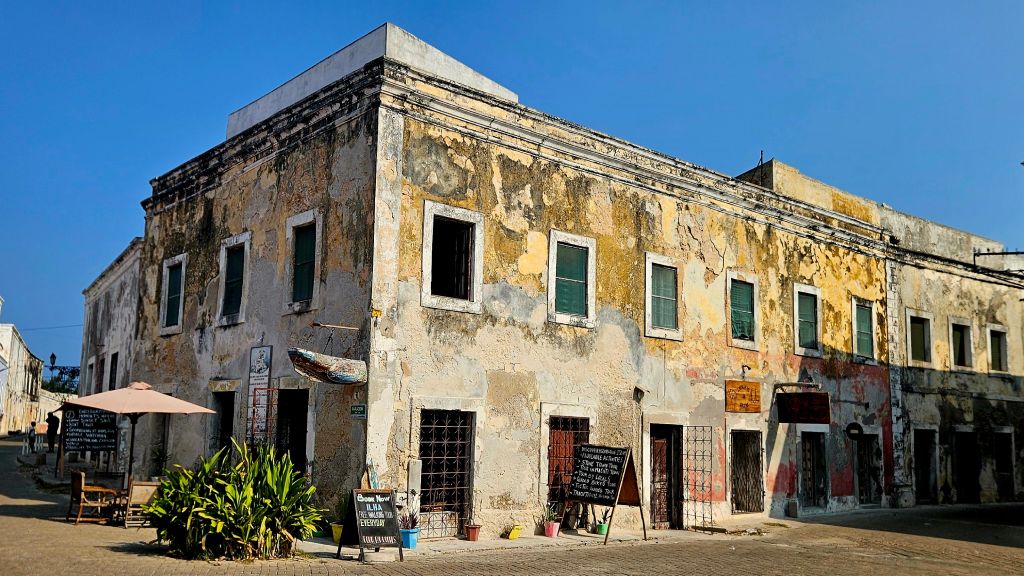
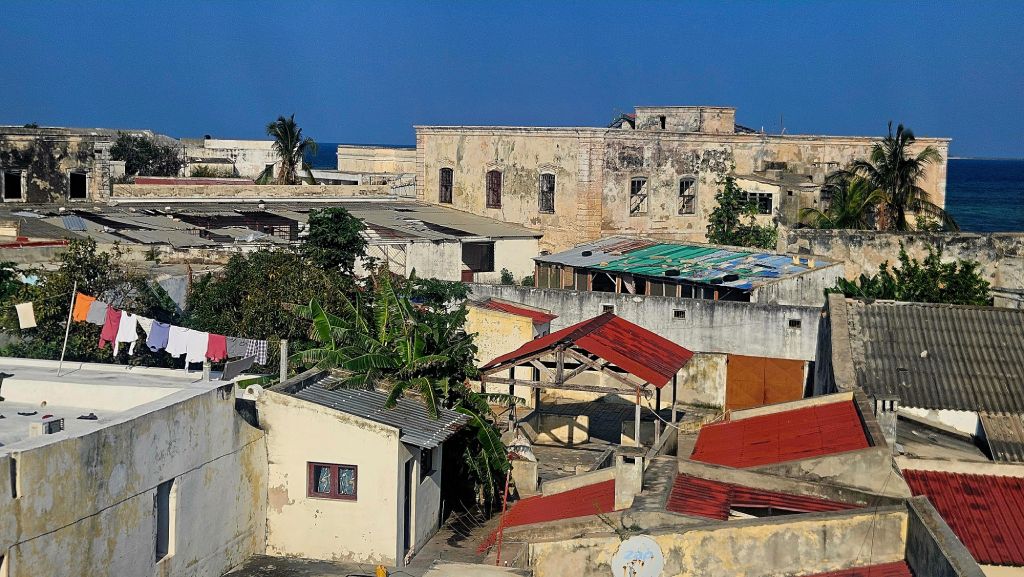
- Wandering around lha de Moçambique and exploring its half-ruined colonial buildings.
- Exhausting long drives on uncomfortable intercity buses.
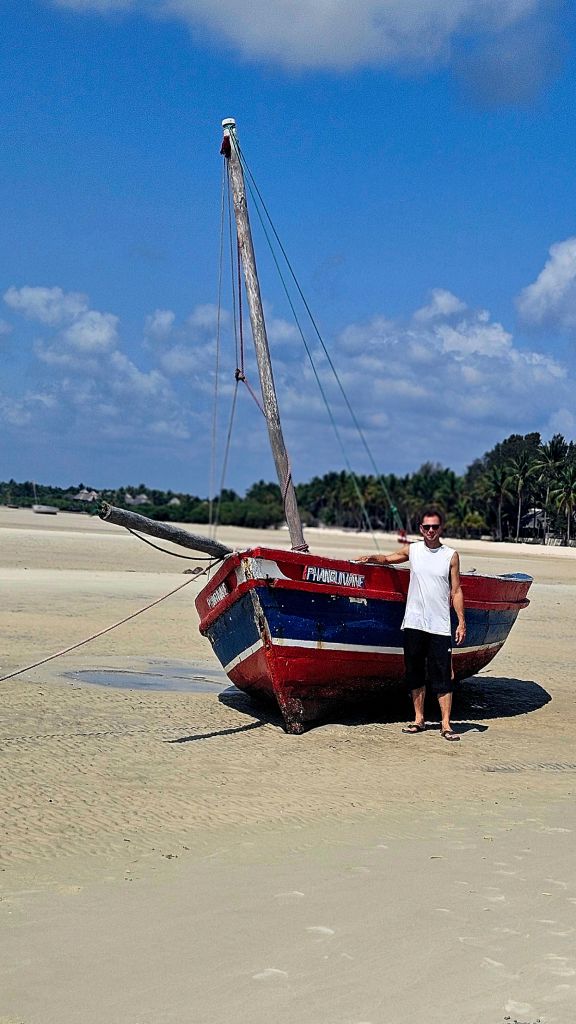
- Watching traditional sailing dhows in Vilankulos.
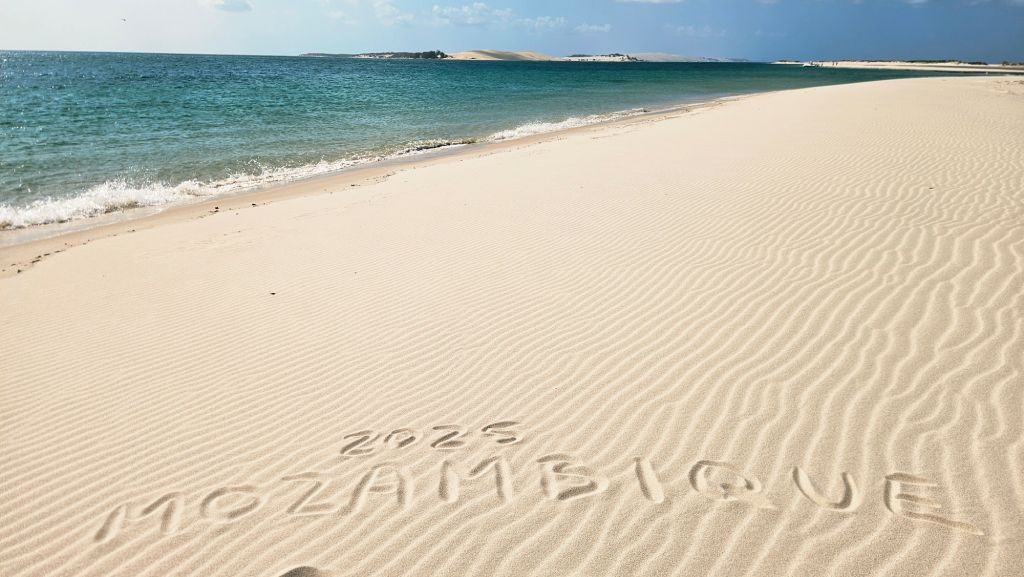
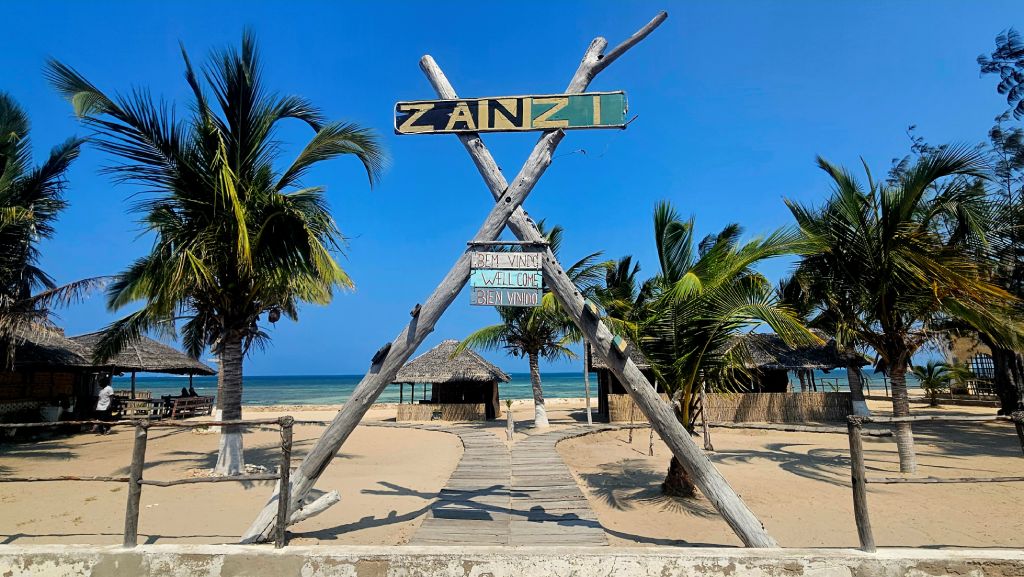
- Stunning beaches, turquoise waters and colorful marine life in the Bazaruto Archipelago.
- Enjoying the sea and tasty local food in Tofo Beach.
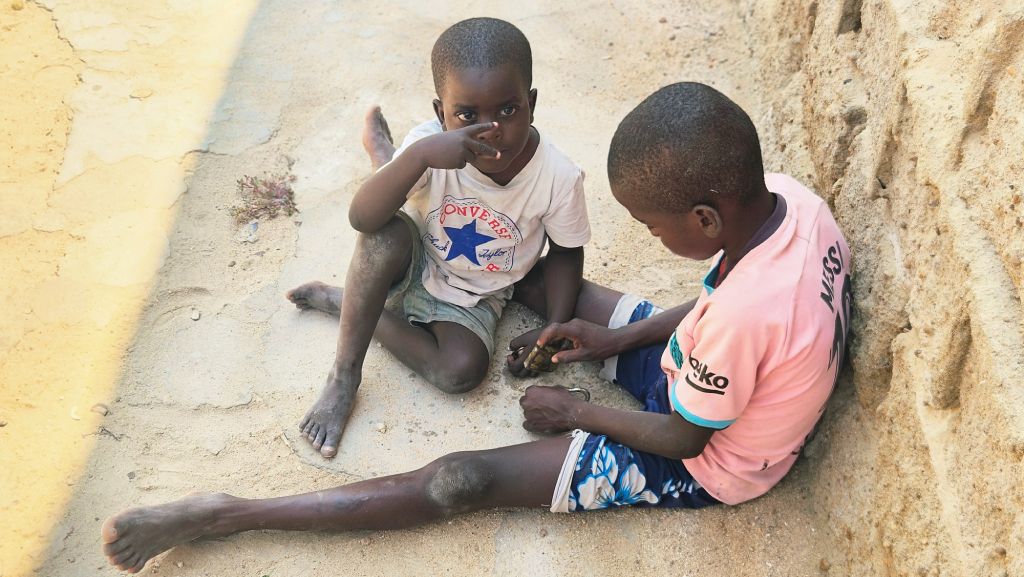
- Donations of school supplies to unprivileged children in Maputo.

Mozambique was part of my three-months trip that also included Angola, Namibia, Botswana, Zambia, Zimbabwe and Malawi. Traveling from the Atlantic to the Indian Ocean was one of my most enjoyable journeys in Africa. Along the way I encountered warm hospitality, reliable infrastructure, delicious cuisine, excellent value for money, and, thanks to perfect timing, I avoided crowds in many areas.
While the contrasts between some countries are substantial, the most notable difference lies in language: Portuguese-speaking Angola and Mozambique, positioned at opposite ends of the continent, often feel more connected to each other than to their English-speaking neighbors.
Crossing the border from Malawi
I expected the Chiponde–Mandimba border crossing to be easy, since my pre-approved eVisa should’ve spared me all troubles. The exit formalities on the Malawian side went smoothly. I exchanged my last kwacha for Mozambican meticals and bargained hard with a moto-taxi driver to take me to Mandimba town.
If the final stretch in Malawi had been dusty and rough, the first few kilometers on a perfectly paved road in Mozambique felt like entering a far more developed country.
I gave my eVisa printout to the immigration officer, who asked me to wait while they looked me up in their system. During the next hour and a half, I changed some dollars, chatted with a few people, and watched the movement across the border. It was getting late, and I still hoped to make it to Cuamba that day.
Finally, the officer called my name, placed a visa sticker in my passport, stamped it, and wished me a good stay in Mozambique. The fee to officially enter in country number 158 was high at 135US$.
Learning about the local rules
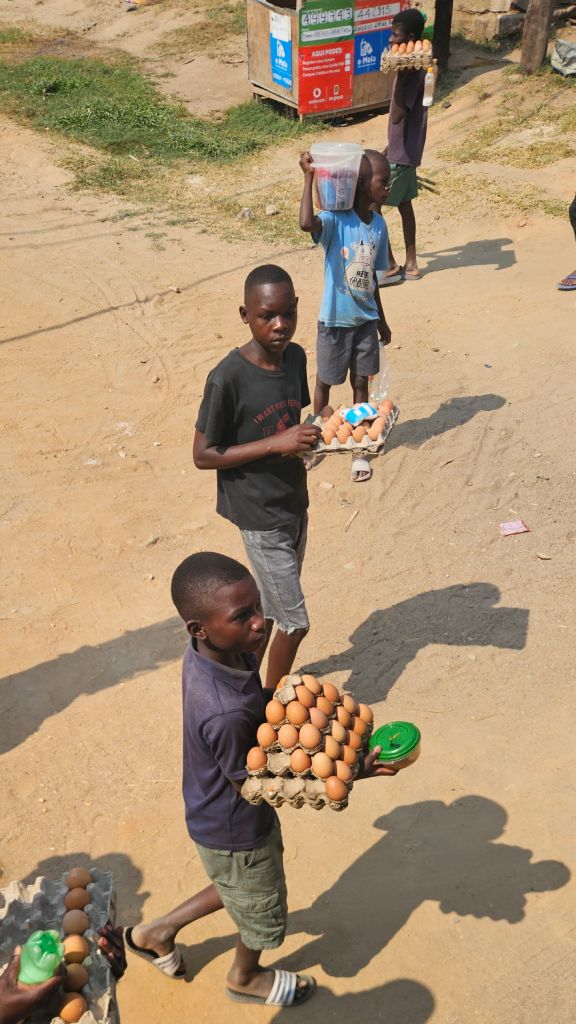
Mozambique is a Portuguese-speaking country with more than 40 local languages, and only a few people speak English. Since I’m fluent in Spanish, I mostly communicated in Spanish. Most people understood me well enough, though I often struggled to follow their Portuguese.
The money changer offered to take me on his motorbike to the bus stop in Mandimba. He looked drunk, so I hesitated, but he kept insisting. On the way, I stopped at the market to buy a local SIM card. Another slow process of registration and approval that costed me valuable time.
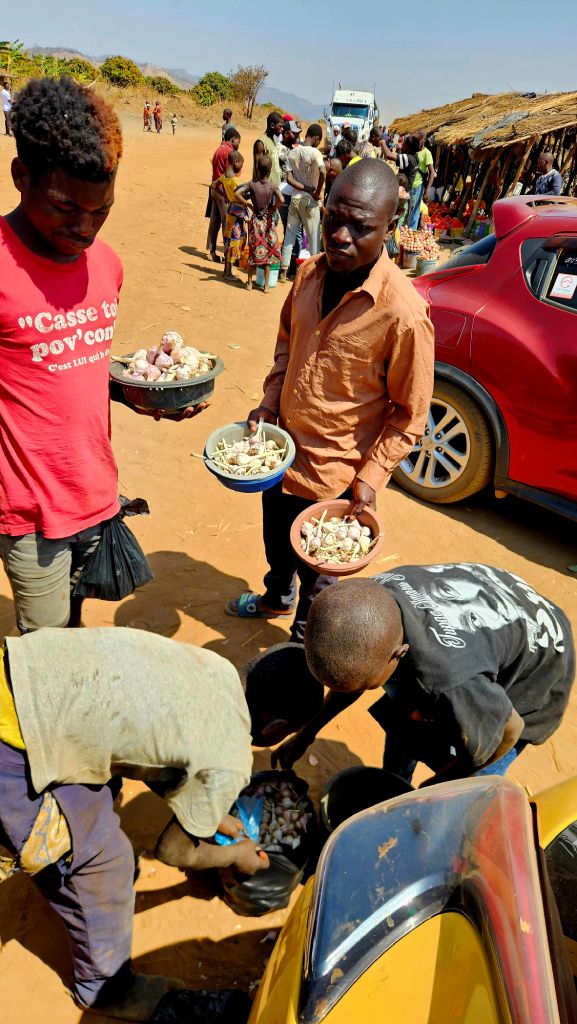
Eventually, I reached an informal roadside stop where young boys were matching travelers with passing vehicles heading to different destinations.
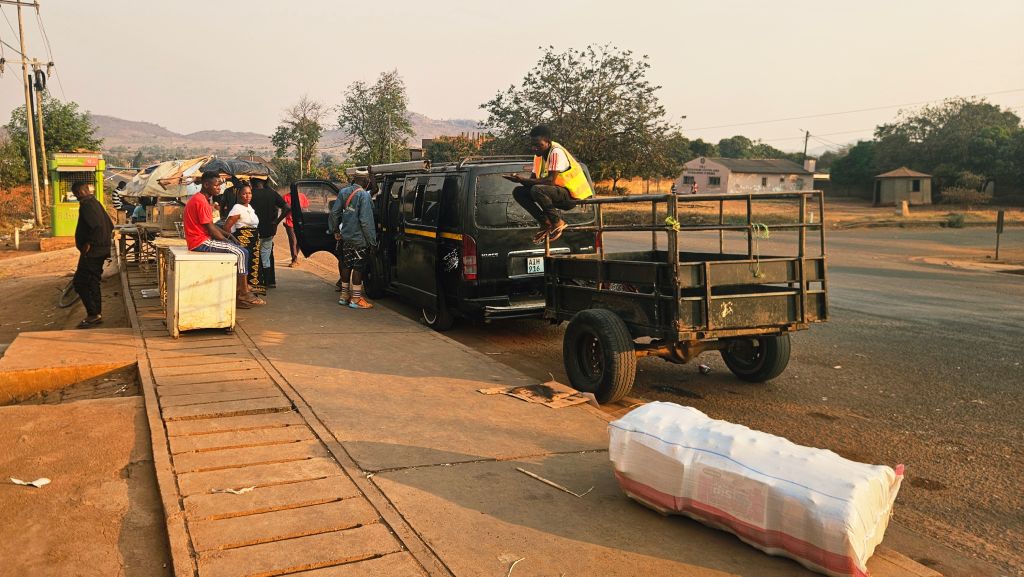
When the van to Cuamba finally arrived, it was already dark, and I wasn’t too happy about traveling at night. The driver promised it was safe and said he’d drop me in front of my hotel.
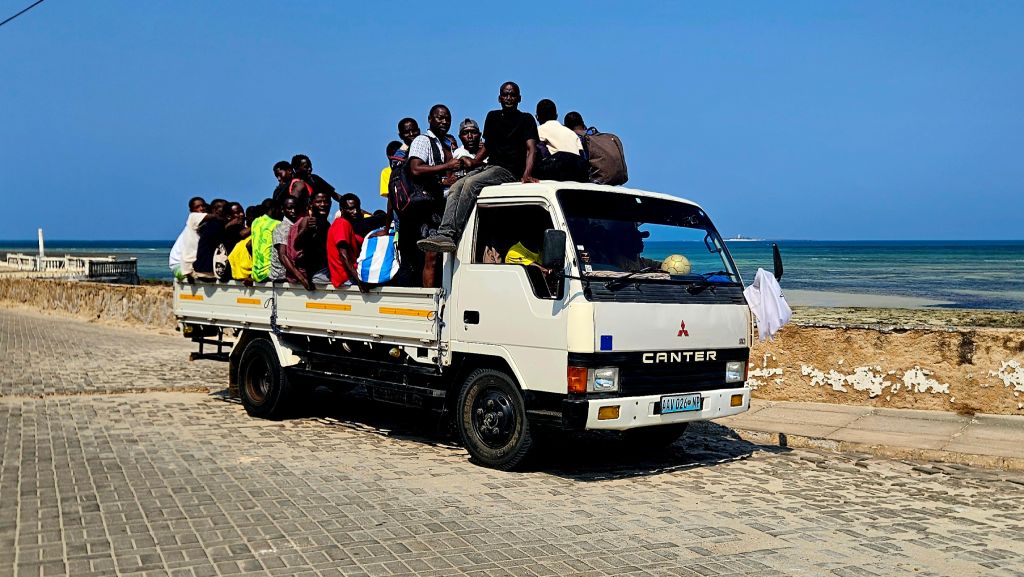
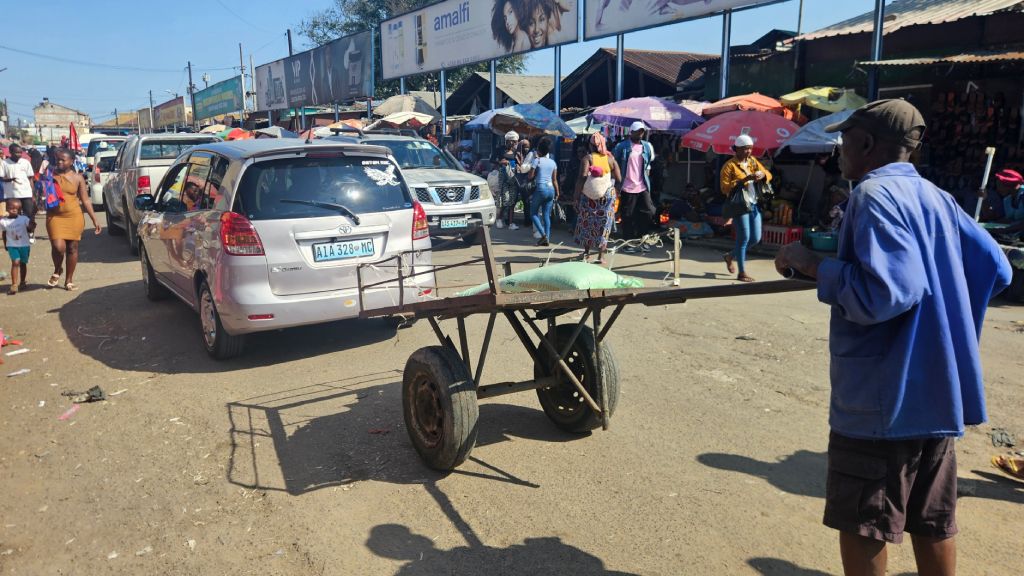
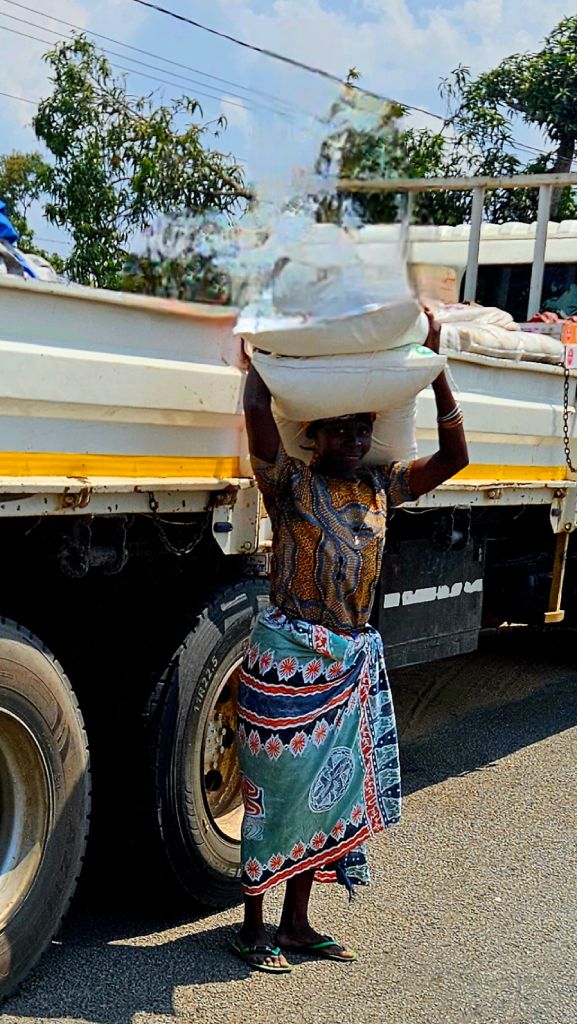
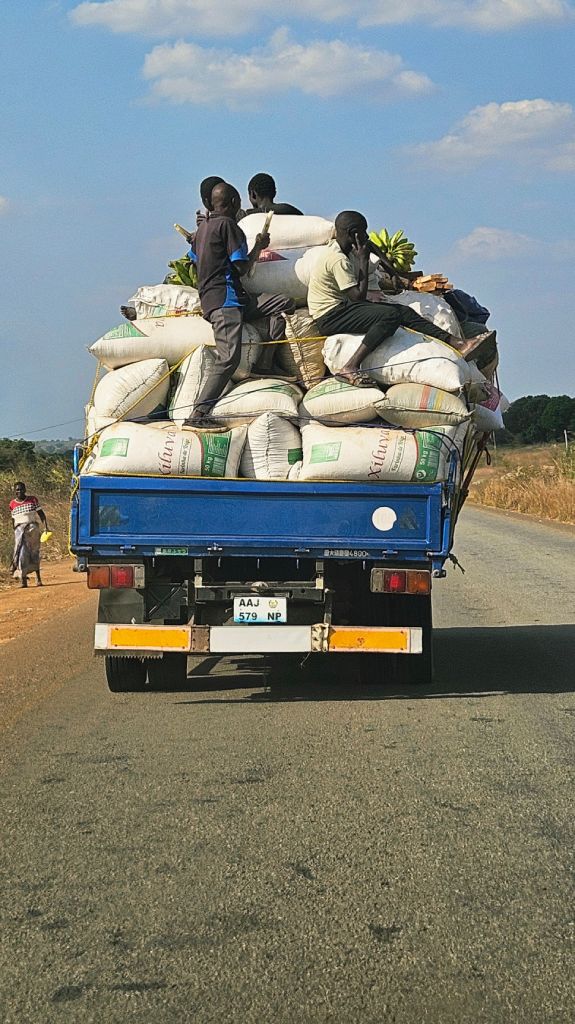
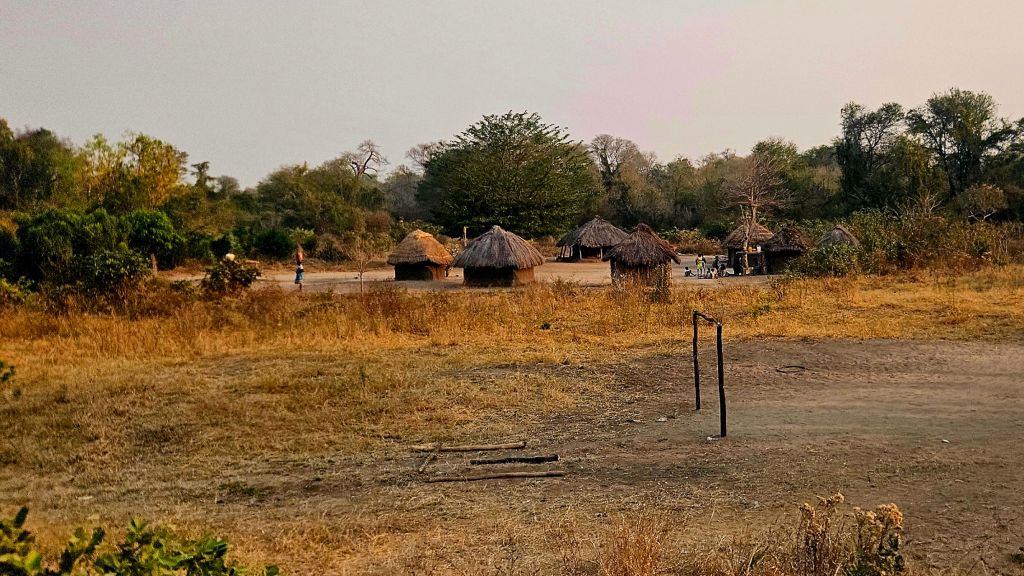
One of the peculiarities of public transport in Mozambique is that small buses often pull a trailer loaded with passengers’ baggage and additional cargo they might find along the road.
Not long after leaving Mandimba, we stopped by the road where the driver, his assistant, and a few locals started to argue over the price to load hundreds of chickens stacked in wooden cages. Once the deal was made, we kept going smoothly, until we hit a rabbit. The assistant jumped out with a machete, cleaned it, and packed it up for dinner.
Finding a ride in the middle of nowhere
Cuamba was just a place to sleep for the night, with no real places to visit or things to do. My room at the old Pensão São Miguel might have been worth 40US$ years ago, but now it felt like a rip-off. I negotiated the price down to 35US$, but the next morning, after complaining about the broken AC and torn mosquito net, I told the receptionist I’d only pay 2,000 meticals (about 28US$). He looked surprised, but accepted my offer.
I walked down the street to find transport to my next destination.
“How can I get to Nampula?” I asked a moto-taxi driver.
“No problem,” he said. “I’ll take you to the place, to where you can find a good car.”
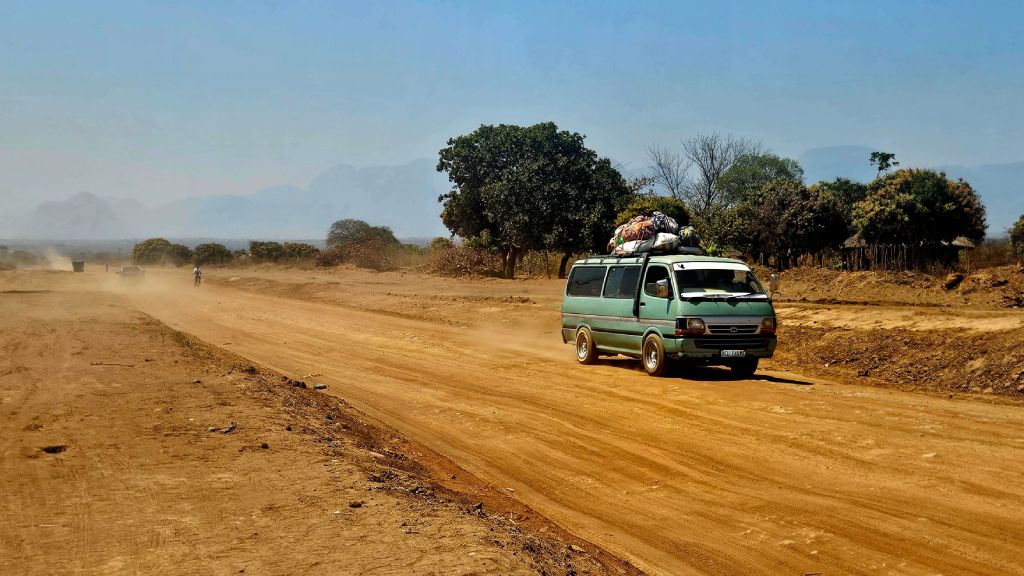
Five minutes later, he dropped me at the edge of town, surrounded by dust and silence. I could hardly believe I’d find any transport there. But just a few minutes later, a yellow Nissan Juke stopped in front of me. The passenger seat was empty, while the rest of the car was packed to the roof.
We quickly agreed on a price, and the comfortable ride began. The smooth asphalt was soon replaced by long stretches of dusty gravel. Along the roadside, locals were selling baskets of fresh vegetables: potatoes, tomatoes, corn, onions and lettuce.
Around noon, we stopped in a small village. The driver and a few others went to pray at the mosque while I wandered around, waiting for them. Instead of stopping for lunch afterward, as they had said, we kept driving toward Nampula.
By the time we arrived in the afternoon, I was starving and a bit grumpy. On the other hand, I was also relieved, since I’d crossed a big part of Mozambique in comfort. Something not always guaranteed in this country.
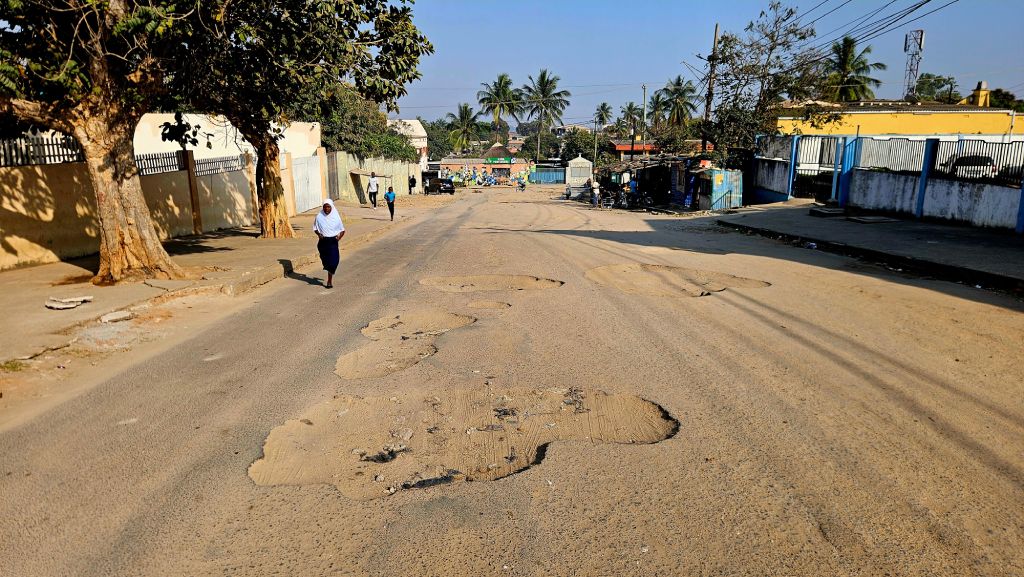
Uninspiring Nampula
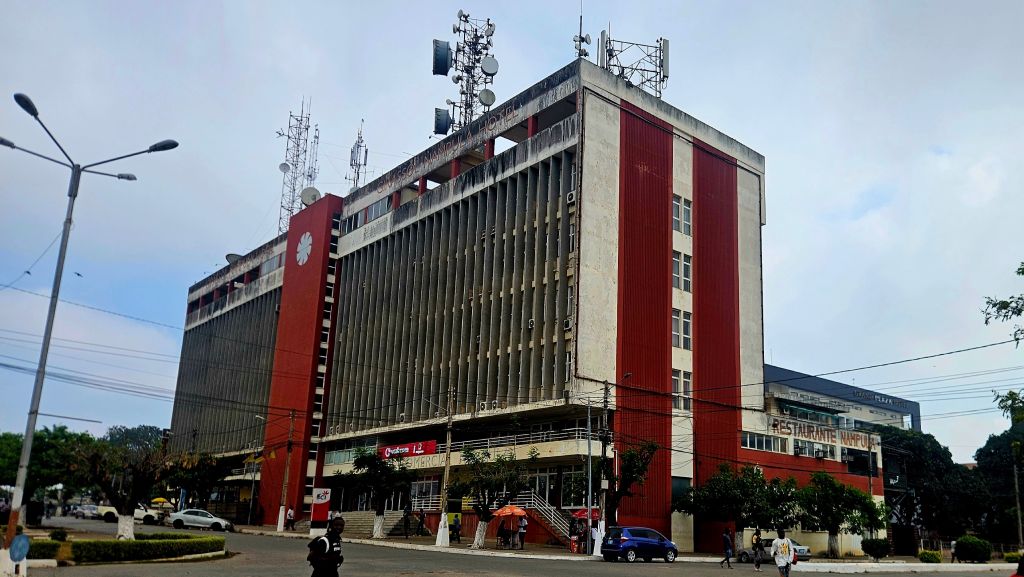
There aren’t many landmarks in Nampula, the capital of Nampula Province and the third-largest city in Mozambique, with a population of over 700,000. Still, I decided to stay two nights to rest, do laundry, eat well, and exchange some money.
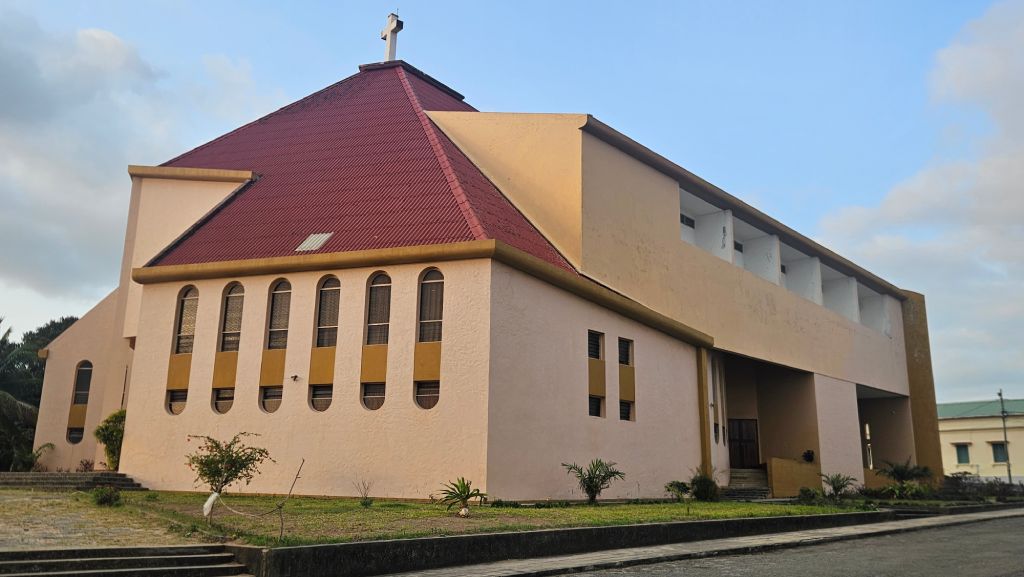
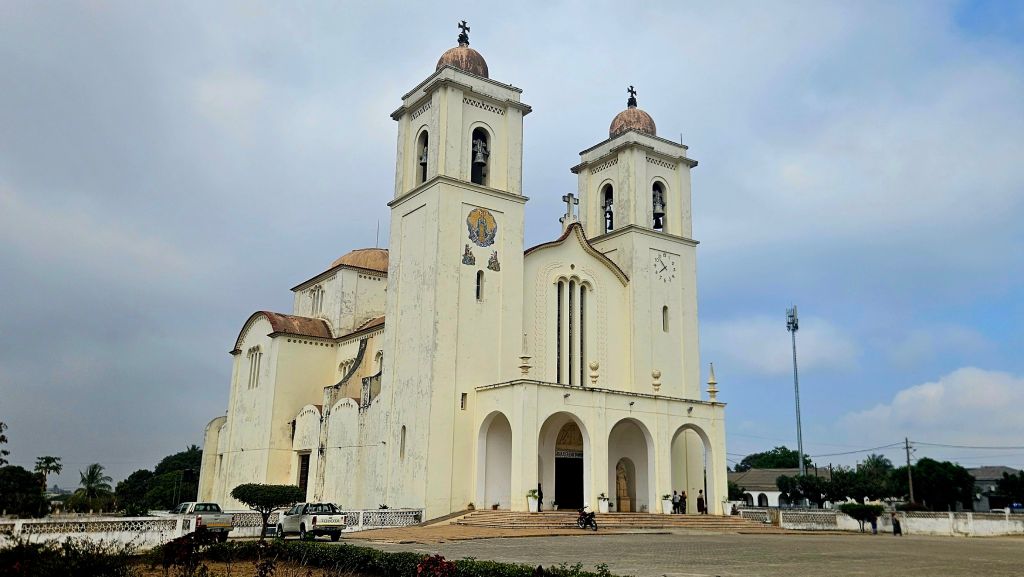
The only worth place to visit was Catedral Nossa Senhora de Fátima, built in 1956. Standing out with white façade, it still remains the heart of the city’s spiritual life. When I visited it in the morning, it was quiet and calm, offering me a peaceful moment to appreciate it slowly.
The main street, Avenida 25 de Setembro, was full of potholes, a reminder that Mozambique isn’t quite as developed as I first thought. I walked around looking for a decent place to eat, but luck wasn’t on my side. Two restaurants I’d marked were closed. With dusk setting in and my hunger growing, I finally settled for a pizza at a place next to the Spar supermarket. Nothing fancy, but fair and quick.
Island of Mozambique – lha de Moçambique
After five hours on the road and three different van rides, I finally reached the bridge at Lumbo. It was time to bargain for a moto-taxi to take me to the Island of Mozambique. The 3.4-kilometer bridge linking the island to the mainland is so narrow that we had to stop several times to let cars pass from the opposite direction.
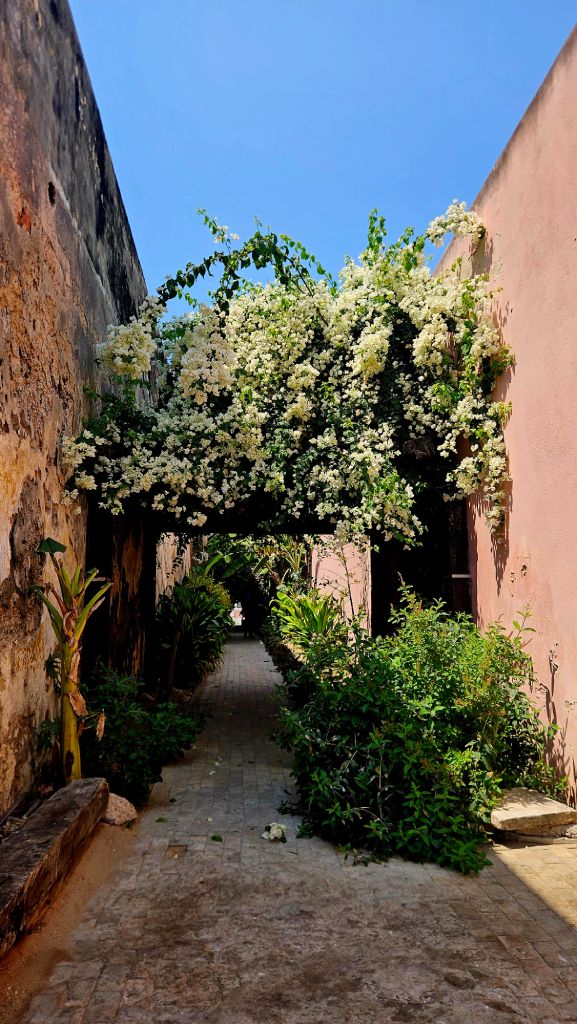
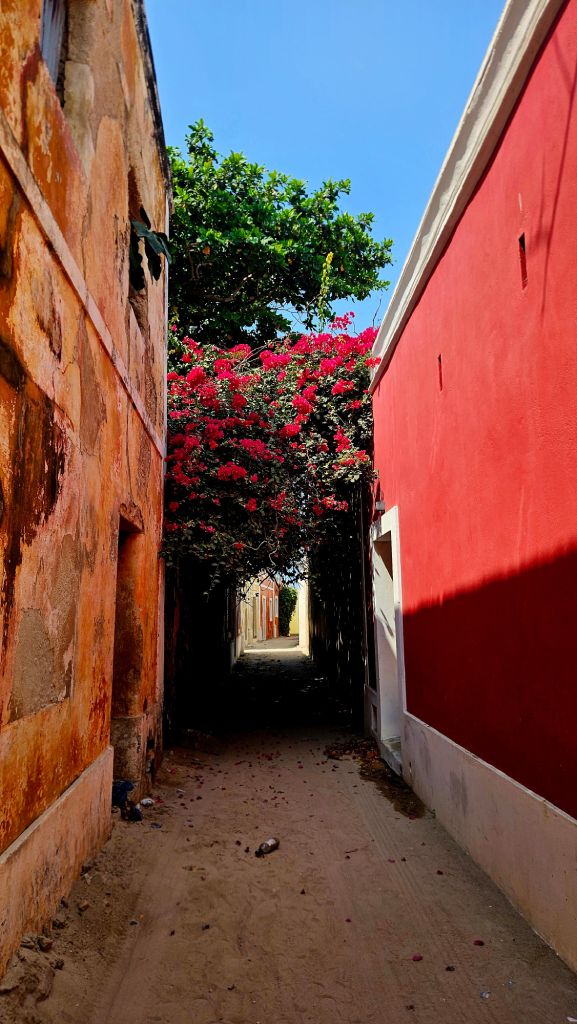
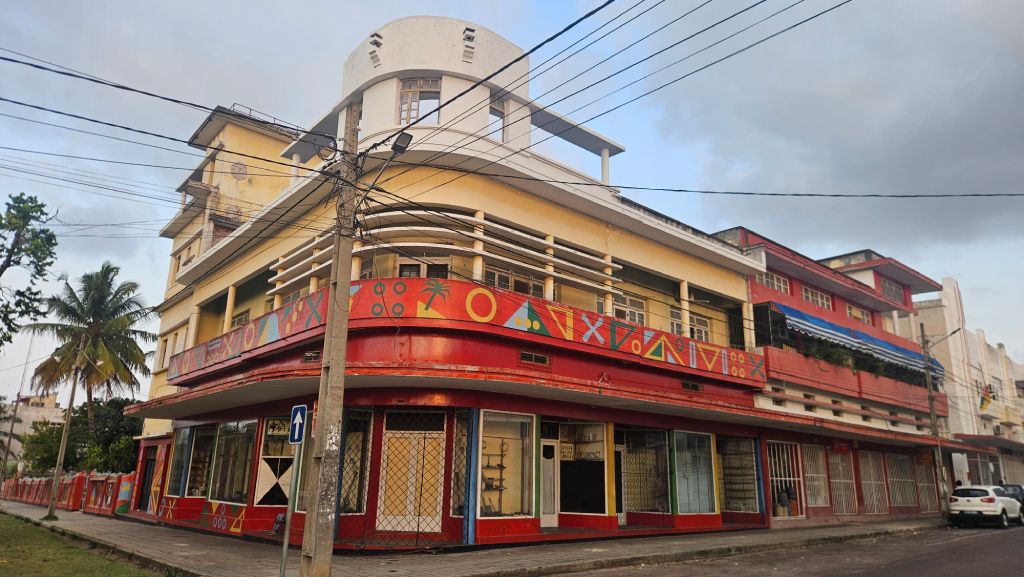
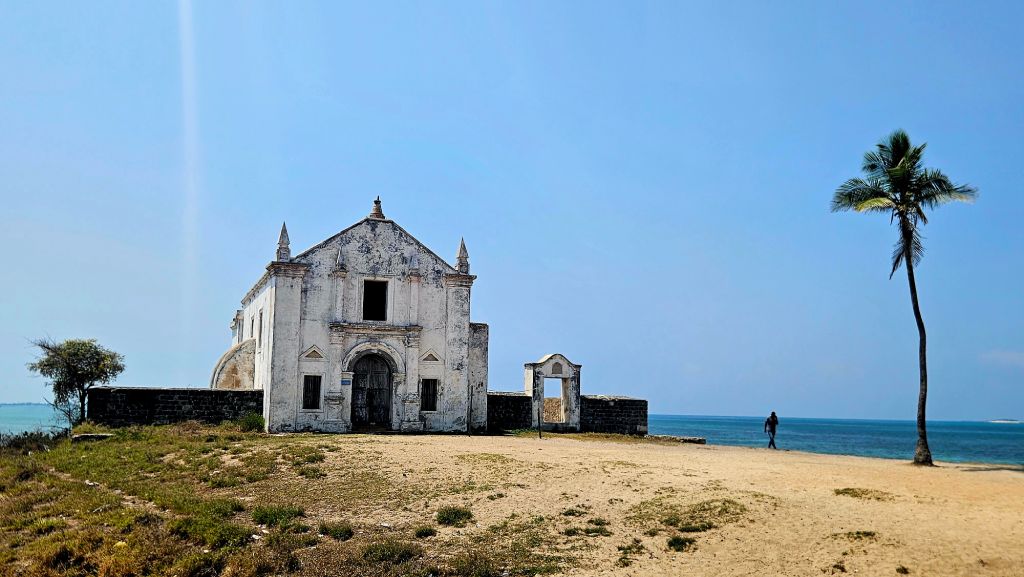
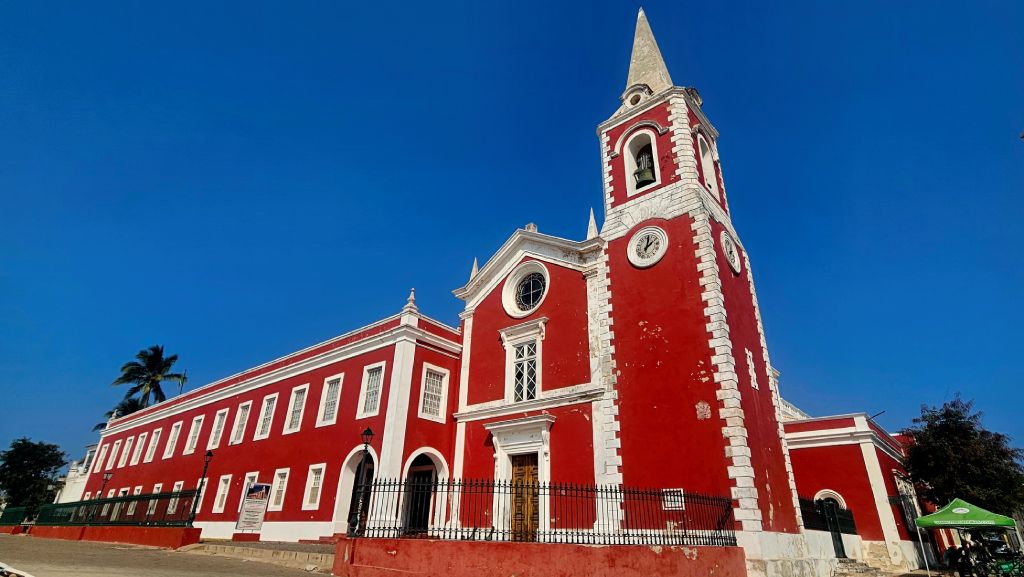
For the next two days, I wandered around the island without any particular plan. I explored half-ruined buildings that tell stories of the colonial past and failed postcolonial politics.
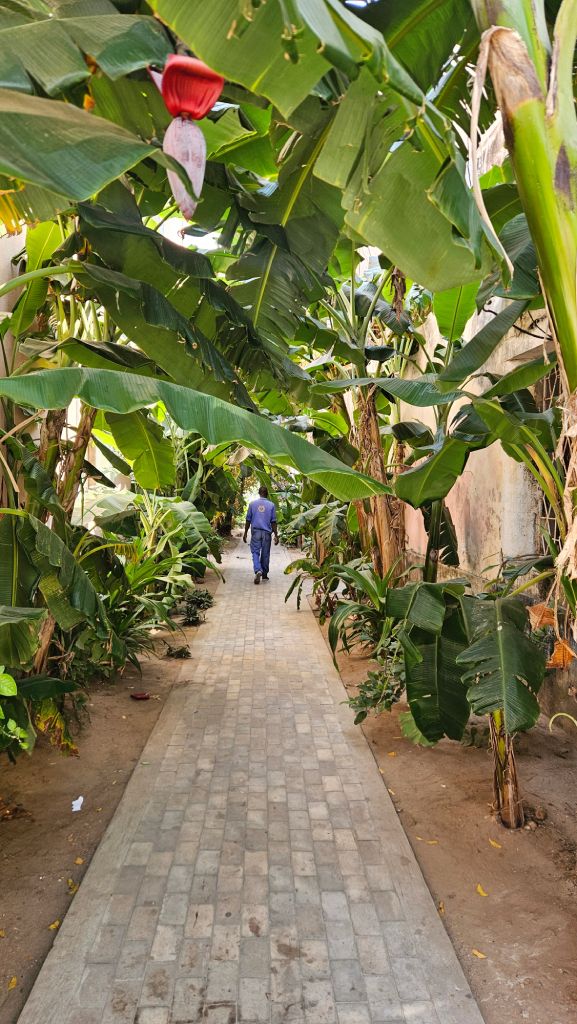
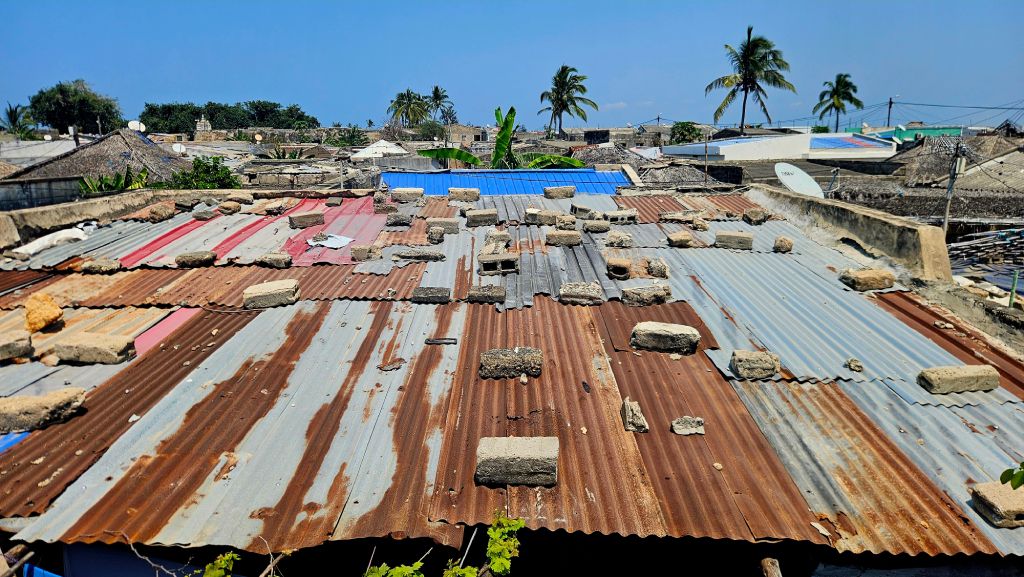
The northern part of the island (Stone Town) is full of old colonial buildings that are slowly being restored and turned into guesthouses, hotels, restaurants, and shops. The southern part, known as Macuti Town, is crowded with traditional thatched-roof houses, with no real places to visit, but perfect for a relaxed stroll.
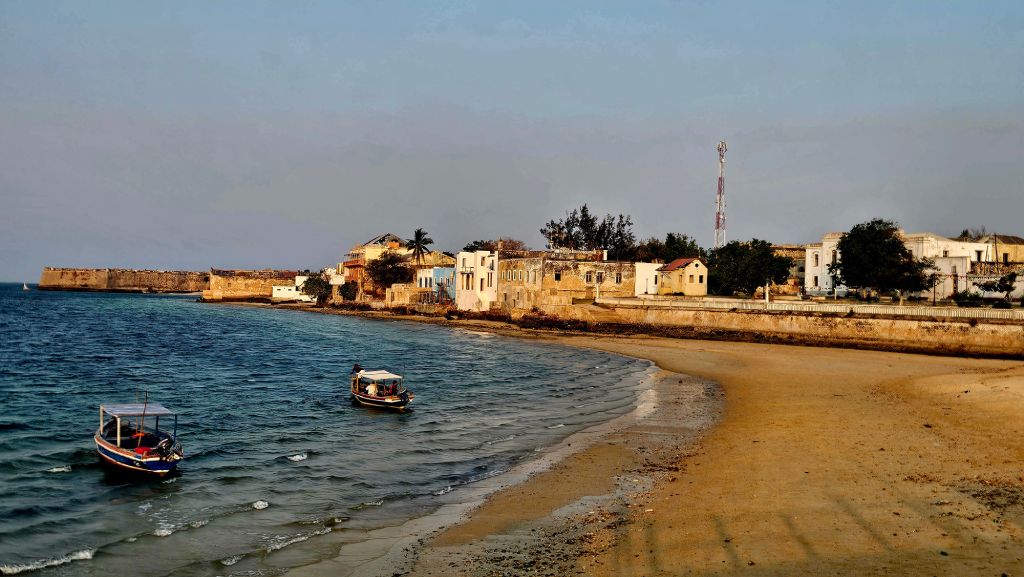
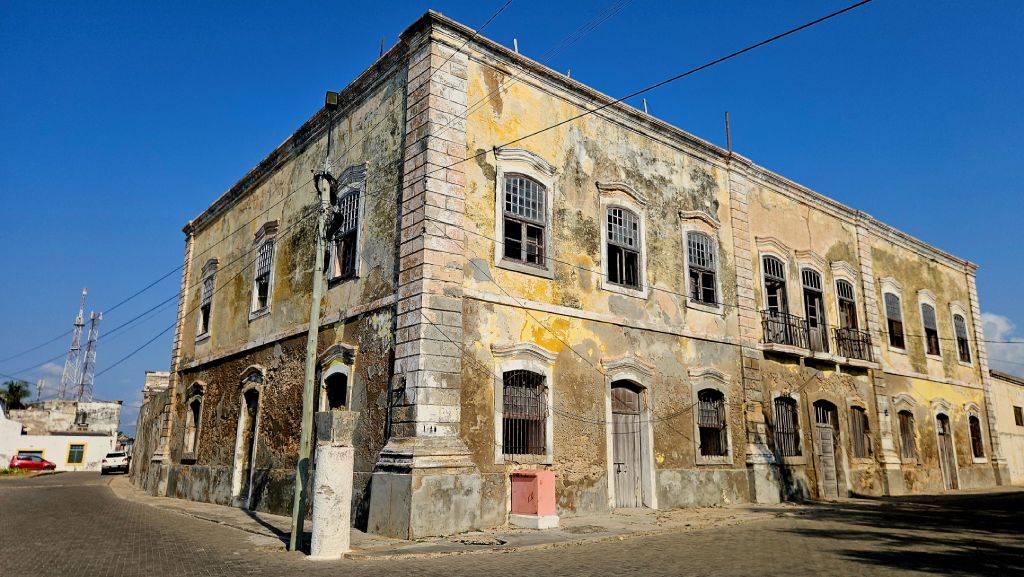
The Museum of the Palace of São Paulo is located in the former Governor’s Palace, built in the early 17th century, when Mozambique Island was the colonial capital of Portuguese East Africa. A local guide showed me around its well-preserved rooms, filled with colonial furniture, religious art and old weapons.
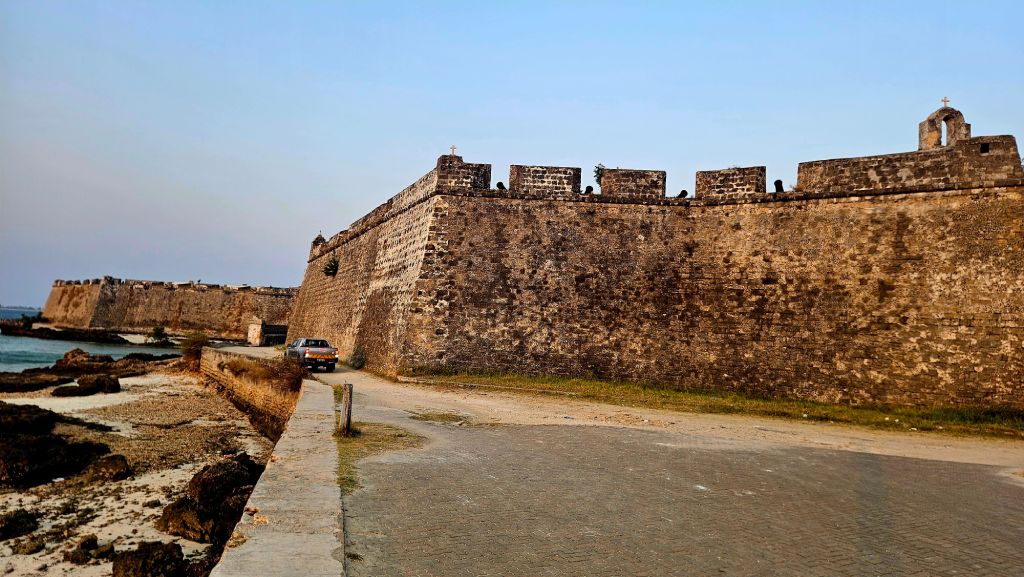
At the end of peninsula stands Fort São Sebastião, the oldest intact fortress in sub-Saharan Africa. Unfortunately, it was closed when I tried to visit it on various occasions.
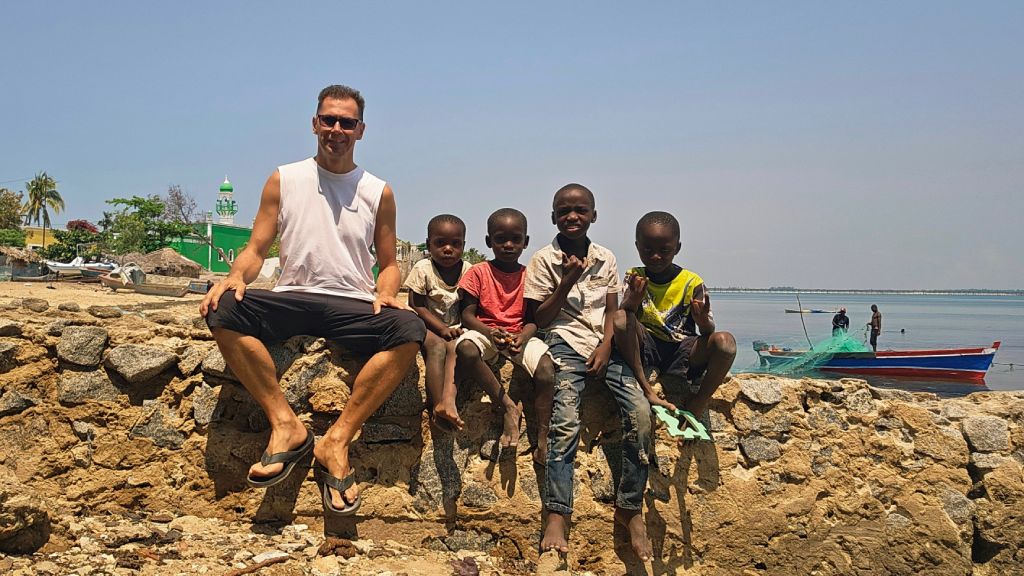
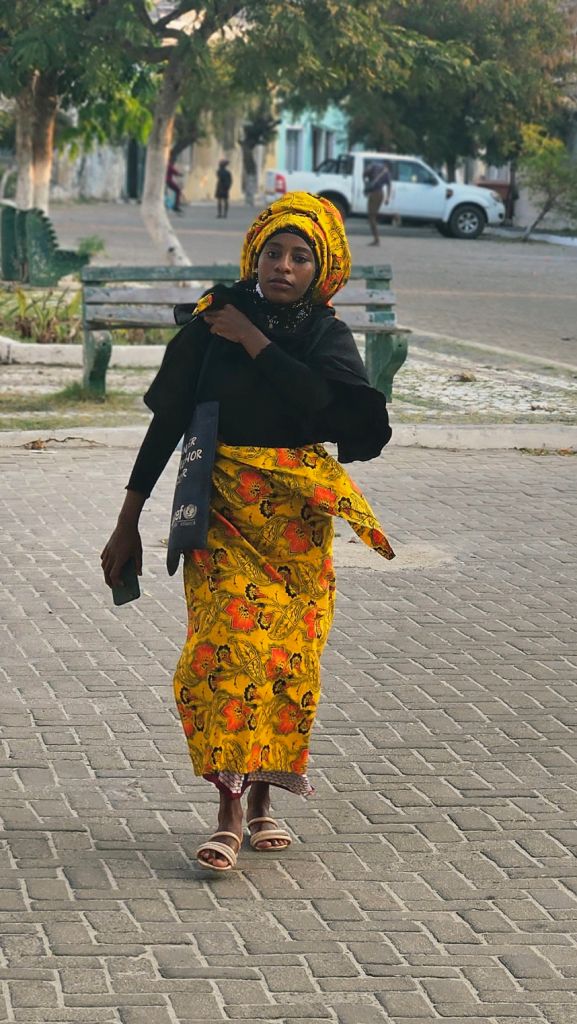
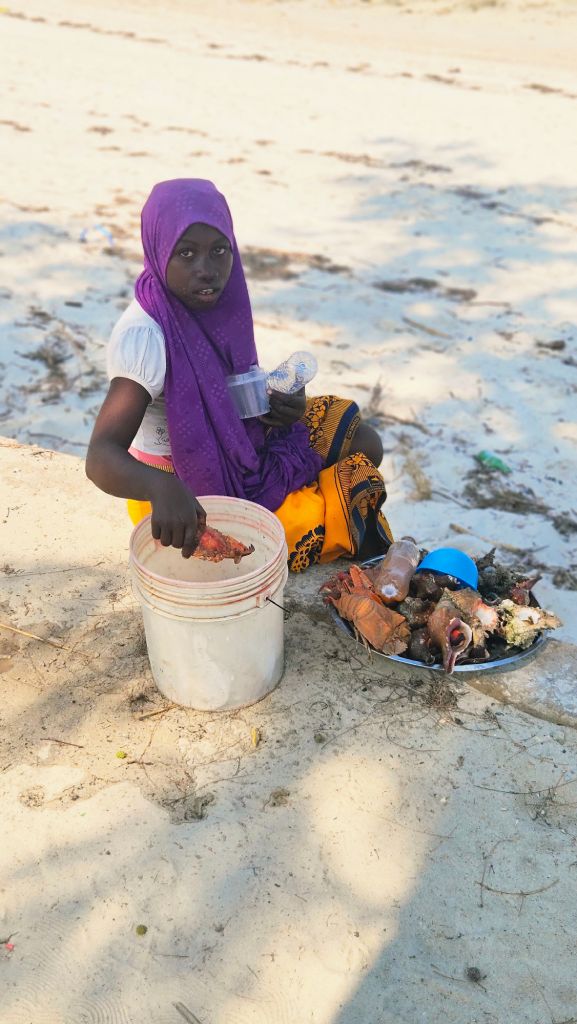
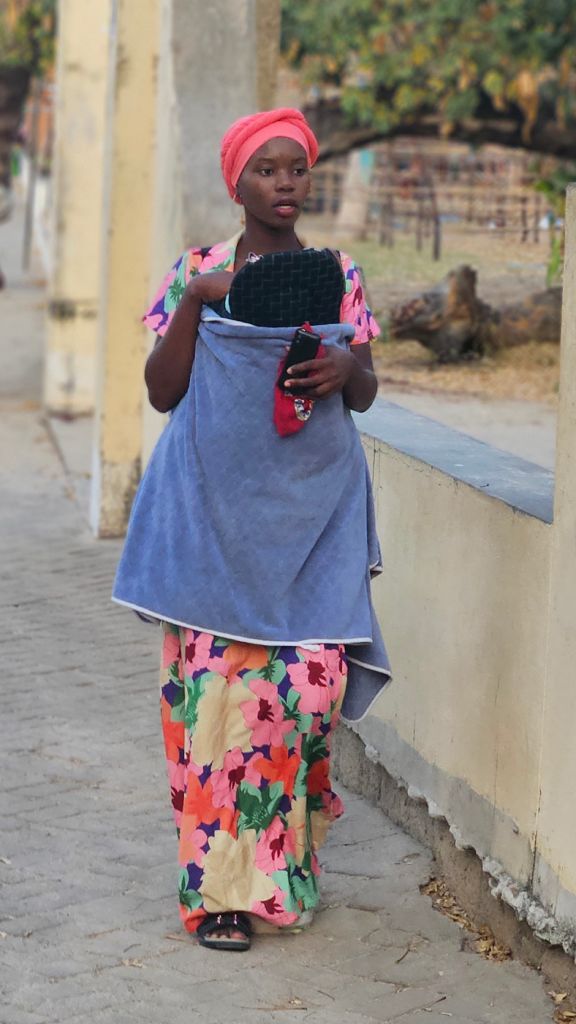
Many children who greeted me kindly, talked to me, and wanted to take photos together. I tried some local food and chatted with young men who were just hanging around without much to do.
Even though I really wanted to swim, I decided not to do it. During a walk along the beach, I noticed pieces of glass and other sharp trash that could easily cut my feet. It was too risky to step into the water.
Sailing dhows in Vilankulos
Vilankulos is one of the most popular destinations in Mozambique, but during my visit I hardly saw any tourists. From my apartment right by the sea, I had a great view of the beach, where most of the activities were defined by the tides.
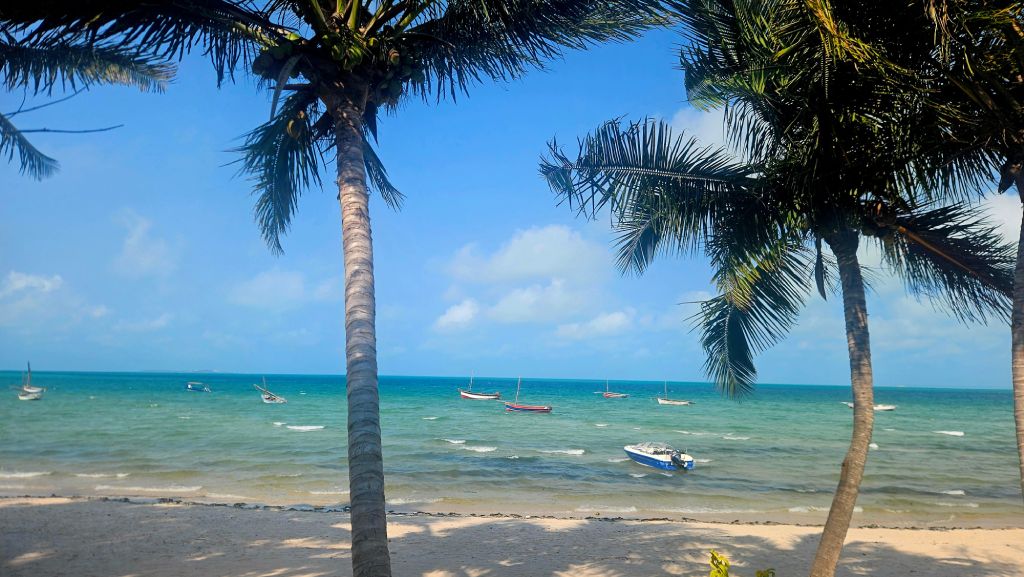
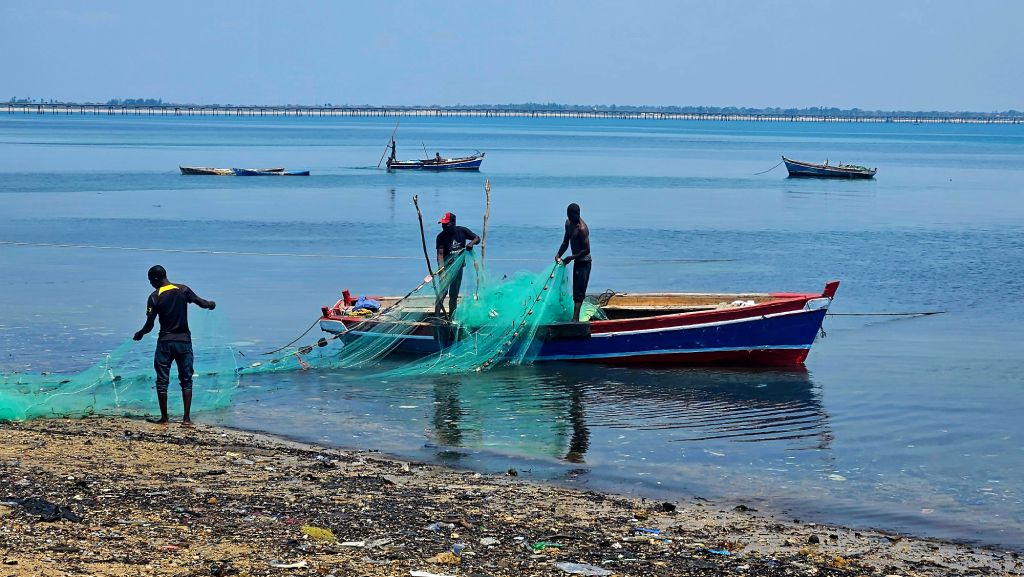
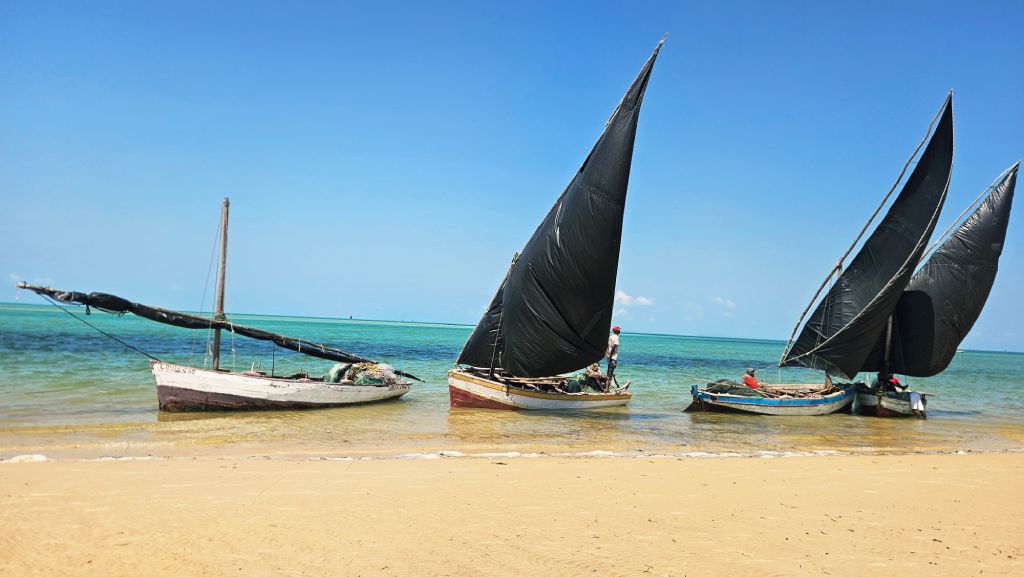
A beautiful scene of many fishing boats, called dhows, were anchored along the shore. A dhow is a traditional wooden sailing boat, used by local fishermen and traders. These boats usually have a triangular lateen sail made of cloth or plastic and are powered by wind.
The shore was lined with traditional wooden dhows – simple sailing boats with triangular lateen sails made of cloth or plastic, used by local fishermen.
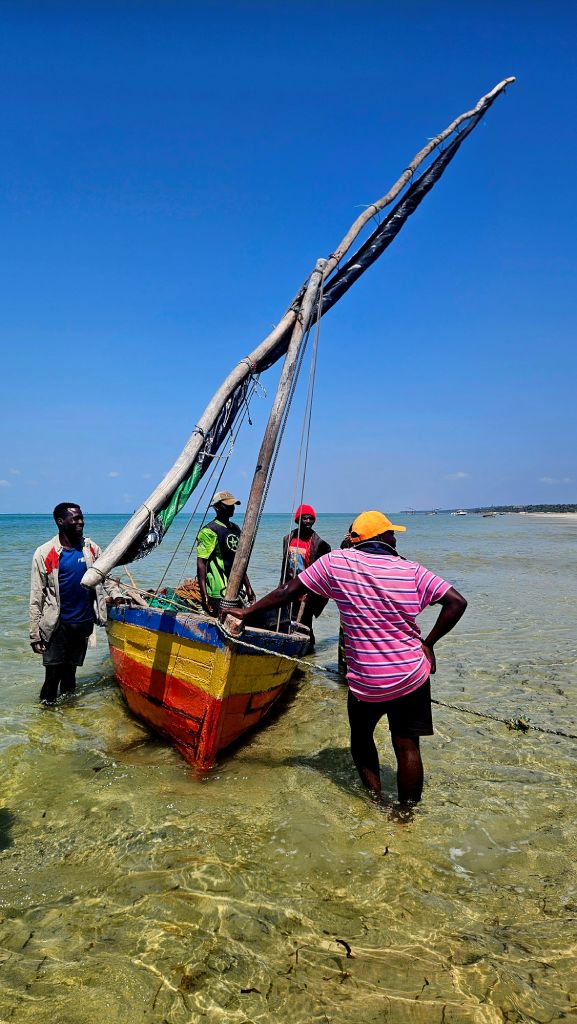
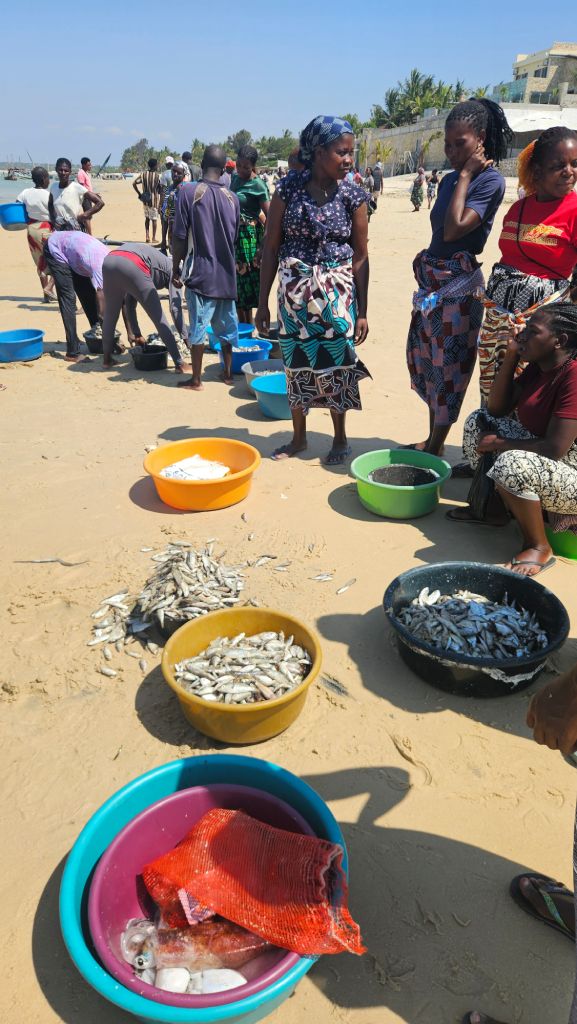
Early in the morning, crews of three or four fishermen sailed out and return around noon. The scene of them landing on the beach was picturesque. Women with baskets waiting to buy their catch, followed by quick price negotiations and the transfer of fish to the town market. Most fish were small, though sometimes a squid or a large fish appeared among them.
When the sun got too hot during my walk on the beach, I simply jumped into the water and swam in the clear turquoise water. The only downside was the strong wind blowing from the shore.
Bazaruto Island day trip
My main reason for visiting Vilankulos was the Bazaruto Archipelago and its beautiful beaches, a group of five islands famous for stunning beaches, turquoise waters and colorful marine life.
The speedboat first picked me up and then we stopped at three more points along the Vilanculus long coast to collect other passengers. In total, four boats with about thirty-five people headed that day toward the Bazaruto Islands. Very little comparing to the main tourist season.
Even before reaching our destination, the water turned in stunning shades of turquoise. In the distance, I could see fishermen sailing on dhows, and islands covered with palm trees and simple huts. Snorkeling on the nearby coral reef was great: clear visibility, colorful corals, fish of all shapes and sizes. At one point, a small shark swam just below me.
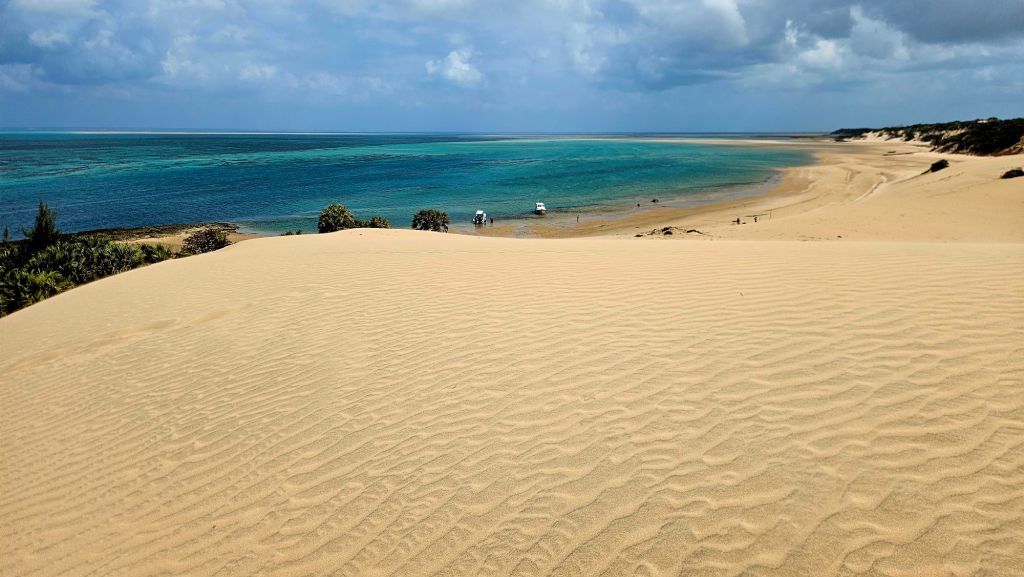
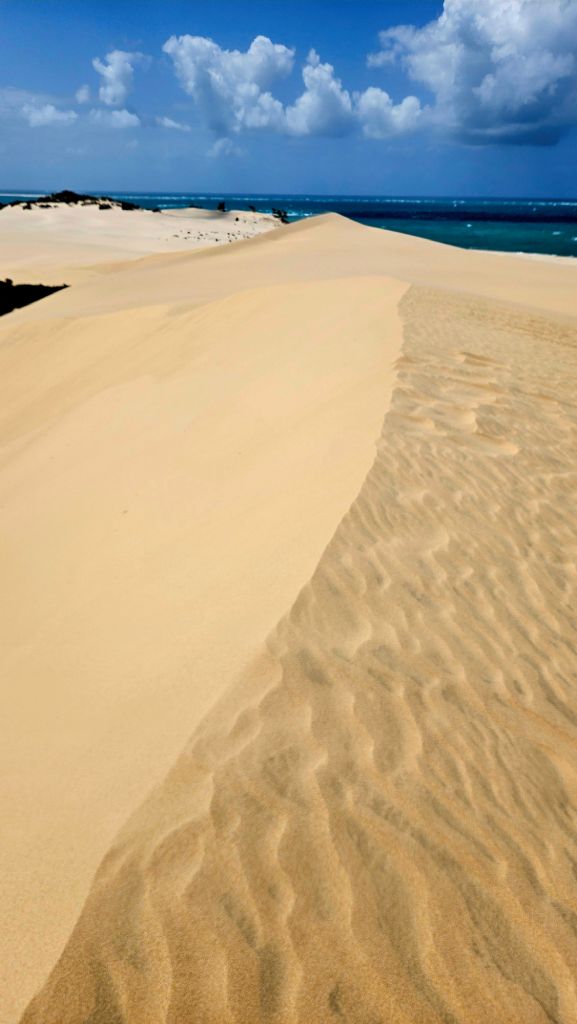
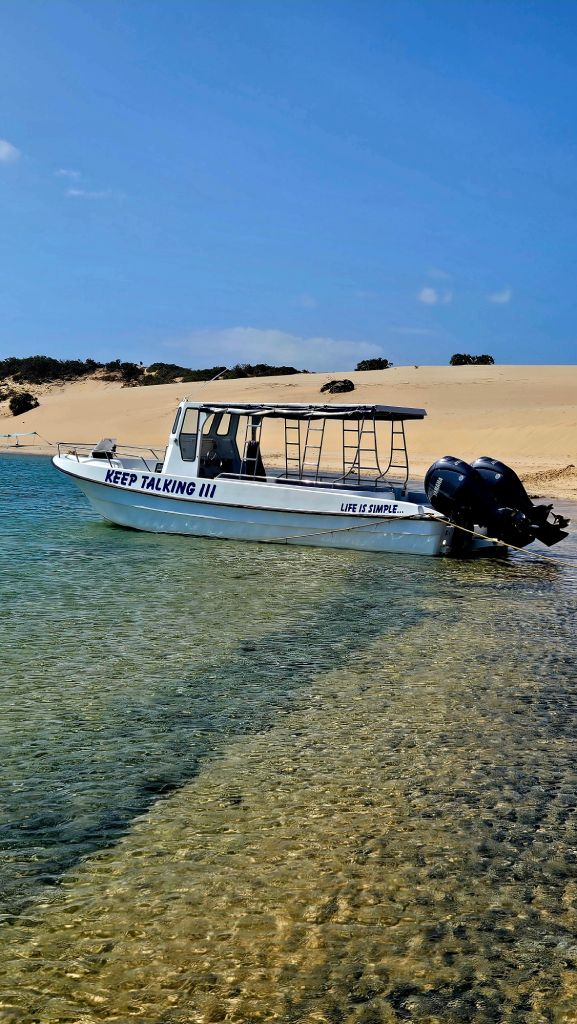
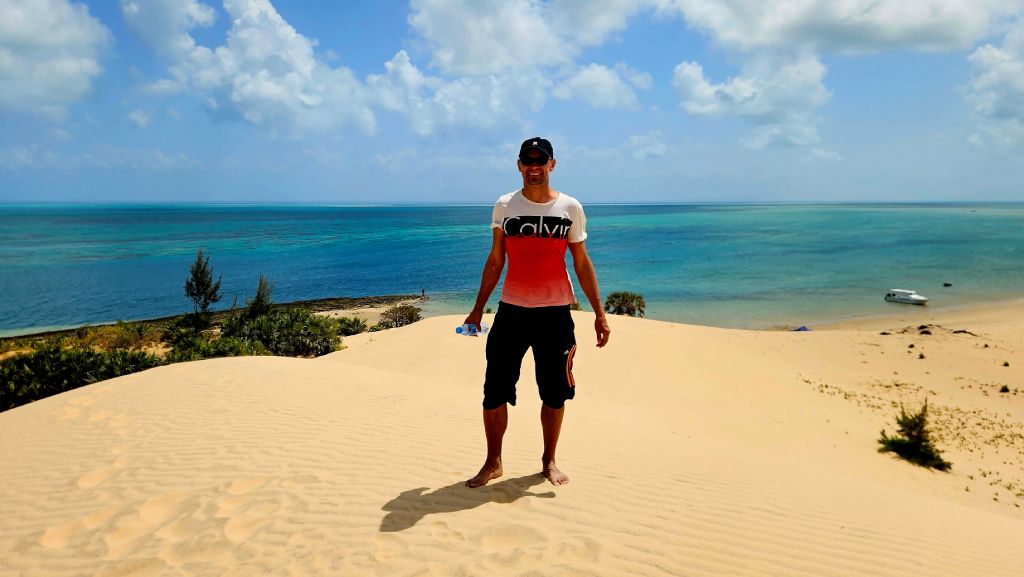
Since there was still time before lunch, I climbed the sand dunes that cover southern part of Bazaruto island. They weren’t as high as desert dunes, but they offered beautiful views of the surrounding islands and sea. Walking barefoot wasn’t easy. The midday heat made the sand so hot I had to keep moving to avoid burning my feet.
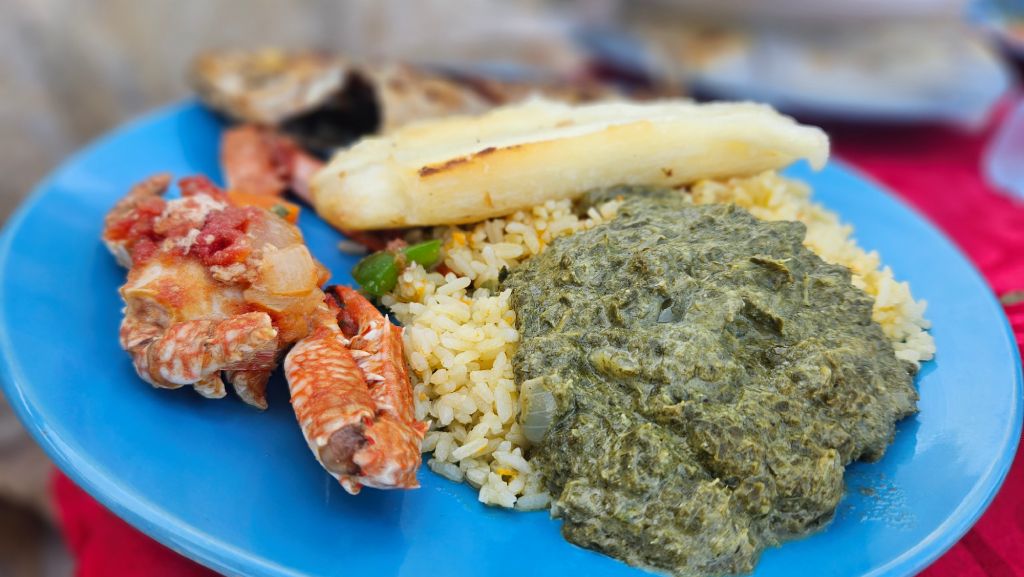
Lunch was delicious: fish, lobster, and squid, freshly prepared while we were snorkeling. The food was served on trays under a sunshade, right on the beach. Simple, tasty, and relaxing.
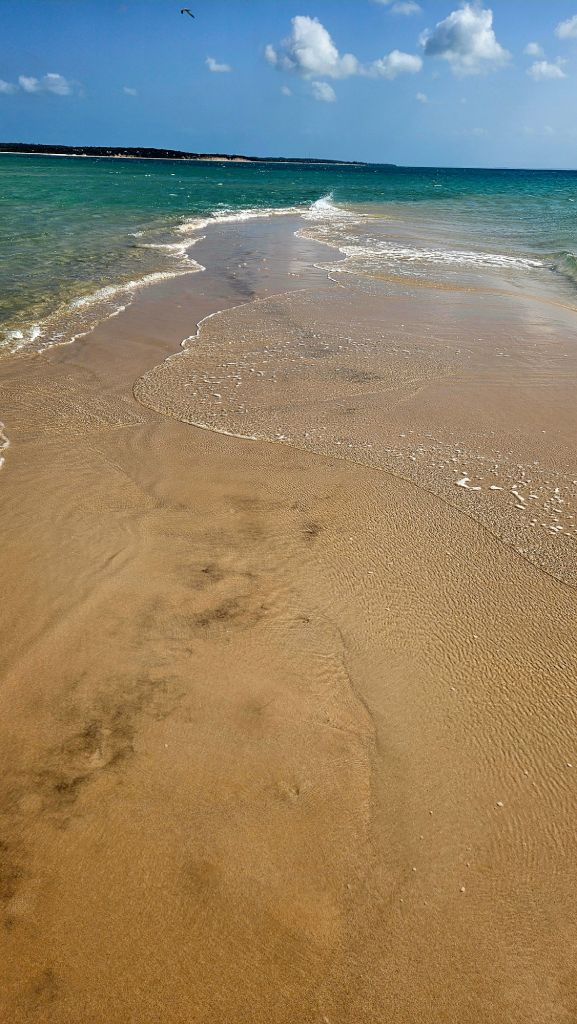
In the afternoon, before heading back to Vilankulos, we stopped at one of the magical sandy beaches on Benguerra Island. On a small sandy peninsula, I swam in the warm, clear sea, took a few photos, and simply enjoyed the perfection of the idyllic scenery created by the sea and the sand. I can confirm that the beaches on Bazaruto Islands are absolutely stunning; one of the highlights of my trip around Mozambique.
Travelling by public transport
After ten days of traveling around Mozambique, I was already an experienced user of public transport. I knew that all big buses leave between 4:00am and 5:00pm and finish their routes not later than 9:00pm. Public transport was not allowed to operate at night. The only exception was my exhausting trip from Nampula to Beira, which lasted from 4:00am until midnight. You can’t imagine, how exhausting I was.
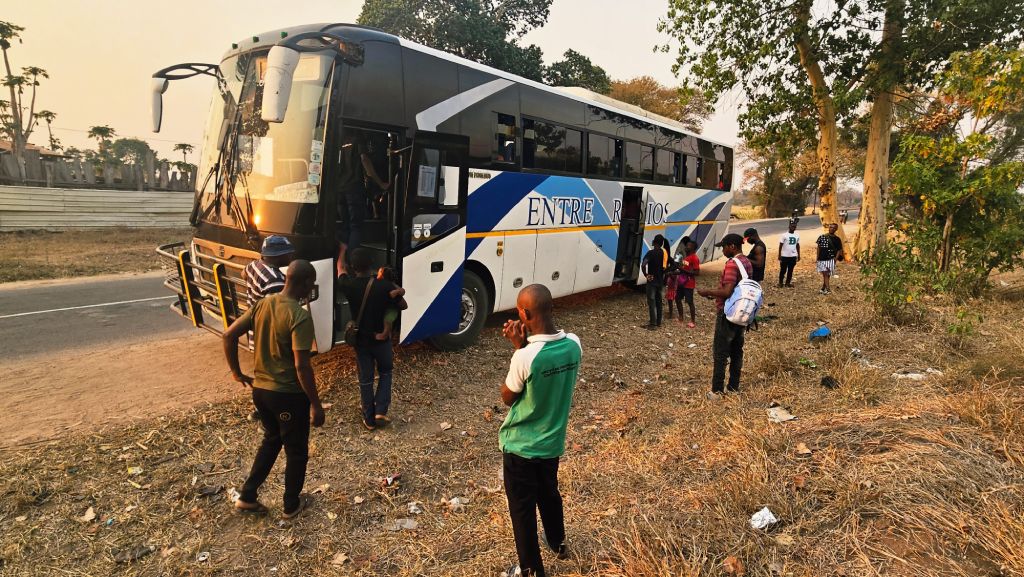
Traveling on the large Chinese buses was uncomfortable, mainly because the air conditioning didn’t work and the dust was unbearable on gravel roads.
On top of that, you never knew exactly when the bus would actually leave in the morning or when it would arrive at its destination. Lunch breaks were usually very short.
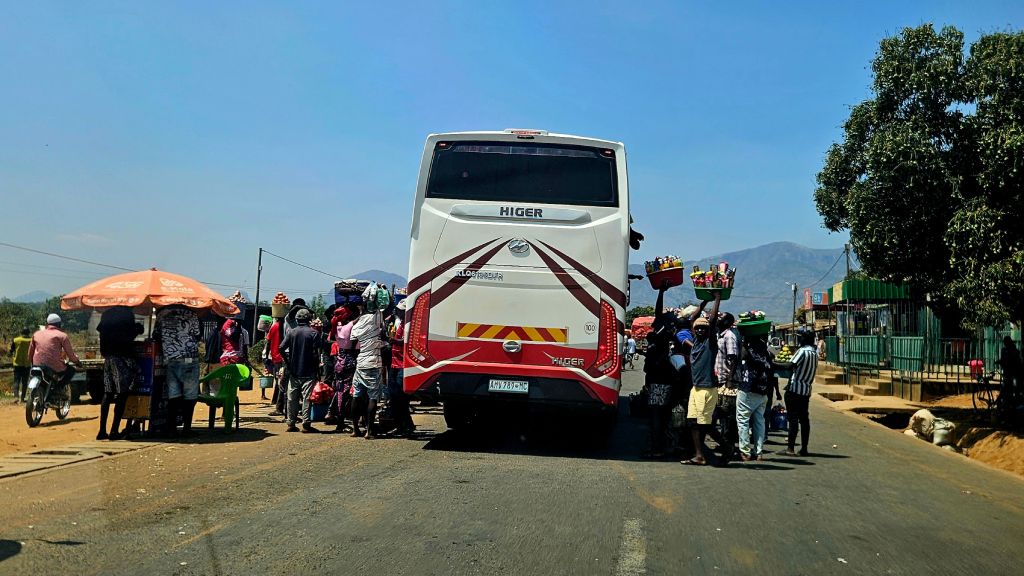
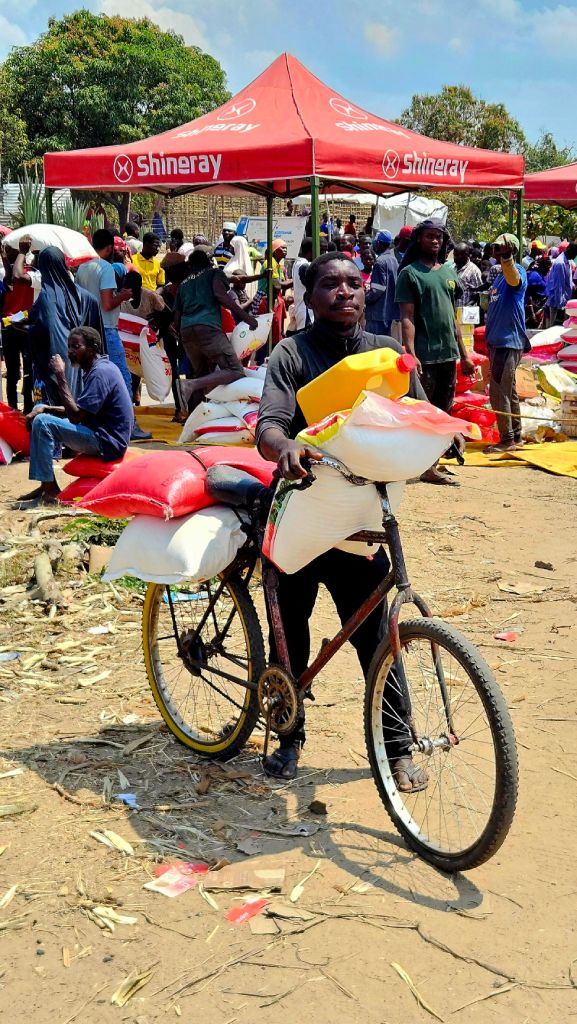
Moving around on local small buses (vans) was even less comfortable than big intercity buses. They were always in a search for more passengers and they hardly never started the journey without being full. Stopping at every corner, picking up and dropping off passengers, goods and animals constantly, extended the time of the trips substantially.
An unexpectedly easy ride
The last stop before the capital, Maputo, was Tofo Beach. When I was walking from my hotel in Vilankulos, thinking about how to get to my next destination, I had no idea how easy it would turn out to be. Reaching the town center, I saw a van and asked the driver where he was going.
“To Maxixe, my friend. Where are you going?” he replied, to my surprise.
Maxixe was exactly the place I was hoping to reach, since from there it’s just a short boat ride across the channel to Inhambane.
“Perfect, I’ll come with you! How many more passengers do you need before you go?” I asked, knowing that vans never leave until they’re full.
“Don’t worry, we’ll leave in 15 minutes,” the assistant said confidently.
I didn’t believe him. From my previous experience, it always takes much longer.
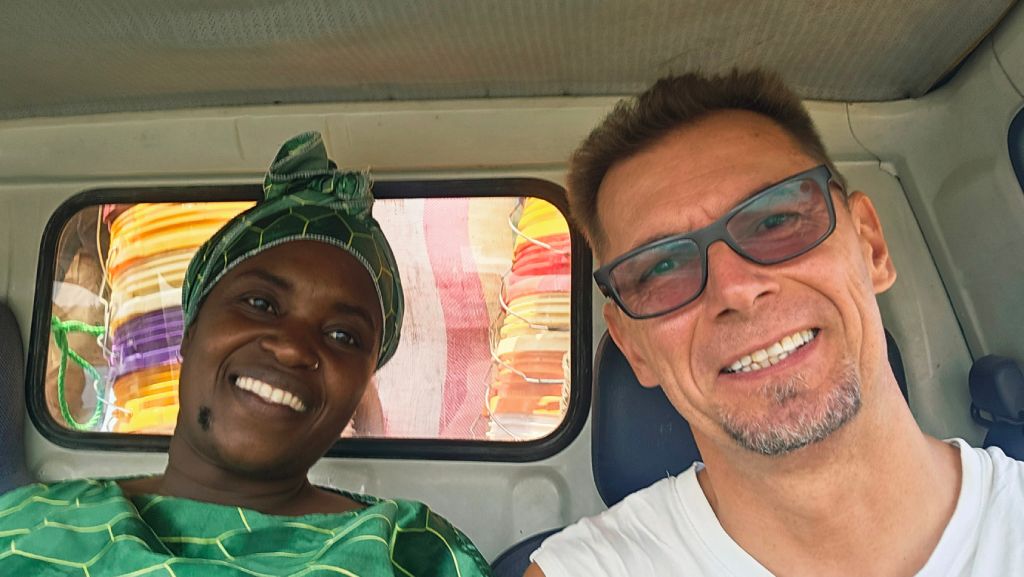
But only 20 minutes later, with the van still half-empty, we were already on our way to Maxixe. Of course, the van stopped often, picking up new passengers, calling out for more, and dropping others off along the road. Sitting in the front seat made the ride slightly more comfortable and interactive.
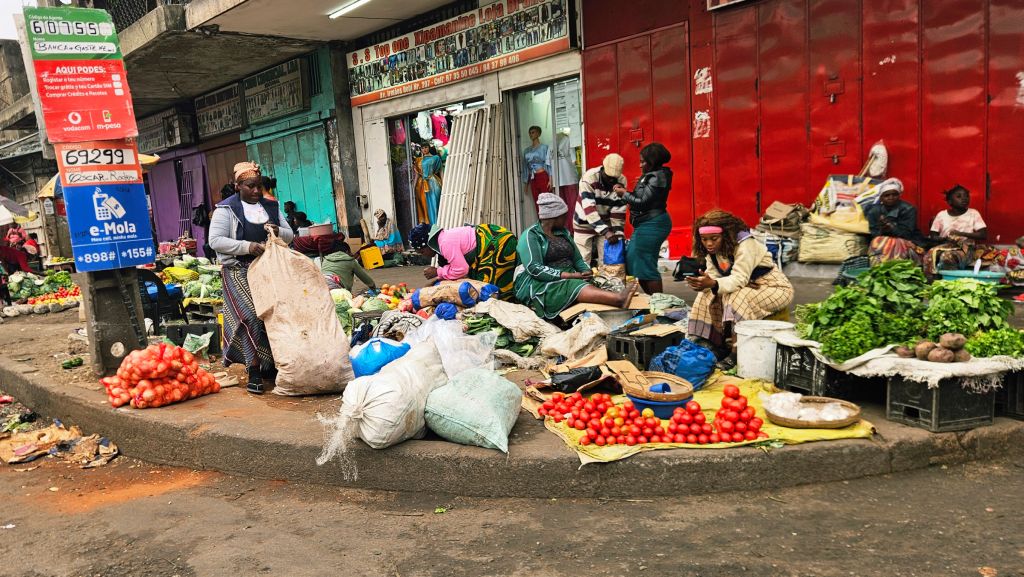
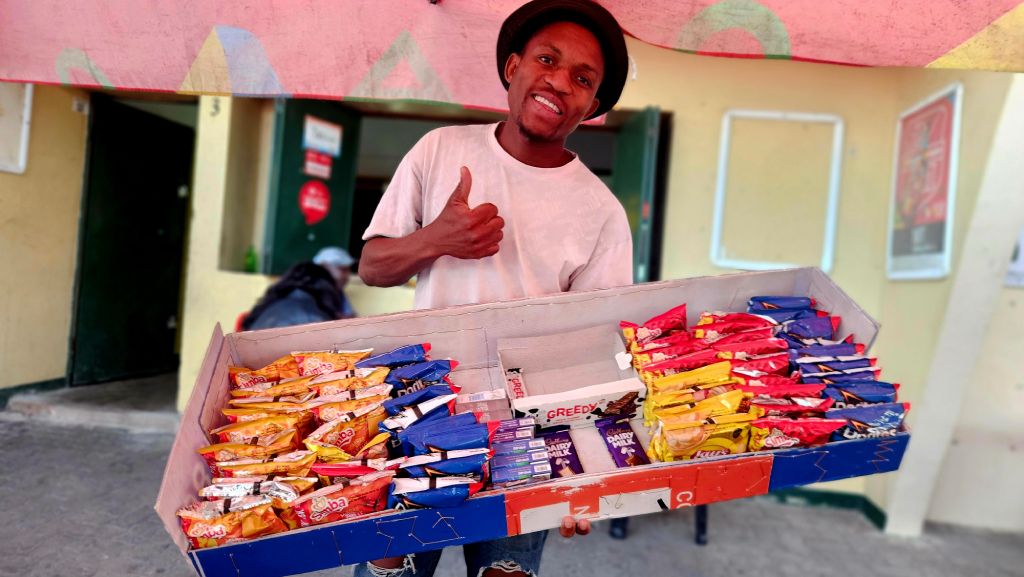
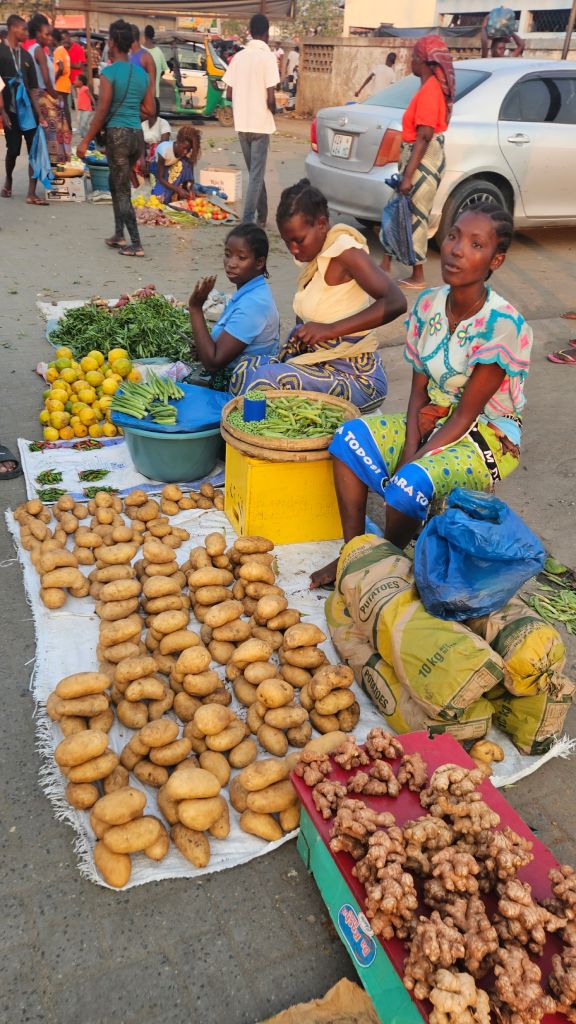
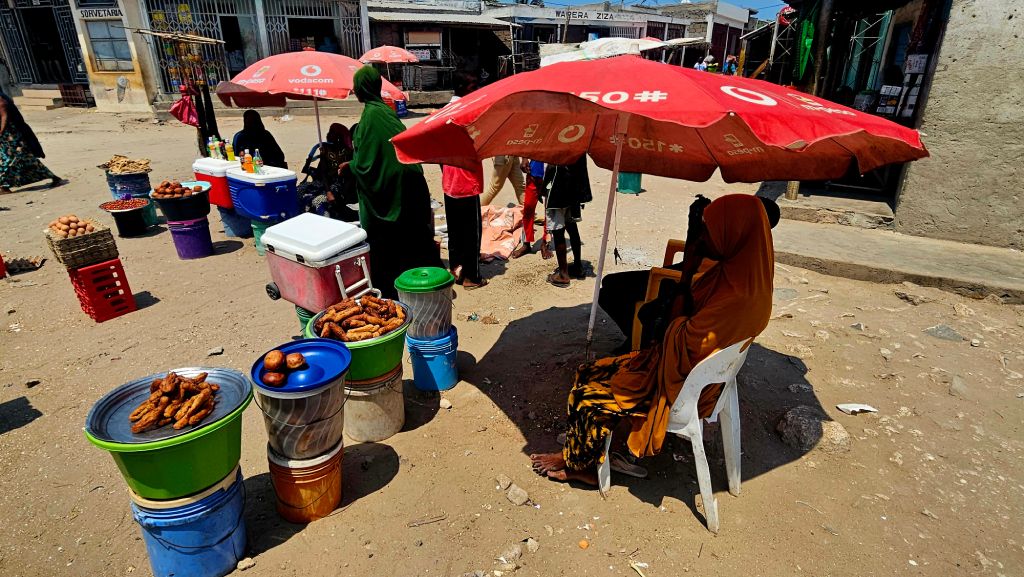
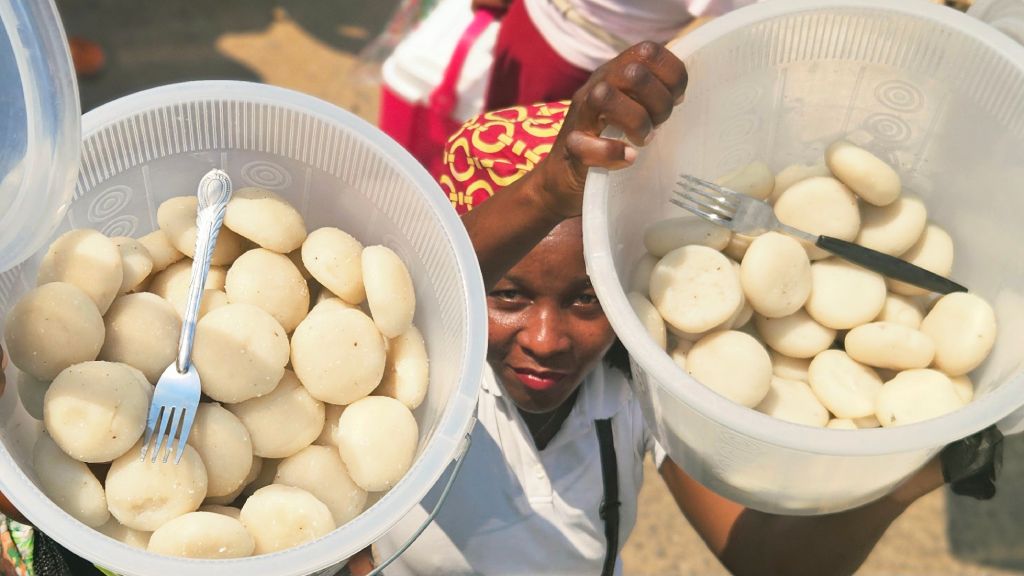
At every stop, I was entertained by the street sellers offering similar products. In one village they were selling only tomatoes or potatoes, in another everyone had rice, and in the next came bananas, and so on.
The competition between them was fierce, the prices similar, and they were pushing and shouting to get the attention. With such variety, you never had to wait long to find something for you. Or you could simply shout what you needed, and soon a seller would show up with it. I never bargained over fixed and fair prices at these stops, nor did the other passengers.
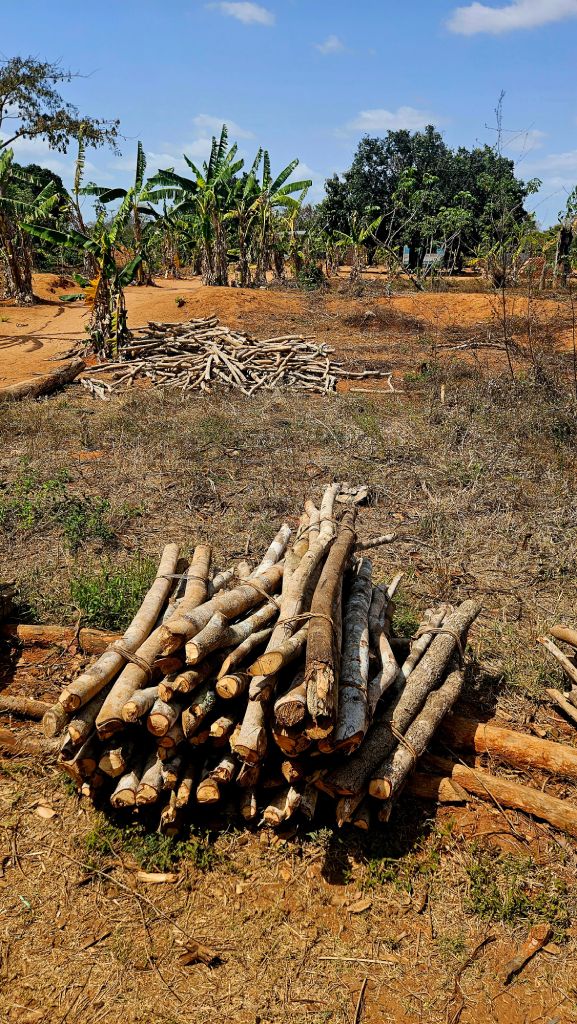
When we arrived in Maxixe, I walked about 200 meters to the pier. A boat was already waiting, and by the time we departed, nearly a hundred passengers had squeezed aboard. The calm, semicircular ride across the bay took about 20 minutes and brought us to the other side — Inhambane.
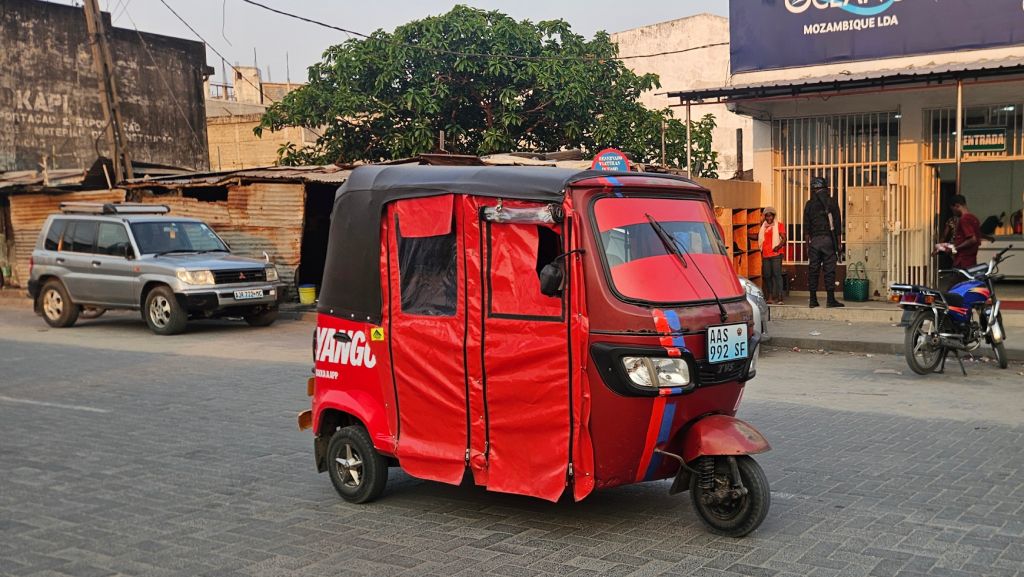
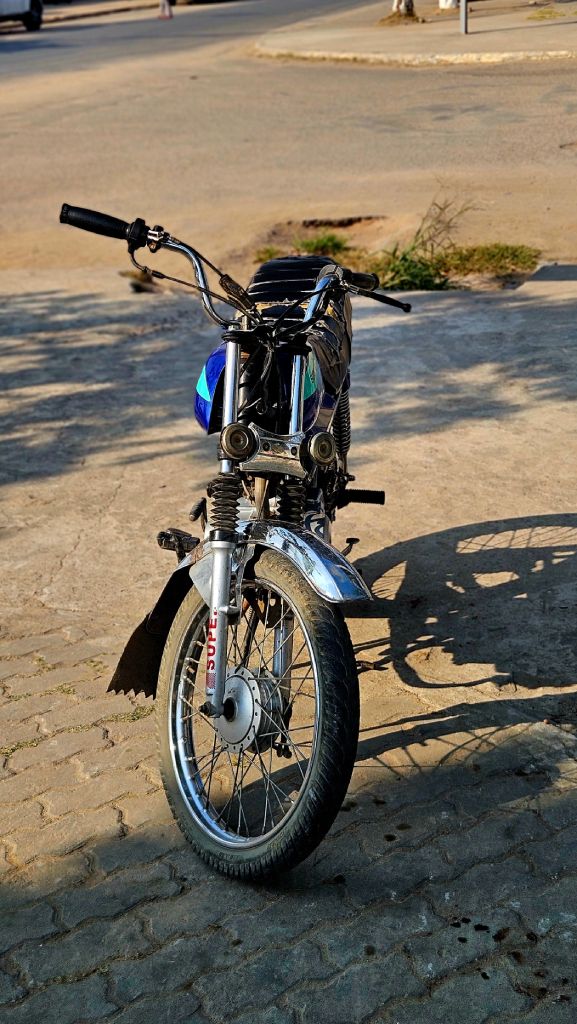
After an excellent late lunch and a short walk around the town center, a tuk-tuk (txoupela in Mozambique) took me to Tofo Beach. From there, a sandy road led to Mango Beach Resort, my home for the next three days. The road was in such poor condition that only a 4x4 could make it through.
Relaxing by the ocean on Tofo Beach
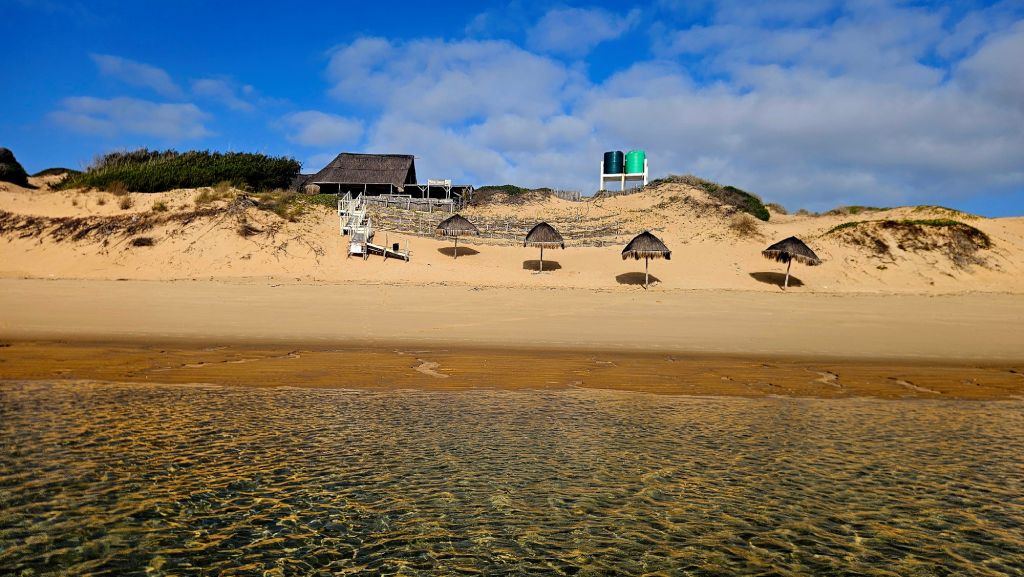
Tofo Beach is one of the most popular backpacker spots in Mozambique, but during my visit in mid-September, it was almost deserted. The tiny downtown offers a market, a couple of small grocery shops, a few restaurants and bars, some dive centers, and a handful of guesthouses and lodges.
There were hardly any tourists around and no tours were running due to low demand. Whale watching, diving, and snorkeling tours were canceled. I still spotted whales from the beach in front of my hotel.
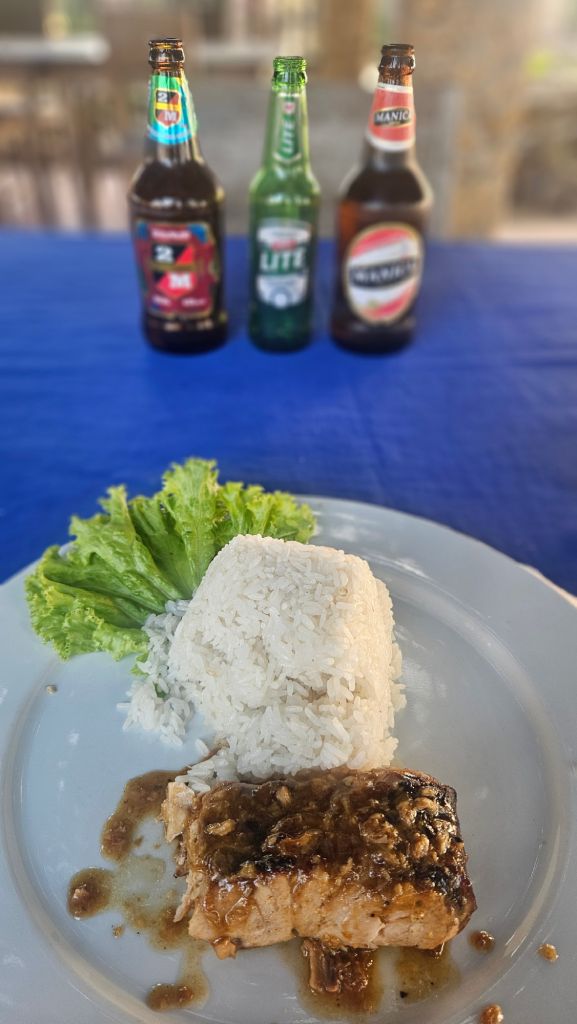
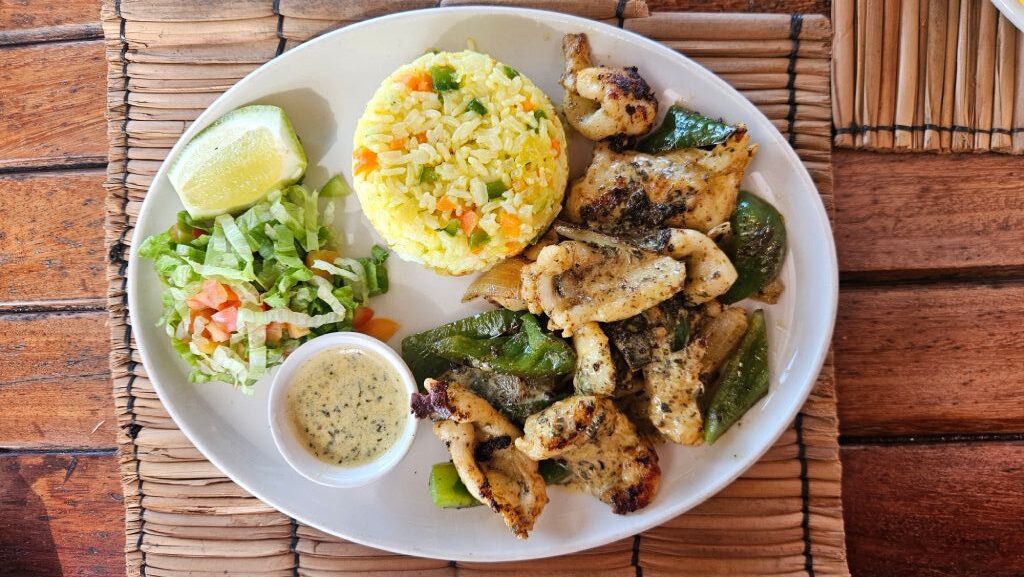
I spent my time swimming, relaxing, enjoying great food and cold drinks. Always with a view of the ocean.
Several kilometers long beach wasn’t perfect for swimming. At low tide, rocks appeared, then disappeared as the sea returned.
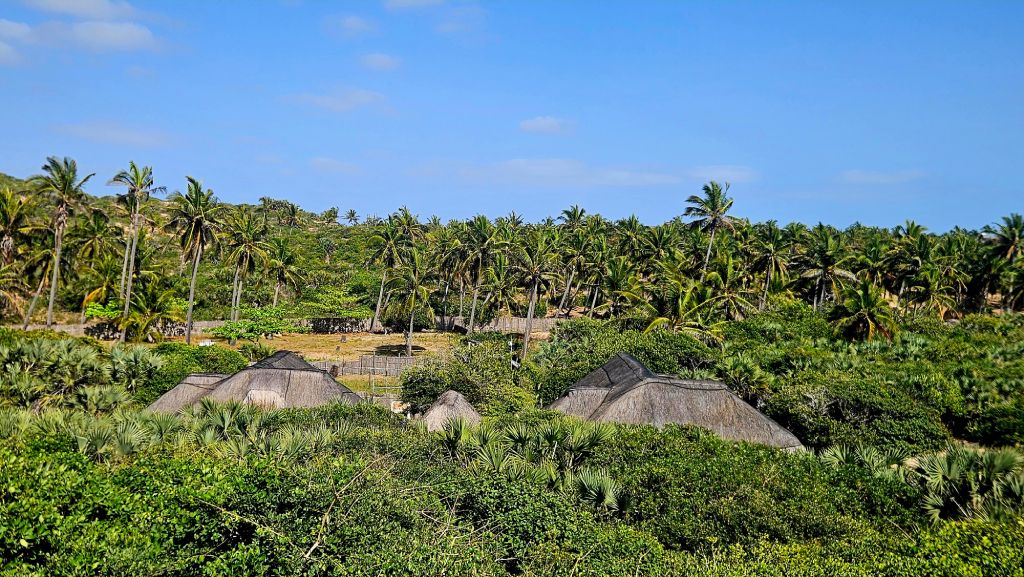
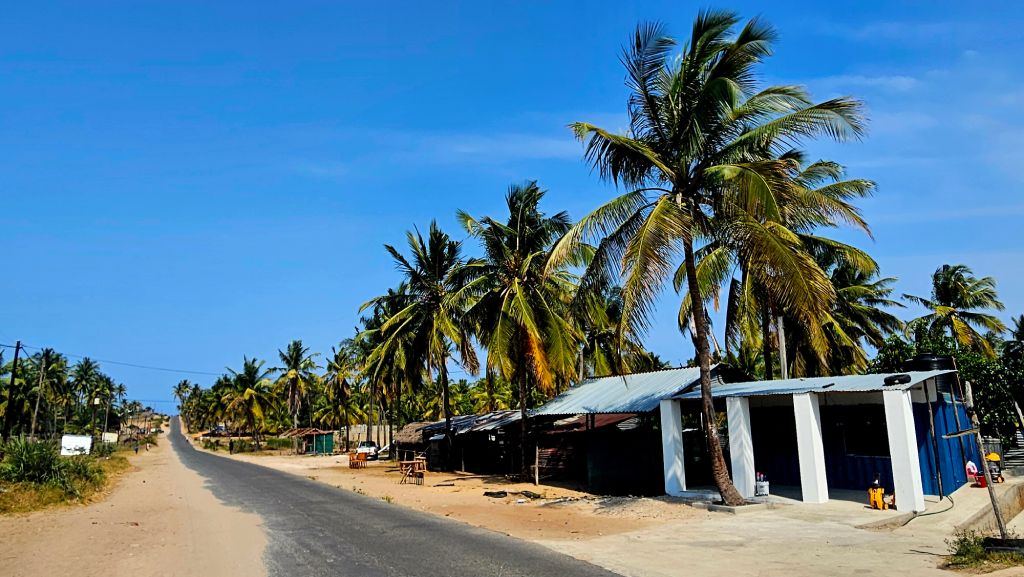
On my way back to town, I was offered a ride by a visitor from South Africa, who told me:
“You are lucky. Right now, Tofo is incredibly calm. In December or January, it’s packed with South African tourists. It turns into chaos with high prices, fully booked hotels and empty shelves in grocery stores. You wouldn’t want to be here then.”
My final stop: Maputo
It’s not common for me to visit a country’s capital at the end of my trip. After traveling more than 3,500 kilometers, I finally completed my last typical ride on Mozambique’s roads. Our small coaster bus left Tofo Beach at 4:00am and arrived in downtown Maputo twelve hours later, at 4:00pm. A cheap and efficient Yangoo taxi took me straight to my guesthouse.
The weather was surprisingly cold and even rainy at times, unusual for this season.
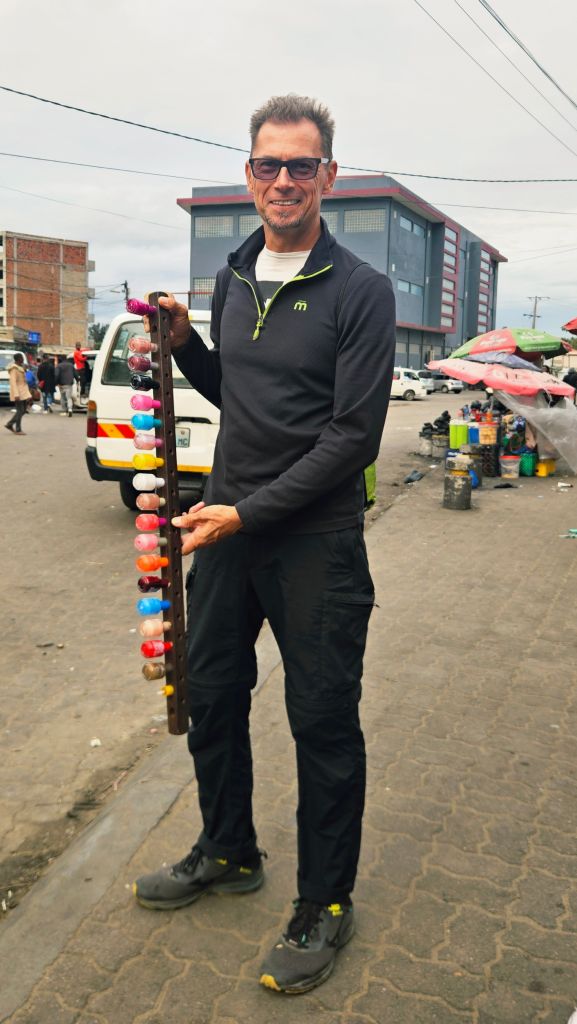
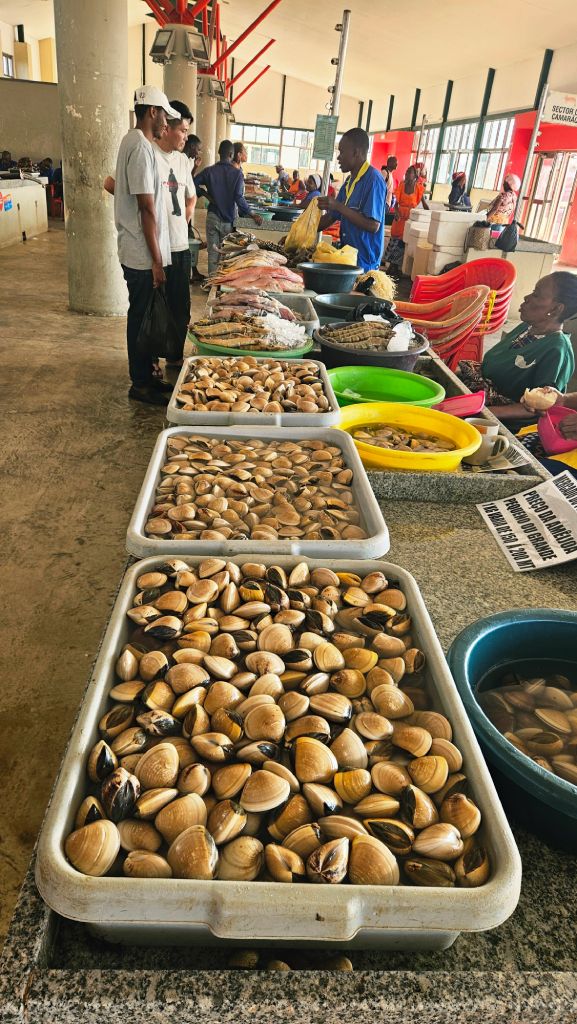
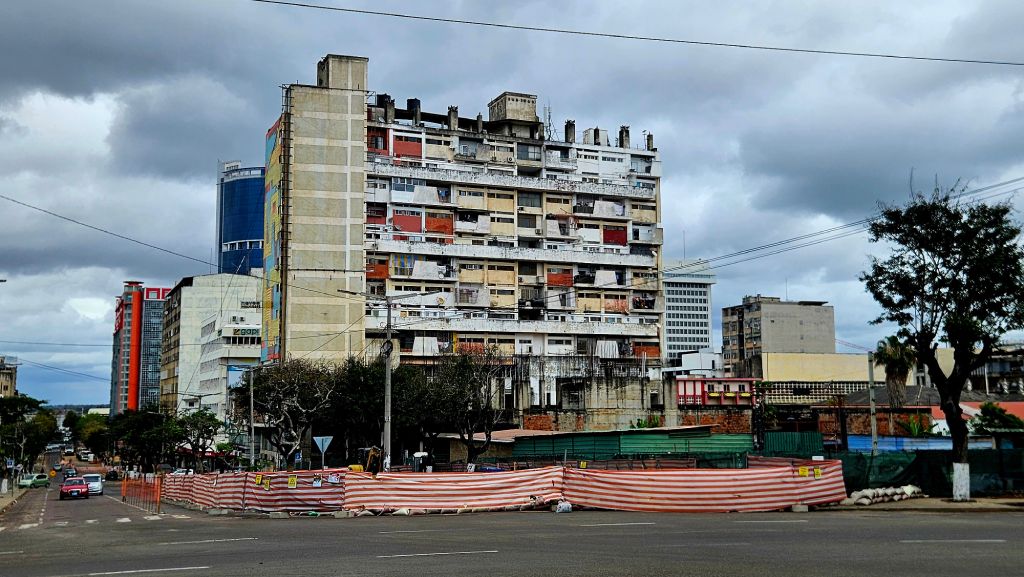
The next day, I explored two very different sides of the city: a typical, poor African ghetto and modern, upscale coastal area.
In the morning I started in Mafalala, one of Maputo’s poorest neighborhoods, on a walking tour with a local guide. Despite strong promotion, the tour turned out to be quite disappointing. Mafalala is a typical African ghetto, poor and crowded. It is also known as the birthplace of several famous Mozambican athletes, artists, and politicians.
Tin shacks are slowly being replaced by brick houses, some even two stories high. There’s a small market, a few tiny shops, narrow dirt lanes, and a rough gravel road - proof that life here is still tough. It is probably not always safe, although my guide assured me that I don’t need to worry.
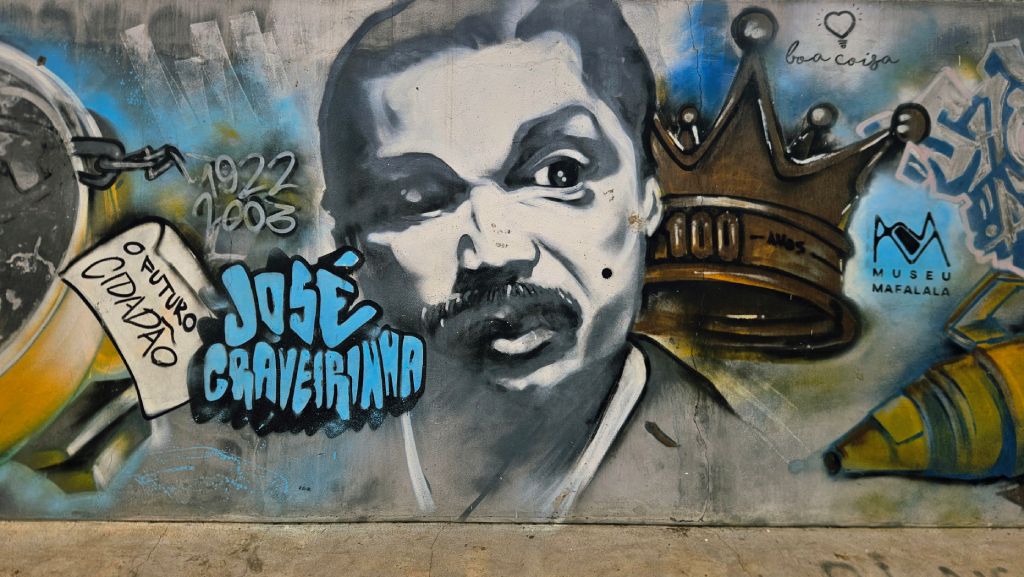
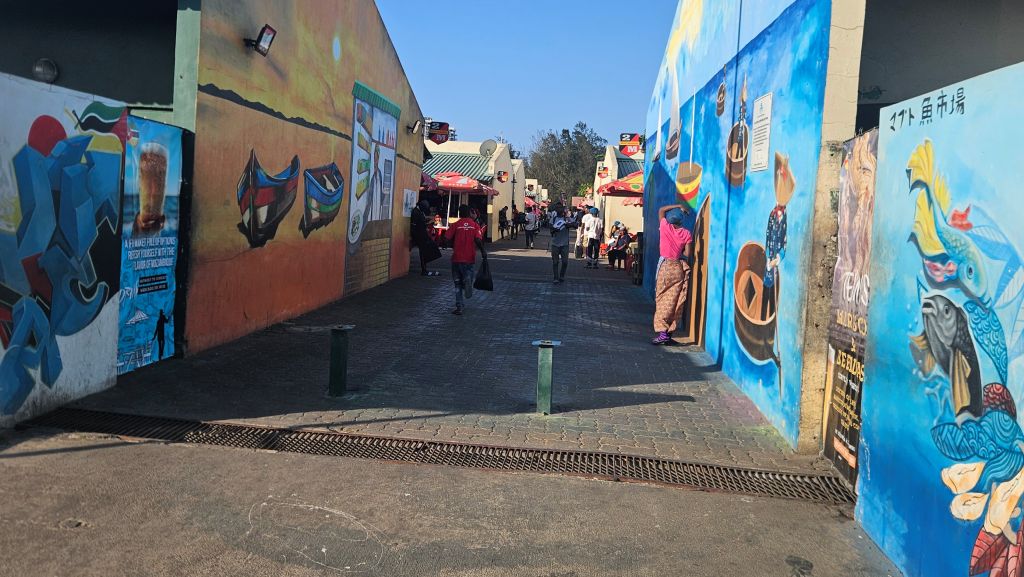
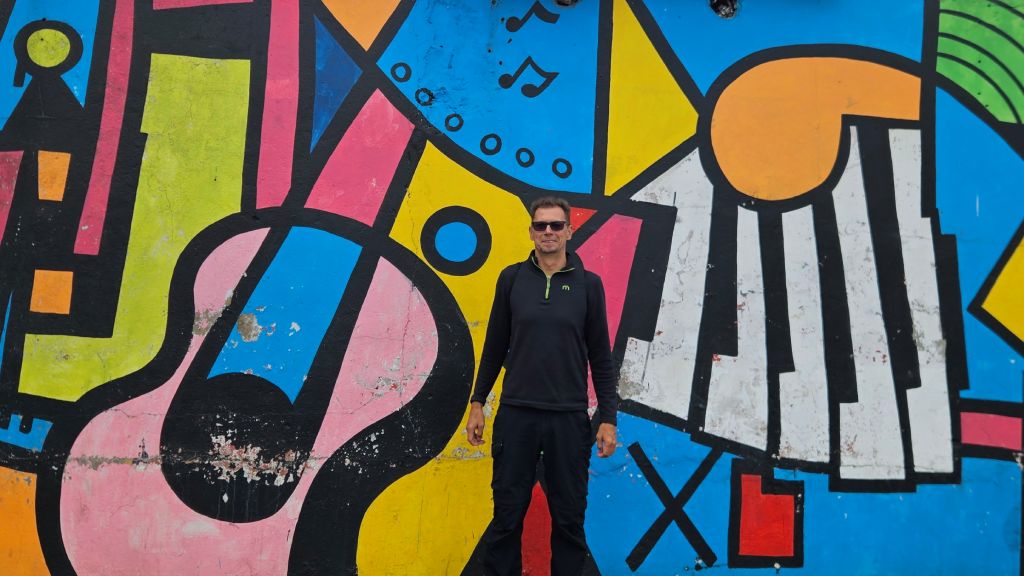
Because of a public holiday, the local school was closed, and the nearby Mercado Xipamanine was unusually quiet. What stood out most to me were the colorful murals of local heroes and the simple school building nearby, which looked basic and in poor conditions.
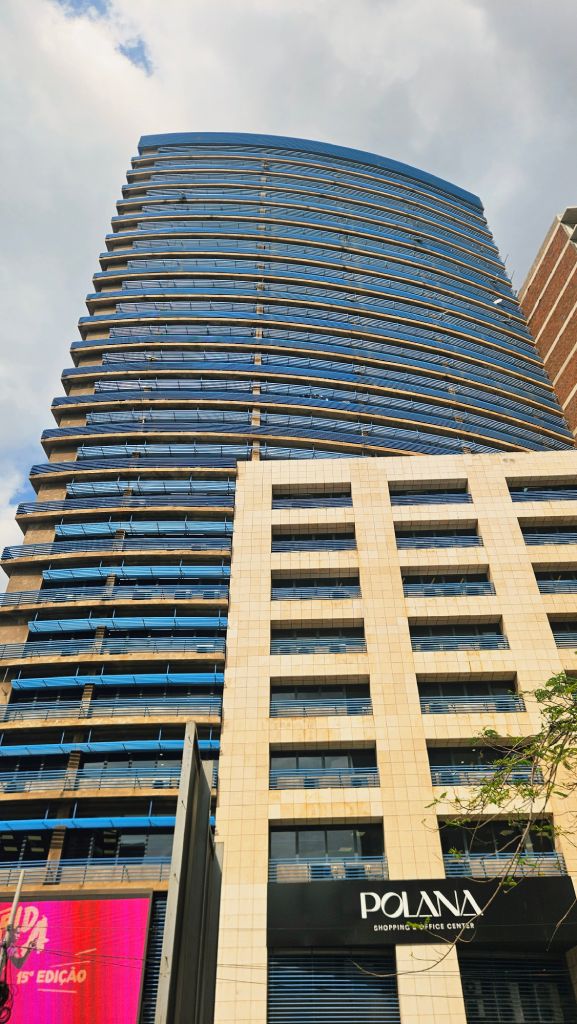
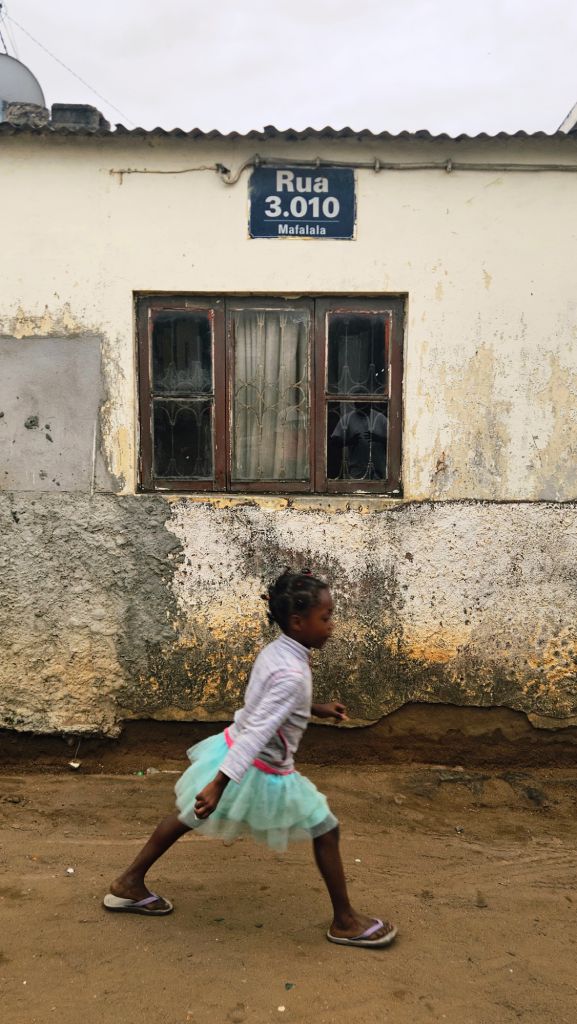
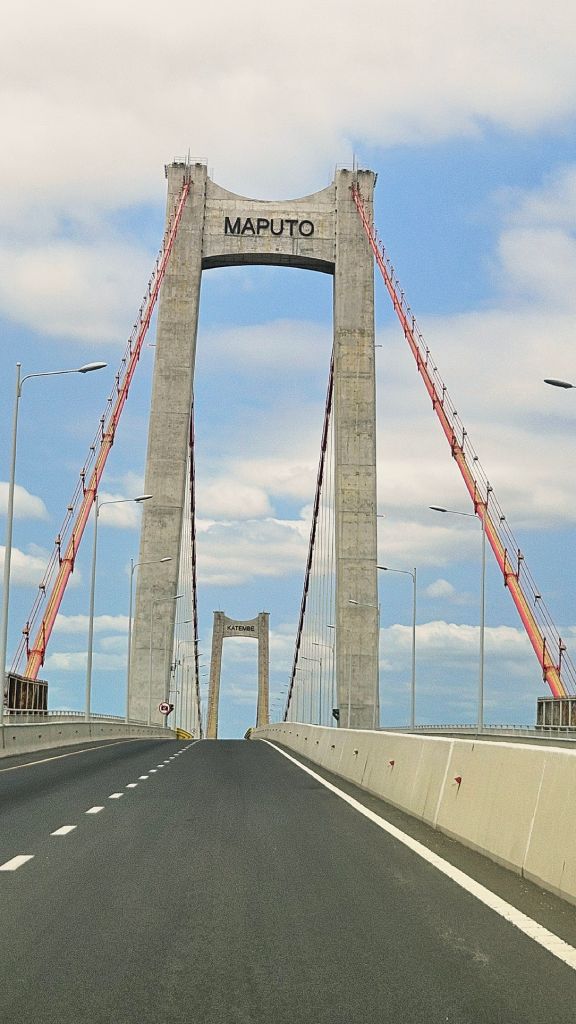
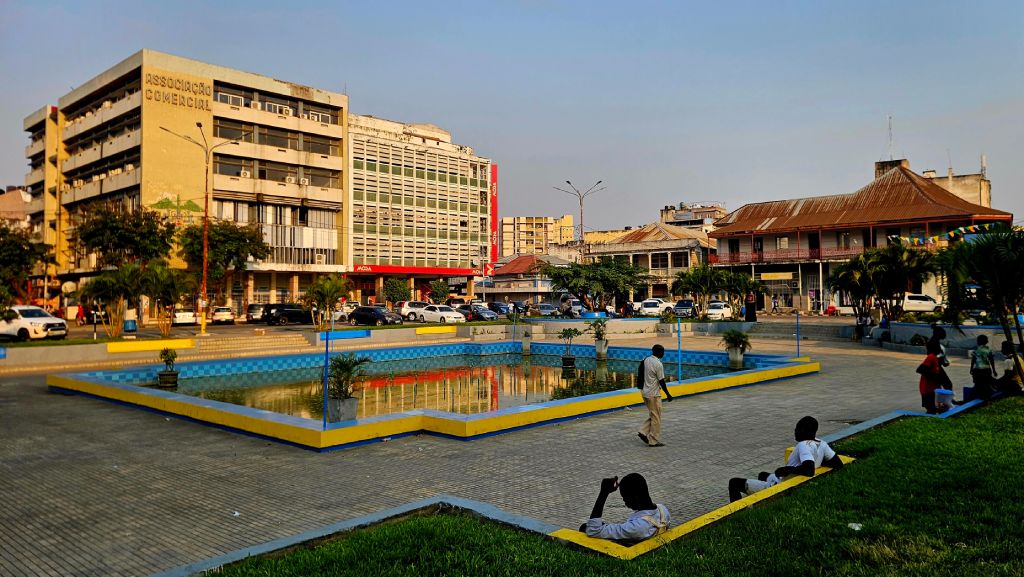
In contrast, the coastal area along Avenida Marginal and Avenida 24 de Julho represents the modern, upscale face of Maputo: high-rise buildings, new developments by the sea, great restaurants, hotels, and shopping malls. Prices here are far higher than in the rest of the country, especially for food.
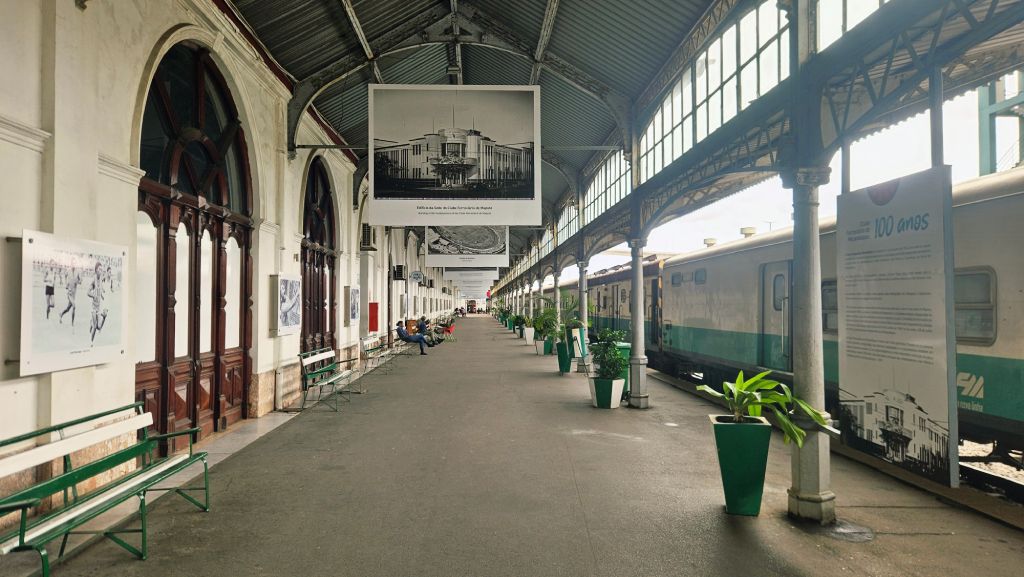
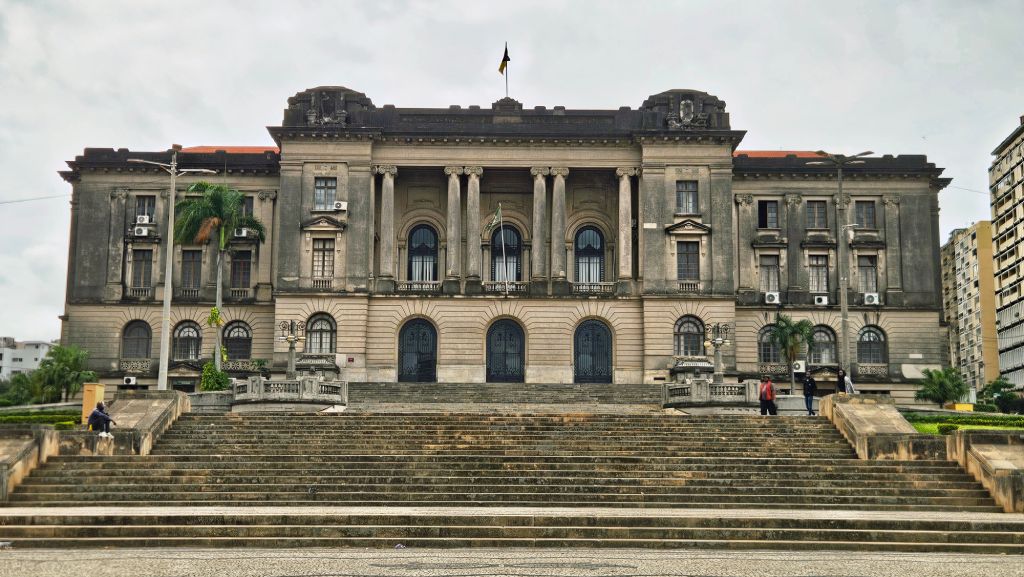
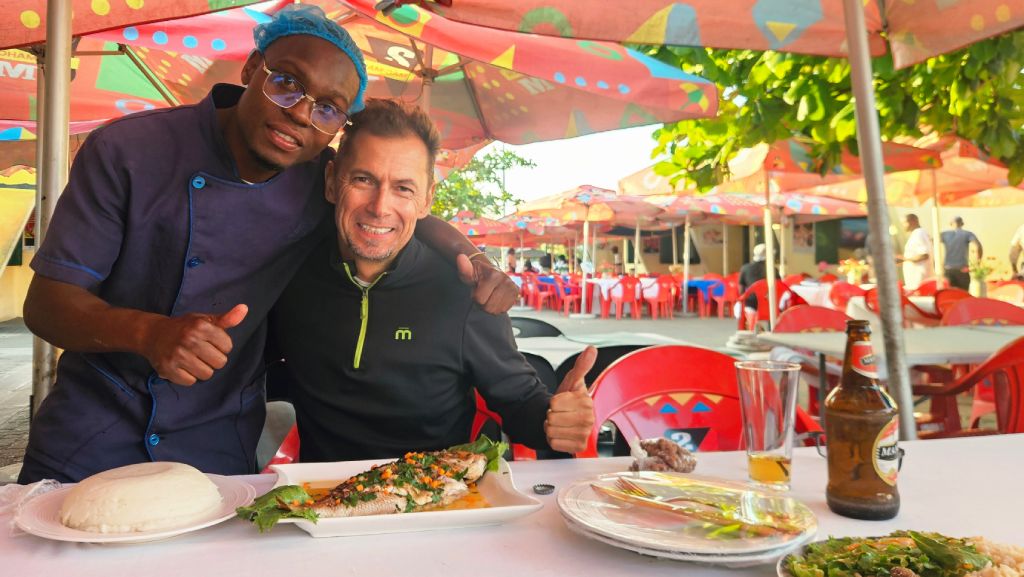
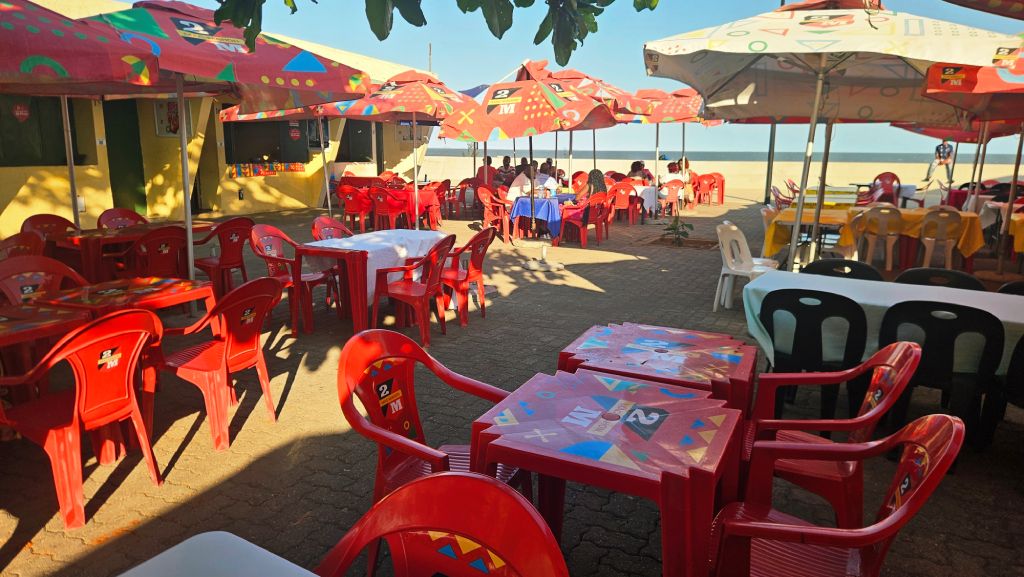
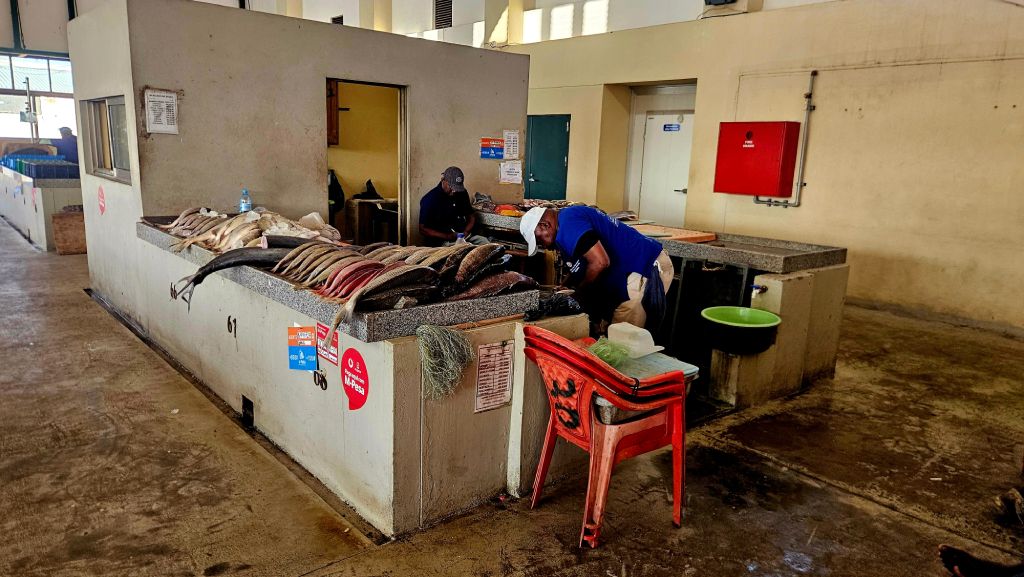
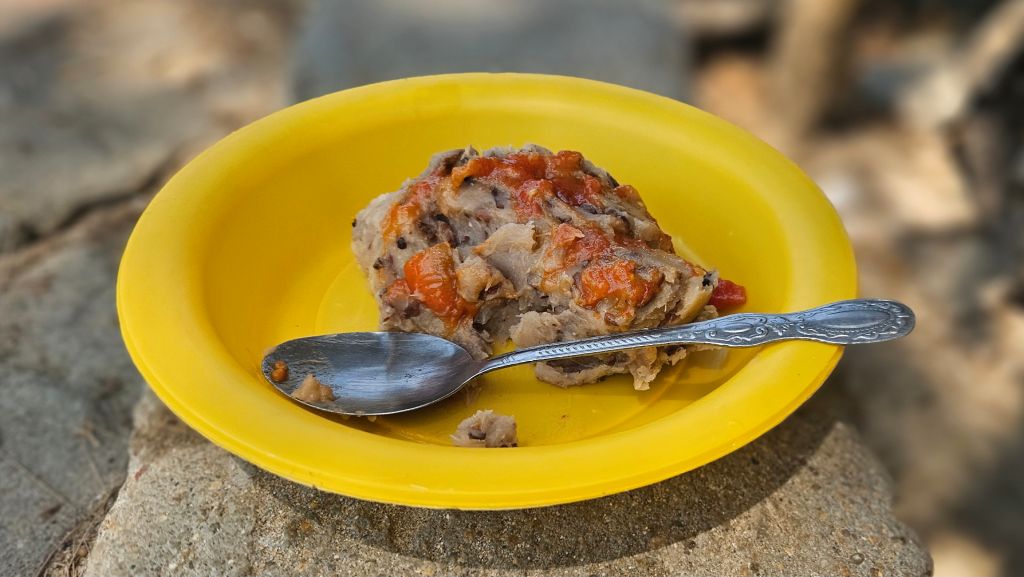
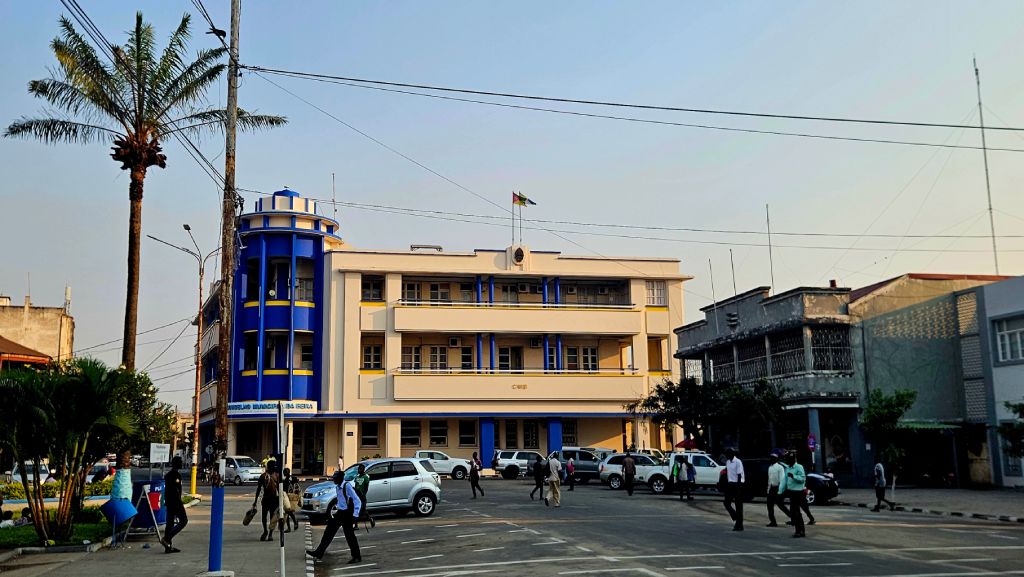
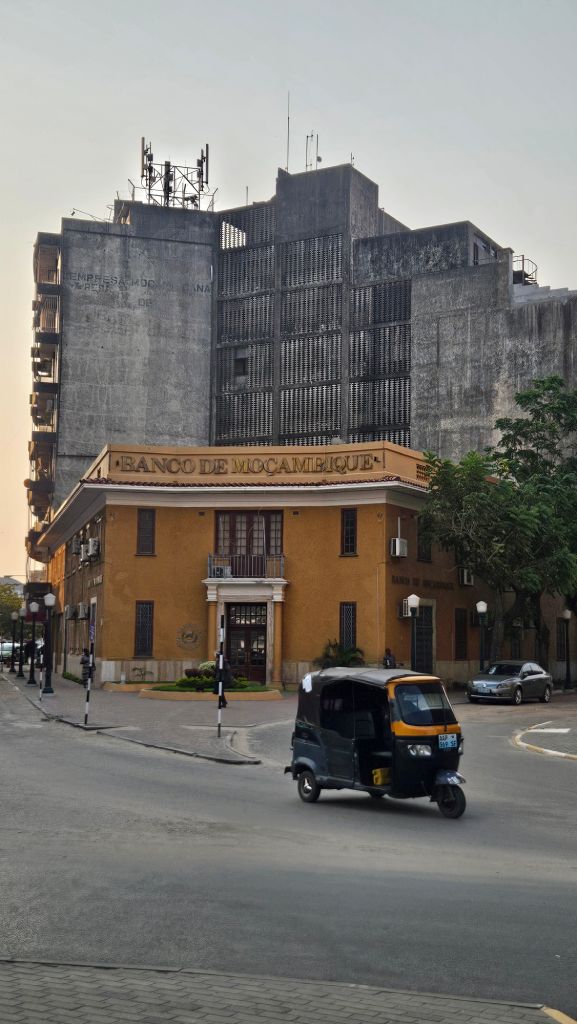
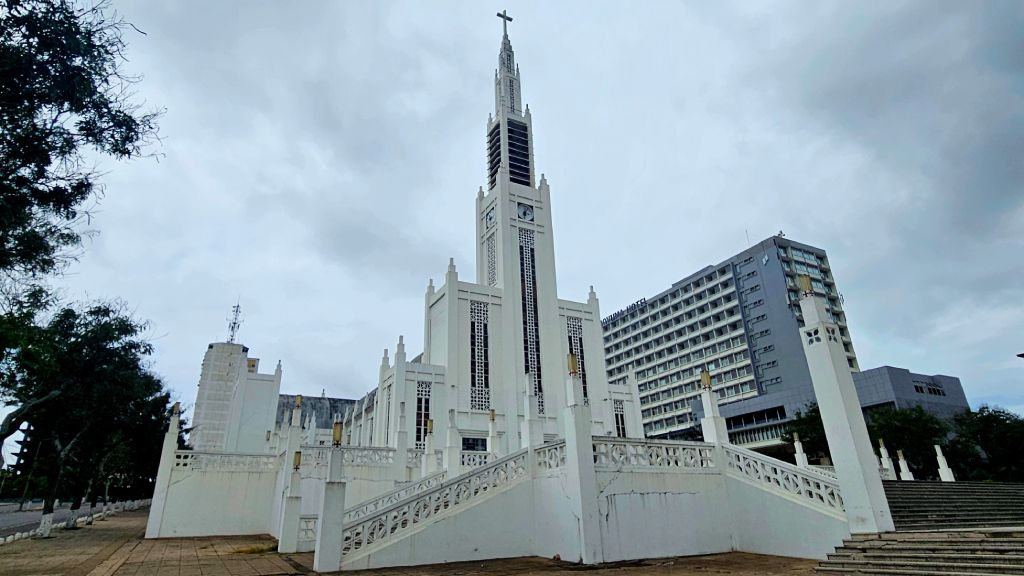
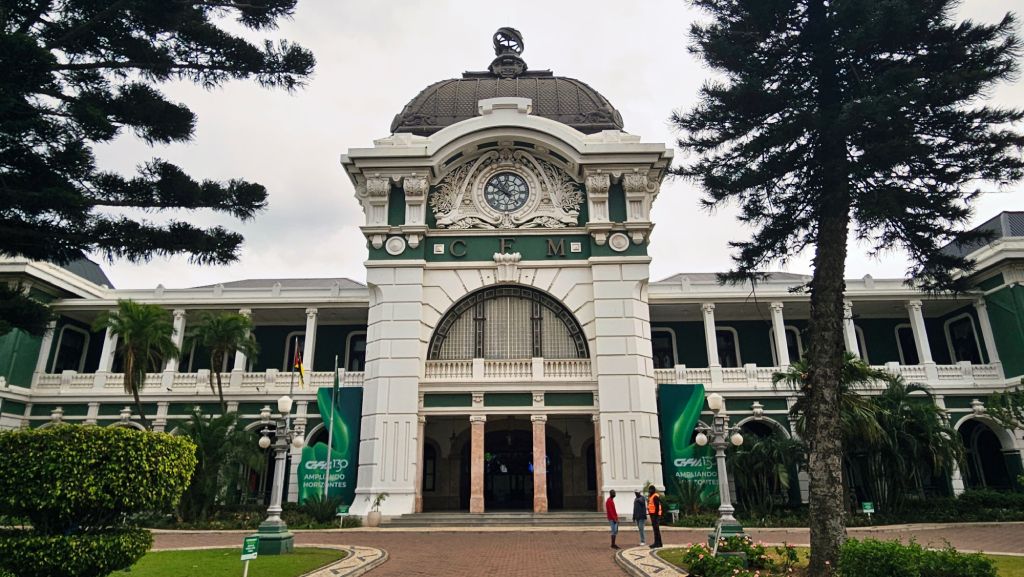
I also visited some of the city’s main landmarks and attractions: Independence Square, City Hall, the Cathedral, the Maputo Fortress, and one of the most beautiful train stations in the world - Maputo Railway Station. At the Mercado de Peixe (fish market), I enjoyed freshly cooked fish and my last shima - a cornmeal porridge that’s not often found in Mozambique.
Although Maputo wasn’t the highlight of my trip, I wished to have another day to explore it, but I had a special mission to complete.
Donation to a school in Mafalala
Maputo was the last stop on my three-month journey through Central and Southern Africa, and I wanted to do something meaningful before heading home. I decided to support a school in poor neighborhood Mafalala - Escola Unidade 23.
Samuel came along to help and translate. He was a bit nervous driving through the narrow, chaotic streets, but we eventually found the school. After being sent from one office to another, I finally met school’s administrators. Ms. Marcia and Mrs. Celestina looked surprised and touched when I explained that I wanted to donate school supplies.

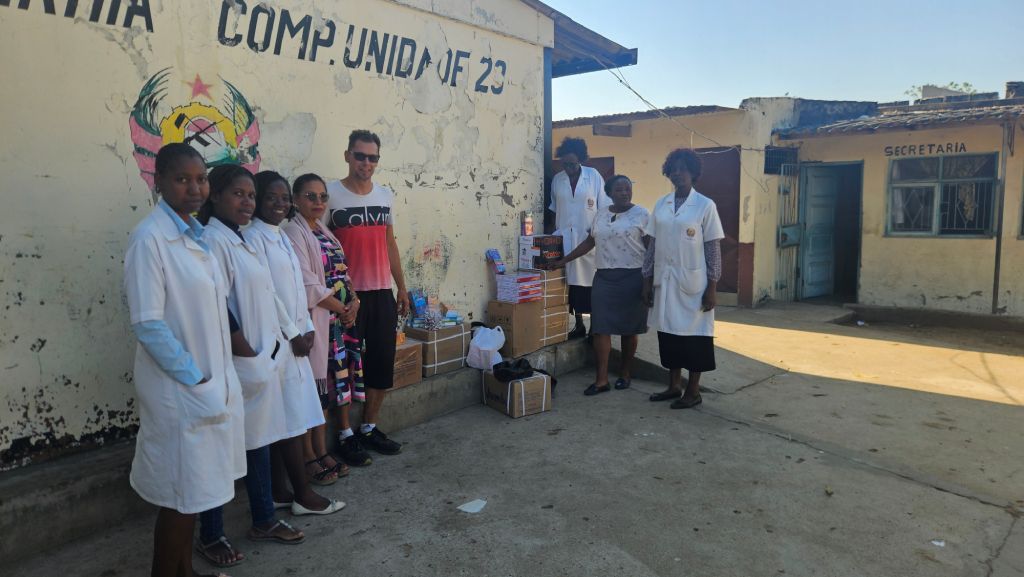
They told me how difficult it was to get basic materials, since the Ministry rarely kept its promises. I explained them that I’d raised about 500US$ with help from my family and friends.
After making list of what the school needed most, we visited several shops to find the best deals on notebooks, pencils, rulers, erasers, and chalk. My budget was enough to buy supplies for more than 200 children.
Read more about Mozambique donation project and other FARO donation initiatives at this link.


Reflections on my visit to Mozambique
Mozambique stretches along more than 2,400 kilometers of coastline, blessed with crystal-clear waters, coral reefs, and abundant marine life. In addition to its magnificent beaches and the historic Ilha de Moçambique, the country also has several national parks, though visiting them is far more expensive and challenging than in its neighboring countries.
In 2025, despite its great potential, Mozambique was still far from being a major tourist destination. Since I visited it outside the main season, I was surrounded almost entirely by locals. The great distances, the high cost of domestic flights and more accessible tourist destinations in the region discourage most foreign visitors from exploring the country in depth.
Maybe it was also for these reasons that I found my visit to this unique country quite fascinating. I discovered far more interesting places to visit and exciting things to do than I had expected.
An AK-47 Kalashnikov on its flag and the slogan “A luta continua!” (The struggle continues!) are still the pride of Mozambique’s leaders. Perhaps the authorities should start focusing more on development and reducing inequality.
Mozambique travel Photo Gallery