Visited: August 2025
Duration of visit: 12 days
Capital city: Lusaka
Population: 21 million (2025)
Zambia travel blog reading time: 19 minutes
Zambia attractions and memorable experiences:
- Easy going capital Lusaka.
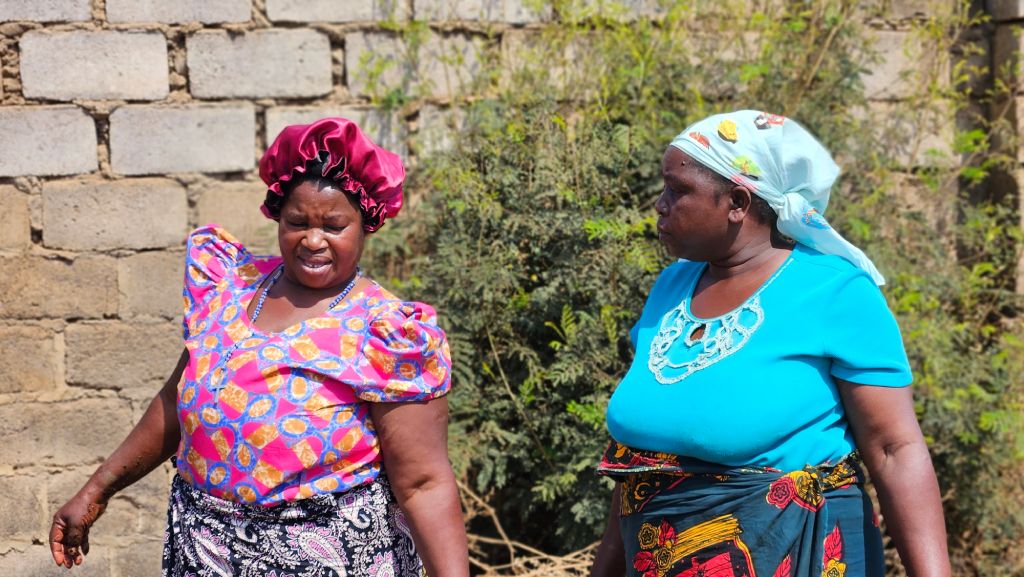
- Calm, humble and friendly people, treating themselves respectfully.
- Unforgettable game-watching experience in South Luangwa National Park.
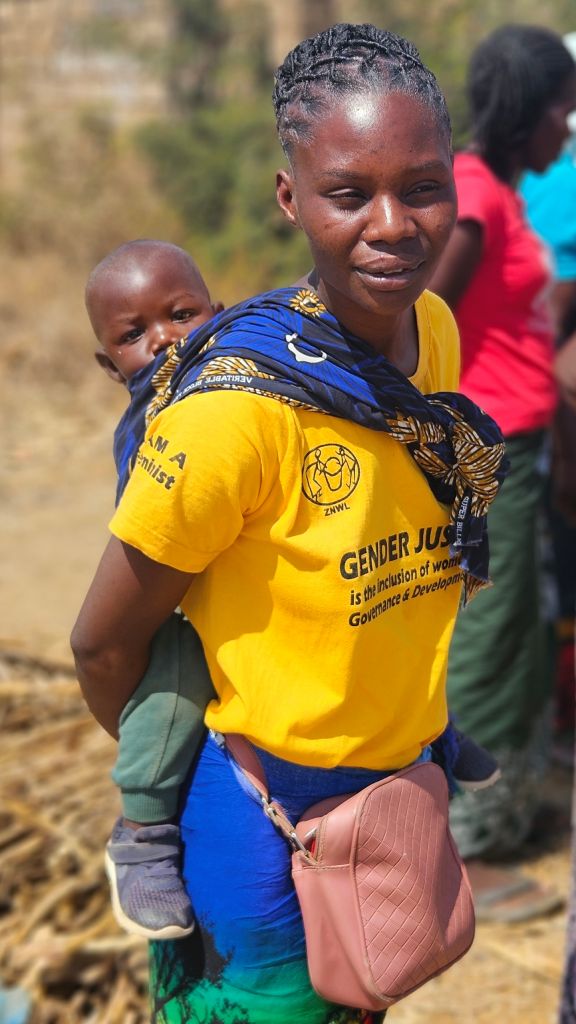
- Learning about a local community life improvement project through Tiko Lodge in Katete.
- Amazing Victoria Falls – the largest curtain of falling water in the world.
Zambia was part of my three-months trip that also included Angola, Namibia, Botswana, Zimbabwe, Malawi and Mozambique. Traveling from the Atlantic to the Indian Ocean was one of my most enjoyable journeys in Africa. Along the way I encountered warm hospitality, reliable infrastructure, delicious cuisine, excellent value for money, and, thanks to perfect timing, I avoided crowds in many areas.
I travelled around Zambia with my family. We rented a car to explore the Eastern Province and used public transport in the west.
Quiet people and interesting buildings in Lusaka
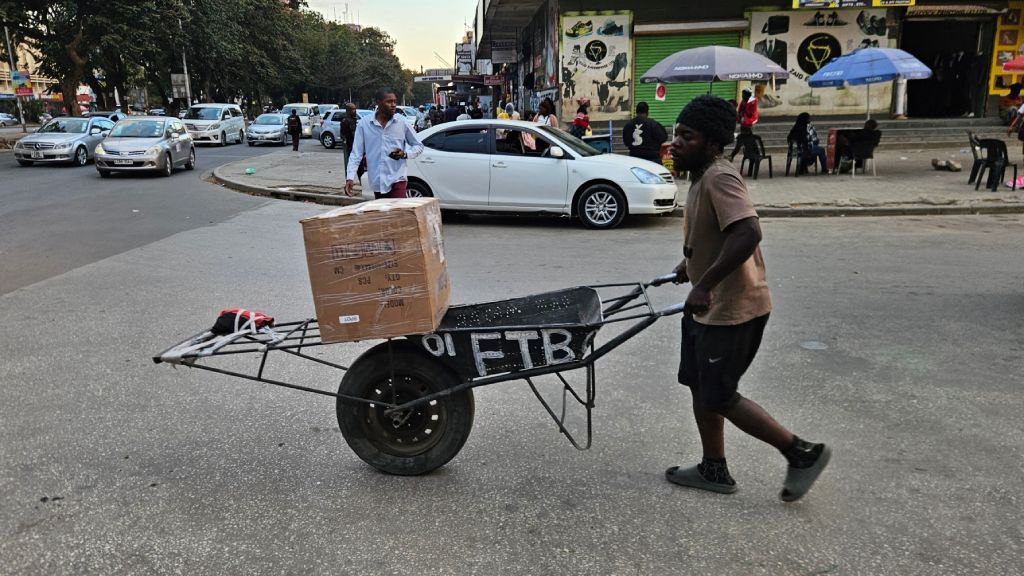
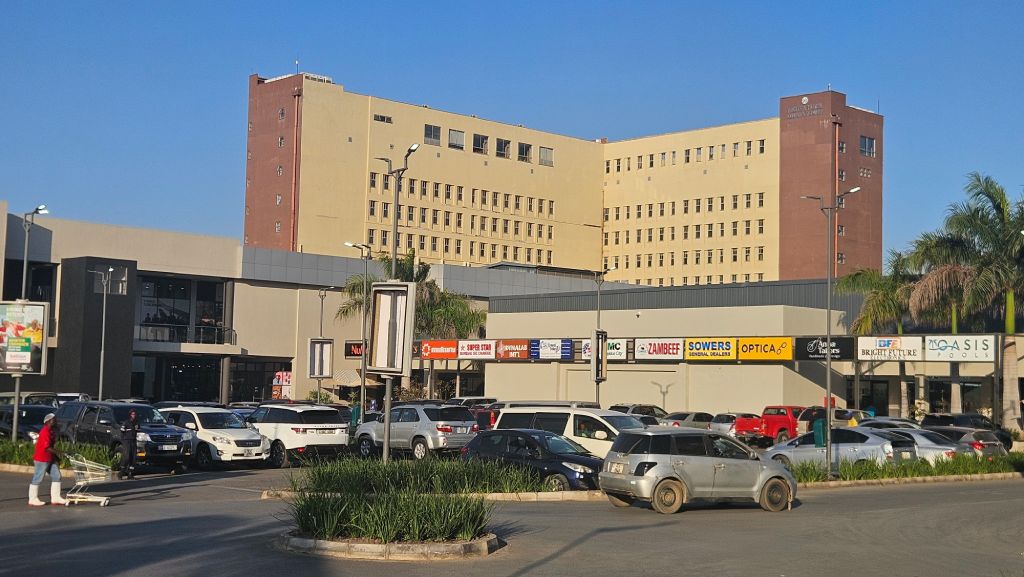
After landing in Lusaka airport in the early morning and resting in a nice apartment within a secure complex, it was time to explore Zambia’s capital. There aren’t really any places to visit or things to do on the must-see list, but the walk along Cairo Road turned out to be the most interesting part.
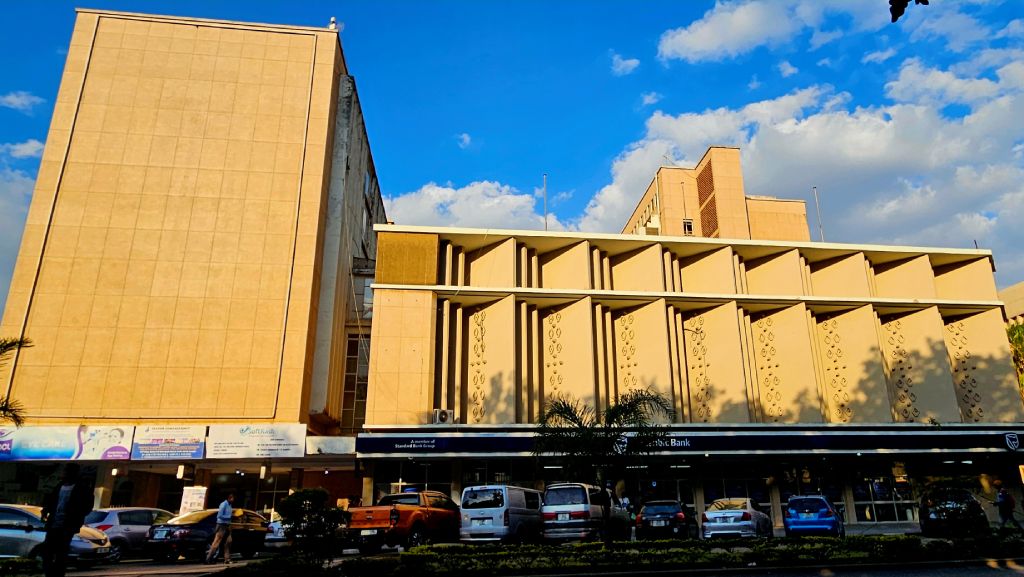
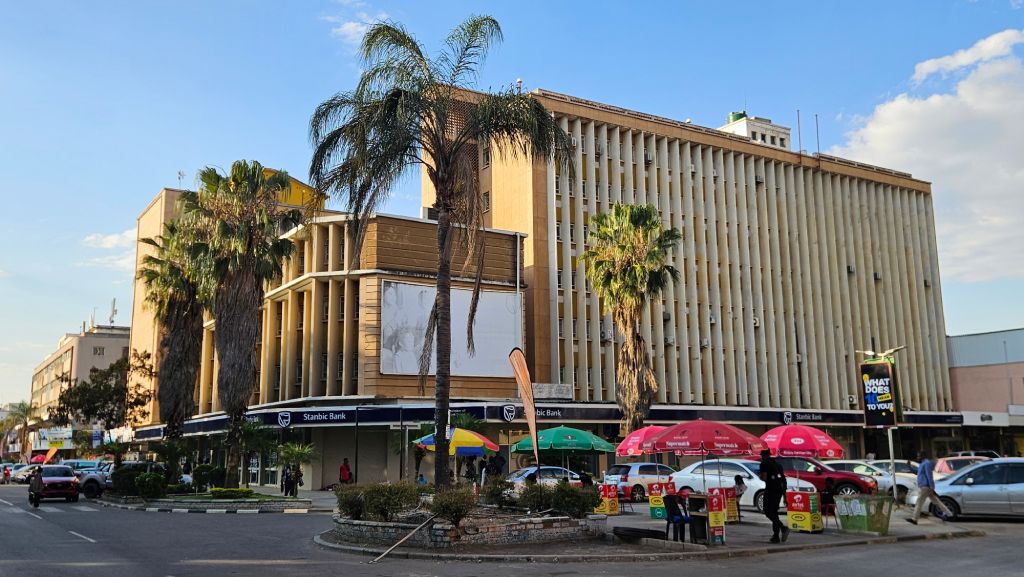
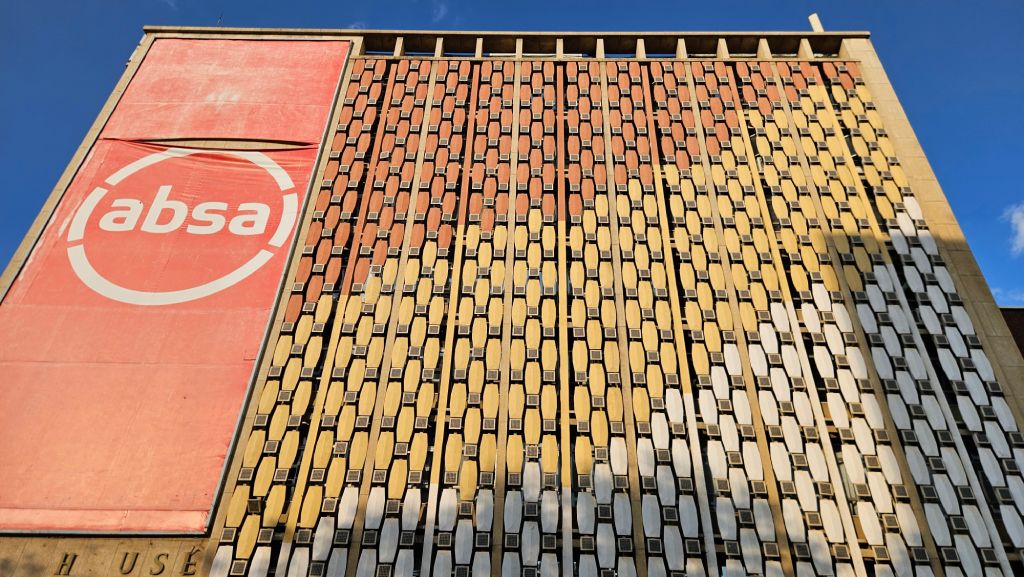
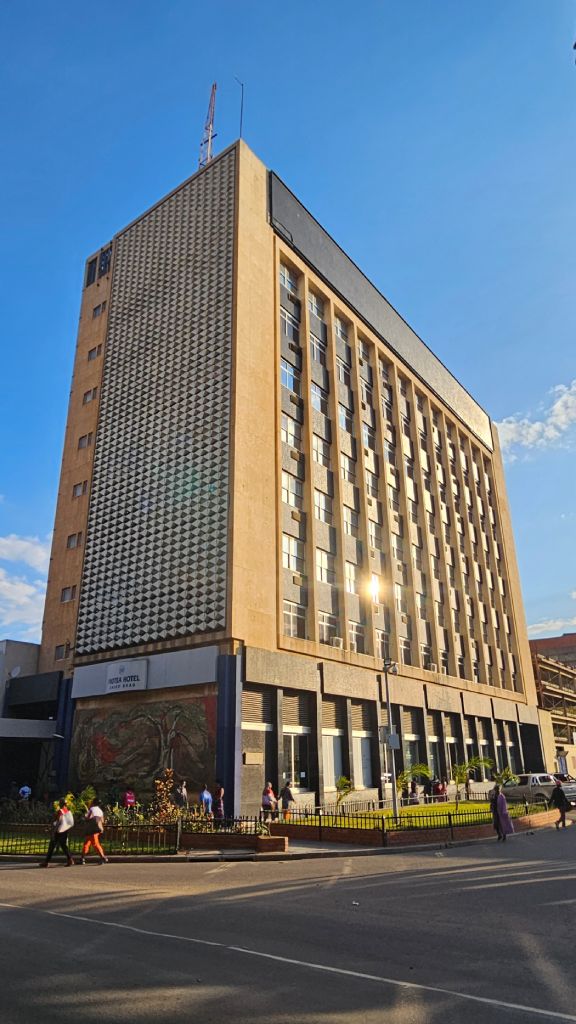
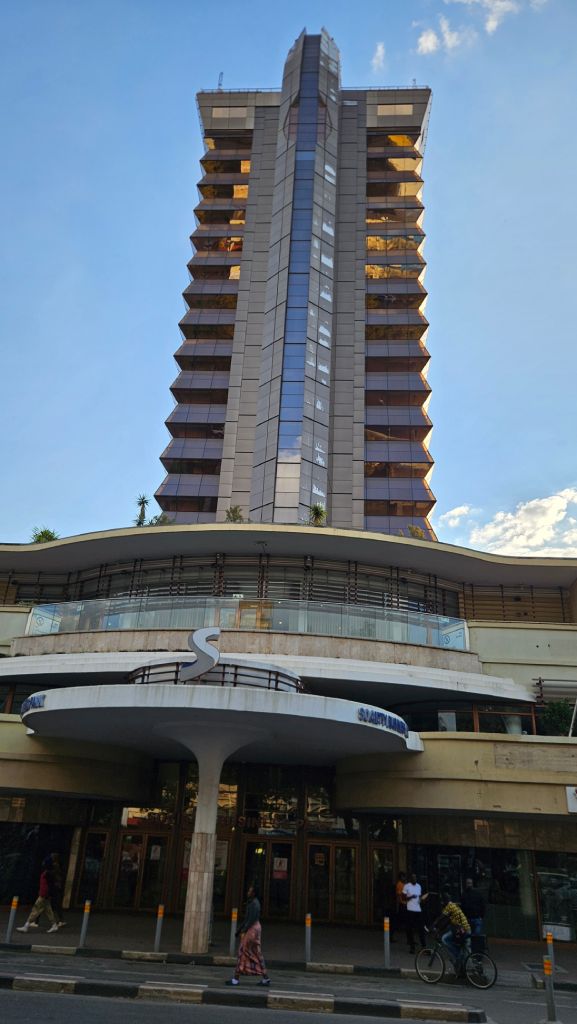
Cairo Road is one of the city’s main streets and its principal business, retail, and service hub. The avenue, lined with trees and a pedestrian zone in the middle, is awkwardly designed, making walking a bit inconvenient. Distinctive buildings line both sides of the road. Most were built during the peak of the Non-Aligned Movement era and appear fairly well preserved.
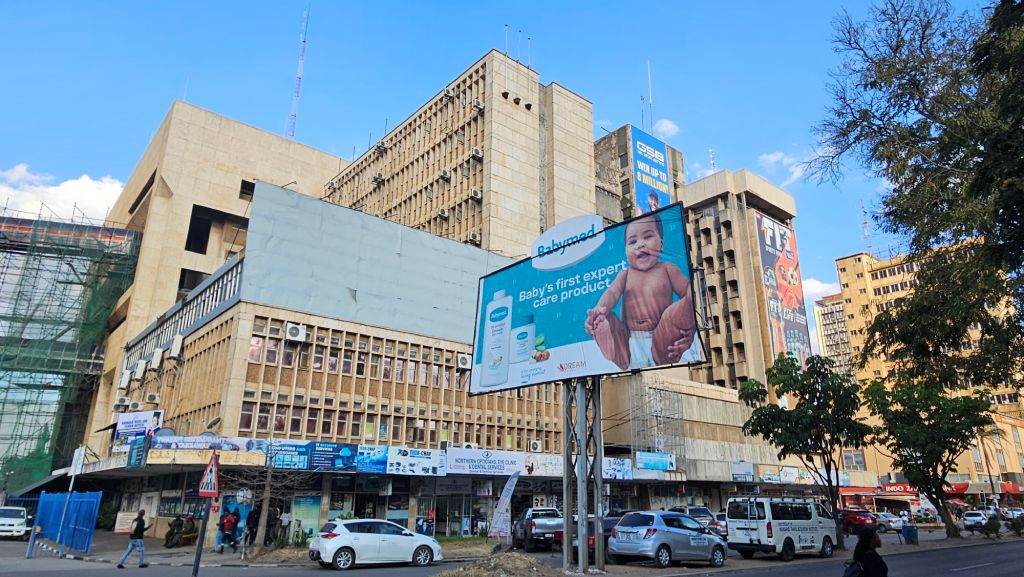
The FINDECO House skyscraper is the tallest building in the country, while the Protea Hotel is among the most notable structures.
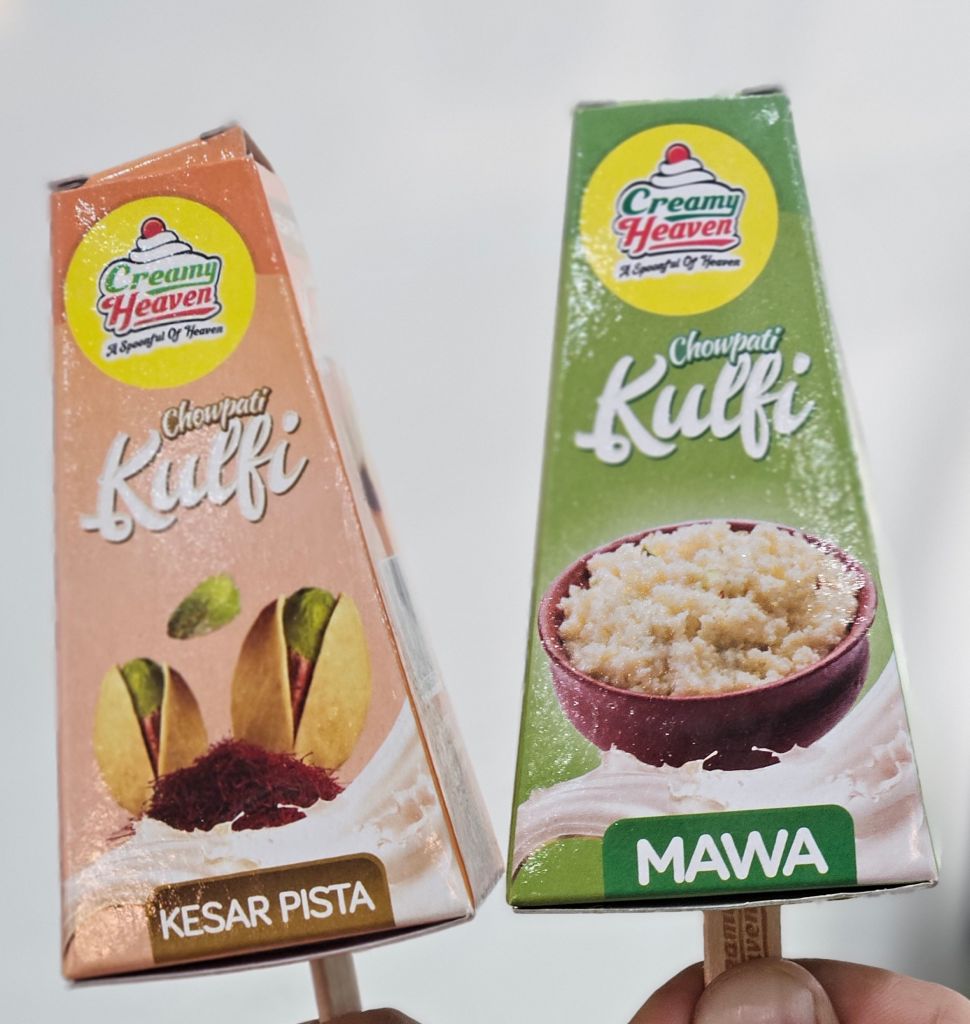
At the end of the walk, I stopped by a pastry shop and treated myself to an unusual, locally made ice cream, full of vivid colors and bold flavors.
Savoring the finest local cuisine
I explored Lusaka using taxis I booked on the Yango app. Since most of the the drivers were friendly and fairly knowledgeable, I asked one of them for a recommendation on authentic local food.
He replied without hesitation:
“Mpoto Yathu Zambia is the best local restaurant, offering delicious food at reasonable prices.”
After checking it on Google Maps I wanted to reconfirm: “Is it not a touristic place, frequented only by expats?”
“Not at all. Go there and you will see!” the driver reconfirmed.
And he was right. The restaurant was tastefully arranged and filled with local guests, serving excellent food. While the rest of my family sampled meat dishes, I stuck to my usual vegetarian and fish diet.
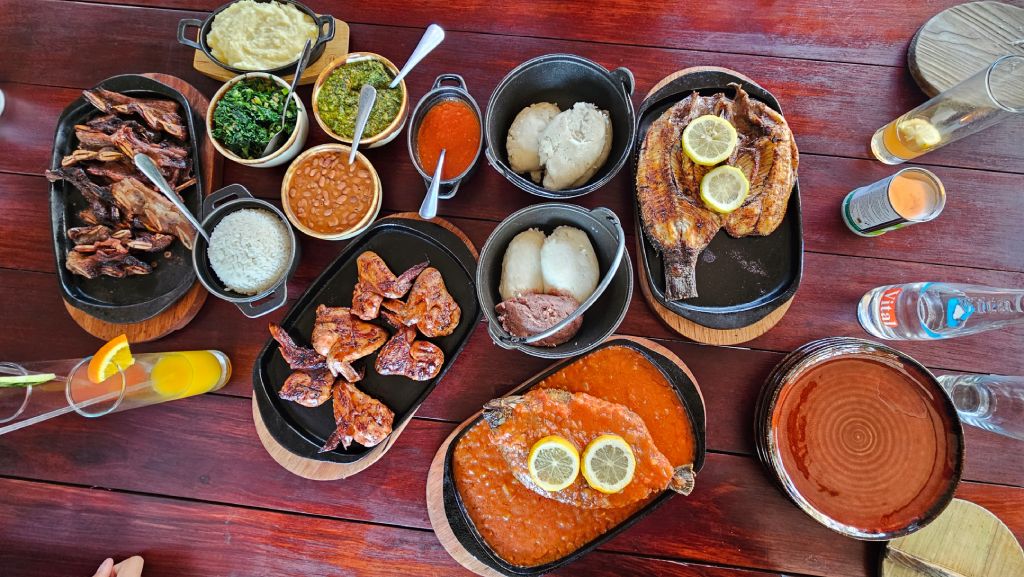
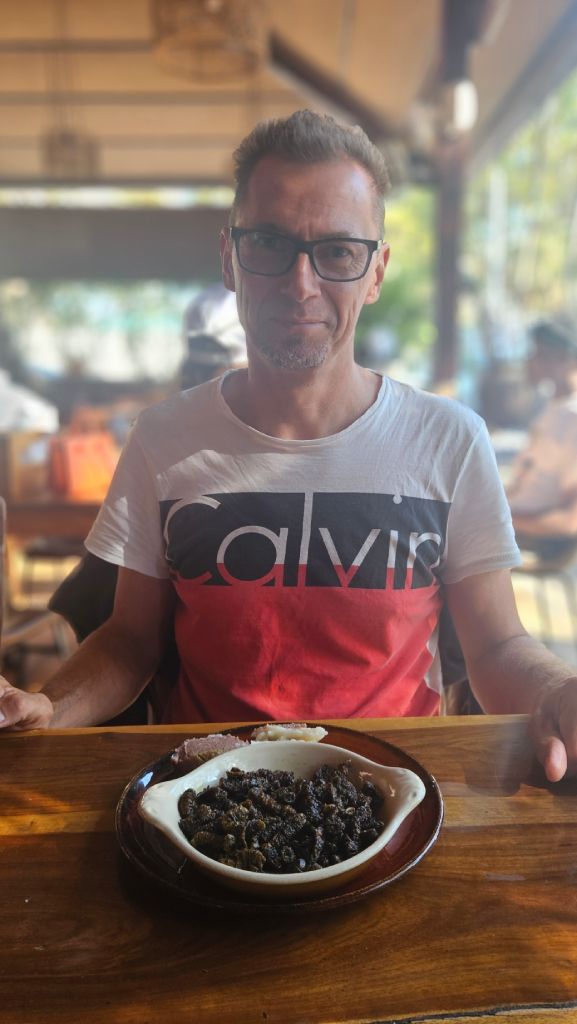
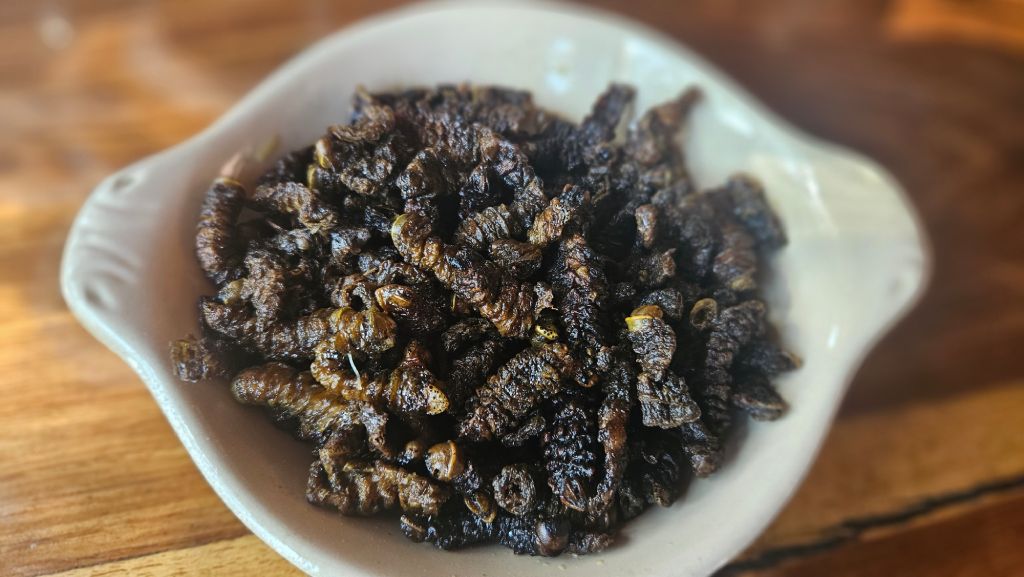
Along with fish, I decided to try a local specialty – Mopane worms – Ifinkubala. For my taste, the roasted caterpillars of the emperor moth were a bit overcooked and quite tough. They are a highly nutritious, protein-rich delicacy, usually boiled and then fried with tomatoes and onions. Mopane worms are served with nshima or eaten as a snack in Zambia, Zimbabwe, Botswana and South Africa.
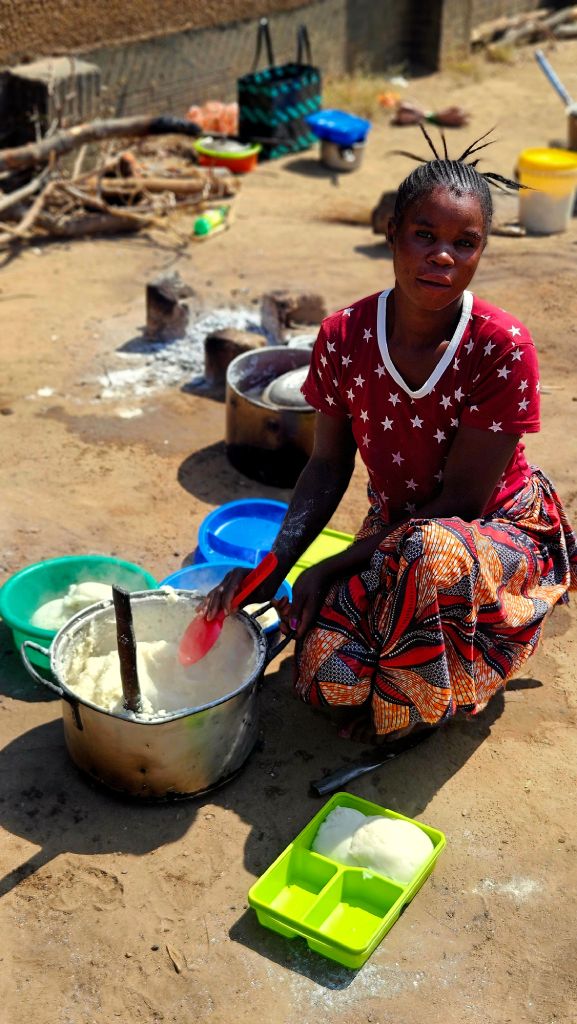
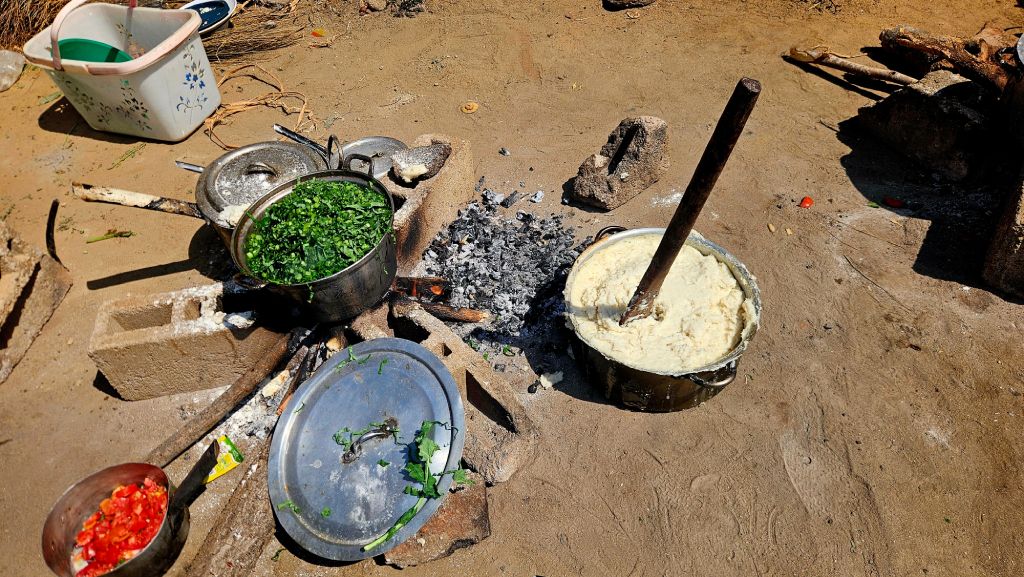
Nshima, a thick porridge made from maize, is the main staple food in Zambia. It’s a simple mixture of finely ground cornmeal and water, eaten by hand. This way it is easy to form small balls and dipping them into meat, fish, or vegetable sauce. In Mpoto Yathu restaurant I tasted four different types of nshima, made from maize, cassava, sorghum and millet. My favorite was the original one made from maize.
The food at the Mpoto Yathu restaurant was one of the highlights of the culinary experience in Zambia.
Lusaka National Museum
One of the few attractions worth visiting, despite the entrance fee being high by local standards, is the Lusaka National Museum.
The museum, located in an impressive building on Independence Avenue, is divided over two floors. The ground floor is dedicated to archaeological and historical artefacts, while a temporary exhibition of contemporary art showcases different perspectives on Zambia. The upper gallery traces the path of the nation from its ancient beginnings to the present day.
A special section is dedicated to the construction of the Tanzania-Zambia railway, a landmark project that opened up trade and travel routes.
The TAZARA Railway connects the port of Dar es Salaam in Tanzania with Kapiri Mposhi in Zambia, stretching 1,860 km. Built between 1970 and 1975 by Tanzania, Zambia, and China, it was designed to give landlocked Zambia access to the sea and reduce its dependence on white-minority-ruled Rhodesia and South Africa. An interesting set of images shows the significance of China’s contribution, the importance of political connections, and the beginning of great Chinese influence in Africa.
Exploring the Eastern Province
To travel to the Eastern Province, I rented a car, which gave me greater flexibility and independence. Especially for driving around South Luangwa National Park. Although Zambians drive on the left and African capitals are often congested, navigating the streets of Lusaka was surprisingly smooth. The calm temperament of people seemed to reflect on the roads as well.
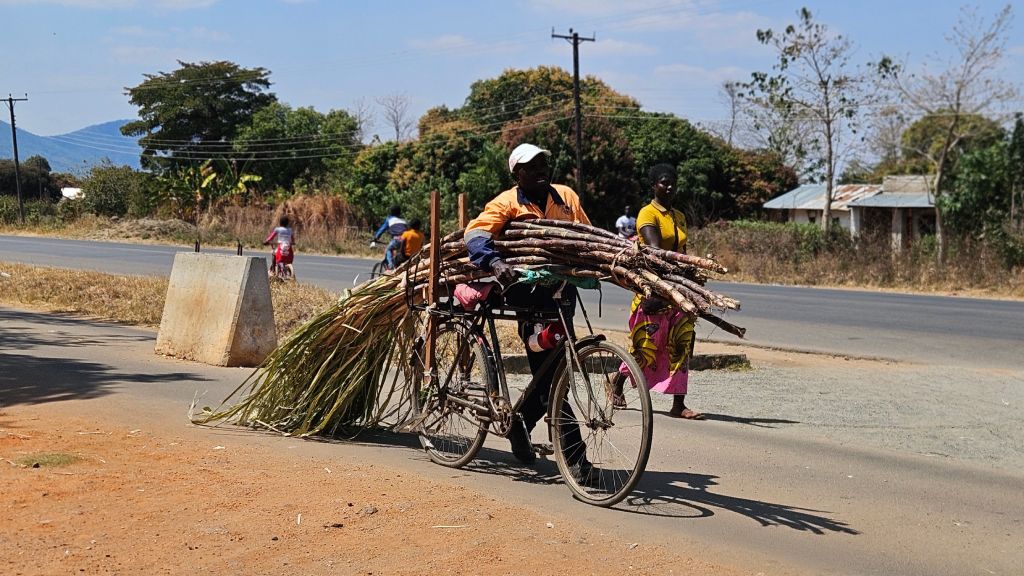
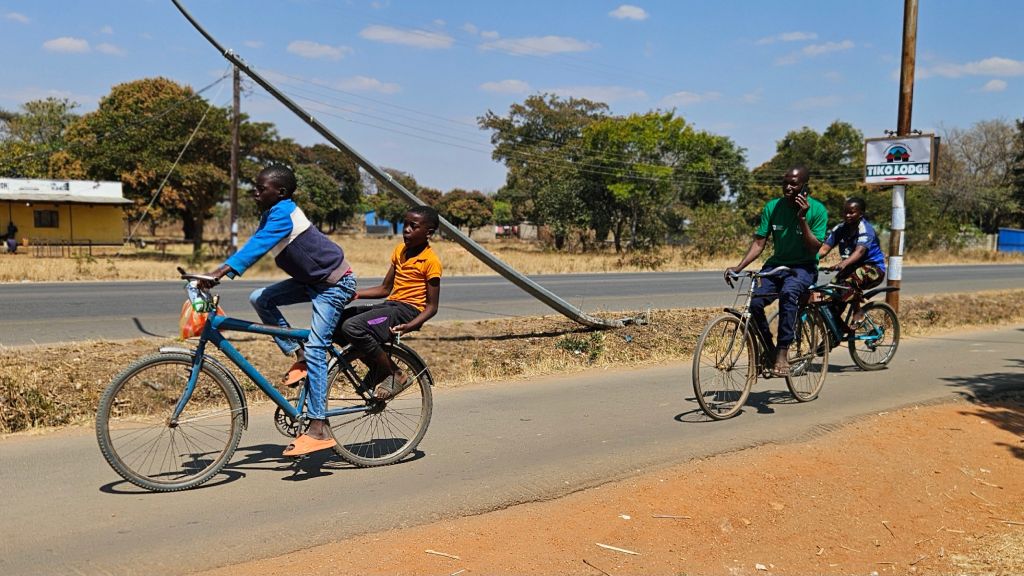
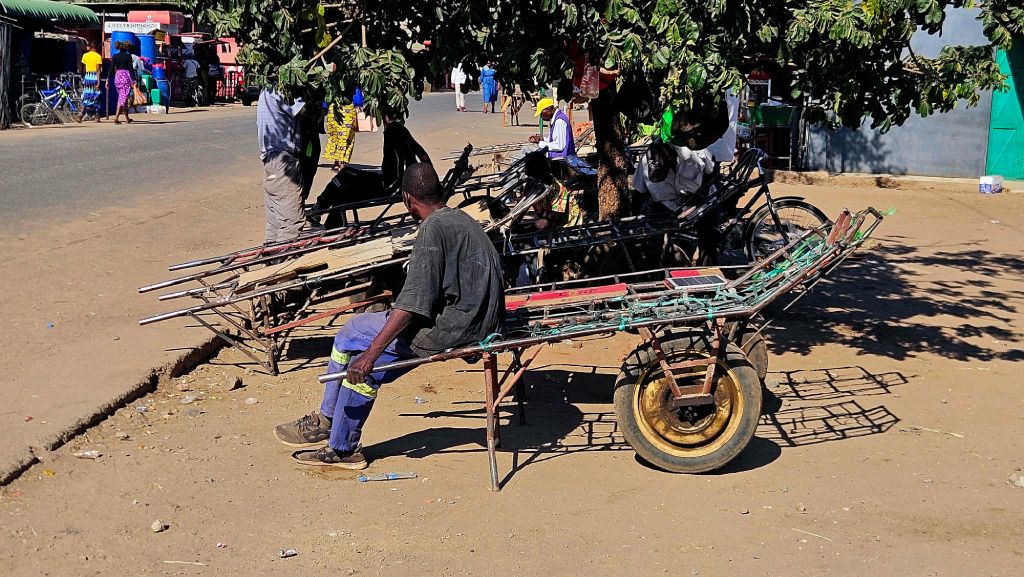
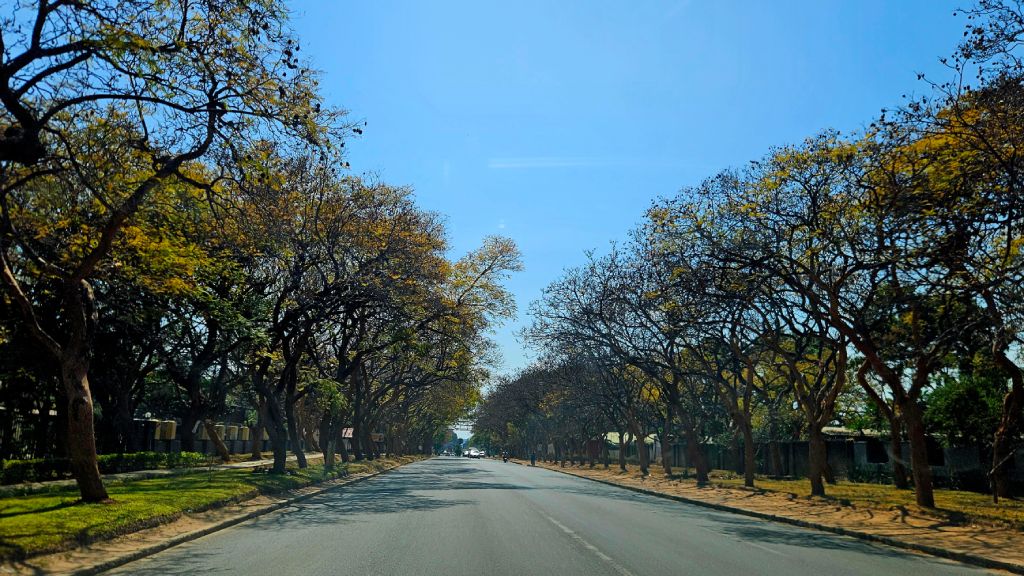
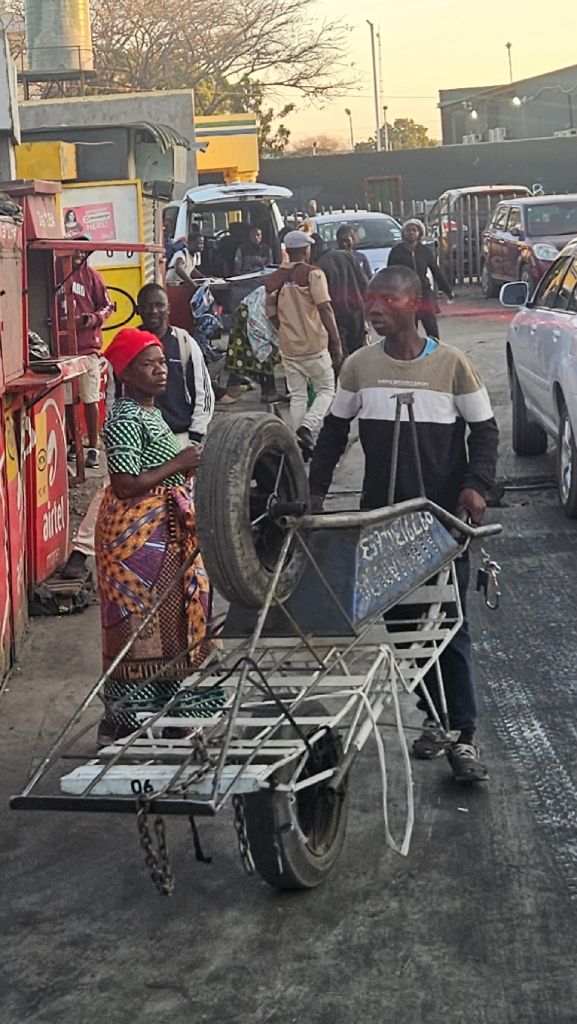
The fluid traffic soon led me out of the city, where the road remained in very good condition. I passed through modest villages, with many markets right beside the highway. Long stretches of the landscape were completely flat.
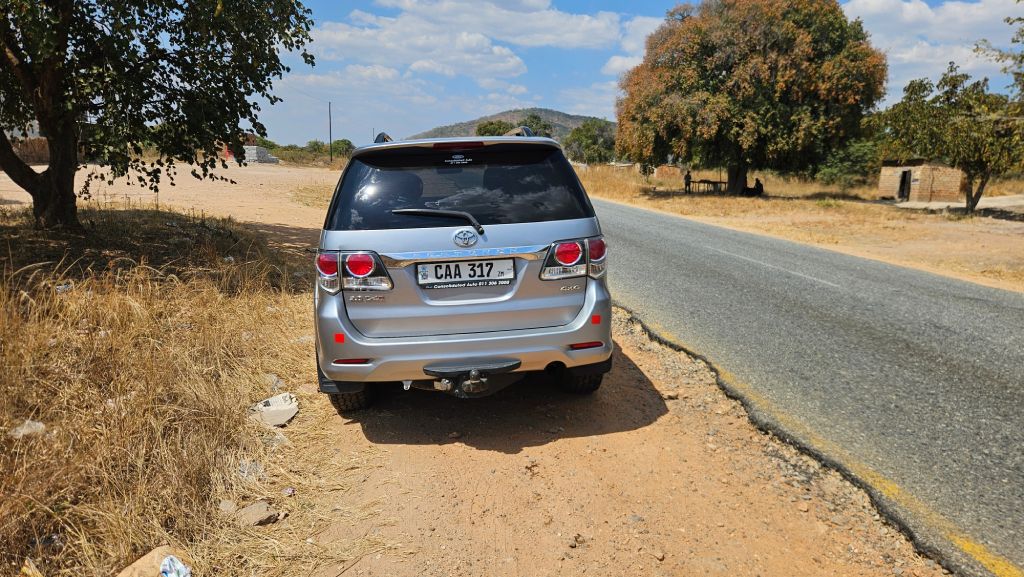
On one of the straight stretches, I drove over 90 kilometers and laughed when oncoming drivers flashed their headlights at me.
“It must be because I’ve got my lights on during the day for safety,” I thought aloud.
I realized my mistake, when I spotted a police radar and an officer by the roadside, waving me to pull over.
His calm explanation that I was driving 93 kilometers per hour, when the limit was 60 kilometers per hour, surprised me. I hadn’t seen any speed-limit signs, and I was already more than a kilometer away from the last settlement.
“There was a sign just before the bridge. People walk along the road and there is a construction site further down,” explained the young, robust policewoman.
““I only arrived in Zambia two days ago! How am I supposed to know that the restrictions are in effect for several kilometers ahead?” I responded, hoping to avoid the fine.
“Just give me the ticket then. If I broke the rule, I’ll pay,” I apologized, while the radar kept catching local drivers too. Obviously, the speed checkpoint had been strategically placed.
The policewoman wrote me a ticket and directed me to the transit police headquarters in Chipata, where I could arrange payment.
“Just what I needed, another bureaucratic adventure,” I thought to myself.
For a moment, I regretted my honesty a little bit. Instead of negotiating a small bribe on the spot and carrying on with my trip, I will be wasting my time to follow the official route.
Epilogue – paying the fine
The next afternoon, on Friday, I stopped by the Transit Police Headquarters in Chipata. The friendly officer at the counter couldn’t accept my payment, since such transactions are handled only through banks, which were already closed at that time.
Her supervisor came over and told her to call the headquarter in Lusaka to request the fine to be canceled. I couldn’t believe the words.
We exchanged WhatsApp numbers and stayed in touch for the next few days until my fine was officially revoked.
Delicious food along the road
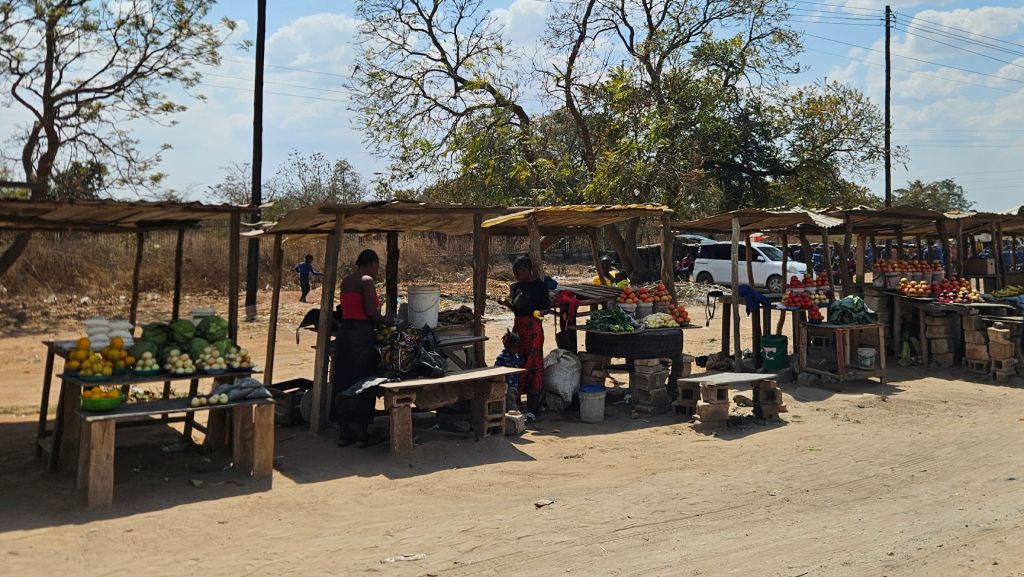
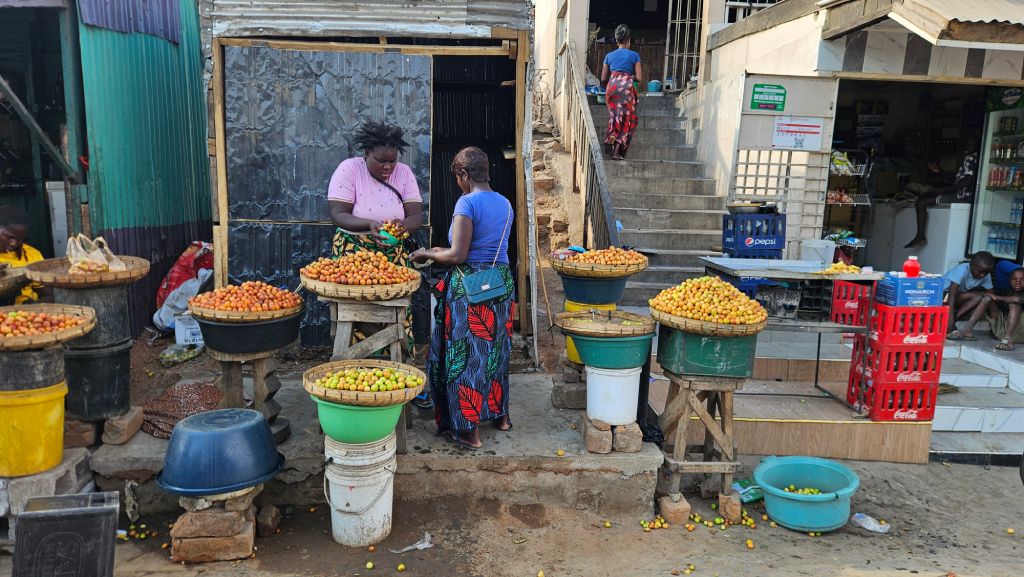
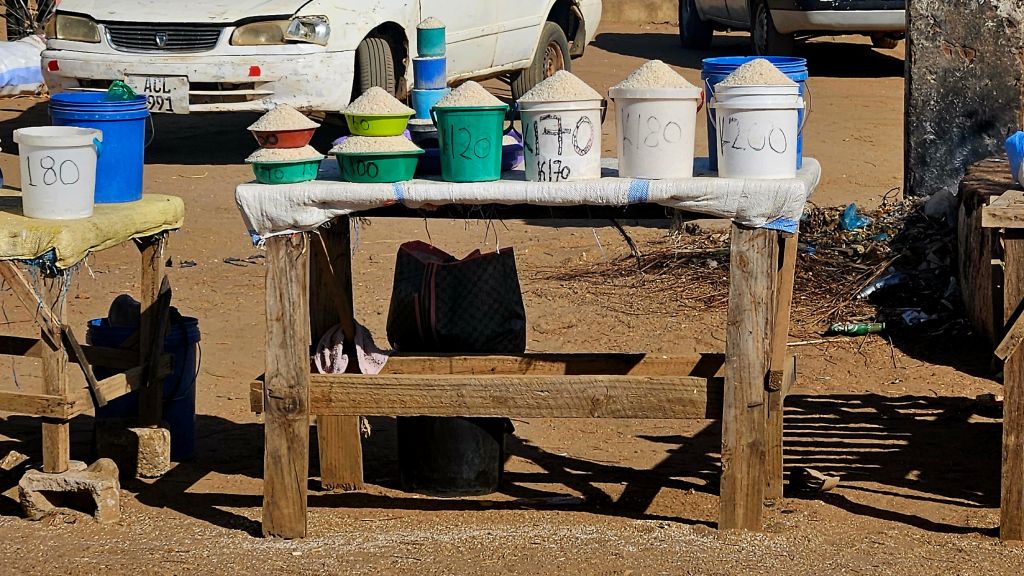
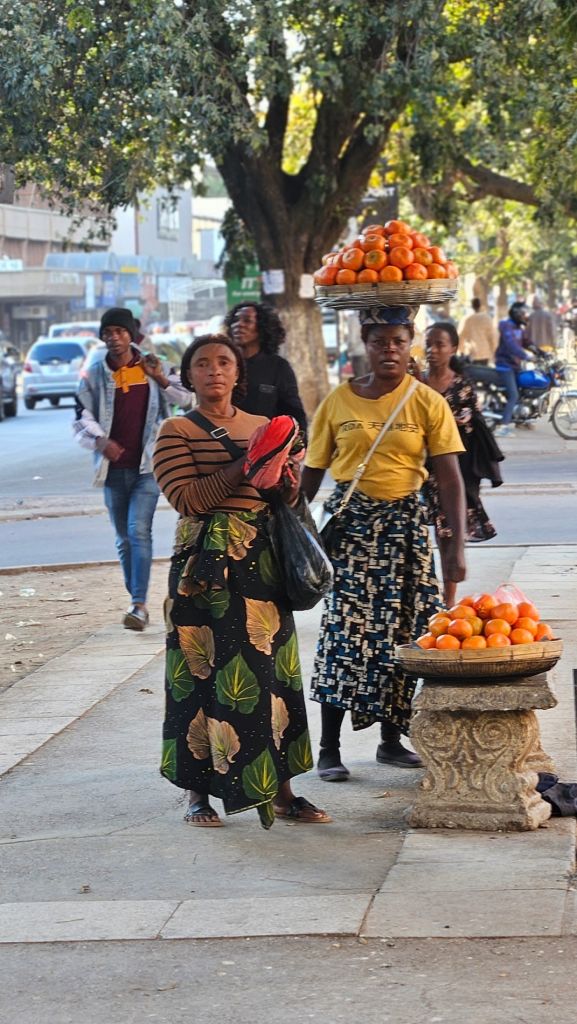
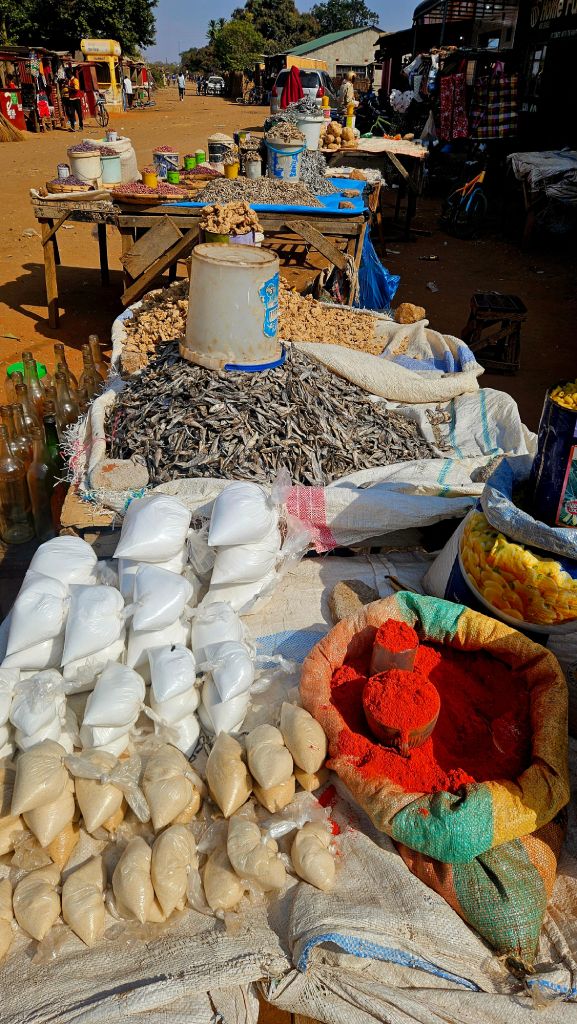
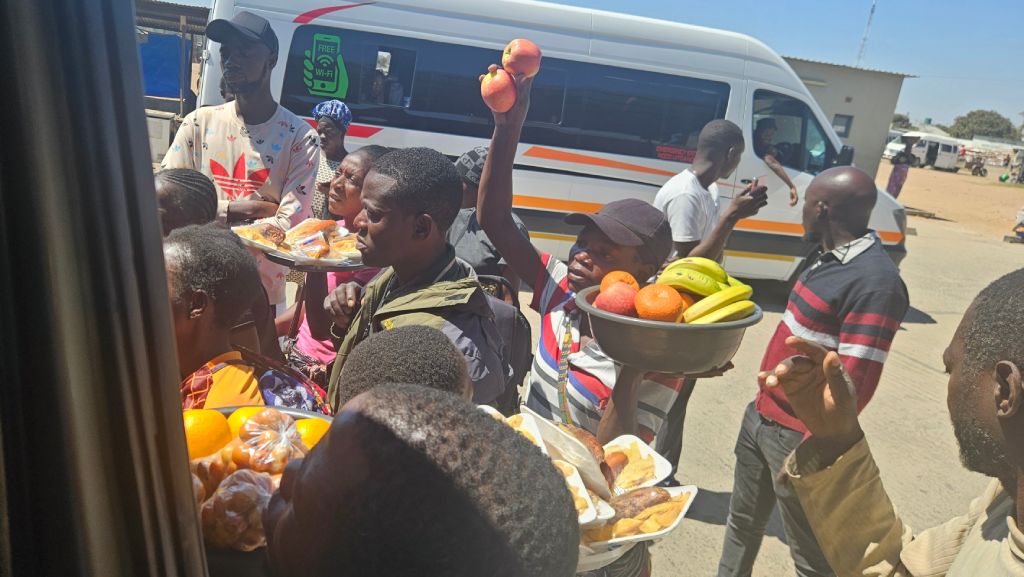
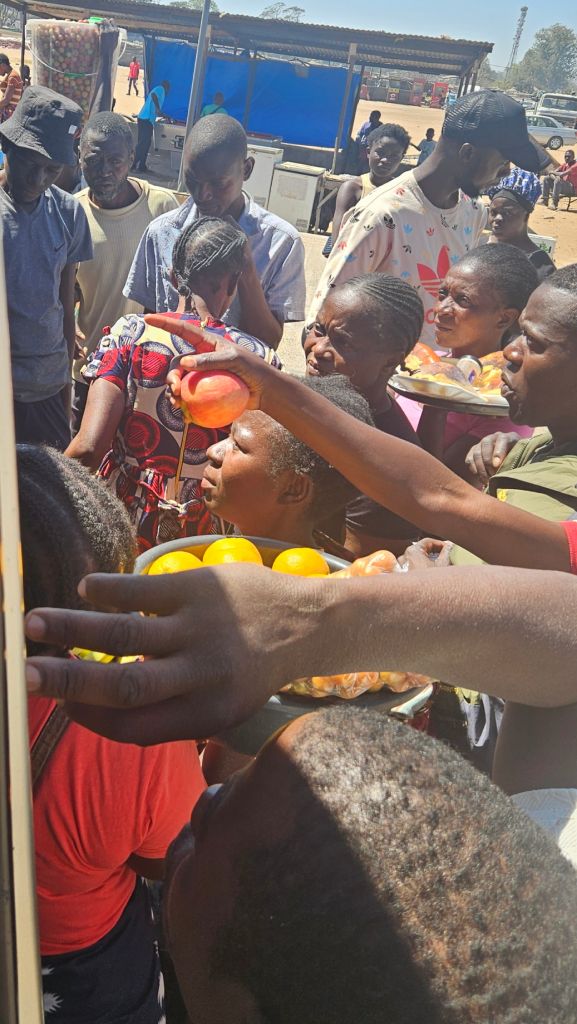
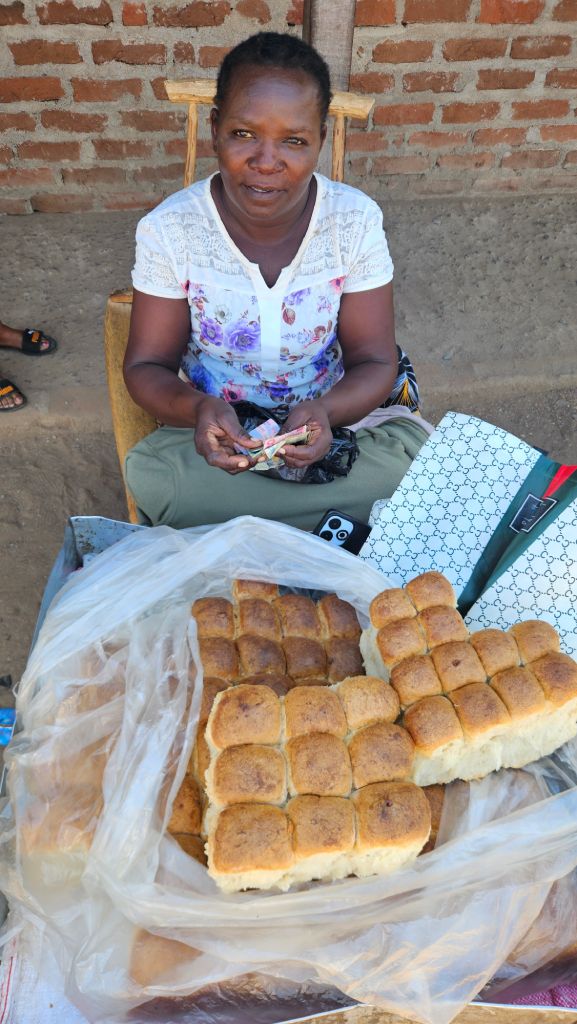
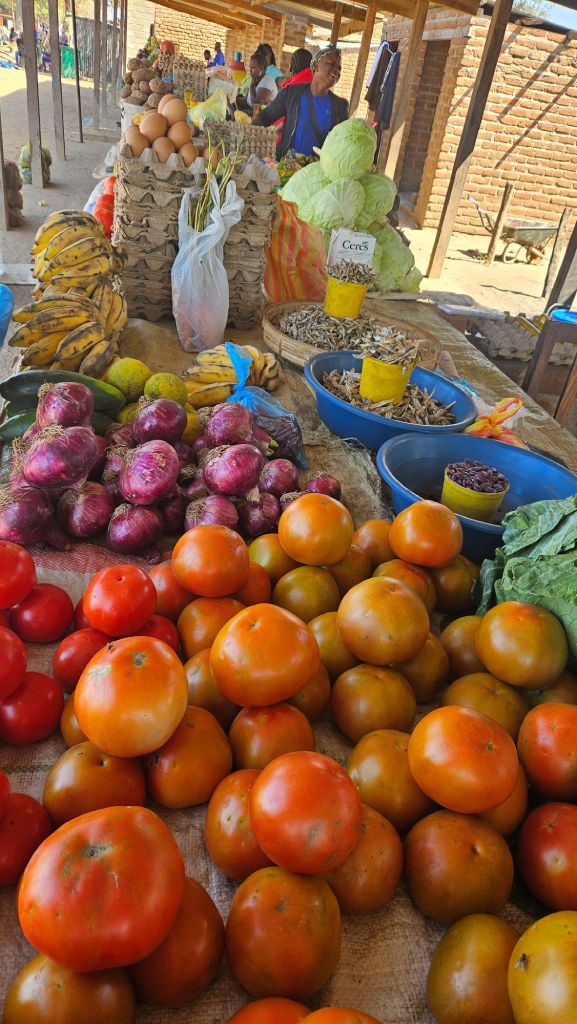
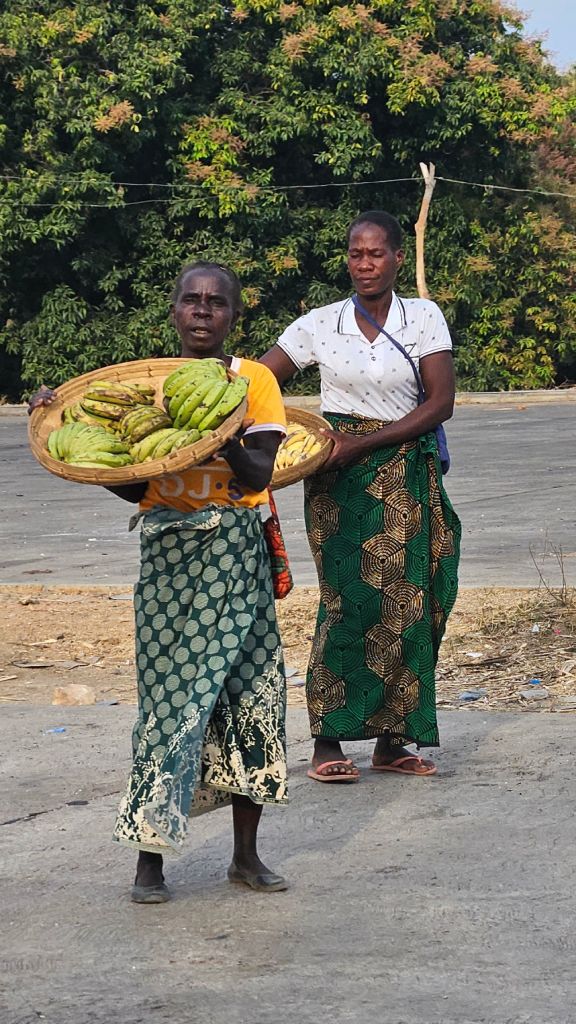
Visiting Zambia’s roadside markets was a real pleasure and one of the highlights. Fresh vegetables, roasted or boiled maize, local dishes like nshima, rice, vegetables, chicken, beef stew, and sometimes fish were always available. Each set of stall tends to specialize. For example, one sells only tomatoes, another potato, and a third onions.
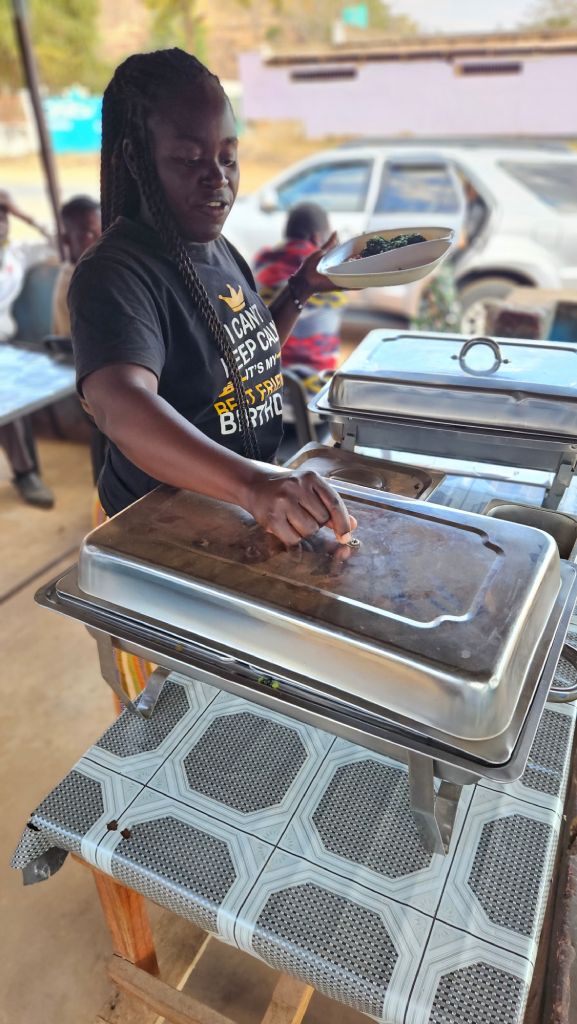
Skilled cooks start preparing dishes early in the morning, later cooking them on wood or charcoal-fired stoves. I learned that the best time for lunch is around midday, when the food is served buffet-style in metal trays and remains available until it’s finished. The food is extremely tasty and incredibly cheap.
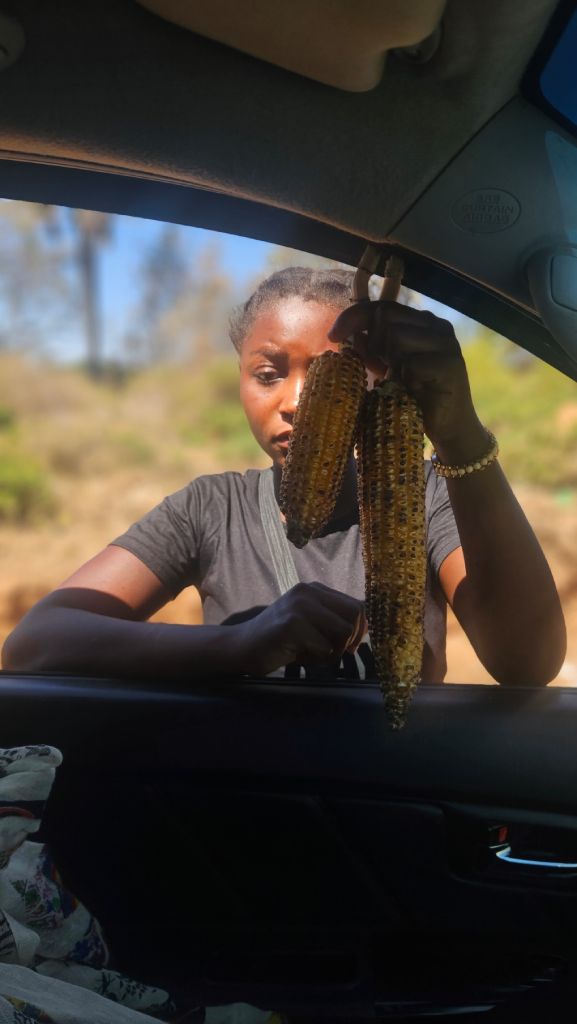
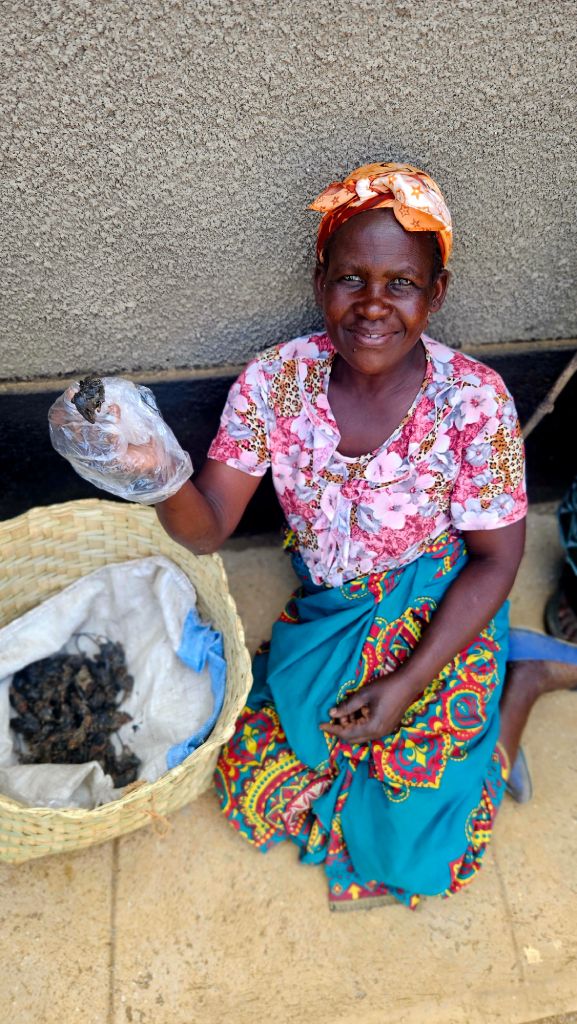
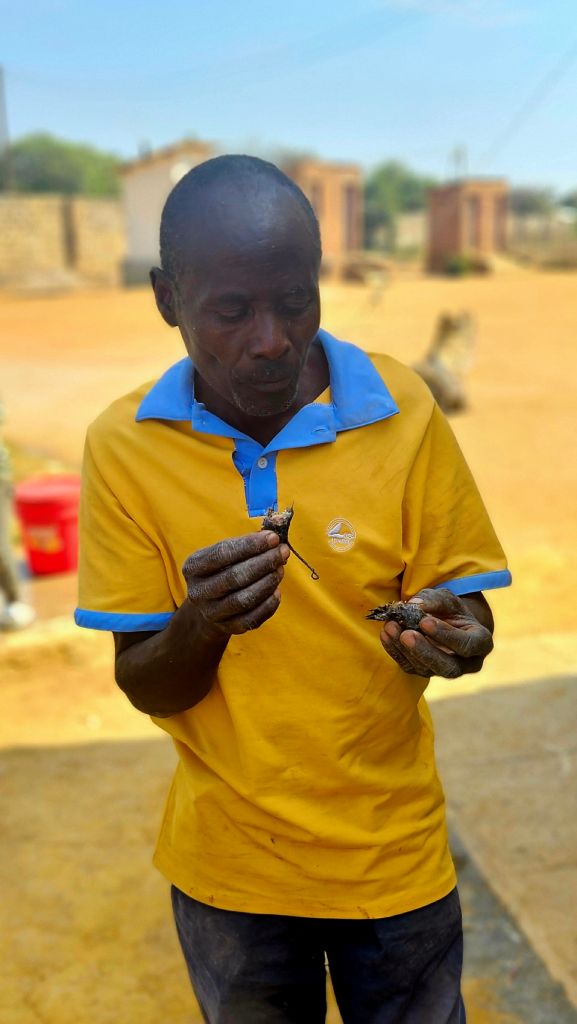
In Zambia, field rats, known locally as mbeba, are considered a delicacy.
They are roasted over an open fire, spiced and eaten as snacks or relish with nshima. I saw them on various occasions skewered on sticks and displayed by the roadside, where young boys sell them to passing cars.
During a visit to a small village near Katete, an elderly woman was selling them straight out of a plastic sack. I couldn’t believe that people actually ate them. Therefore, I bought a few rats for the locals, who happily ate them. According to them, the taste is similar to rabbit.
Tiko Lodge in Katete
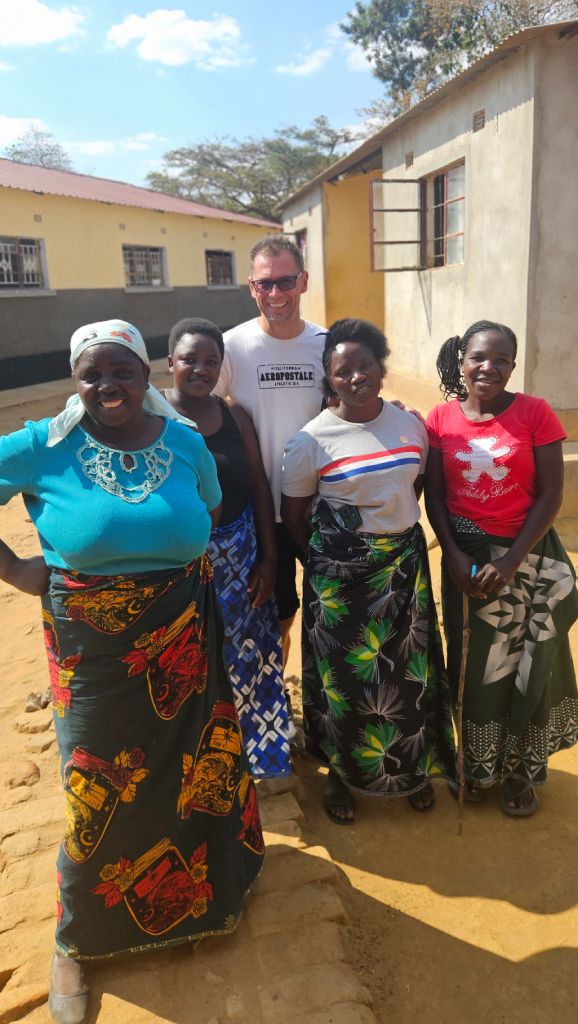
One of the memorable places to visit in eastern Zambia is Tiko Lodge in Katete. This remarkable community project was founded by Ms. Elke, a German woman who envisioned to support one of the poorest regions in the country. Deeply affected by traditional beliefs, infertile soil, poor education and malnutrition, the local community faces many challenges.
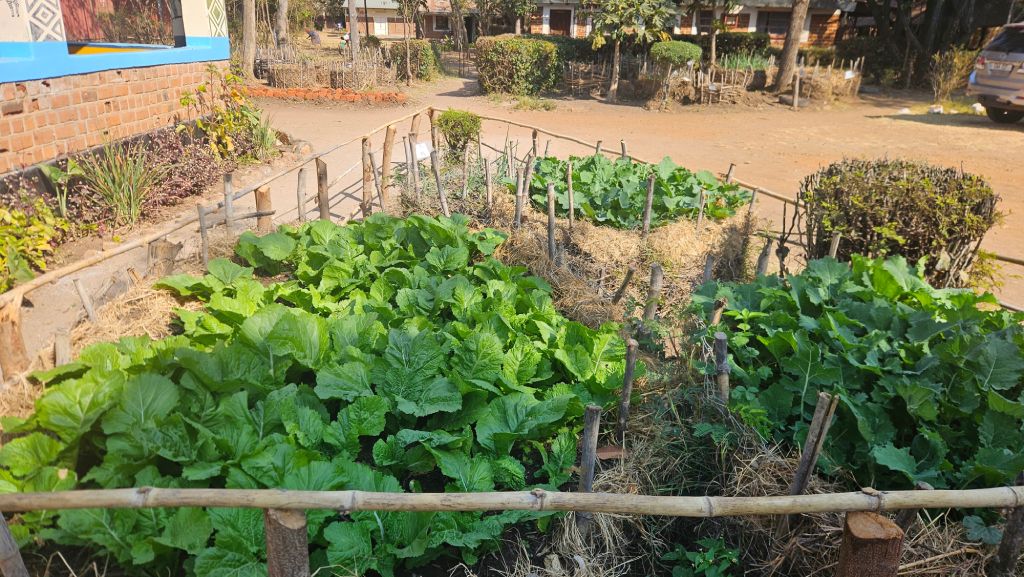
The Tikondane Foundation functions as a community education center, workplace, health center, and micro money lender. Its core idea is to improve education levels and create employment opportunities. The foundation experiments with alternative farming and nutritional practices to diversify crops in an area where most families still depend on growing maize on small plots of land. The next step is to spread successful models throughout the region.
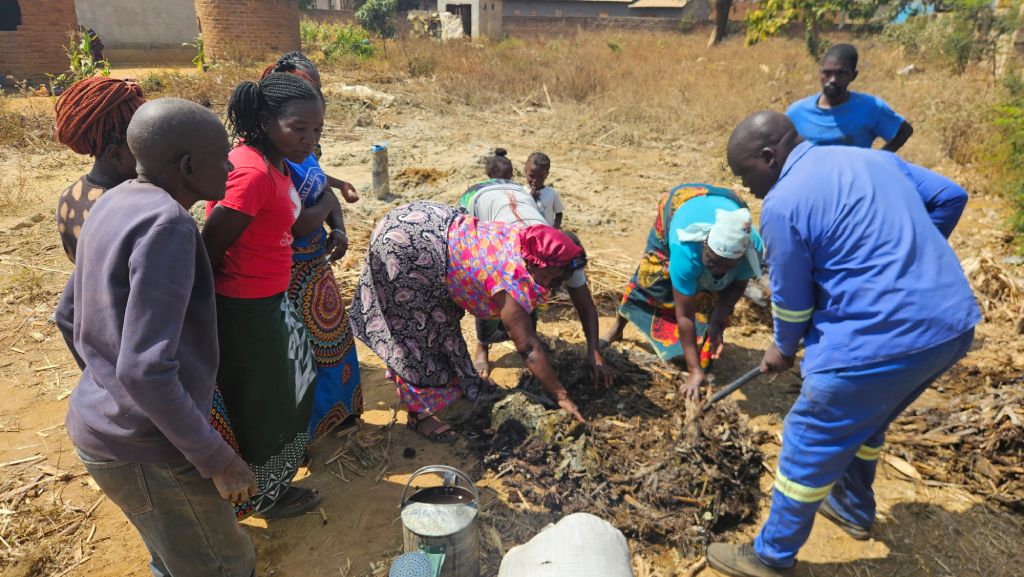
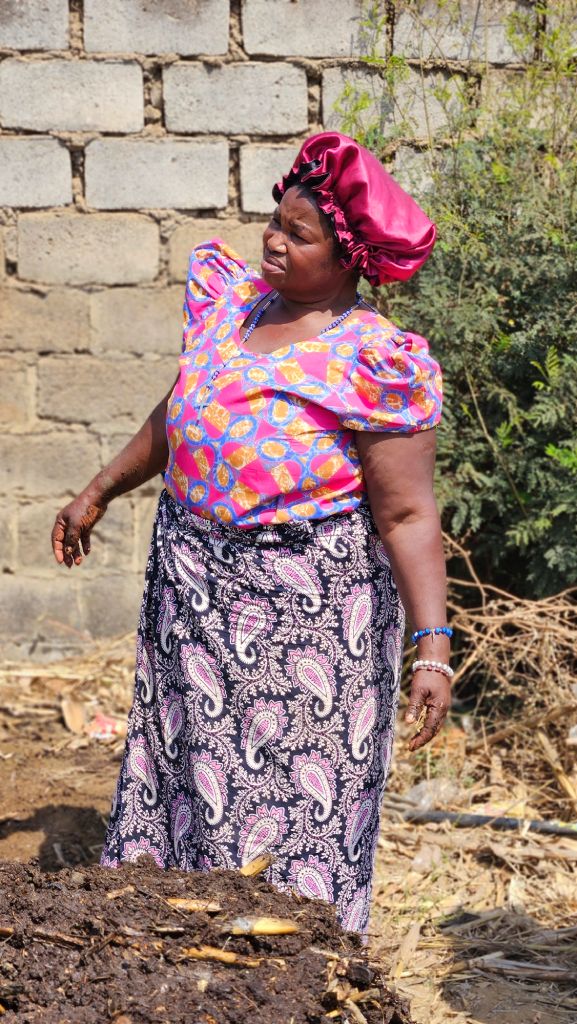
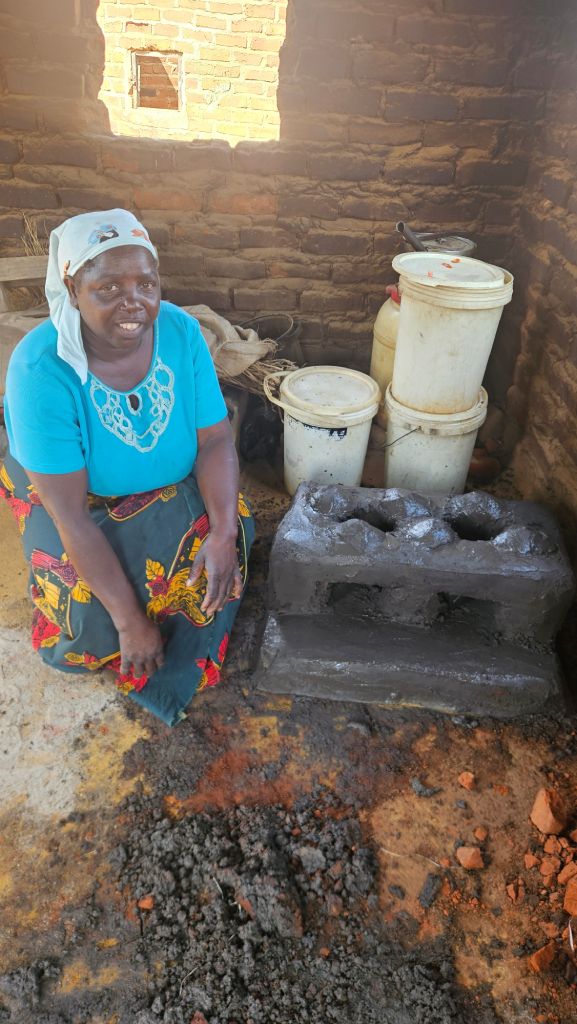
During our visit, we had the opportunity to see their work up close. Together with members of the organization, we visited a new project site. We helped set up a compost bin, build a small pigeon house and an efficient clay stove for cooking.
Ghost Dance – Gule Wamkulu
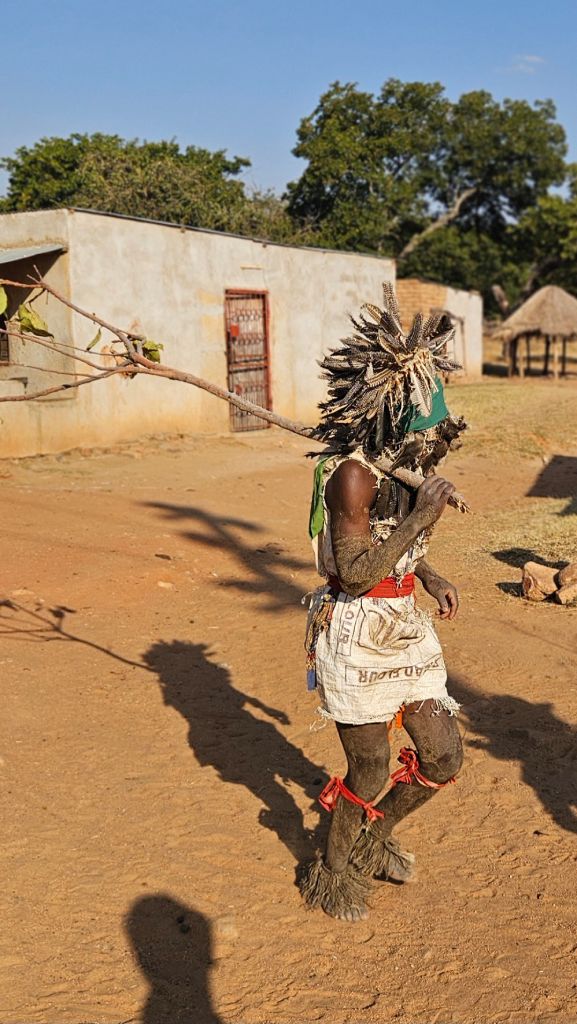
Ms Elke also organized a participation on a traditional Ghost Dance event in a nearby village. The ritual of Gule Wamkulu is performed by Chewa People in Zambia, Malawi and Mozambique. Dancers wearing elaborate masks and costumes made of wood, straw, and pieces of cloths, embody spirits, animals, ancestors and symbolic figures.
Late in the evening, our driver took me and my family to a village about half an hour’s drive from Katete. The rough road seemed to stretch on endlessly. Finally, I saw a large group of kids slowly approaching our vehicle, surrounding us completely. They were thrilled by our arrival. Wherever I pointed the flashlight in the complete darkness, the faces of smiling children appeared, screaming unfamiliar words of welcome.
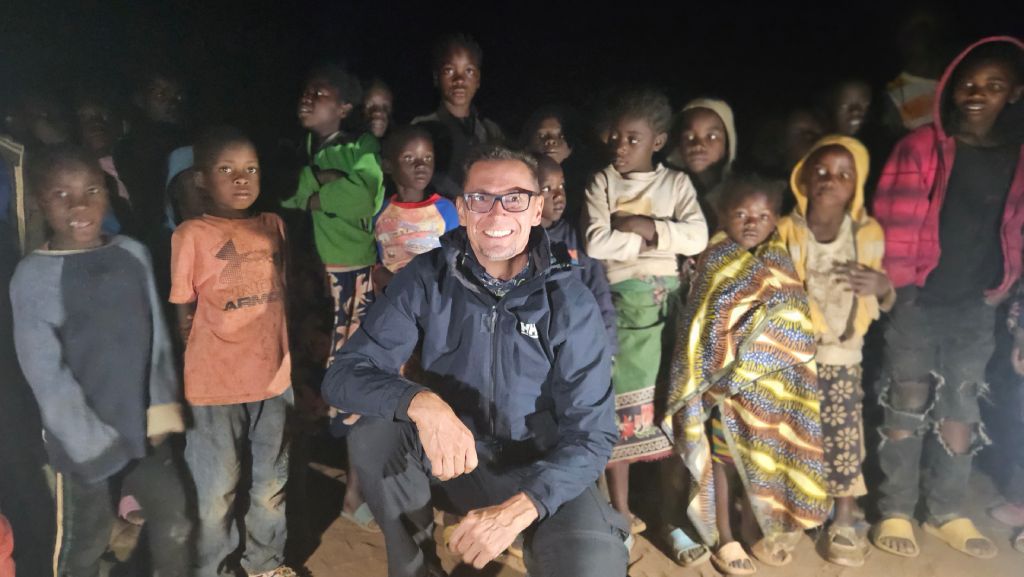
We slowly walked to an open sandy area, where they offered us chairs and a bench. The crowd around us did not diminish. I felt like a celebrity, with everyone wanting to touch me, speak to me, or catch a glimpse of me. Luckily, we had brought powerful flashlights, because there was complete darkness around us.
A group of drummers began playing, while three dancers took turns in a dance lasting approximately 15 seconds. The masks on their heads made it difficult to orientate, so a young boy guided them playing an instrument. The dancers were lifting their legs in quick movements, kicking the sand, and spinning around their axis in jerky movements.
Dust flew in every direction. The sand in our eyes, mouths, and on our clothes was unbearable at times. The crowd of children, especially women, swayed to the rhythm of the drums, joining the celebration as much as they dared.
Half an hour later, other dancers wearing different masks joined in. One of the boys was dressed as a woman. He delighted the audience with comical expressions.
As the time passed by, the dancers were jumping, spinning, stamping and crawling with intense energy. The rhythmic beat of drums, whistles, and chanting by people from the village created a vibrant atmosphere.
Although I couldn’t understand the meaning of performance, it is well known that each masked dancer represents a specific character: ancestral spirits, animals or moral figures. The energetic performances entertain and teach moral lessons or social misconduct, linking the living with the spirit world.
The dance performances serve only as preparation for the climax of the Gule Wamkulu ritual. The main Kulamba Traditional Ceremony is held on the last Saturday in August. It gathers thousands of people, including presidents, ministers, and tribal chiefs, who come together to honor the Chewa leader, Chief Chewa. Definitely a good reason to return to the region and experience this spectacle.
The incredible event, which I attended with my family, was something special, one of the highlights. The footwork reminded me of the Zaouli dance from the Ivory Coast, although the dancers were less skilled.
South Luangwa National Park
South Luangwa NP is not only one of Zambia’s greatest wildlife sanctuaries, but also among Africa’s finest safari destinations.
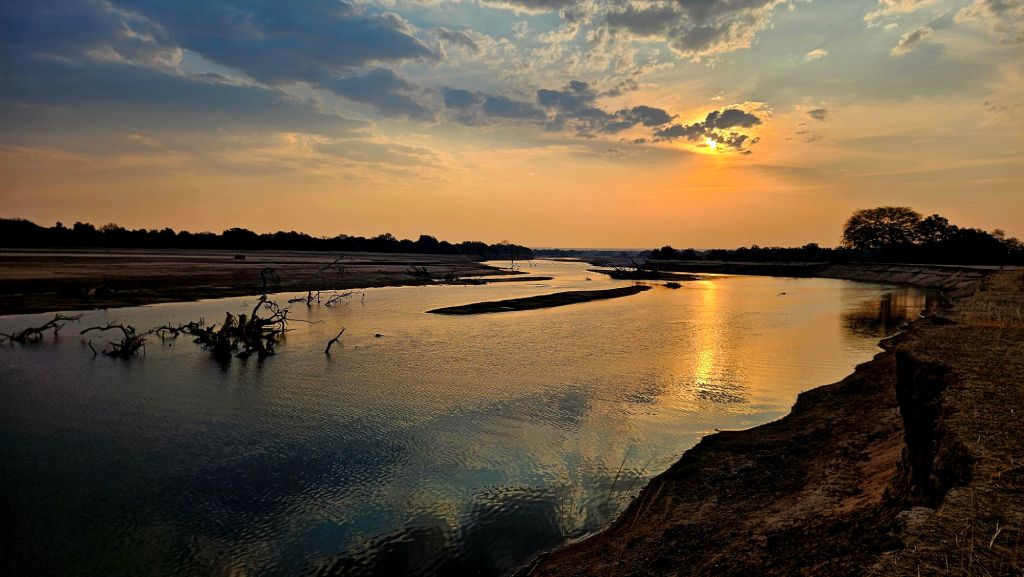
The park is famous for its high concentration of animals around the Luangwa River, including large herds of elephants, buffalo, hippos, and crocodiles.
The Luangwa Valley can boast with over 400 species of birds and an incredible density of leopards; the highest naturally occurring in the world.
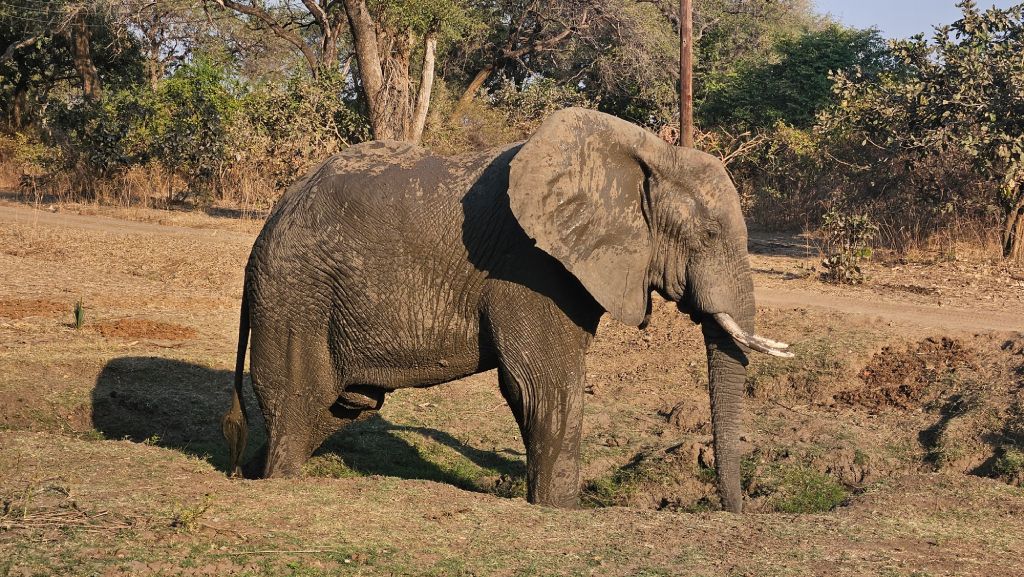
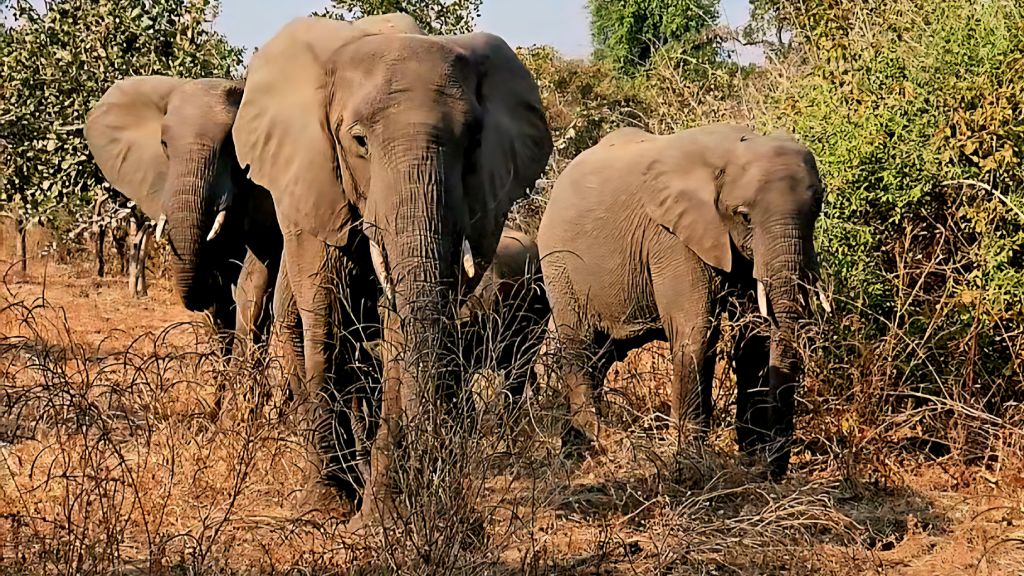
Although we arrived late and it took us a while to settle into bed, we were ready for the safari the next day at 6:00am. We wanted to reach the nearby entrance to the national park as early as possible, but even before getting there, we came across our first elephants just off the road.
After completing the formalities, registering, and having a short chat with the park rangers, we crossed the bridge over the Luangwa River. At first, I wanted to track down ranger vehicles for tourists, but I quickly lost them from my radar.
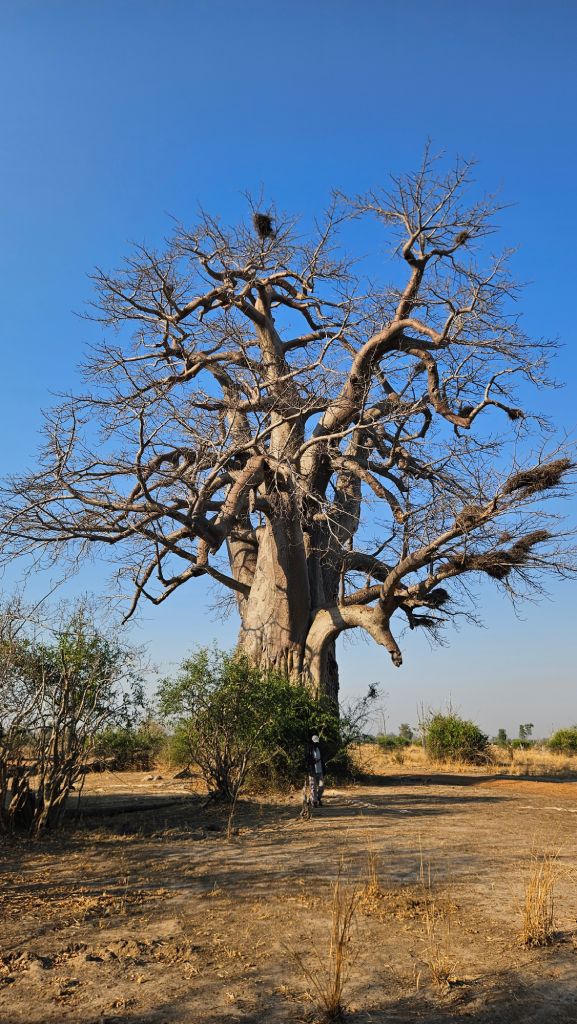
We followed a dirt road toward the area, where a pride of lions had usually been seen. I quickly realized that the markings on the stone posts were faded, and the map I had photographed at the park entrance was useless. Apart from a few main landmarks, a lake or a river, I spent the whole day navigating by instinct.
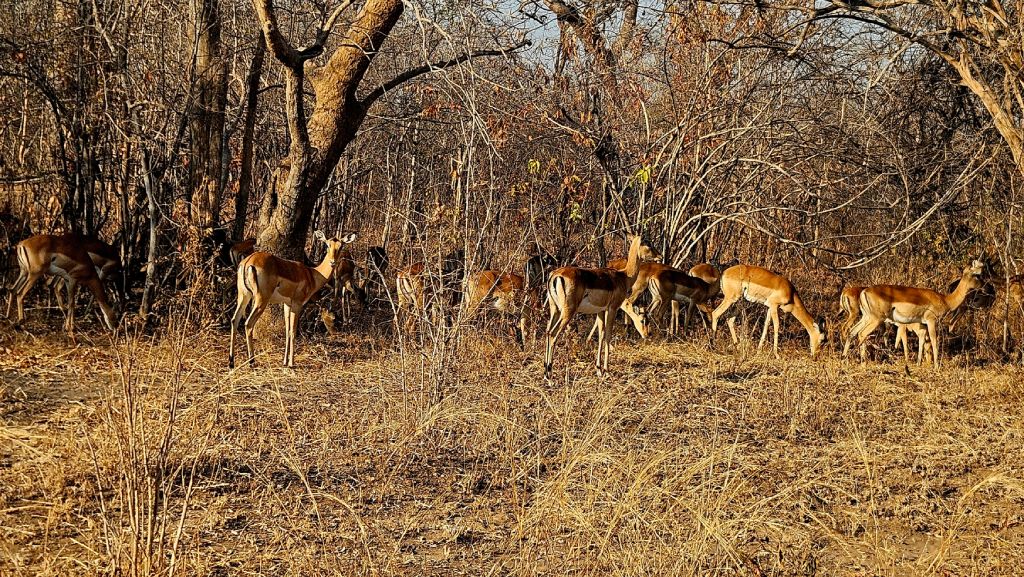
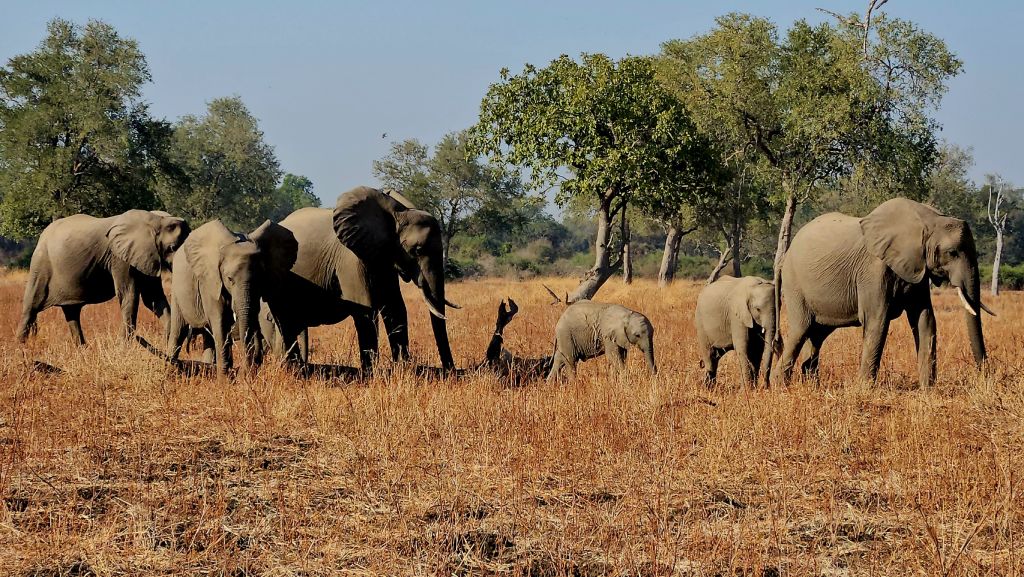
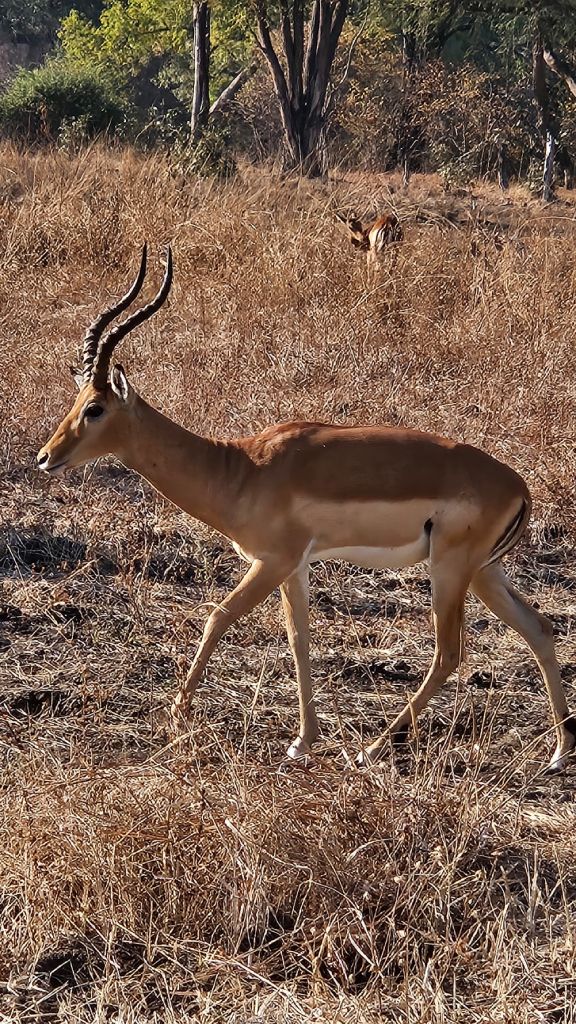
In the morning, we encountered many animals gathered in groups. Herd of up to 20 elephants were common throughout the day, slowly moving while eating, defecating, and protecting their young. Large herds of impalas were always alert and timid. They scattered quickly as our vehicle approached. I spotted buffalos in the distance, but I couldn’t get close to them along the marked trails and eventually lost them from my sight.
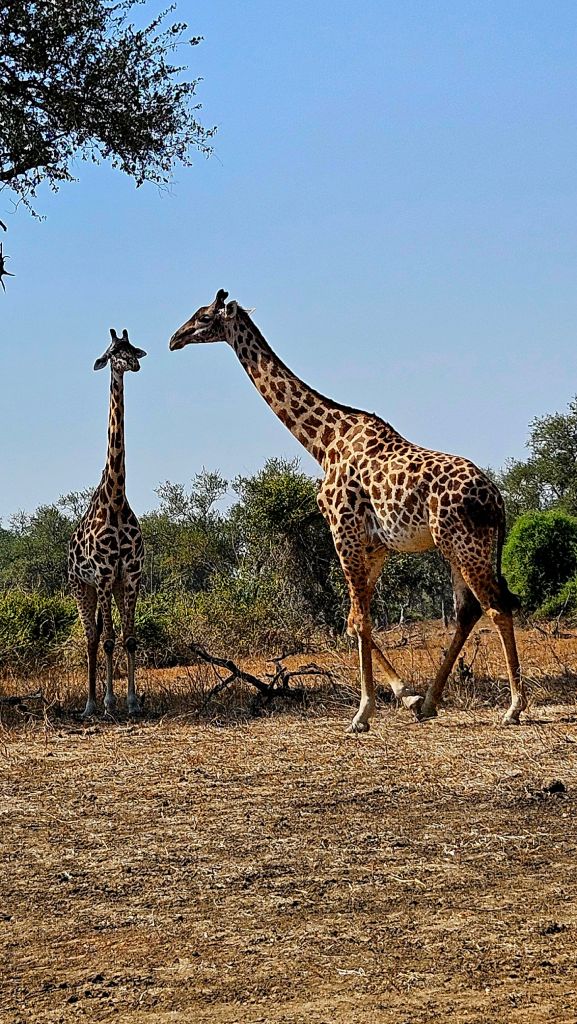
Our first encounter with giraffes came as a surprise when two tall ones suddenly appeared from behind a bush. From previous experiences in Kenya, I was used to seeing shy giraffes that would quickly move away at the sight of a vehicle. Here, they seemed much more relaxed and used to people. They only stepped behind the higher branches if we came too close.
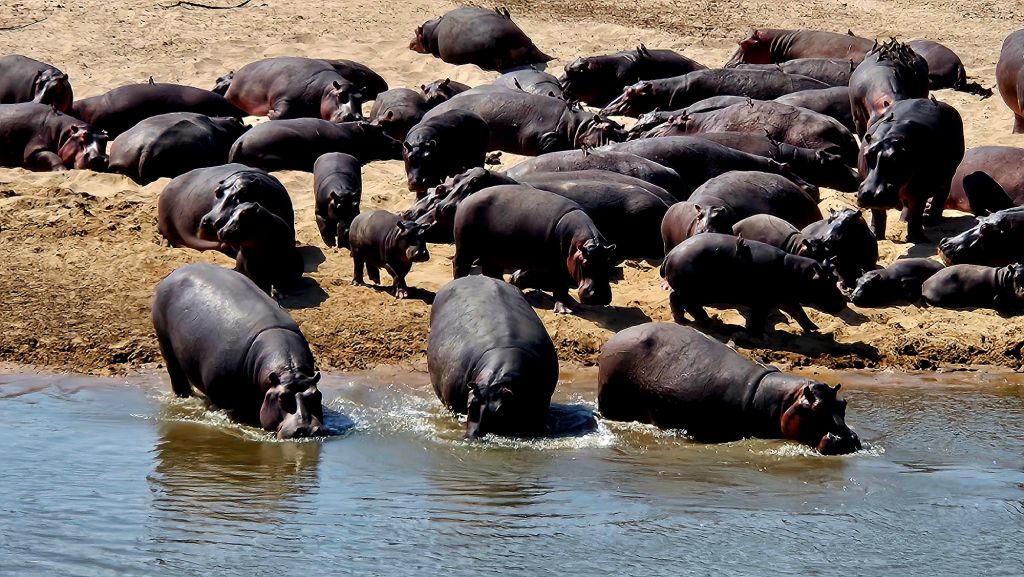
Hippos spent most of the day cooling off in the river, where the water was still deep enough for them to stand. Occasionally they let out loud grunts that echoed from underwater. Until then, I had mostly seen hippos from lake or river level. That time I was standing a few meters above the water on the riverbank, from where I could see them much more clearly, even though most of their bodies remained submerged in the water.
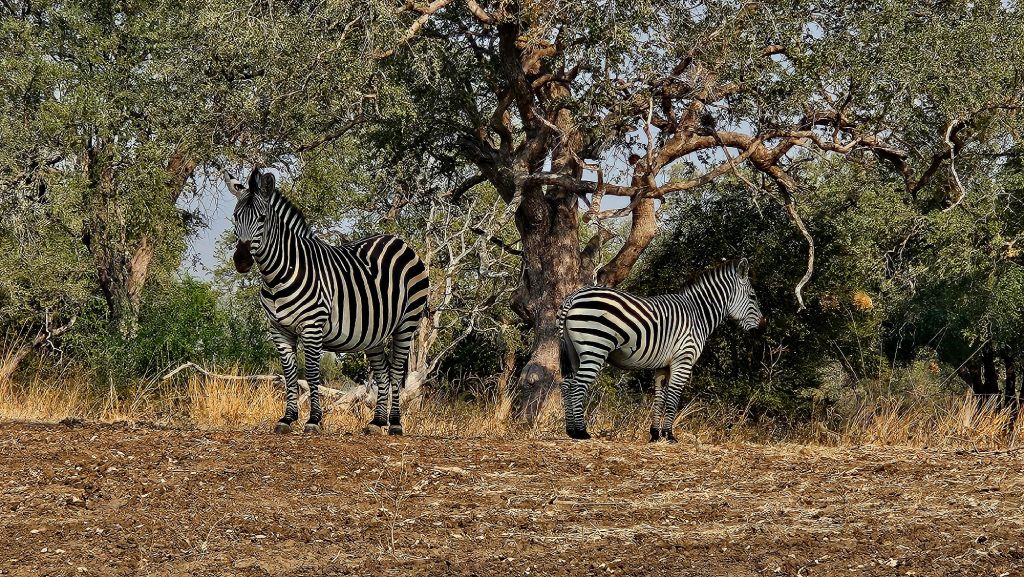
At midday, all the animals gathered around the lake to drink. Even the zebras, which seemed the most timid of all. They began to move away gracefully as soon as I got too close.
Face to face with a leopard
Late in the day, following directions from a local guide, we finally found a leopard.
The solitary leopard lay in the shade beneath a small tree, lazily looking around. Apart from our car, only two other safari vehicles were nearby.
We quietly approached within a few meters and watched it for several minutes. Calm and uninterested, it looked around with the same curiosity that we felt watching it. Observing the leopard was the most unforgettable moment of my visit to South Luangwa National Park. In general, the safari in the park was one of the best things to do in Zambia.
Dinner with a local family
In the evening, I visited a market in the nearby village Kakumbi to buy vegetables and find someone who could wash our clothes. When I mentioned this to Teresa, one of the vendors, she first looked at me in surprise, then replied:
“No problem!”
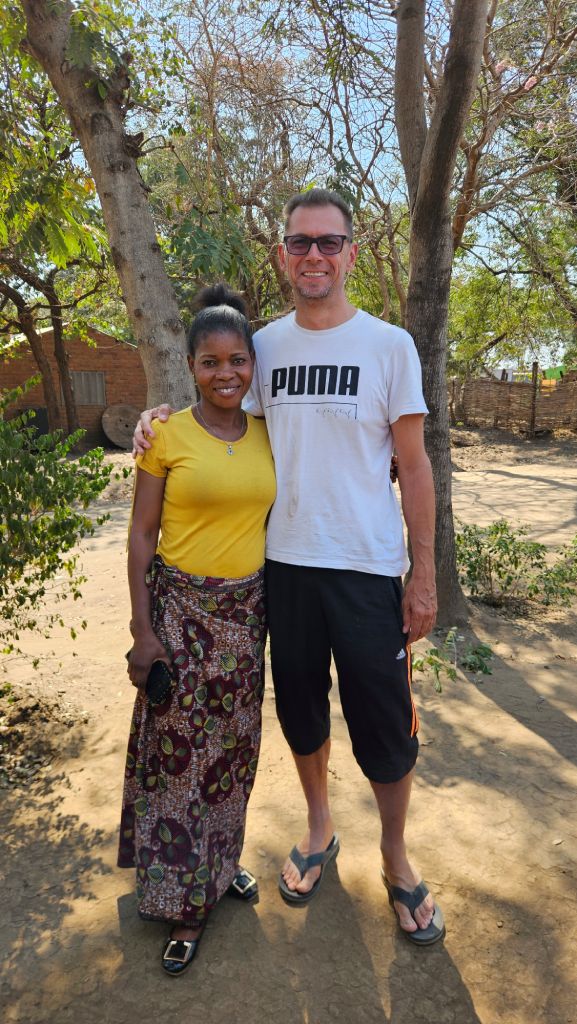
I first drove Teresa to a nearby shop to buy soap, and then to her home, where she lived with her sisters, nieces and parents. Her sister would take care of the laundry by the next day.
I then asked Teresa if they could cook lunch for my family.
“No problem! What do you want to eat?” she responded cheerfully.
We quickly agreed on the price, menu and time.
I had driven Teresa back to the market, where a middle-aged man offered me a large fish. After a short bargaining, we agreed on the price. Teresa was surprised, but assured me that she would be happy to prepare the fish for lunch the next day.
At the last minute, I remembered that I also needed a local guide who could take us to some lesser-known parts of the national park and help us find lions.
“No problem. My father is a guide!” Teresa replied confidently.
I could hardly believe it. We drove back to her home, where she introduced me to her father. During a short conversation, he convinced me of his experience and knowledge. He had been working as a park guide for 20 years but hadn’t renewed his license due to lack of money and work. We quickly agreed that he would accompany us as a guide the next day, and then we would come to his house for lunch.
Super Teresa took care of everything: vegetables, fruits, laundry, lunch and a guide.
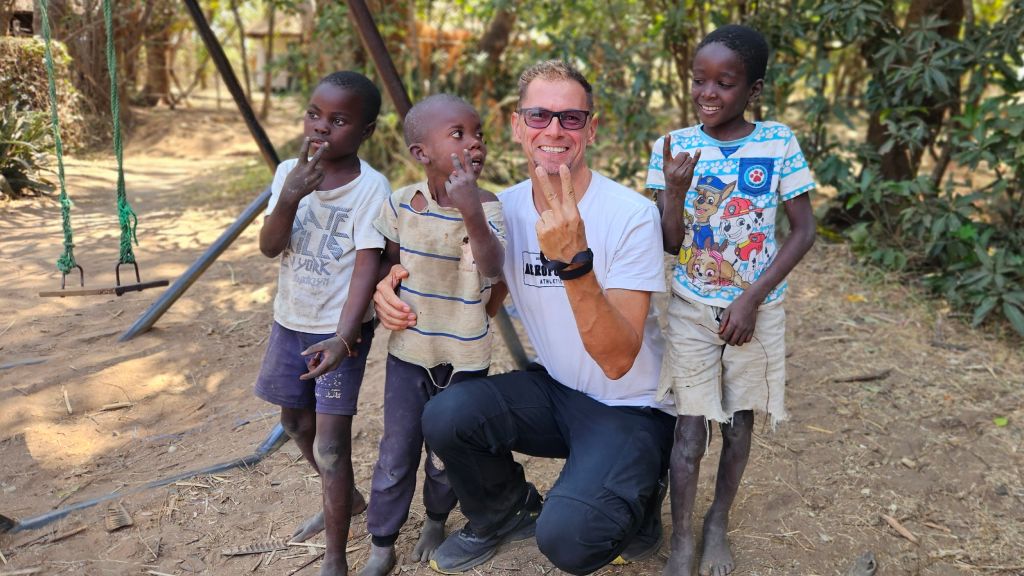
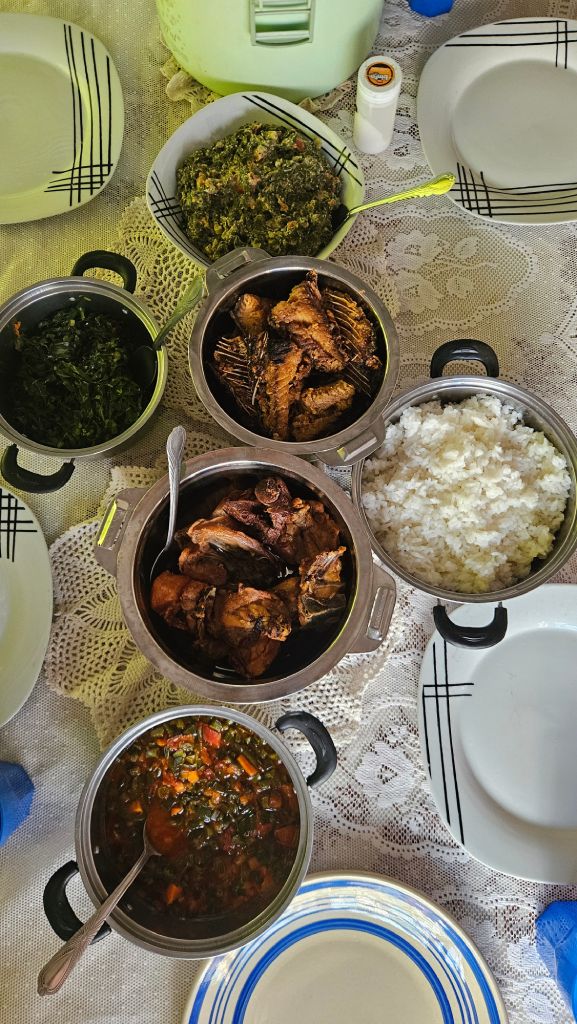
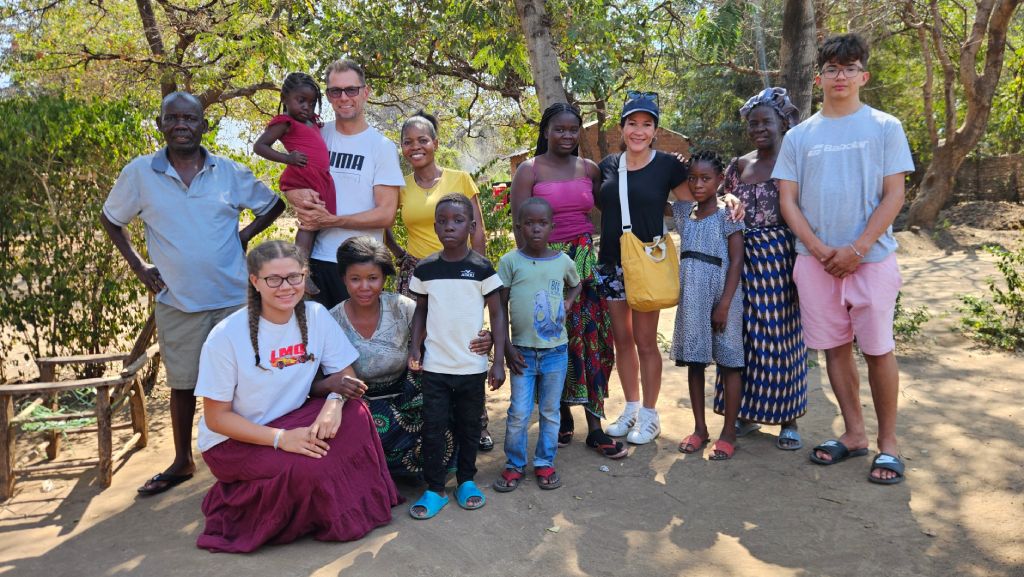
Everything turned out perfectly. Clean and neatly folded clothes, an experienced guide who confidently led us through new parts of the park, and a delicious meal shared with Teresa’s family. We ended up the event with pleasant conversation and a joyful group photo.
Majestic Victoria Falls
Livingstone, named after the explorer David Livingstone, is Zambia’s main tourist town thanks to its location near Victoria Falls. At first, I wasn’t impressed with the city. Our Airbnb apartment was far from the center. There were frequent power cuts; the town itself seemed dull. Later, I realized how calm and pleasant it was compared to the busy Zimbabwean side (Victoria Falls Town), with tasty local food, few tourists, and very friendly people.
The main reason for staying in Livingstone was to visit Victoria Falls and go rafting on the Zambezi River. In the afternoon, when the heat had eased a bit, we took local transport to Zambezi River Bridge, where the entrance to the falls is located. The entrance fee (25 US$) on the Zambian side is quite reasonable compared to 50 US$ on the Zimbabwean side.
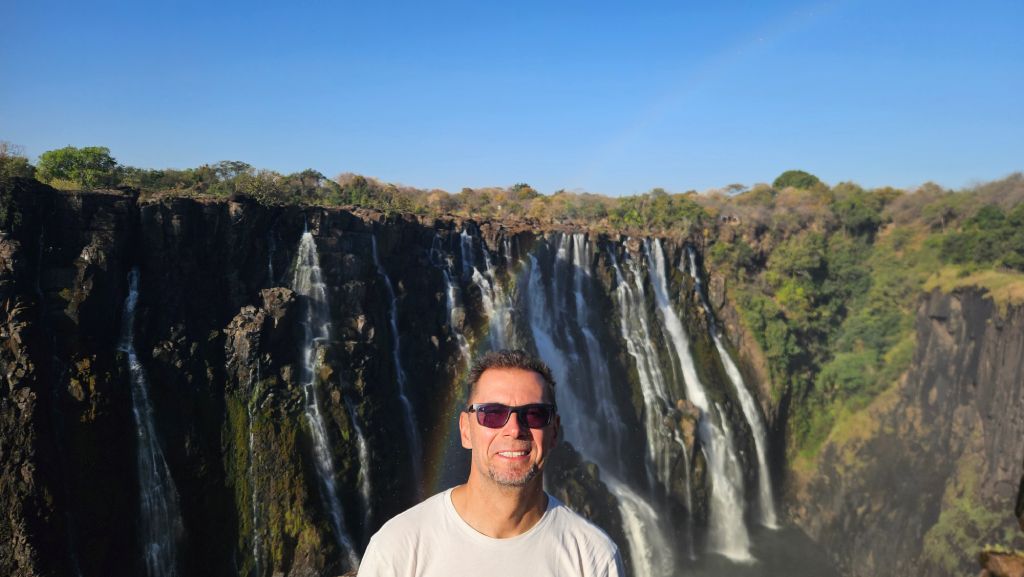
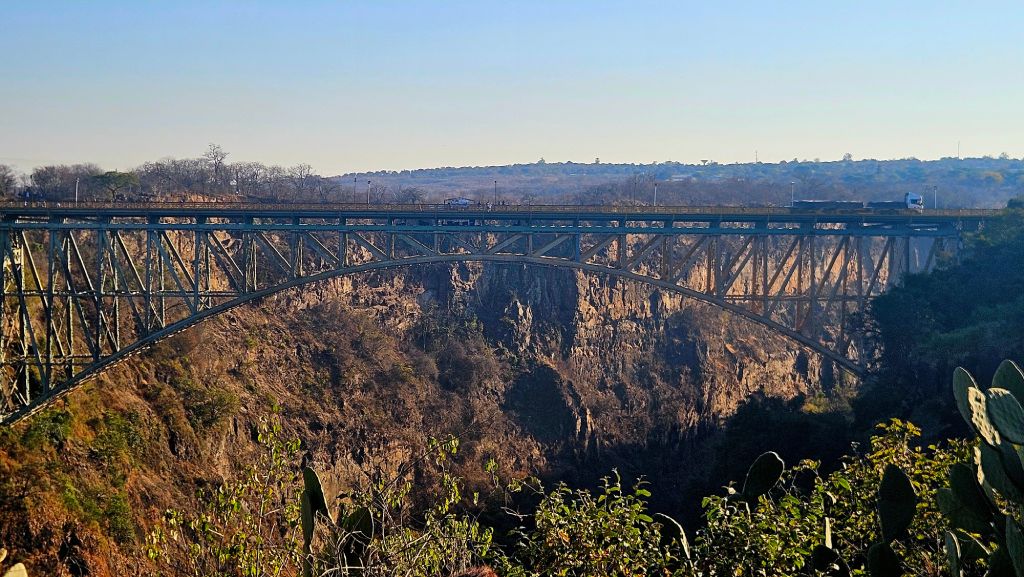
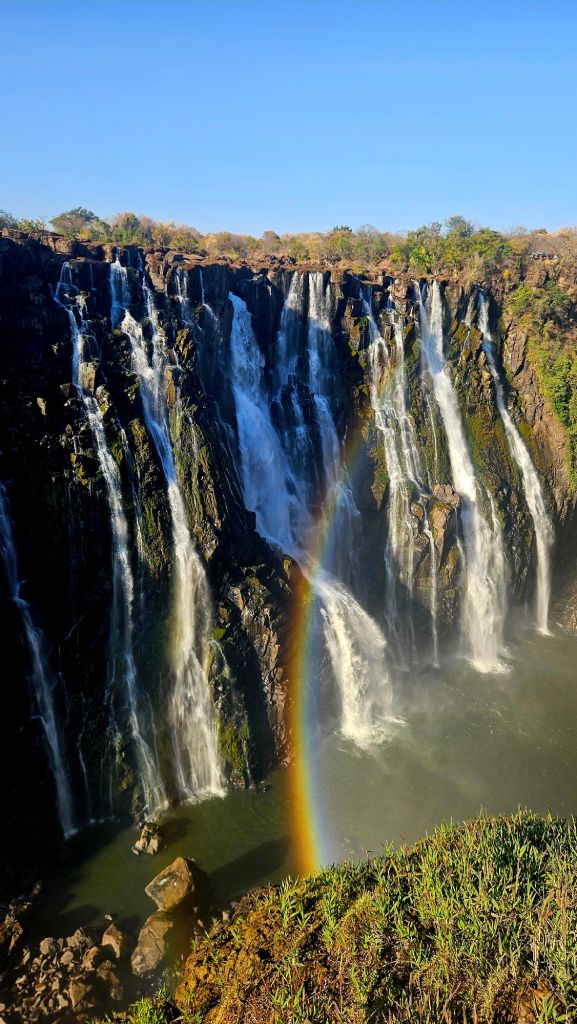
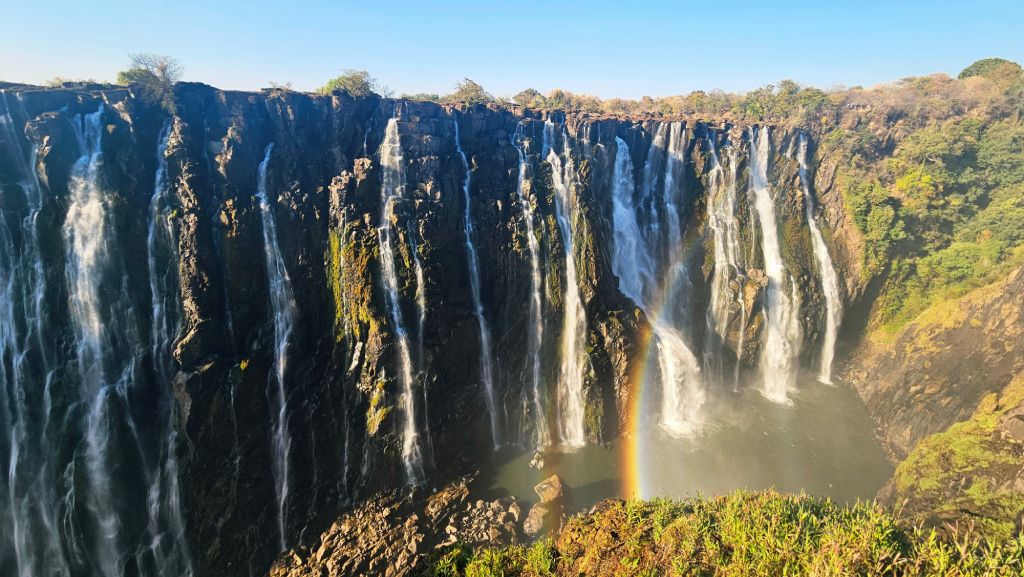
Victoria Falls, known locally as Mosi-oa-Tunya (The Smoke That Thunders), is one of the world’s most awe-inspiring natural wonders. From the moment I saw the falls, I understood why they have earned such international fame.
Stretching 1.7 kilometers wide, with water falling 108 meters into the gorge, they are impressive from every angle.
Even in the dry season (August), the falls were still strong and thundered through the gorge. The mist, rising from the falls, created constant rainbows at different locations.
I walked along the edge of the gorge for about two hours. I was enjoying views from every possible perspective, mostly in the company of local visitors. No tour groups. The mist soaked me far less than I had expected.
Zambezi rafting negotiations
Rafting on the Zambezi River is known as one of the best in the world. The powerful river cuts through a deep canyon, creating a thrilling mix of rapids, pools and calm stretches. I chose the Zambian side over Zimbabwe’s because of the half-day option, lower price, set the minimum age at 13.
After some confusing Airbnb communication, I ended up with an agency called Elite Rafting in Livingstone. When I went to the address on Google Maps, there was no rafting office; just a small taxi service and a man with long dreadlocks who introduced himself as Raymond - the owner of the agency.
I expressed my surprise at the look of the agency and its unusual location. When I asked, how he could guarantee good equipment, safety and a great rafting experience, he smiled and answered:
“Everybody knows me. I am Raymond. You’ll have a great time tomorrow — we’ll take good care of your kids.”
Despite my doubts, we met over lunch, finalized the deal at a heavily discounted price, and agreed to meet at our apartment the next morning. The main reason to raft with Elite Rafting were good reviews from previous customers.
Zambezi river rafting tour
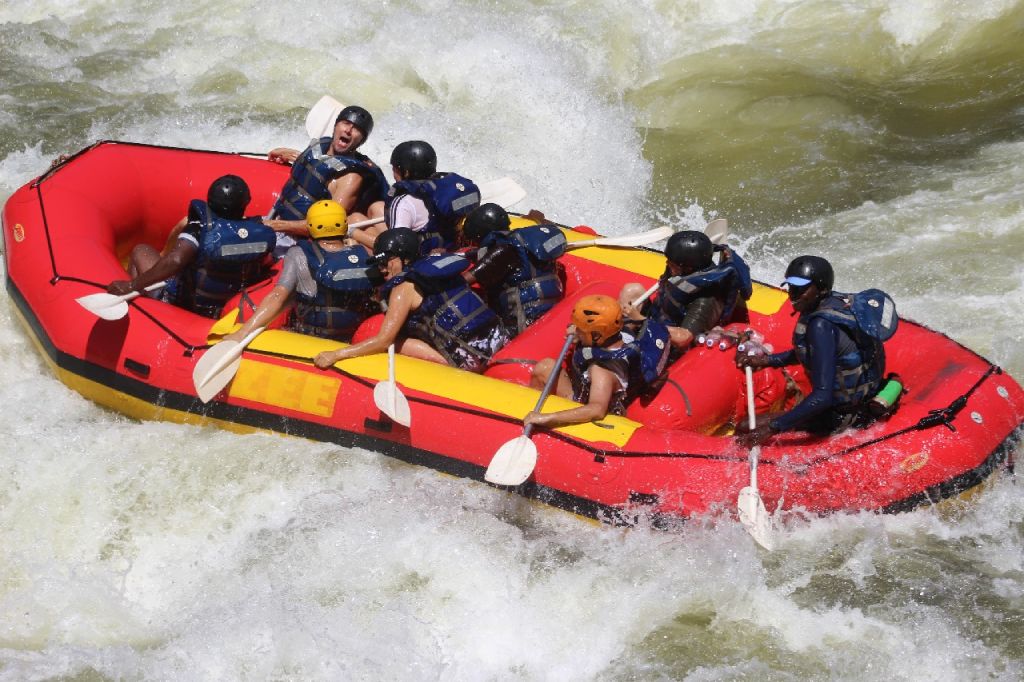
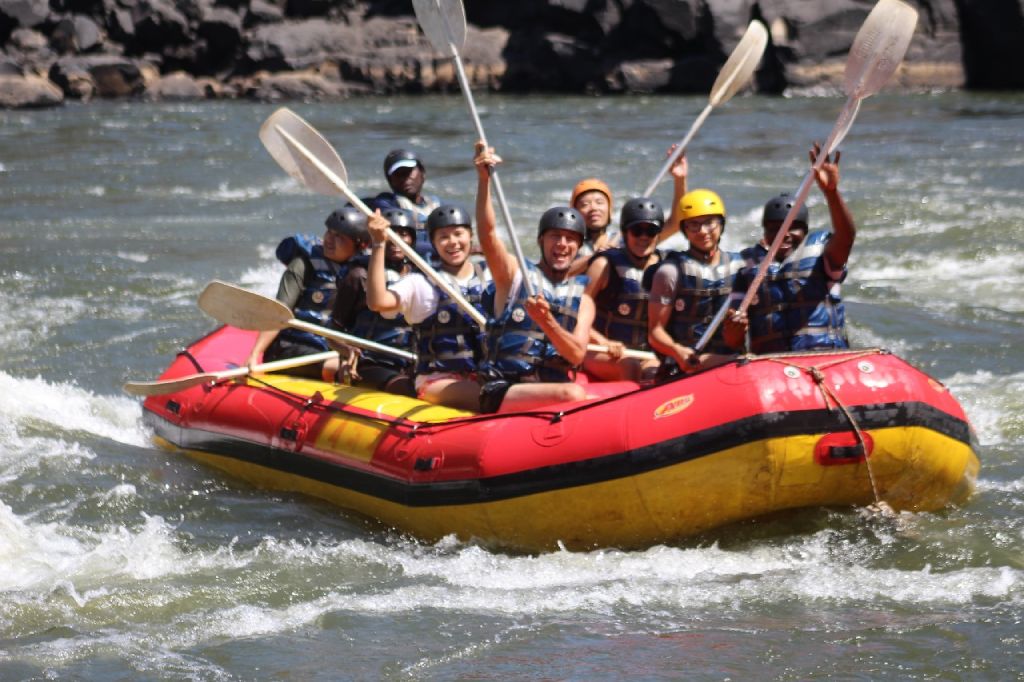
The next morning, we were picked up exactly as agreed and taken to the starting point for rafting. A steep descent from the ridge to the river passed quickly as I chatted with one of the guides. Our international group of eight was briefed on the rules, paddling techniques, communication, and safety instructions. Some details turned out differently from what Raymond had promised, but our boatman’s positive energy and funny stories quickly assured me we were in for a great time.
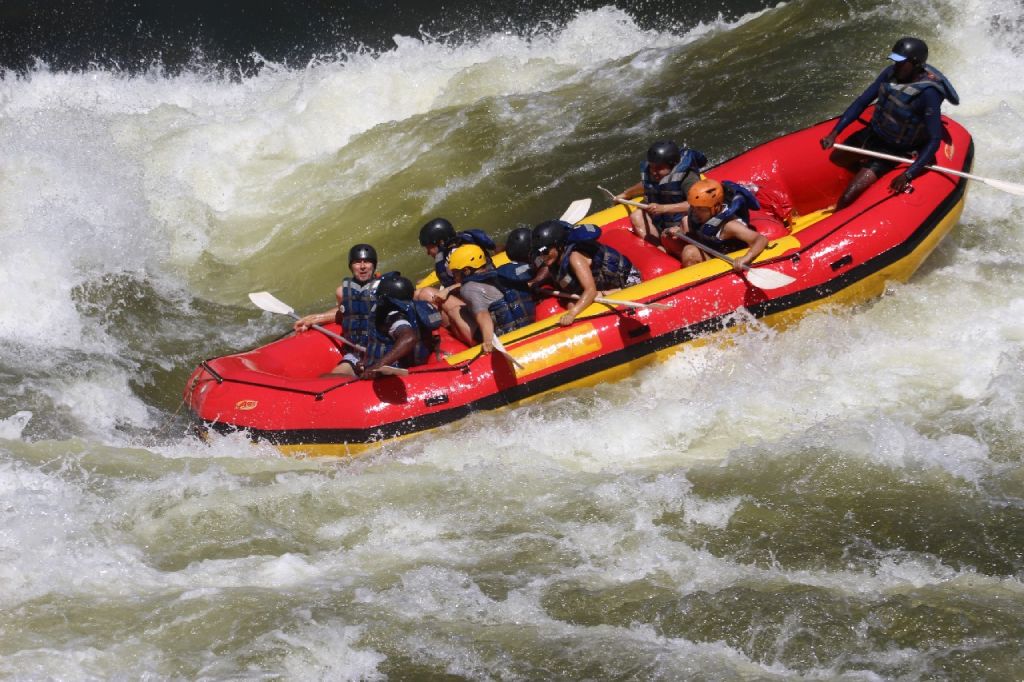
The rapids followed one after another; some gentle, others powerful enough to send adrenaline through the body.
As one of the key paddlers at the front, I tried to keep the rhythm and paddle hard. It soon became clear that our strokes were more for fun, while the boatman effortlessly steered the raft wherever he wanted.
The two Chinese guys in the back row were paddling in slow rhythm until the boatman directly called them out for not putting in the effort, while the rest of us were rowing with full strength. One of the safety kayakers spent his free moments spinning, diving and turning around in the most exciting rapids. The other kayaker was responsible for photos and videos. He always paddled ahead to find strategic spots on the rocks to capture our raft in action.
We successfully made it through all the rapids, including the most notorious ones: rapid #10 – Gnashing Jaws of Death, rapid #12 - Three Ugly Sisters, rapid #13 - The Mother, rapid #15 - Washing Machine and rapid #18 – Oblivion. The only one we skipped was rapid #9, known as Commercial Suicide, where we watched from the bank as our boatman guided the raft alone through the 5-meter vertical drop and powerful reverse current below.
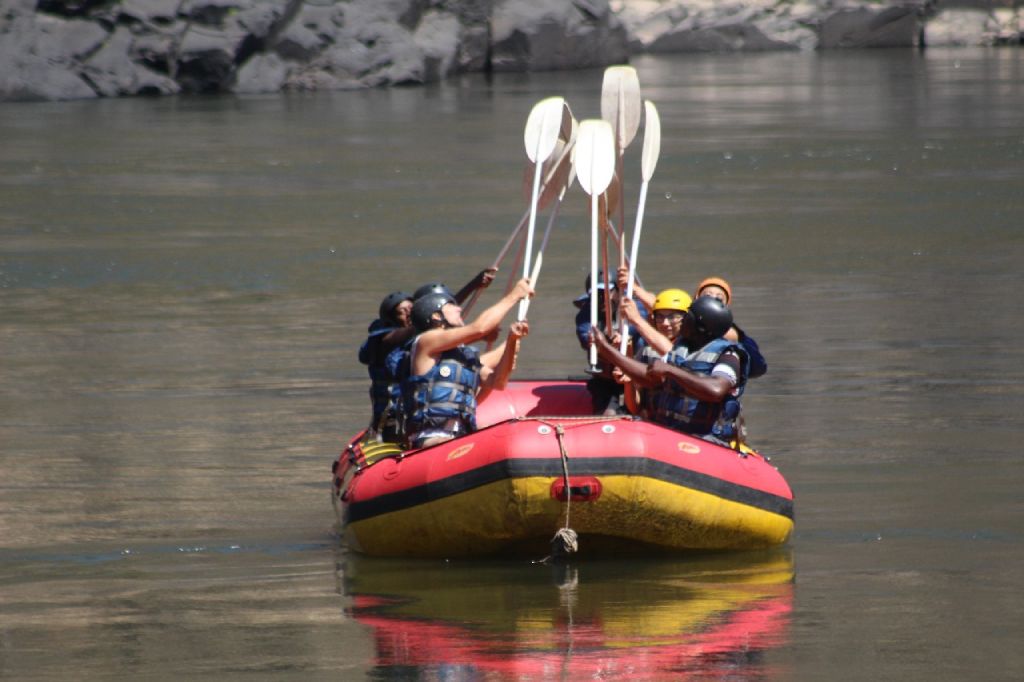
We successfully made it through all the rapids, including the most notorious ones: rapid #10 – Gnashing Jaws of Death, rapid #12 - Three Ugly Sisters, rapid #13 - The Mother, rapid #15 - Washing Machine and rapid #18 – Oblivion. The only one we skipped was rapid #9, known as Commercial Suicide, where we watched from the bank as our boatman guided the raft alone through the 5-meter vertical drop and powerful reverse current below.
After navigating from rapid #7 to #25, we finished our adventure. The toughest part was the steep ascent back to the top of the canyon. A bumpy ride in an old Russian truck back to Livingstone and an encounter with elephants, who were crossing the main road, completed an unforgettable day.
Rafting on the Zambezi River was truly one of the most thrilling experiences I’ll never forget.
Reflections on my visit to Zambia
Zambia is one of the most pleasant country to visit in Africa.
I mixed excellent and affordable wildlife watching in the eastern region with authentic Ghost Dance and community service. The spectacular Victoria Falls was complemented by thrilling Zambezi rafting. There are other adrenaline-filled activities around the famous waterfalls, but I didn’t decide to participate in these activities.
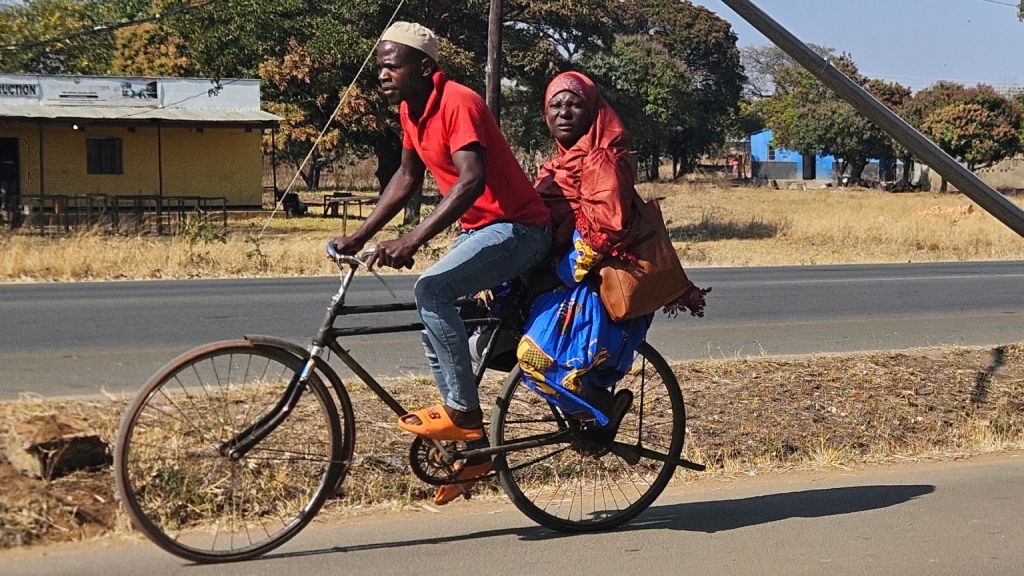
It’s easy to get around — whether by rental car, efficient public transport, or reliable taxi apps in bigger cities. I found delicious food and affordable, high-quality accommodation (by African standards) at every destination.
Zambia Travel Photo Gallery