Visited: August 2025
Duration of visit: 6 days
Capital city: Harare
Population: 17 million (2025)
Zimbabwe travel blog reading time: 10 minutes
Zimbabwe attractions and memorable experiences:
- Amazing Victoria Falls – the largest curtain of falling water in the world.
- Rhino walking safari in Matobo National Park.
- Exploring the remains of Great Zimbabwe
- A vibrant and bustling capital Harare, but with limited things to do.

Zimbabwe was part of my three-months trip that also included Angola, Namibia, Botswana, Zambia, Malawi and Mozambique. Traveling from the Atlantic to the Indian Ocean was one of my most enjoyable journeys in Africa. Along the way I encountered warm hospitality, reliable infrastructure, delicious cuisine, excellent value for money, and, thanks to perfect timing, I avoided crowds in many areas.
I travelled around Zimbabwe with my family. We used public transport and rented a car to visit Matobo National Park as a day trip. Due to another commitment, I was obliged to interrupt my visit, which meant less time than planned for visiting Harare.
Dollarization
Crossing the border from Zambia (Livingstone) to Victoria Falls was a real cultural shock. The long line of tourists, mostly tour groups, whom I hadn’t noticed before, was the introduction to what felt like an adult version of Disneyland in Victoria Falls Town.
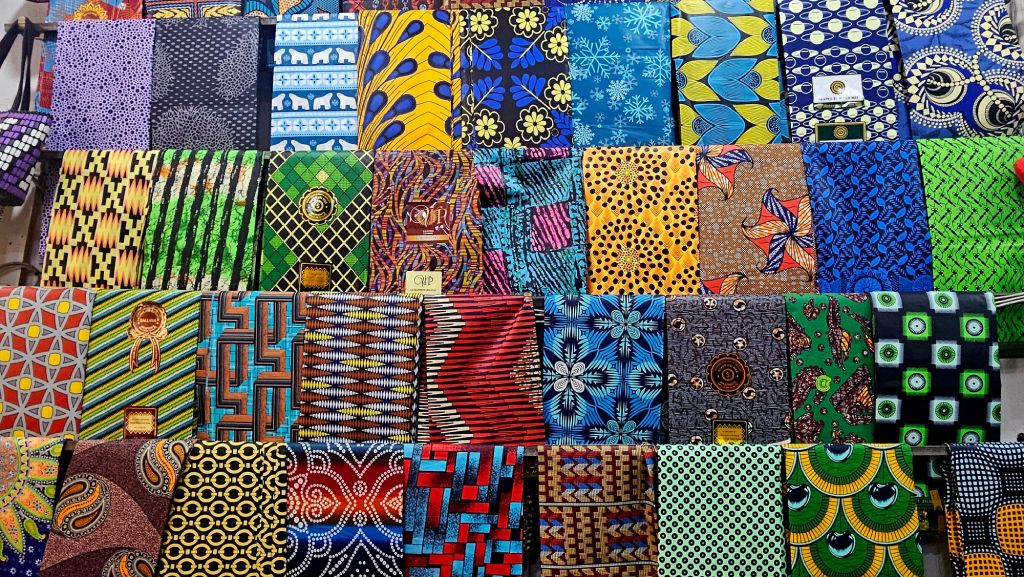
Prices in US$ automatically mean higher costs compared to neighboring Zambia. At first, I was surprised when people on the street quoted me only round figures in American dollars, but later I realized why: in Zimbabwe, they use only dollar banknotes, not coins.
After the period of hyperinflation, when prices were rising every few hours, Zimbabwe replaced its weak currency (Zimbabwean dollar) with the US$ in 2009.
Although subsequent efforts were made to restore the local currency, that never really happened in practice.
Victoria Falls
We stayed in a large three-bedroom house we found through Airbnb. It was a bit far from the city center, which is entirely orientated toward tour groups and international visitors. There’s also a special shopping complex dedicated to souvenirs, a craft center, and exclusive restaurants offering international cuisine.
The town is full of travel agencies offering all kinds of tours: from Victoria Falls activities to excursions across the country and neighboring countries.
I was really happy that I had already done my rafting on Zambezi River in Zambia. Here, I only planned to visit the falls and continue my journey inland as soon as possible. I wanted to avoid the crowds of organized tour groups and tourists who fly into Victoria Falls for two or three days, spend hundreds or even thousands of dollars on luxury adventures, and then fly out.
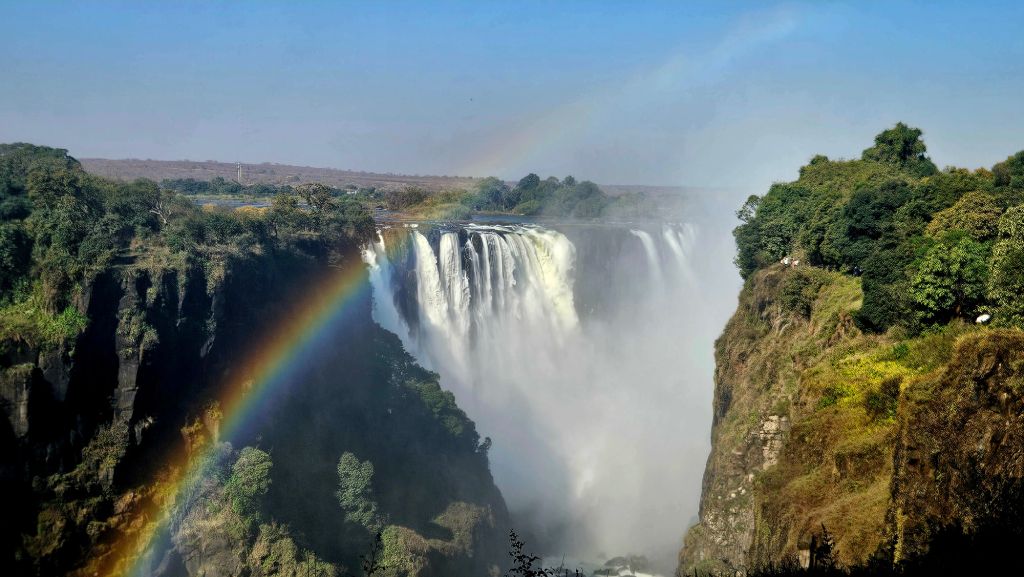
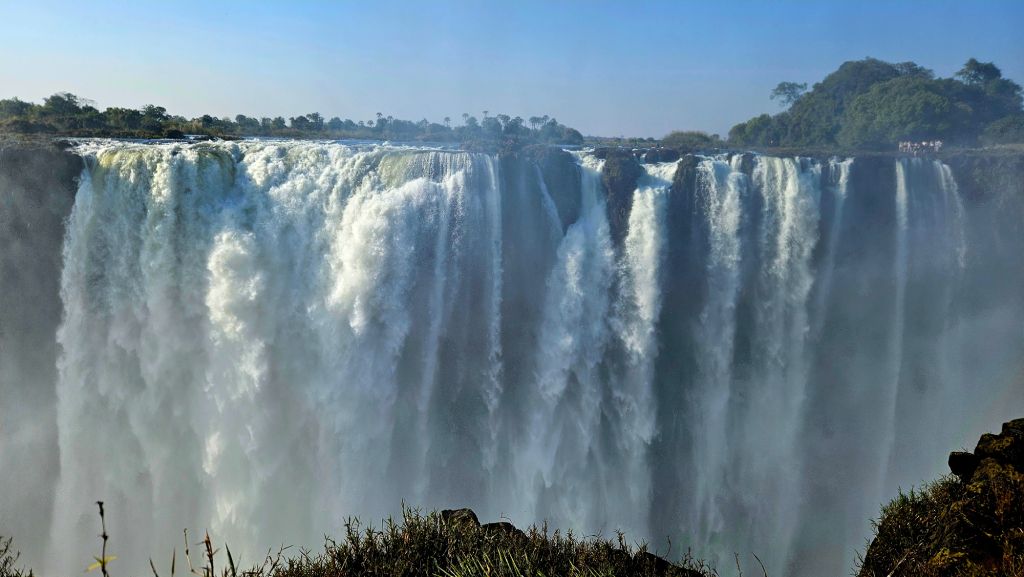
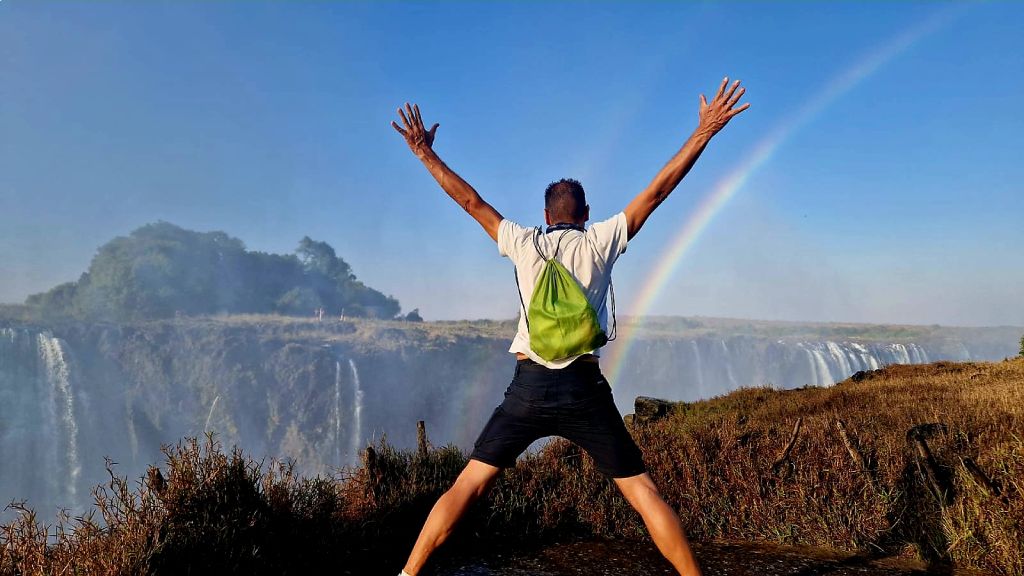
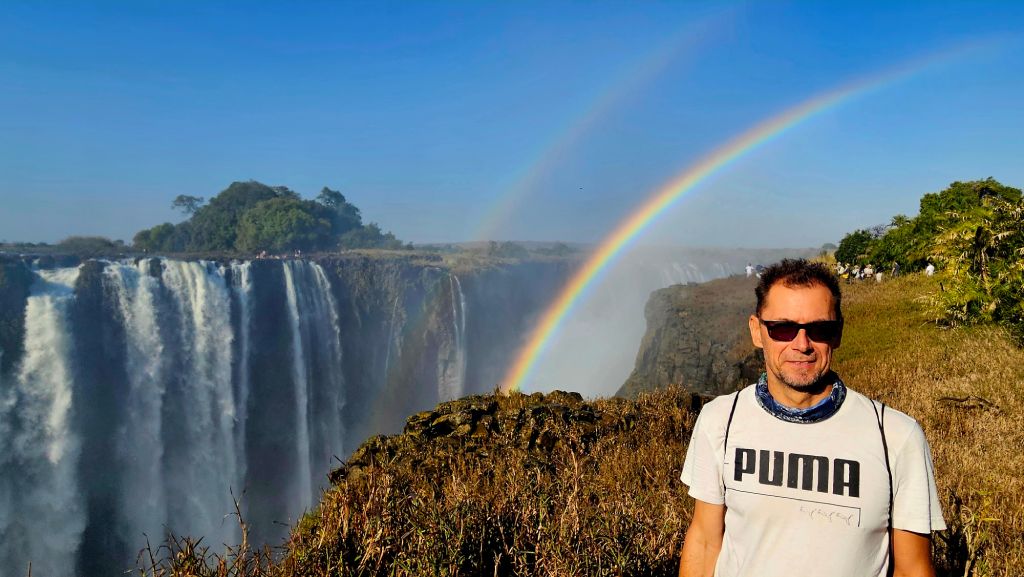
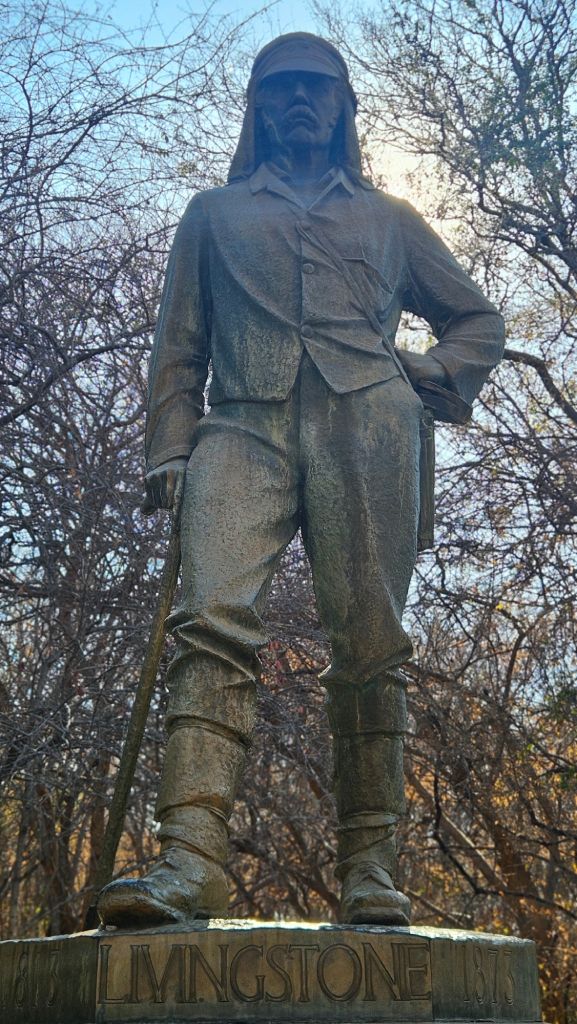
Two-thirds of Victoria Falls can be viewed from the Zimbabwean side, and the entrance fee reflects that (50 US$). I began my visit at the statue of the first European to see this natural wonder in 1855, Dr. David Livingstone. He named the falls after Queen Victoria of Britain. Locally, they are known as Mosi-oa-Tunya, meaning “The Smoke That Thunders.”
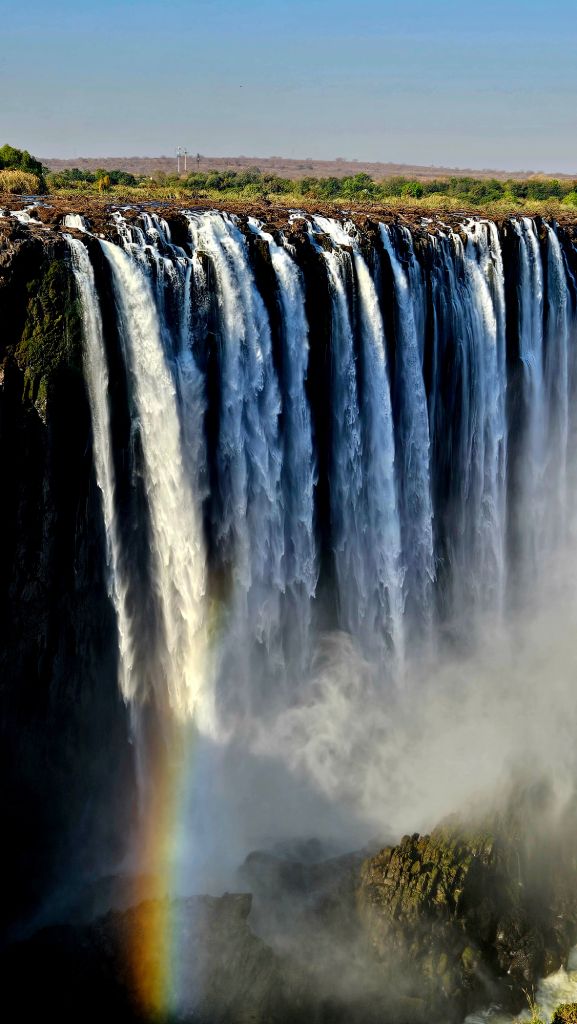
Victoria Falls, is one of the world’s most awe-inspiring natural wonders. From the moment I saw the falls, I understood why they have earned such international fame.
Stretching 1.7 kilometers wide, with water plunging 108 meters into the gorge, they are the highlight of Zimbabwe and impressive from every angle.
In the late afternoon, when the air finally cooled down, I followed the path that extended past a number of viewpoints along the edge of the gorge, where the water drops more than a hundred meters below. At certain times of the year, white-water rafting begins at the base of the falls, while at the top lies the famous Devil’s Pool – small rock pool, adjacent to the famous Livingstone Island situated on the edge of the waterfall.
Even in the dry season, there was still plenty of water. On this side of the falls, I noticed far more foreign tourists than in Zambia. Helicopters carrying visitors circled overhead, offering panoramic flights above the thundering curtain of water.
Riding a bus on deteriorated roads
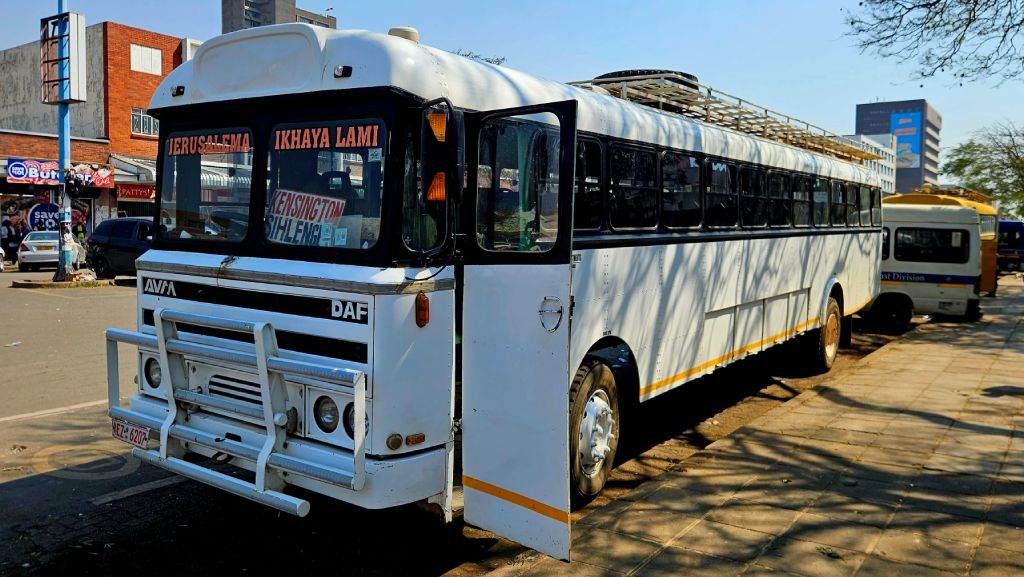
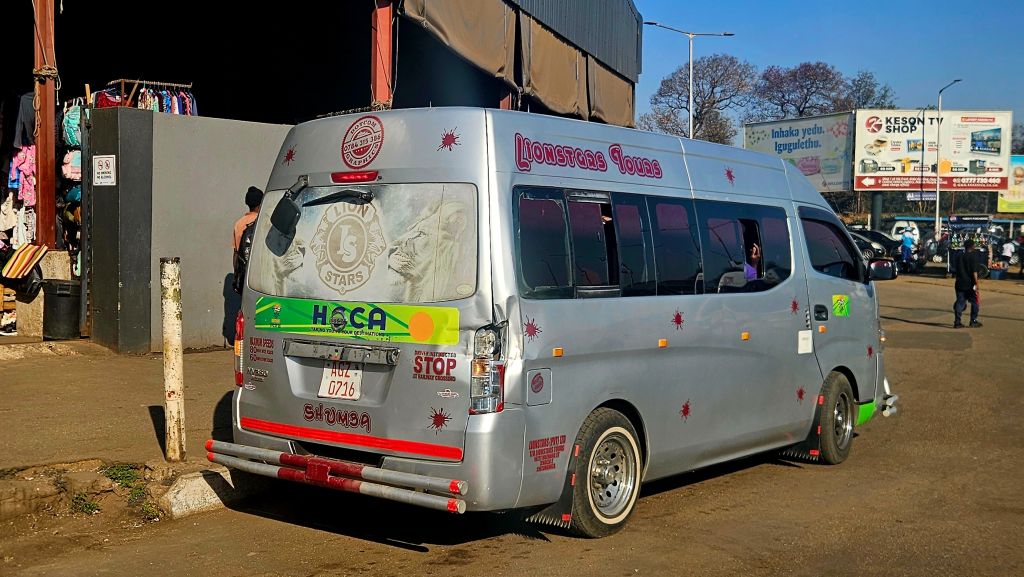
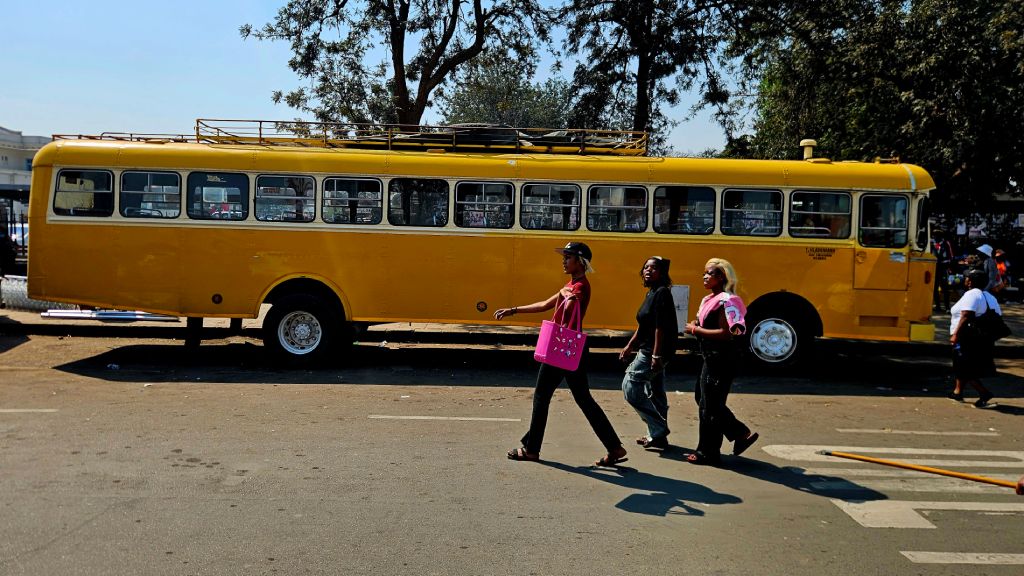
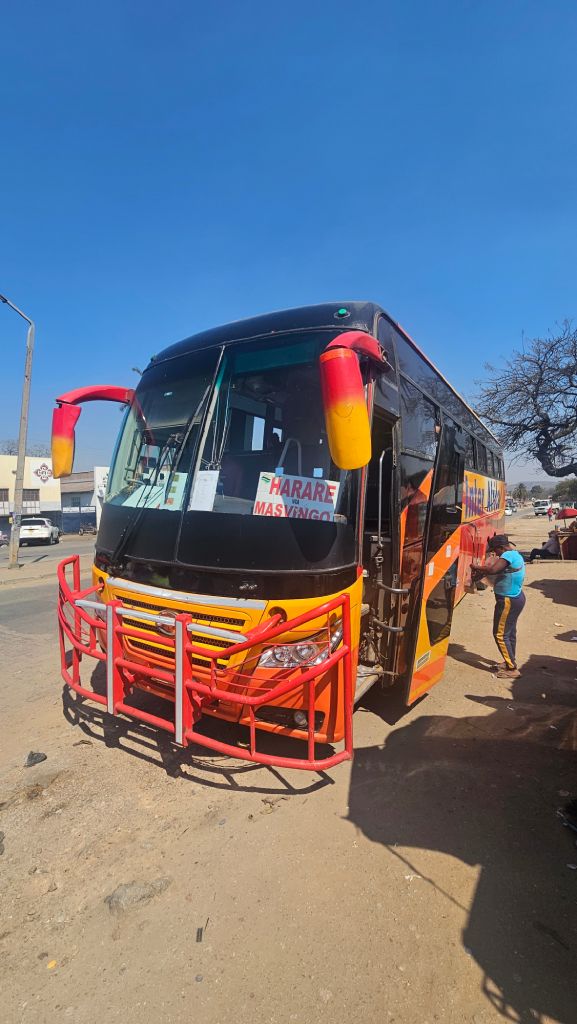
Travelling by bus in Zimbabwe can be exhausting. Despite the relatively short distances, poor road conditions and overcrowded buses make the journeys much longer than expected. Very often they can be uncomfortable as well.
From Victoria Falls to Bulawayo, I took a large bus with five seats in each row. After a short while, the asphalt disappeared. The dusty road was full of potholes, with some stretches under construction. Without air conditioning and with clouds of dust filling the cabin, I arrived at my destination dirty and tired, but grateful to have made it.
I had previously booked and apartment in Bulawayo. The owner advised me to call her, when I was going to arrive at the bus terminal.
“Wait at the bus station. I will pick you up in 15 minutes!” was almost an order that I got.
After exactly 15 minutes, she called me again and asked to wait outside, since she was arriving.
Suddenly a police pick-up truck stopped in front of us and a big lady with a strong voice ordered used to join her: “I will take you to my apartment. Jump in!”
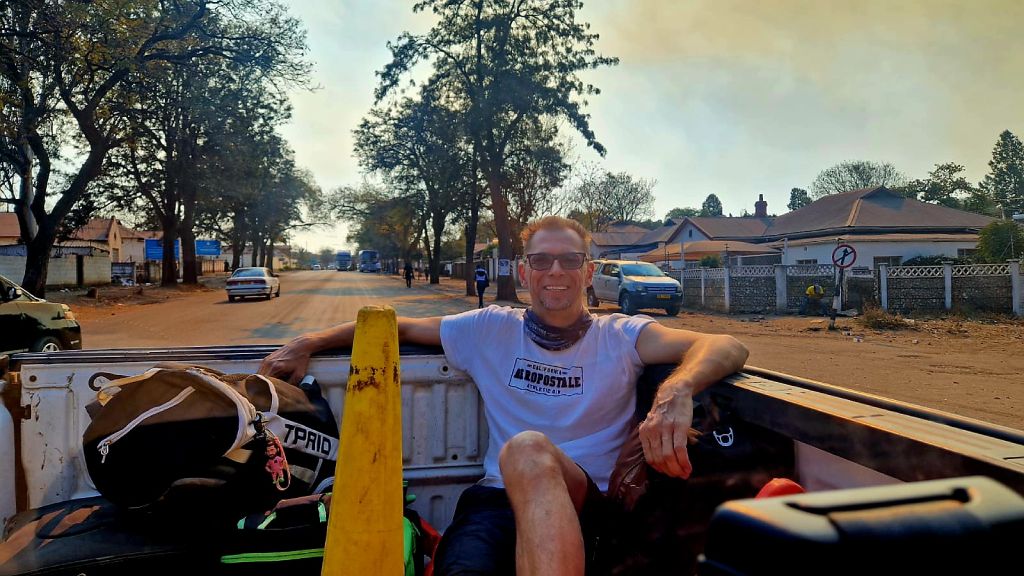
Since there wasn’t enough space in the car for all of us, I climbed onto the back of the truck. I settled comfortably and enjoyed the ride in a police pickup around Bulawayo.
“Bulawayo is a very dangerous city. Lock your doors and close the shutters when you go out. If you rent a car, don’t park it in front of the apartment building,” the apartment owner warned me.
I took her advice about the car seriously and decided to rent one the next morning. But during my walk through the city, I didn’t notice any particular danger.
Bulawayo isn’t a particularly attractive city; there aren’t many places to visit or things to do.
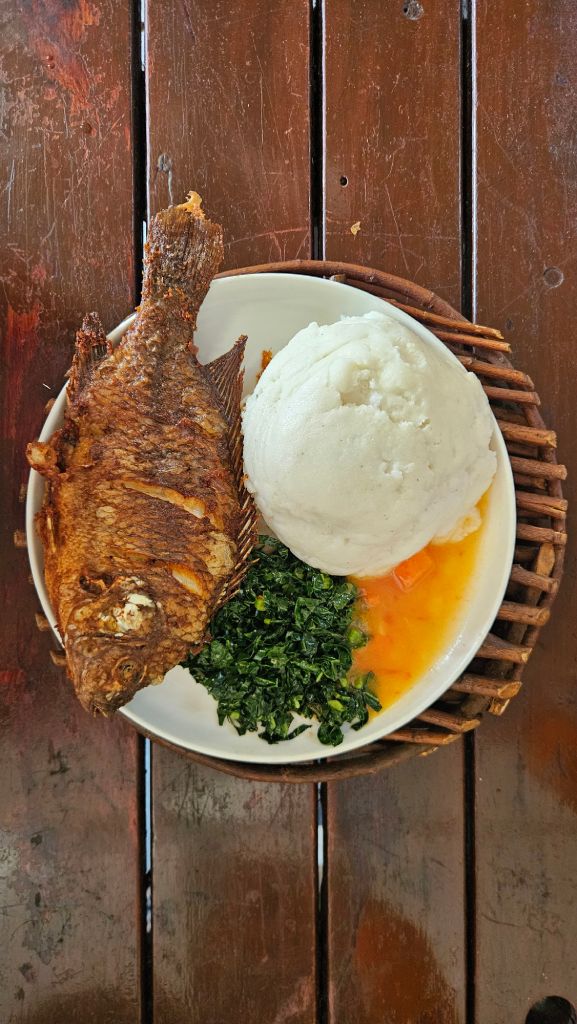
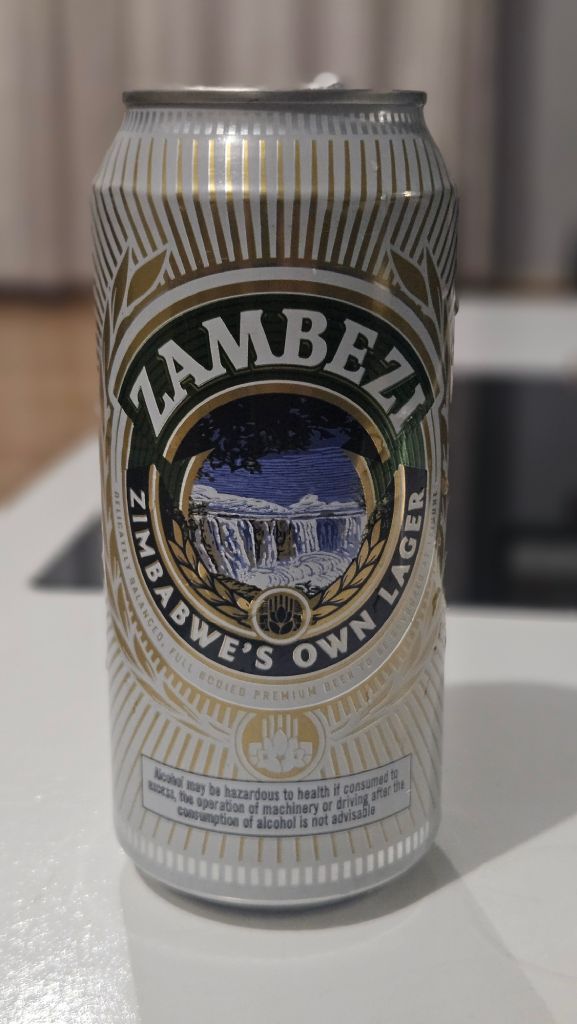
It took me quite some time to find a restaurant, before finally ending up in a simple local place that, despite its good reviews, didn’t look very promising. I was wrong. The fish was excellent, and the meat dishes for the children were freshly prepared and delicious. The price was local, too.
Rhino walking safari
The only national park I visited in Zimbabwe was Matobo National Park, and only for one reason: to see white rhinos. I rented a vehicle in Bulawayo to drive about half an hour to the park entrance.
At the well-organized ranger’s station, I was explained how the park operates. Besides its primary purpose, it also serves as a transit point to the southern part of the country. In addition to the basic entrance fee, I had to pay extra to see each of the park’s main attractions.
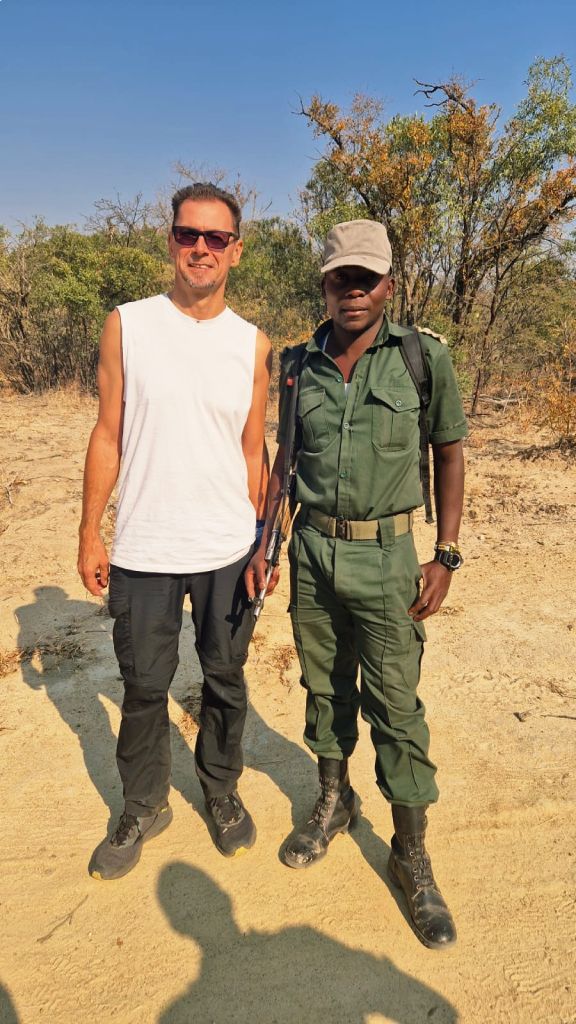
So, I paid the supplement to see the rhinos, and took one of the guides into the vehicle. She directed us to the area, where a ranger and a security guard were waiting for us.
“How far are the rhinos?” I asked excitedly.
“About a hundred meters from here. Park the car and we can start walking to see them!” he replied.
Walking safaris to spot rhinos are probably even more exciting than the usual safaris by vehicle. Before the walk began, we got a few tips on how to walk quietly, avoid making noise, and what to do if the animals felt threaten. Then we set off, stepping over dry leaves and through tall grass to make the way across the savanna.
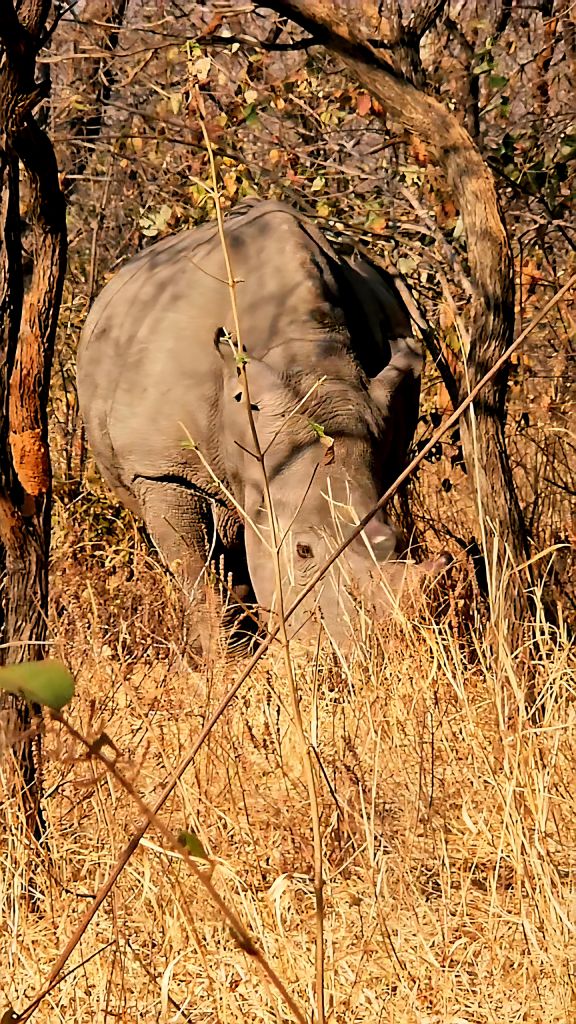
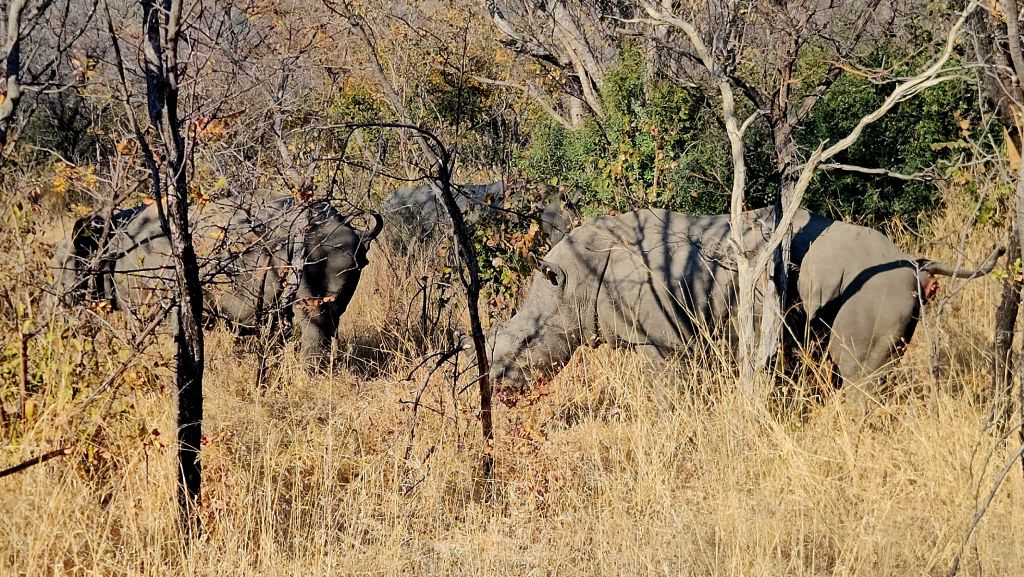
Not far away, we spotted a family of five rhinos grazing in the late morning. They moved slowly, calmly eating leaves approximately 7 meters from us.
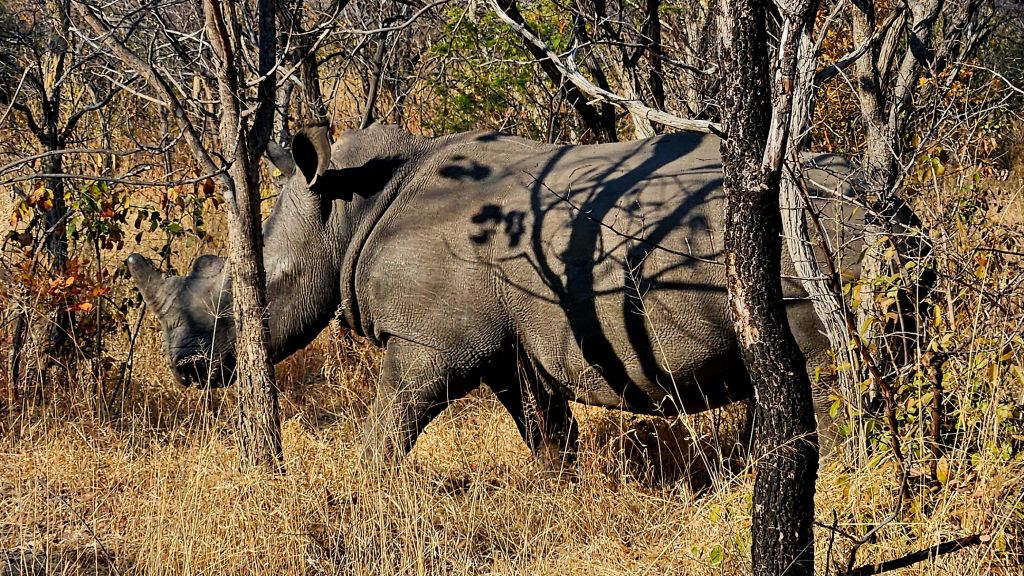
Their behavior was relaxed. I assume, they’re used to people. Each morning, after the rangers track them down, the visitors are allowed to approach, observe and take photos of them for a few minutes.
I had the feeling that, from the moment they noticed our presence, they skillfully hidden behind bushes and tree branches. Even though we could watch them from up close, taking good photos was tricky. There was always something in the way: a tree, a bush, a shade, or simply their backs turned toward us.
Remarkable rock formations
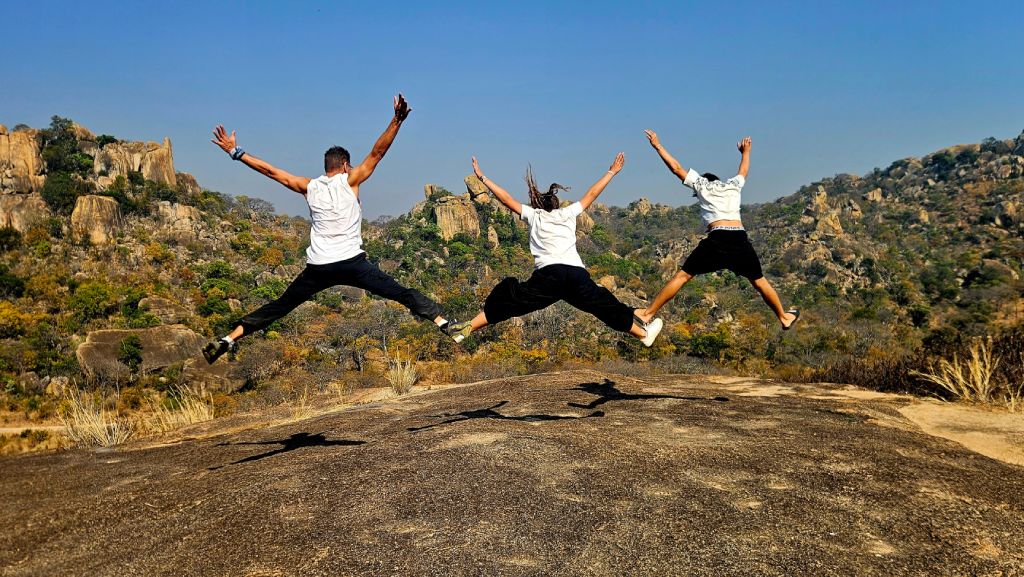
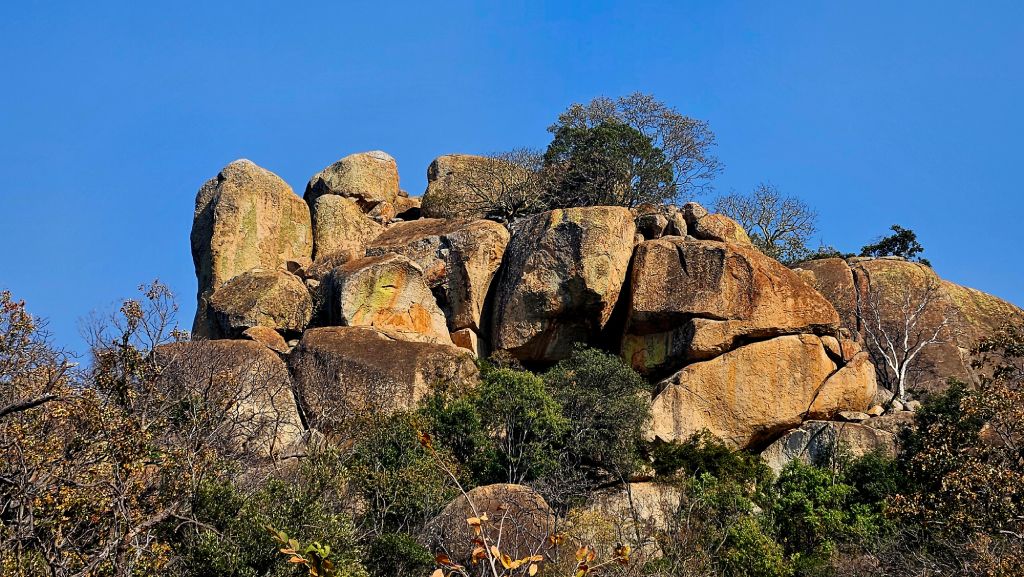
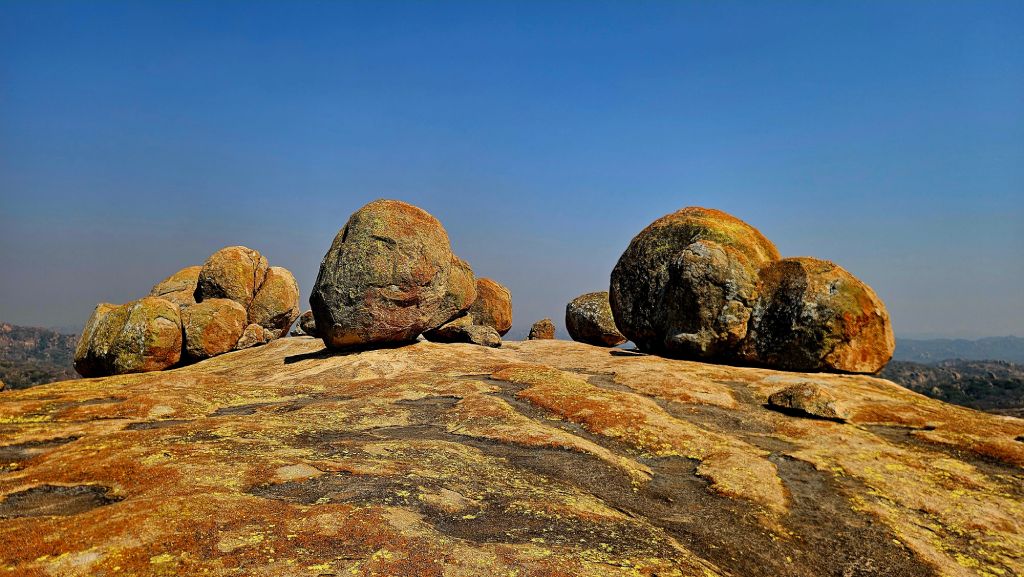
Another highlight of Matobo National Park is its remarkable rock formations — colorful, eroded, and uniquely shaped. Some are easy to climb, as their rough surfaces provide a good grip and aren’t slippery. Every few hundred meters fascinating views unfolded in front of us.
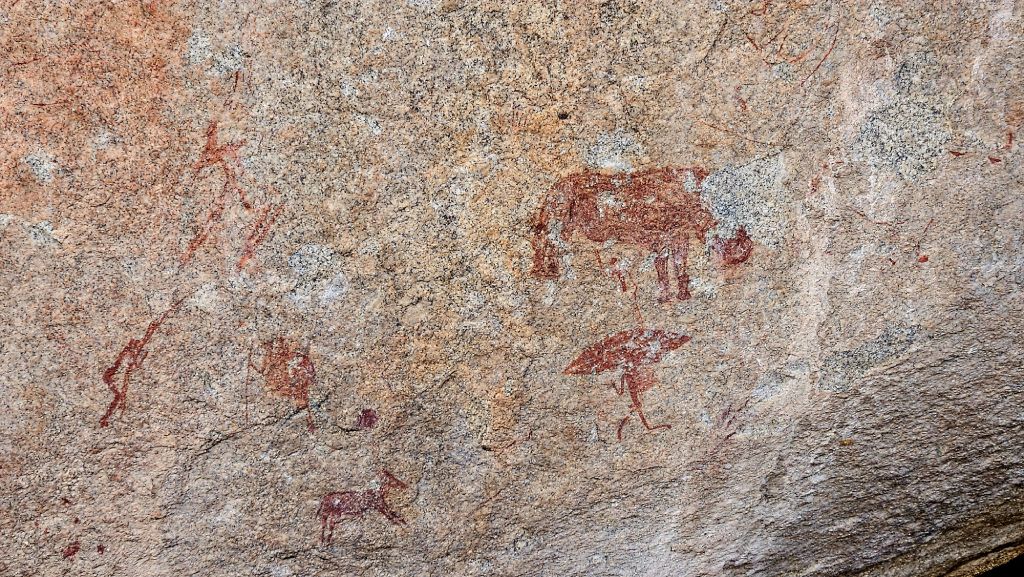
The Matobo Hills are home to the largest concentration of rock art in on the entire African continent. While hiking up one of the hills, we found several ancient paintings carved into the rocks. Despite being thousands of years old and exposed to natural conditions, they have remained surprisingly well-preserved.
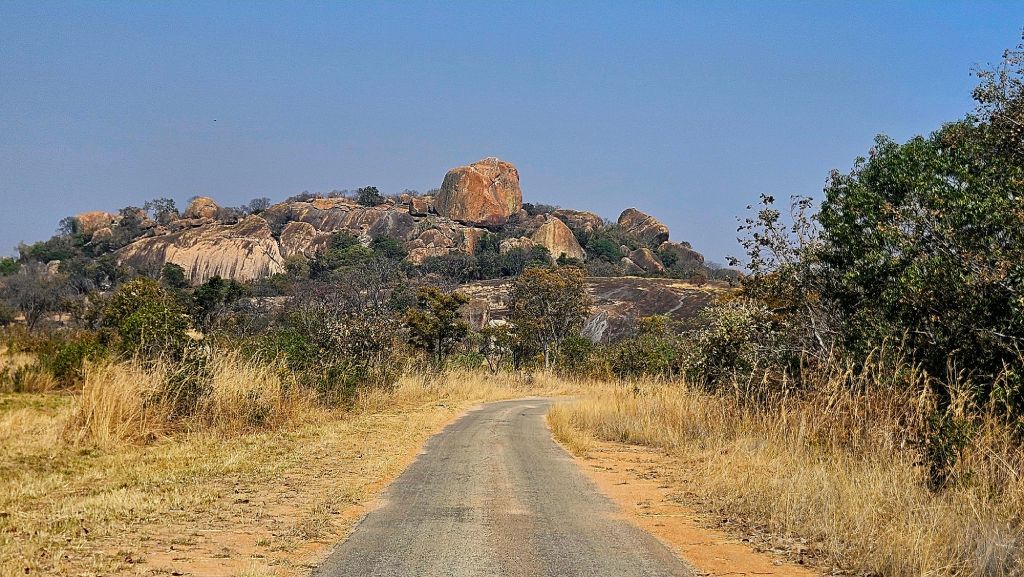
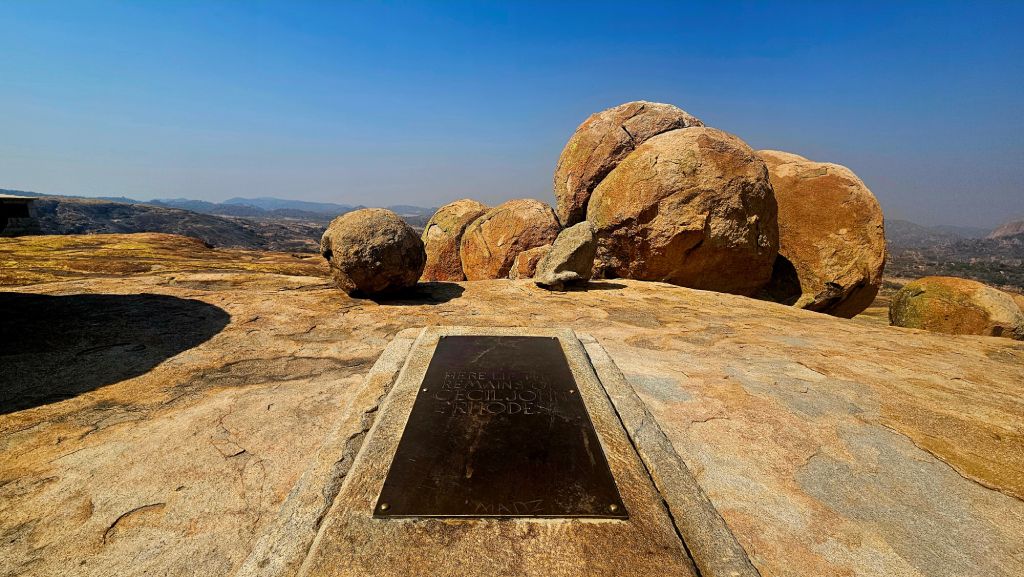
I found the best view at Malindidzimu (Hill of the Ancestral Spirits), also known as the World’s View, which is the burial site of several prominent figures in Zimbabwe’s history. This place holds historical significance and it is famous for breathtaking panoramic views. It serves as the final resting place of Cecil Rhodes and several members of the Shangani Patrol. Malindidzimu is definitely a landmark that combines natural beauty, historical significance, and sacred meaning for indigenous groups.
I was impressed by a spectacular setting for the chosen colonizers’ final resting place. The graves are surrounded by stones of various shapes and sizes on top of the magic hill with a 360° view over the stunning landscape.
Great Zimbabwe
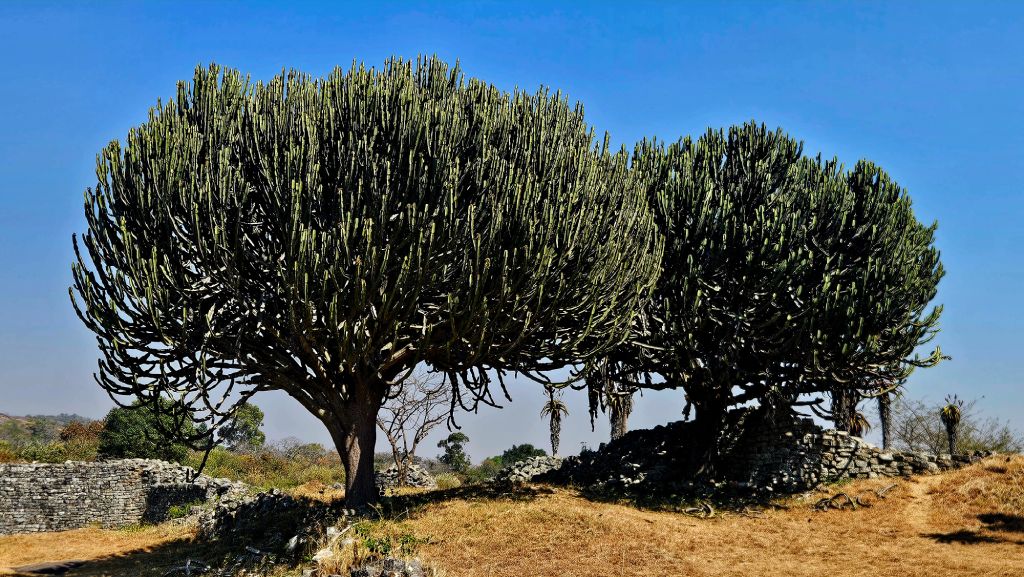
Great Zimbabwe is unlike anything else in this part of Africa; a rare historical site unlike anything else for hundreds of kilometers around. Once one of the continent’s most advanced and powerful civilizations, it stands as an important reminder of Africa’s rich and complex past.
As a UNESCO World Heritage Site since 1986, it is one of the nation’s top attractions and landmarks, featured on Zimbabwe’s national flag, emblem, and old currency.
A ruined city was the capital of the Kingdom of Zimbabwe during the Late Iron Age, thriving between the 11th and 15th centuries.
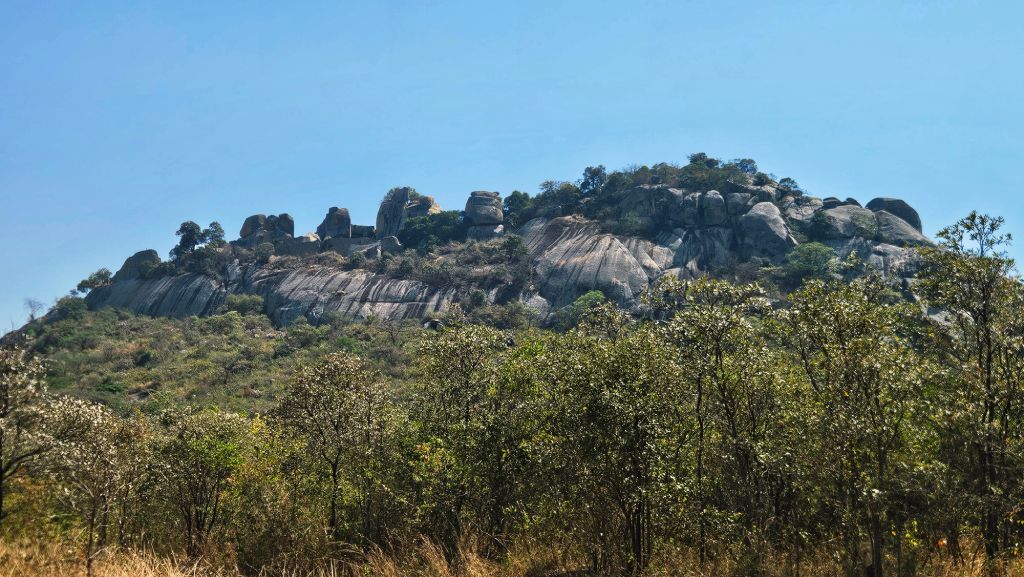
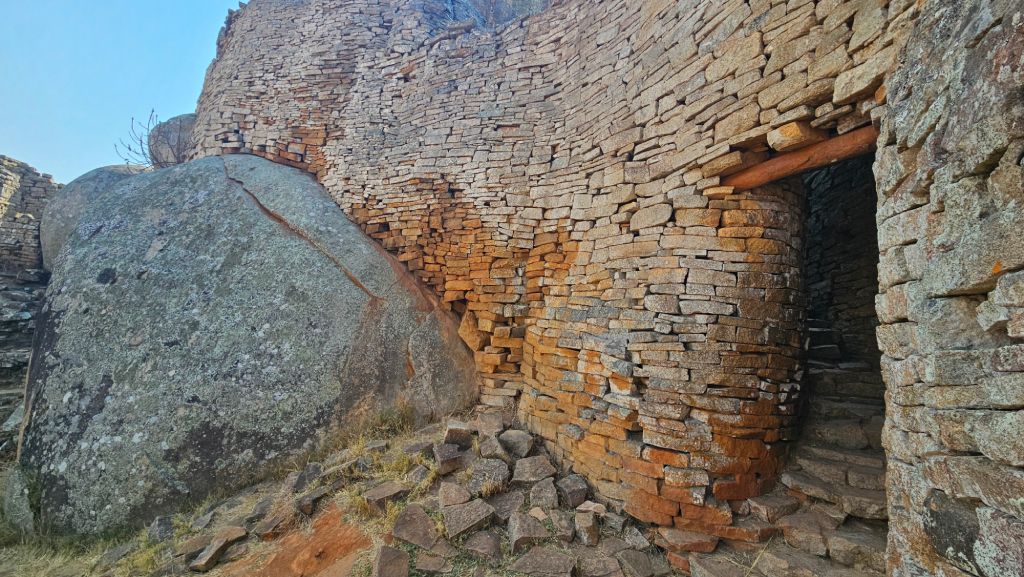
Since the price difference between the regular entry ticket and the one that included a guide was small, I chose the latter. The three-hour walk among the remains of this ancient civilization passed quickly, filled with the fascinating stories by the local guide.
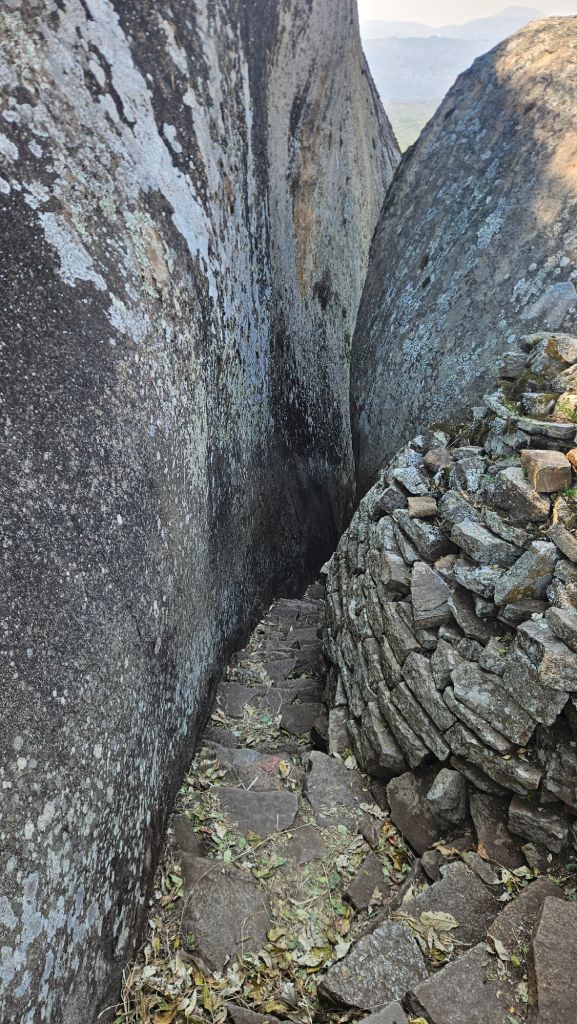
We first climbed up to the Hill Complex, built high on the granite rocks. It’s impressive to see how the builders complemented the natural formation with stone walls, turning it into a strong fortress that was also functional and provided comfortable living quarters for the king. A special cave with a powerful echo was used for communication with the valley below, whenever the chief wanted something from the valley or the company of one of his many wives.
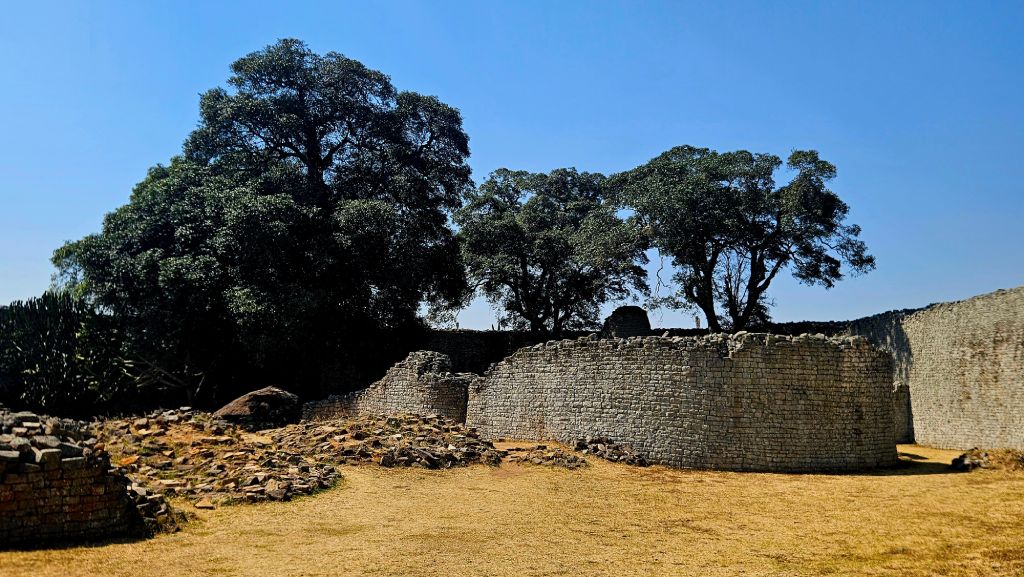
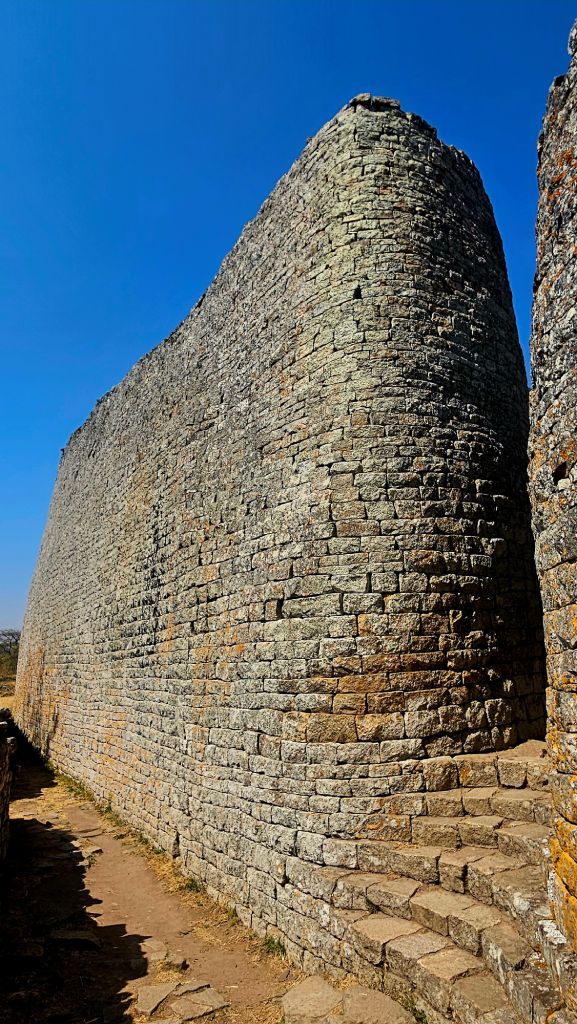
After descending from the granite hill, we stopped at the Great Enclosure, the largest and most impressive structure. The biggest ancient stone building in sub-Saharan Africa consists of dry-stone walls, some over 11 meters high and 250 meters in circumference. It was built without concrete from precisely cut granite blocks.
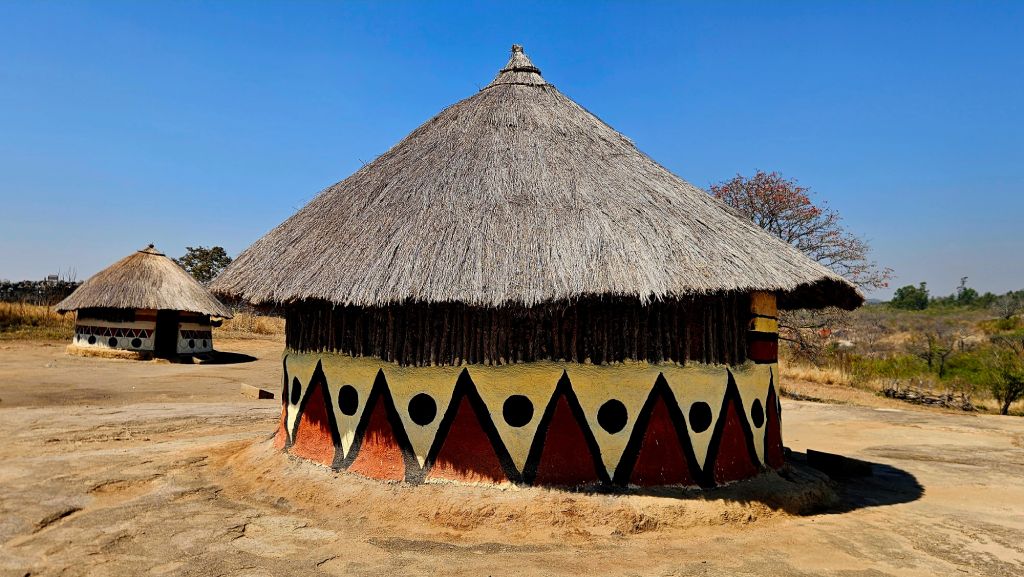
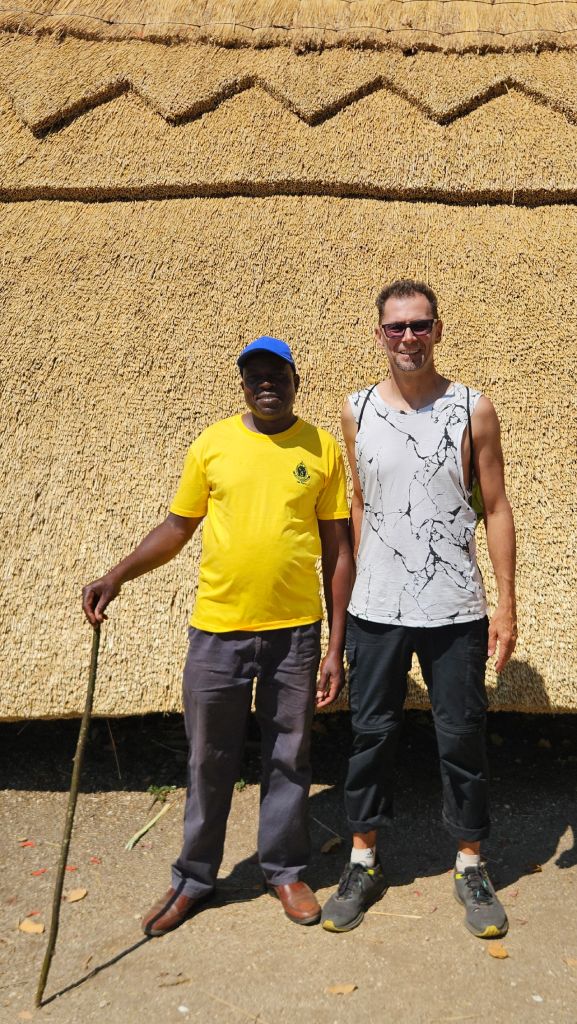
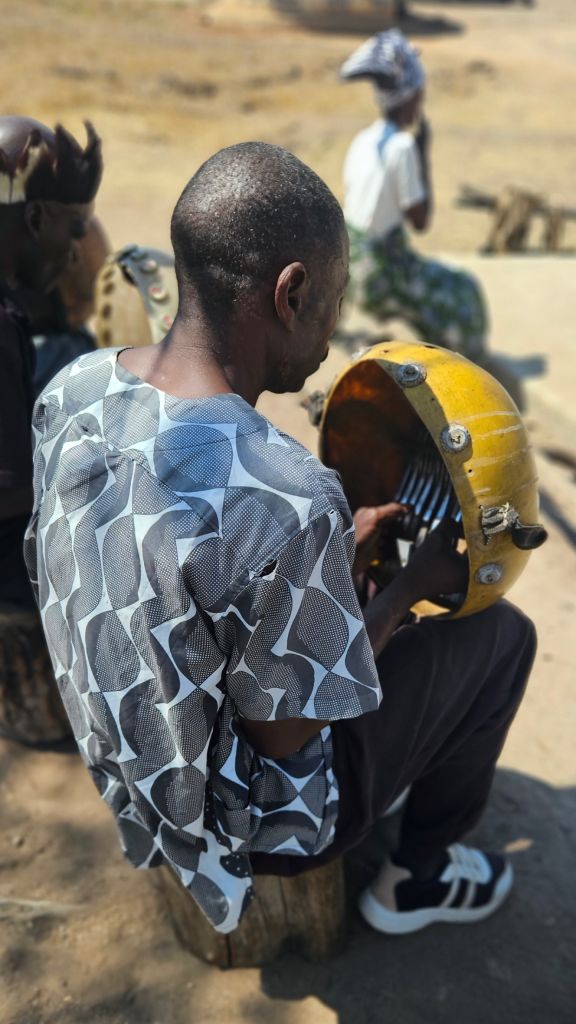
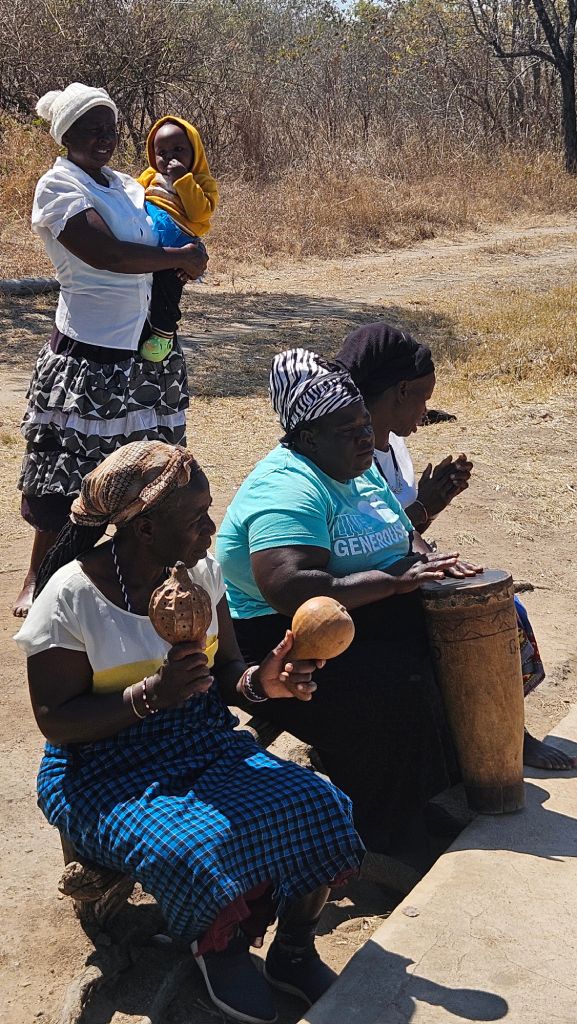
The Valley Ruins were home to most of the city’s inhabitants, who lived in clay-and-thatch huts, built on stone foundations. If traders, artisans and regular families were giving the area lively atmosphere in the past, there was a group of local musicians and dancers, who kept the good vibe during my visit.
What called my attention were the particular instruments. The mbira is a thumb piano, made from strips of metal mounted on a wooden board and placed within a resonator. A group of men played by plucking the keys with the thumbs and fingers. They were holding mbiras inside a large calabash resonator to amplify the sound.
Harare – the bustling capital
Harare was my last stop in Zimbabwe. Due to a last-minute emergency, I had to reduce the time I had planned to spend there.
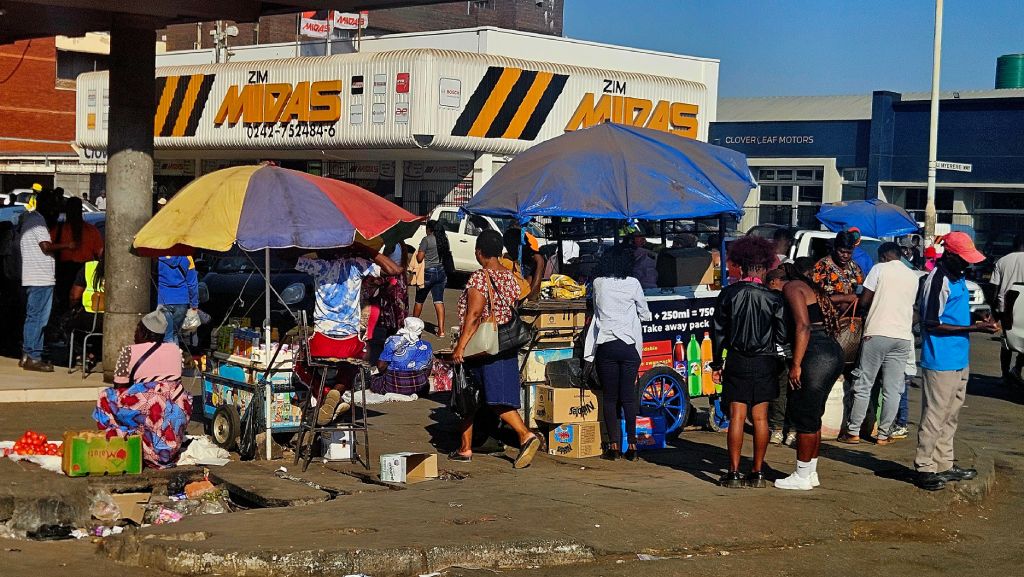
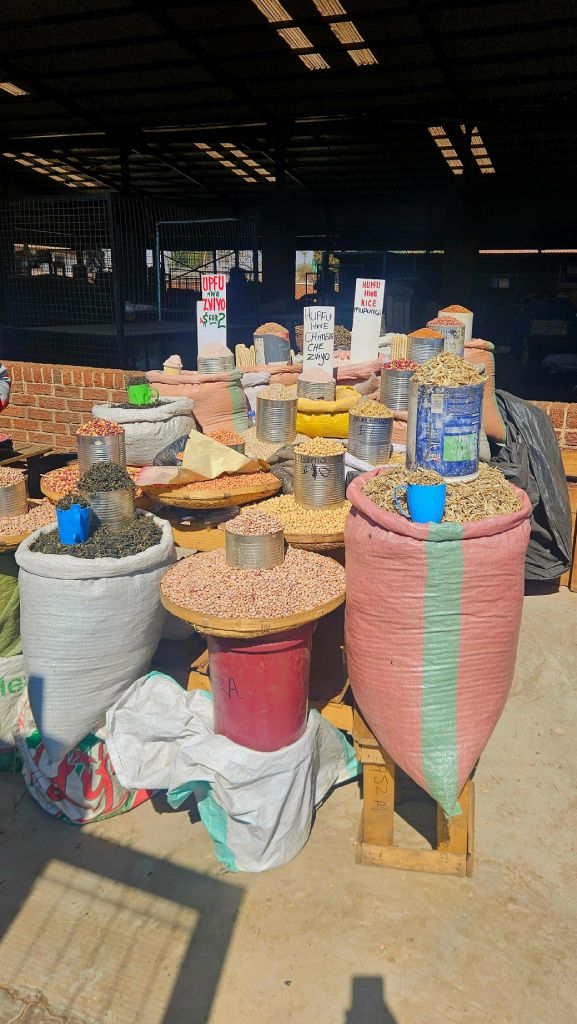
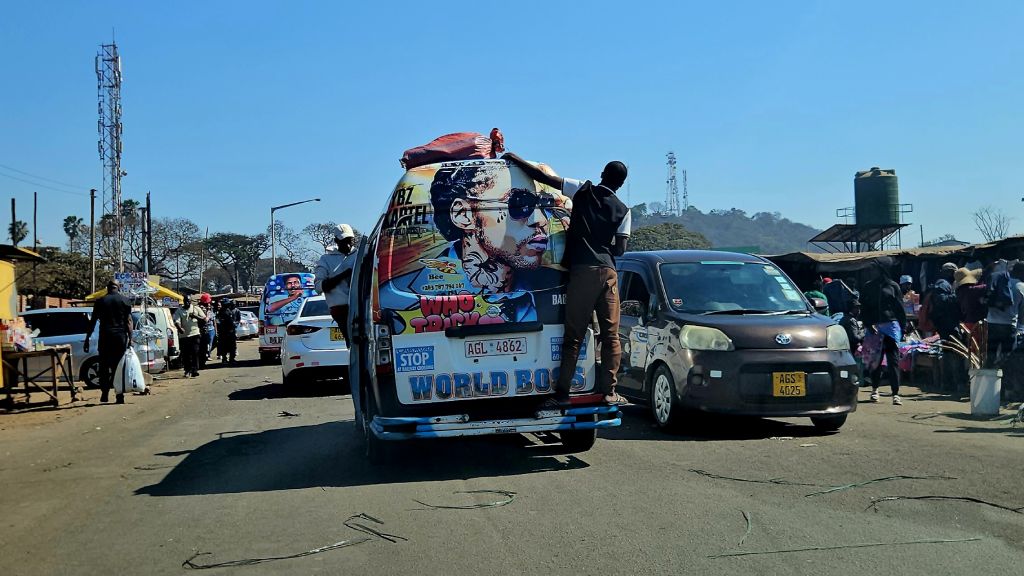
I began my exploration at Mbare Musika Market, one of the most chaotic places in the whole country. It was easy to get there using the Yango taxi app, which helped me avoid the usual hassle of negotiating fares with drivers. Even on the way, driving through the city’s commercial areas, I noticed the intense activities. Vendors were shouting, exhibiting their goods, and competing for attention in an aggressive way.
When the taxi dropped me off, I started walking around, trying to absorb the atmosphere and take a few photos.
But I didn’t feel comfortable, Actually, I felt intimidated. For the first time in this part of Africa, people didn’t seem particularly friendly.
This matched the warnings I’d heard beforehand and the experiences of other travelers. Feeling unsafe, I decided to end my visit early and return to the CBD, which was still lively but far less chaotic.
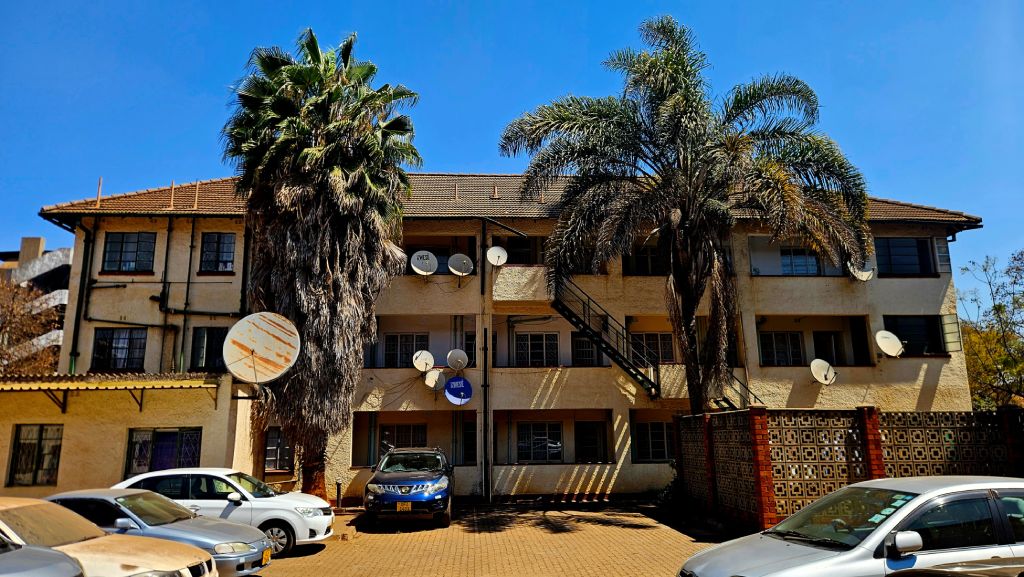
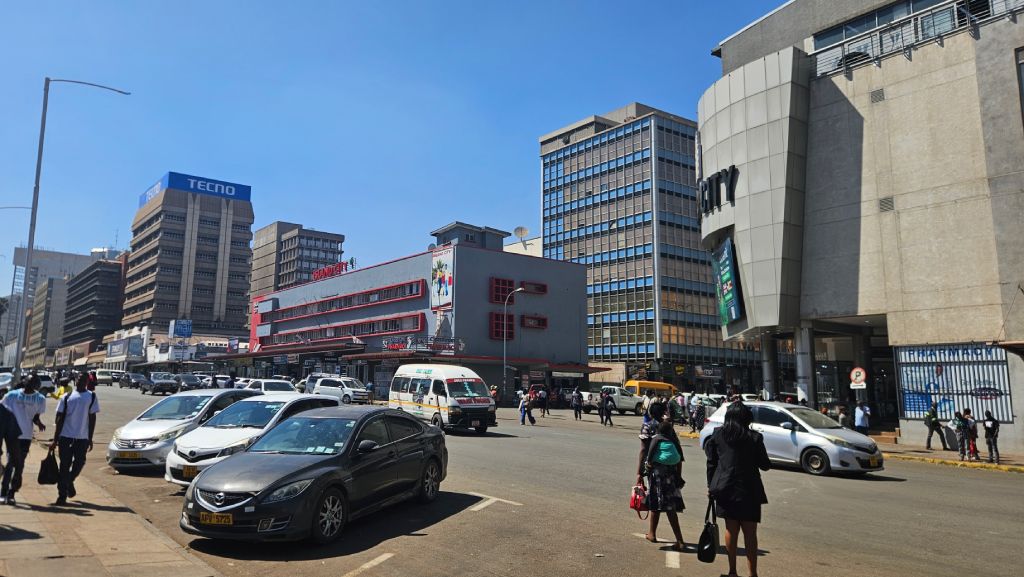
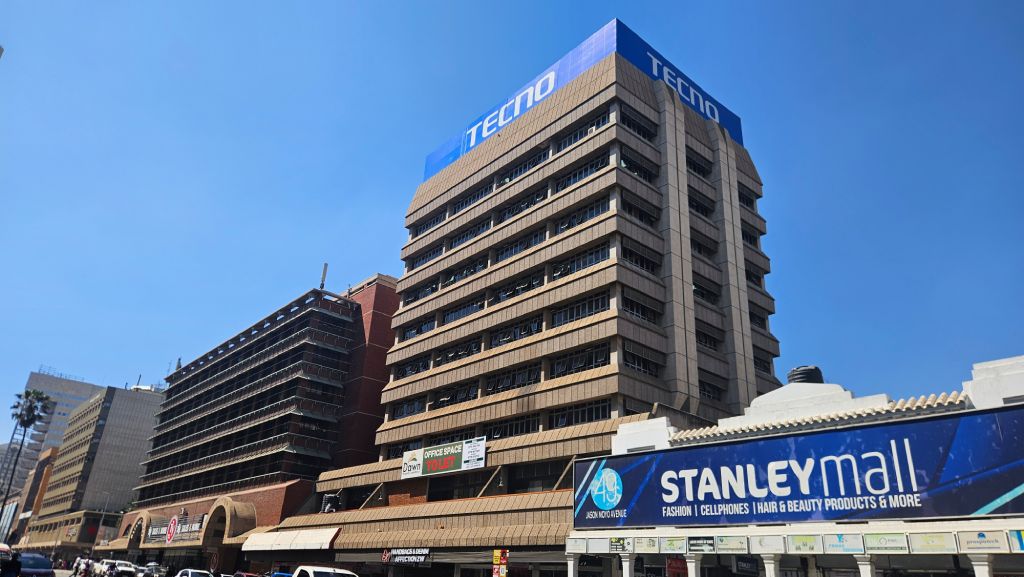
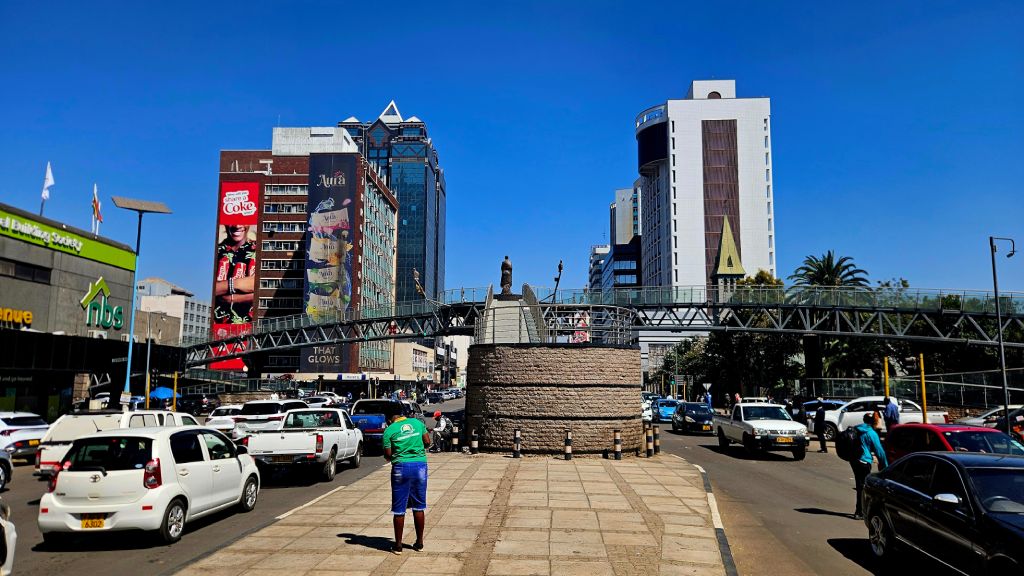
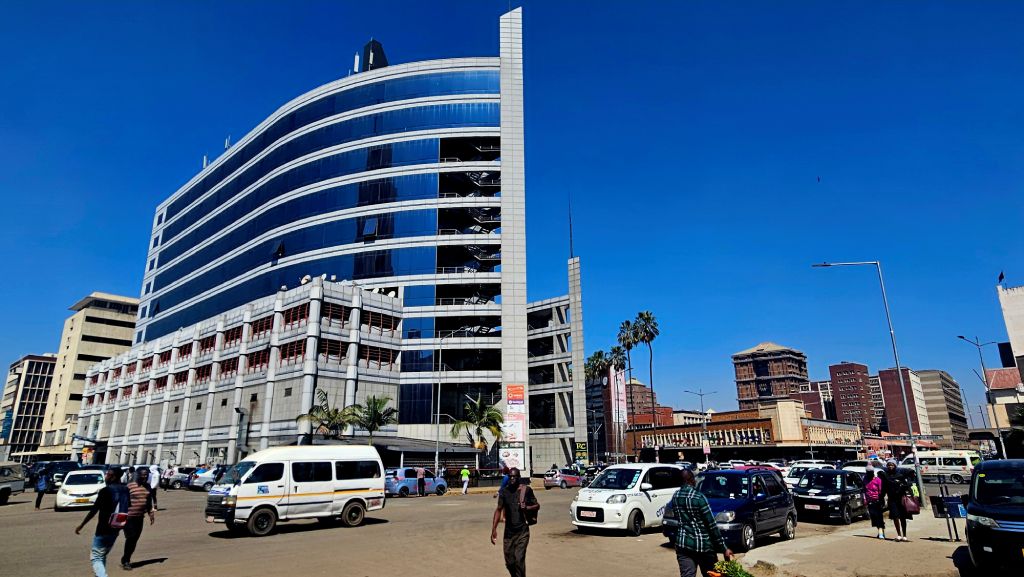
As many urban zones in Zimbabwe, the CBD is the heart of the capital city. Harare's Central Business District represents the lively heart of the capital, displaying a mixture of colonial-era structures, modern skyscrapers, hectic traffic and street vendors. A mix of government offices, banks, markets, and shops combine into a commercial and administrative hub of the city.
I ended my time in the capital at the Harare Gardens, which are nothing remarkable, but at least calm and relaxing after the constant noise and pressure of the city streets.
Harare is definitely not my favorite city in Africa, with only limited attractions and interesting places to visit.
Reflections on my visit to Zimbabwe
In hard competition of popular tourist destination in Southern Africa, Zimbabwe is one of the weakest contenders. A big majority of the tourist industry is focused on Victoria Falls, the must place to visit, while the rest of the country receives much less visitors.
Touristic atmosphere of Victoria Falls and frenetic environment with so many people in Harare didn’t really impress me. I would actually place Zimbabwe at the bottom in terms of popularity among the countries in the region.
An interesting detail was also communication with the locals. Although English is the official language, and widely spoken around the country, I encountered the accent quite peculiar. It was also difficult to understand it on various occasion.
Zimbabwe Travel Photo Gallery