My Fiji travel summary:
Visited: February 2026
Duration of visit: 2 days
Capital city: Suva
Population: 950,000 (2026)
Fiji travel blog reading time: 5 minutes
Attractions and places I visited in Fiji:
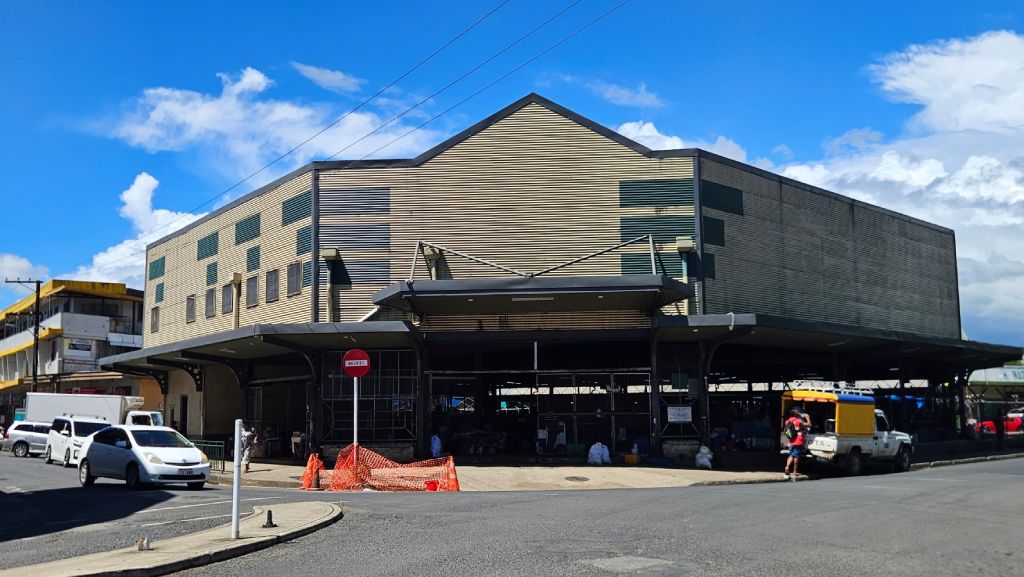
- Wandering around Nadi town, the market, and the main downtown area.
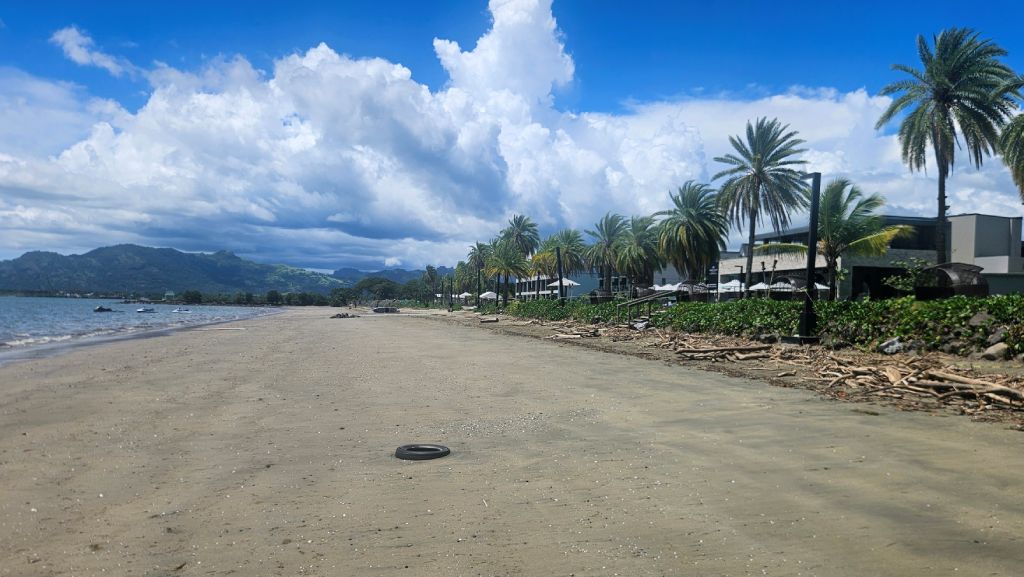
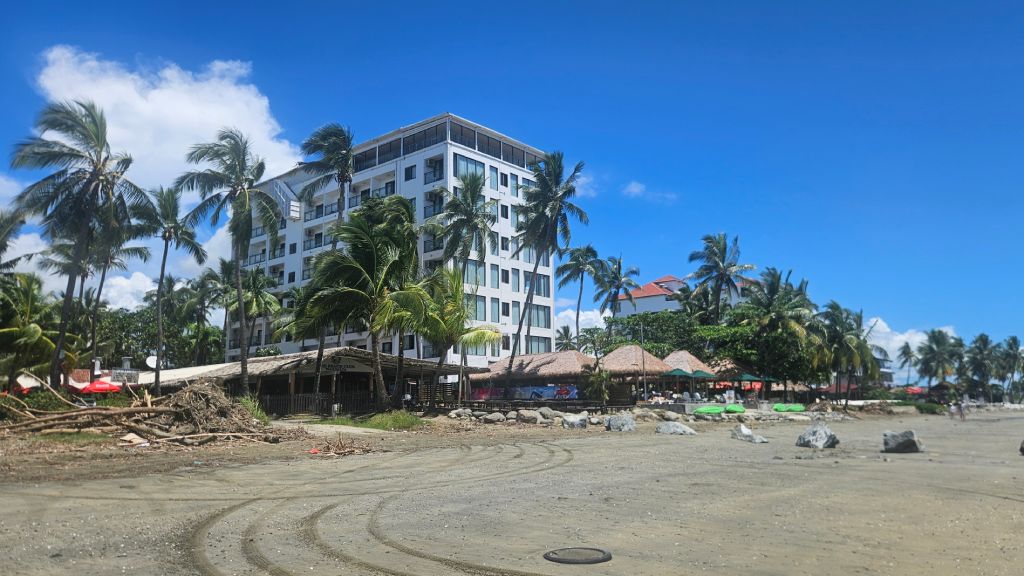
- Disappointed with rather unimpressive Wailoaloa Beach.
- Riding the bus like locals and visiting non-touristic places.
I found myself in Fiji due to unexpected circumstances, as it wasn’t part of my Pacific islands’ itinerary in 2026. When my flight from Nauru to Kiribati was canceled, I was supposed to stay three extra days in Nauru. After lengthy negotiations with the airline, we agreed that I could use Fiji as a stopover for two days on my way to Kiribati.
Nadi: between beaches, buses, and temples
Because of limited time on my Fiji travel adventure, I stayed in Nadi, the main town in western side of the island. Wailoaloa area seemed to be the best option. Centrally located black-sand beach is known for lively social scene, bars, restaurants and impressive sunset over Nadi Bay.
In conversations with taxi drivers and my Airbnb host, I was surprised when they claimed taxis were the only way to get around the island. Additionally, expensive private tours are offered to tourists. It just didn’t seem logical to me. There must be some public transport for Fijians who can not afford to have a car or take expensive taxis on a daily basis.
I decided to go to Nadi downtown and try to find buses that could take me around.
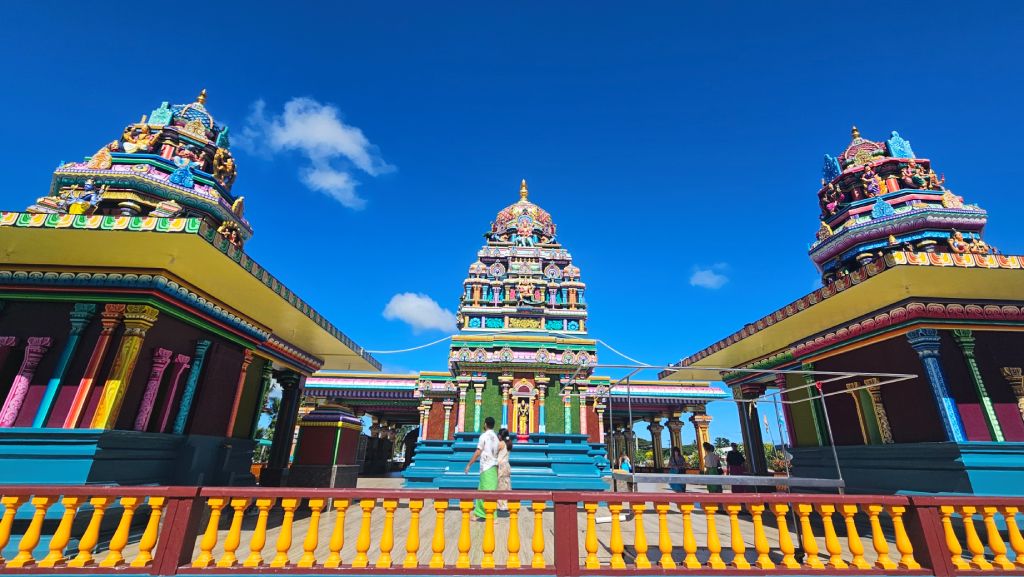
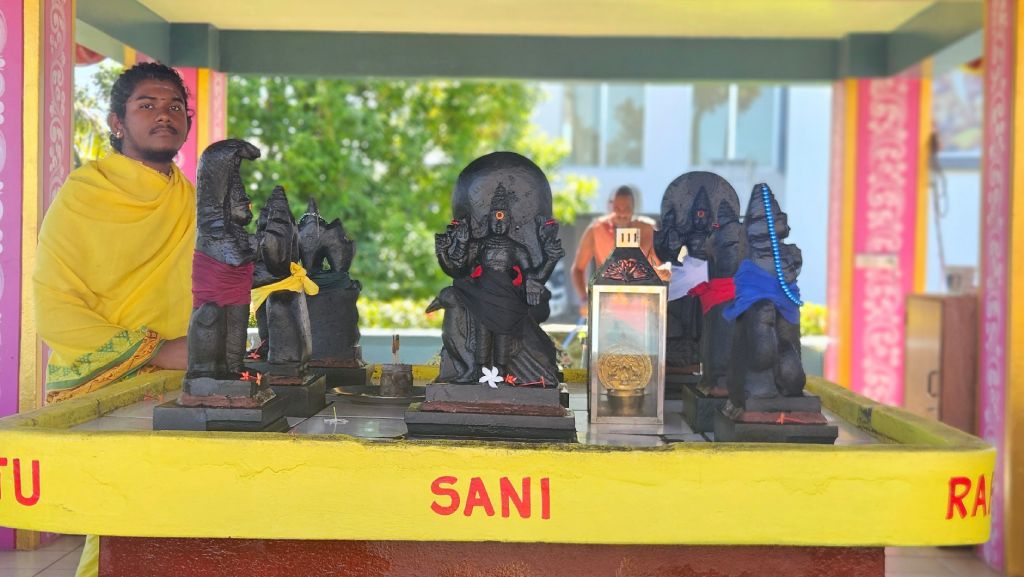
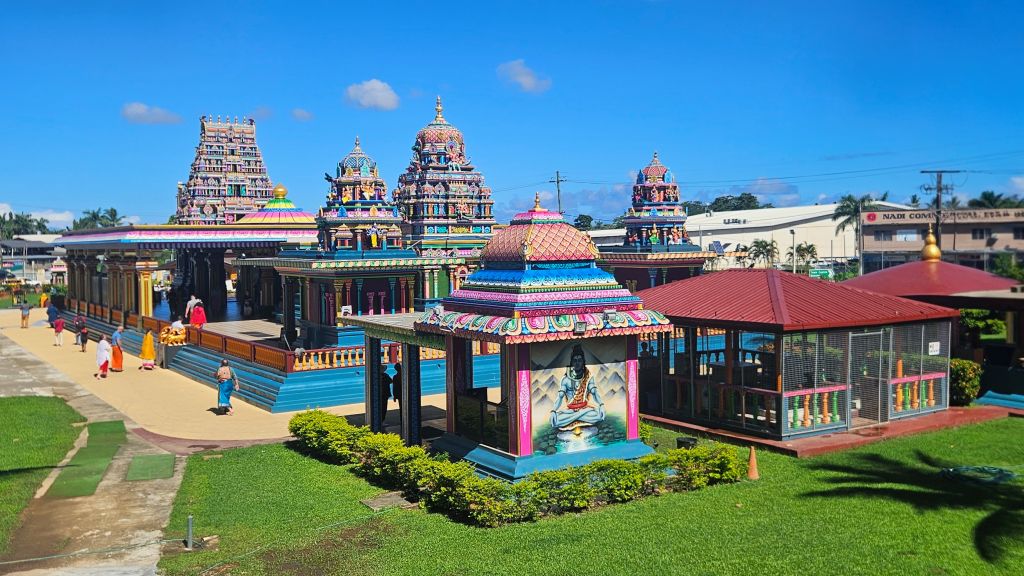
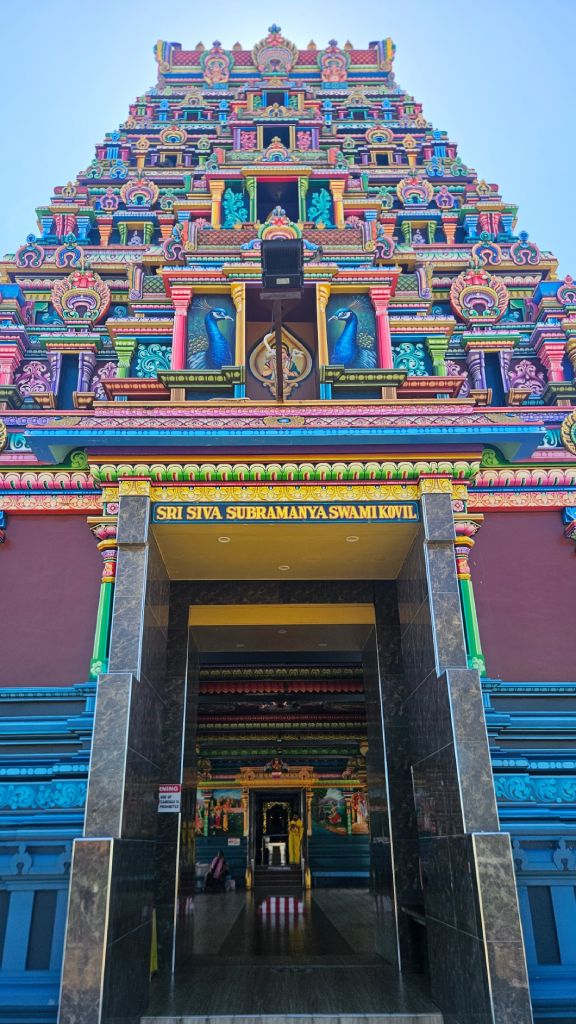
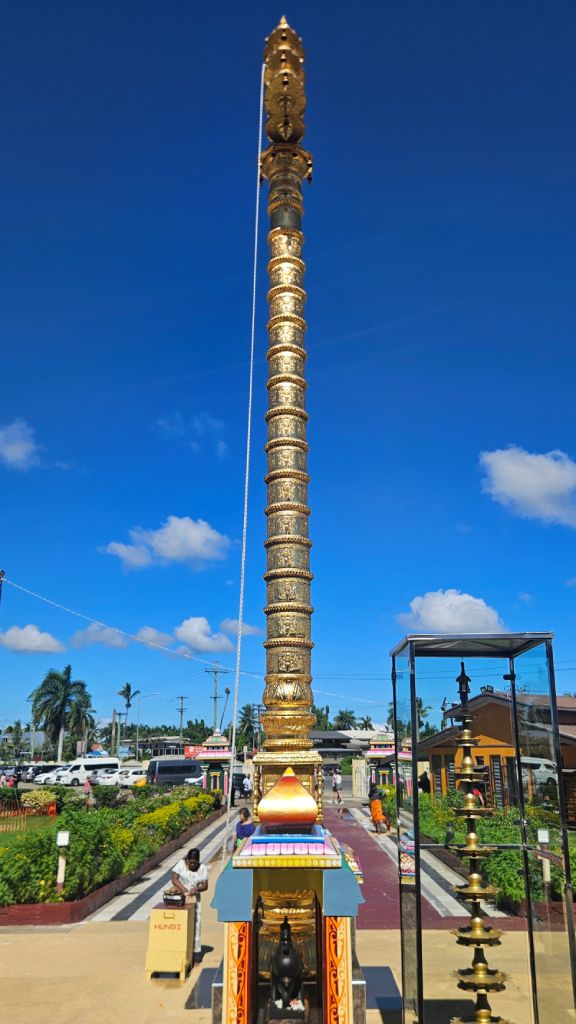
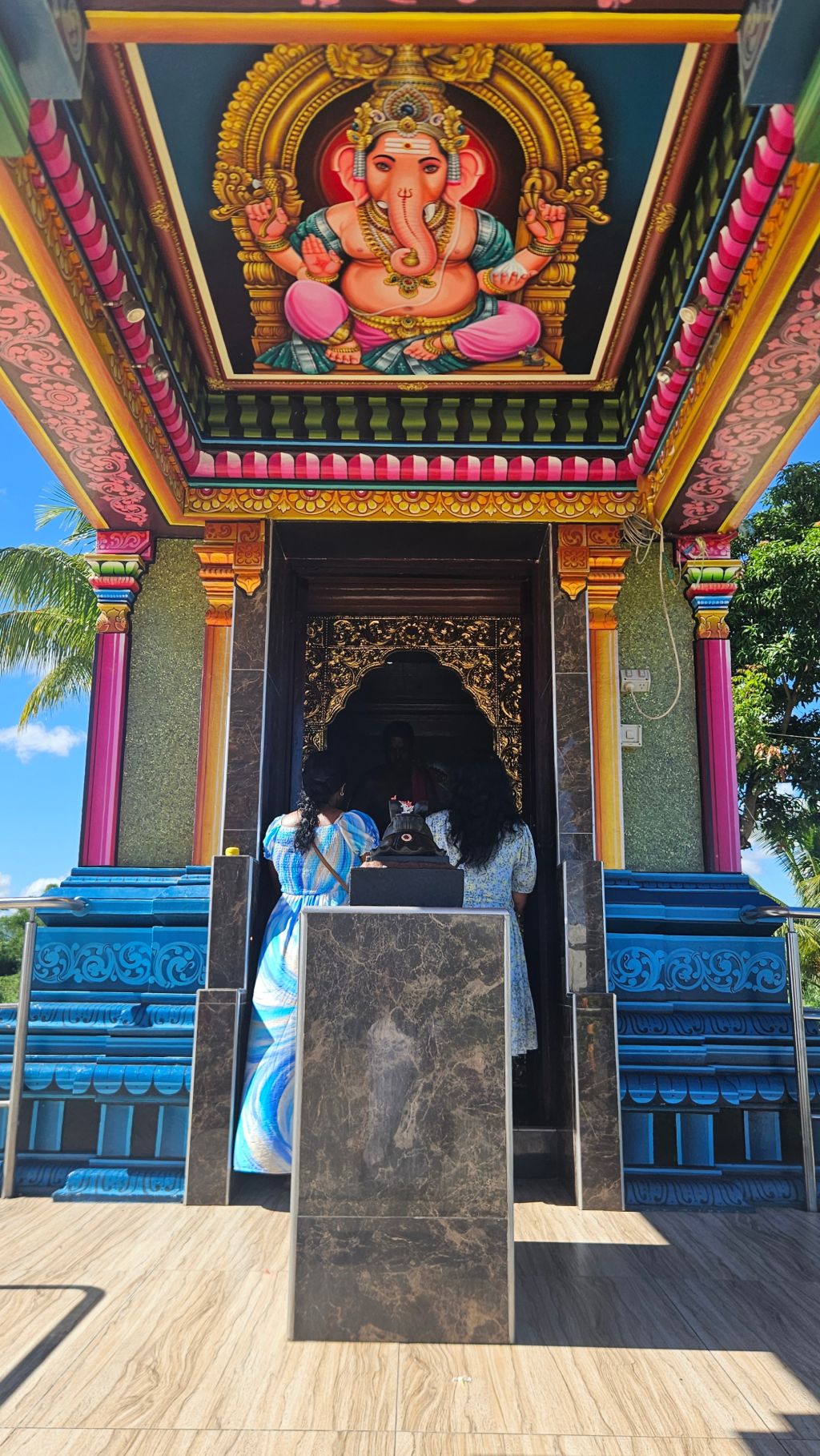
First, I visited Sri Siva Subramaniya Swami Temple, the largest Hindu temple in the Pacific. It is practically the only notable historic landmark on the western side of the island. The largest Hindu temple in the Southern Hemisphere is dedicated to Lord Murugan, the deity of seasonal rains. I admired the carved wooden statues and colorful paintings, which remain lively thanks to regular repainting.
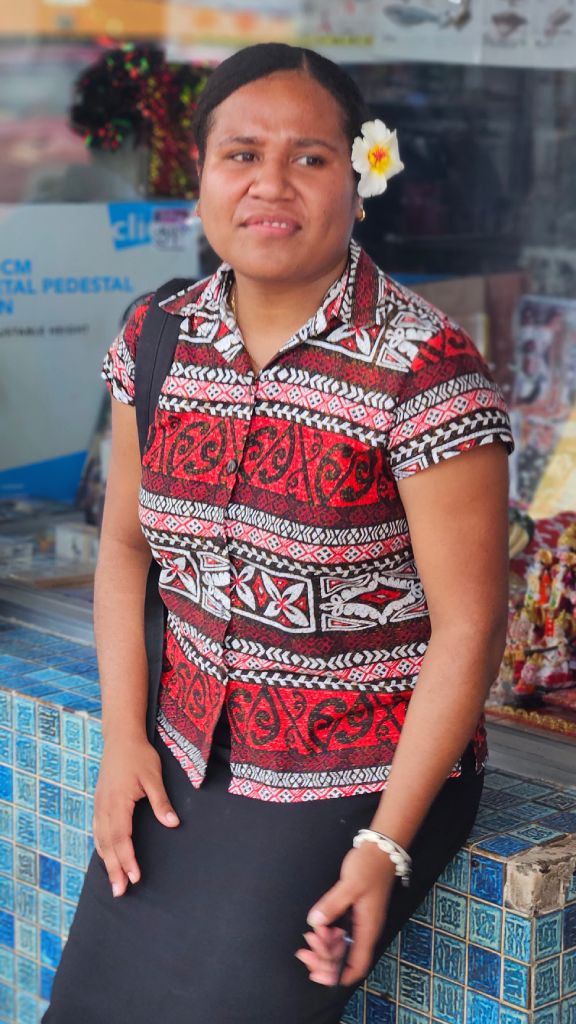
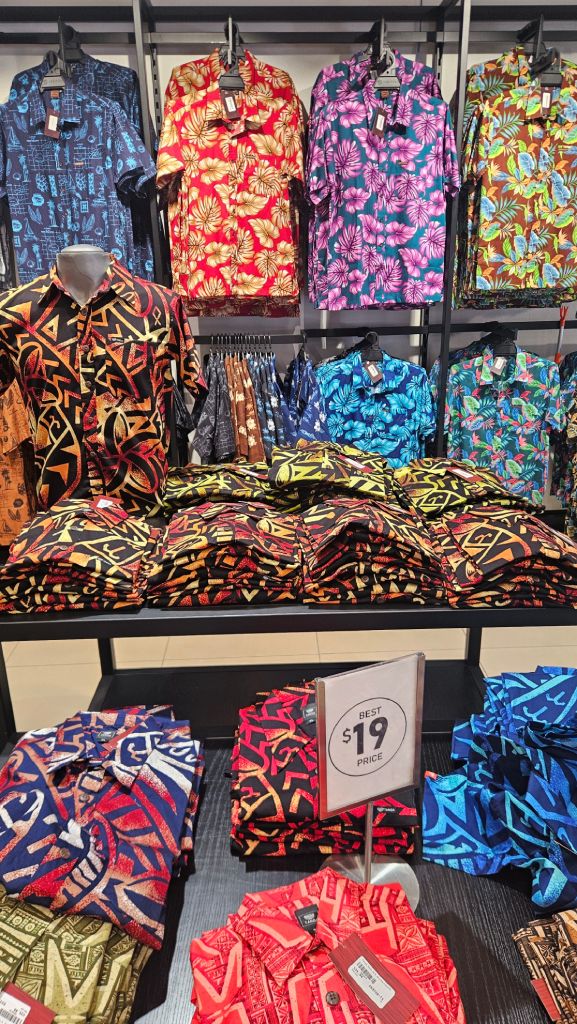
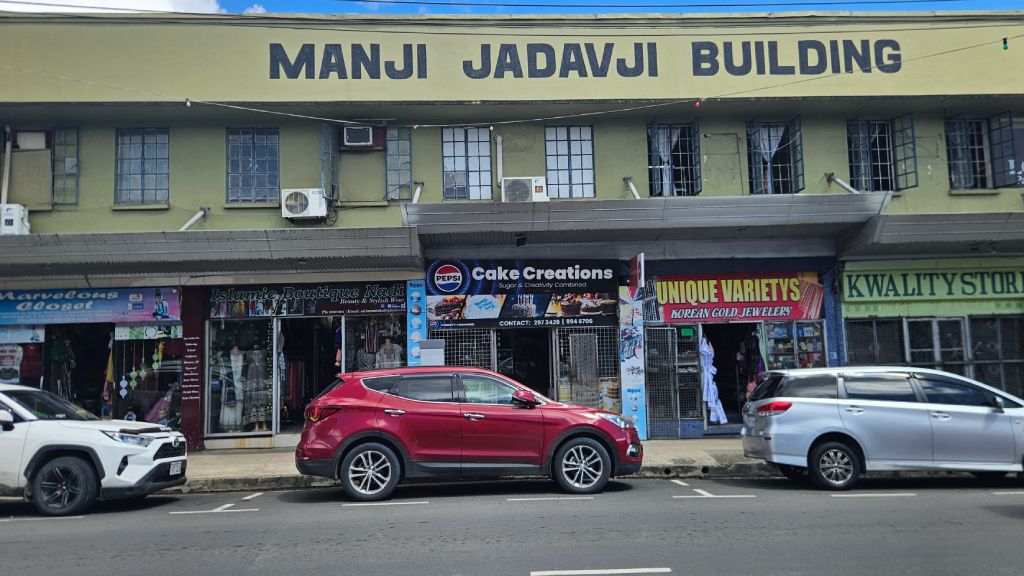
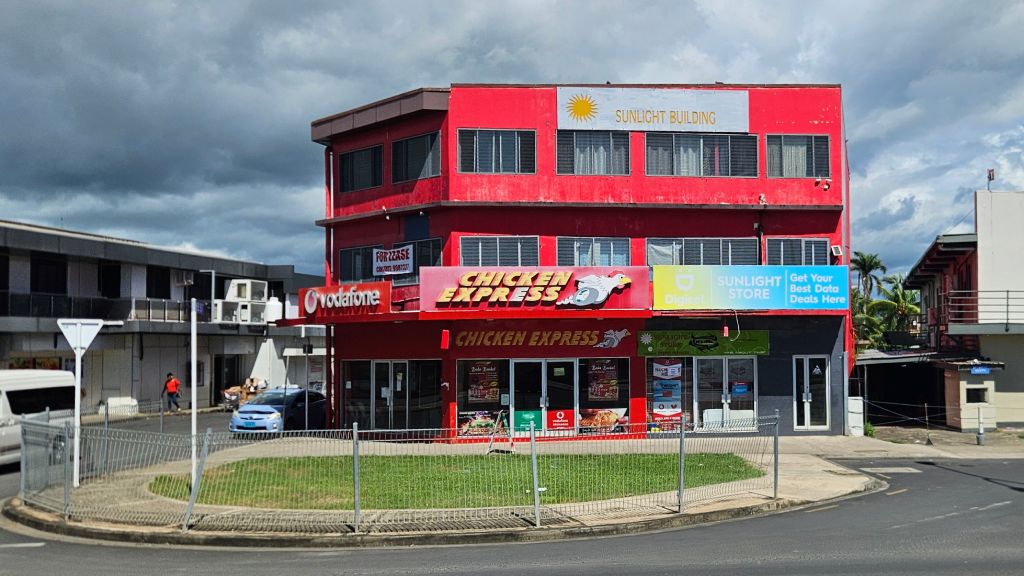
Downtown Nadi is a mix of shops, restaurants, and bars with a strong Indian influence and a focus on tourists. Many stores sell colorful clothes with traditional Fijian patterns. I stumbled upon the largest souvenir selection by chance and found a huge crowd of tourists inside.
“A cruise ship is in town today. You can really see the difference in visitors,” one of the friendly shop assistants told me.
It was fun to watch them shopping so desperately. As always, I bought my only souvenir (a magnet), at a small handicraft market nearby.
Bula and kava
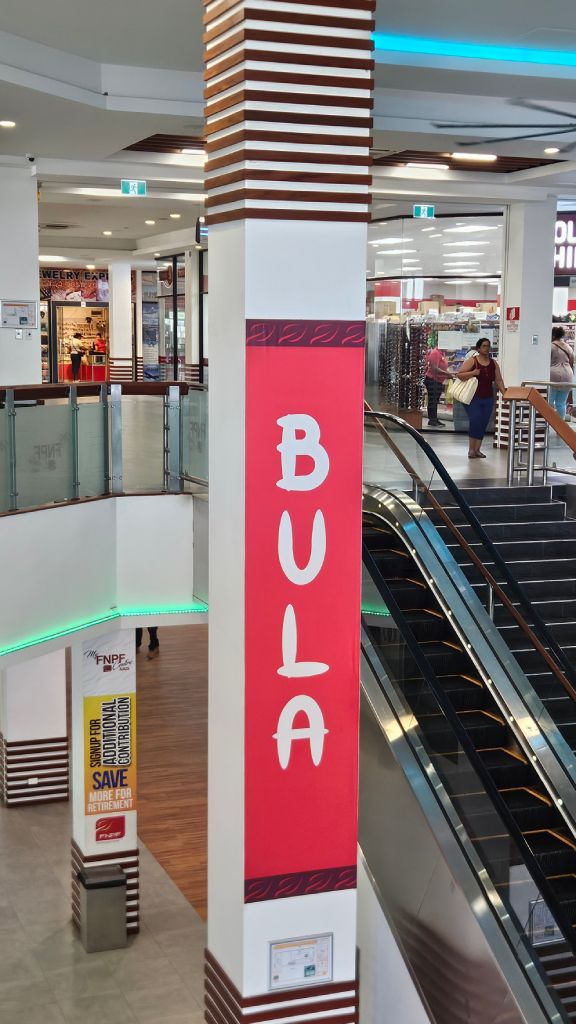
Fijians are known for their friendliness, which starts with the traditional greeting “Bula,” used almost everywhere. People patiently answer visitors’ questions, and I never felt that anyone was trying to cheat me or push something on me.
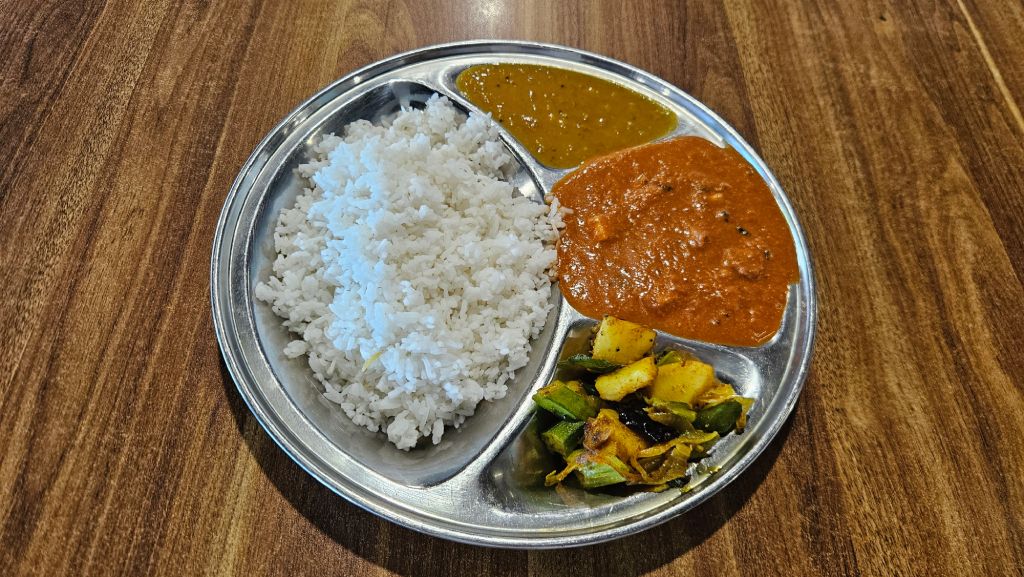
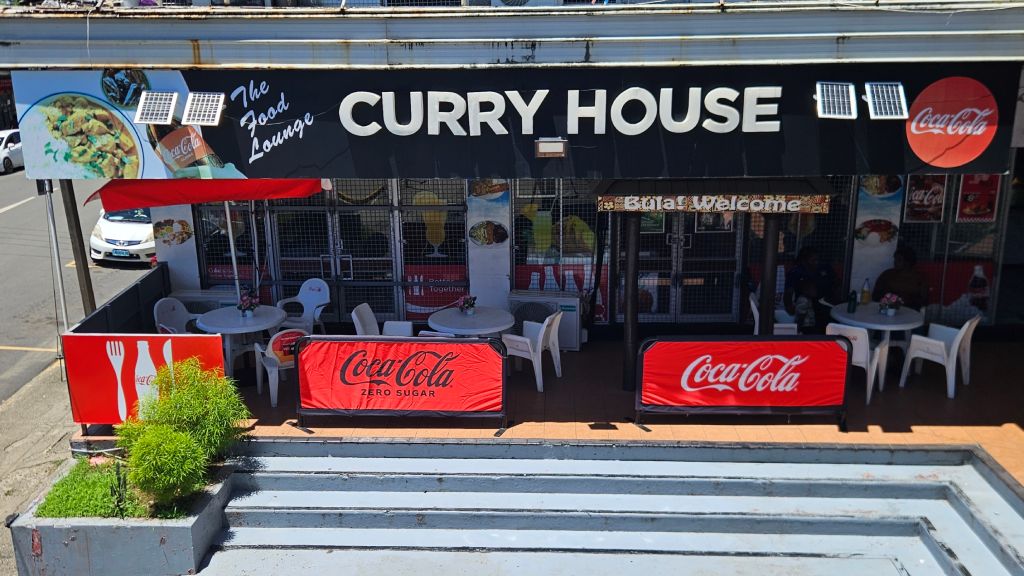
For lunch, on the recommendation of a local barber who had just cut my hair, I treated myself to a thali in an Indian restaurant. Surprisingly, it was only mildly spicy and tasted excellent for my sensitive palate.
Due to the large Indian community in western Fiji, the town offers plenty of excellent Indian food, culture, and shops.
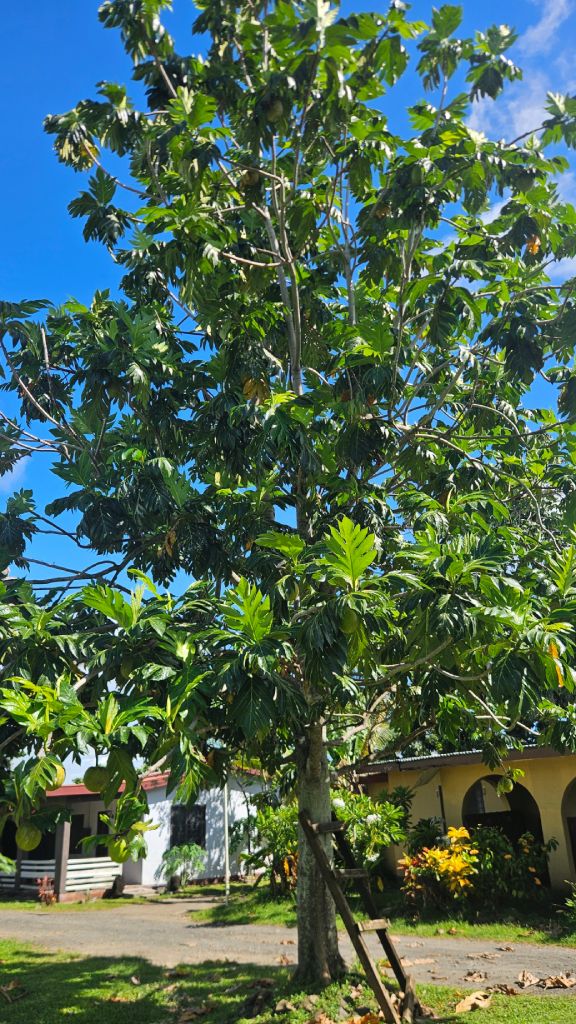
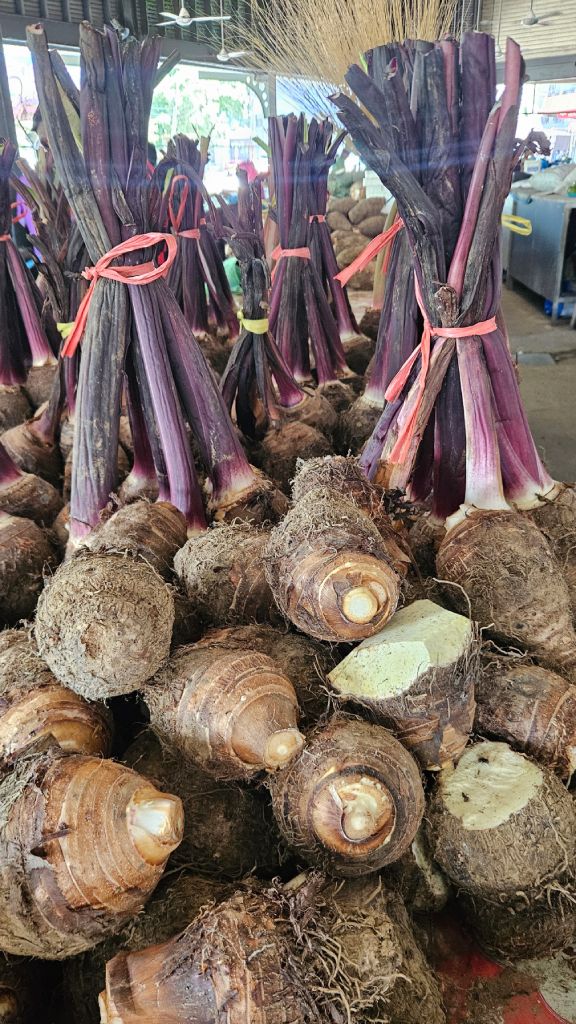
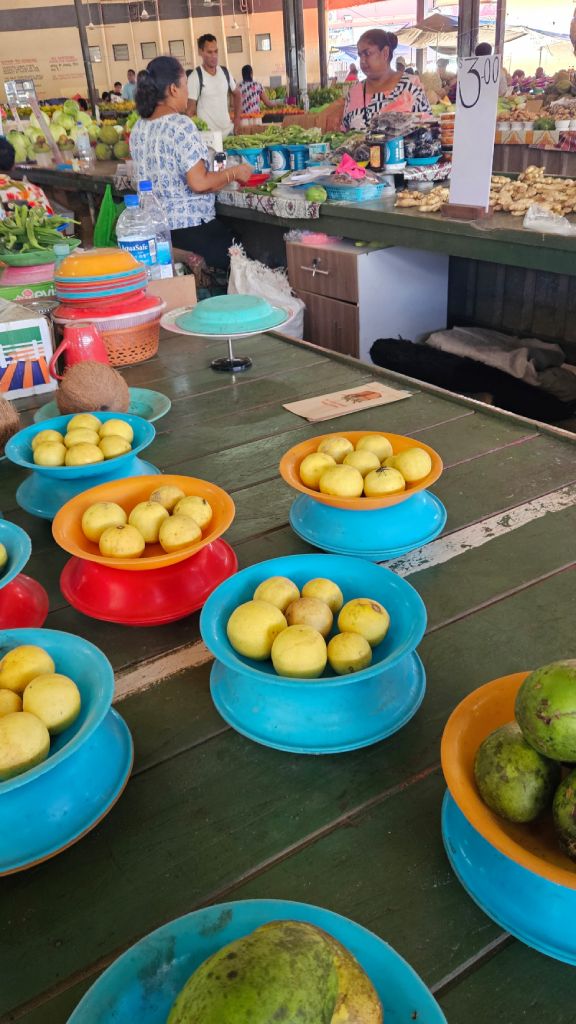
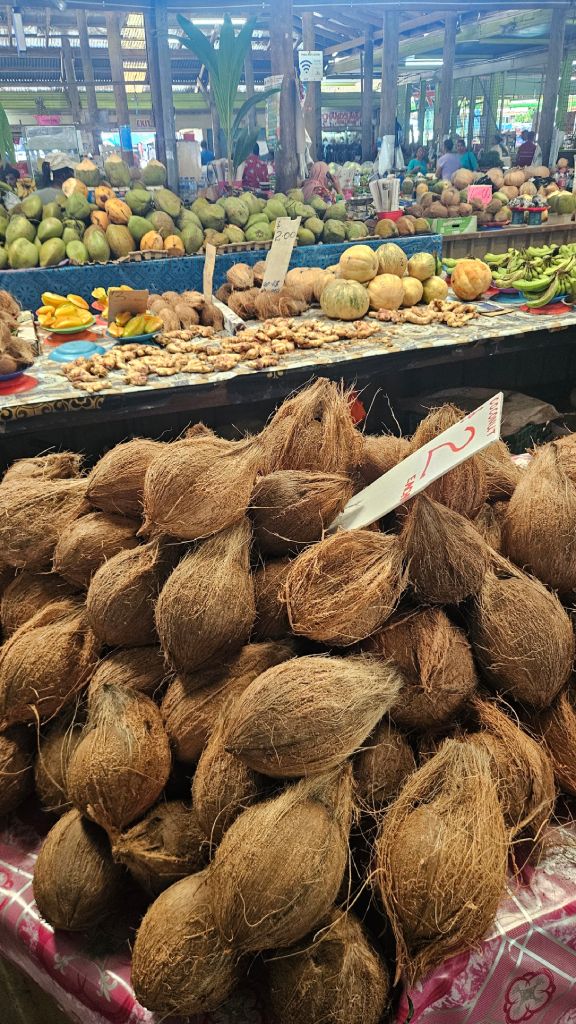
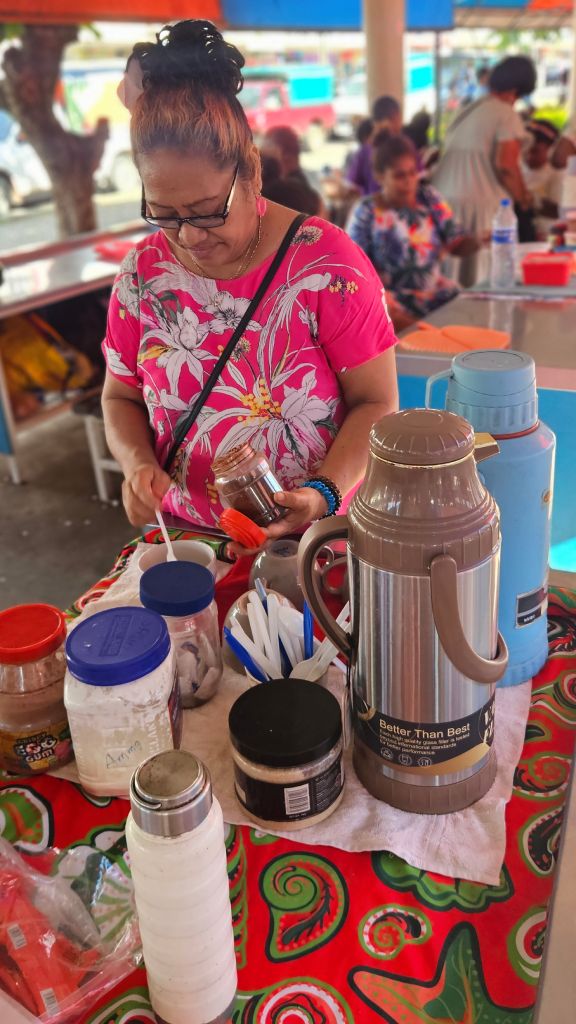
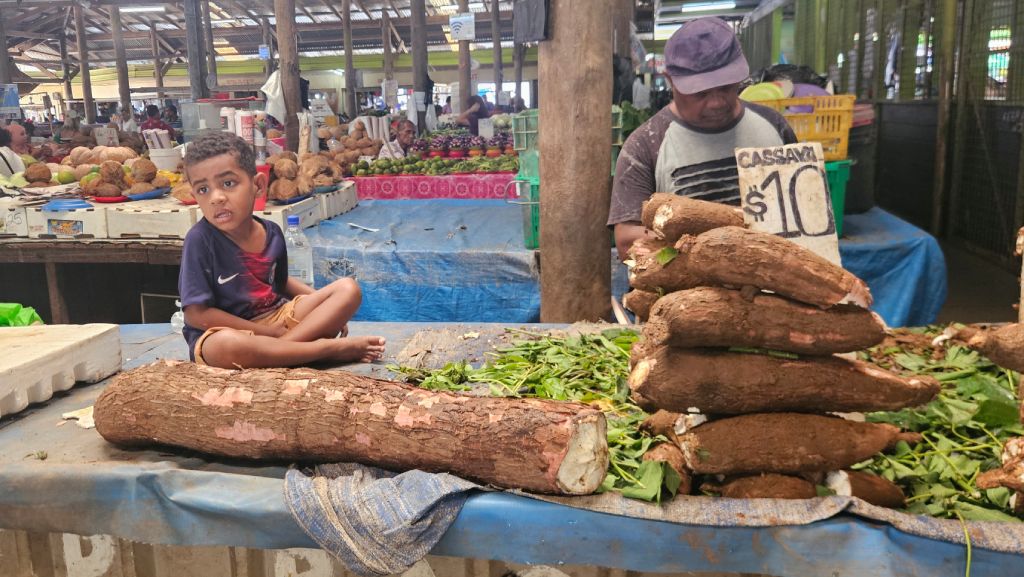
While walking through the colorful central market, I came across many tropical fruits that are rare on smaller Pacific islands. There were many varieties of bananas, papayas, avocados, and pineapples. Coconuts were everywhere, along with other exotic fruits and vegetables. Prices were reasonable and displayed on small tags.
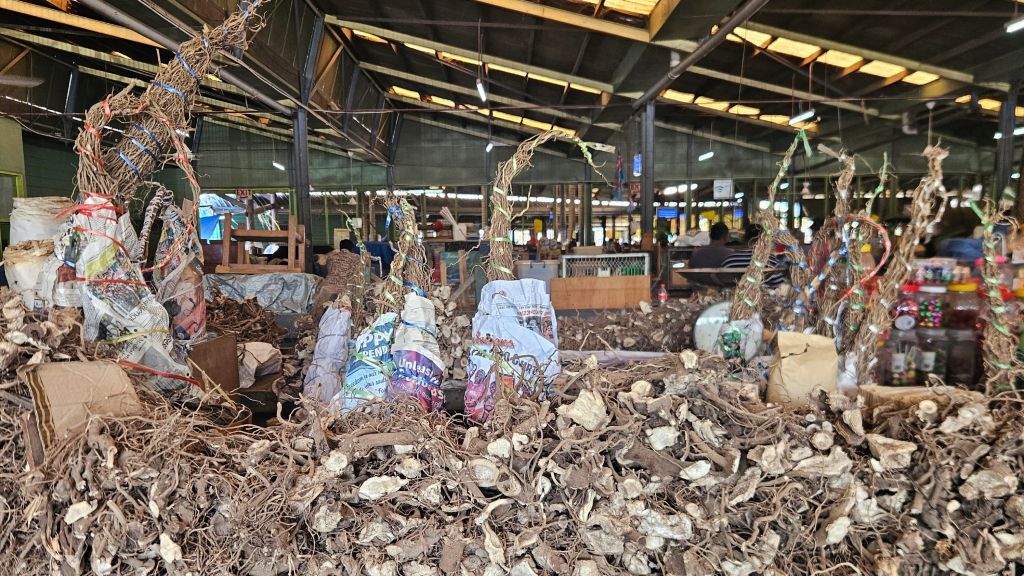
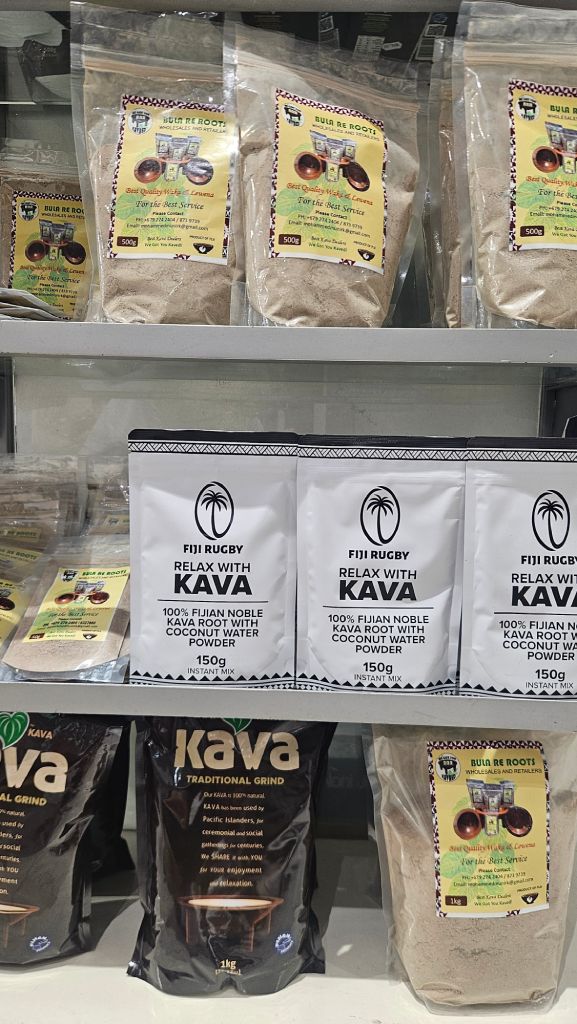
A friendly vendor selling roots of the plant used to make the intoxicating drink kava explained a few basic facts about it.
“There are different qualities of kava, mostly depending on the country of origin. The best comes from Tuvalu.”
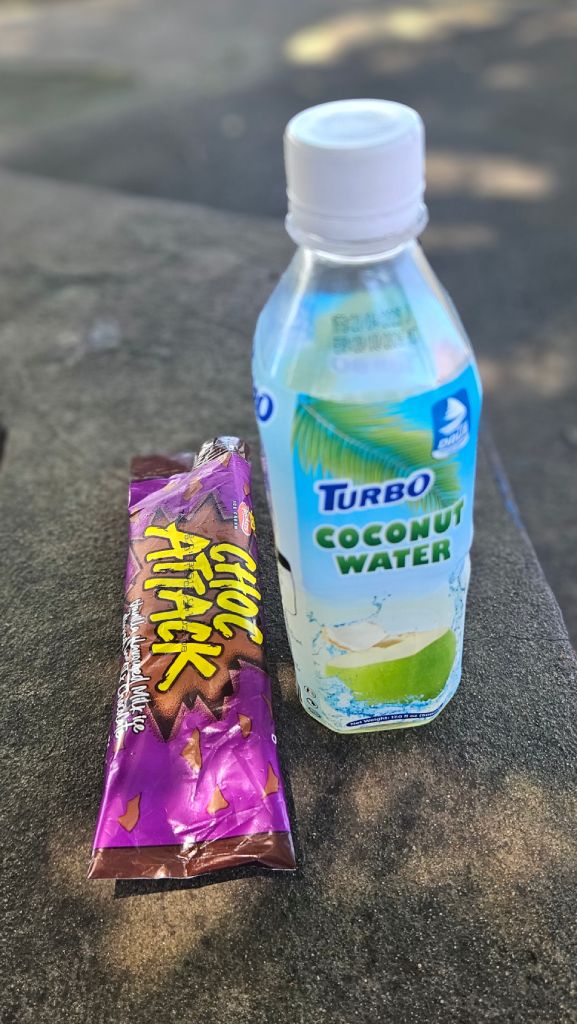
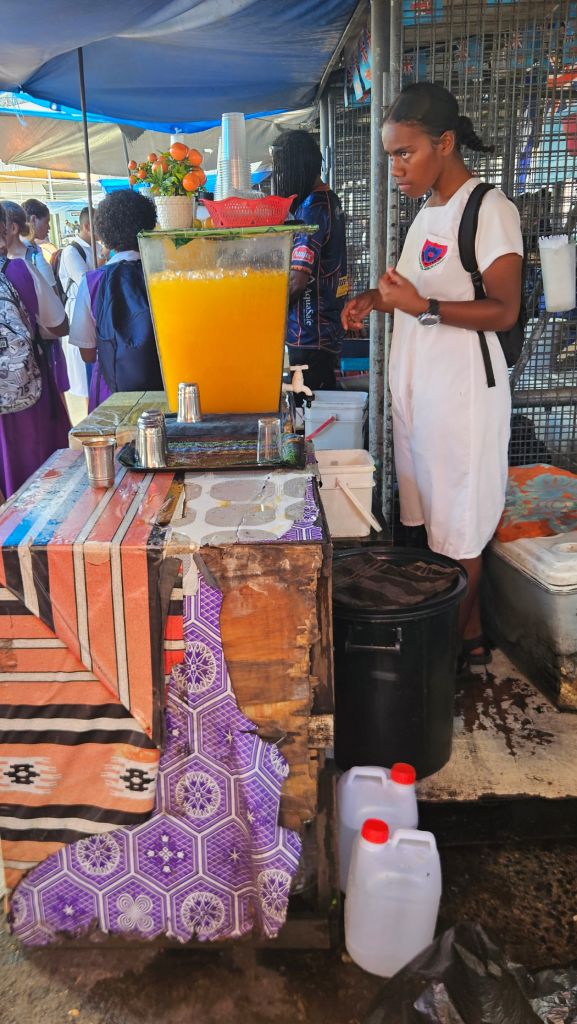
Outside of the market I found a colorful orange drink chilled with ice in large refrigerated cases. I didn’t dare try it, unsure whether the water had been boiled and safe to drink.
Fiji bus ride
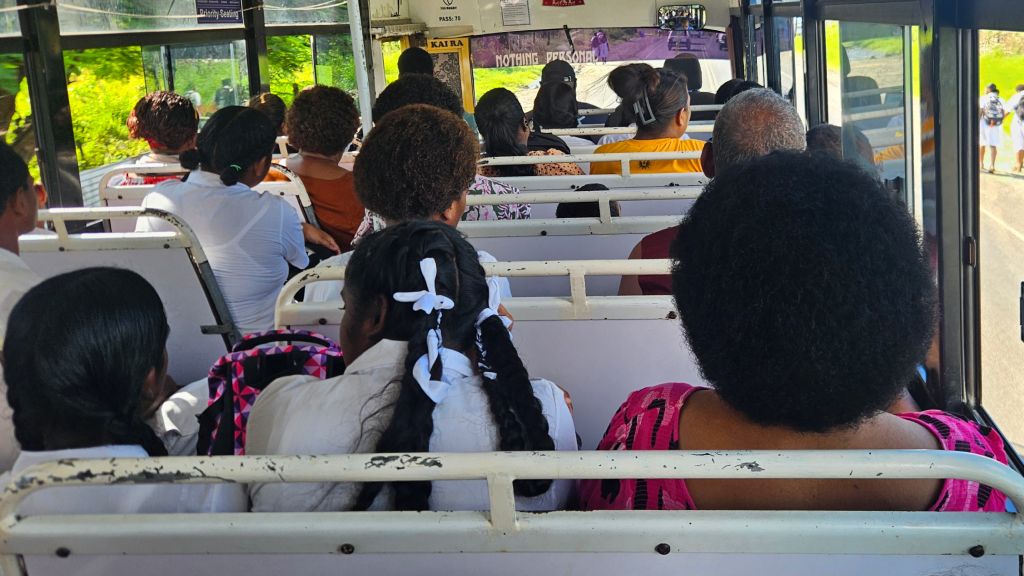
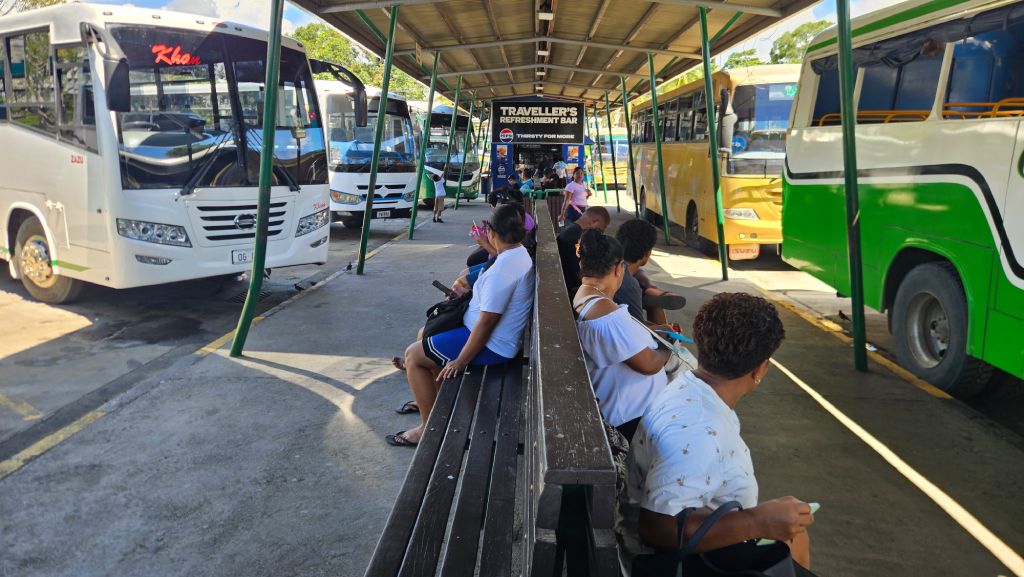
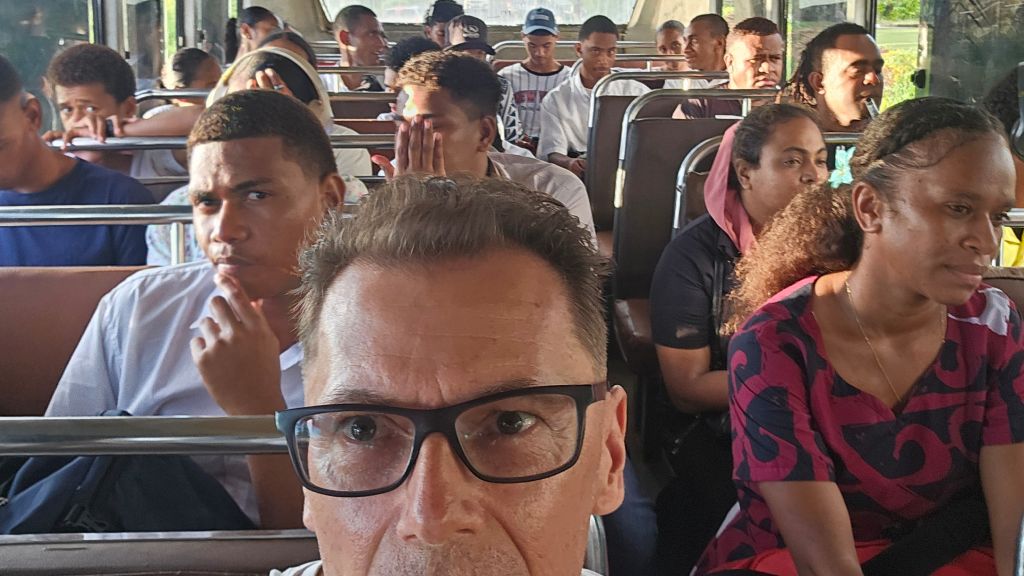
Near the central market, I found a bus station where buses of various sizes and comfort ran to different parts of the island. I boarded a large bus heading north to Lautoka.
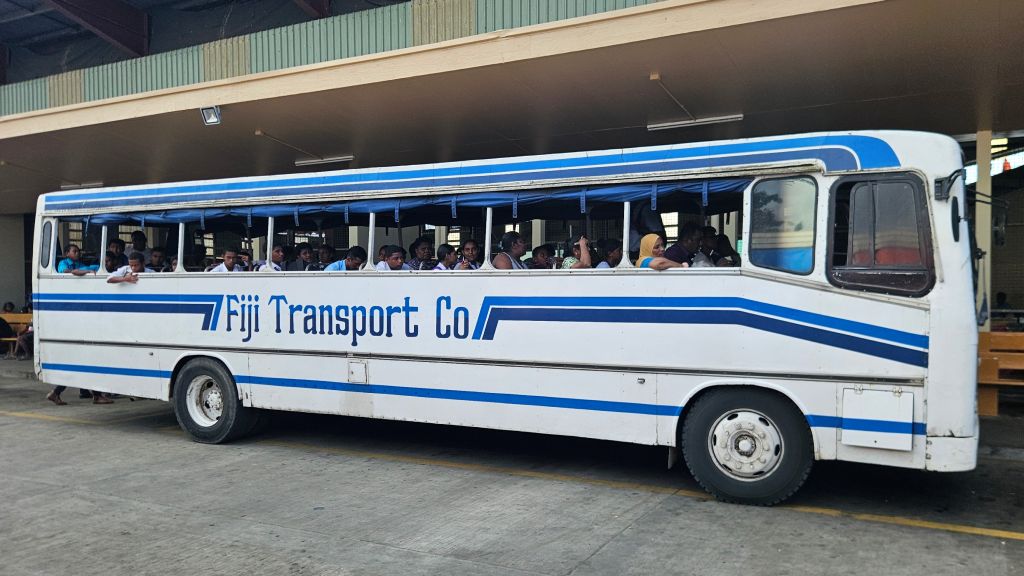
As I entered through the front doors, the driver asked me to pay with a special card at the fare machine.
“I don’t have a card or an app, but I can pay with cash or a credit card,” were the only options I could offer.
“No problem. Just sit at the back and enjoy the ride,” he said.
Frustrated that I couldn’t pay like everyone else, I later gave cash to a local, who used his card to cover my fare.
Through Viseisei to Lautoka
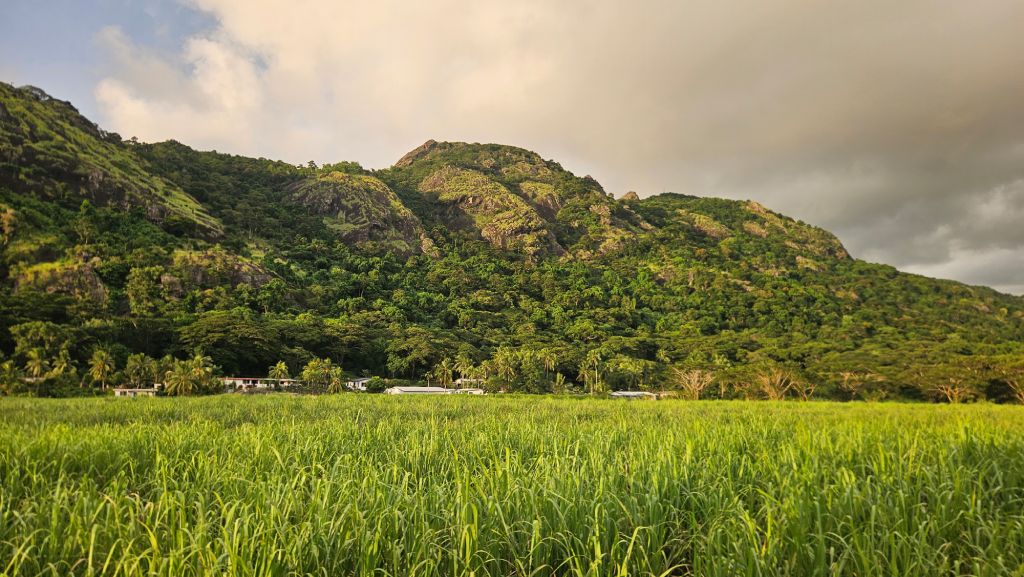
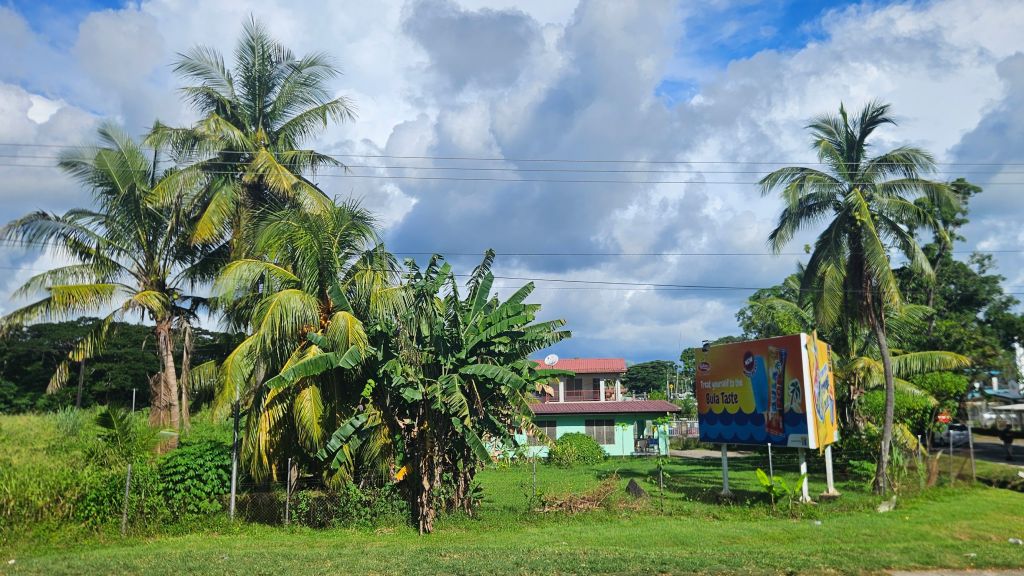
The calm ride, accompanied by music, took me through a beautiful, lush green landscape. After less than an hour, I got off in the village of Viseisei, home to traditional thatched chef’s houses.
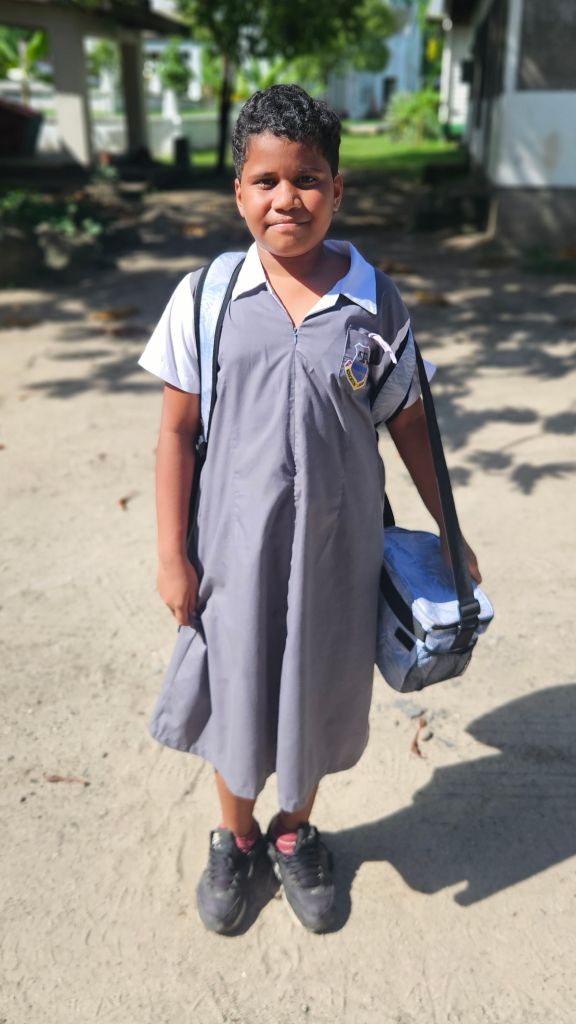
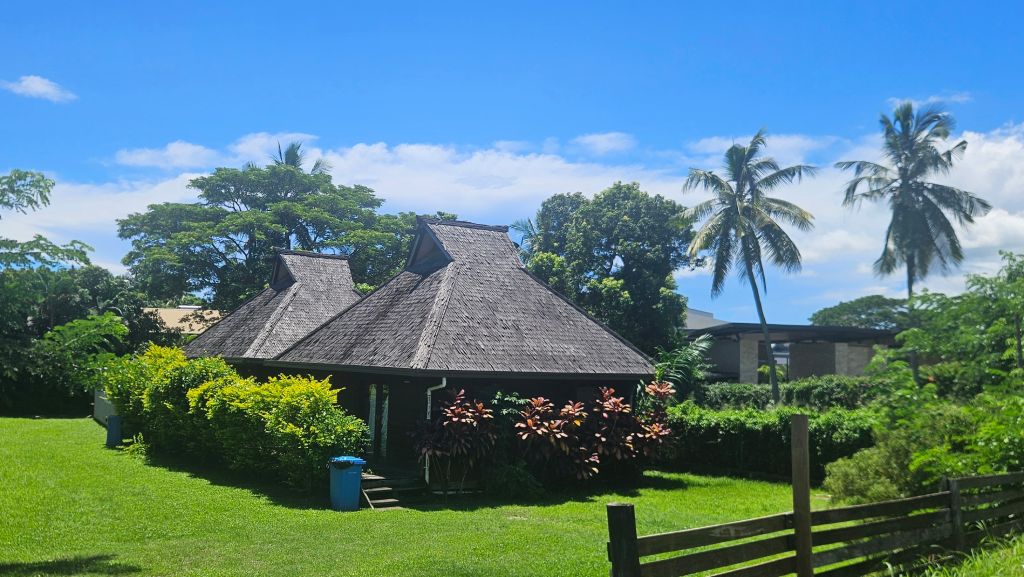
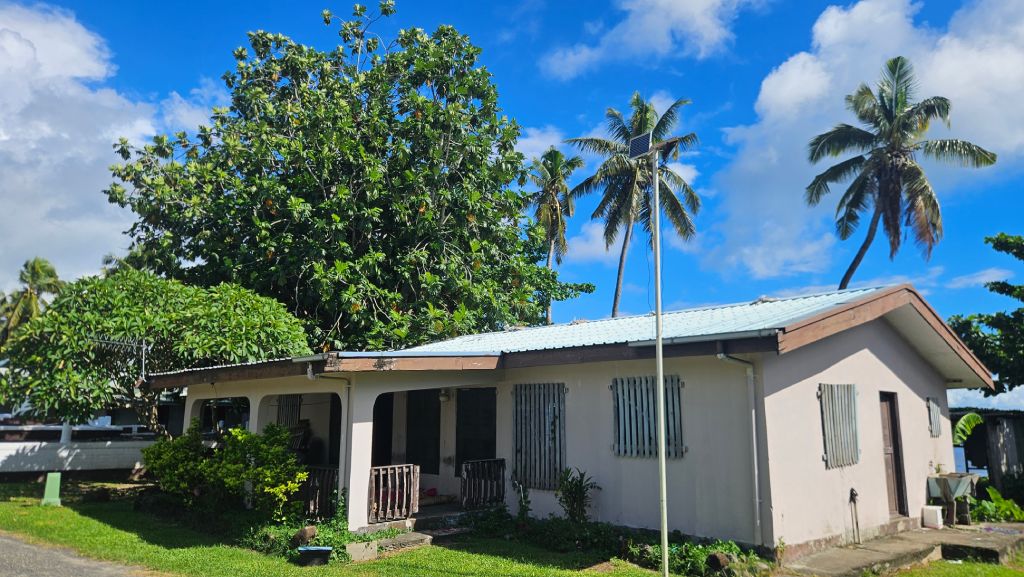
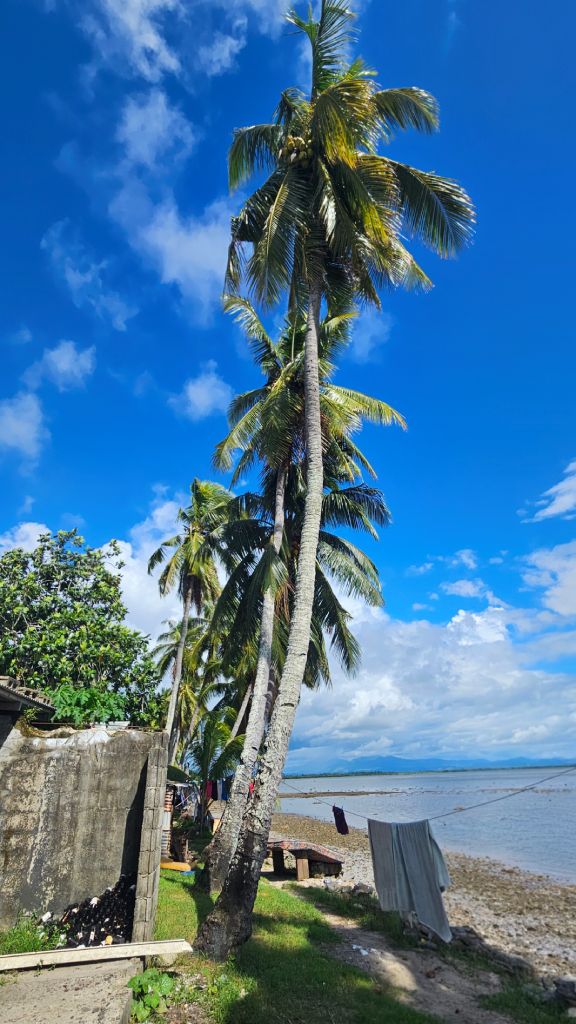
I wandered through the village and met a few children who greeted me warmly and struck up a conversation. The houses along the coast were in poor condition, and trash was scattered everywhere.
The rocky beach and low tide, revealing a muddy seabed, hardly matched the myth of a paradise-like Fiji.
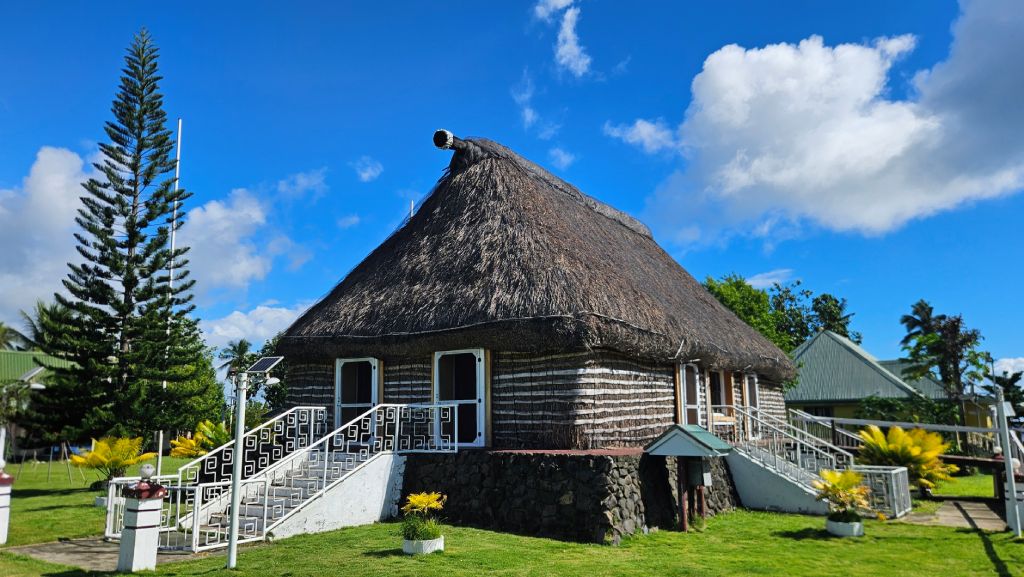
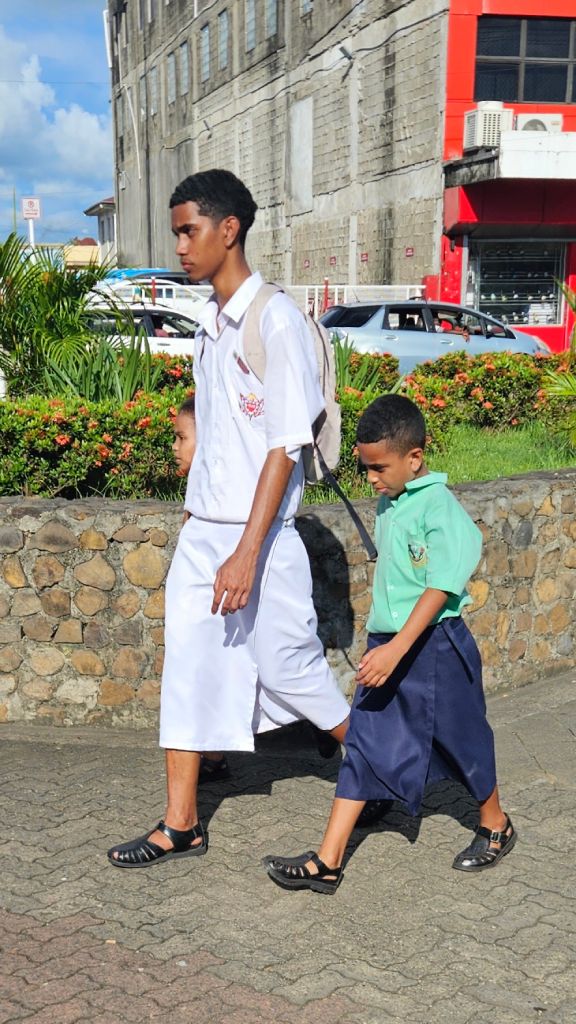
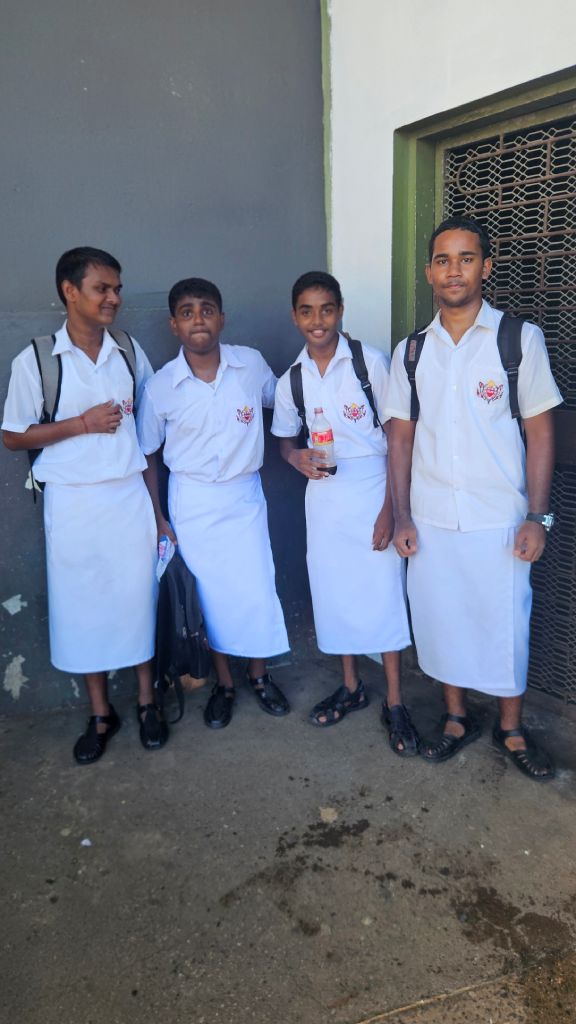
I skipped the tourist attractions Sleeping Giant and Sabeto Hot Springs Mudpool and continued on to Lautoka, arriving just as school finished. Hundreds of students in uniforms gathered at the bus station, grabbing snacks, searching for refreshments, and trying to board buses home. In Fiji, boys often wear a traditional skirt called a sulu as part of their school uniform. The sulu is a wraparound garment, similar to a kilt, reaching just below the knees.
Like in Nadi, I didn’t find any remarkable places to visit or things to do that would justify a visit beyond enjoying the lively street atmosphere.
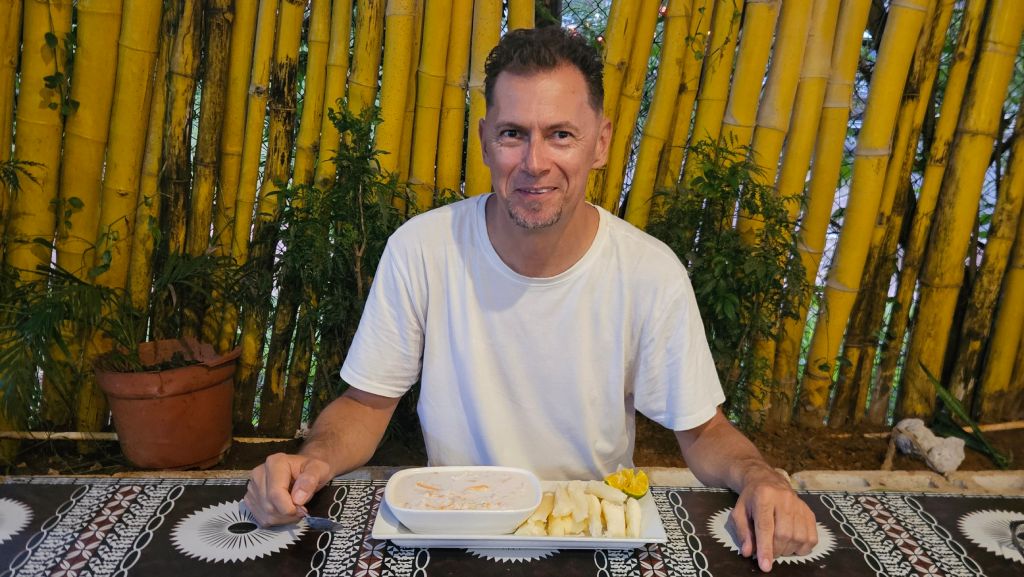
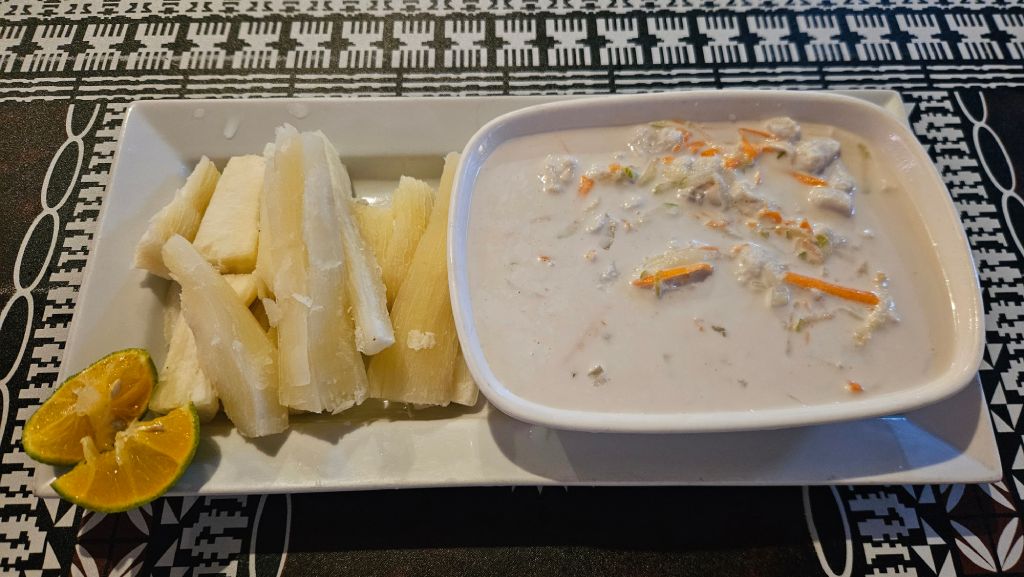
The return ride to Nadi was less comfortable, as the bus was completely full. I spent most of the time standing, pressed against other passengers. Back in Nadi, I stopped at Isa Lei, a restaurant known for excellent Fijian cuisine. I ordered a local specialty, kokada. A kind of tuna ceviche with coconut milk that masks the taste of onion. It was a delicious and quickly prepared dish, a truly Fijian specialty. The highlight of my culinary tasting experience.
Reflections on my visit to Fiji
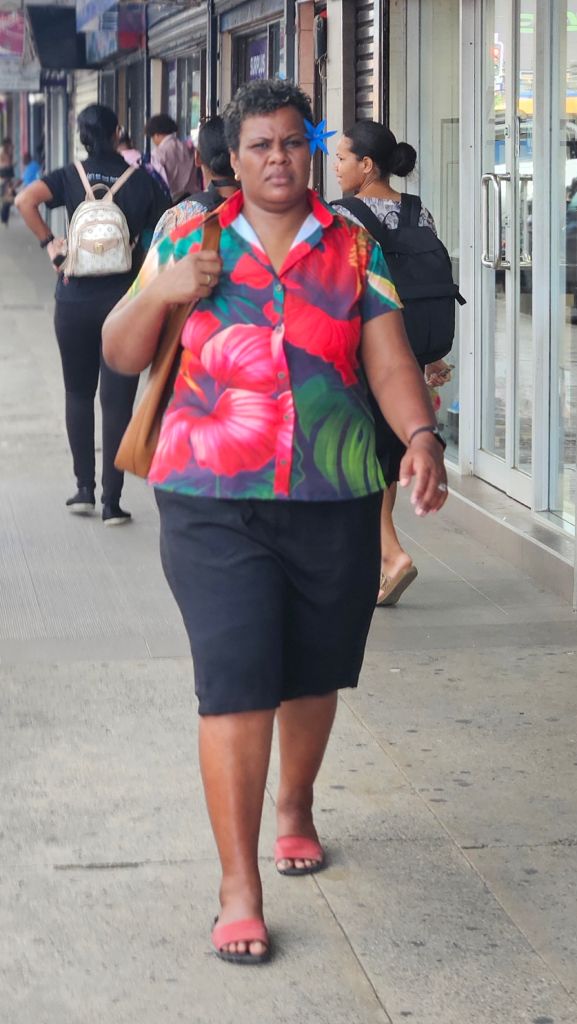
There are two worlds in Fiji: the world of tourists and the world of locals. Many locals live ordinary lives, mostly unrelated to the sea or the exotic beaches often portrayed as symbols of Fiji. Experiencing this side of Fiji revealed me the local culture and daily life beyond the typical tourist images.
In my short stay, I didn’t manage (or really want) to visit the exclusive areas reserved for tourists, as I had too little time. I’ll need another Fiji travel adventure to explore the coastal beauty, discover the dreamlike beaches, and dive into its underwater world.
Fiji Travel Photo Gallery