My Micronesia travel summary:
Visited: March 2026
Duration of visit: 5 days
Capital city: Kolonia
Population: 75,000 (2026)
Micronesia travel blog reading time: 7 minutes
Attractions and places I visited in Micronesia:
- Scenic snorkeling among coral reefs and manta rays.
- Constant concern about the stray dogs roaming Pohnpei.
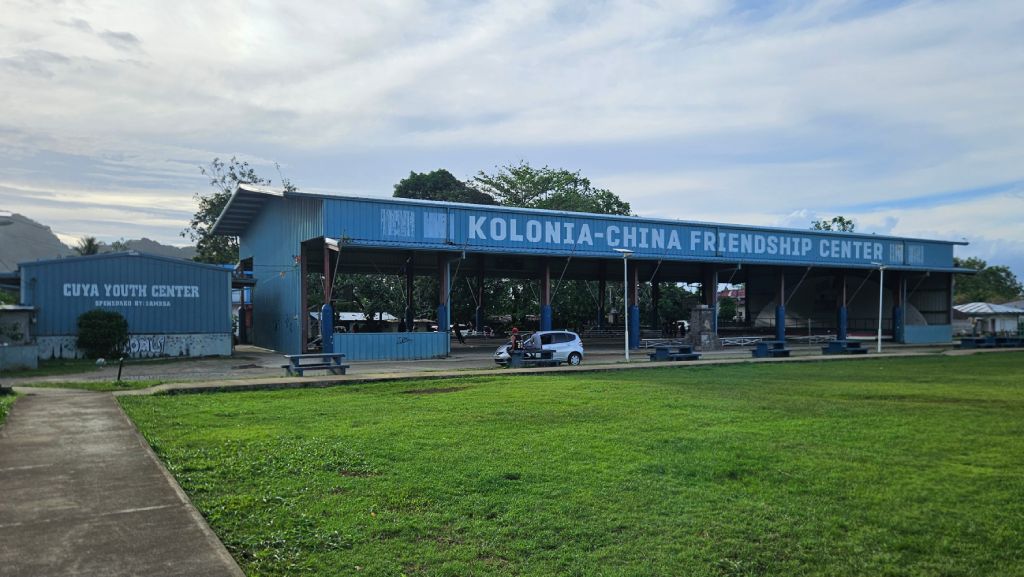
- Exploring the rather unremarkable capital, Kolonia.
- Discovering mystic Nan Madol – Venice of the Pacific.
- Hiking to powerful Kepirohi Waterfall and Liduduhniap Waterfall.
The Federated States of Micronesia (FSM) consists of 607 islands divided into four states: Yap, Chuuk, Pohnpei, and Kosrae. Each of them has its own culture and language. There is not a lot of information of this Pacific country in the news, and before my visit, it never really felt like an appealing destination to me.
One important fact is that under the Compact of Free Association, Micronesian citizens can live and work in the United States. This makes life easier for locals, similar to other Pacific nations that have comparable agreements with the United States. If they don’t want to continue with relatively simple life at their homes or want to study, they can simply move to the USA.
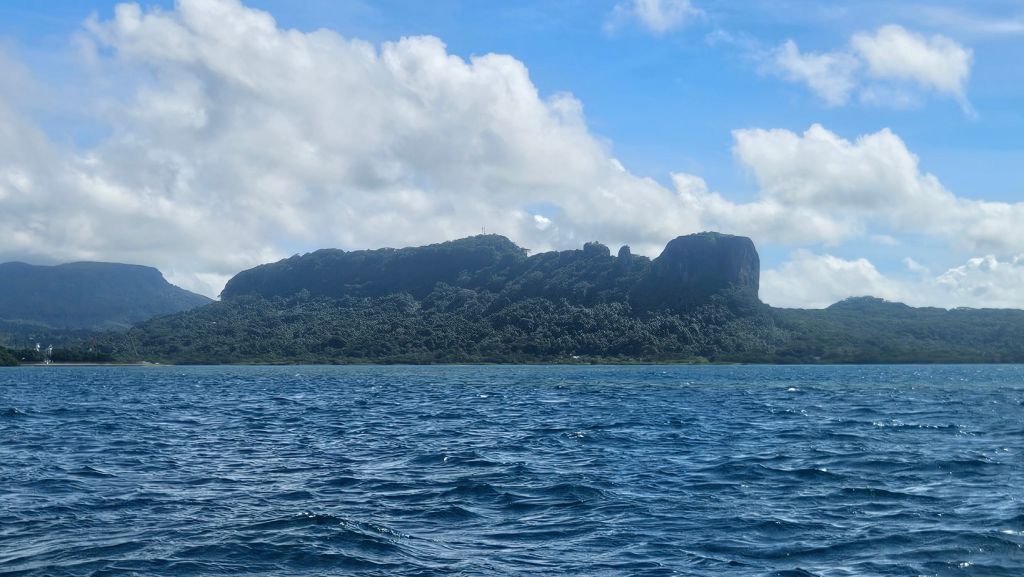
On my Micronesia travel adventure, I visited only mountainous volcanic island of Pohnpei, one of the wettest places in the world.
Last minute activities
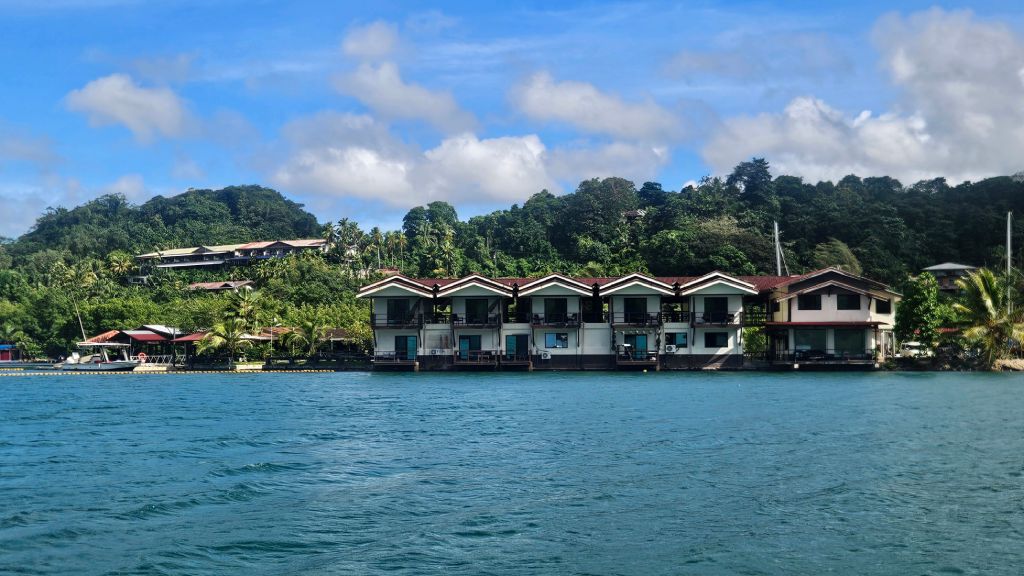
I initially stayed at the upscale Mangrove Bay Hotel, as the accommodations in the city center had poor reviews. As soon as I arrived, I realized this kind of luxury setting wasn’t for me and it was also far from the town’s activity.
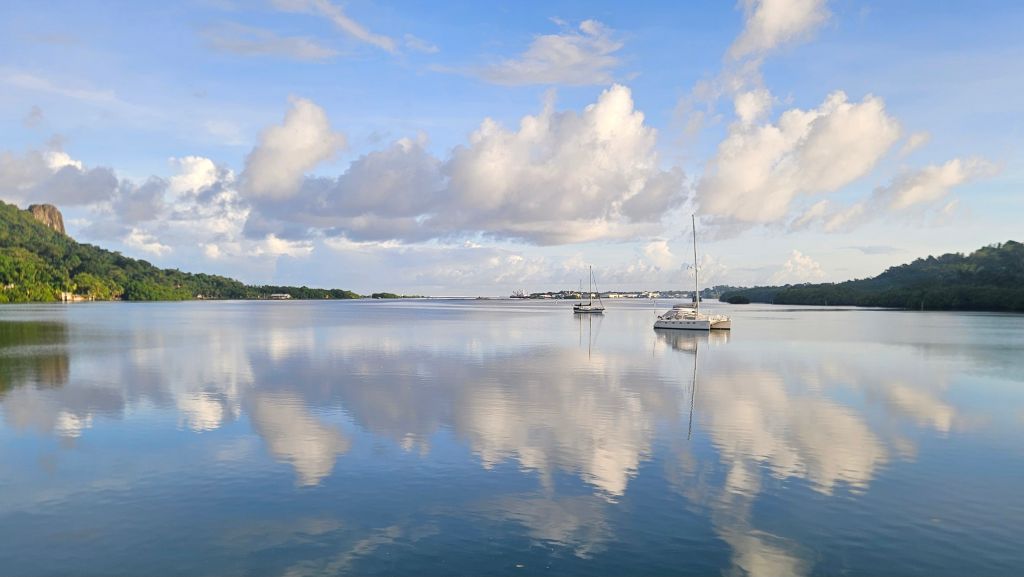
The next morning, I woke up early and knocked on the door of the island’s only diving tour operator. Since I didn’t have a SIM card, my phone hadn’t adjusted to the local time, and I arrived an hour too early.
“You still have time to join us today. We’ll visit the best snorkeling spots, including Manta Channel, where you might see manta rays,” explained the Brazilian owner.
I quickly ate some leftovers from the previous day, packed my things, and got ready in time. They also provided a rash guard to protect me from the strong sun, so I was set for the day.
Snorkeling with mantas
Besides me, there was only a girl from Guam and an American named Steven, who was in Micronesia on a similar mission – to visit every country in the world. We had great conversations throughout the day, exchanging stories and tips about the islands.
The main goal was to see manta rays. It took some time, but in the end, I was lucky to see them twice. The first time, two mantas slowly glided just a couple of meters from me, moving gracefully beneath the surface.
About five minutes later, another manta came straight toward me from the deep, turning away just before reaching me. Impressive!
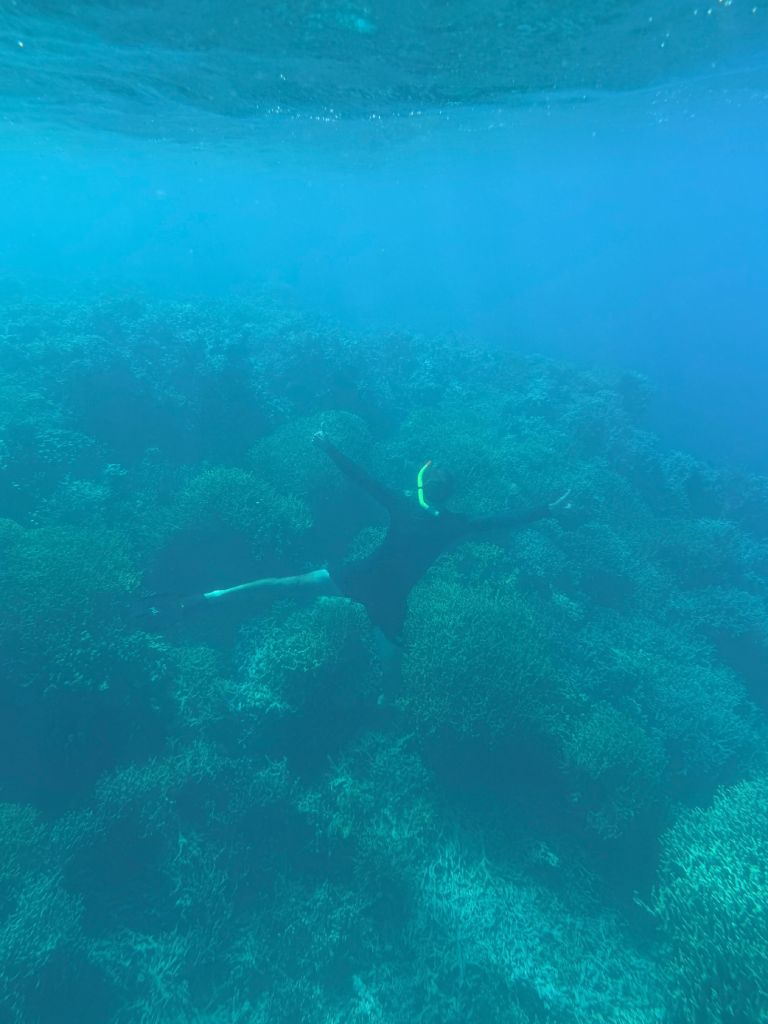
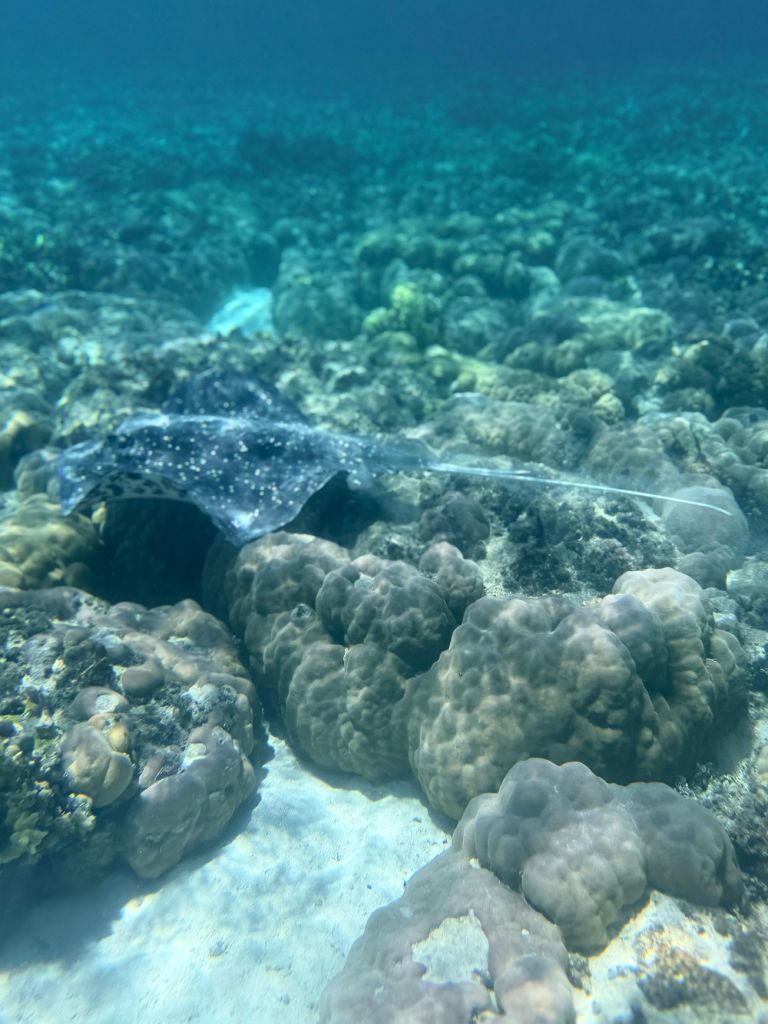
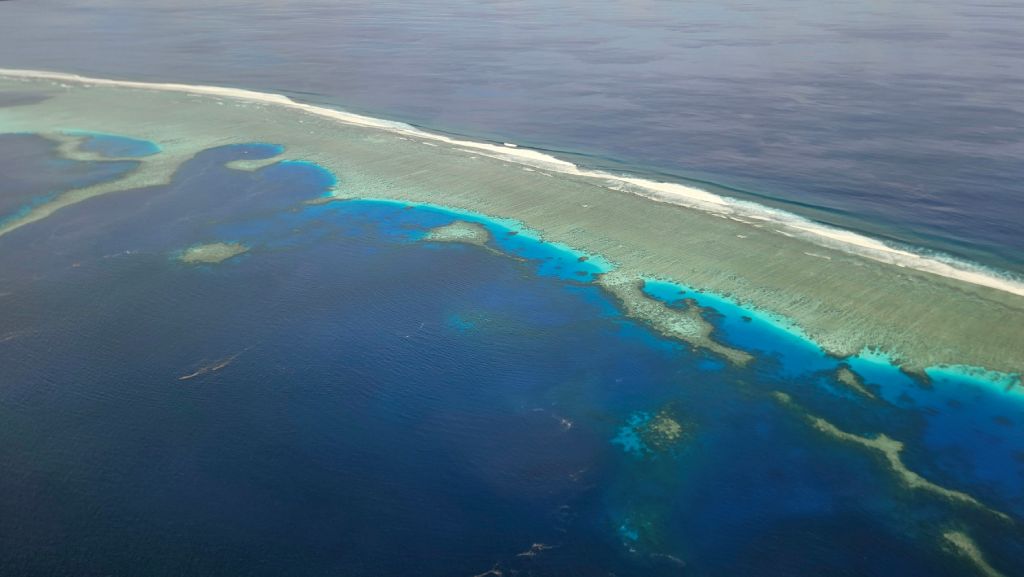
The second dive offered the most colorful underwater scenery. The coral reef was full of vibrant formations, intertwined in different shapes and colors. There weren’t many fish, but there was good variety. I also spotted a stingray hidden in the sand, before it quickly swam away. The snorkeling day was definitely one of the highlights of my Micronesia travel adventure.
Driving around Pohnpei island
Although Pohnpei isn’t known for many beautiful places to visit or exciting things to do, I decided to rent a car to explore it as thoroughly as possible. Early in the morning, a well-maintained Nissan SUV was delivered directly to my hotel in downtown, where I moved after the first night. Although cars drive on the right side in Micronesia, most vehicles have the steering wheel on the right. Luckily, mine was on the left – the correct side.
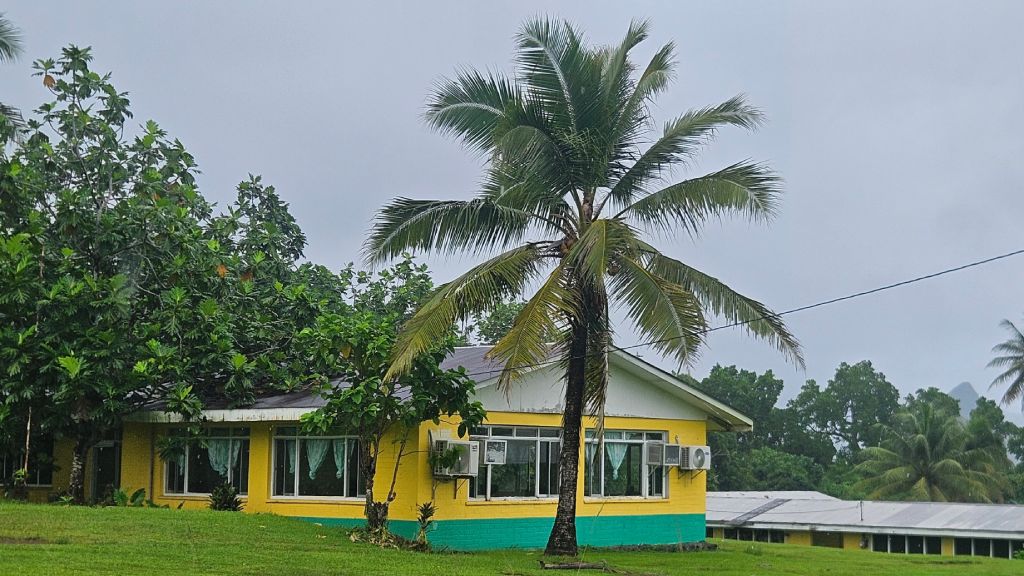
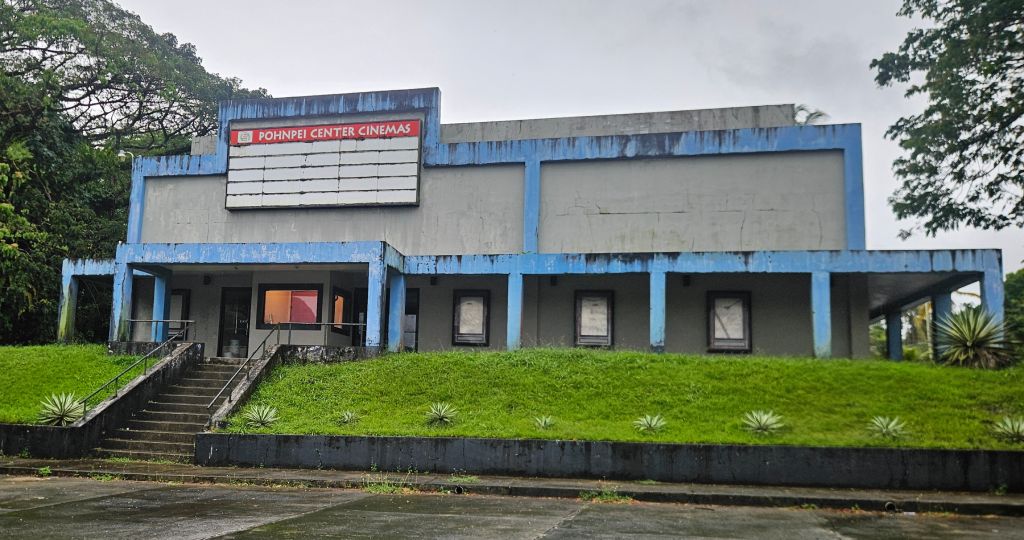
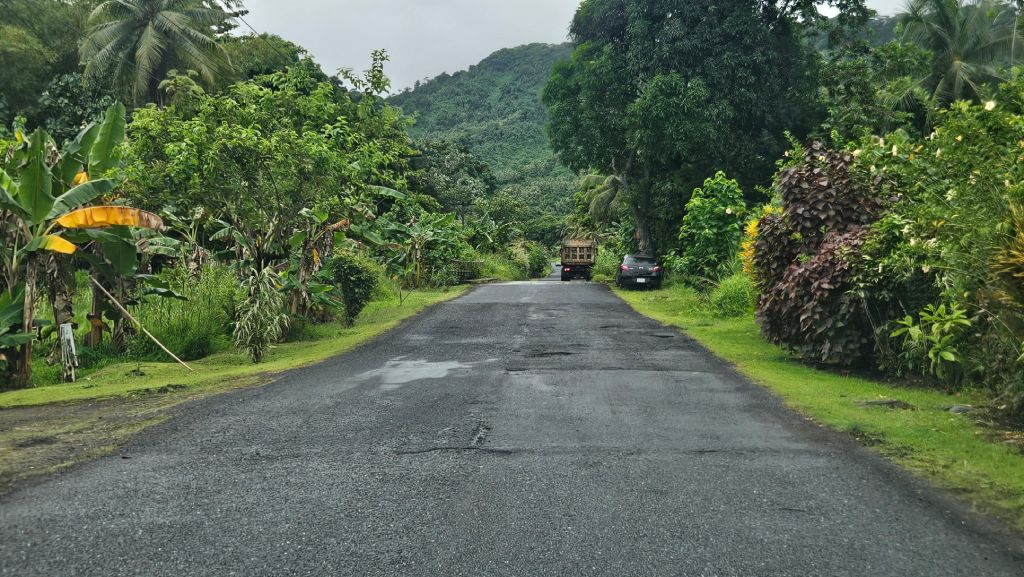
I drove clockwise along the road that circles the island, mostly hugging the coastline. It would take around 130 kilometers, but I stopped frequently to take photos or chat with locals. The weather wasn’t great that day; cloudy and grey in the morning, with rain later in the day.
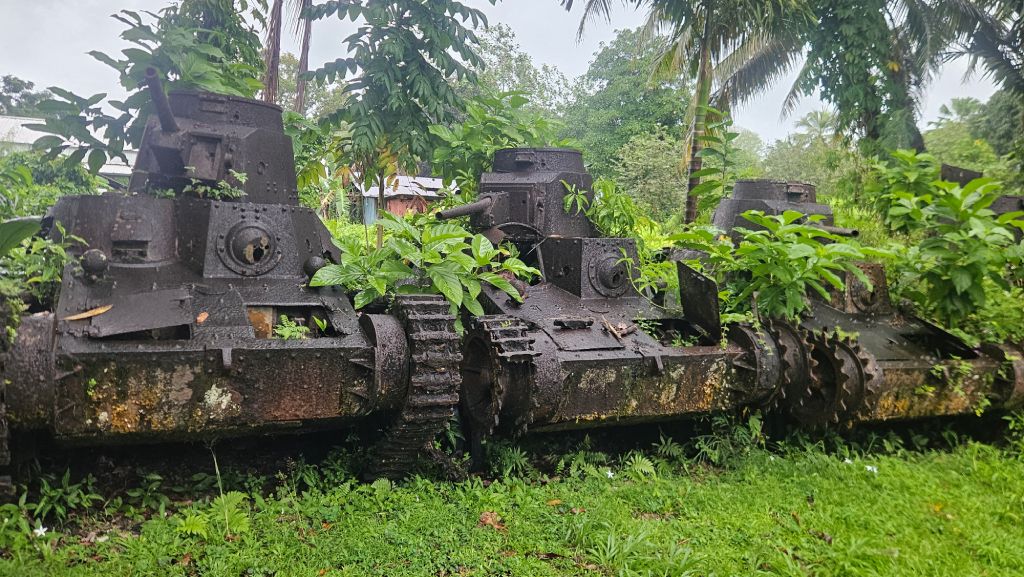
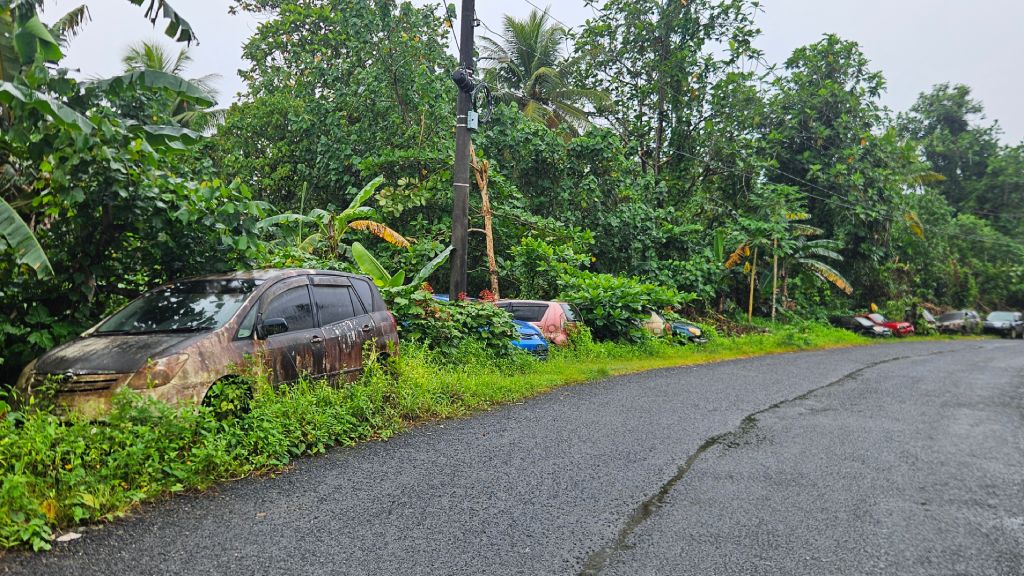
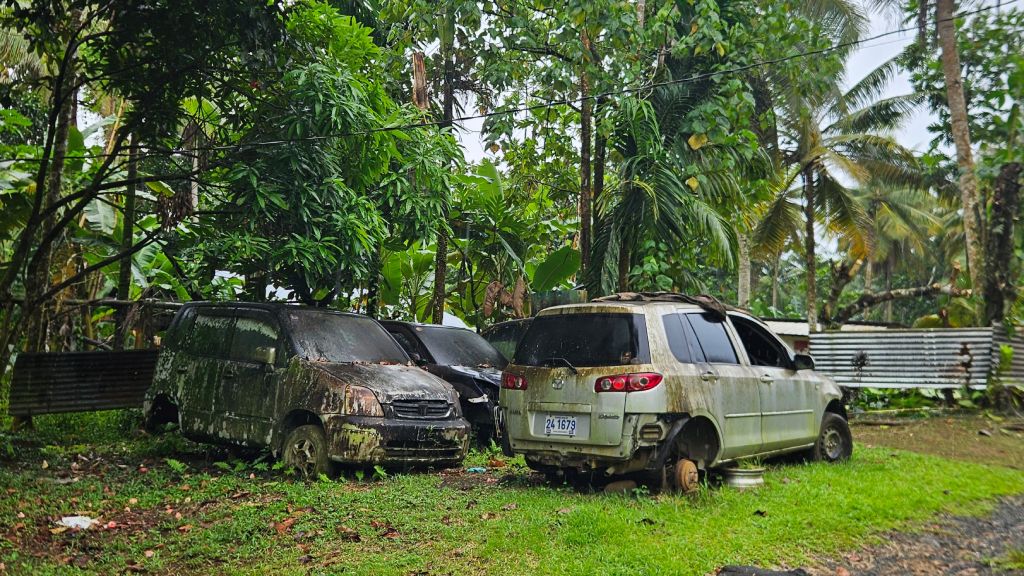
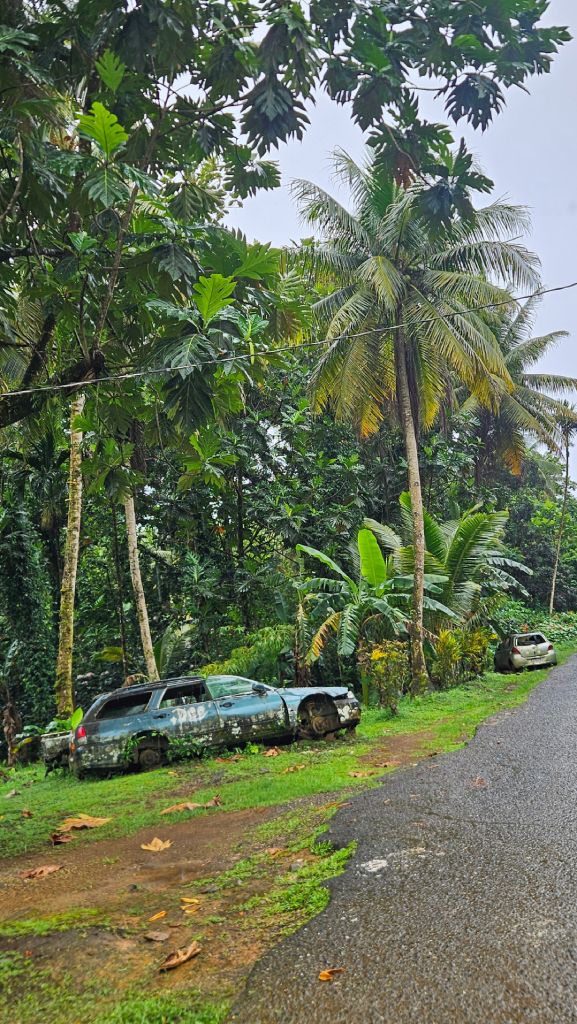
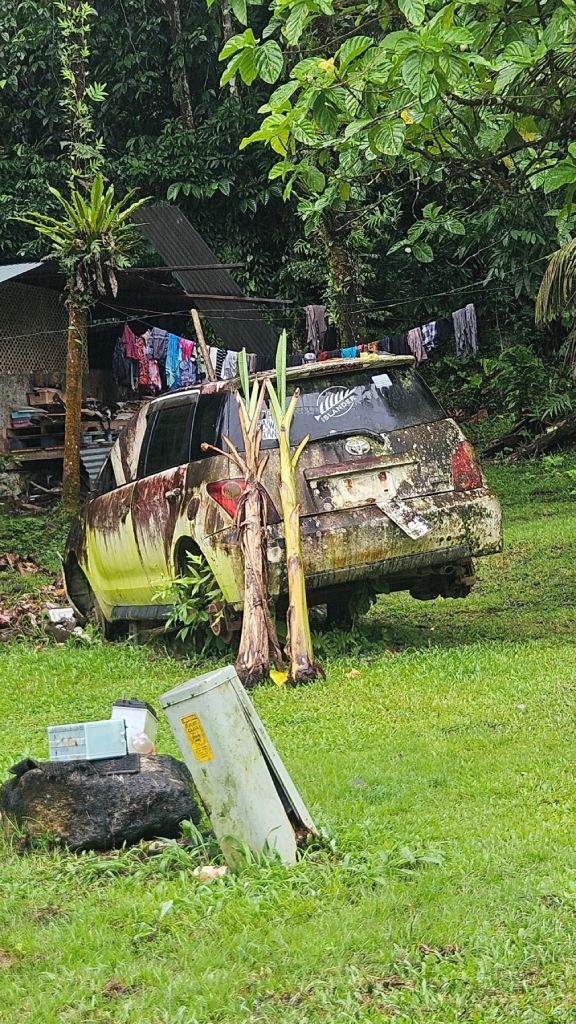
For me, one of the most unusual sights on Pohnpei was the number of abandoned cars scattered along roads, in yards, or even in the forest.
They seem to bother no one. Some are faded, others stripped of wheels and parts, while the oldest are slowly being overgrown by lush tropical vegetation.
Nan Madol – Venice of the Pacific
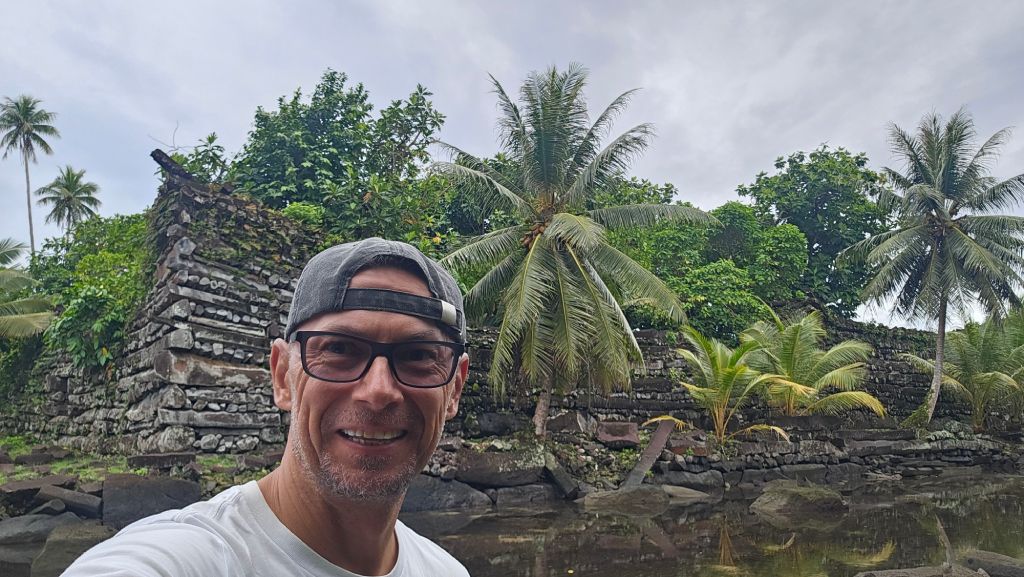
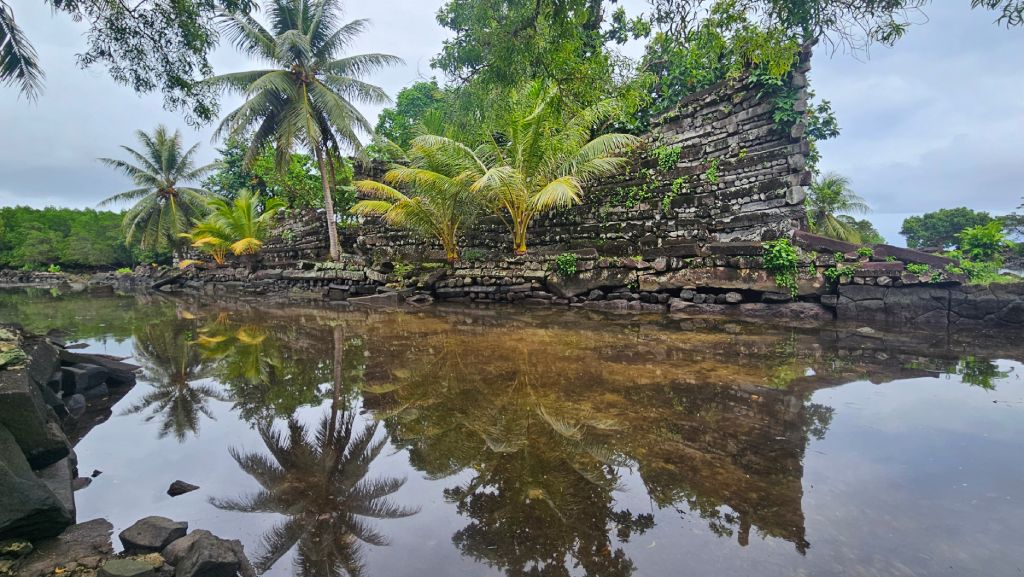
The first real landmark was Nan Madol, a complex of over 100 man-made islets built with basalt and coral stones between 1200 and 1500 CE.
Nan Madol served as the ceremonial and political center of the Saudeleur dynasty. Its stone structures reflect advanced engineering and social organization for that time.
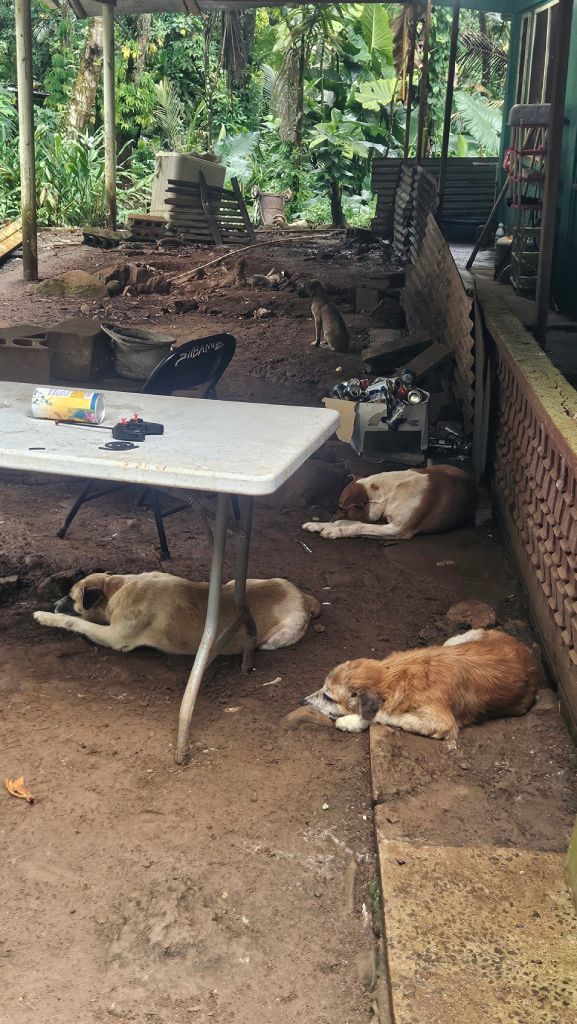
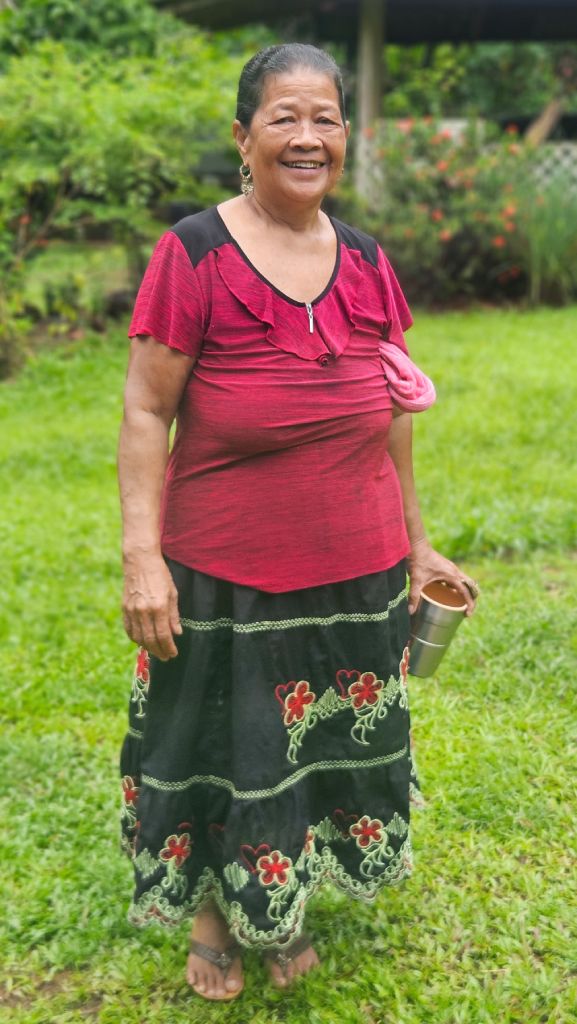
Reaching the site was an experience in itself. I had to stop three times to pay entrance fees. First 25USD to the local chief, then 1USD to cross private land, and finally 3USD for parking and access through another property. At the last stop, I struggled to get the owner’s attention, as she was resting inside her house and didn’t seem eager to come out. I didn’t dare approach the house, because of half a dozen dogs nearby. When she finally appeared, she showed me the path through a dense, overgrown forest leading to Nan Madol.
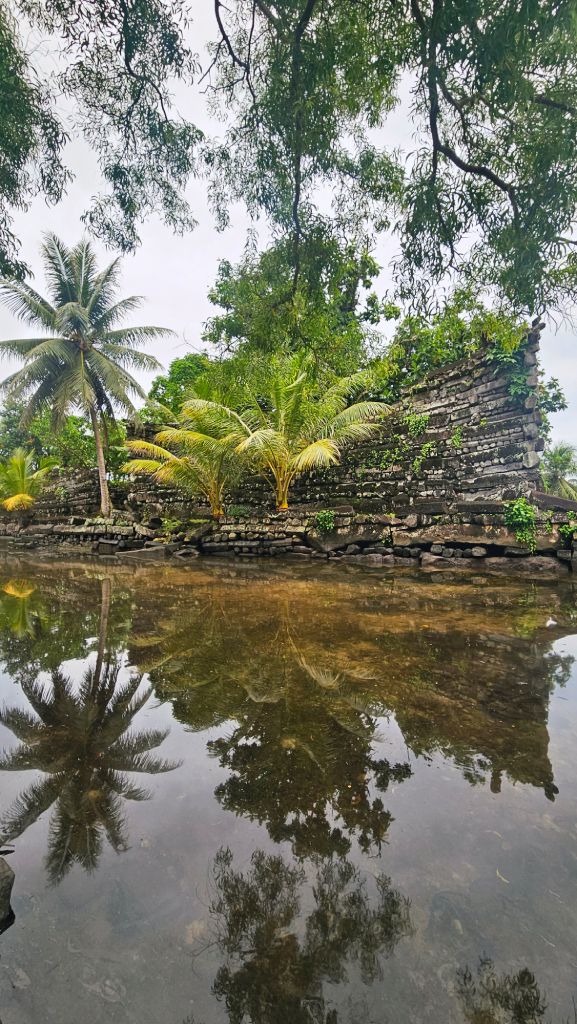
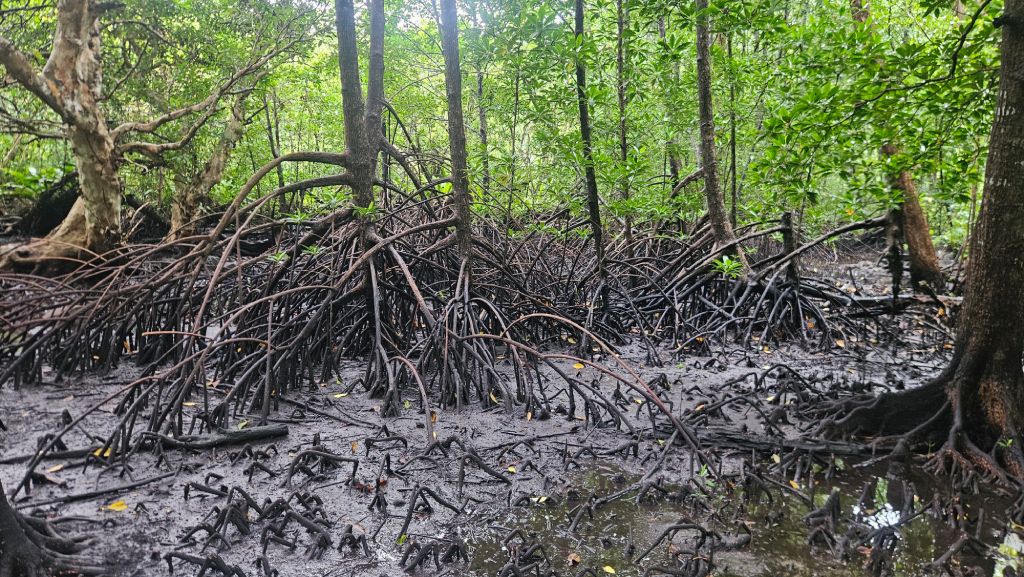
A narrow trail of sharp stones and small wooden bridges leaded through tropical forest and mangroves, which were dry due to low tide. Even so, the water level around the ruins was high enough that I didn’t feel confident crossing further. With no other visitors around, I wasn’t even sure whether it was safe to continue across the channels. Although Nan Mandol is considered endangered due to siltation and mangrove overgrowth, it appeared to be in relatively good condition.
On my way back to the parking area, I passed the same property again and noticed how incredibly disorganized and neglected it was. It felt as if everything had simply been left where it was last used. Empty bottles, trash, clothes, broken electronics, and all kinds of clutter scattered around the house. Meanwhile, the owners were relaxing inside.
Fortunately, the dogs were just as lazy and only watched me pass by.
Kepirohi Waterfall and Liduduhniap Waterfall
As I continued driving around the island, the rain itensified. I made two stops at waterfalls.
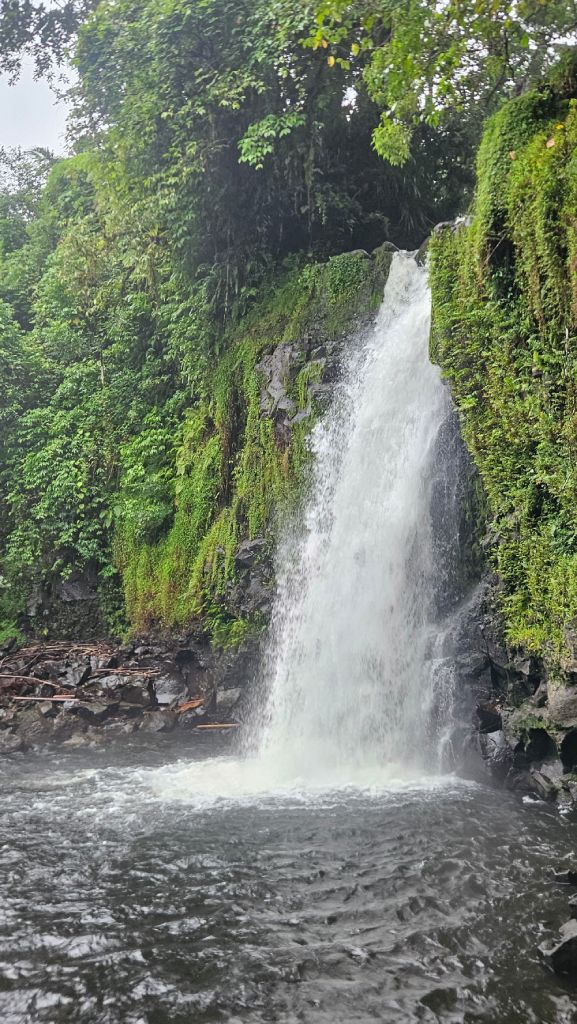
Kepirohi Waterfall is the island’s most famous and photographed waterfall, located nearby Nan Madol. A large volume of water cascades 20 meters deep and 30 meters wide through basalt rocks, filling a shallow pool before flowing towards the sea.
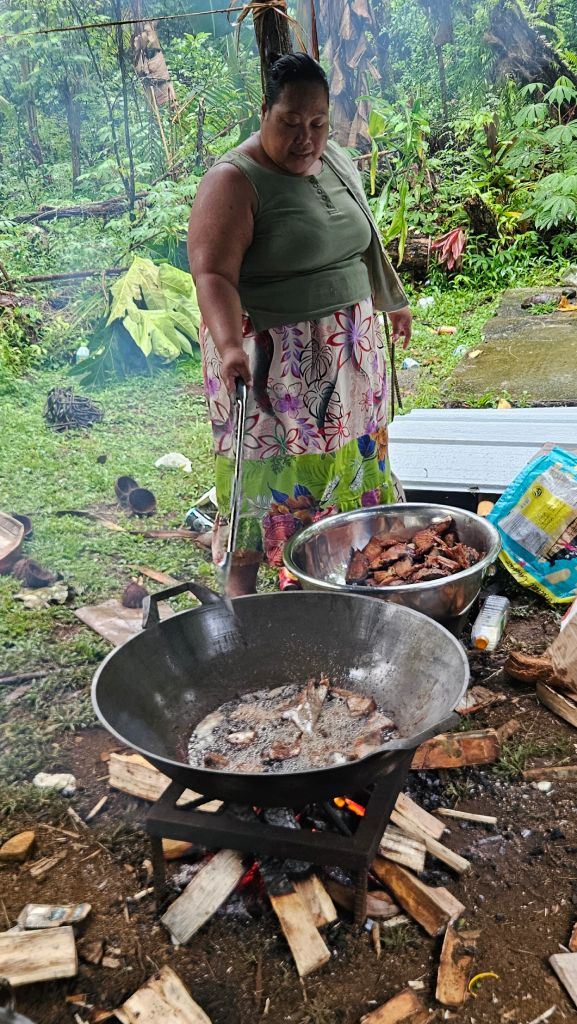
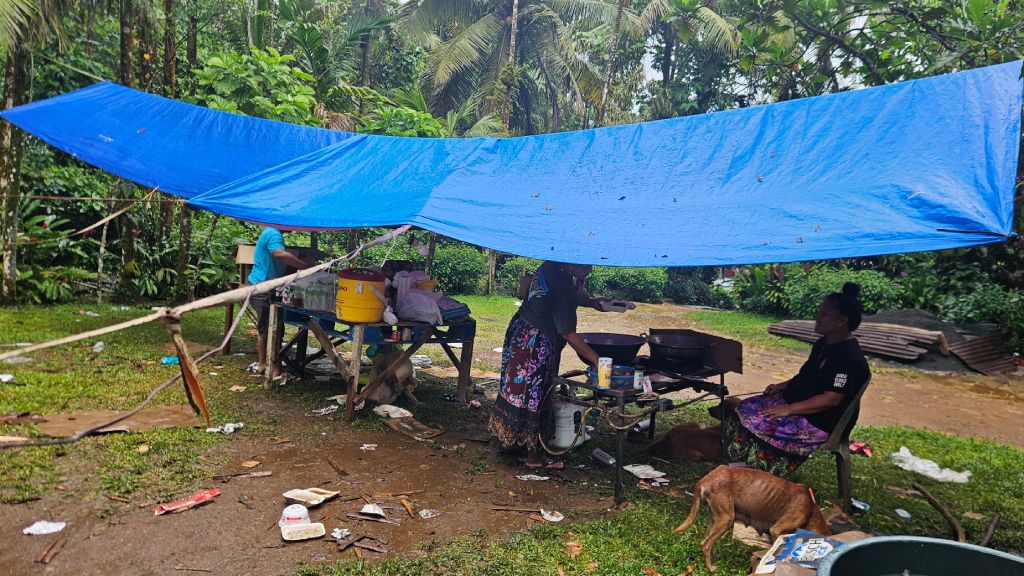
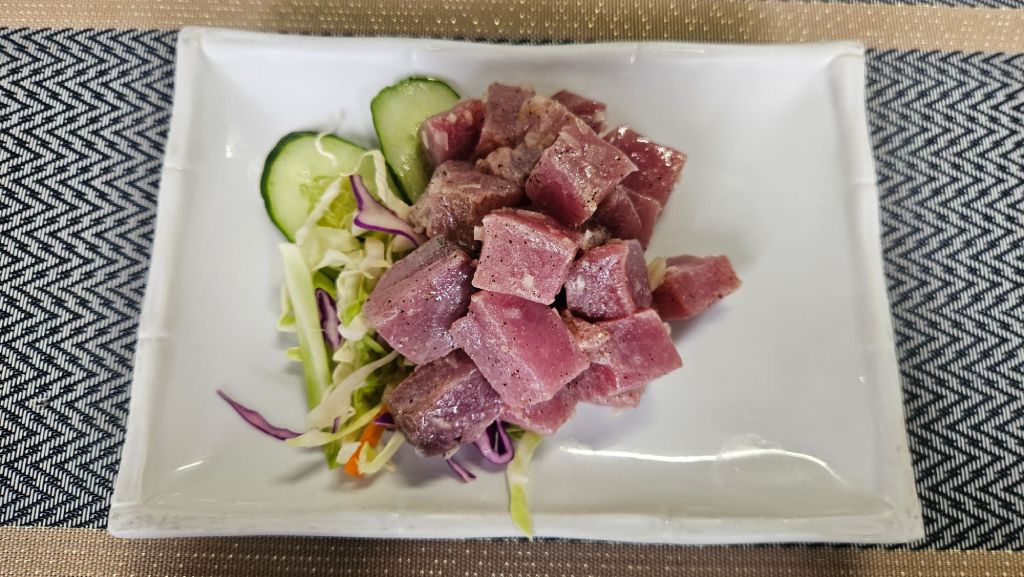
When I arrived at the parking area, the rain became storonger. I came across a group of women frying tuna in large woks. They sheltered under makeshift tents as they prepared food for a funeral. When I asked them for a taste, they happily offered me freshly cooked tuna.
After paying a steep 10USD entrance fee, I followed a well-maintained path to the waterfall. Despite the dry season, the water flow was strong.
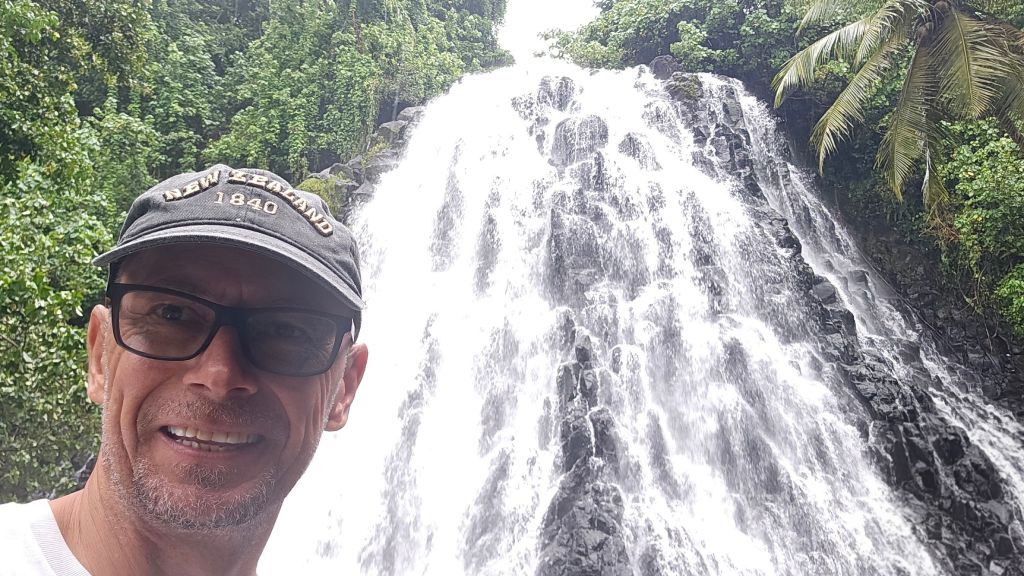
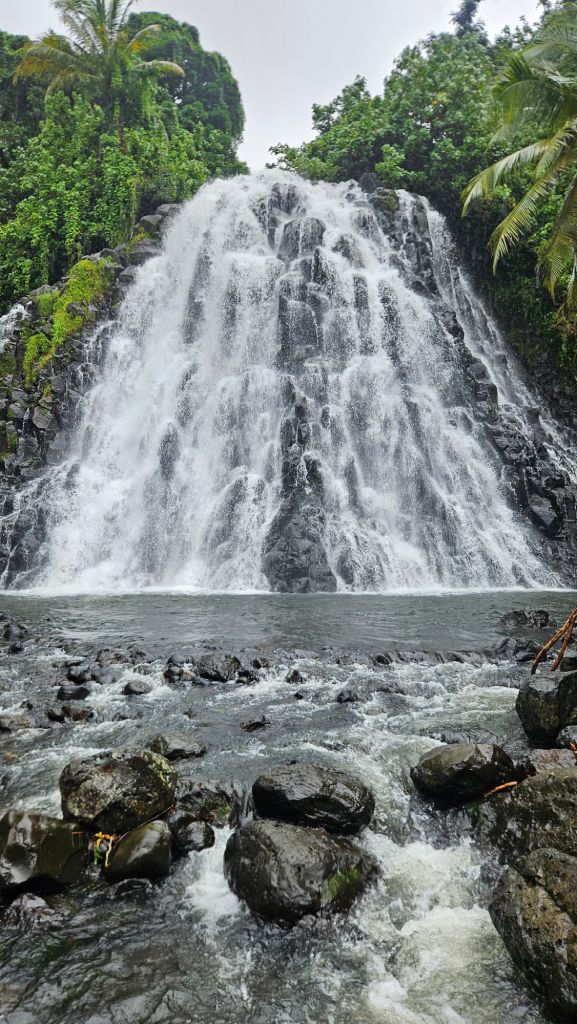
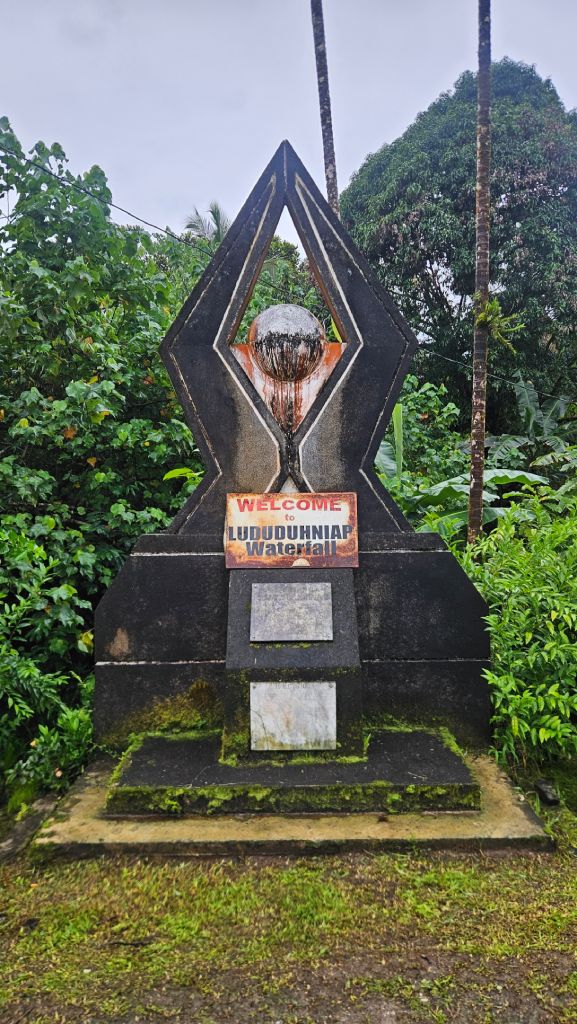
Liduduhniap Waterfall lies just a few kilometers from Kolonia and is easily accessible by car. I stopped near a small workshop, where the owner of the land charged 3USD and pointed me to a path leading down to the falls. This waterfall is smaller. The water drops about 8 meters into a natural pool suitable for swimming. Due to the bad weather, I decided not to go in.
At all these remarkable places to visit, I was completely alone. I didn’t see any other visitors or tourists.
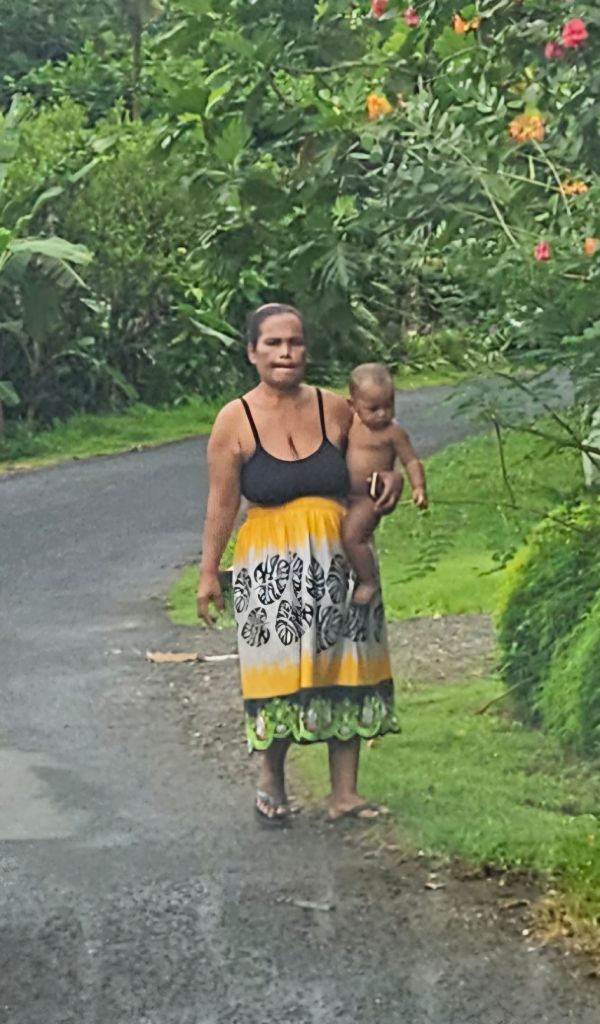
Betel nut: tradition, habit, addiction
One of the traditions (also) in Micronesia is the chewing of betel nut for its stimulating and mildly narcotic effects.
Almost everyone takes part; young women, men or elderly. From immigration officers at the airport to taxi drivers and restaurant staff. Betel nuts are commonly chewed with slaked lime and betel leaves as part of a social or personal ritual.
As the effects increased, people often drink water and spit out the red saliva that accumulates in their mouths. I consider it very unpleasant, especially among neatly dressed officials or young women. However, I didn’t notice much sense of embarrassment, even when speaking became difficult.
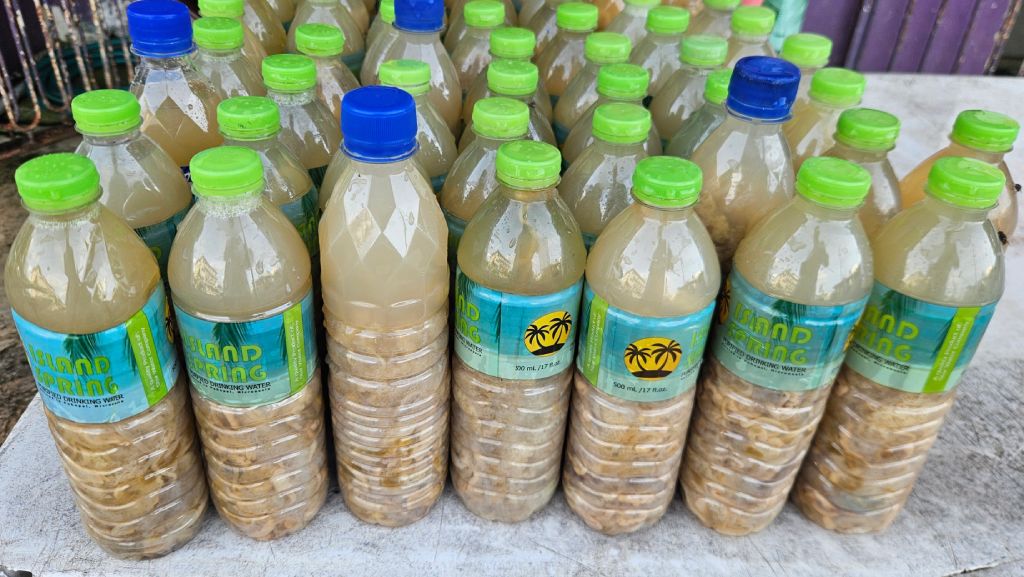
The health consequences are serious. I observed particularly poor dental conditions among many adults, with some even missing teeth entirely. Due to its carcinogenic properties, betel nut consumption is linked to high rates of oral, head, and neck cancers. It also increases the risks of heart disease and stroke.
Additionally, betel nut is highly addictive. It is considered the fourth most commonly used psychoactive substance in the world, after tobacco, alcohol, and caffeine.
Reflections on my visit to Micronesia
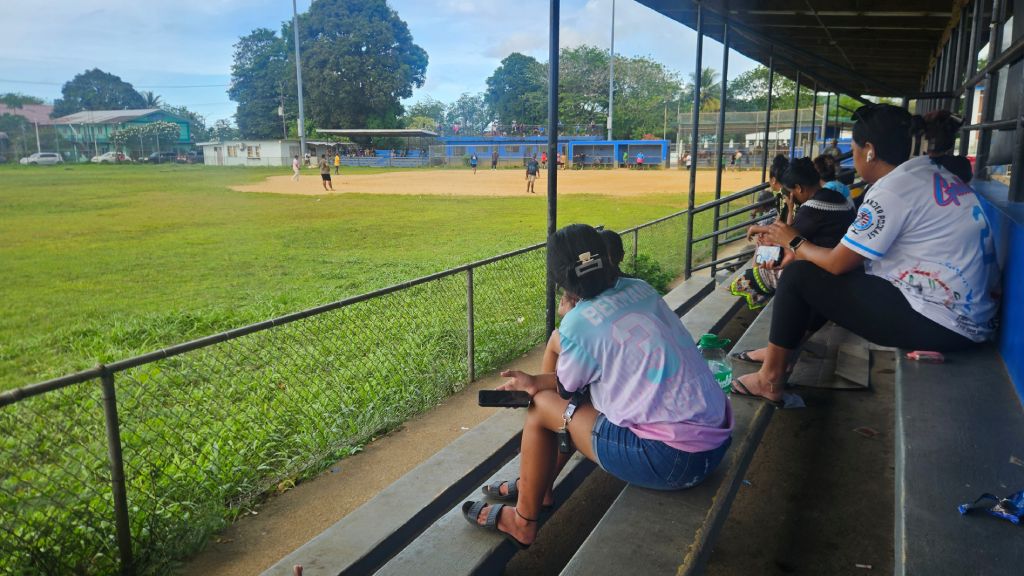
Before my Micronesia travel adventure, I made the mistake of planning too much time to just one island, Pohnpei. Two or three days would have been enough for snorkeling and seeing the few notable places to visit. I spent the remaining days walking around the capital, Kolonia, which has very little to offer in terms of attractions or exciting things to do. The most exciting activity was actually a weekend baseball tournament, where many locals gathered to play and watch.
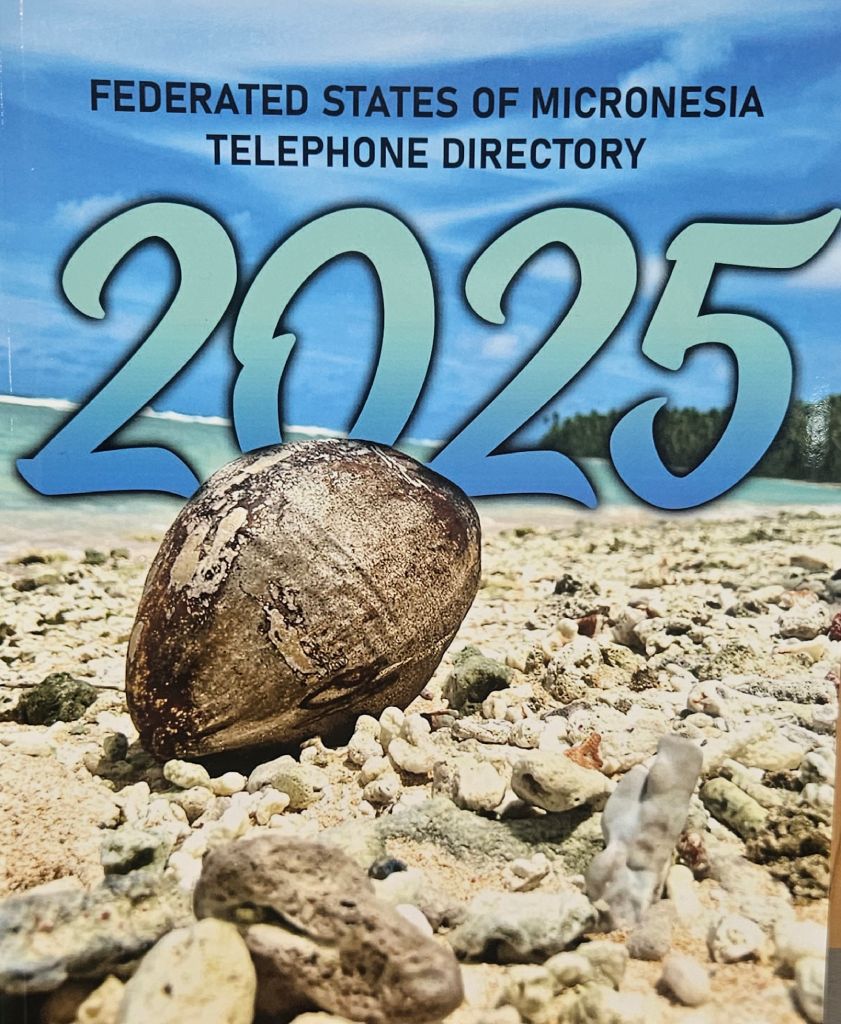

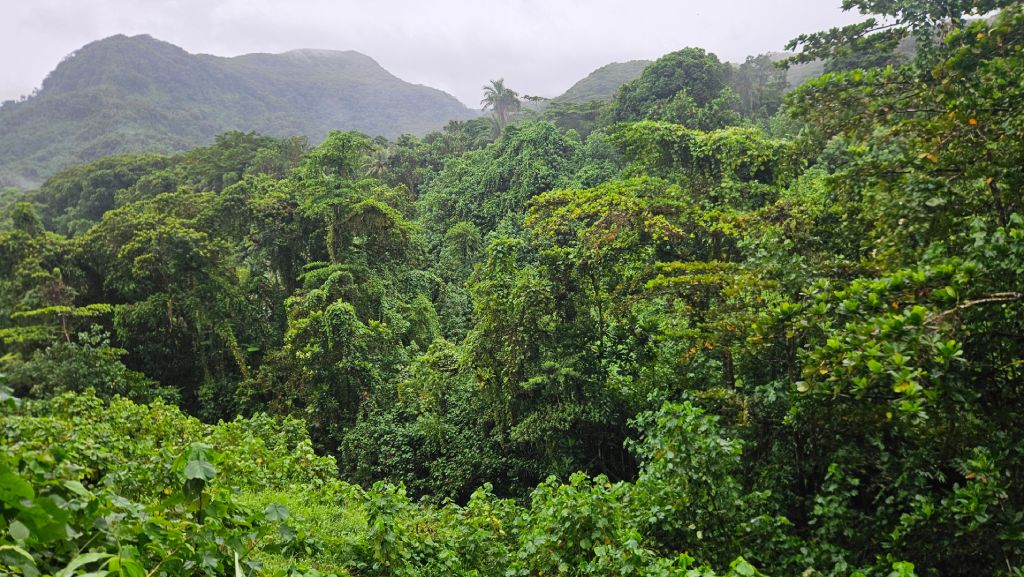
The island’s incredibly lush and green landscape is underutilized and appreciated by its population. Despite this, the economic standard seems relatively high. Almost no one walks or uses motorcycles; even the youth drive cars. Families often eat out in restaurants or take food home.
The more ambitious can easily emigrate to the United States under the Compact of Free Association (COFA), which grants them the right to live, work, and study there without a visa.
The biggest challenge for me as a visitor was the numerous stray dogs, which often discouraged me from walking around.
Additionally, there is not a single beach on Pohnpei suitable for swimming in the sea.
Micronesia Travel Photo Gallery