My Lesotho travel summary:
Visited: August 2026
Duration of visit: 3 days
Capital city: Mesaru
Population: 2.4 million (2026)
Lesotho travel blog reading time: 6 minutes
Attractions and places I visited in Lesotho:
- Arriving to the border without visa.
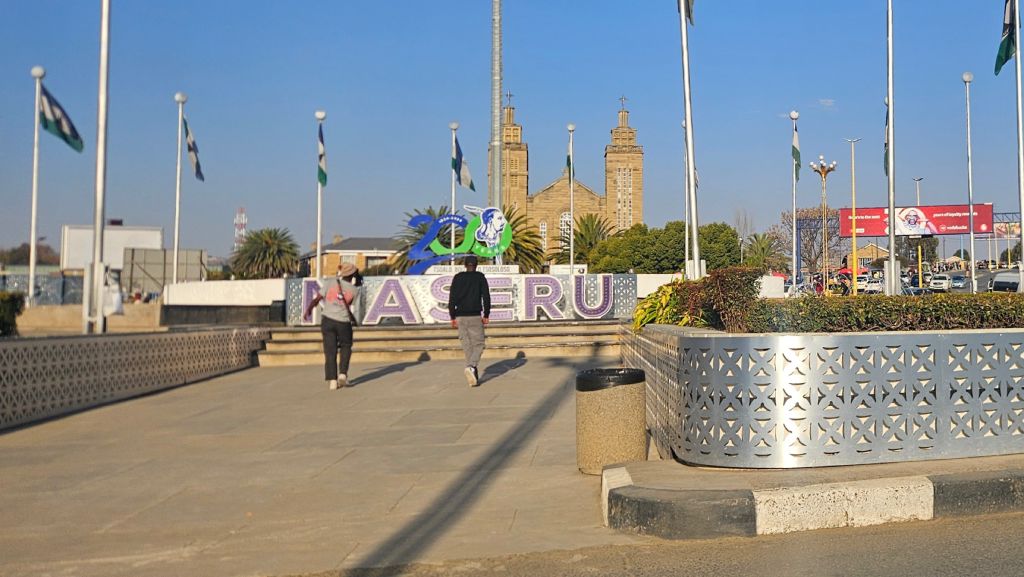
- Unattractive capital city, Maseru.
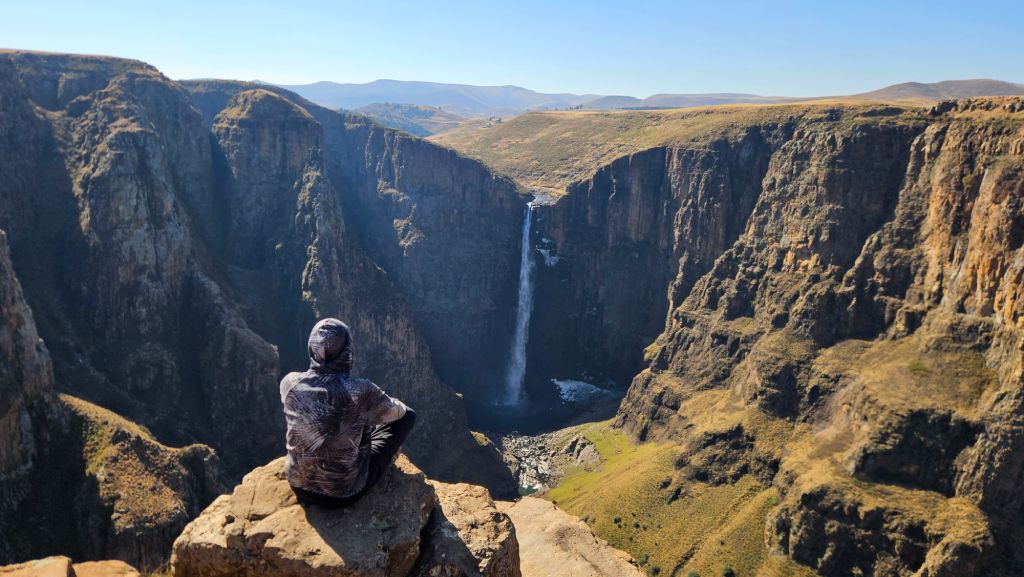
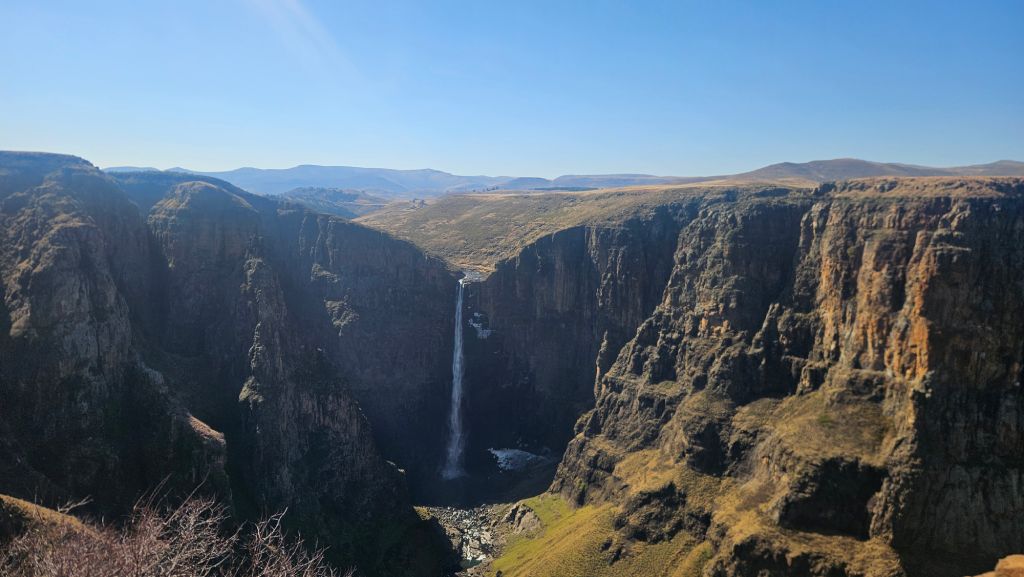
- Standing on top of the canyon and enjoying the view over Maletsunyane Falls.
- Learning about the founder of the Basotho nation – King Moshoeshoe I.
After seeing almost the whole of Africa, 2026 was finally time to explore its southern tip.
Lesotho travel adventure was part of my two-month journey, which also included Botswana, South Africa, Eswatini, Comoros, Madagascar and Mauritius.
The Lesotho visa surprise
As on many of my previous trips, I checked the visa requirements and found that Slovenian citizens don’t need a visa for Lesotho. At the Maseru Bridge land border crossing, everything seemed quite relaxed until an immigration officer told me to park the car and come to her office.
“You need a visa for Lesotho. Do you have one?”
“I don’t need a visa. We are part of the EU and Schengen Area, and I don’t need one.”
She brought out a list of countries showing their visa requirements. Next to Slovenia, it said that a visa was required. Since my South African SIM card had stopped working, I couldn’t check the information online and show her that Slovenian citizens didn’t need a visa. She called her supervisor, who calmly confirmed that I needed one and that it would cost 150USD.
In all my travels through 166 countries, I had never arrived at a border without a visa when one was required.
Or without knowing that I needed one. Lesotho was apparently going to be the first. To make matters worse, I had my partner and two children in the car.
“What can we do?” I asked.
“We can help you, but you will need to pay something,” she calmly answered.
Somehow, I trusted the officers’ helpful attitude and quickly negotiated a total of 300USD for four visas. I put the dollar bills inside our passports, and a few minutes later we all had our stamps.
“Here is my WhatsApp number. Let me know when you are leaving, and I’ll give you the exit stamp to avoid any problems,” the friendly immigration officer even offered help at the end of my Lesotho travel adventure.
Winter in Maseru
Lesotho’s capital is not particularly interesting, with few attractive places to visit or things to do. We drove to the outskirts of Maseru, where our accommodation was located. The friendly owner welcomed us and offered a relatively comfortable apartment.
August is very cold in Lesotho, but according to the locals, the weather during our visit was unusually warm and dry. Even so, temperatures dropped to just 4°C at night, while during the day they rose above 20°C in the sun.
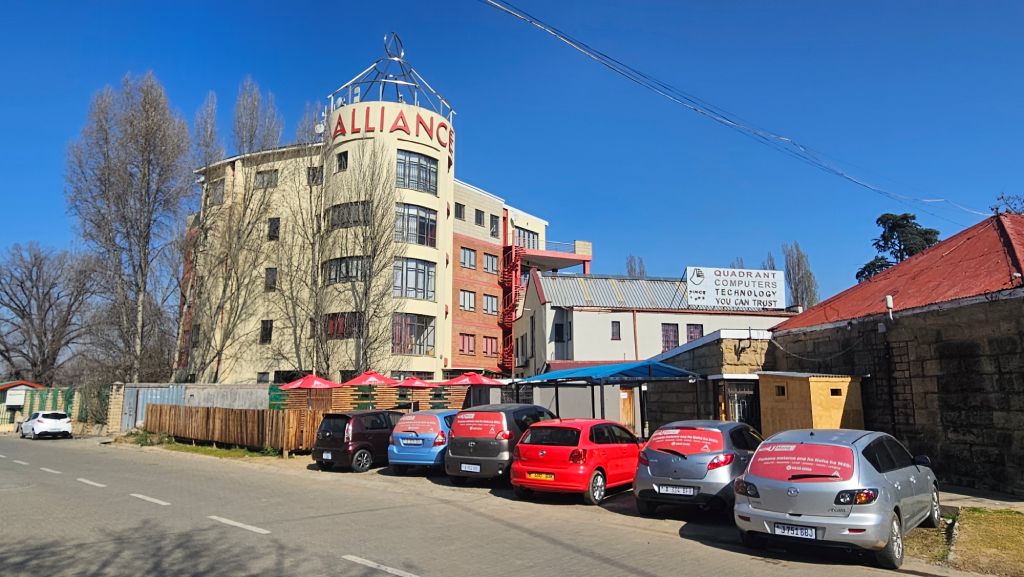
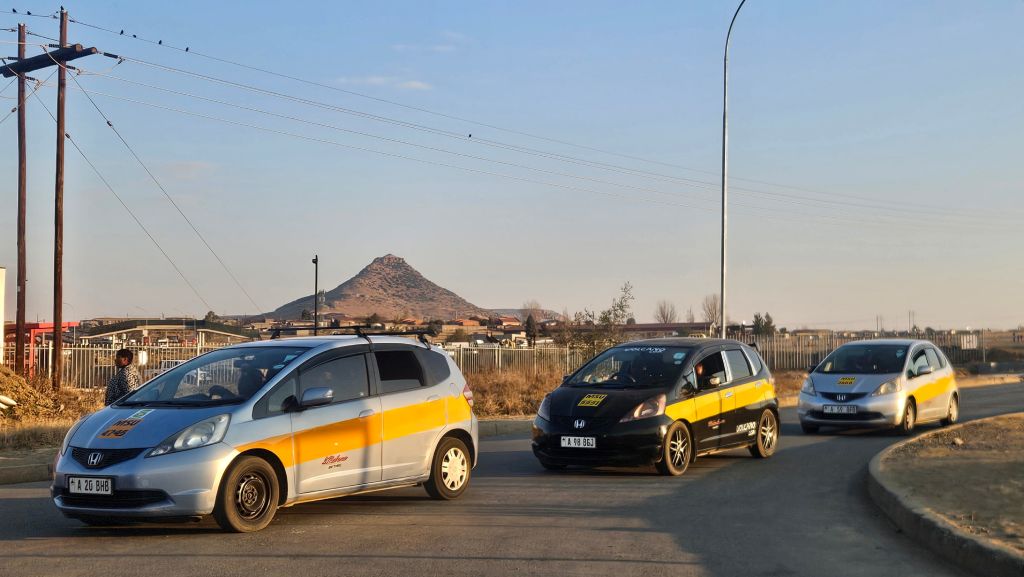
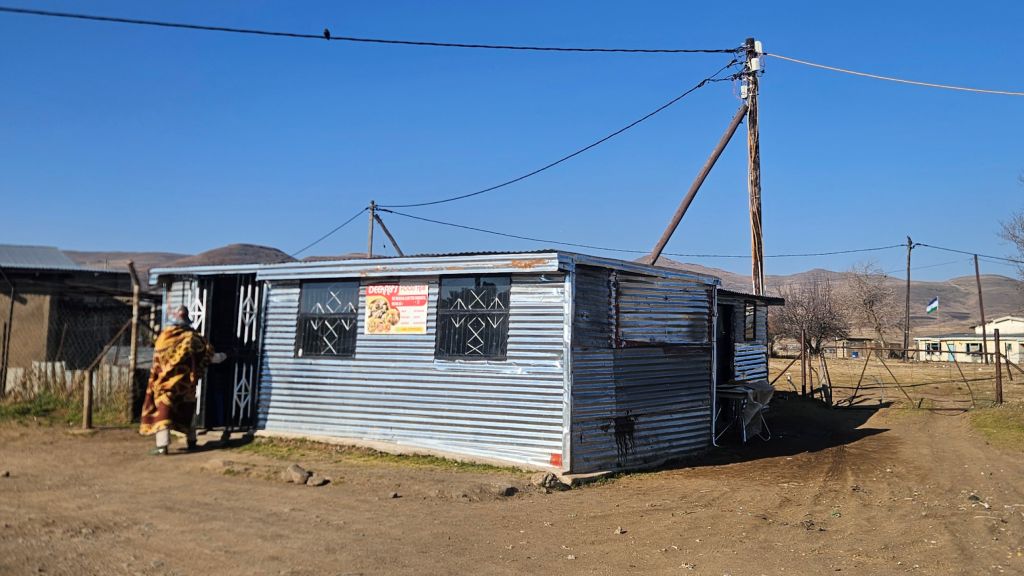
Most homes have no heating. They are simple, often made from corrugated metal sheets, with single-glazed windows.
Instead of heaters or stoves, hotels and rental units provide electric blankets to keep the beds warm at night.
I kept a cheap fan heater running, but it only managed to warm the living room. Although electric blankets are comfortable, I still prefer a proper radiator or heater that warms the whole room. The bed warms up quickly anyway once you get in and your body starts giving off heat.
The Basotho hat and the Parliament
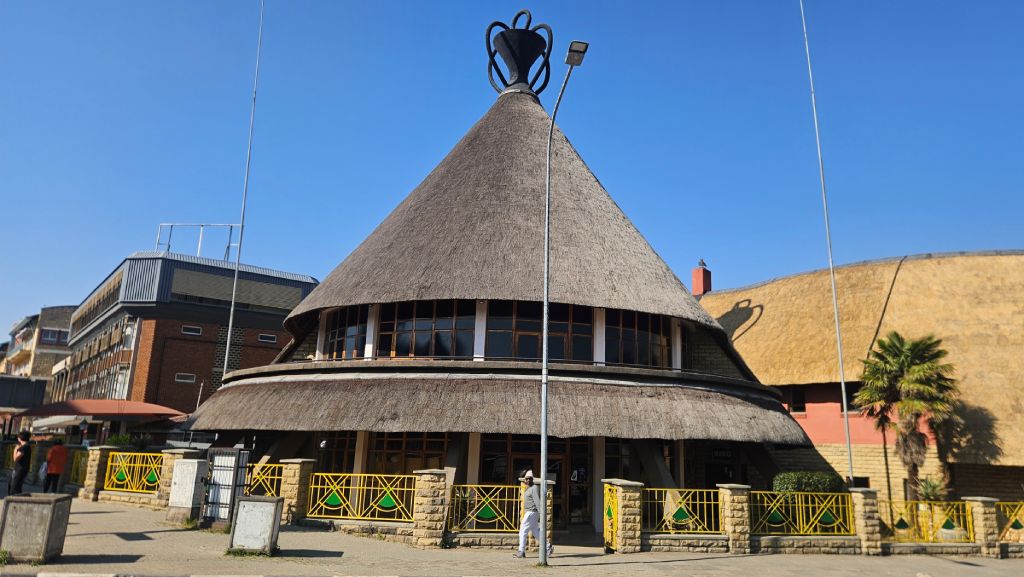
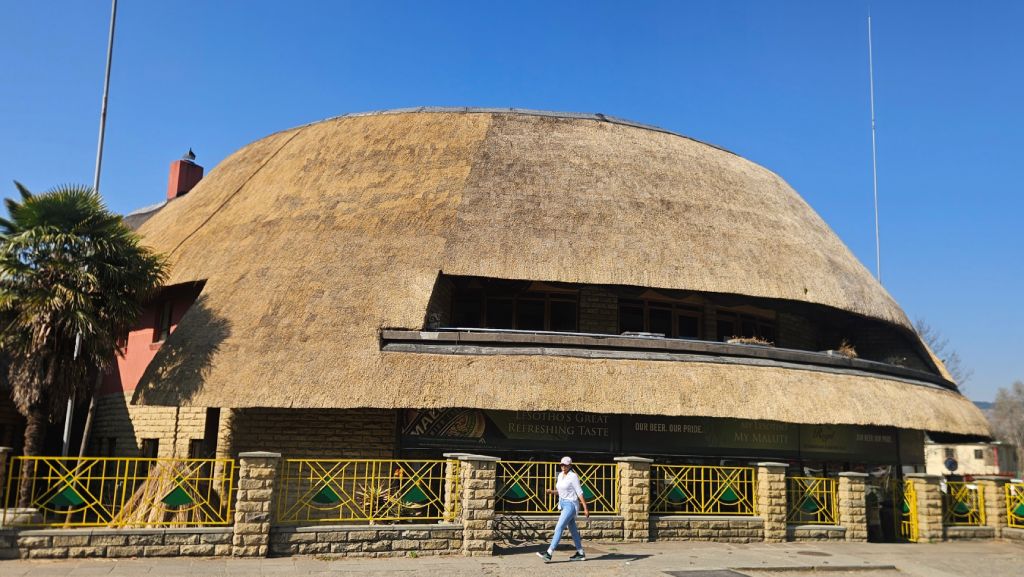
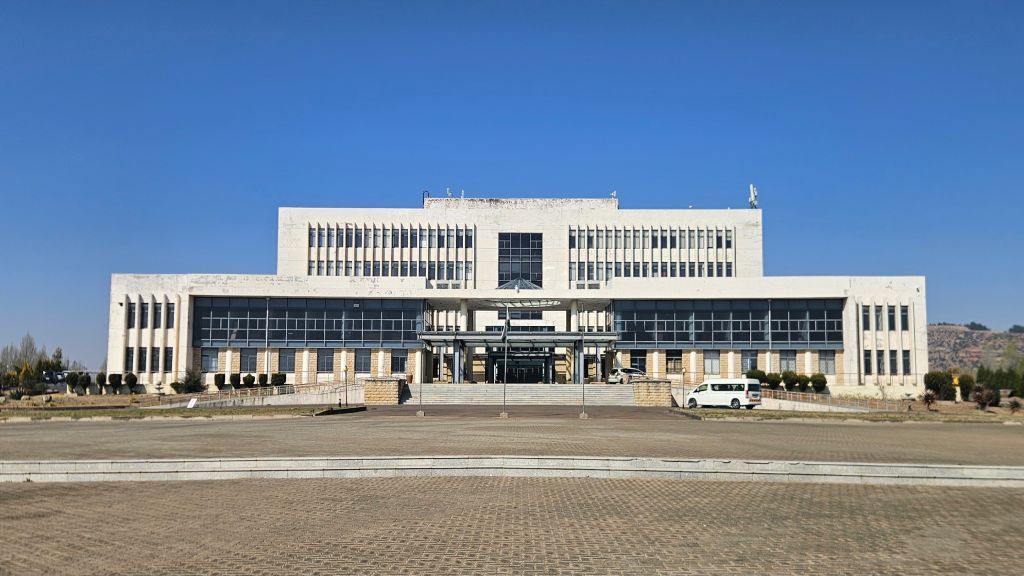
Of the capital’s landmarks, the Basotho Hat-shaped building and the Parliament of the Kingdom of Lesotho made the biggest impression on me.
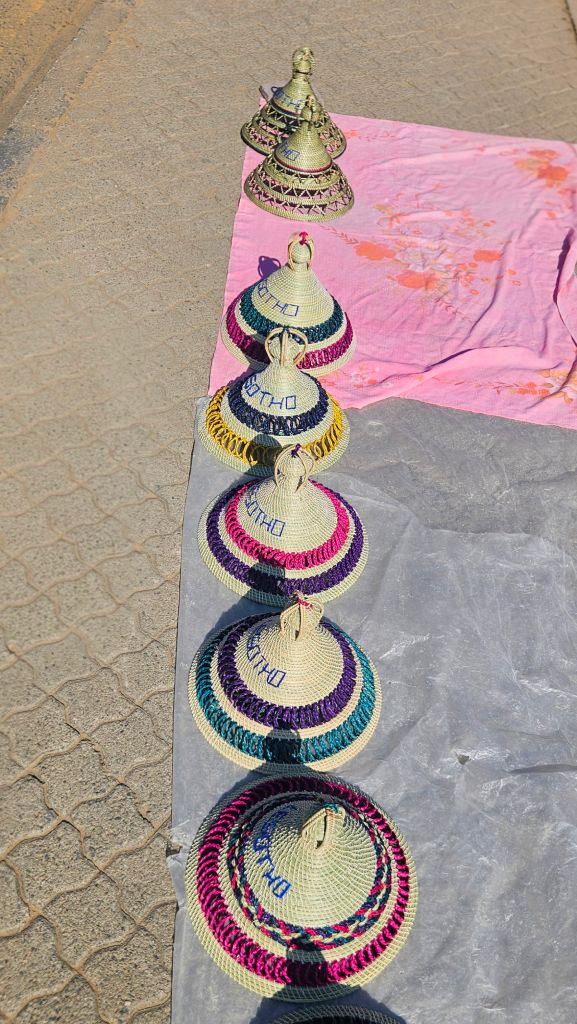
The Basotho Hat, locally known as the Mokorotlo, is one of Lesotho’s best-known symbols. Traditionally made from woven grass or straw, it is closely associated with Basotho cultural identity and is worn during traditional ceremonies and special occasions. The Basotho Hat-shaped building in Maseru houses a handicraft center and has become a landmark itself.
The Parliament of the Kingdom of Lesotho stands high on a hill, well away from the city center.
“You can approach the Parliament, but you must not walk straight towards it,” a security guard warned me.
“The area in front of the building is reserved for the King, even though you cannot see him. You have to respect it and leave it empty.”
I kept well away from the sacred area. The friendly staff then explained that Parliament was closed because the MPs were on their annual holiday. So, unfortunately, they couldn’t let me enter the governmental building.
Impressive Maletsunyane Falls
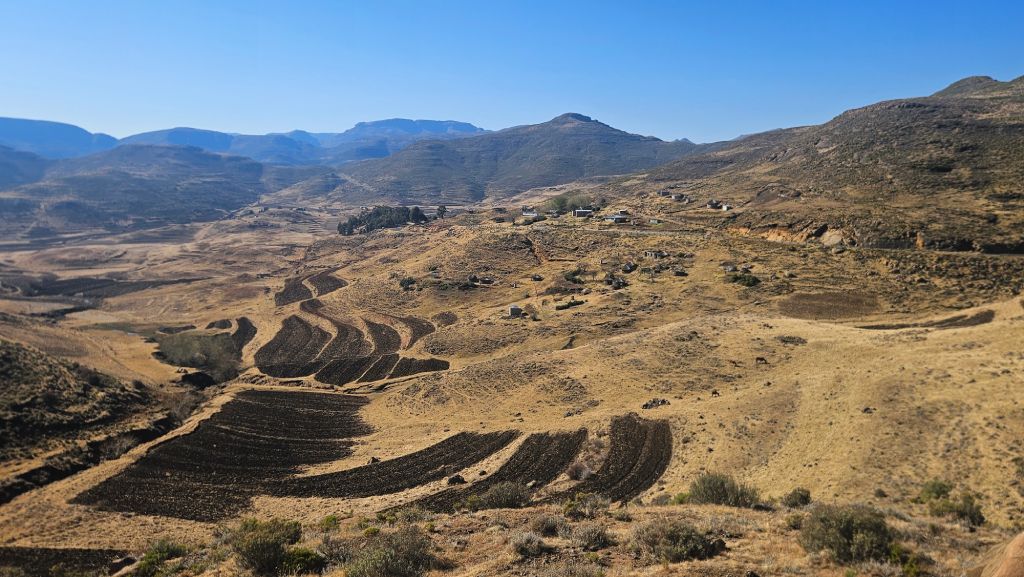
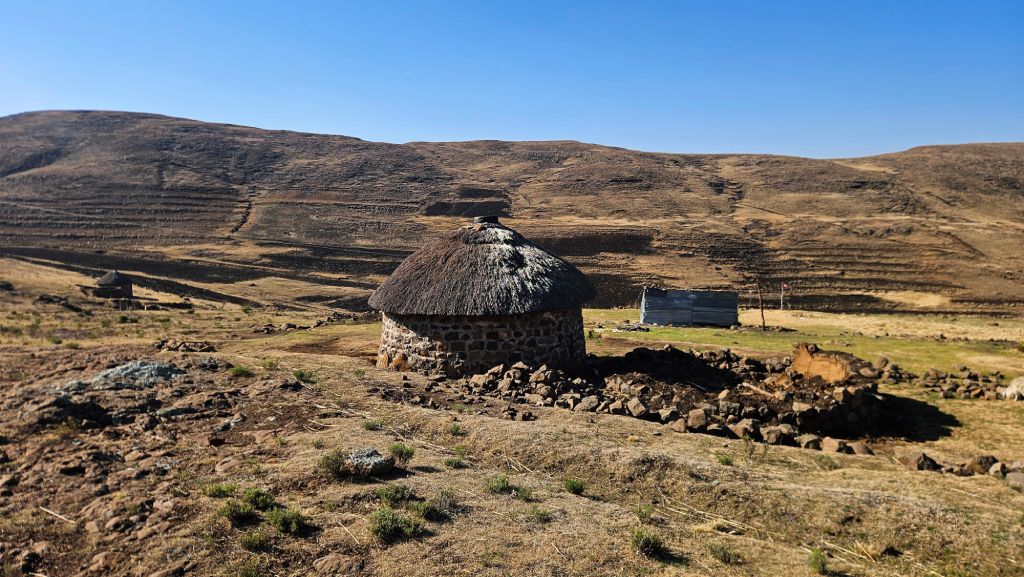
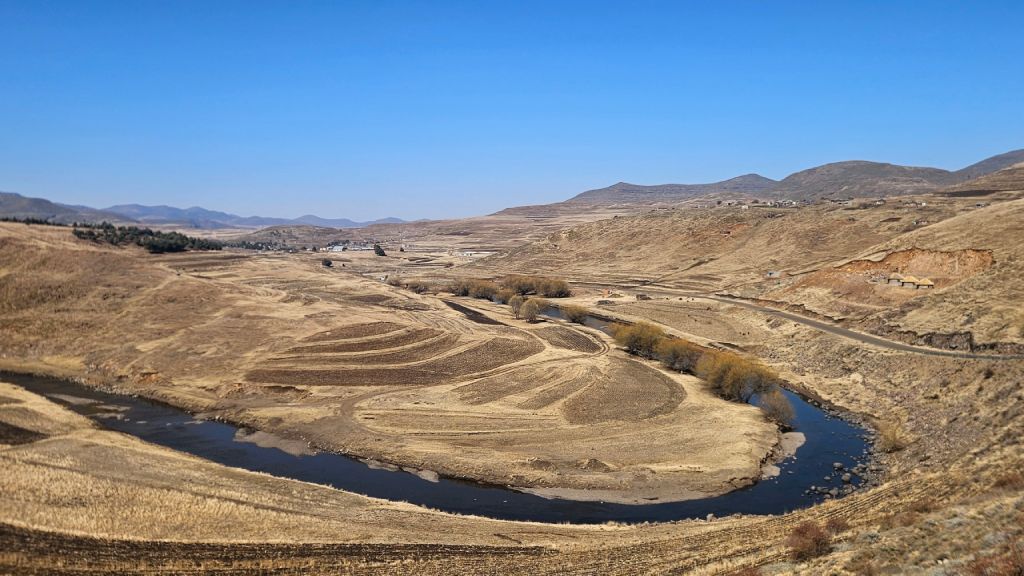
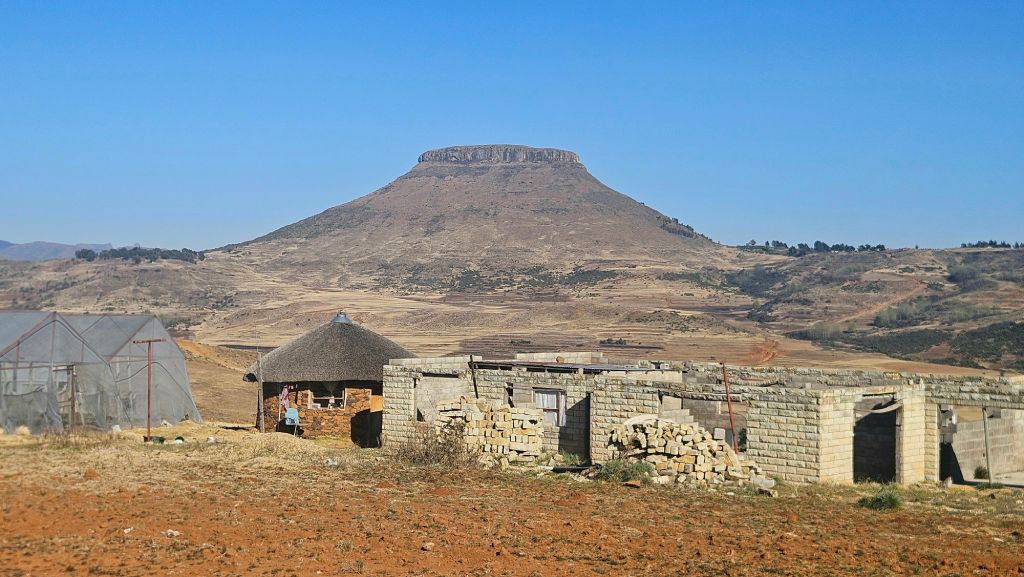
The drive to Semonkong, was really enjoyable. The views of the surrounding hills and valleys were often so beautiful that I stopped to take photos. The simple, oval-shaped stone houses with thatched roofs looked more photogenic than living in them during the cold winter months.
As the good asphalt road came to an end, I turned onto a dirt track. Winding through the hills and sometimes in poor condition, it forced me to drive slowly and carefully. After about 20 minutes, I saw a large modern building that seemed to serve as a visitor center for the waterfalls. It offered accommodation, a conference room and who knows what else. Only the restaurant was operating, and the menu was very limited.
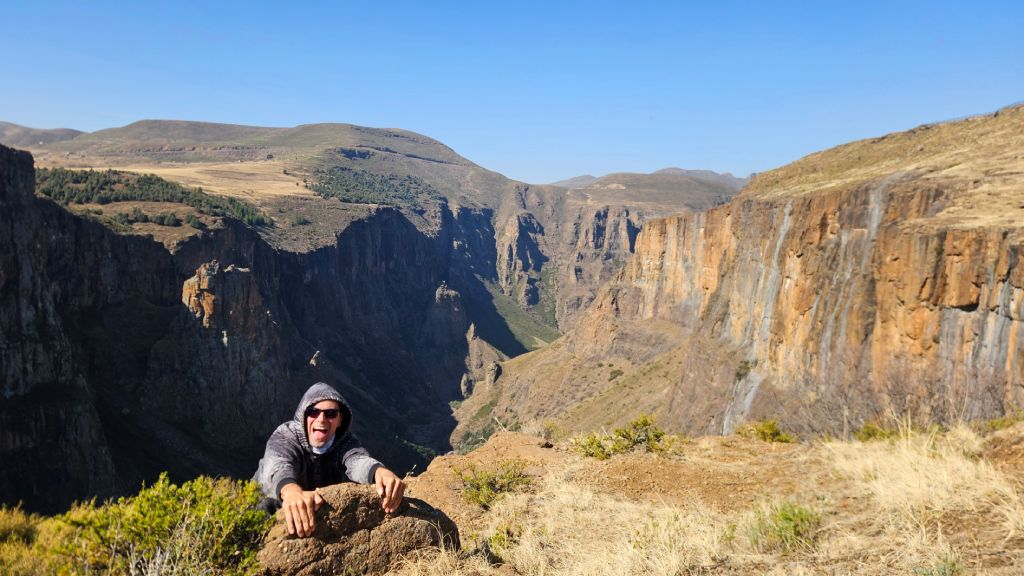
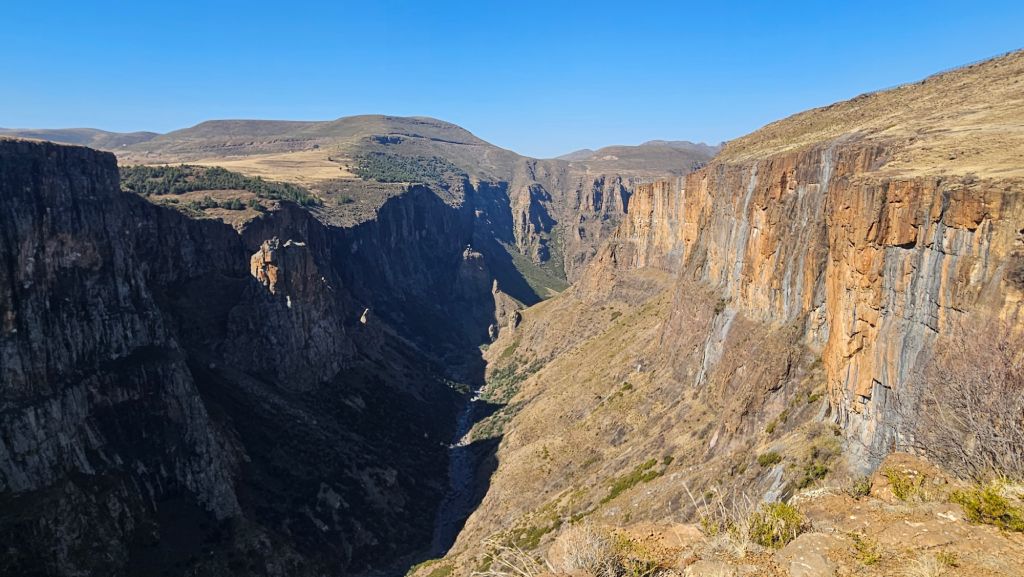
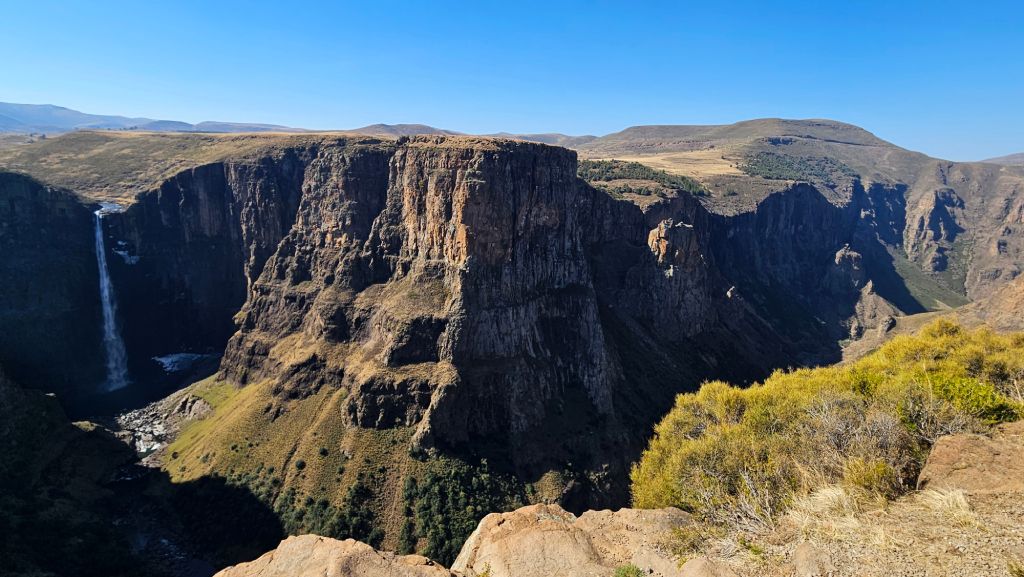
After a quick refreshment, we walked to a viewpoint on the edge of the canyon, where we got a fantastic view of the waterfalls and the canyon.
Maletsunyane Falls is Lesotho’s most impressive landmark, dropping 192 meters in a single fall into a dramatic 300-metre-deep gorge.
Sitting on the edge of the cliff, watching the waterfall and taking in the canyon in complete silence was the highlight of my Lesotho travel adventure.
Harvesting sorghum
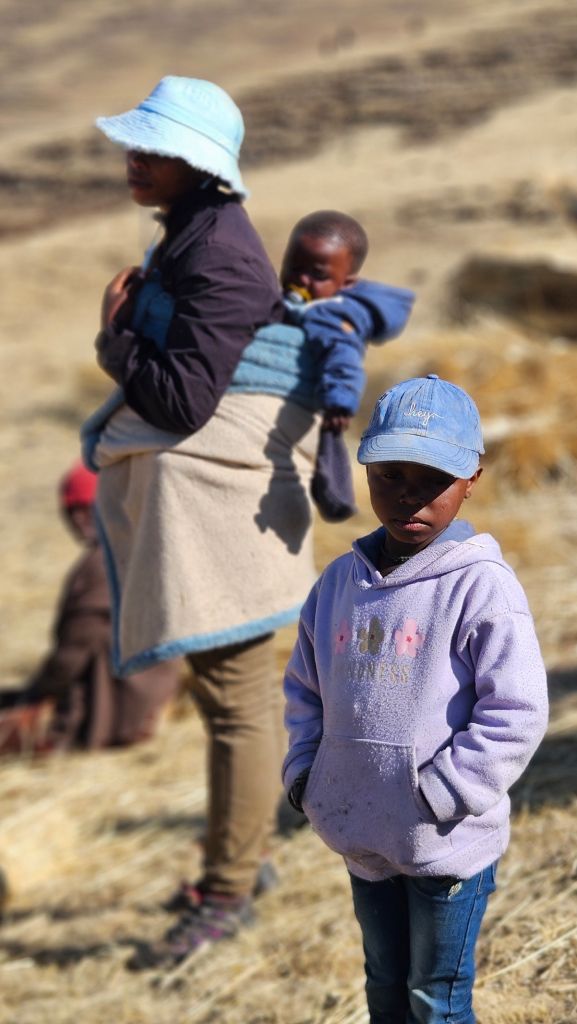
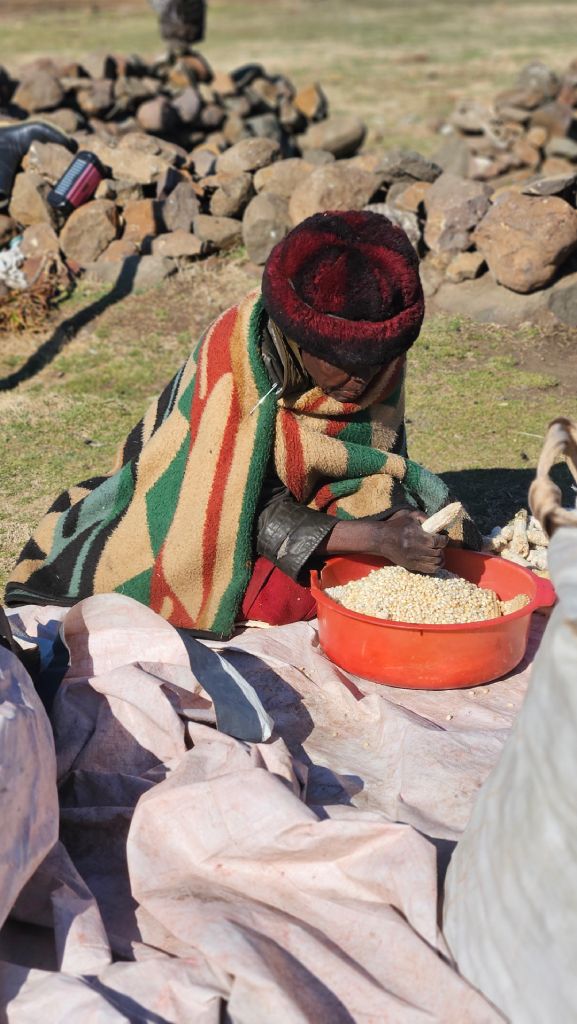
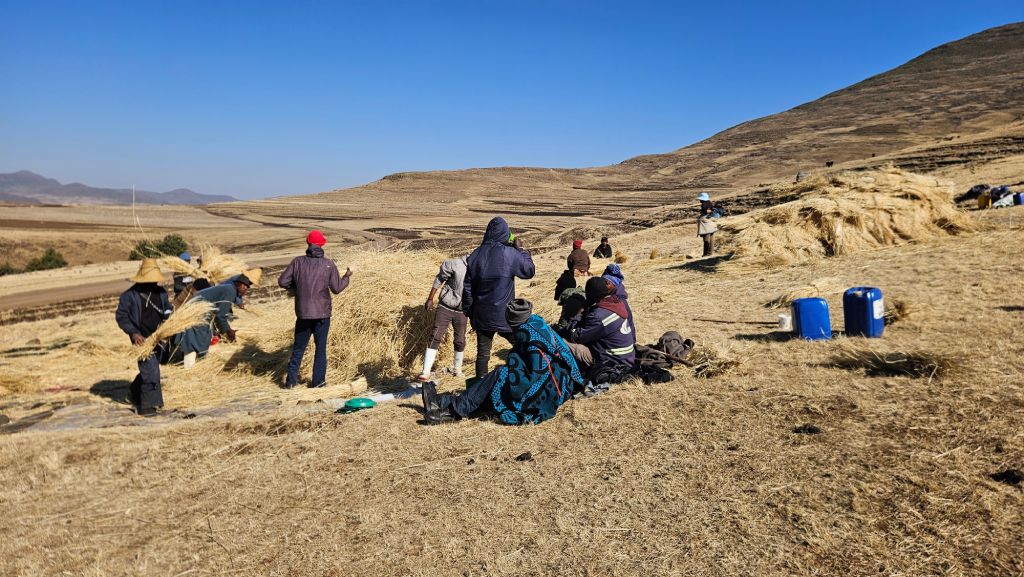
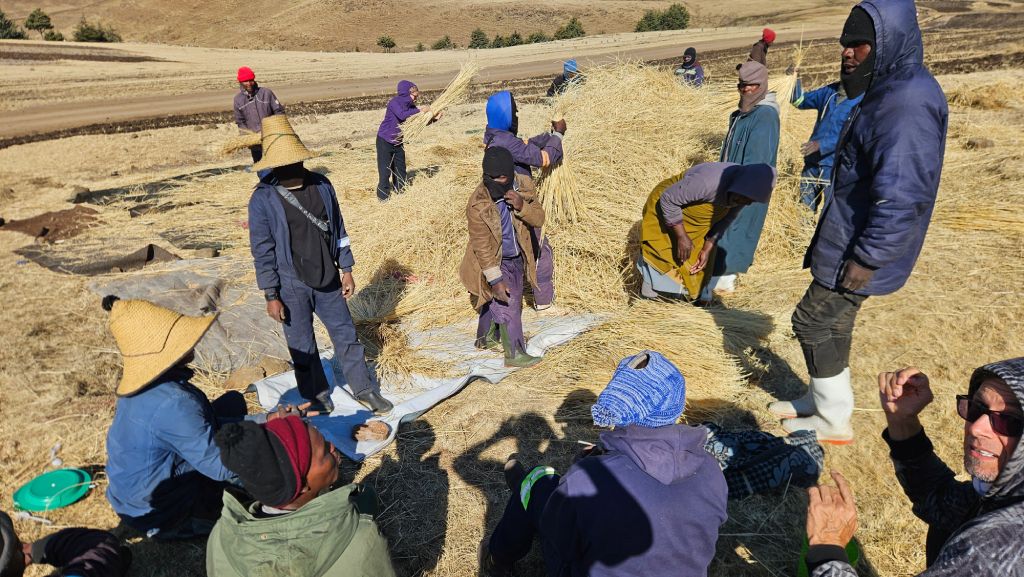
On the way back, we stopped by the road where a group of villagers were threshing sorghum. They happily showed us how the whole family worked together to process the harvest. Everyone worked together throughout the day. They even invited us to try, so we joined them.
When I wanted to give them some food as a gesture of appreciation, the English-speaking man directed me towards the oldest woman in the group. The hierarchy was clearly understood, as were the different roles of men and women.
“When I’m not working as a guide, I help my family and live a very simple life in the village,” he explained.
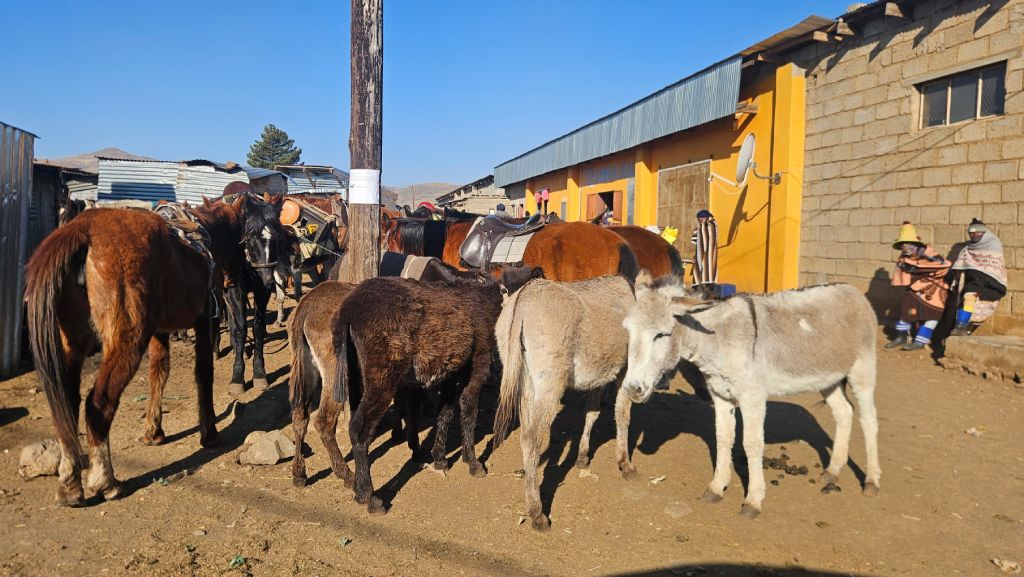
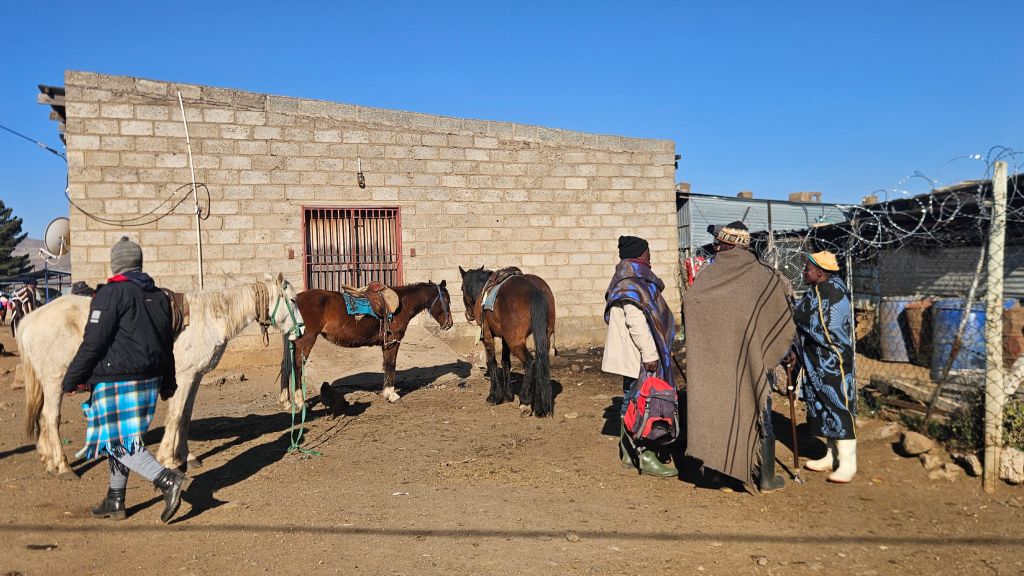
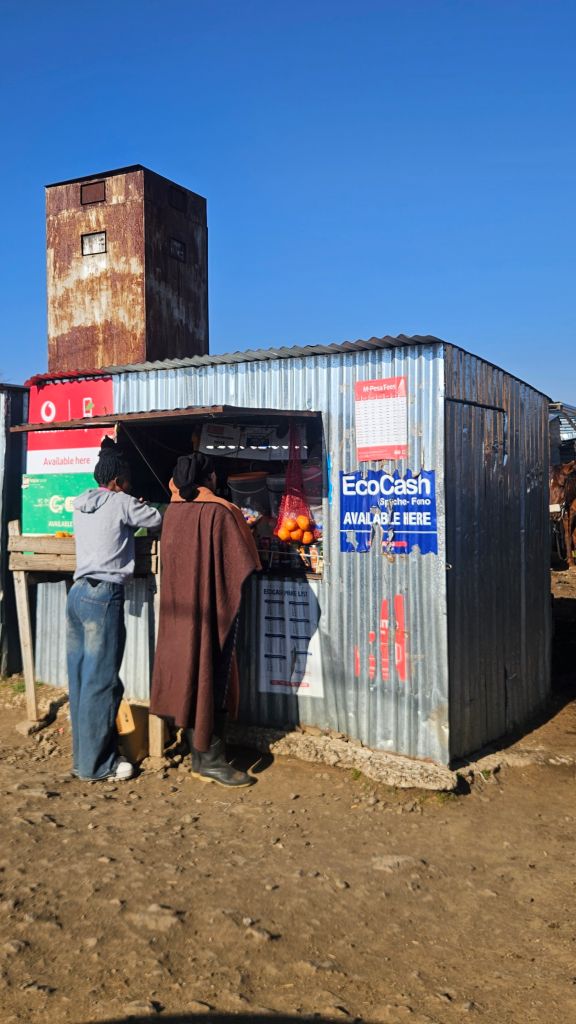
We then drove into the center of Semonkong, which looked like a scene from an old Western film.
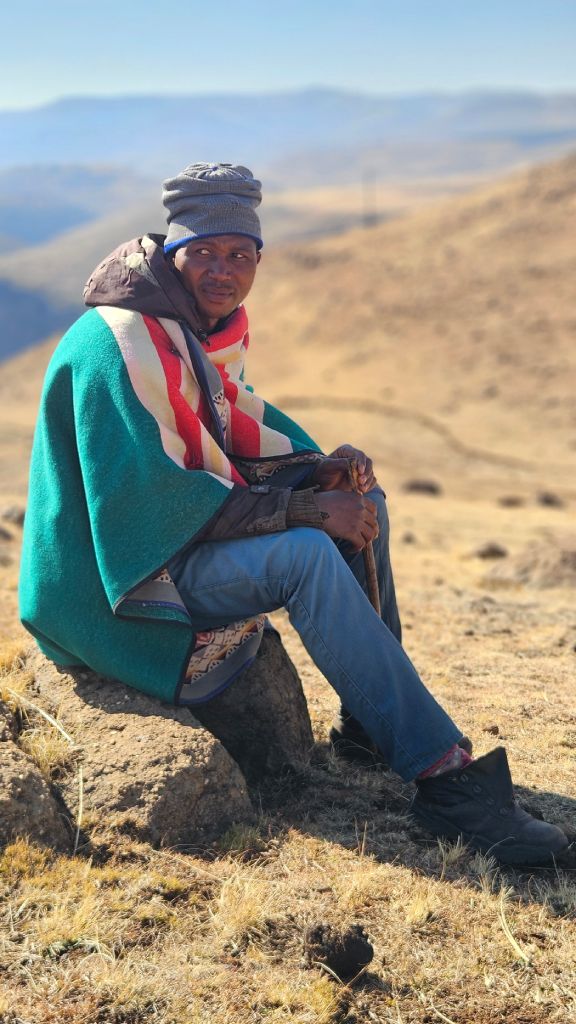
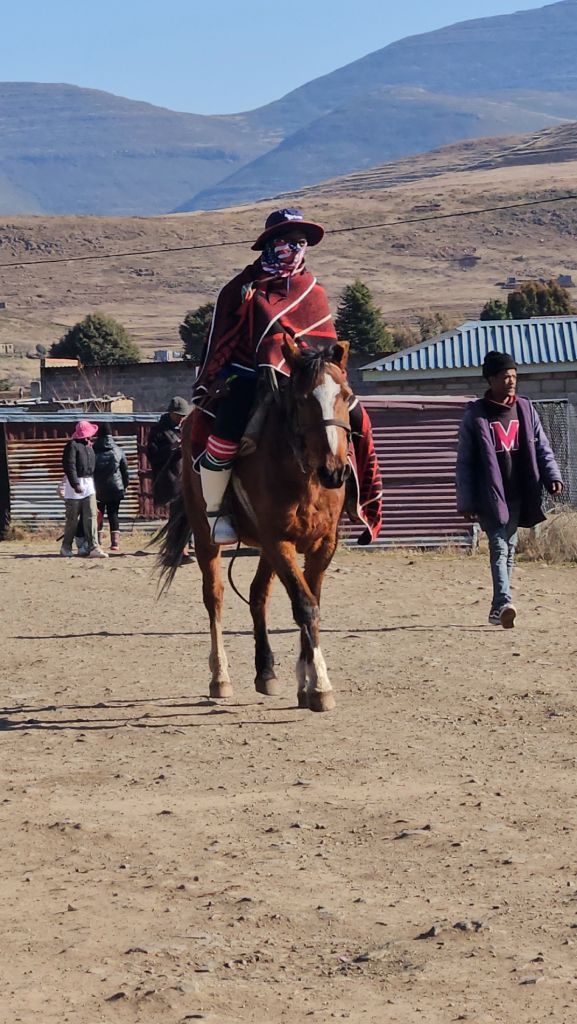
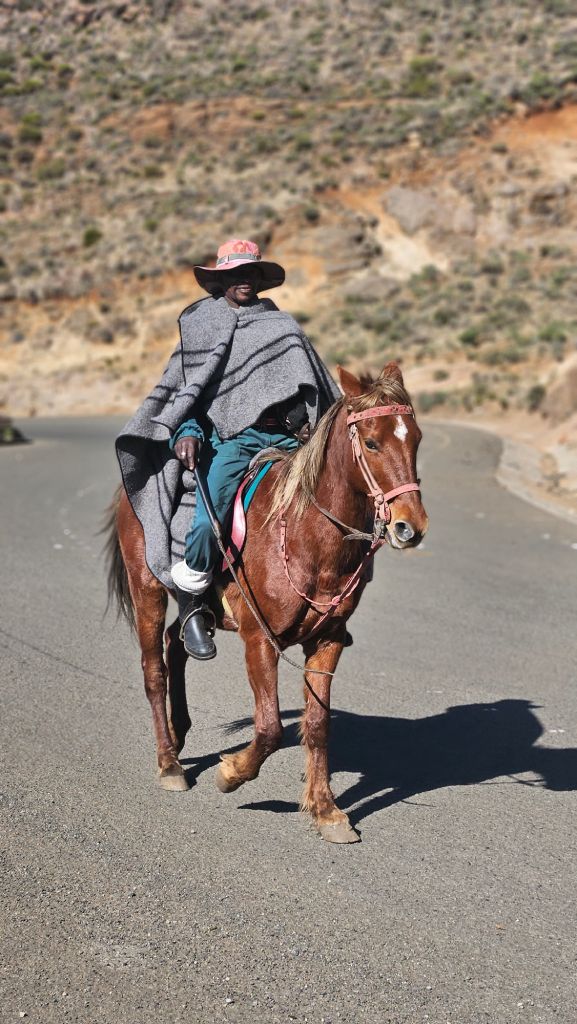
Men rode horses and gathered in bars or outside shops, leaving their horses tied up nearby. Wrapped in blankets, as is common in Lesotho, and wearing plastic boots, they rode elegantly up and down the streets.
I realized that along with the Basotho hat, blankets are also a symbol of Lesotho. People regularly wear them to keep warm during the cold months.
Thaba Bosiu: where the Basotho nation began
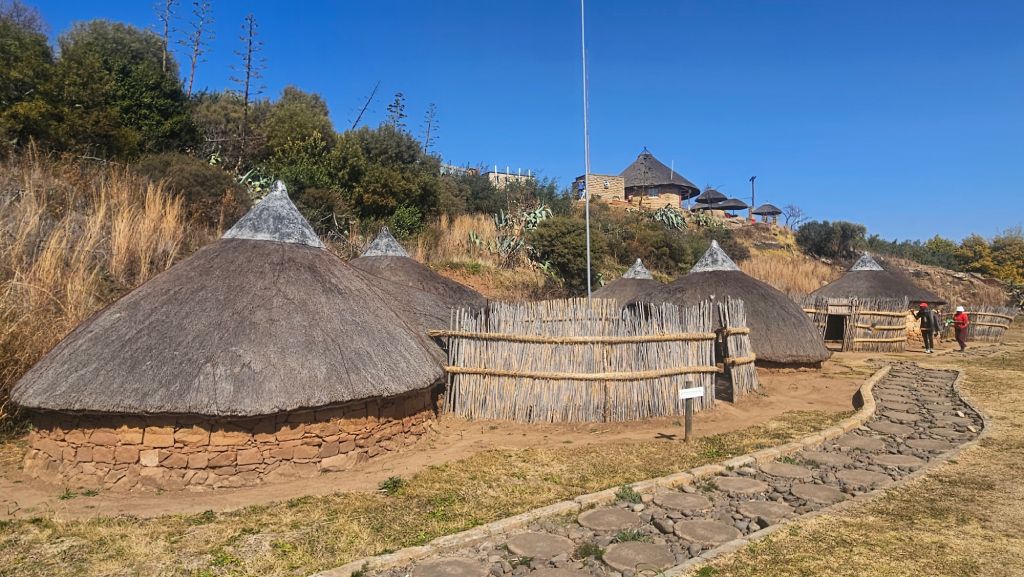
At the end of my Lesotho travel adventure, we visited Thaba Bosiu Cultural Village. It is located at the foot of the famous Thaba Bosiu plateau, one of the most important historical sites in Lesotho. Since there were no other foreign visitors, we had the village almost to ourselves.
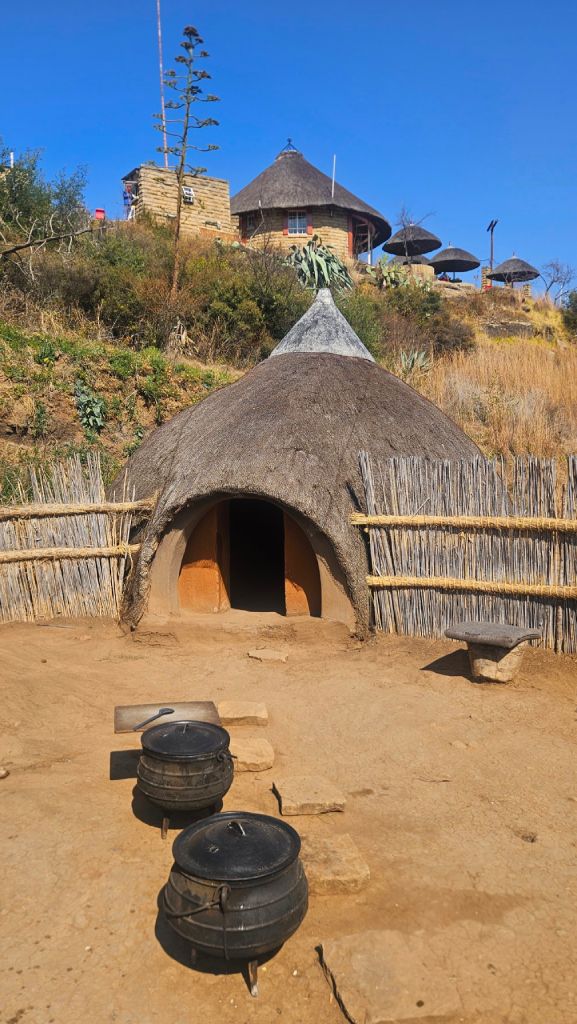
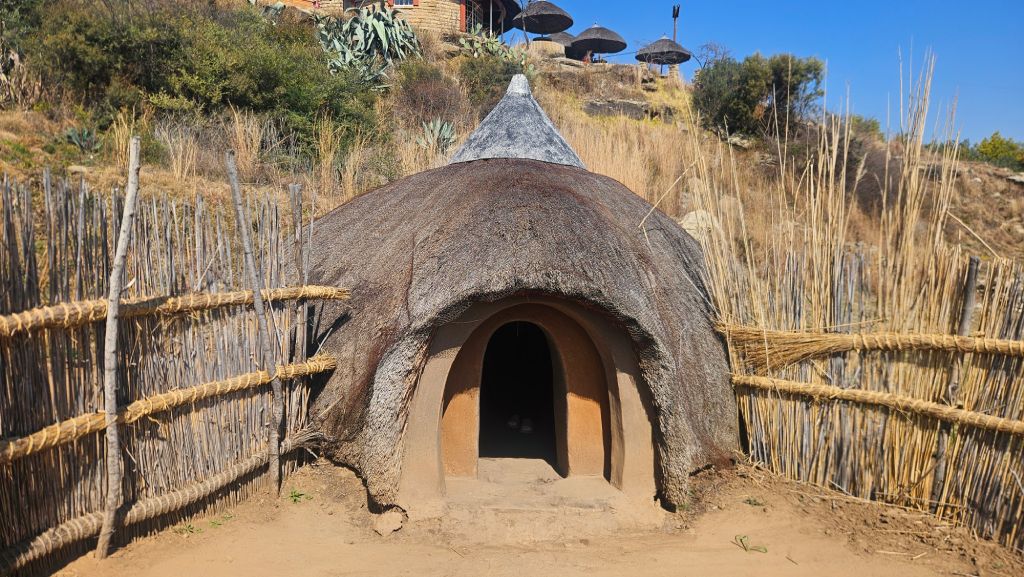
The village shows how the Basotho traditionally lived and built their homes. In the museum we learned about the history of the kingdom.
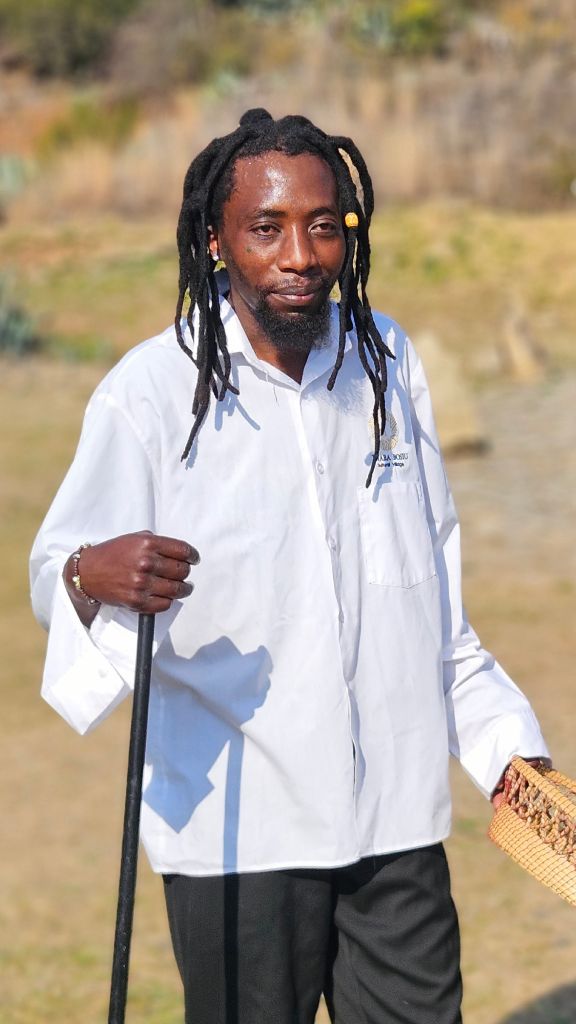
Our guide was quite funny, especially because of his unusual way of speaking. He seemed to whistle through his teeth while talking. He showed us the traditional houses, explained some local customs and explained us about King Moshoeshoe I, who is closely connected with Thaba Bosiu.
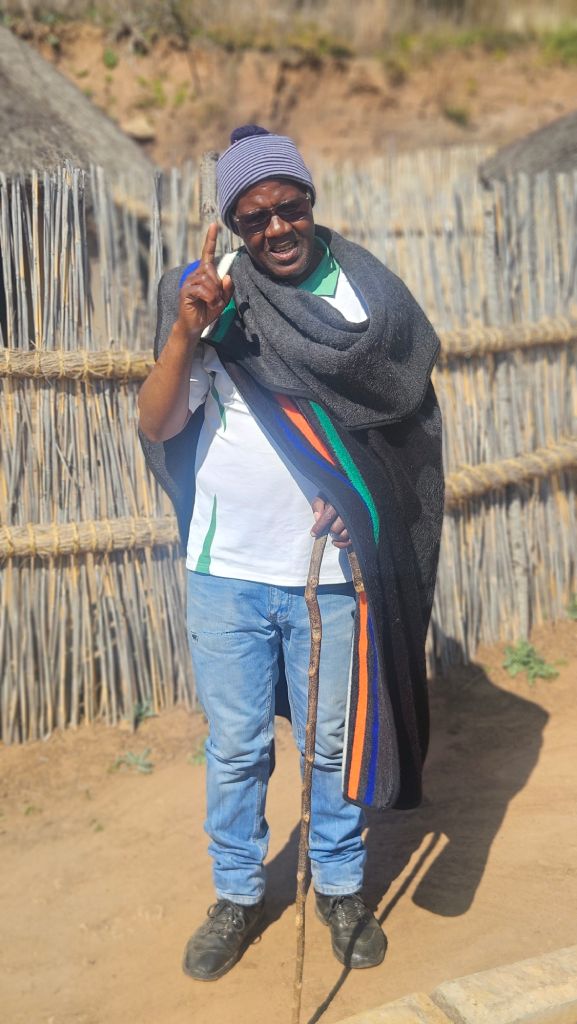
King Moshoeshoe I was the founder of the Basotho nation and one of the most important figures in Lesotho’s history. In the early 19th century, he united different clans and groups, bringing them together at Thaba Bosiu. The mountain became his stronghold and the center of the emerging Basotho nation. His grave is still on top of Thaba Bosiu.
Traditional dances followed, but they were not particularly impressive, and the dancers seemed bored. One performer stood out with his lively energy, making the audience smile and laugh.
Reflections on my visit to Lesotho
Lesotho is a small country that welcomed me with cold but sunny winter weather. I had no particular expectations before my visit. Apart from the impressive Maletsunyane Falls and friendly people, Lesotho didn’t leave a strong impression on me.
I didn’t find other particularly interesting places to visit or exciting things to do. I didn’t find enough landmarks or highlights to make Lesotho worth visiting as a destination on its own.
Lesotho Travel Photo Gallery