My Comoros travel summary:
Visited: August 2026
Duration of visit: 6 days
Capital city: Moroni
Population: 900,000 (2026)
Comoros travel blog reading time: 9 minutes
Attractions and places I visited in Comoros:
- Exploring the colorful Volo Volo and Chalma markets in Moroni.
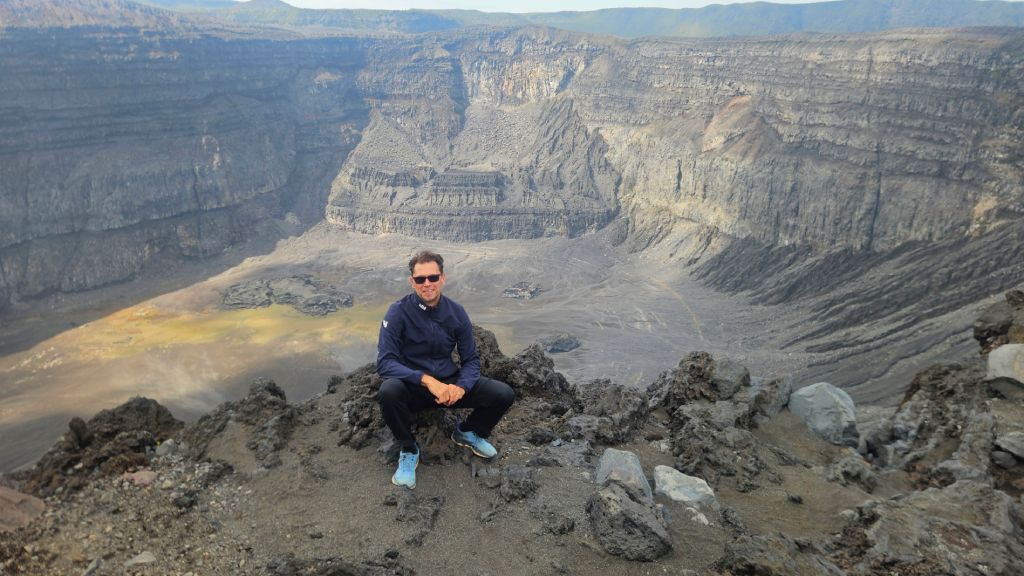
- Climbing Mount Karthala from sea level to 2,361 meters.
- Tasting lobster on the perfect sandy beach at Chomoni.
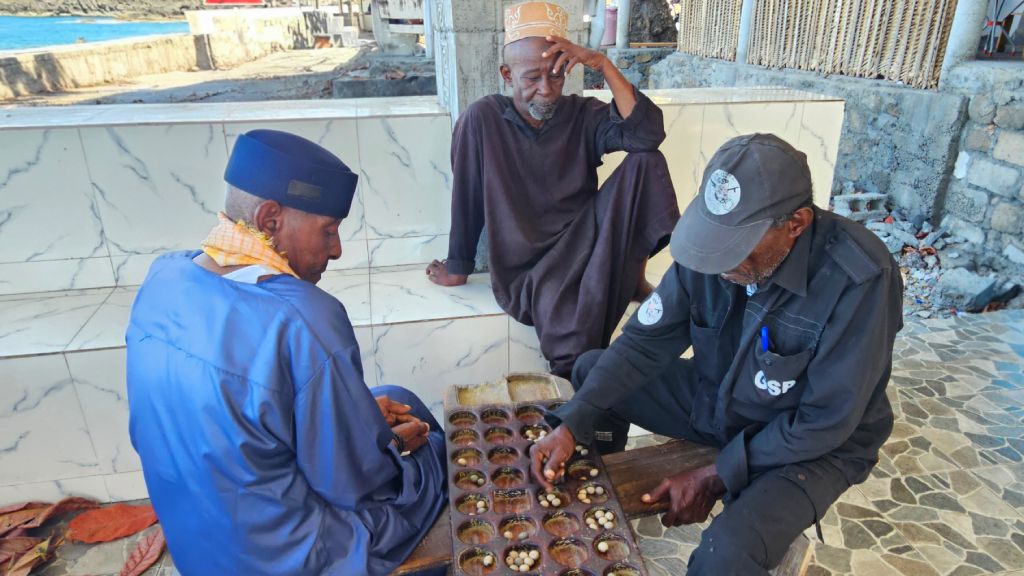
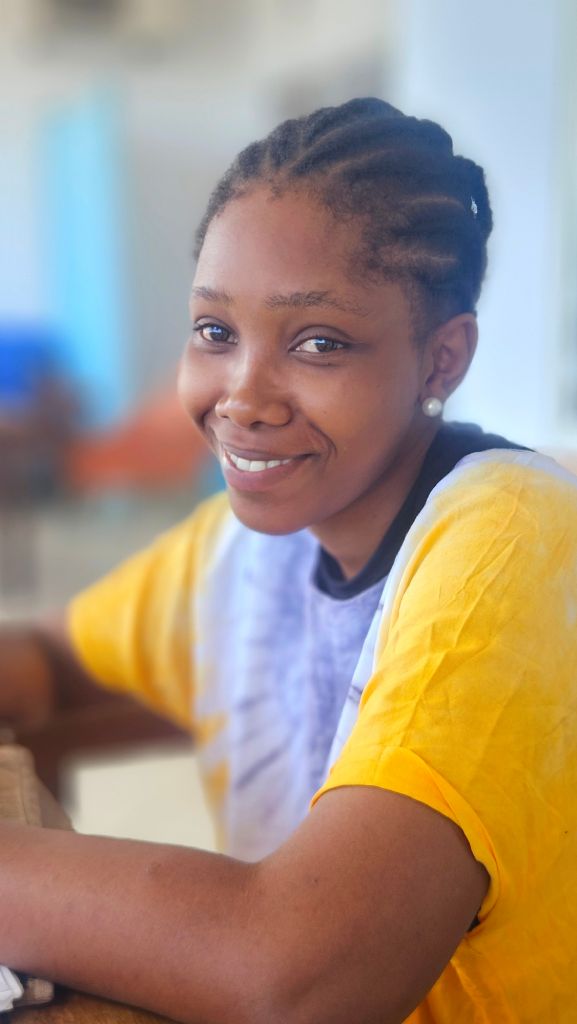
- Mingling with extremely friendly and helpful locals.
- Sampling delicious street food.
Comoros travel adventure was part of my two-month journey, which also included Botswana, South Africa, Lesotho, Eswatini, Madagascar and Mauritius.
Comoros was the least familiar country on my itinerary. I included it almost as a necessary stop on my mission to visit every country in the world. Apart from Mount Karthala, I had no concrete plans or much information to inspire me to explore Grande Comore, the largest of the three islands making up Comoros. I couldn’t find many notable landmarks, interesting places to visit, or things to do.
Why Comoros travel adventure?
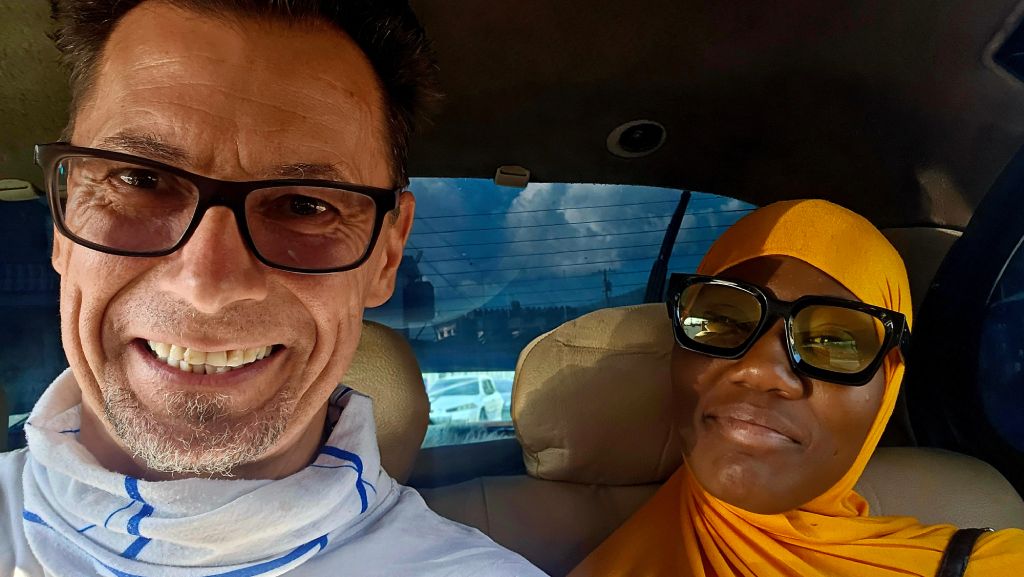
Instead of taking an expensive taxi from the airport to the capital, I walked to the main road. I soon noticed two friendly women who explained that I simply had to wait for a passing taxi, which would take me to the center for just 1.50€.
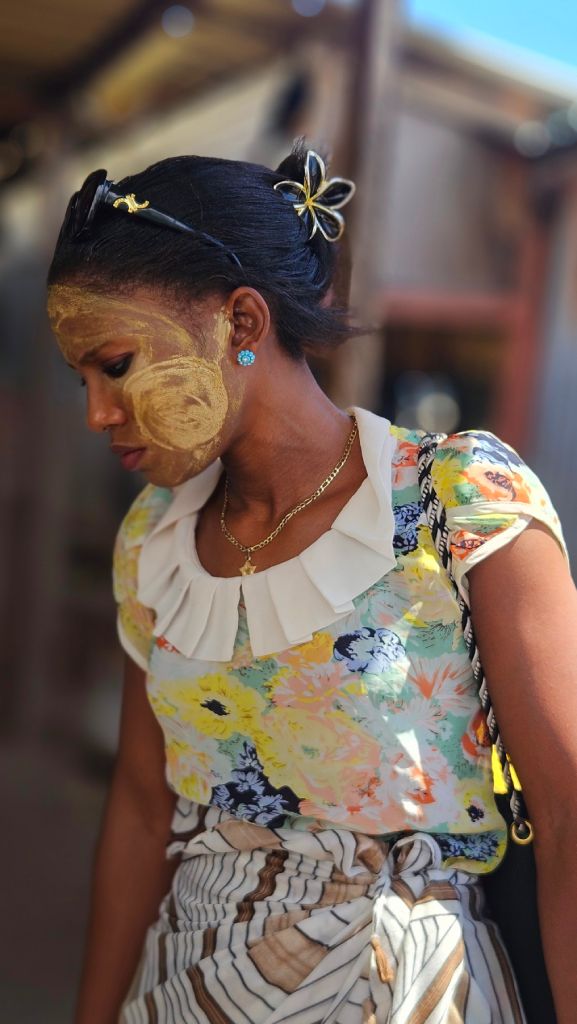
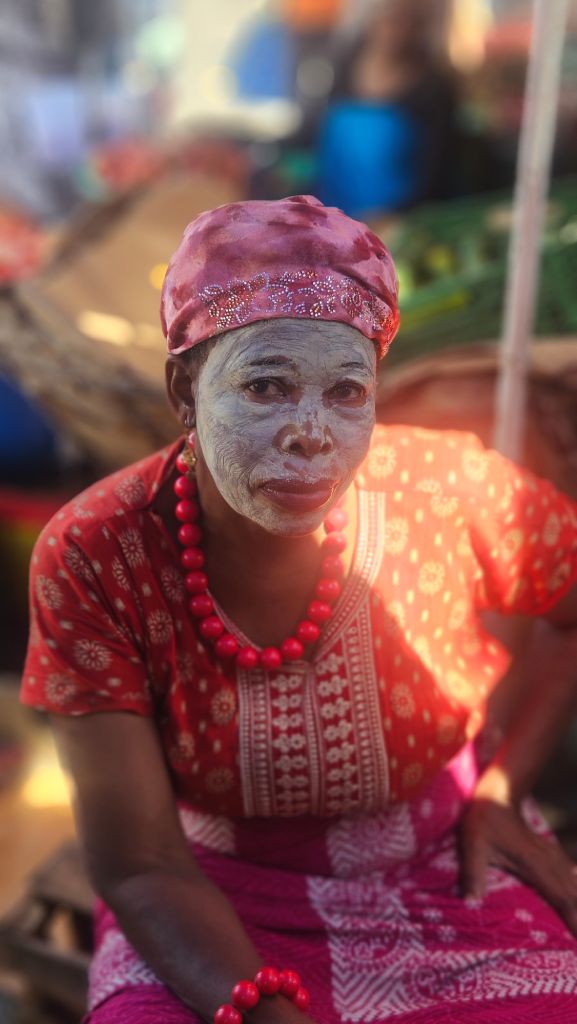
Like many women I encountered later, they had their faces covered with a thick yellowish paste.
Msindzano is made by grinding sandalwood into a fine powder and mixing it with water into a smooth paste.
It is traditionally used as a beauty mask or facial decoration and provides a cooling sensation while absorbing excess oil. Over the following days, I saw many women on the streets wearing this distinctive facial decoration. I was impressed by their outstanding colors and cool look.

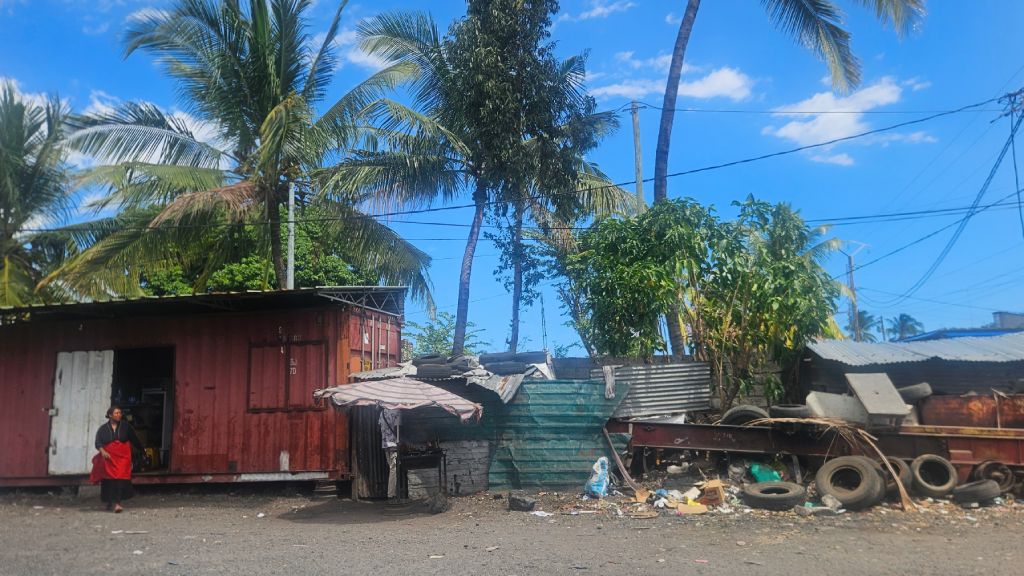
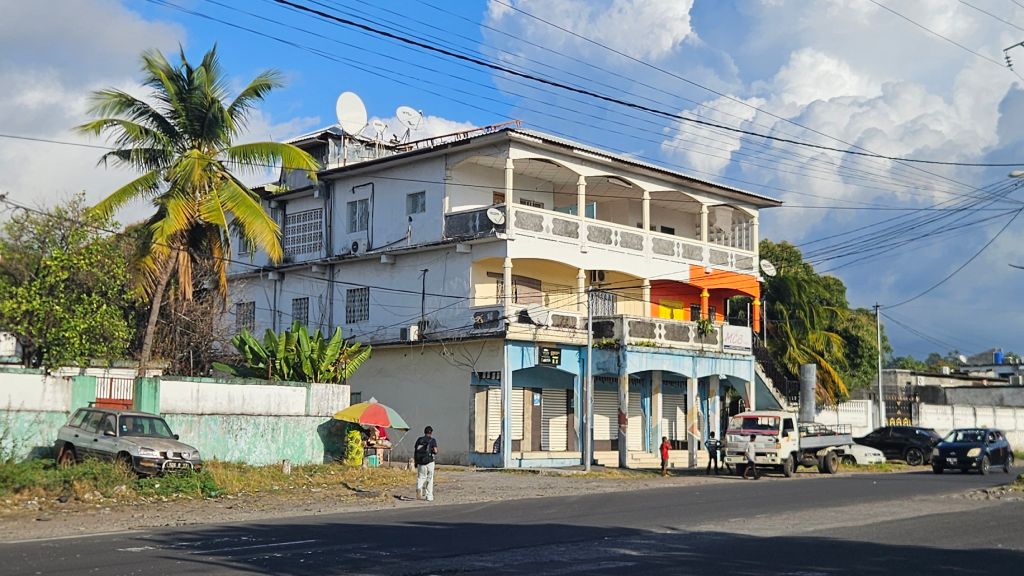
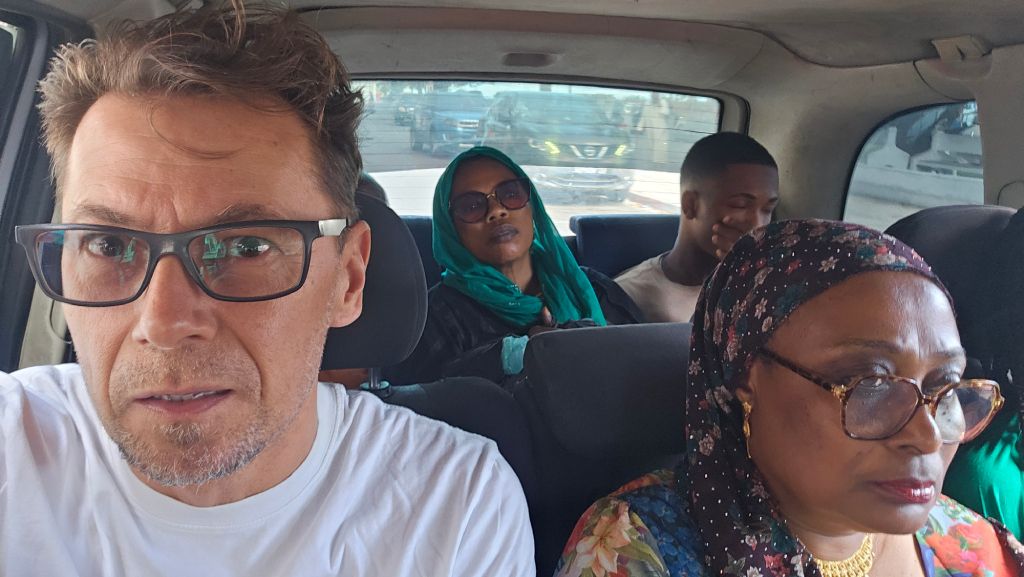
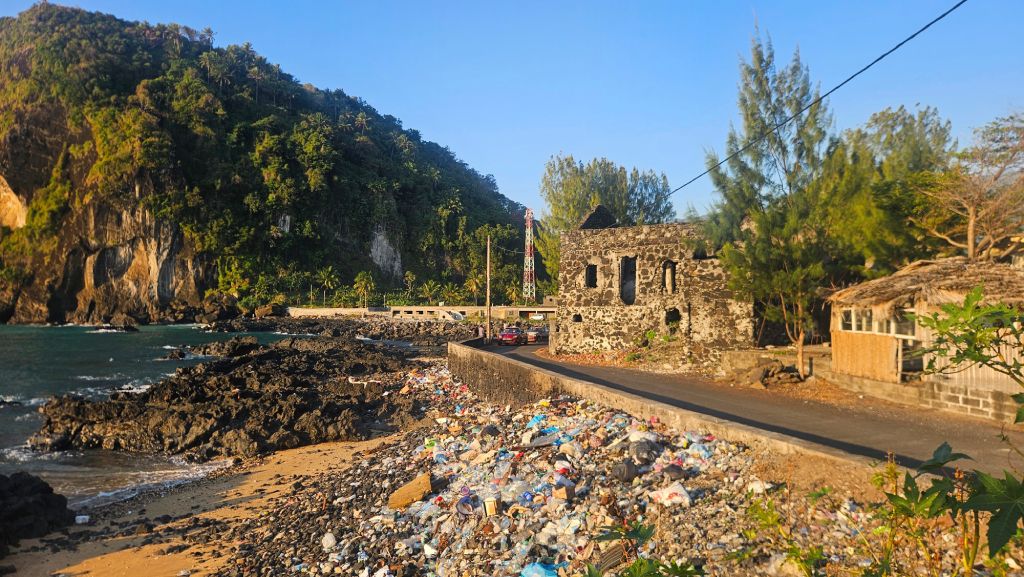
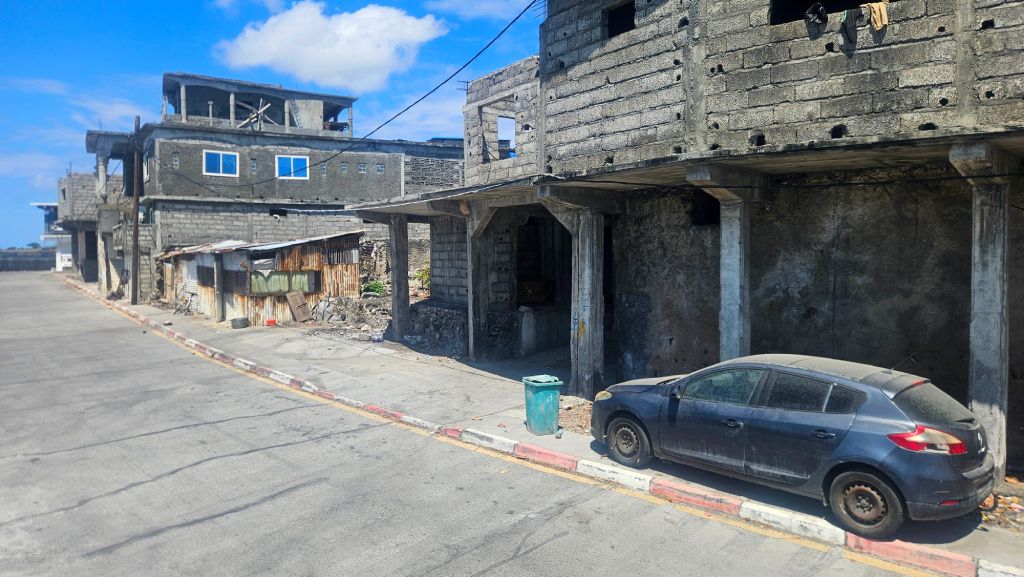
The shared taxi ride was comfortable, but I was shocked by what I saw along the road. Black lava rocks were mixed with rubbish, plastic, and abandoned cars, while unattractive concrete-block houses stood side by side. Numerous unfinished buildings and corrugated-metal shacks made the already bleak scenery even less appealing.
“Why did I come to Comoros and paid so much for the flight?” I wondered.
After the taxi dropped me off on the main road, I walked to my hotel, a combination of a restaurant and apartment building. The location was extremely remote, along a dirt track surrounded by rubbish, abandoned vehicles, and unattractive homes. Fortunately, the room was relatively decent, while the 45€ price was one of the cheapest by Comoros standards.
Let my Comoros travel adventure begin!
Finding the soul of Comoros
After several hours of walking around the capital city, Moroni, and exploring Volo Volo Market, I slowly began changing my opinion of Comoros.
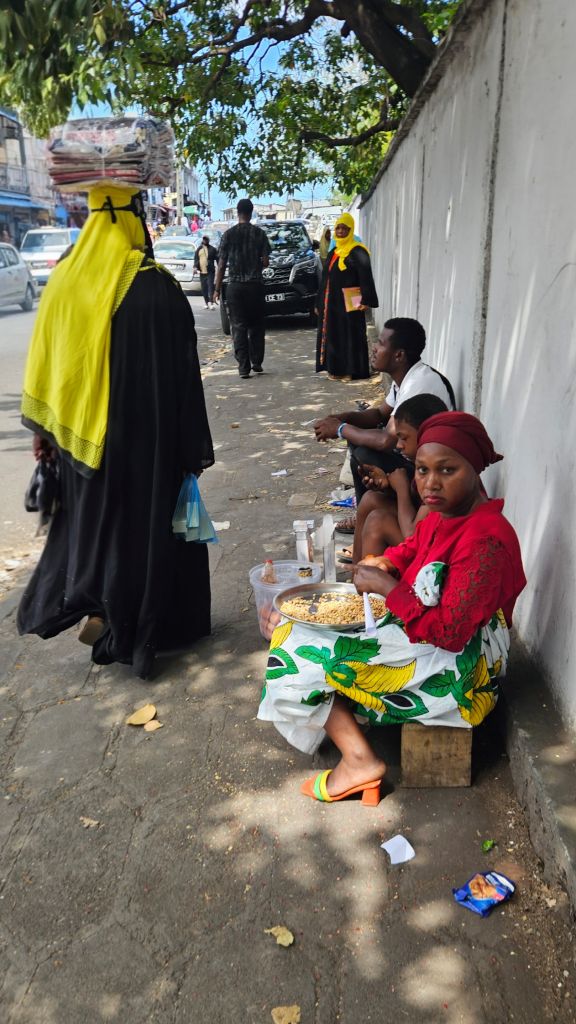
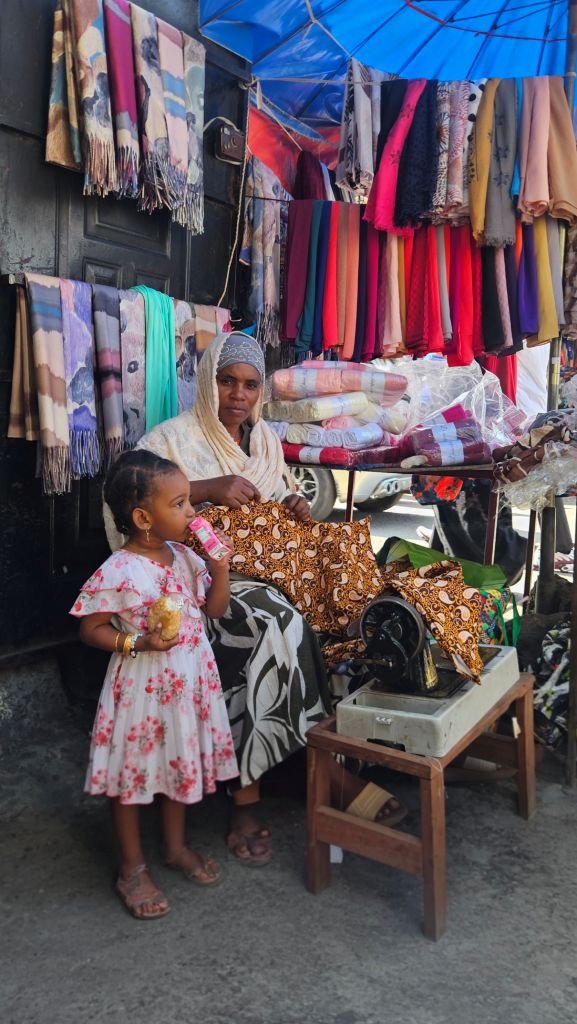
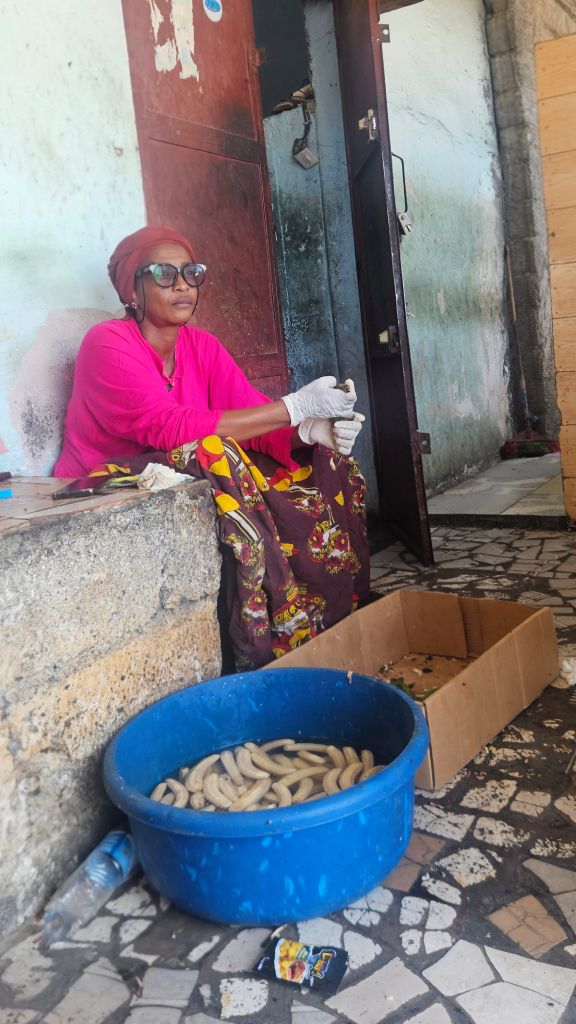
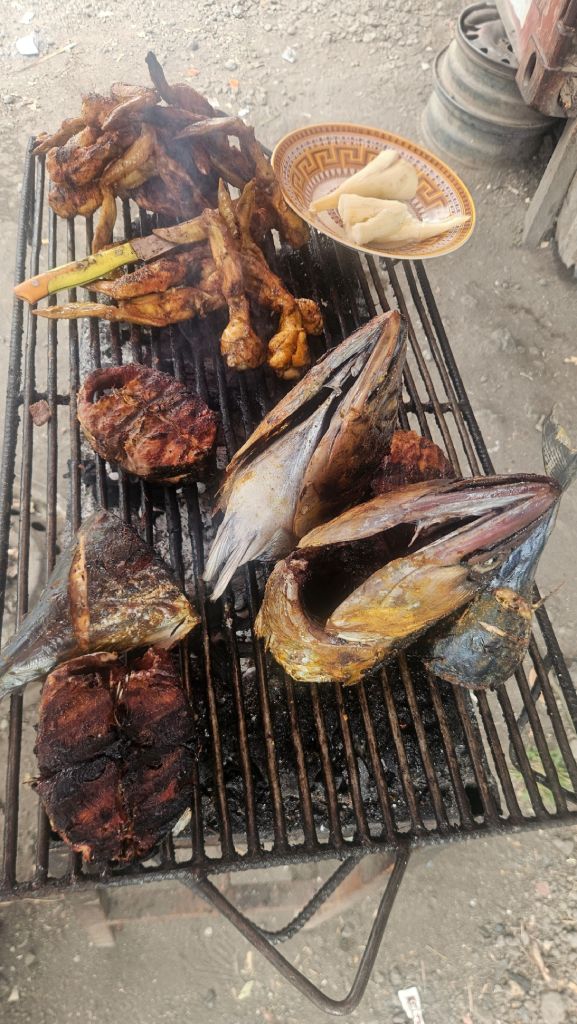
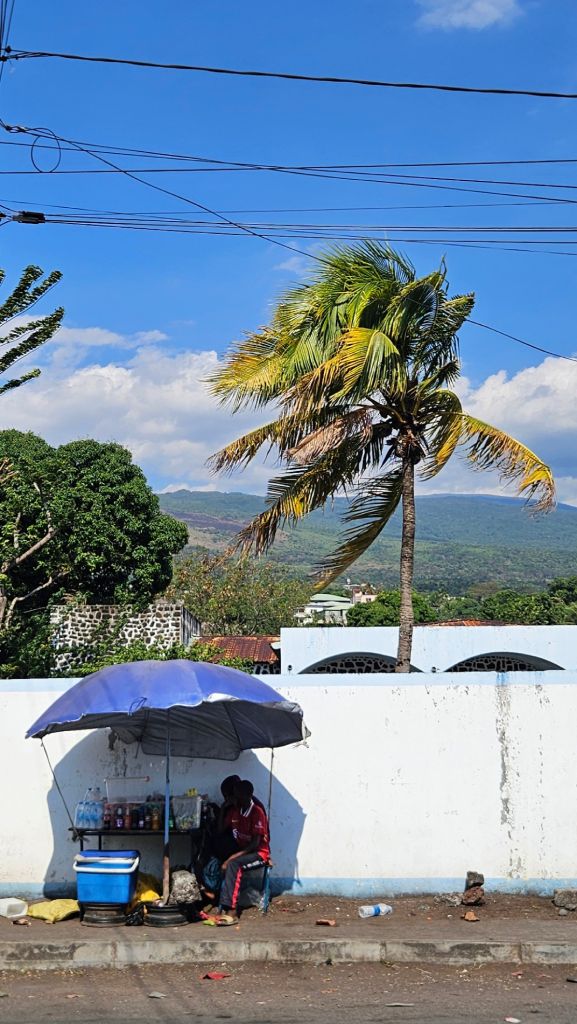
Lively streets, noisy announcements attracting customers, and vendors loudly but politely promoting their goods and services completely captivated me. I felt safe, absorbed the atmosphere, and watched the high amount of trading taking place. The same organized chaos continued among covered stalls and street BBQs, where vendors grilled chicken, fish, sweet potatoes and bananas.
Instead of modern supermarkets, most shopping took place directly on the streets, with reasonable prices for an island.
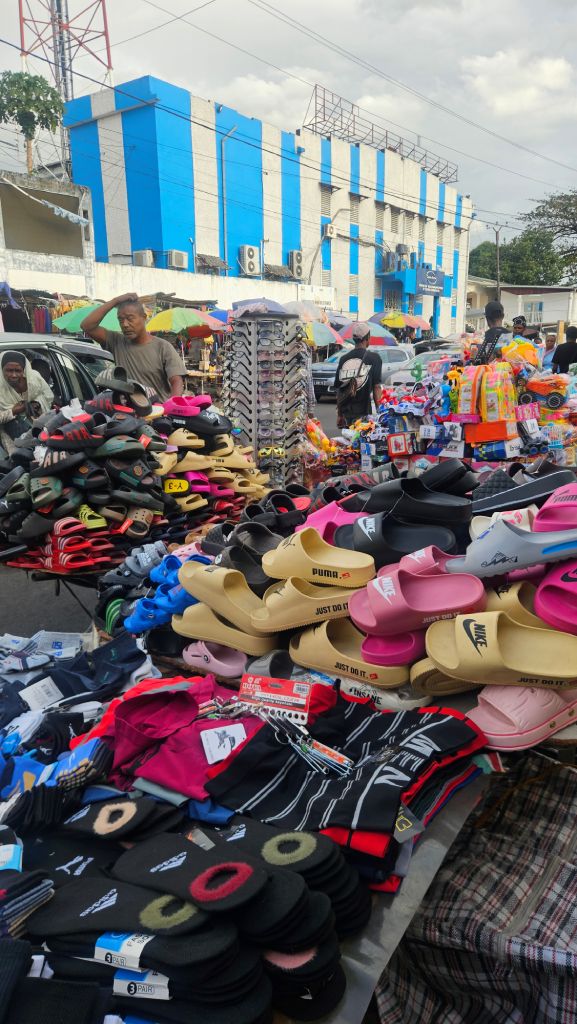

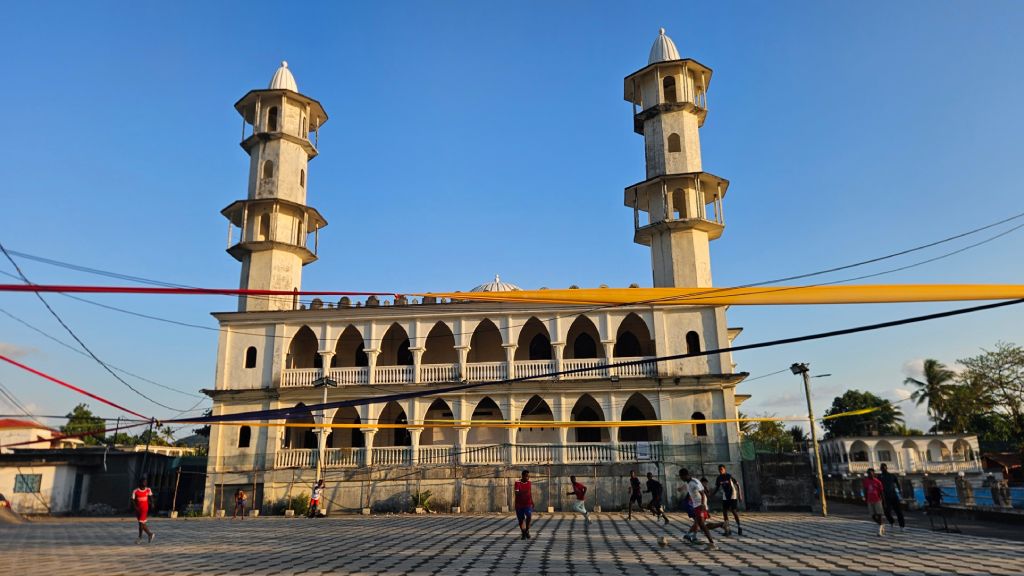
I enjoyed grilled fish with bananas and sweet potatoes while sitting beside a football field. Local boys played on a rough surface, partly concrete and partly gravel, under terrible conditions. Some were barefoot, while others wore old sports shoes as they chased the ball across the uneven, slippery ground. A pile of sand covered parts of the field, while locals occasionally crossed it while visiting the Volo Volo market.
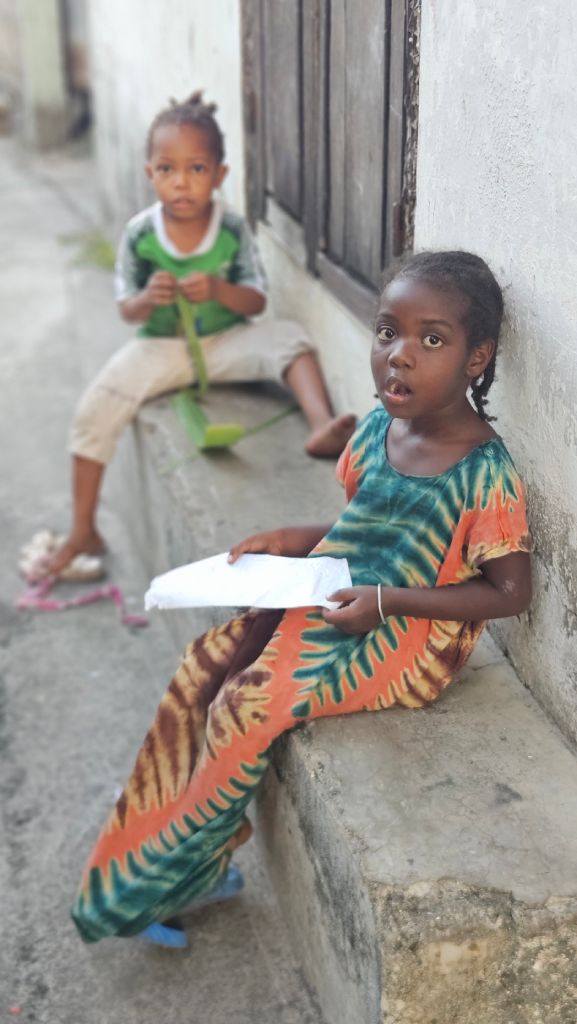

Simple life in the Comoros medina
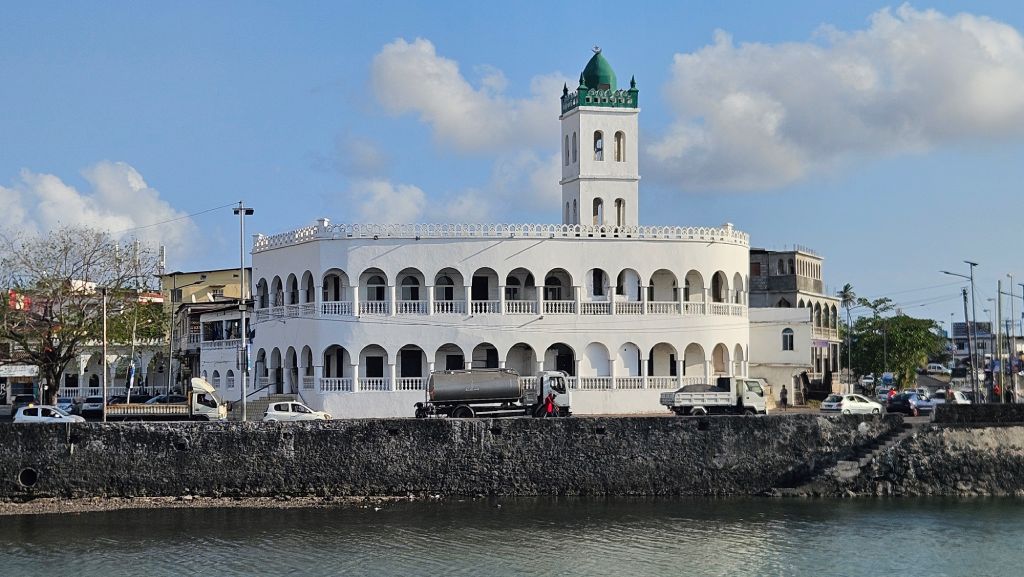
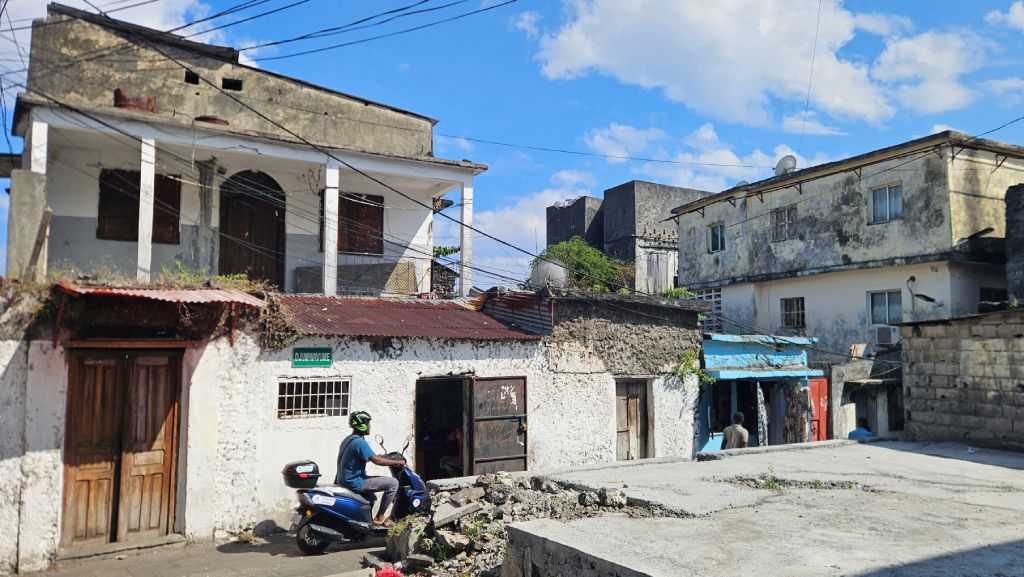
Walking through the narrow streets of the medina around Mosquée de Badjanani was one of the highlights of Maroni. At first glance, old stone houses, narrow alleys and public squares seemed deserted, but later I found action everywhere. Passers-by, children, and vendors greeted me and watched me with curiosity as I walked past.
The medina in Iconi charmed me even more. Once the capital of the Sultanate of Bambao, it is one of the historic towns forming part of the UNESCO World Heritage site. Locals seemed surprised to see a foreigner and greeted me warmly at every corner.
I sat on one of the concrete benches built into every house. I ordered traditional ginger tea at an improvised street café, and watched everyday life unfold around me. No special landmarks, places to visit or things to do. Just simple everyday life.
Mitsamiouli and Maloudja Beach
The following day, I took a shared taxi towards the northern part of the island. Although several official attractions are listed there, I skipped Lac Niamawi (Lac Salé) and Trou du Prophète because of the difficult logistics.
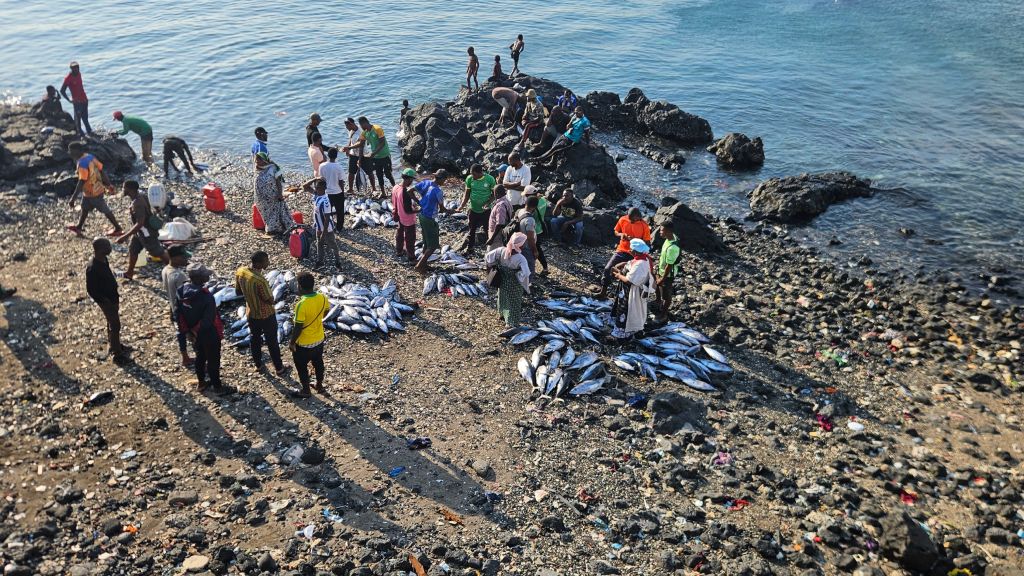
The market in Mitsamiouli was not large but offered a decent selection of vegetables, fruit, and fish.
Right on the beach, I watched a Sunday football tournament. Wooden goalposts and lines drawn in the sand marked the improvised pitch, while several tents provided shade for spectators. A few local dignitaries occupied the VIP section, while a commentator enthusiastically followed the action. Traditional music played through loudspeakers during breaks and after goals. The winners were awarded a trophy, but I didn’t stay until the end.


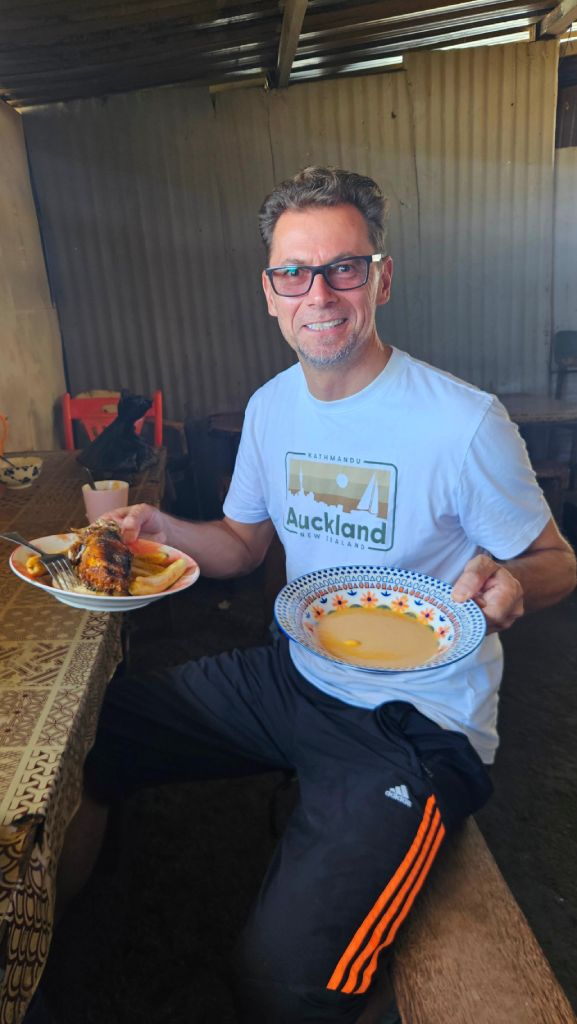
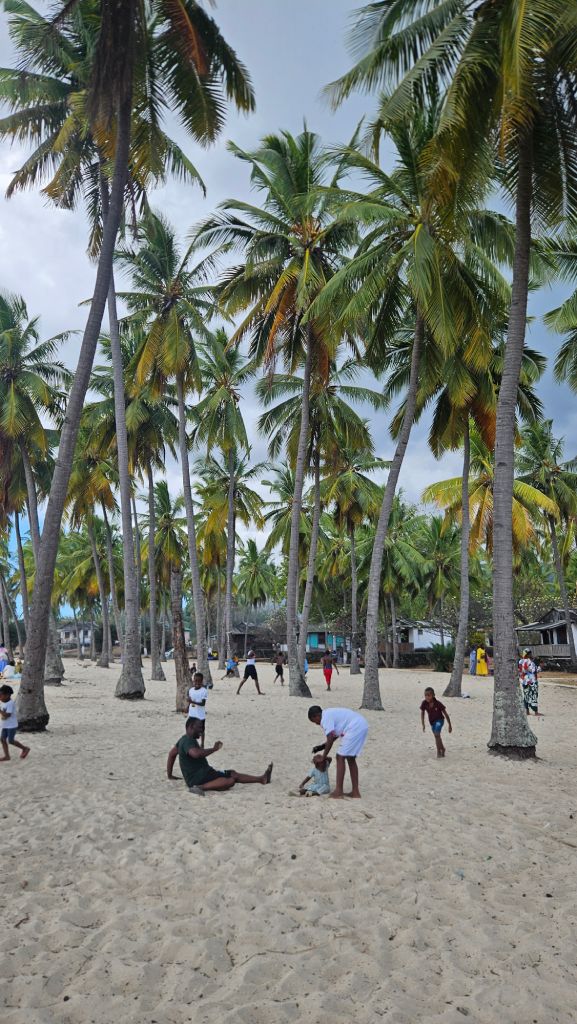
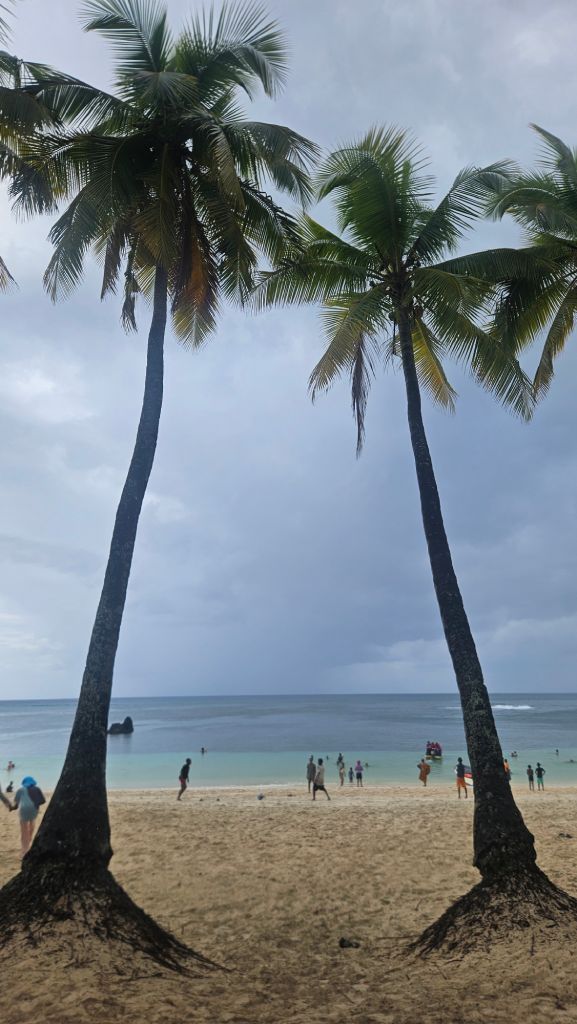
Instead, I continued to nearby Maloudja Beach. The weather was not good, and light rain soon began to fall. Instead of swimming, I took shelter in one of the beach huts. Soon, a group of locals joined me with food, charcoal, and cooking equipment. They had rented the hut and were preparing a proper feast.
I soon realized that other visitors were doing exactly the same. Despite the large Sunday afternoon crowd, there were no restaurants, bars, or vendors on the beach. Everyone brought their own food and supplies, rented a hut, and cooked for themselves.

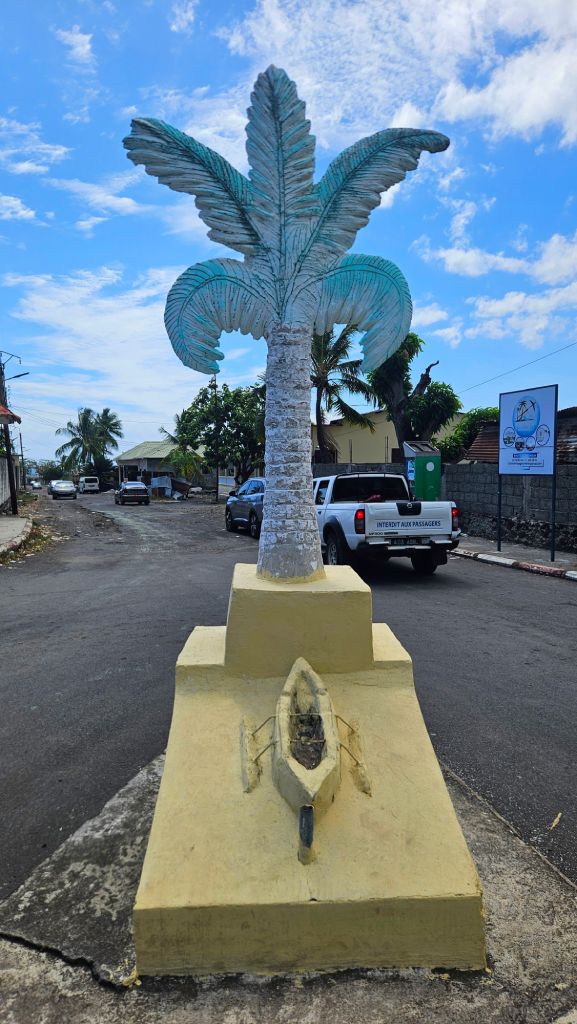
Finding a guide for Karthala
The biggest attraction and at the same time the biggest challenge in Comoros is climbing Mount Karthala. I received three official options:
- Karthala Iron Man: drive to 400 meters and hike to the summit: around six hours – 140€.
- Karthala Sport: drive to 1,600 meters and hike for around two hours to the summit – 250€.
- Karthala Express: drive directly to the summit – 350€.

At Volo Volo Market, I met Chauffeur. He introduced himself as a guide and offered to take me up Mount Karthala for €100 via Karthala Sport option.
“We will start in front of your hotel at 5:00am. I have many friends, and we’ll find transport to 1,600 meters, when we’ll already be inside the park.”
He assured me that getting back down would not be a problem to find a vehicle either.
“Pay me 100€ and we’ll both be happy.”
After a short hesitation, I accepted the offer.
Climbing Mount Karthala
At exactly 5:00am the next morning, Chauffeur was already waiting outside my hotel. Still in complete darkness, we stopped a taxi that took us to a designated meeting point, where a hired vehicle was waiting to drive us to the park entrance gate.
“We are at 400 meters above sea level. From here on, we will walk and see what happens,” the guide explained.
Hmm, this was slightly different from what we had agreed, but I didn’t argue. This is Africa. This is my Comoros travel adventure.
We walked quickly along an excellent concrete road. Some sections were remarkably steep, with gradients reaching 25%. Dawn slowly broke, revealing views over the valley. By around 8:00am, I was getting tired, yet we had reached only about 1,000 meters.
“Let’s take a break, eat something, and hope a car comes along,” I suggested to my guide.
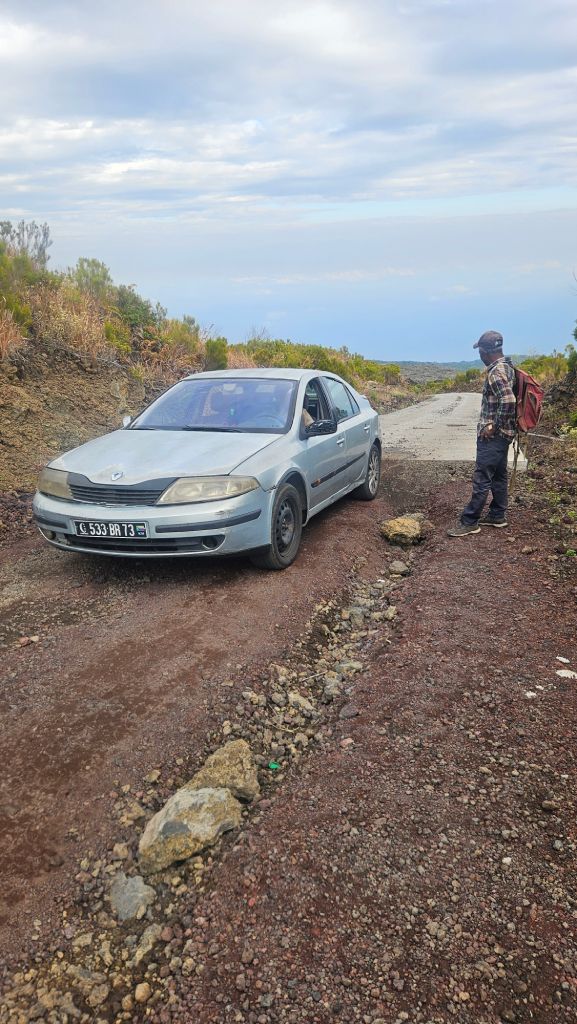
And sure enough, an old Renault Laguna soon came along. I waved, and the driver, who was taking workers to plantations higher up, stopped and invited us in. He drove us all the way to the end of the concrete road at 1,600 meters.
Although the car was in terrible condition, the ride felt like a being in a Ferrari compared with walking.
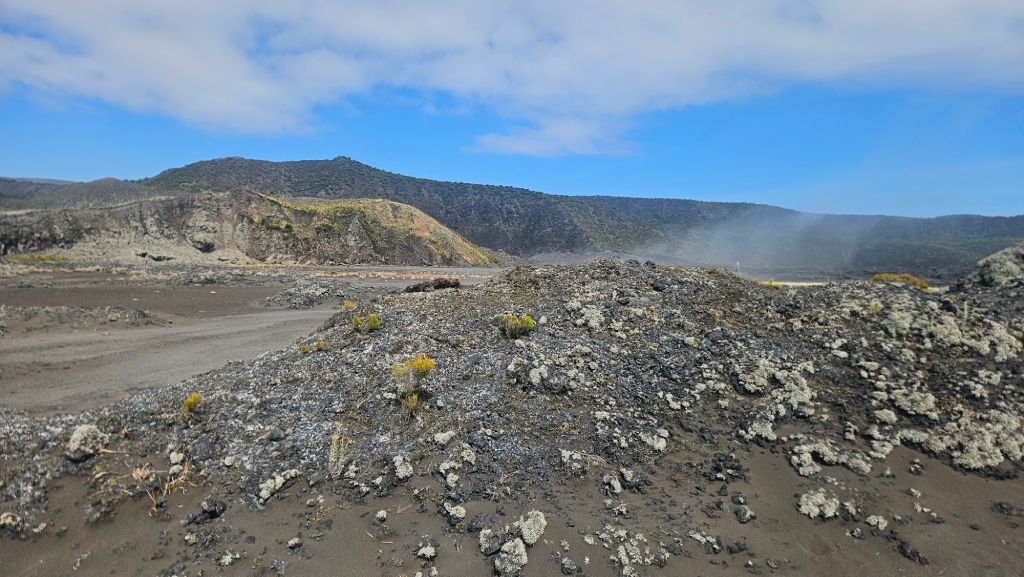
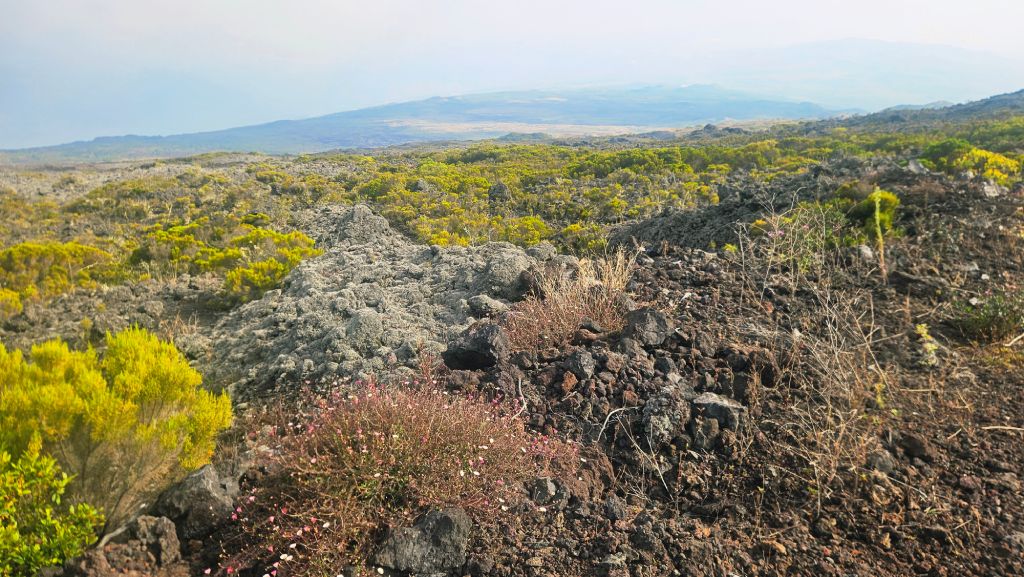
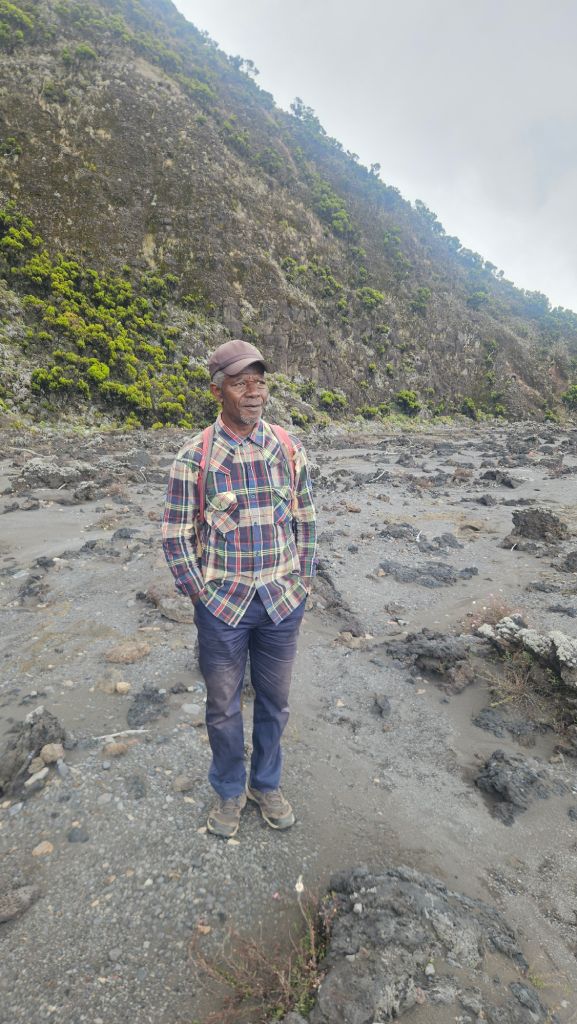
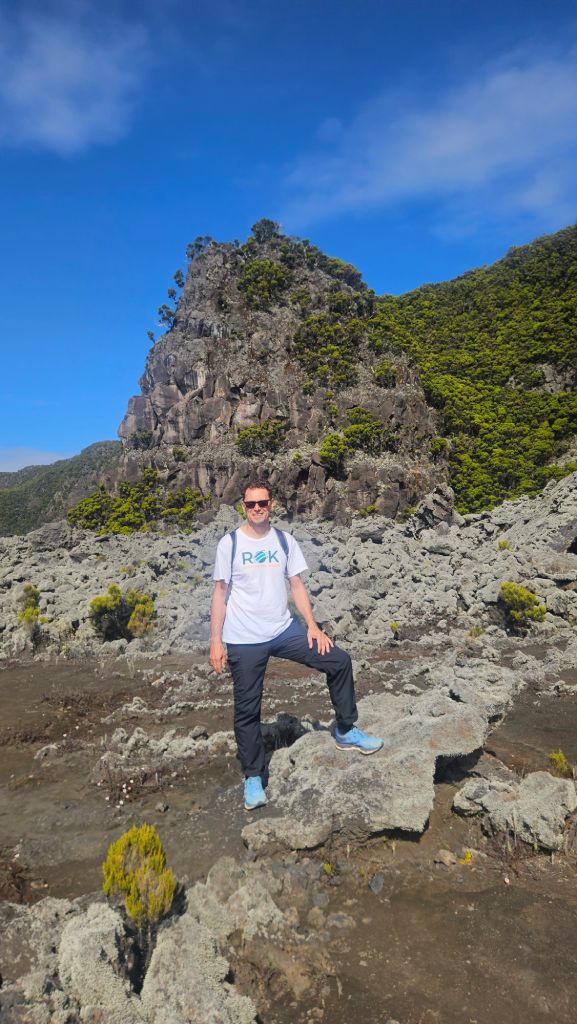
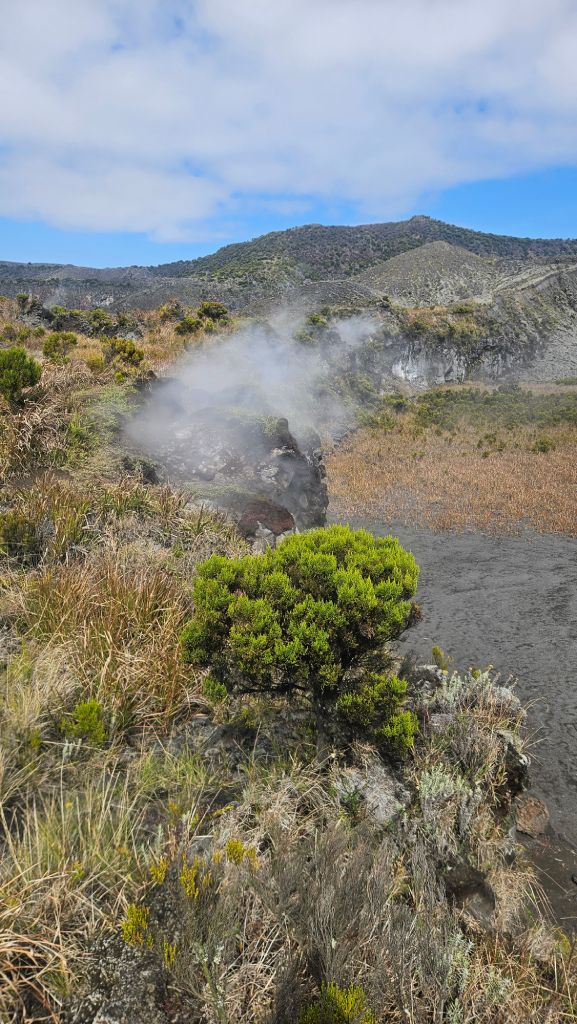
The lift gave me the motivation I needed to continue hiking towards the Mount Karthala’s summit. The landscape changed rapidly until all vegetation disappeared, leaving only rocky lava remains, sand, and rising smoke.
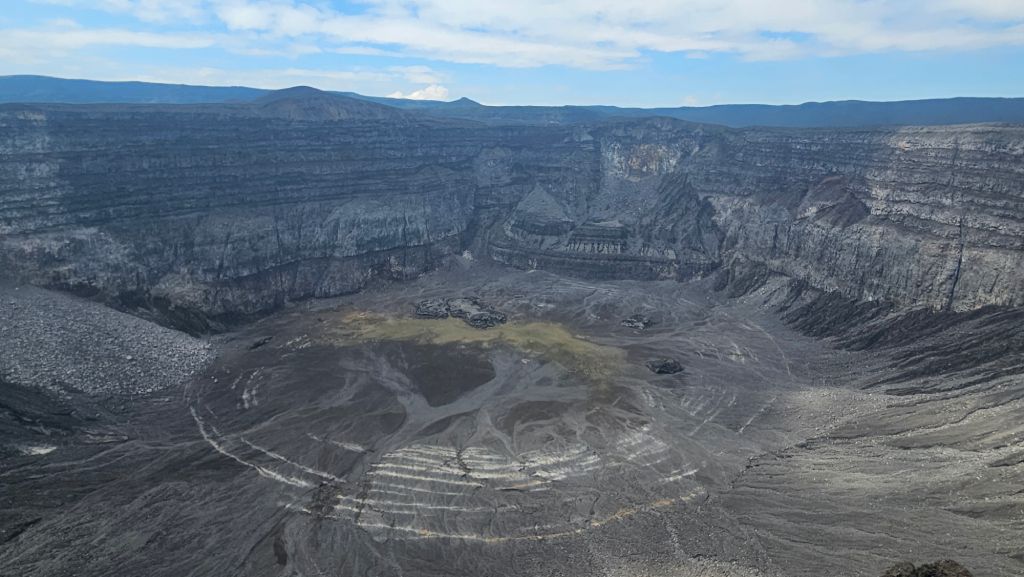
A fantastic view opened before me, and I spent some time admiring the crater on one side and the valley on the other.
The Renault comes to the rescue
The larger crater contains two smaller ones. One completely filled during an eruption in 2007, when ash and smoke covered much of the island as well.
The Choungou-Chahale crater, 1.4 km wide and originally around 600 meters deep.
It is now only about 300 meters deep after being partially filled with volcanic material and ash.
Clouds soon gathered, and on our way back down, we were caught in mist and light rain. Then, once again, blue skies appeared. Although we descended quickly, my knees were suffering, and I hoped another vehicle would come along and take us at least part of the way down.
Once again, the Renault came to my rescue. An old model resembling a Kangoo roared past, sounding as if it belonged in a scrapyard. I climbed onto a wooden plank alongside several workers, hold the metal frame, and wondered how such a vehicle could still move. Apparently, in Comoros they perform miracles with vehicles that would have been scrapped in Europe years ago.
I thanked Chauffeur for an incredible adventure, although I complained that I had ended up walking much longer than planned. He responded by giving me a discount, and I paid him 100USD.
The journey was challenging but absolutely worth it. The highlight of my Comoros travel adventure.
Lobster on Chomoni beach
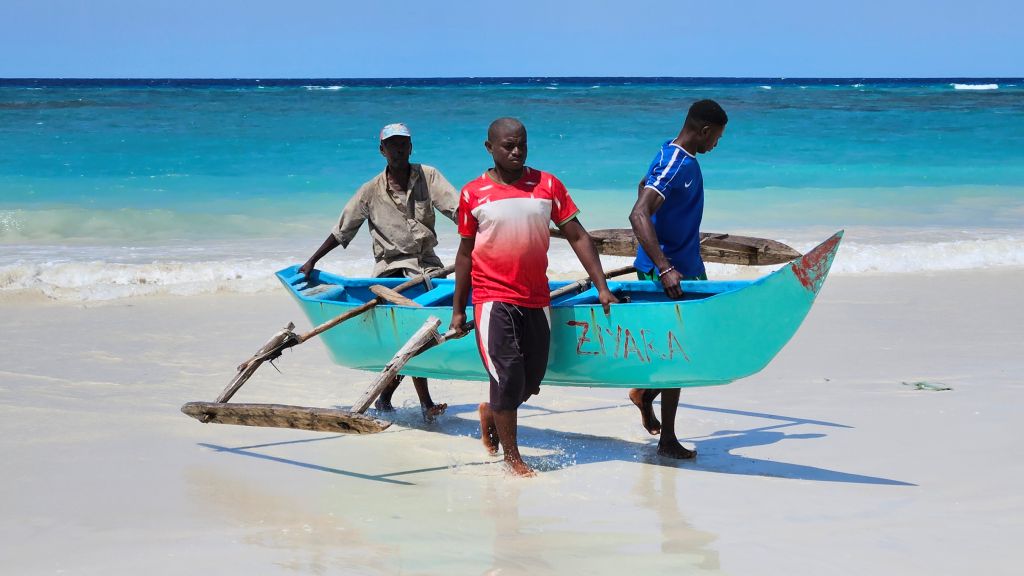
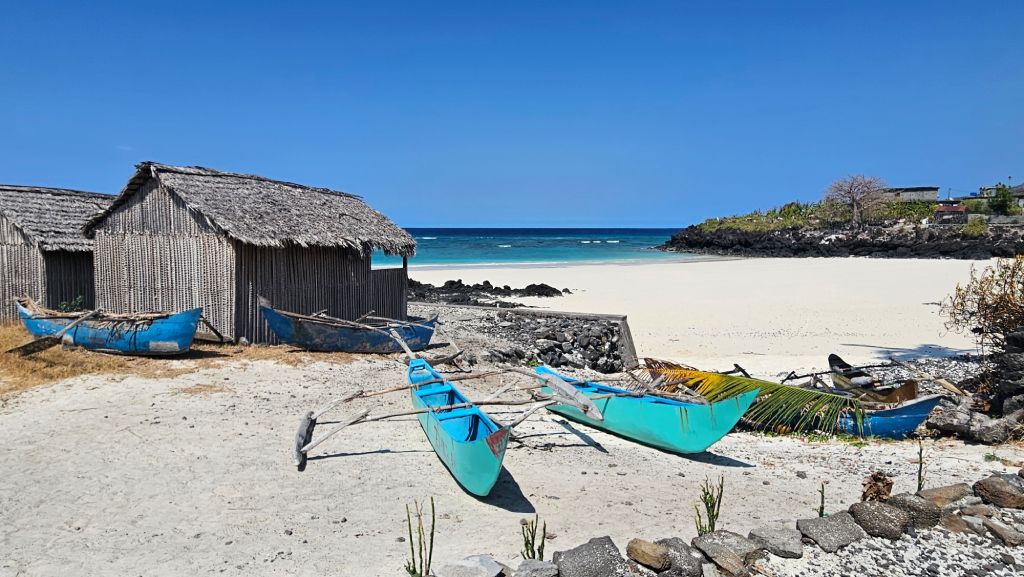
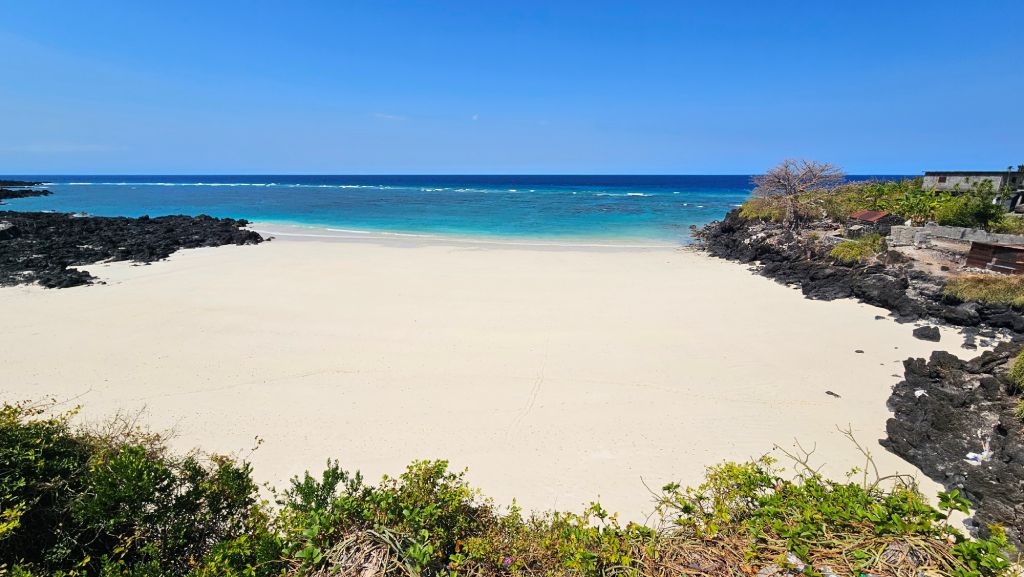
The following day, I crossed the island from west to east to one of the most beautiful beaches in Chomoni. An owner of the simple wooden huts invited me to settle down and be his guest for the day.
“Fish or lobster will be in the menu for lunch! We’ll see what the fishermen bring back in an hour.”
Meanwhile, I swam in the warm sea, played in the turquoise waves, and admired the white sand. The beach itself was relatively clean, although the scene on the cliff above was completely different. Among the unattractive houses, the usual Comorian mess and garbage was everywhere.
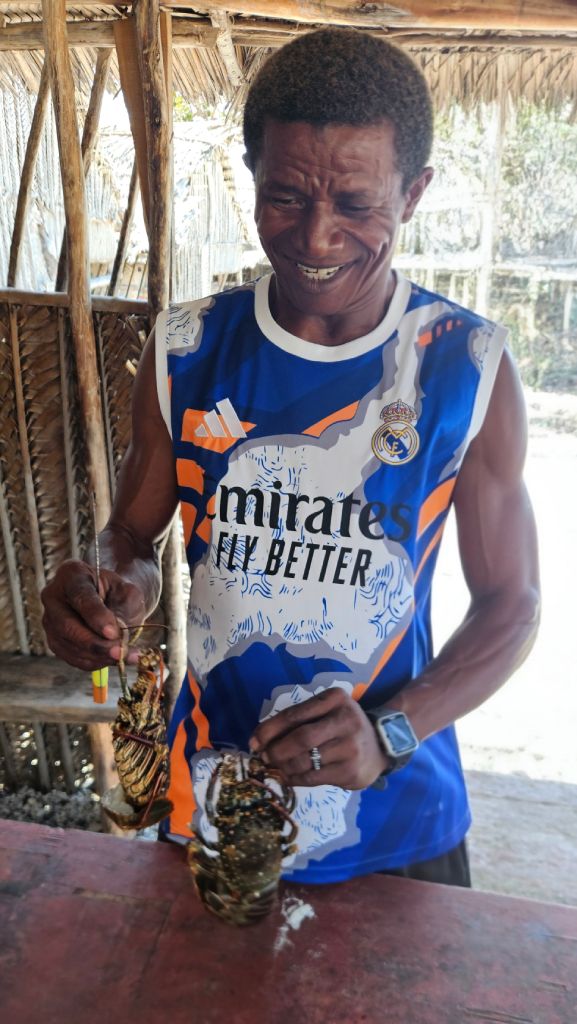


I wondered about the beach’s potential if an entrepreneur developed a few boutique cabins or simple backpacker huts. For now, I simply enjoyed a freshly caught lobster with grilled bananas and sweet potatoes for 15€.
A local welcome in Foumbouni
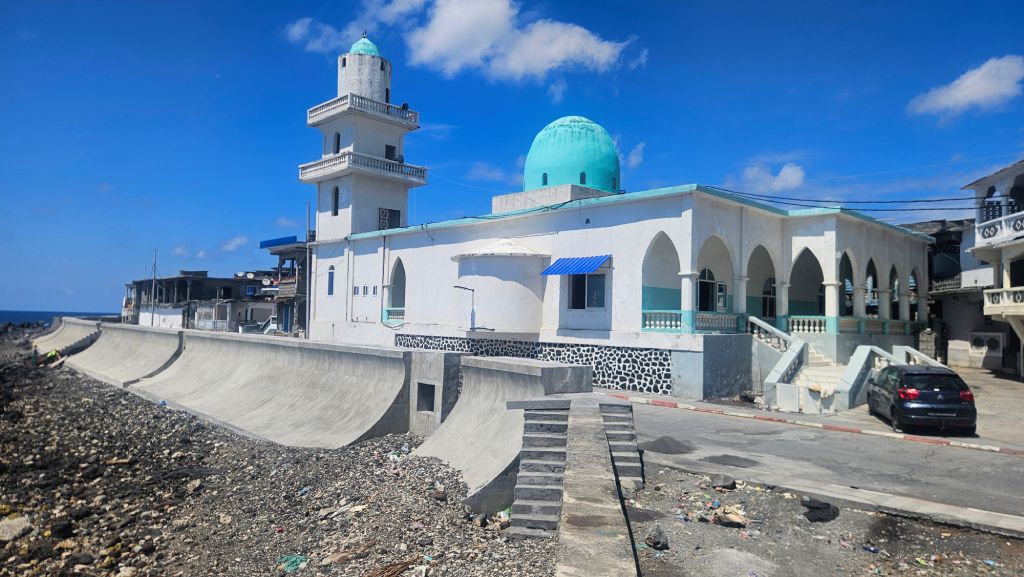
Foumbouni was my final destination in the south of the island. The village didn’t promise anything special when a shared van dropped me at the central gathering point under a large tree. I walked along the coast, where locals had built a high protective barrier against the rough sea. In the midday heat, I barely saw any residents apart from workers repairing the road.
After failing to find lunch, I gave up and sat on a stool outside a small shop to watch the local activity. It was probably one of the most neglected shops I had ever seen. Junk lay everywhere in all shapes and forms, mixed together in complete disorder. Even so, people kept coming to buy sandwiches and drinks, while a man fried potato and a woman peeled bananas.
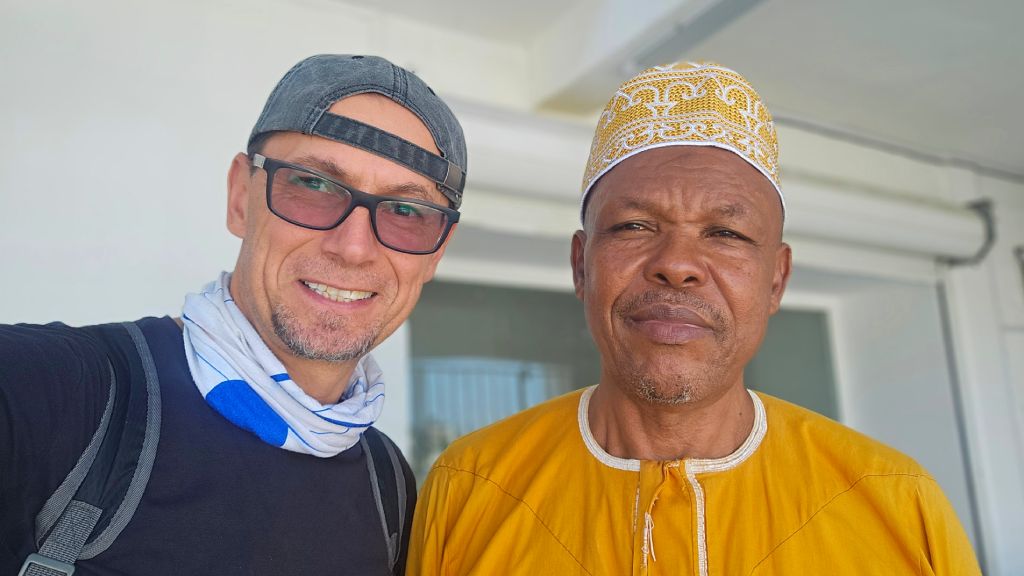
A retired English teacher joined me. When I explained that I wanted fish for lunch, he made a few phone calls and said:
“Come on, let’s get some fish at a restaurant.”
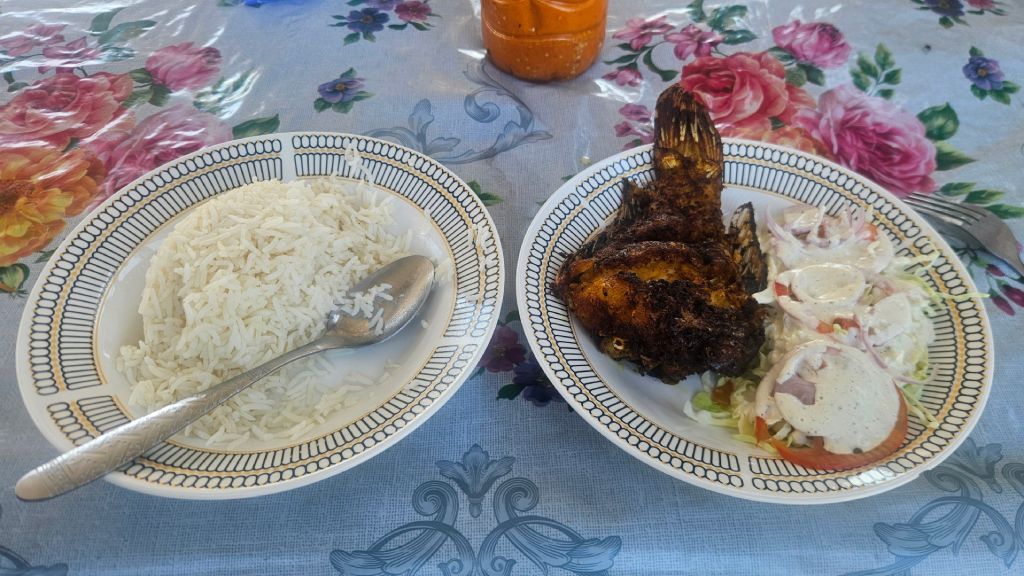
We took a local shared taxi to the other side of town, where I finally had lunch in a simple hut: fish with rice and a spicy sauce typical of Comoros. You can imagine the state of the restaurant. Nevertheless, the staff was friendly and I had a great conversation with my new friend.
Again, there were no particular landmarks or highlights, but I had a great and relaxing time in Foumbouni.

Reflections on my visit to Comoros
Without expectations or a concrete plan, I fell in love with Comoros after my initially negative impressions. Amid the disorder and neglect, I tried to understand the Comorian way of life. The old medinas, simple food stalls, vibrant markets, colorful clothing, and genuine friendliness gradually got under my skin.
Far from the tourist map, with the only luxury hotel closed and no direct connection to France, Comoros feels like a forgotten country. Perhaps that is precisely why people remain so friendly. They continue living their own lives, without adapting their daily routine to foreign visitors.
Comoros Travel Photo Gallery