My Madagascar travel summary:
Visited: August 2026
Duration of visit: 16 days
Capital city: Antananarivo
Population: 63.5 million (2026)
Madagascar travel blog reading time: 17 minutes
Attractions and places I visited in Madagascar:
- From rice paddies to royal history and French influence in Antananarivo.
- Chasing indri lemurs in Mantadia National Park.
- Snorkeling, fishing, and my first encounters with baobabs in Mangily.
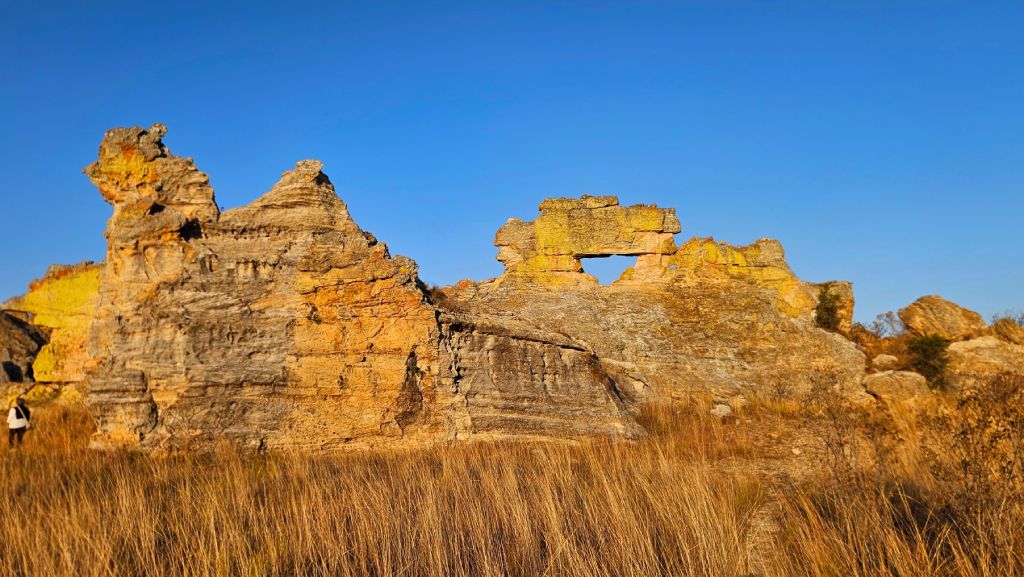
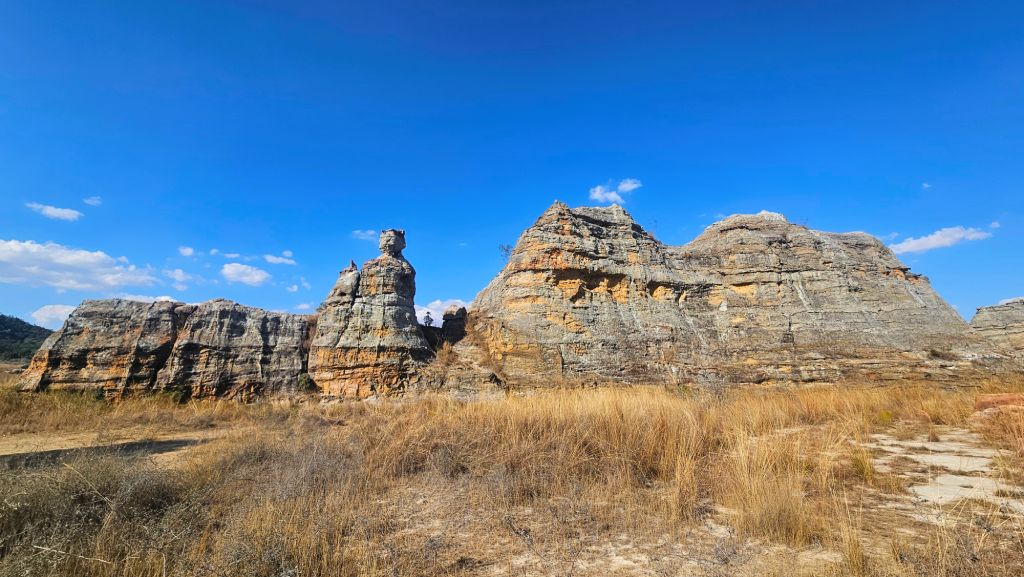
- Trekking through the spectacular Isalo National Park.
- The legendary 28-hour bus journey.
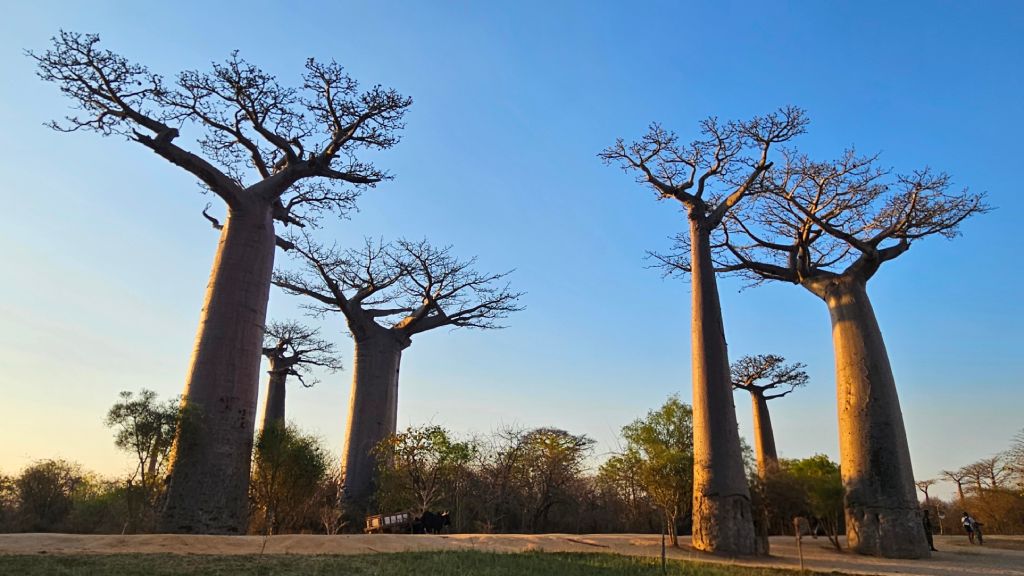
- Sunset along the legendary Avenue of the Baobabs in Morondava.
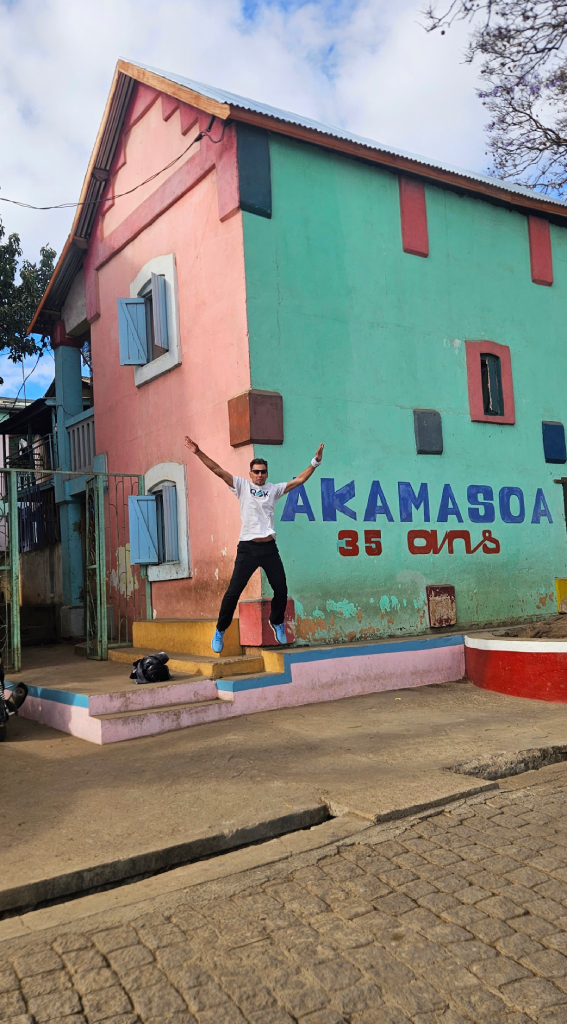
- Meeting Father Pedro who helped over 500,000 people escape poverty in Akamasoa.
Madagascar travel adventure was part of my two and a half-month journey, which also included Botswana, South Africa, Eswatini, Lesotho, Comoros and Mauritius.
Madagascar was the destinations I had been most looking forward to. Isolated for millions of years, Madagascar developed unique wildlife, with around 80% of its species found nowhere else, including lemurs, chameleons and the fossa. Spectacular landscapes range from rainforests and baobabs to sandstone canyons, beaches and rice paddies.
Because of the poor roads and long distances, 15 days would not be enough to explore the whole island. I focused on the south and east and took two domestic flights to save time and make my Madagascar travel easier.
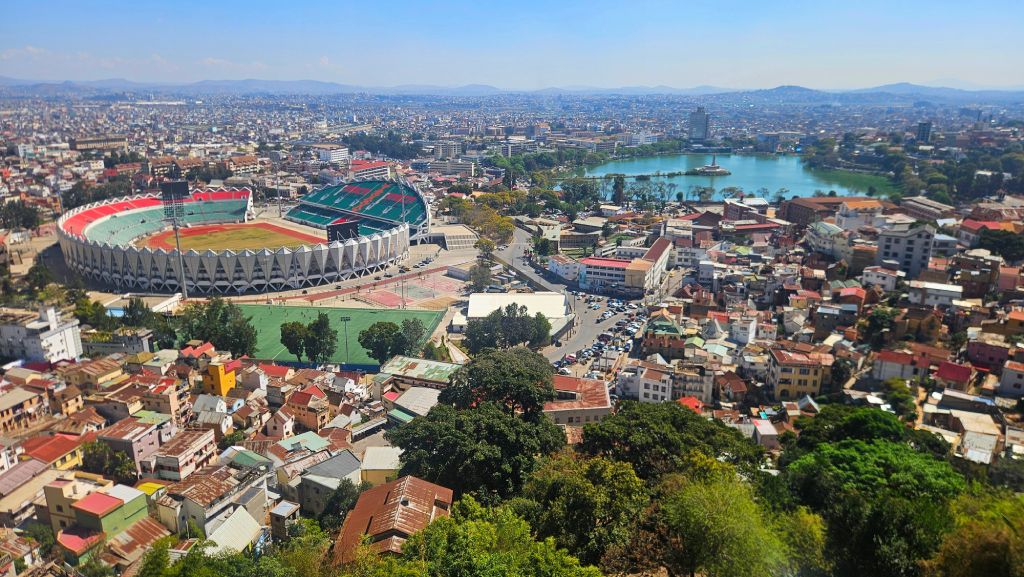
Antananarivo from the hills
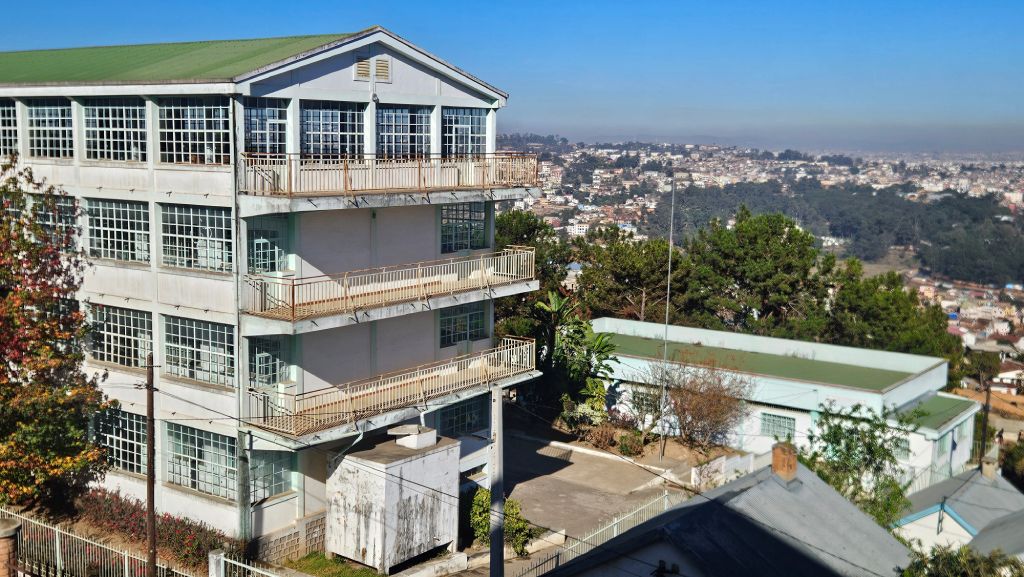
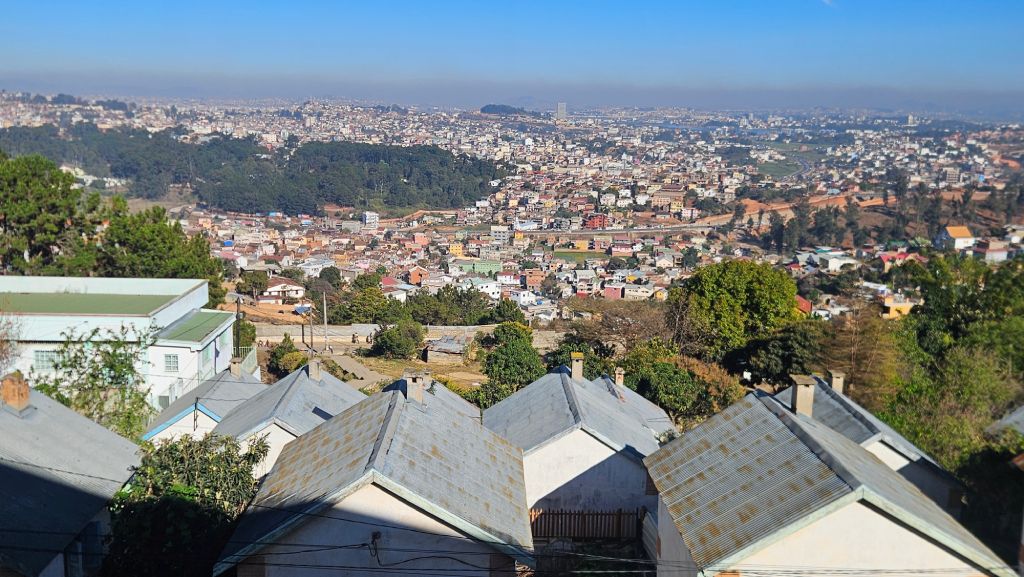
My Madagascar travel adventure started at Antananarivo Airport at 3:00am. After a short night, I woke up around 9:00am to a cold but sunny morning. I stepped onto the apartment’s terrace, and an amazing view of Madagascar’s capital opened up in front of me, a city commonly known by its nickname, Tana.
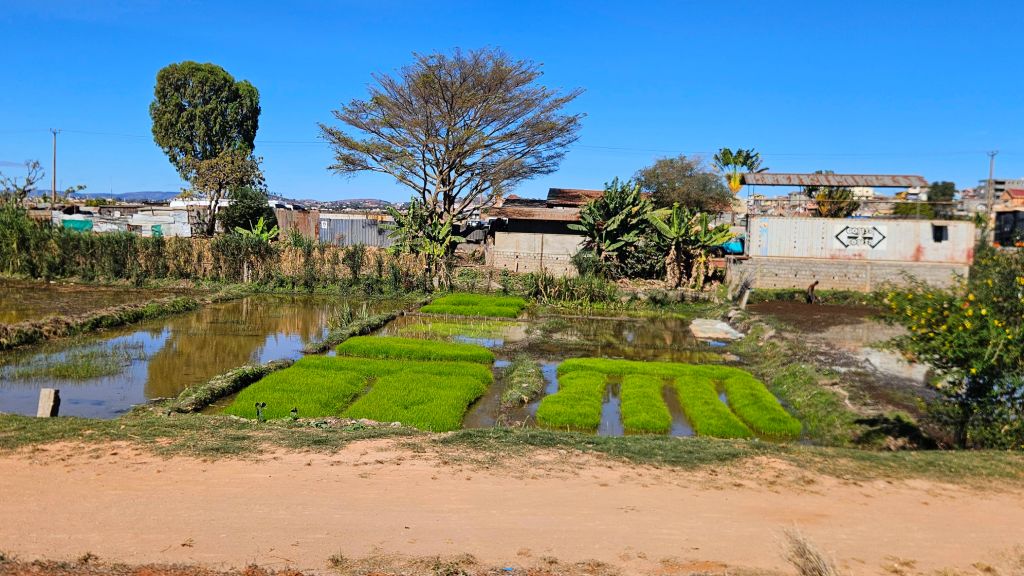
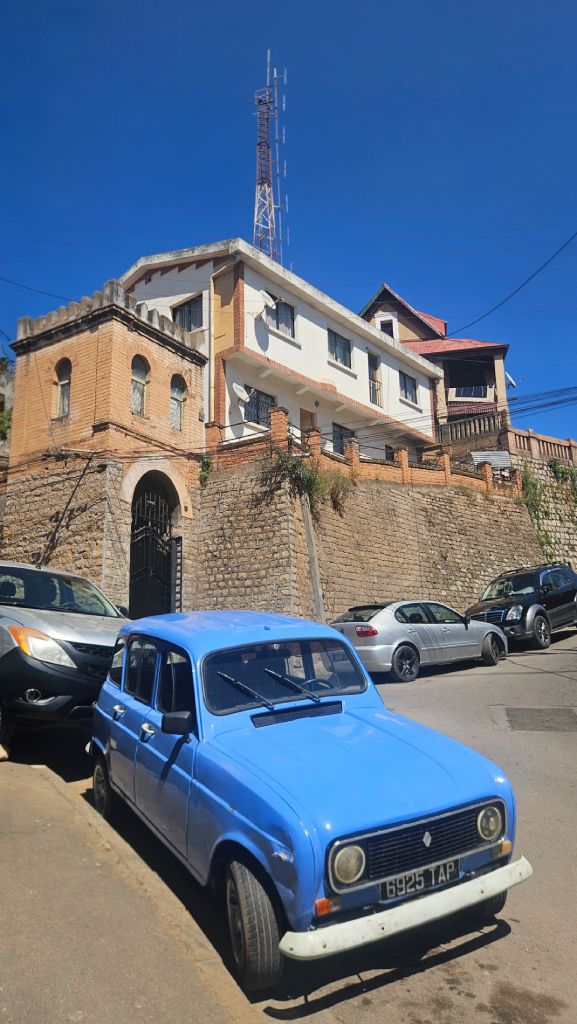
Antananarivo is a chaotic but fascinating highland capital. Royal palaces, traditional brick houses, colonial buildings, and crowded markets fill its steep hills. At every stretch where there are no houses, I could see rice paddies, which add a rural touch to the city.
Having heard many warnings about pickpockets and the general safety situation in the Malagasy capital, I was initially quite scared. The owner of the apartment assured me that the city center was perfectly fine.
“During the day there is no problem, and even at night you can walk around this part of the city without any worries!”
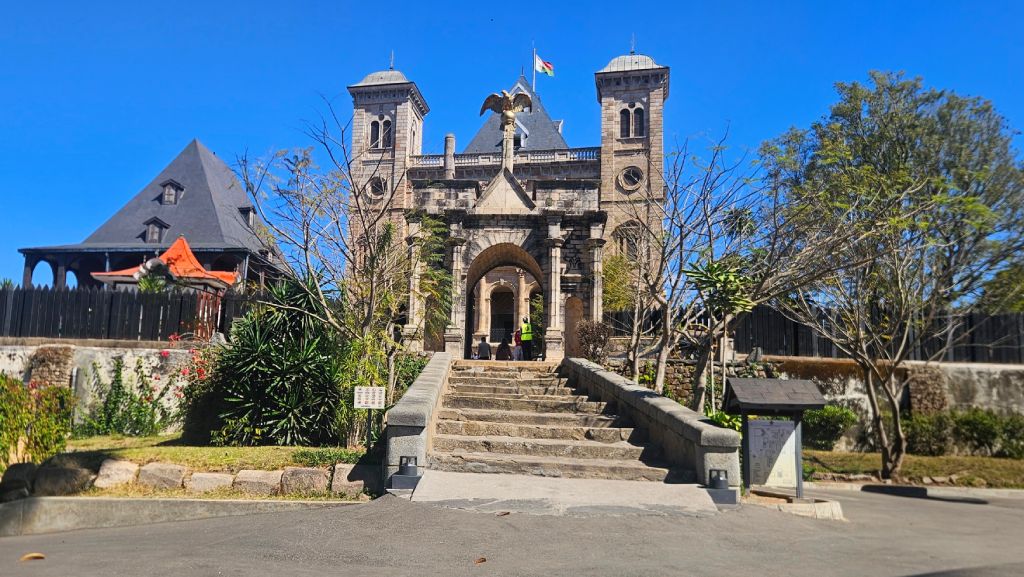
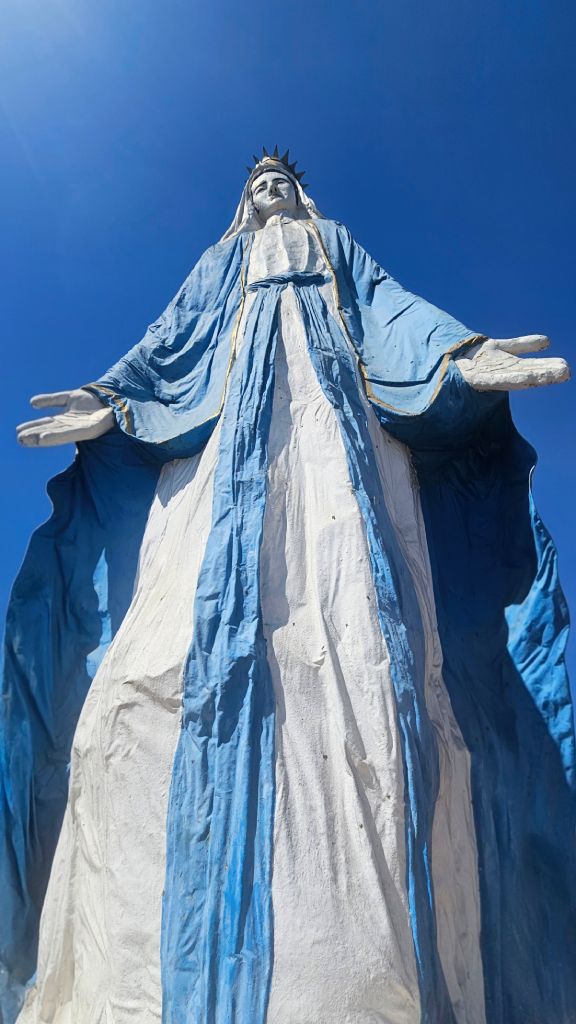
And that is exactly what I did. It took me about half an hour to walk from the apartment to the highest point, where the Queen’s Palace is located. The second part of the walk was particularly steep. On the way, I stopped at the Cathedral of the Immaculate Conception and a tall statue of Mary with her arms spread over the city. Another spectacular view.
In general, Tana has few exciting things to do and places to visit; I decided to skip the markets because of pickpockets.
Travelling Madagascar at 25 km/h
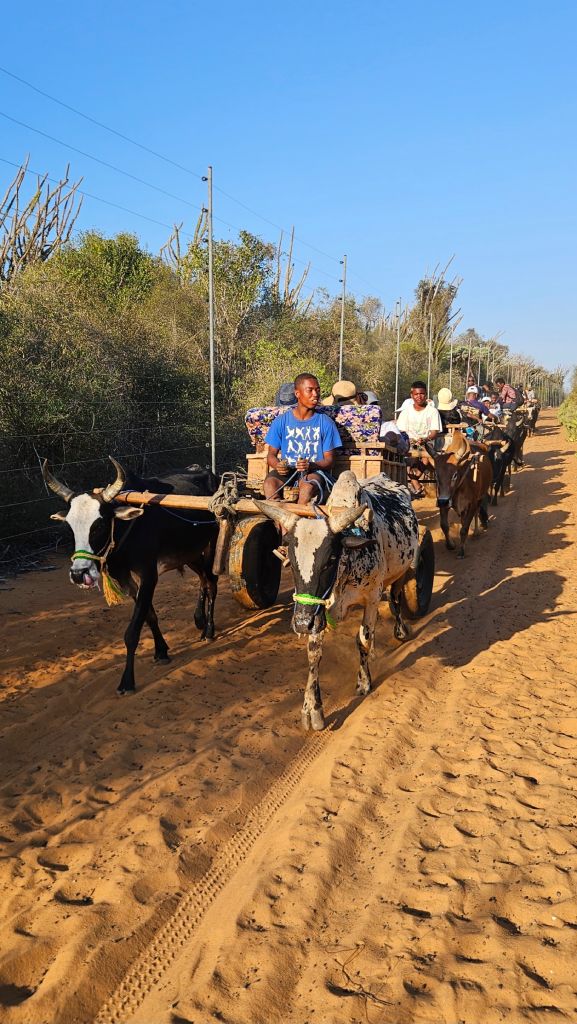
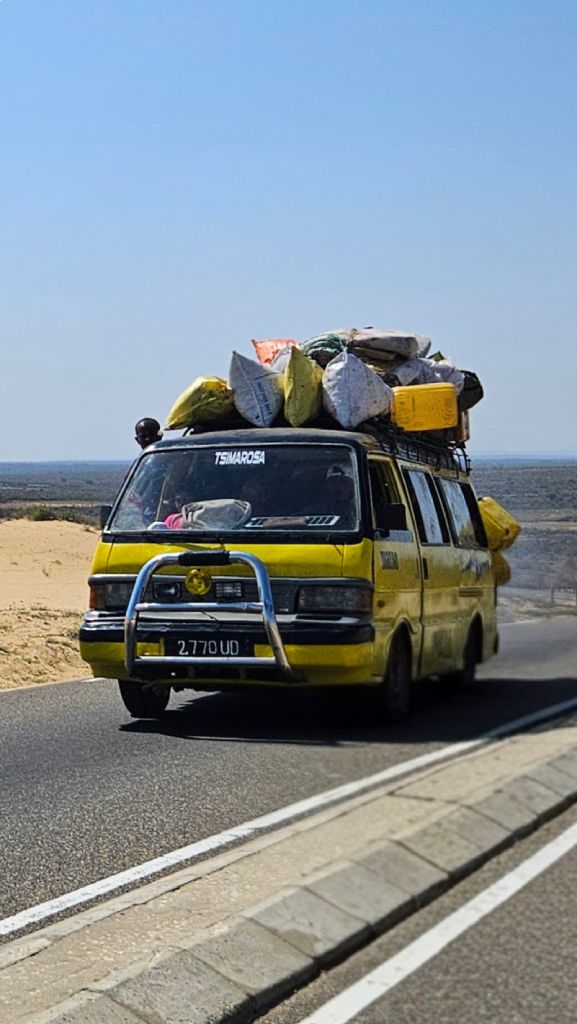
From Antananarivo to Andasibe is about 135 kilometers. At 7:30am, I ordered a taxi through the InDrive app to Gare Routière de l’Est, where I joined the queue for the next taxi-brousse. These are usually VW or Mercedes vans on longer routes, while smaller Toyota Hiaces are used for shorter journeys. After waiting for almost an hour without a larger and faster van appearing, I decided to take the smaller Toyota that was ready to leave.
The traffic was incredibly chaotic. Numerous trucks were carrying containers, while the pothole-filled and winding road made it impossible to drive fast or overtake safely.
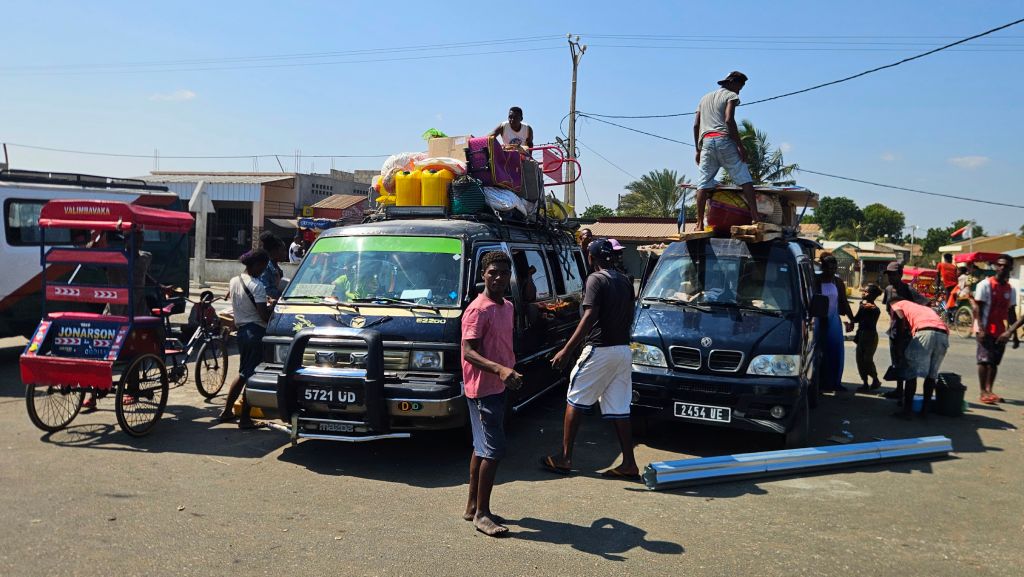
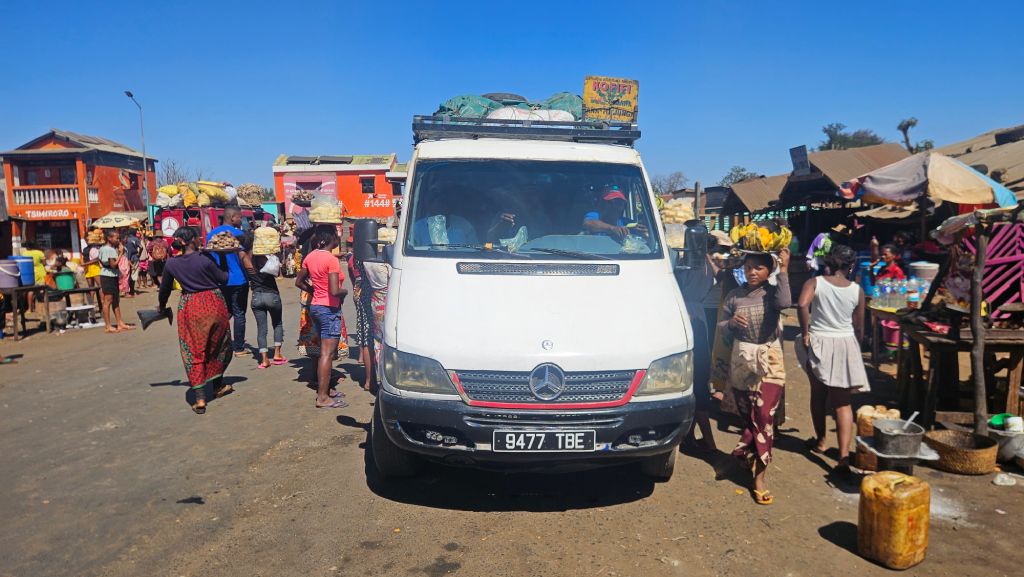
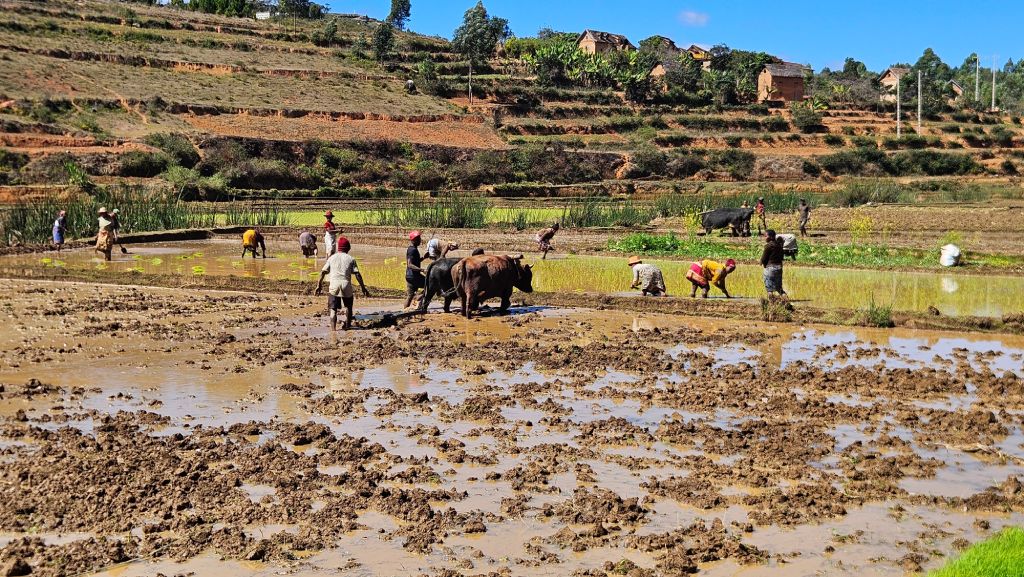
We drove slowly and occasionally stopped at roadside food stalls. Small settlements lined the road, while rice fields covered every irrigated piece of land, showing the importance of rice in Madagascar. Locals eat around 130 kg of rice per year, and Madagascar is Africa’s third-largest rice producer.
When we finally arrived in Andasibe at 5:00pm, I calculated travelling speed at only 25 kilometers per hour.
The same happened on the following trips during my Madagascar travel adventure.
Call of the Indri
The night walk to find nocturnal lemurs was disappointing. Even though six types of nocturnal lemurs live in this area, we found only one. Tiny mouse lemurs seemed unhappy as guides shone powerful lights on them while visitors took photos.
Fortunately, the daytime visit to Analamazaotra Special Reserve, part of the Andasibe-Mantadia protected area, was more interesting.
The system for visiting national parks in Madagascar is similar and well organized. At the entrance, you pay the entrance fee, tax and guide fee. You can hire a guide on the spot or arrange one in advance.
My guide was talkative, although her English was difficult to understand. She was not particularly good at finding lemurs, though. Usually, she simply followed other groups, and we all ended up together watching these endemic animals.
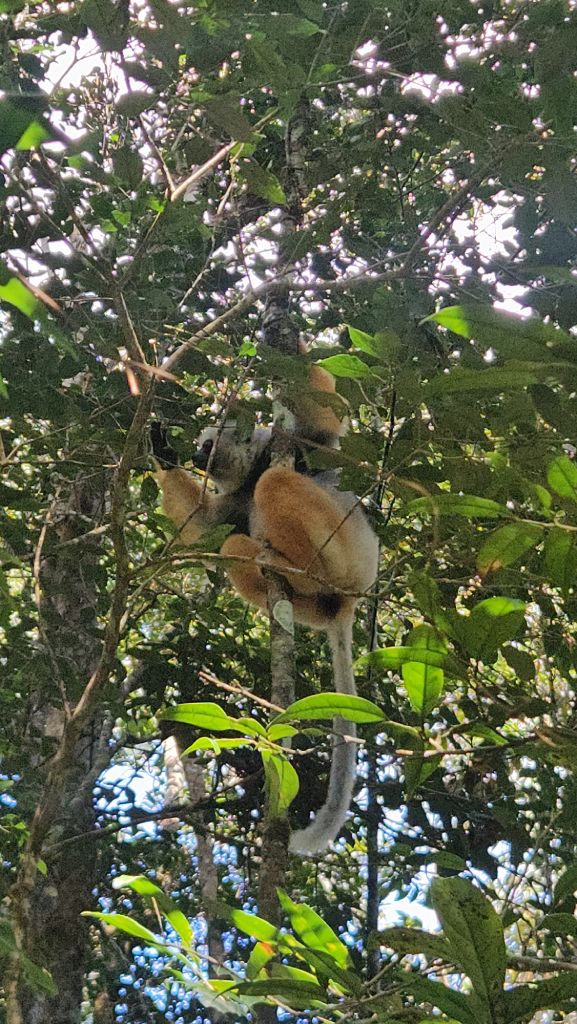
We were looking into the treetops, where sifakas and brown lemurs first appeared. They sat calmly on the branches, searching for leaves and eating. Then, all of a sudden, they would leap from one branch to another, almost like monkeys, before stopping in another tree far away. At first, they did this high in the treetops, but later they came down a little lower.
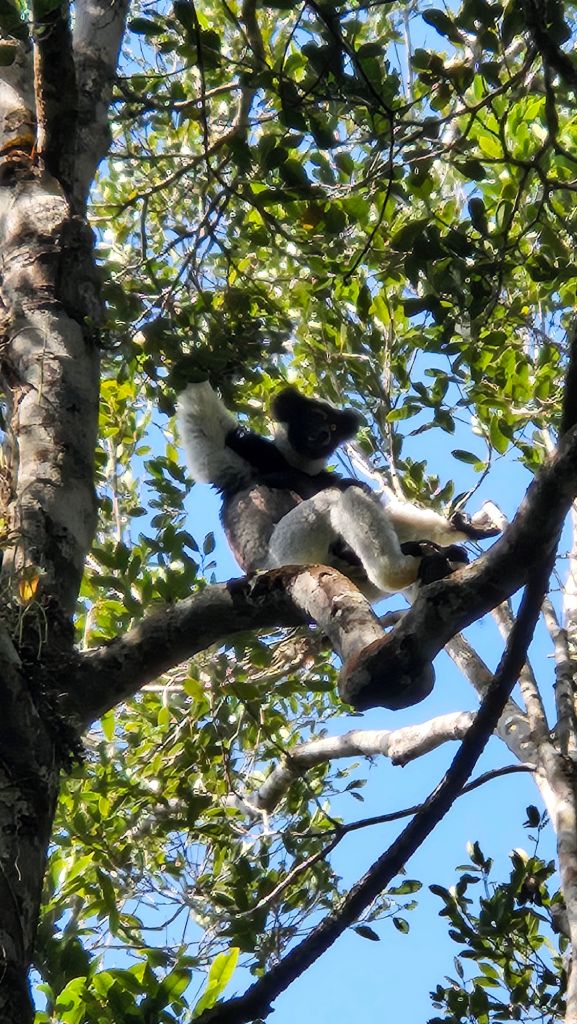
The biggest attraction of Analamazaotra Special Reserve is the black-and-white indri lemur.
The world’s largest lemurs are famous for loud calls that can be heard several kilometers away. They call loudly to warn of potential danger, protect their territory or try to scare away enemies.
We got very close to them and watched as they calmly chewed leaves. Once they had eaten, they became inactive. Similar to koalas, they spend much of the day digesting low-nutrient food and resting.
Seeing indris so close was one of the highlights of my Madagascar travel adventure.
Pousse-pousses in Toliara
The Madagascar Airlines flight from Tana to Toliara was calm, although four hours late.
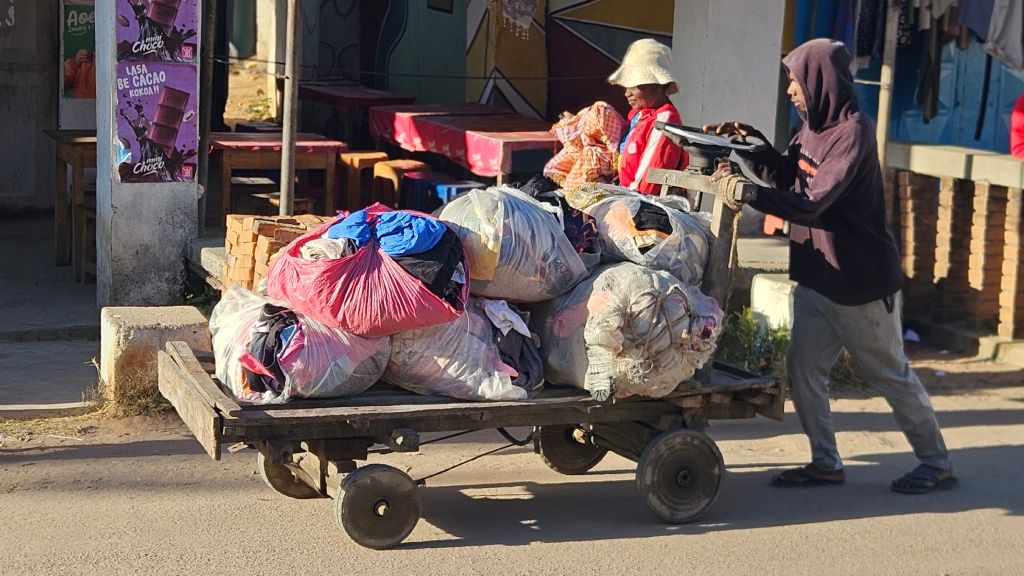
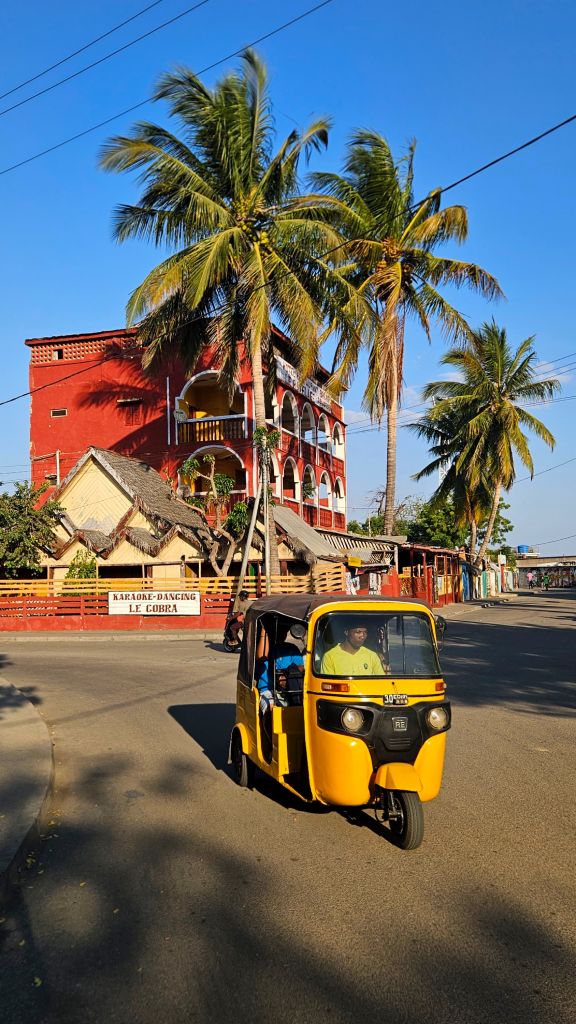
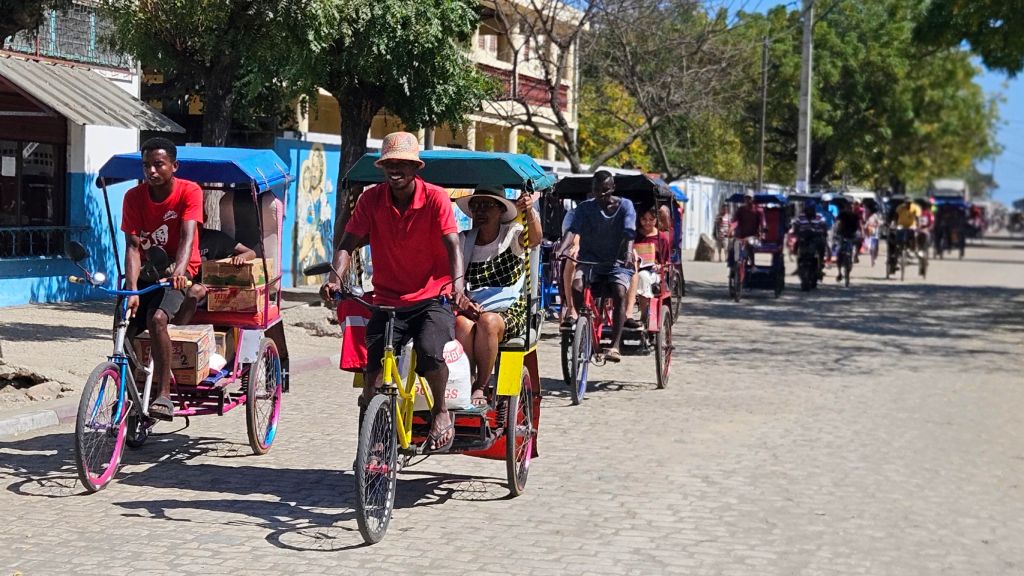
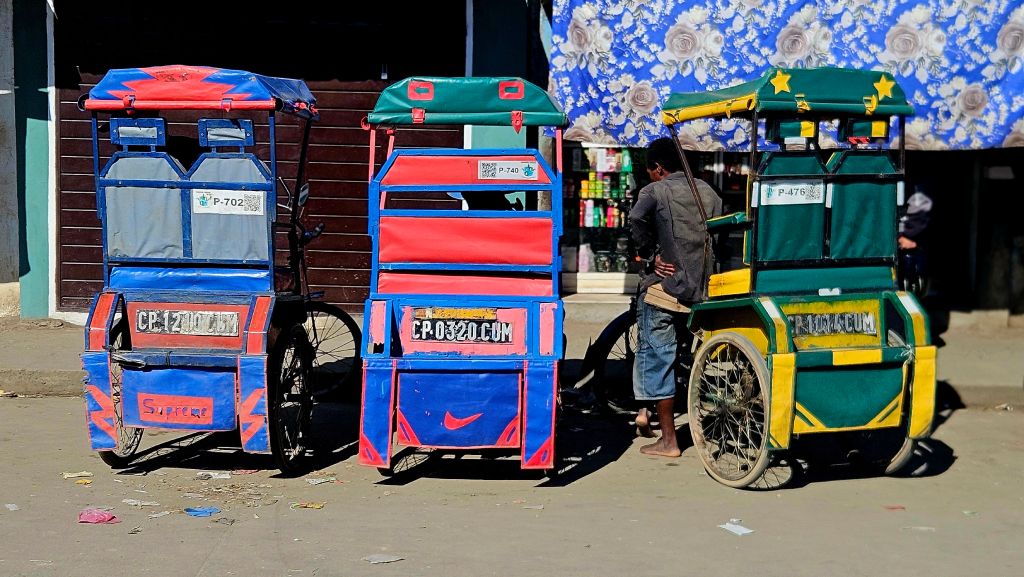
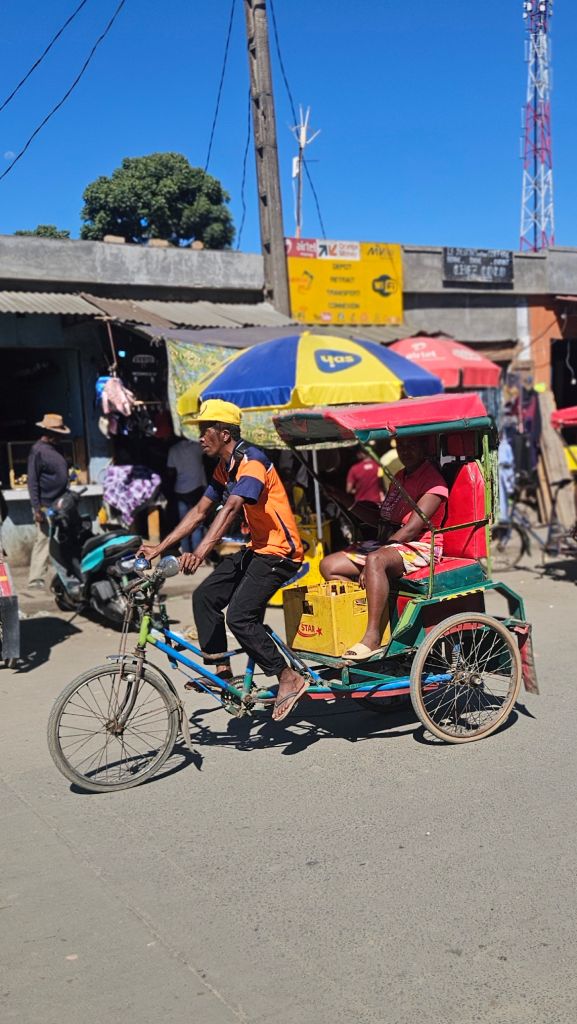
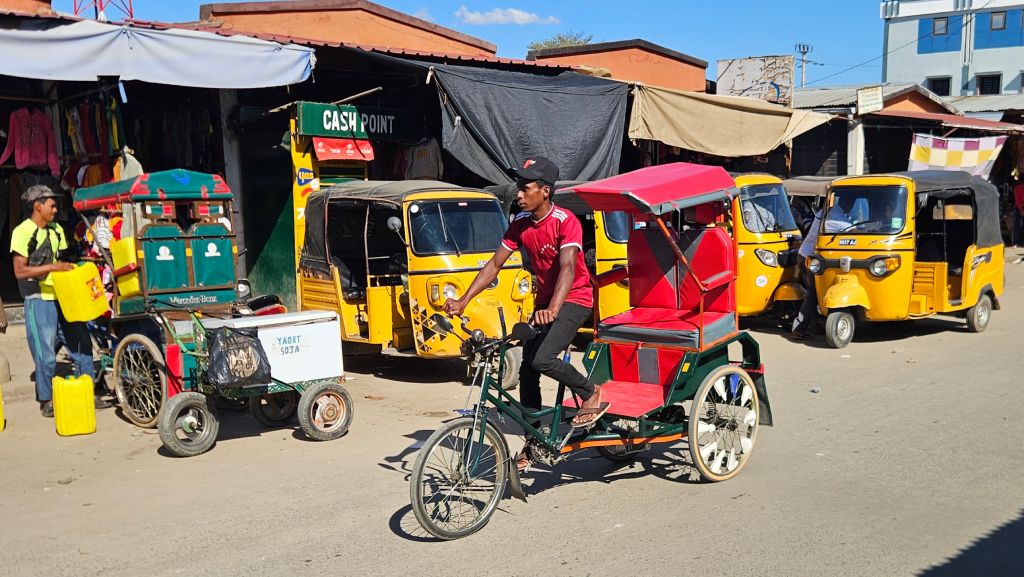
I took a tuk-tuk to the center and quickly felt the lively atmosphere of the regional capital. A mixture of tuk-tuks and traditional human-powered rickshaws, known as pousse-pousse, moved efficiently through the streets. Somehow, I managed to buy a bus ticket for two days later, only to discover afterwards that I had overpaid for it.
Together with 16 other passengers, I travelled in a taxi-brousse designed to accommodate 12 people to Mangily.
During a walk along the beach, I encountered several people offering massage, lunch, sailing, snorkeling and other services. They were quite aggressive, but I successfully turned down all their offers.



Snorkeling, fishing and baobabs
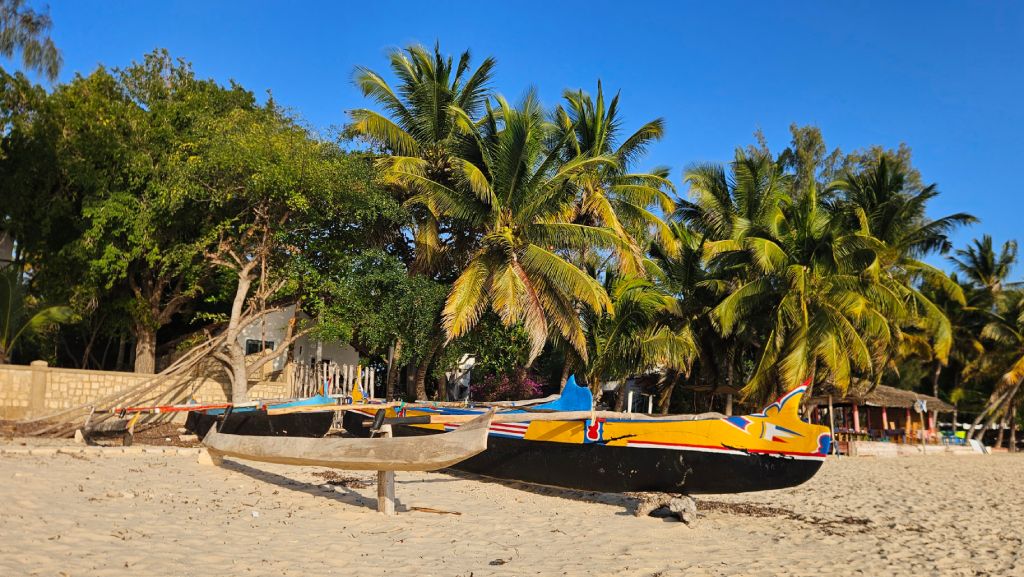
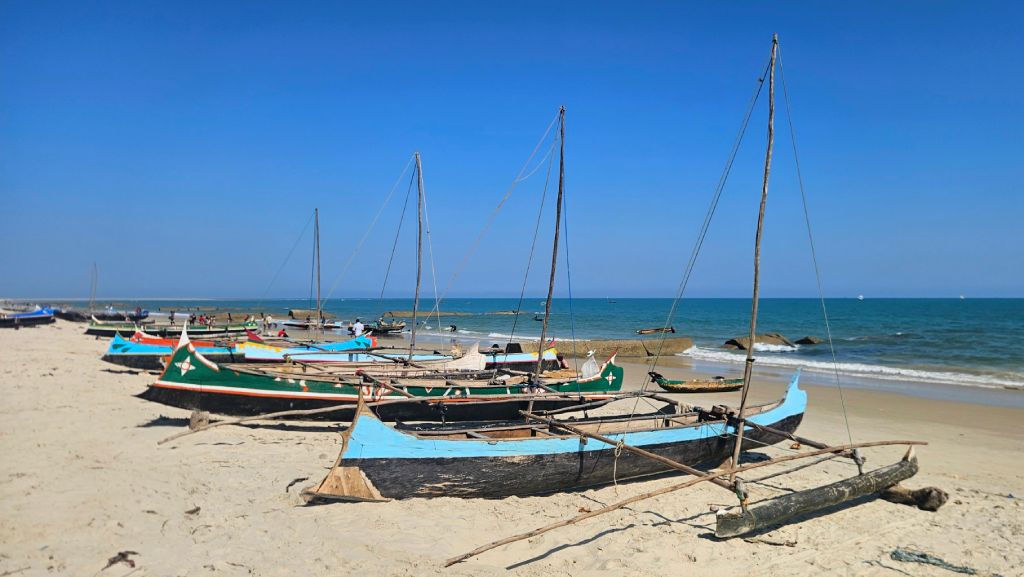
In the end, I opted for a trip on a lakana, a wooden sailing boat with a side outrigger.
“First we’ll go to the reef to catch fish, then you will snorkel, and finally I’ll prepare lunch from our catch,” a local fisherman Pascal promised.
The next morning at 7:00am, his lakana was ready. At first, the two fishermen paddled, but once the wind increased, we raised the sail and gained speed. The calm sea gradually became rougher, and after about half an hour we reached the fishing spot.
We threw the nets into the water, but an hour passed without catching anything.
“It’s too windy and the sea is too rough. The fish aren’t biting,” Pascal explained. “The wind decides what we catch!”
We eventually gave up and sailed to the coral reef. Despite the cold water, I put snorkeling gear and jumped in. Visibility was poor. I still saw plenty of colorful corals, although relatively few fish.
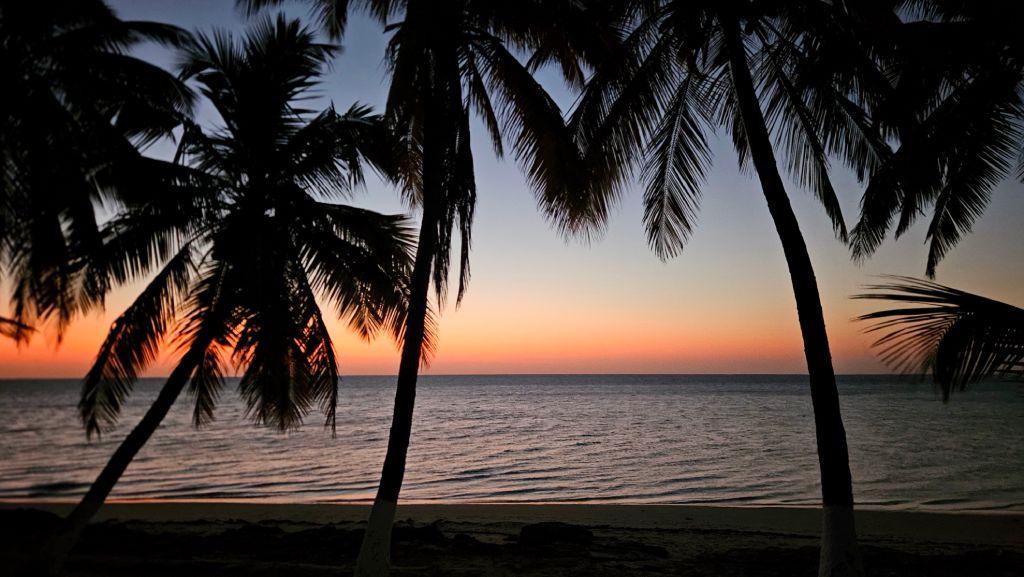
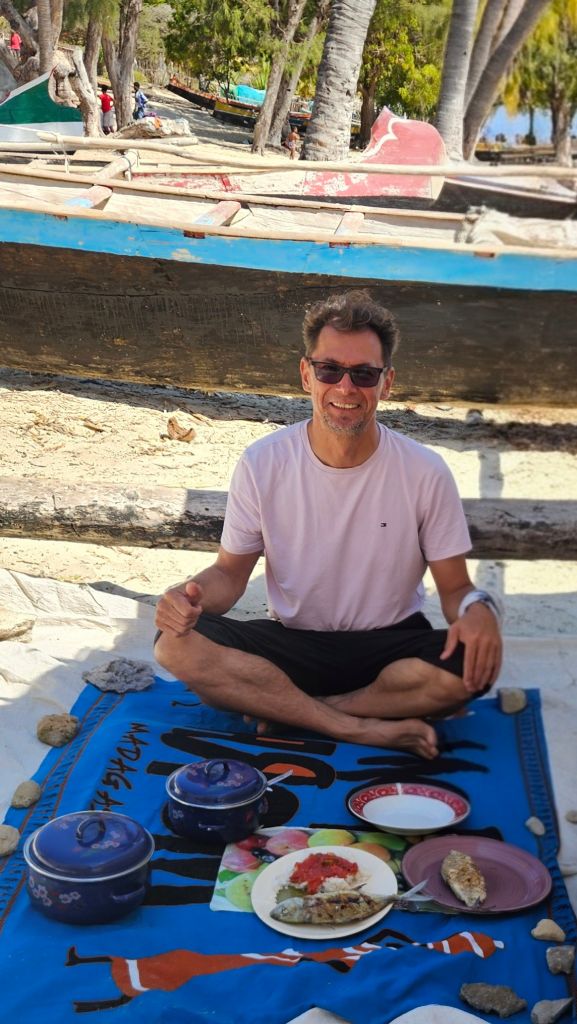
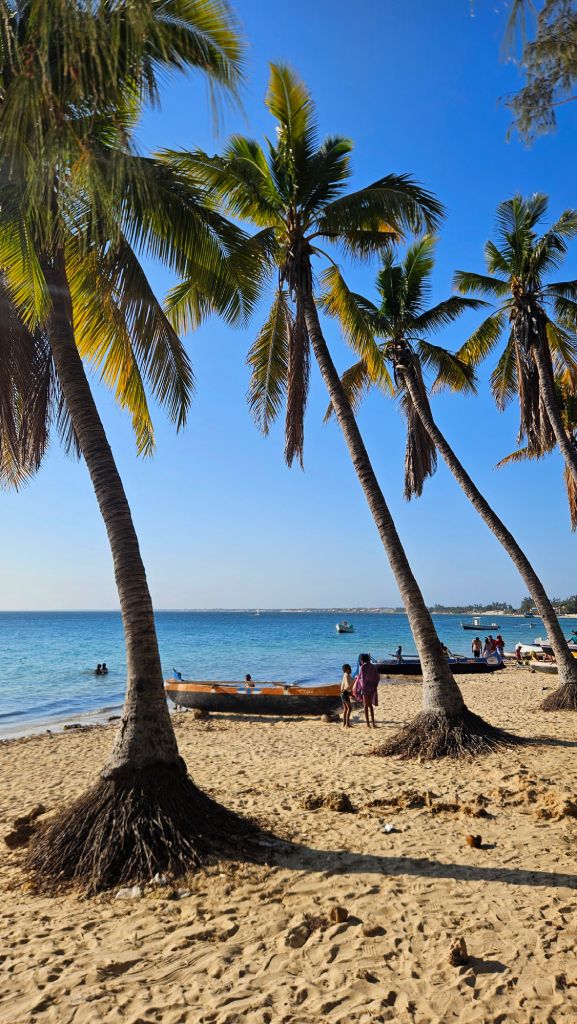
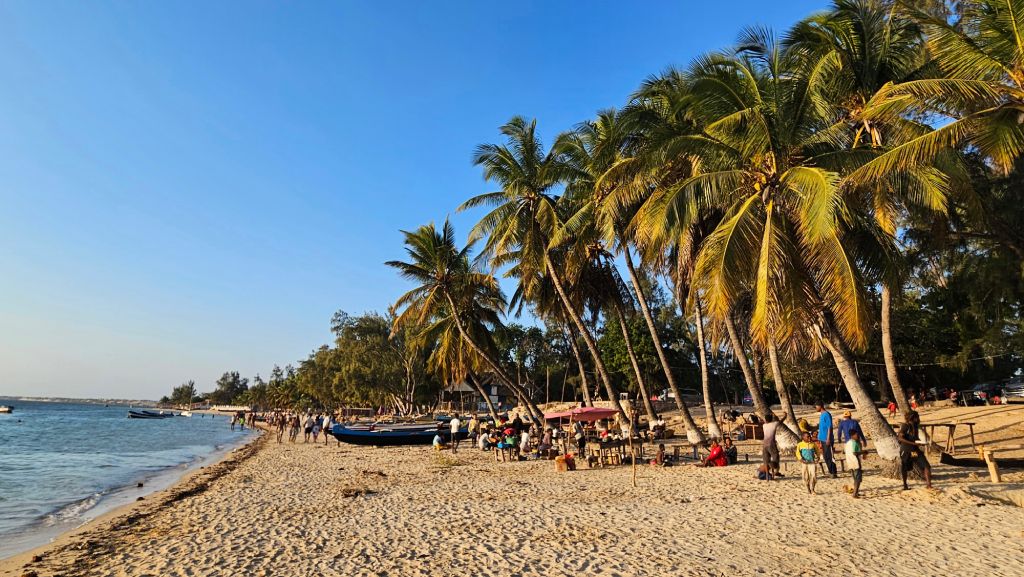
On the return, Pascal bought some fish, while his wife prepared it with a delicious tomato sauce and rice. My lunch under the palm trees on the beach was superb.

In the afternoon, Pascal took me to Reniala Reserve, about half an hour’s walk from my hotel.
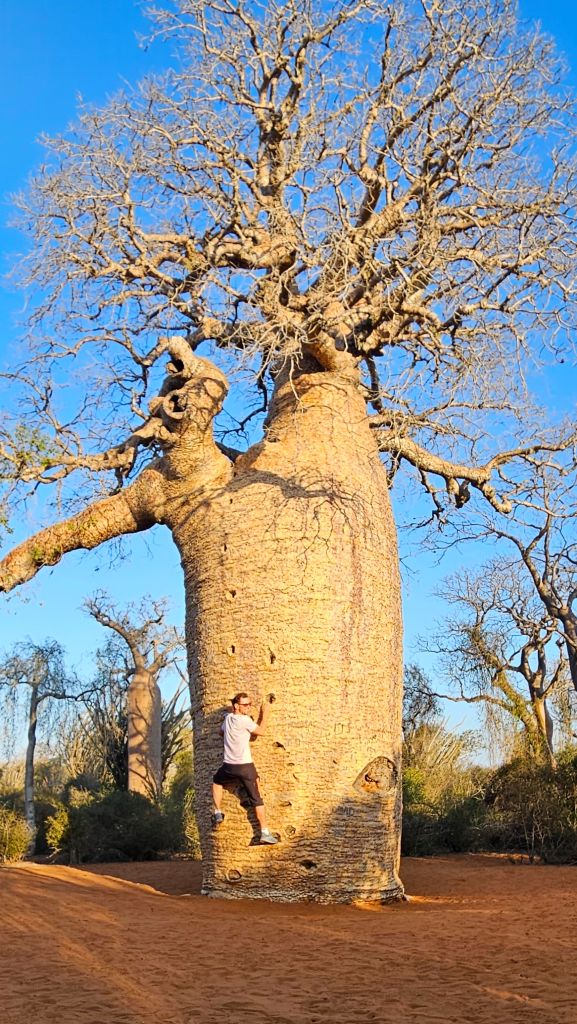
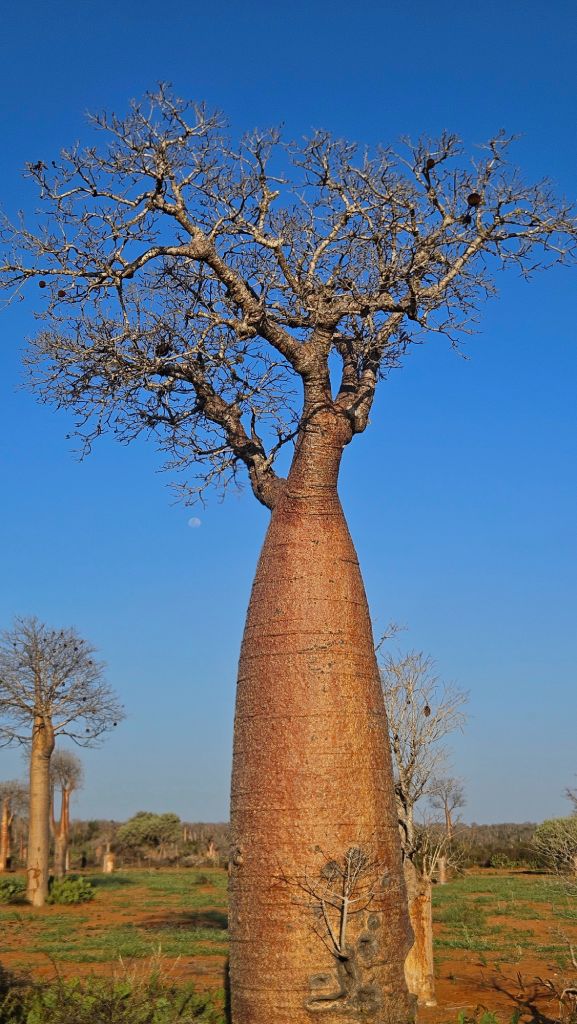
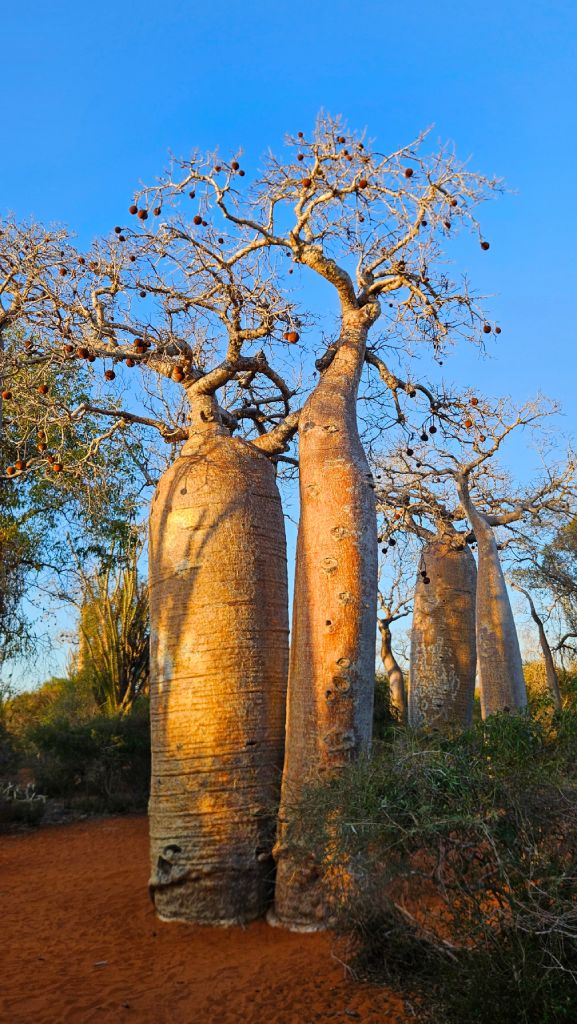
The park is famous for its baobabs in all shapes, sizes and ages, with the oldest around 1,200 years old.
Baobabs shaped like beer and rum bottles, women’s backsides, families and couples amazed me just before sunset, especially since I had no idea this attraction even existed. One of the best things to do in Mangily!
Trekking in Isalo National Park
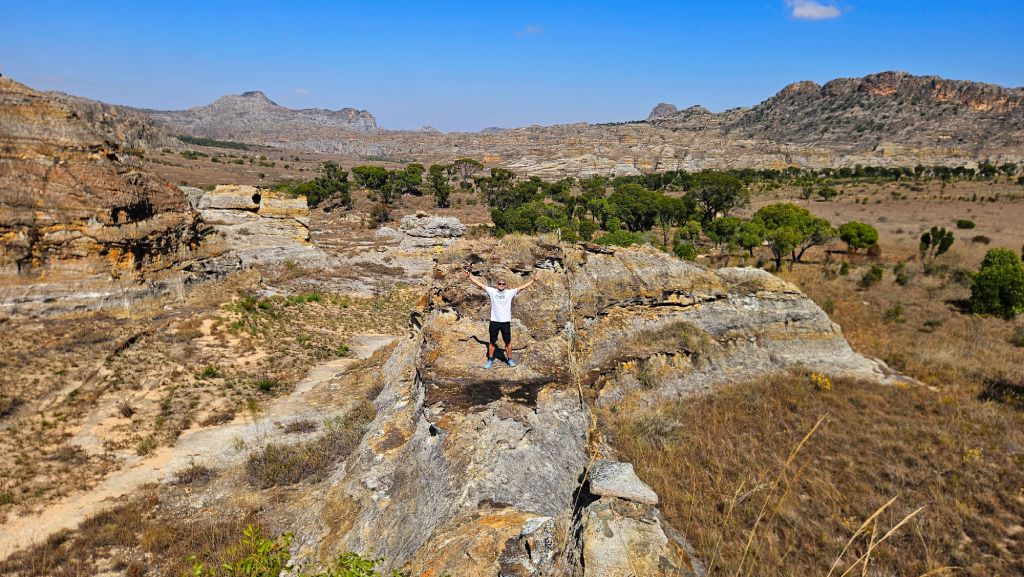
Visiting Isalo National Park was one of the highlights of my Madagascar travel adventure and a must place to visit. I opted for a longer trek that allowed me to see several lakes, spectacular sandstone landscapes and lemurs.
I set off at 7:30am with my talkative guide, Dolphin. We were the first to enter the park that day and began climbing towards a viewpoint at the top of the canyon.
What a spectacular view!
In the distance, dozens of pointed peaks rose in different shades, their rocks rich in bauxite, iron, other minerals and lichens.
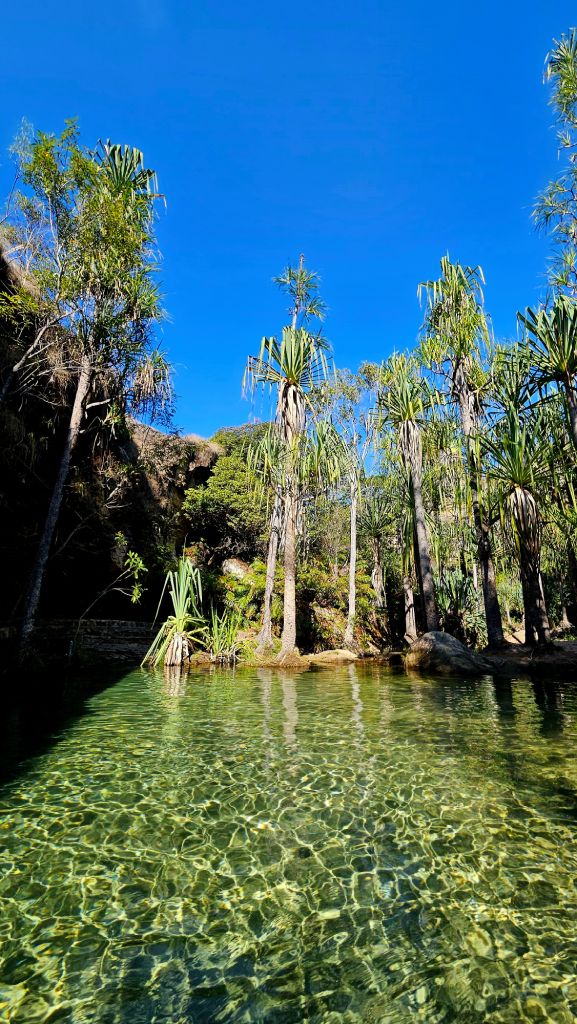
On the way down into the valley, we stopped at the first lake, Piscine Naturelle. Although it was still early and the water cold, swimming among the high cliffs and palm trees was enjoyable.
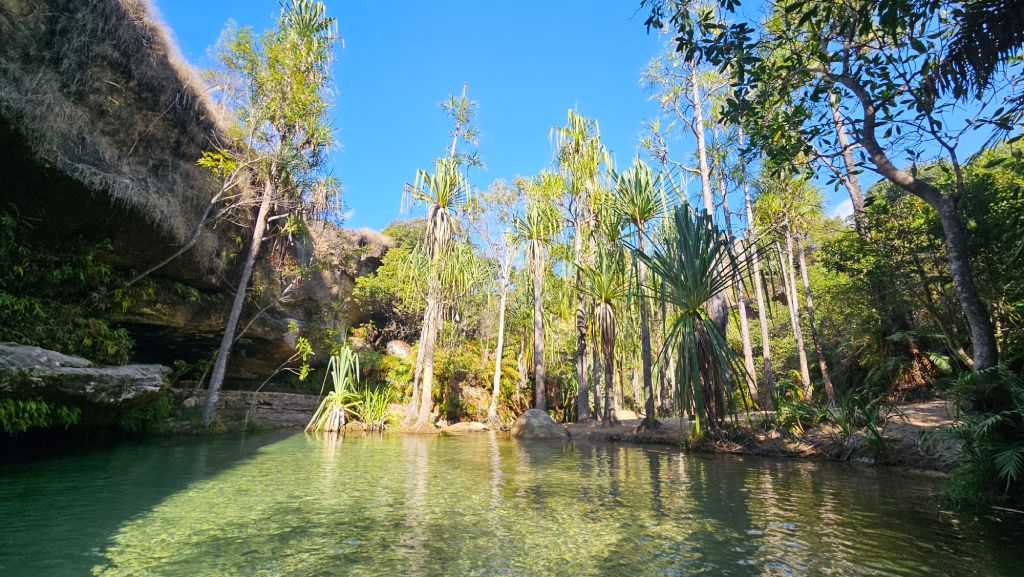
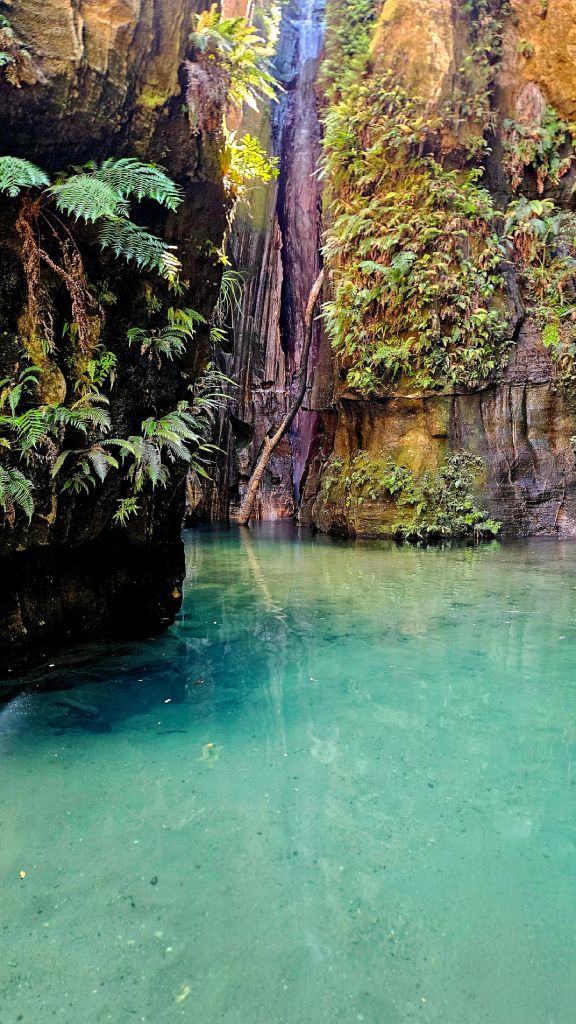
After hiking through the canyon, we made a steep descent into the valley. It felt as if the climate changed every 15 minutes. First, it became very hot, but as the trail entered a shaded canyon, the air turned cool and humid. At the trail’s end, I reached Blue Lagoon and the colder, deeper Black Lagoon, where I went for a swim.
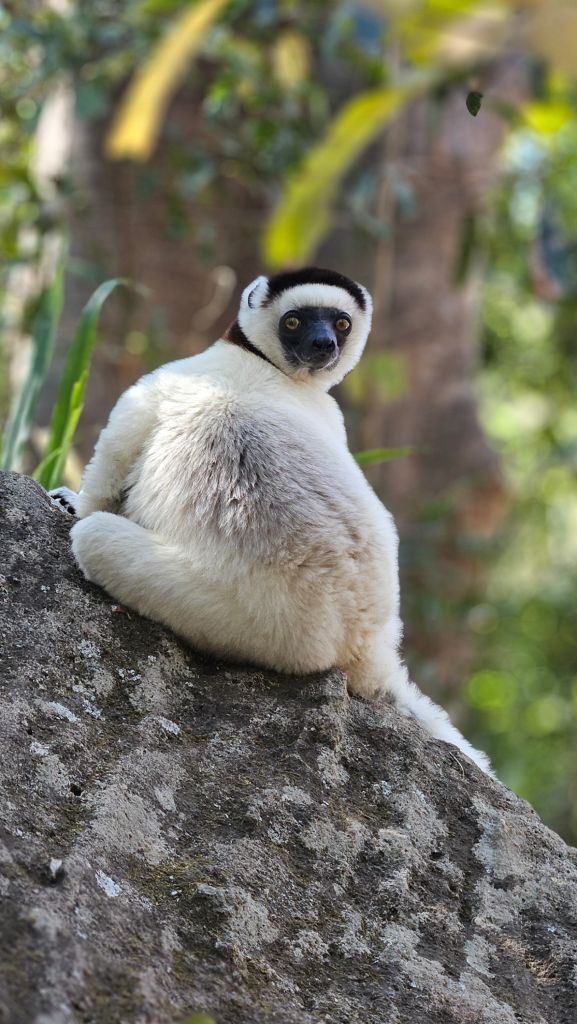
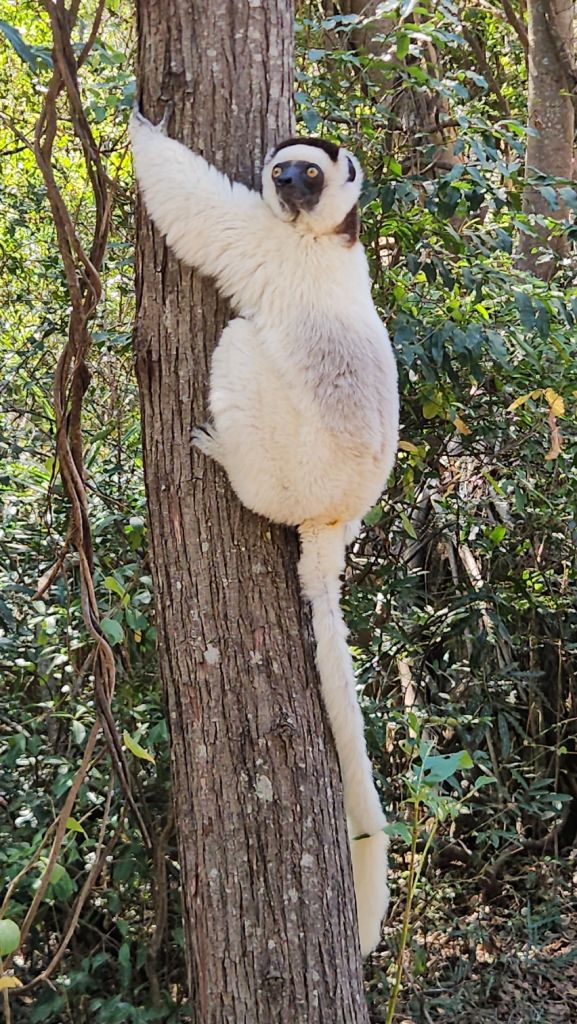
Before returning, I stopped at a campsite where two species of lemurs approached people without shyness. Ring-tailed lemurs and Verreaux’s sifakas came within just a few meters, allowing me to watch them feeding. A red-fronted brown lemur quickly disappeared, so I did not get a chance to observe it more closely.

Mining fever in Ilakaka
In the afternoon, I visited a few other sights nearby.
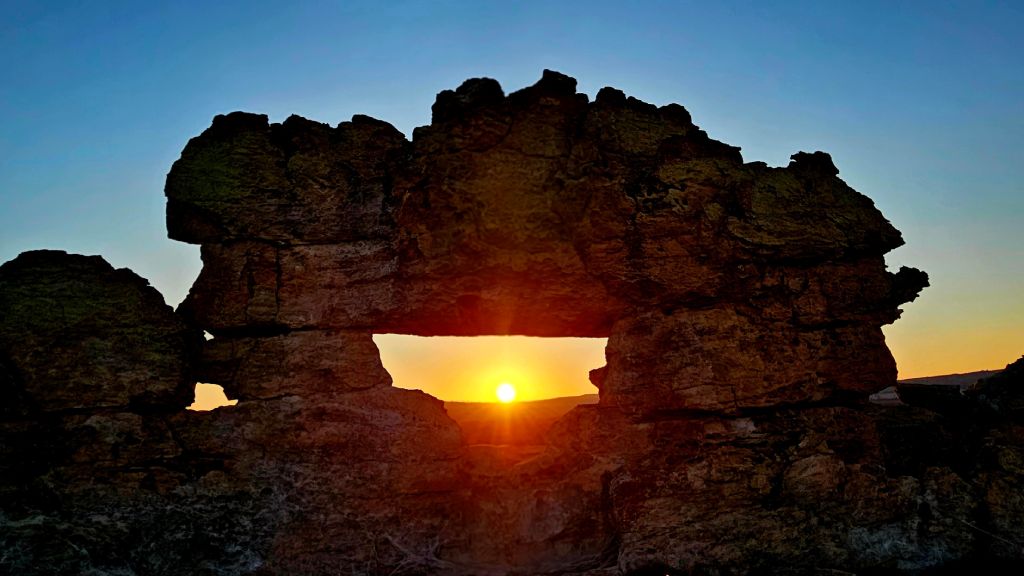
The Fenêtre de l’Isalo (Isalo Window) is a natural opening in the sandstone cliffs, especially popular at sunset when the sun can be seen through the opening. I spotted more tourists than during all my other days combined. The Queen of Isalo is a naturally eroded rock formation resembling a crowned woman and featured on the 1,000-ariary banknote.
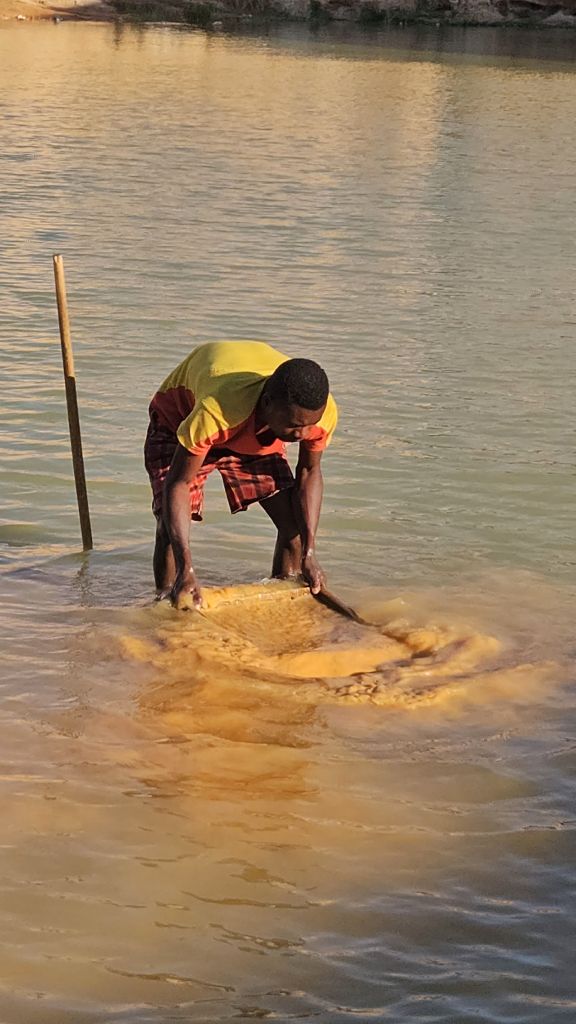
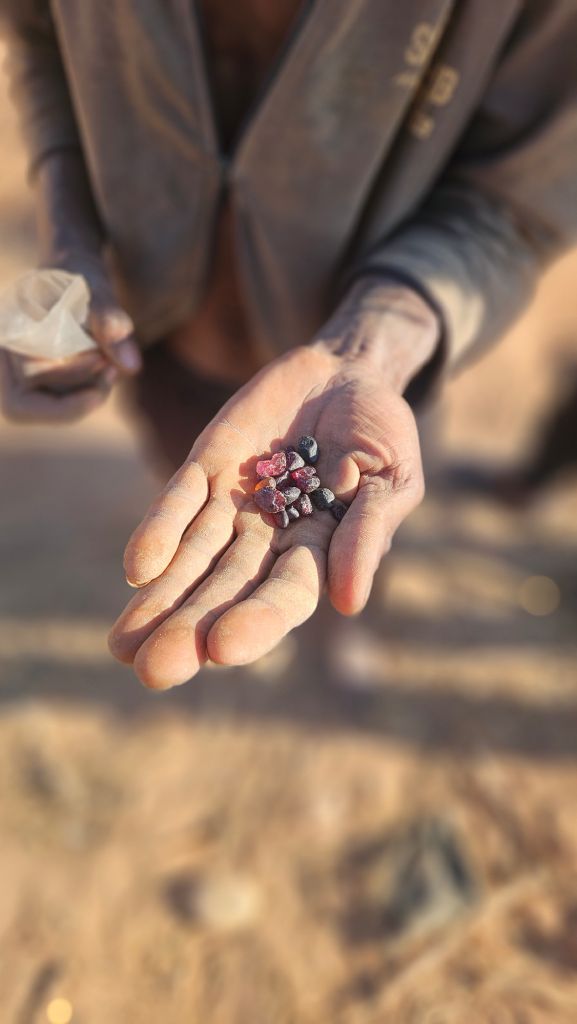
In the nearby town of Ilakaka, I witnessed the mining phenomenon that transformed a small village into a mining town. Ilakaka became famous after sapphires were discovered in the late 1990s. Tens of thousands of miners arrived, turning the small village into a chaotic mining town where people still dig for precious stones today.
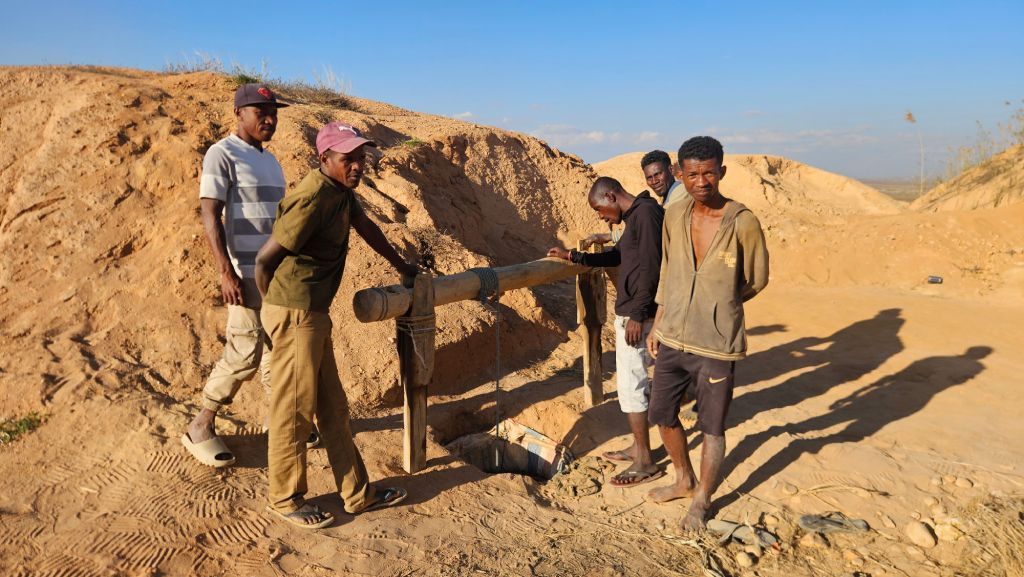
Deep shafts are dug into the soft ground.
“This shaft is 20 meters deep, and from the bottom a horizontal tunnel runs about 50 meters in this direction,” one of the young miners explained.
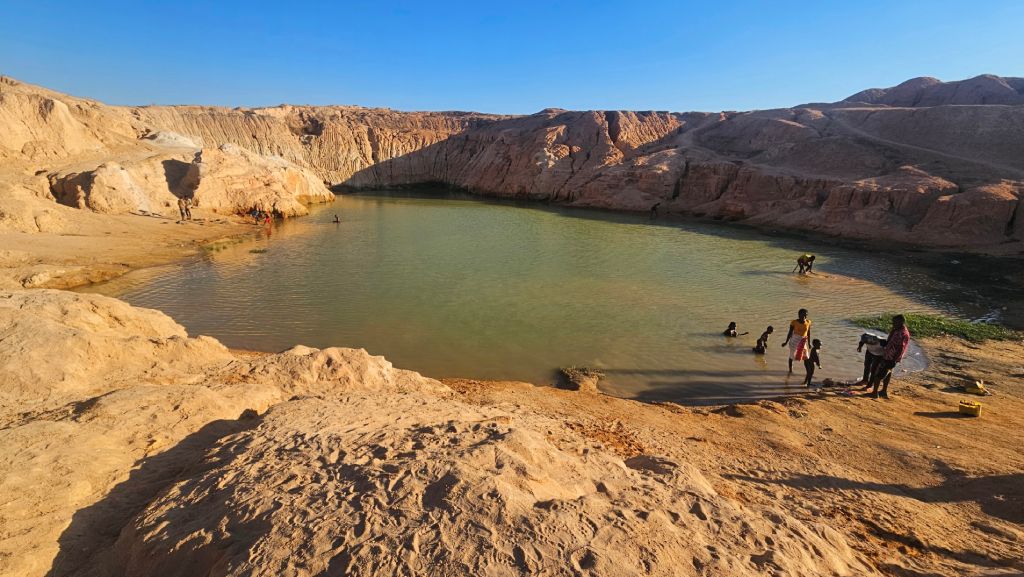
Using a simple pulley with a rope, a miner descended into the shaft, from where bags of sand were later hauled up. The sand is then taken to a nearby lagoon, where it is washed in search of precious stones.
It is a simple process, but also a dangerous one, as the tunnels can easily collapse because of the soft, gravelly ground.
“We work together and divide the profits at the end of the day. Each of us gets around 100,000 ariary,” one of them explained. About 20€ a day is a lot of money in Madagascar.
Today, only a few thousand miners remain in Ilakaka, since the main mining rush is over.
Vanilla plantation in Ranomafana
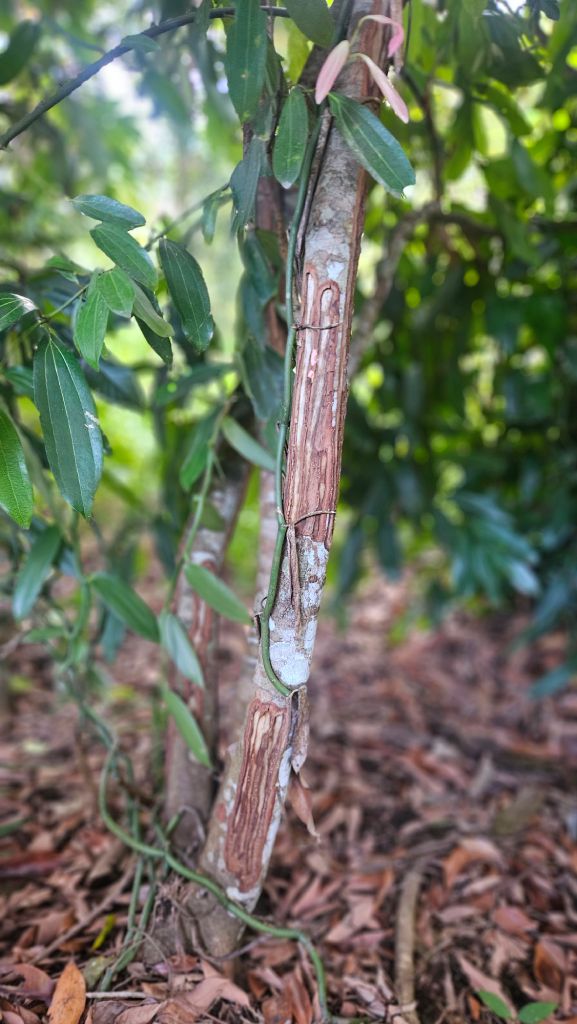
Ranomafana is a small village serving as a base for the famous national park. Surrounded by tropical forest, it is green, humid and rainy. I couldn’t find a decent restaurant in the village, as most were rather unhygienic, with food left on display for hours.
While walking through the village, I was approached by a vanilla seller.
“There is a small vanilla plantation at the end of the village. You can go and have a look!” he told me.
“I have no idea where it is, so come with me and show me!”
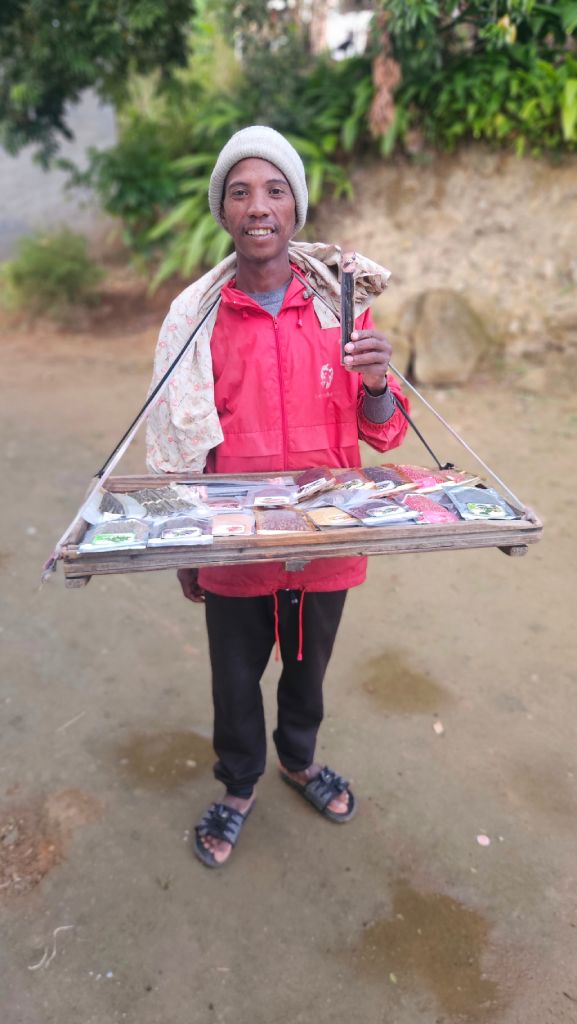
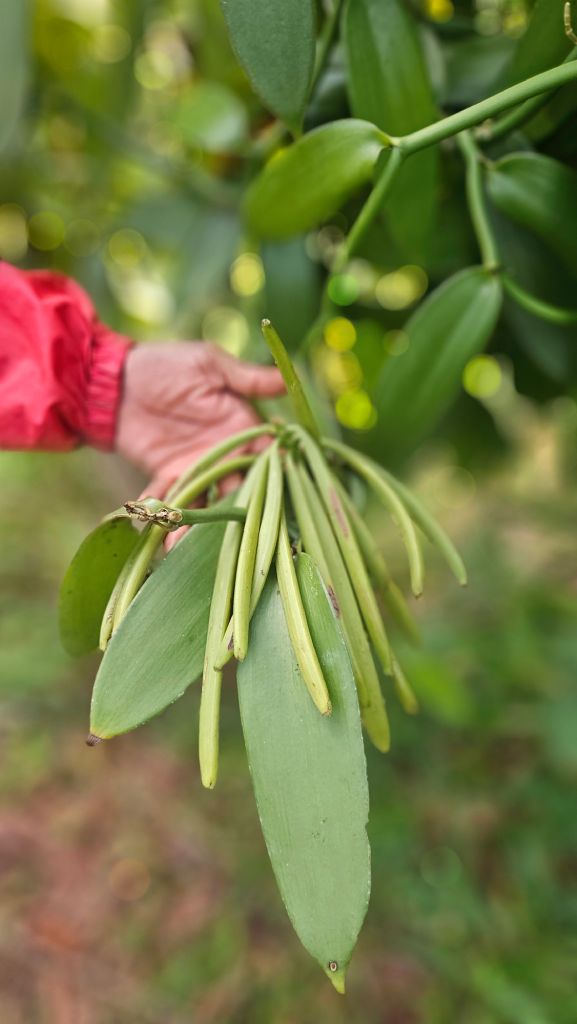

We walked together to a small plantation, where I learned about the production of this special plant.
Vanilla comes from the fruit of an orchid, and each flower must be pollinated by hand.
The pods are then dried and cured for several months, which gives them their familiar aroma and flavor. Madagascar produces around half of the world’s vanilla, making it the world’s leading vanilla producer.
Another attraction and exciting activity on my Madagascar travel journey.
Lemurs and overloaded bus
When I woke up at 6:40am, I wasn’t sure it was worth visiting the park. Wet ground and light rain made me doubt I would see any lemurs.
While looking for breakfast on the main street, I was approached by a guide who already had a motorbike ready to take me to the park entrance.
“Let’s go, I’m ready!” he invited me.
“The weather doesn’t look very promising. I’m not sure,” I replied.
“It’s OK, don’t worry. It’s cloudy, but still good for spotting lemurs.”
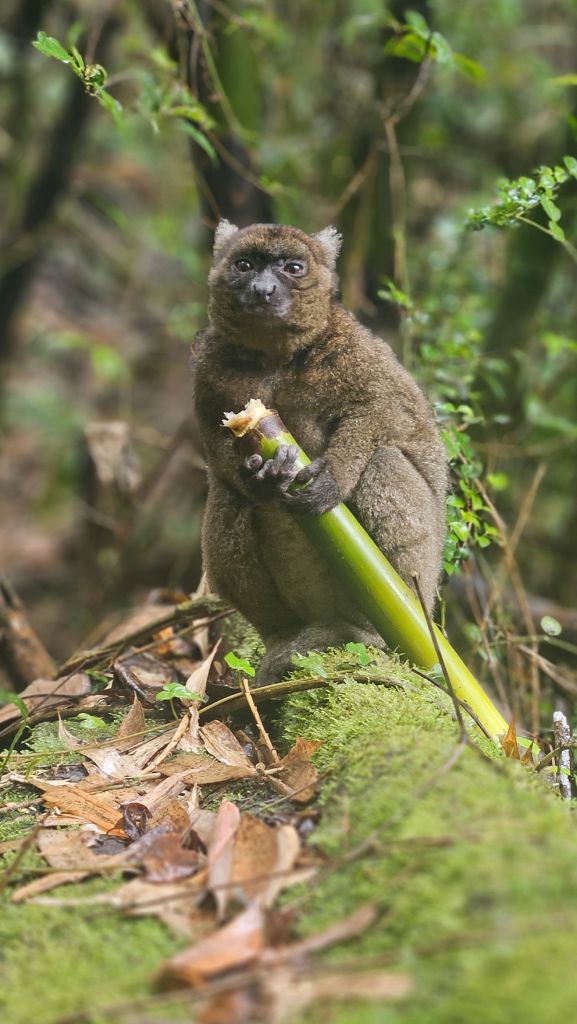
So, we went. During three hours of walking, I saw four species: golden lemur, lesser bamboo lemur, greater bamboo lemur and black-and-white ruffed lemur. Some were high in the trees, but I got very close to a greater bamboo lemur, reportedly the rarest in the park, with only one left. It was fascinating to watch it fearlessly chew bamboo until it dropped it and quickly disappeared into the branches.

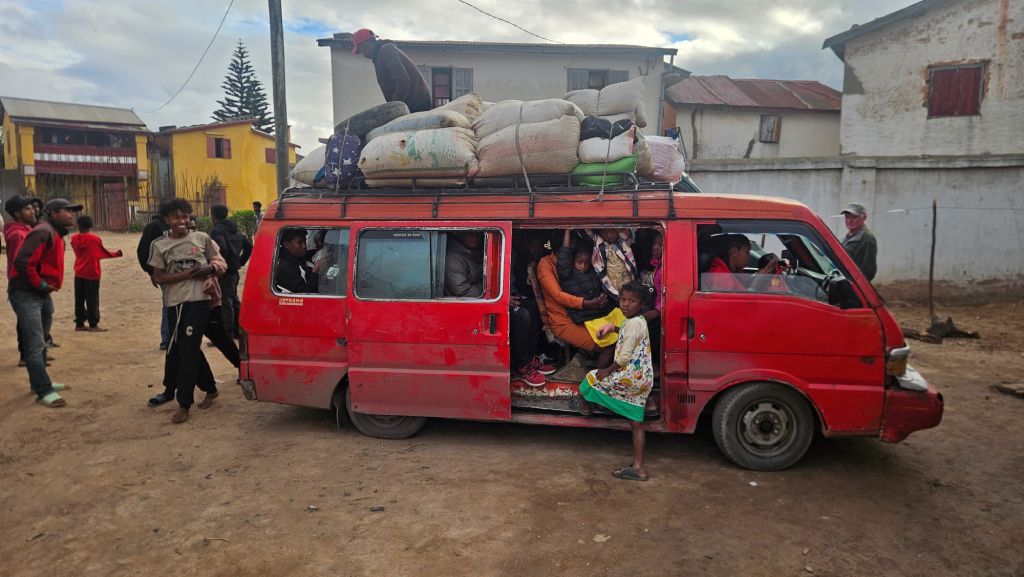
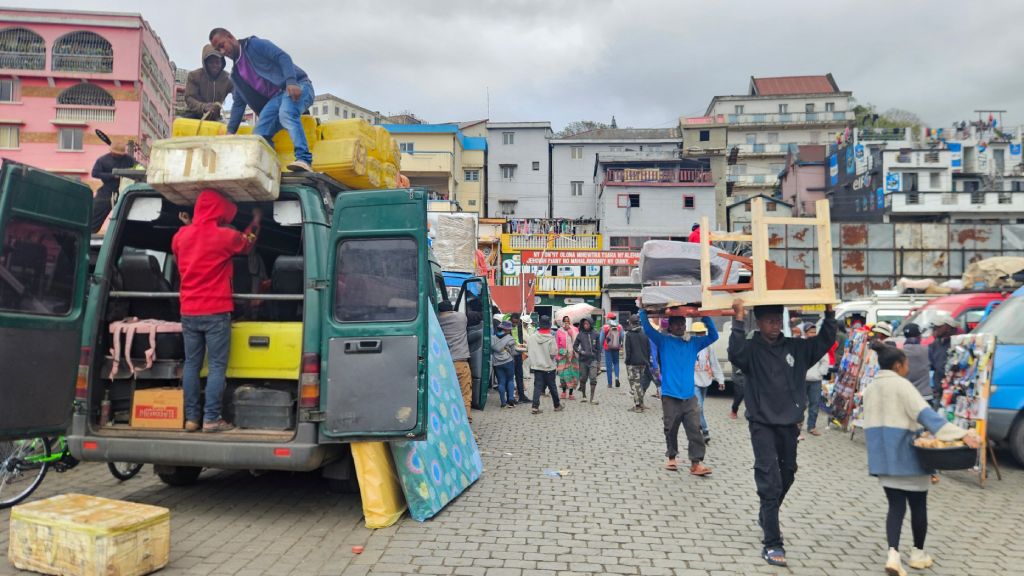
Back in the village, I had something to eat and started looking for a bus to Fianarantsoa. After almost an hour, one finally arrived with a few empty seats, but an incredible number of people squeezed inside.
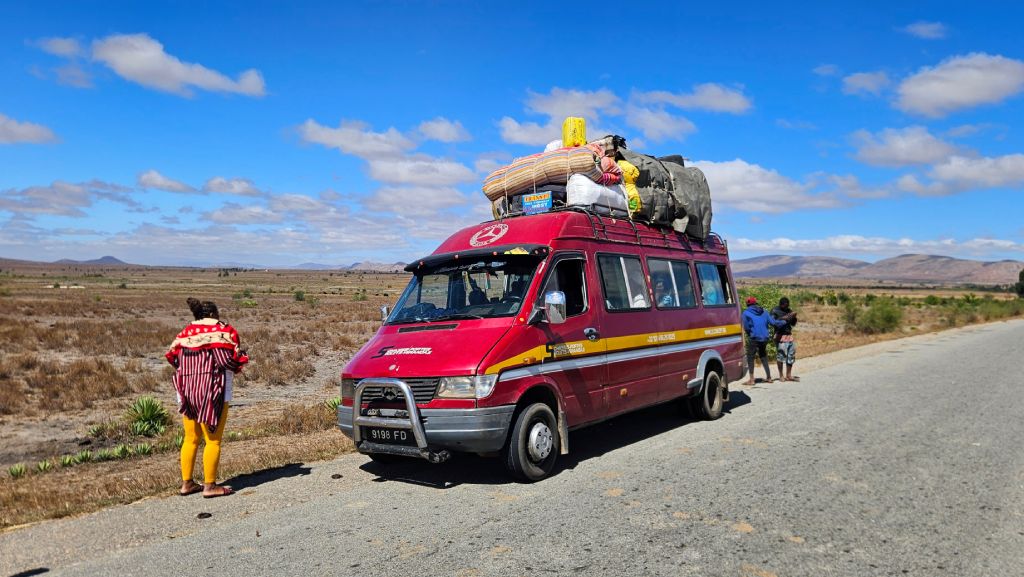
Passengers sat on top of each other, hanging from the open doors, while the roof was packed with cargo.
I had never seen such a crowded bus during my Madagascar travel adventure. It was Sunday, and there were no police checks, which were usually very common.

28 hours bus journey
When I planned my Madagascar travel adventure, I knew I would have to make at least one long bus journey. Fianarantsoa and Morondava are 544 kilometers apart according to Google Maps, with a theoretical driving time of 11 hours. As always in Madagascar, reality is quite different, especially when travelling by public transport, or taxi-brousse.
Since there is no direct connection, I had to travel via Antsirabe, increasing the distance to 728 kilometers. I planned to stop in Antsirabe overnight, but eventually completed the journey in one day, changing buses along the way.
I left my hotel at 7:45am, heading to the chaotic central bus station in Fianarantsoa. I hoped the journey would take just over 24 hours.
In reality, this is how it went:
7:45am — I take a taxi-moto from my hotel to the bus station.
8:15am — The taxi-brousse (bus) leaves the Fianarantsoa station. It’s only half full.
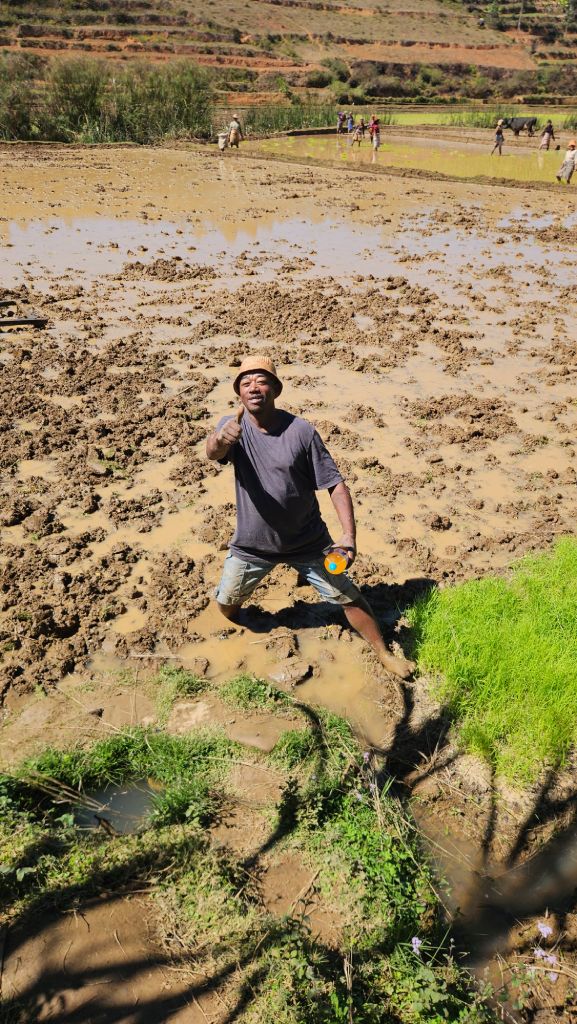
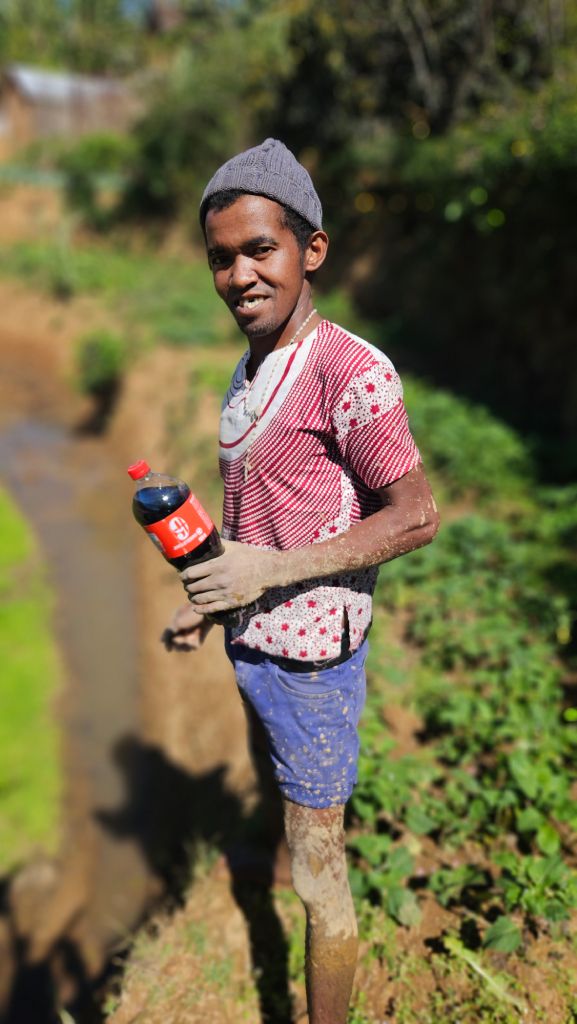
9:45am — Smoke starts from the rear tire. We pull over to fix it. I walk around the nearby village, watching men cutting wood and people working in the rice fields. I buy them fizzy drinks; their gratitude and smiles make the unexpected delay worthwhile.
10:45am — The bus is finally fixed, and we continue our journey toward Morondava.
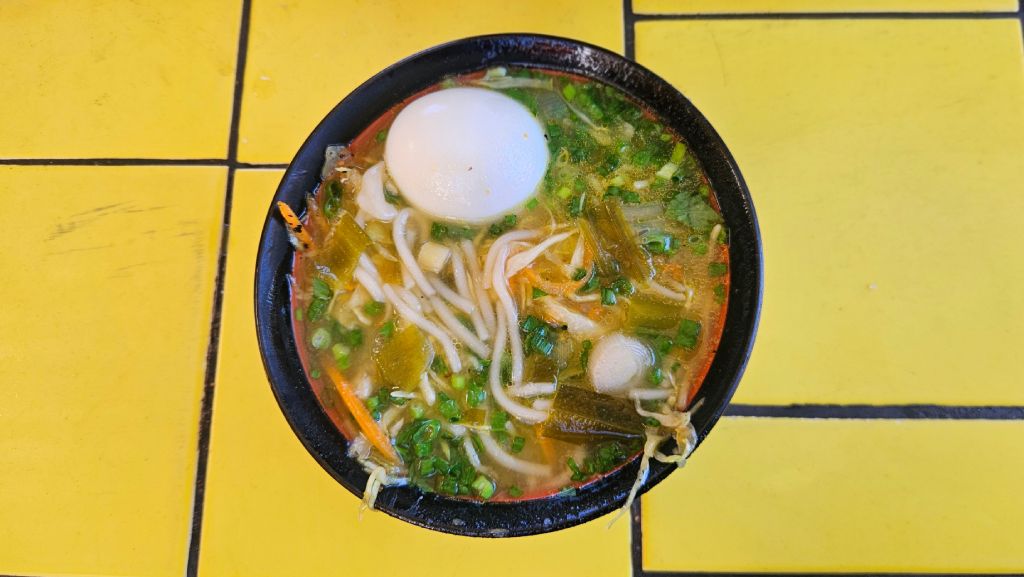
12:15am — We stop for a lunch break. I have a vegetable noodle soup for 0.75€ and buy a bunch of peanuts for 0.40€.
2:35pm – We pass Ambositra, the first major town, where I notice many improvised brick factories between the rice paddies.
5:40pm – We reach Antisarabe just before the sunset. A bustling city is packed with tuk-tuks and pousse-pousses (rickshaws).
728 kilometers later
6:30pm — It’s already dark at the bus station, so I follow the light of a vendor to find my next bus. After changing buses, I continue towards Morondava; surprisingly, the whole process is quick, but there’s no time for dinner!
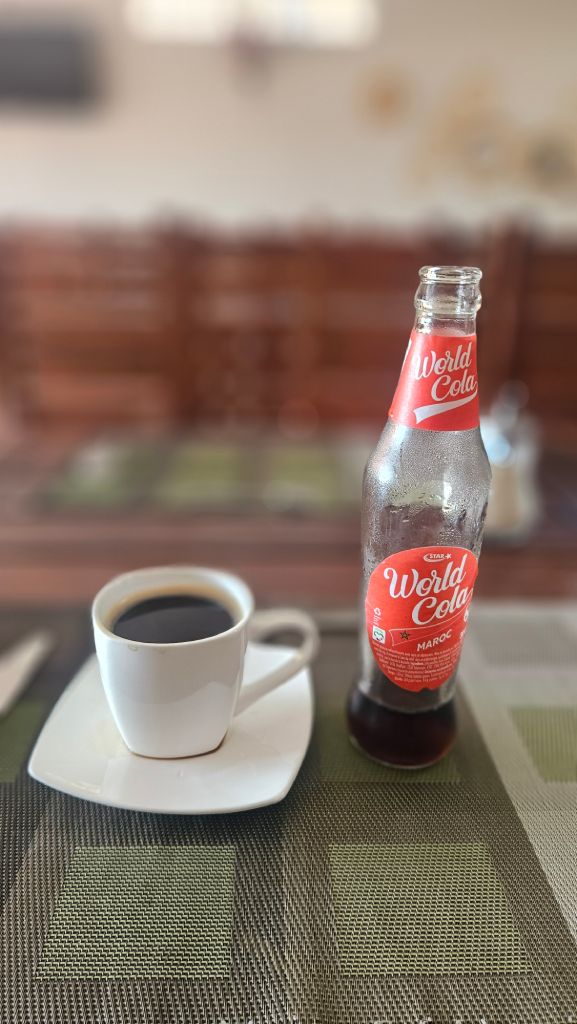
11:00pm – After continuous stops to pick up passengers and load cargo, we stop for dinner. By then, my stomach is starting to hurt and the first signs of diarrhea appear. I follow my usual diet in situations like this: Coke and biscuits. I take my first anti-diarrhea pill.

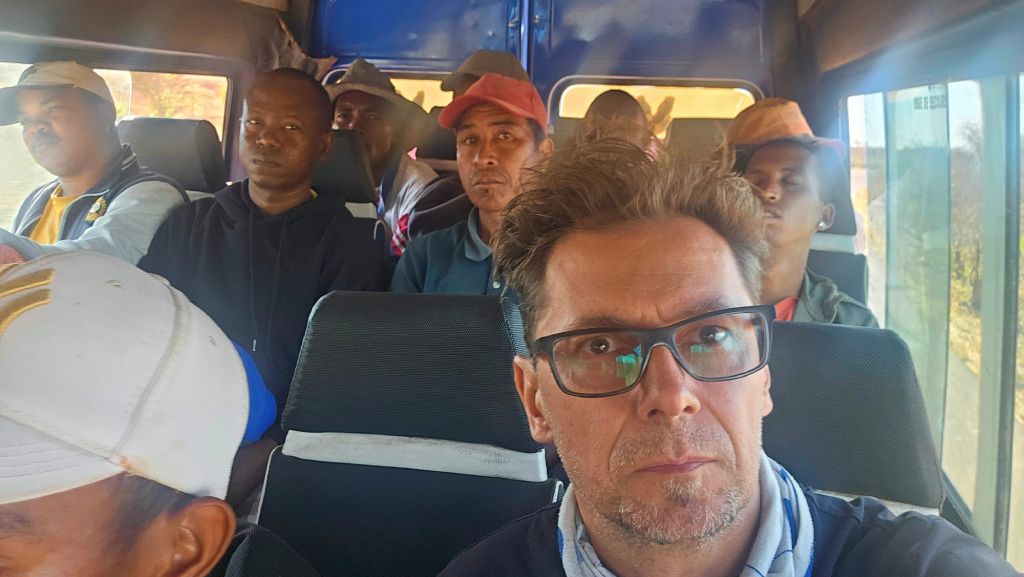
6:15am – During the night, I am half awake and half asleep. My head keeps falling forward and I repeatedly hit against the broken window support. The bus stops several times. My biggest concern is the diarrhea, which I can fortunately still control while sitting.
11:45 am – I get off the bus in Morondava and quickly walk to a nearby hotel. Half asleep, I order a bottle of World Cola and a black coffee to get myself back together. Then I rush to the toilet, where the real battle with diarrhea is only beginning.
Distance covered in 28 hours: 728 kilometers.

Meeting Vezo fishermen in Morondava
Morondava and its famous baobabs are among Madagascar’s best-known attractions and a true landmark of the country. I saved them for the end of my trip, as a reward after the long bus journey.
First, I rested, enjoyed some good food and tried to get my diarrhea under control.
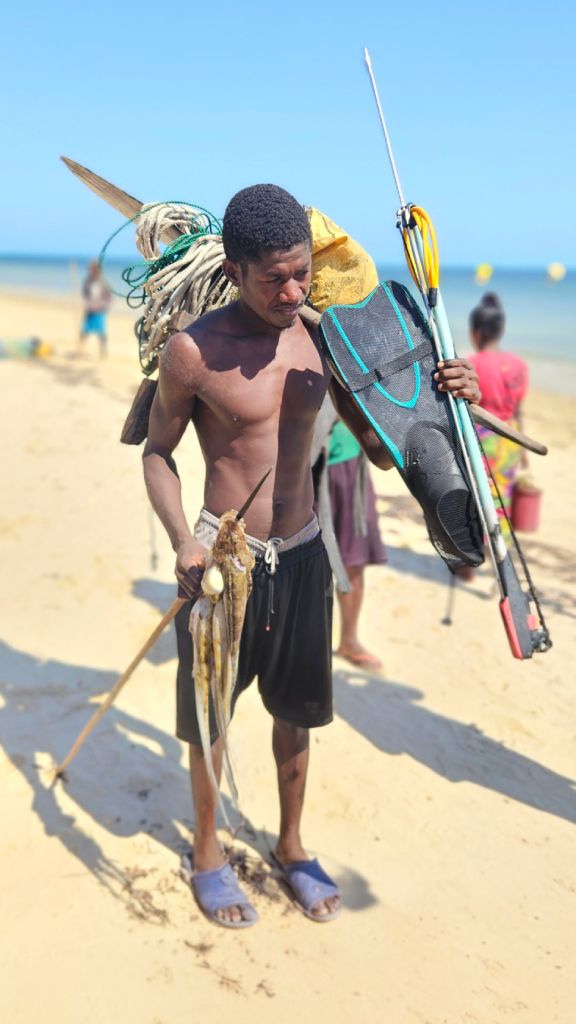
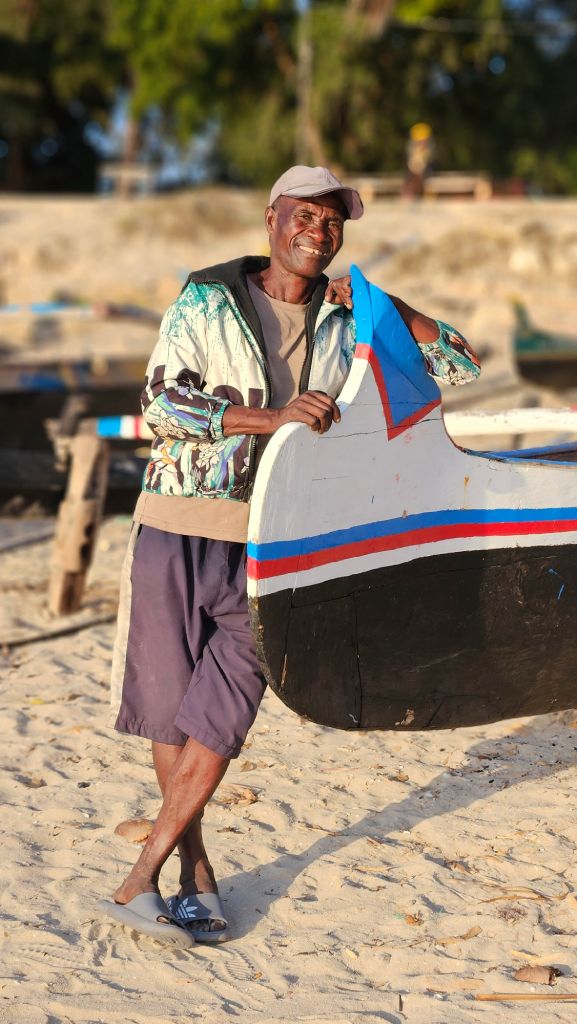
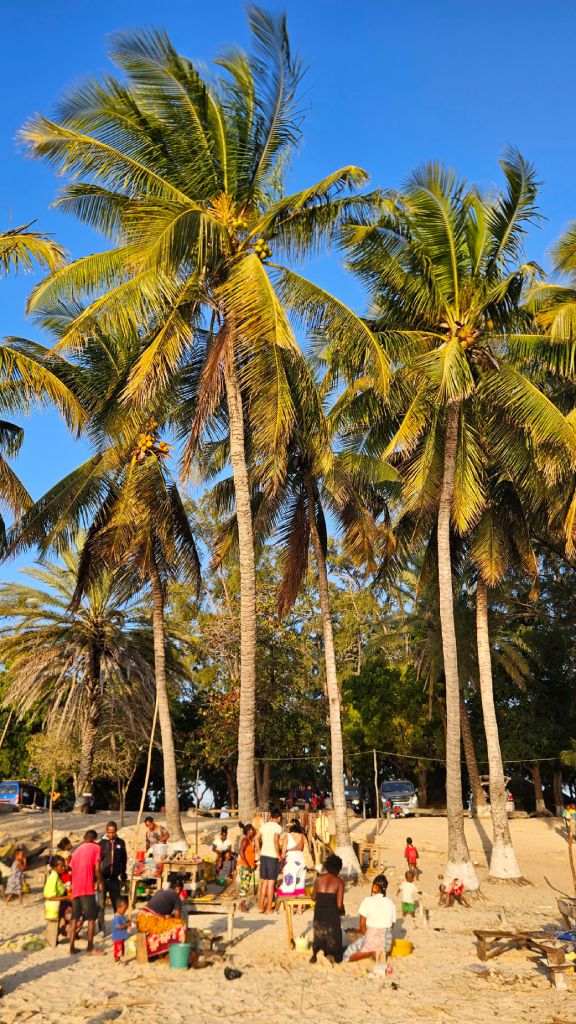
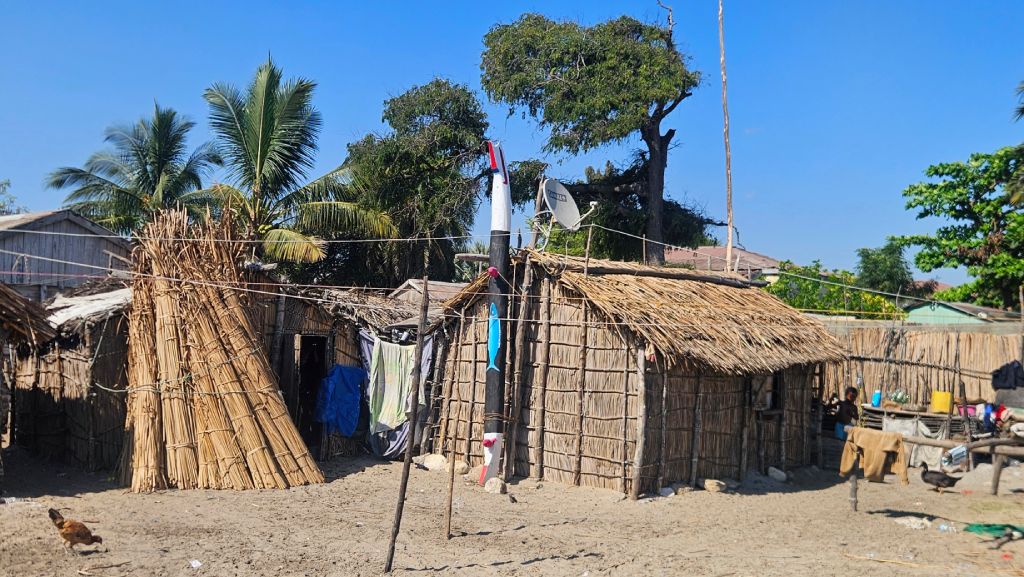
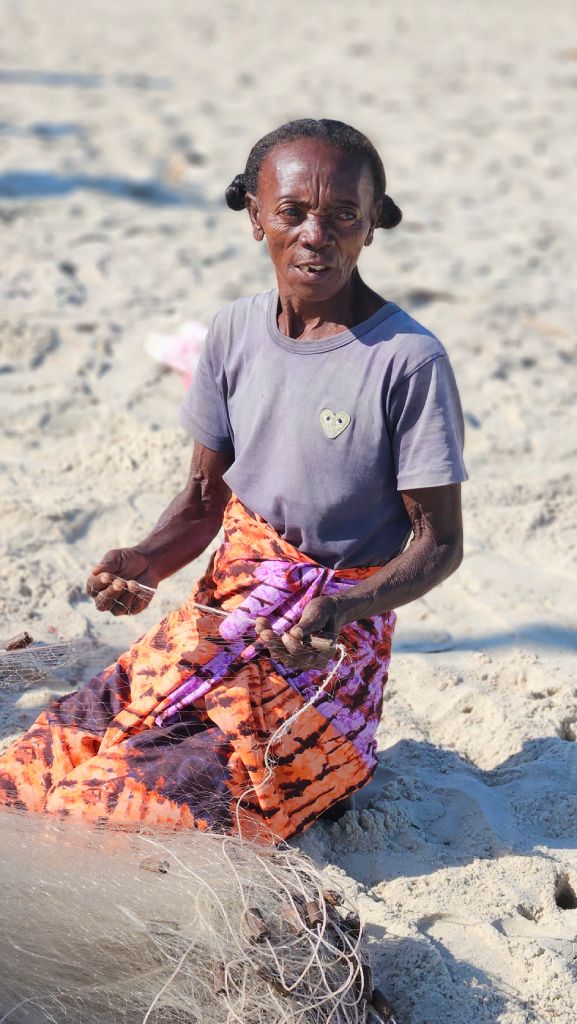
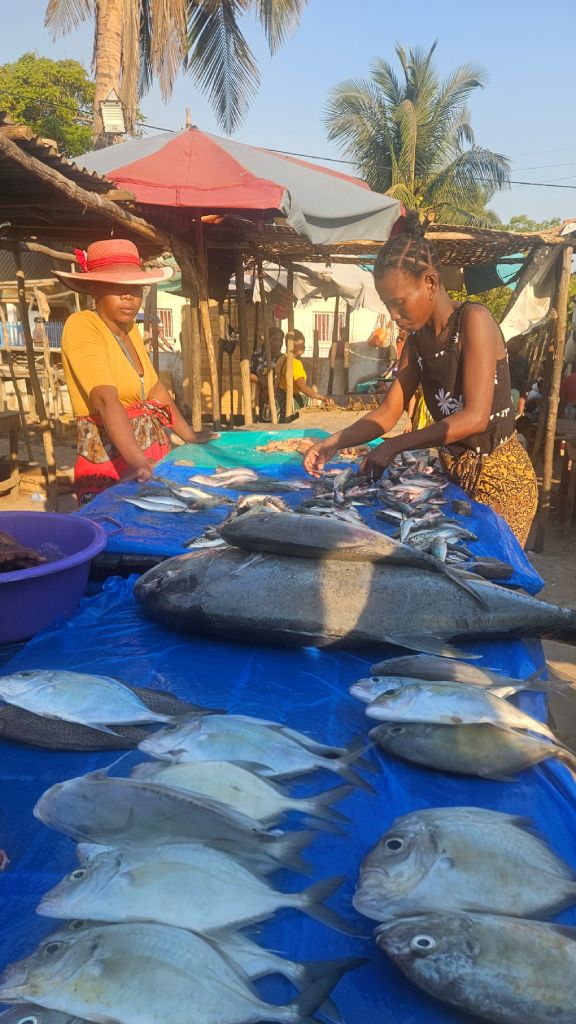
Morondava has a long fishing tradition. While walking along the beach, I spotted Vezo fishermen, women selling fish, and children playing in the sand.
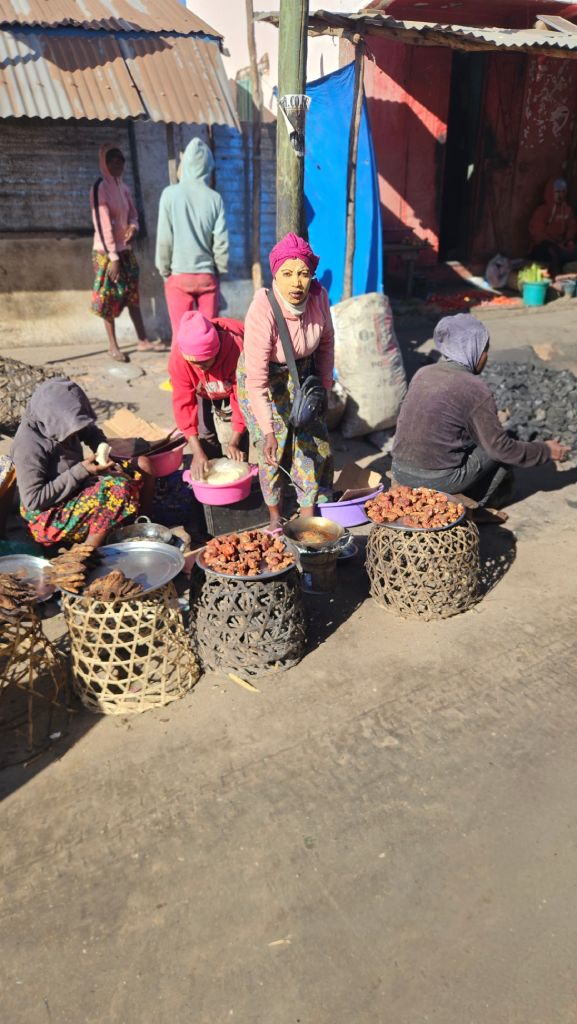
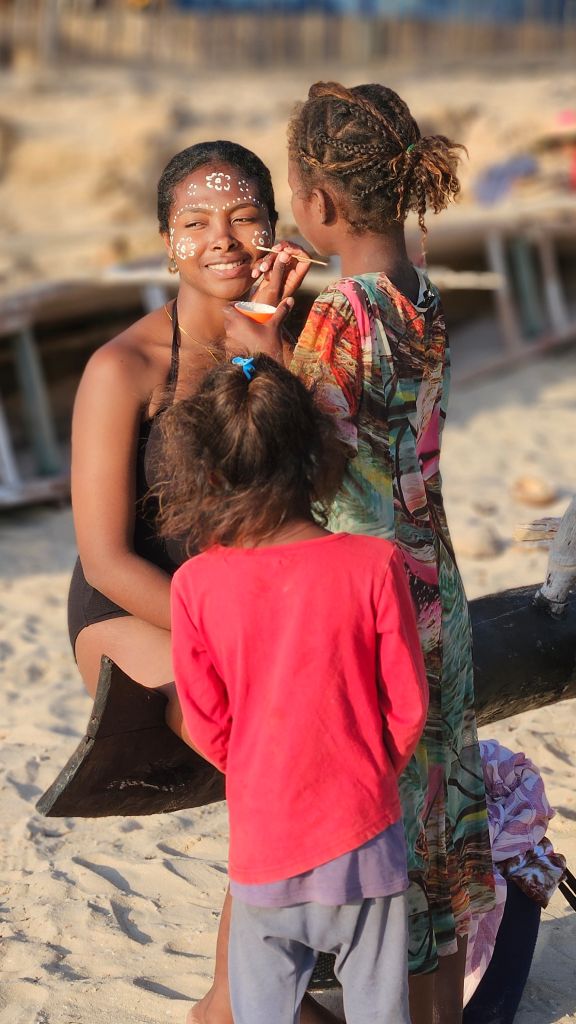
Many women cover their faces with thick yellowish Masonjoany, made from sandalwood powder mixed with water. Traditionally used as a beauty mask and facial decoration, it also cools the skin and protects it from the sun.

Sunset at the Avenue of Baobabs
The famous L’Avenue des Baobabs is located about 20 kilometers from Morondava. Since tuk-tuks are not allowed to go there anymore, I had to hire more expensive taxi for the sunset.
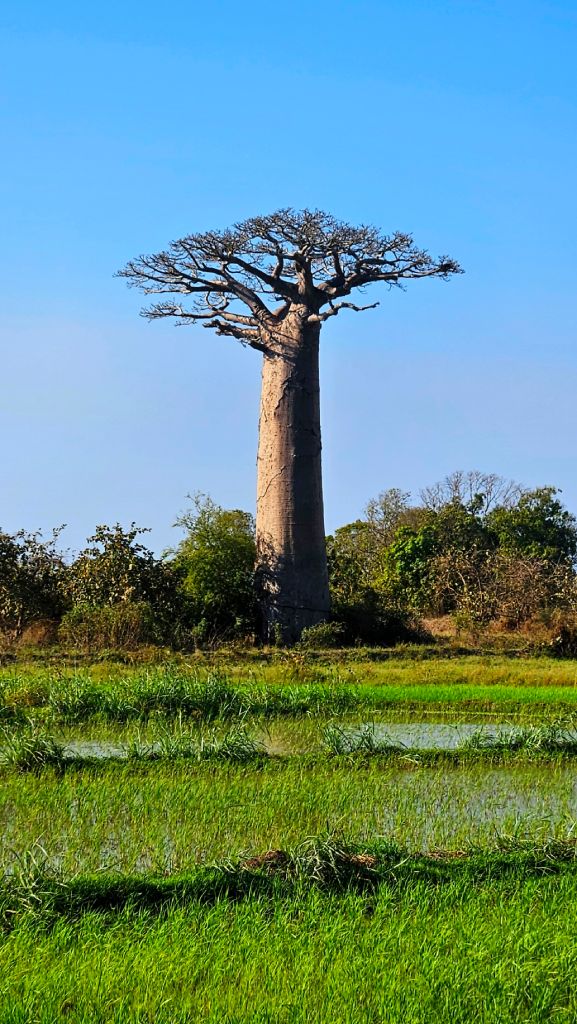
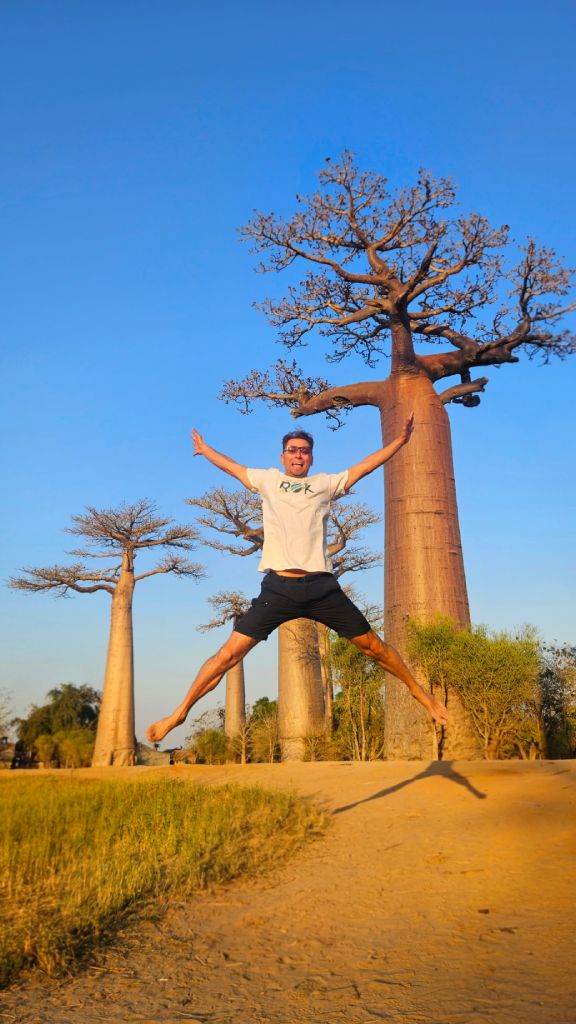
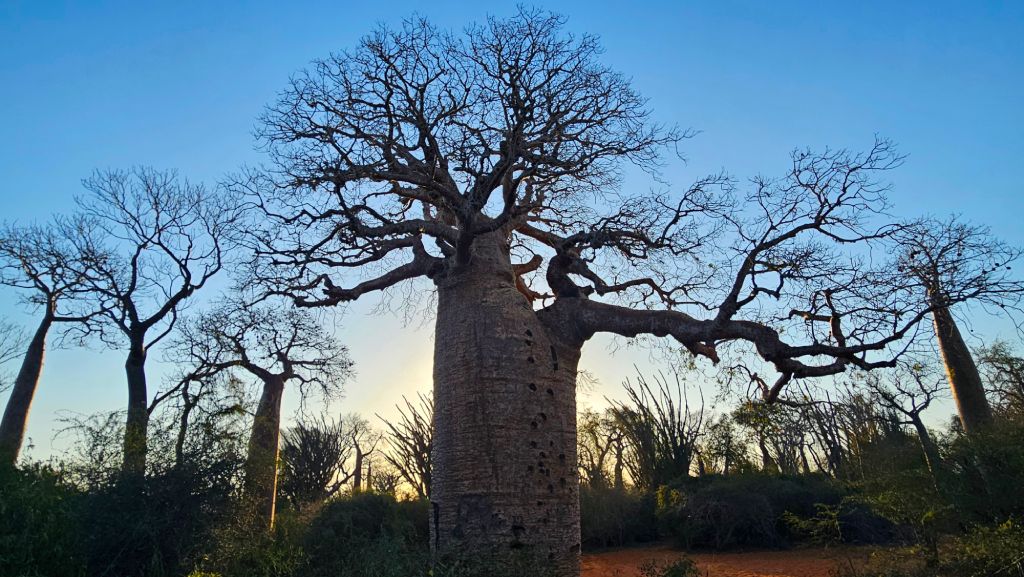
The 300-meter road is lined with approximately 25 huge baobabs, some centuries old and reaching 30 meters high.
I spent the late afternoon walking up and down the road, looking at baobabs from different angles and distances. By sunset, around 200 visitors had gathered, mostly Malagasy and Chinese tourists.
The avenue became a protected natural monument in 2007, but by then most of the surrounding forest had already disappeared. Rice fields and cattle farming have completely changed the landscape. Dense dry forest was mostly gone, leaving large baobabs that were difficult to cut down and provided shade.
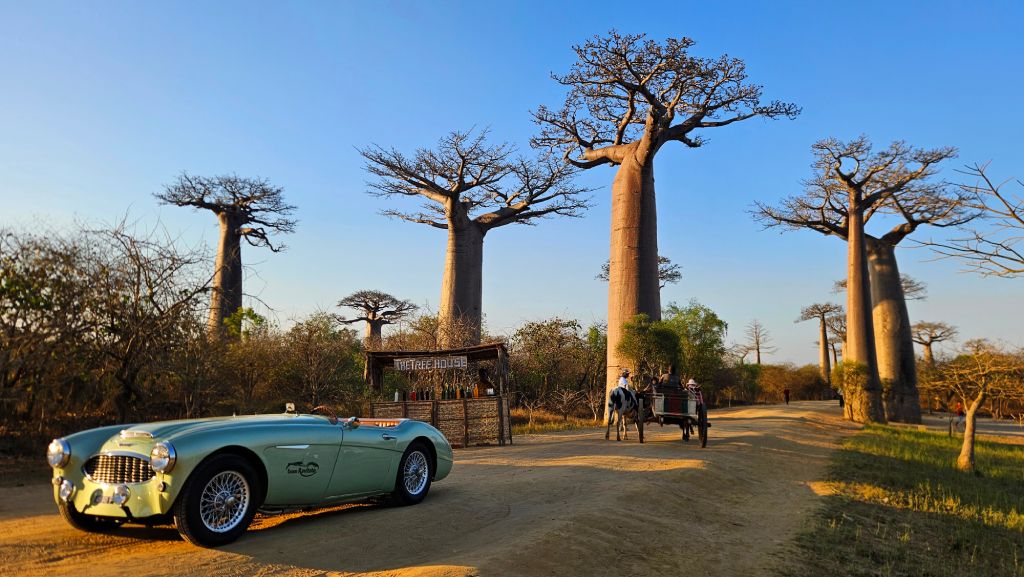
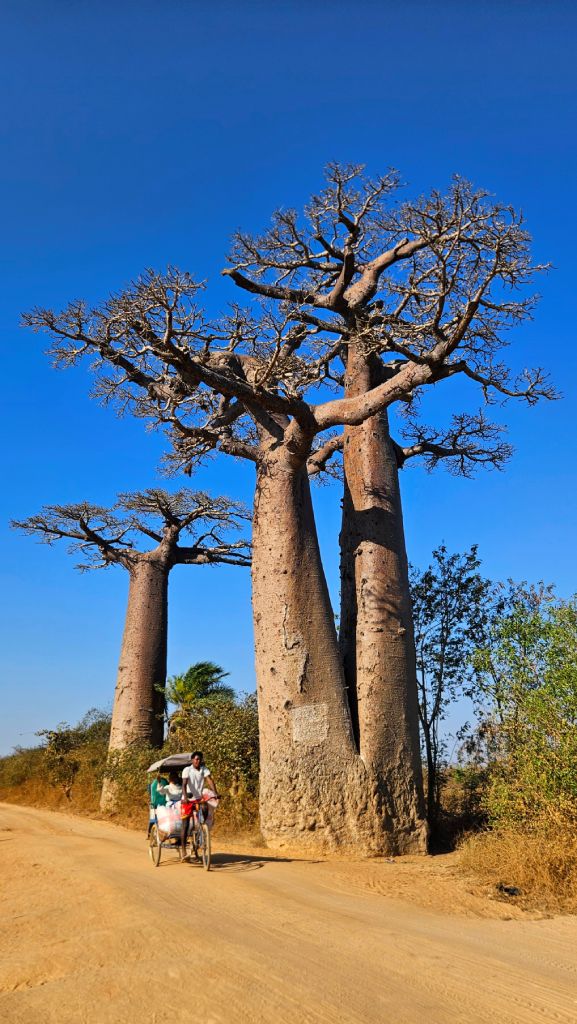
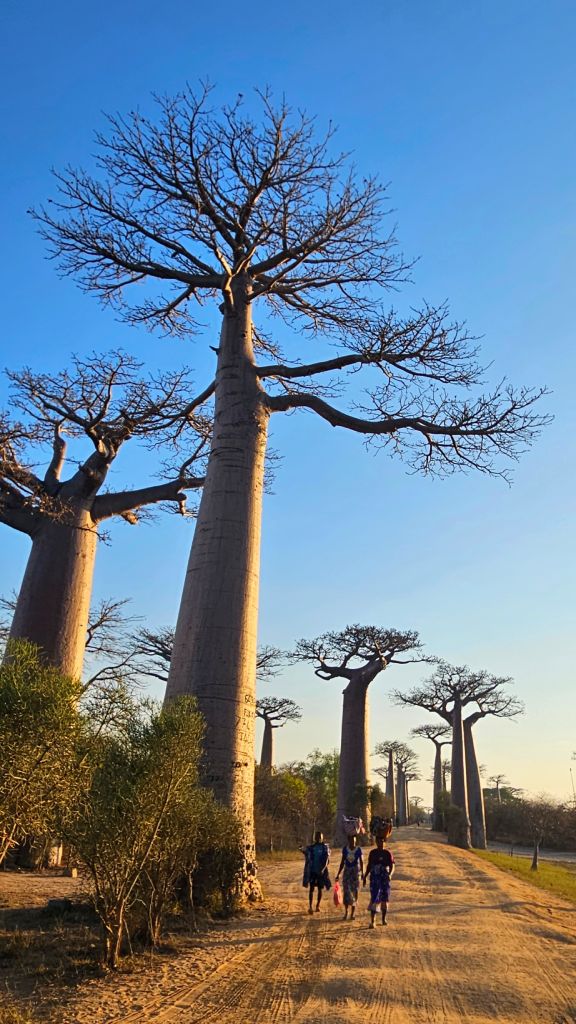
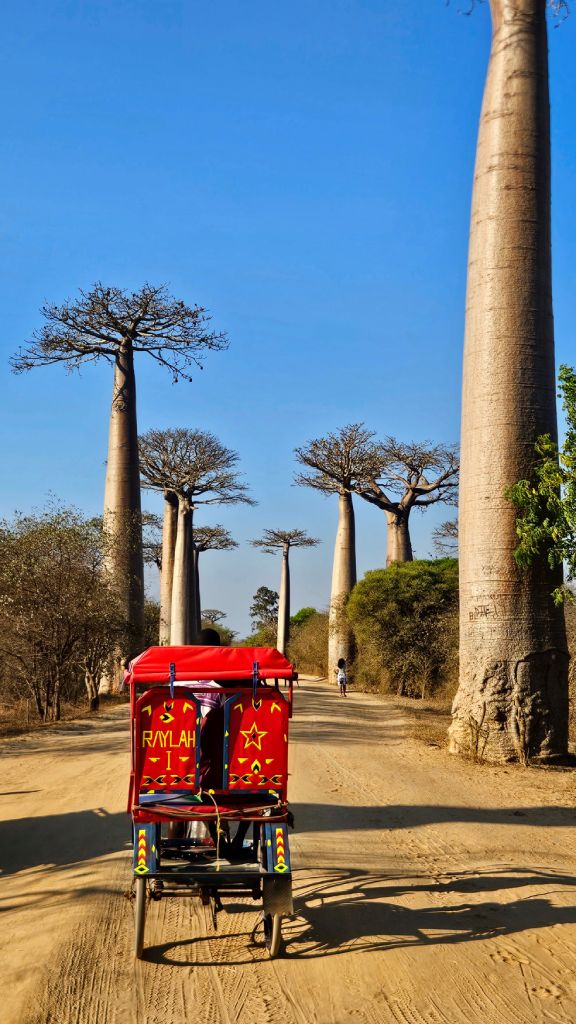
Standing among these enormous trees, I understood why they had become such an important landmark of Madagascar. At sunset, their unusual shapes stood out even more, although hundreds of visitors made it far from peaceful.
The next morning, I returned for sunrise. It was slightly less magical, but there were ten times fewer visitors. The Avenue of Baobabs is definitely one of the most special places to visit on my Madagascar travel adventure. The best thing to do is experience it at sunset.

Akamasoa - from a dump to a community
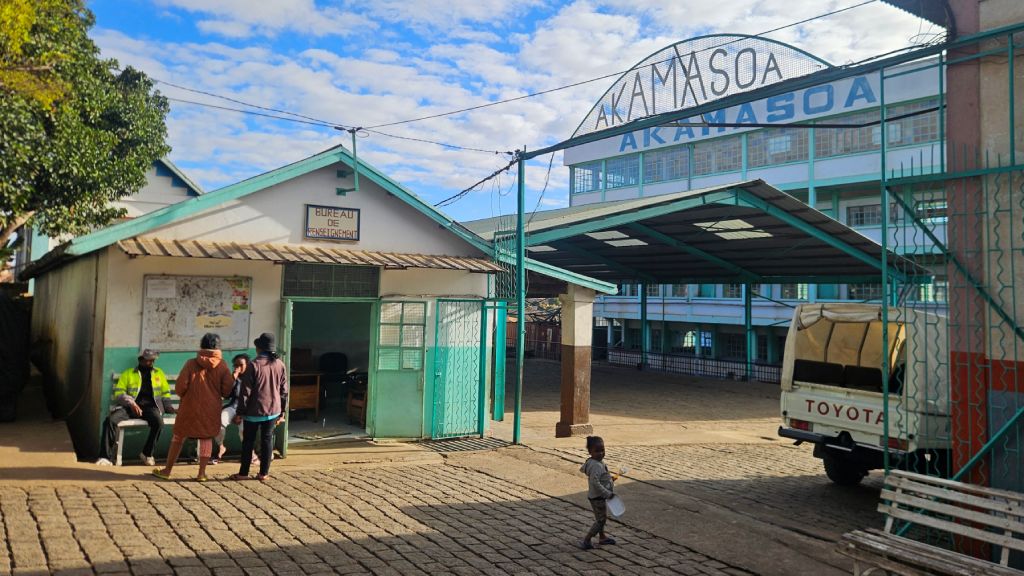
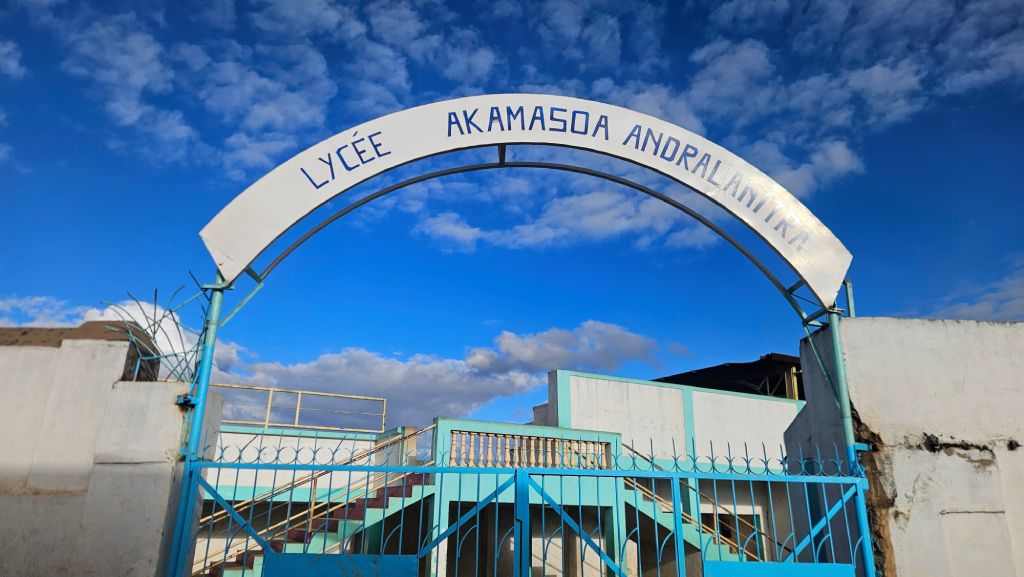
The last stop on my Madagascar travel adventure was Akamasoa, a unique neighborhood on the hills outside Antananarivo.
Argentinian-Slovenian Catholic missionary Pedro Opeka arrived in Madagascar in the 1970s to work with poor communities. In 1989, while working in Antananarivo, he discovered a huge landfill where around 1,000 people lived among the rubbish, searching for food.
Instead of simply giving them food, Father Pedro asked them a different question:
“Would you work with me to build a different life?”

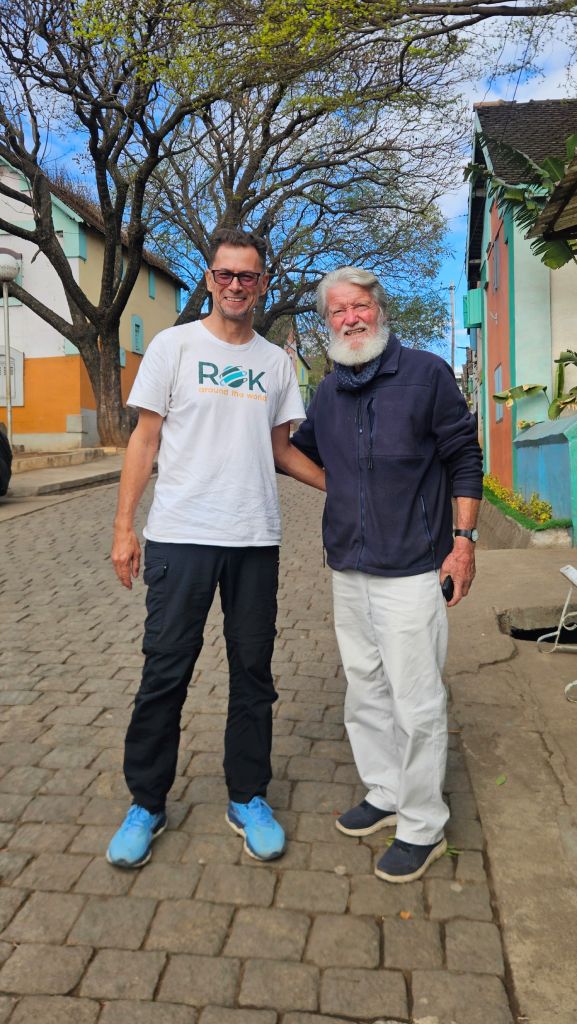
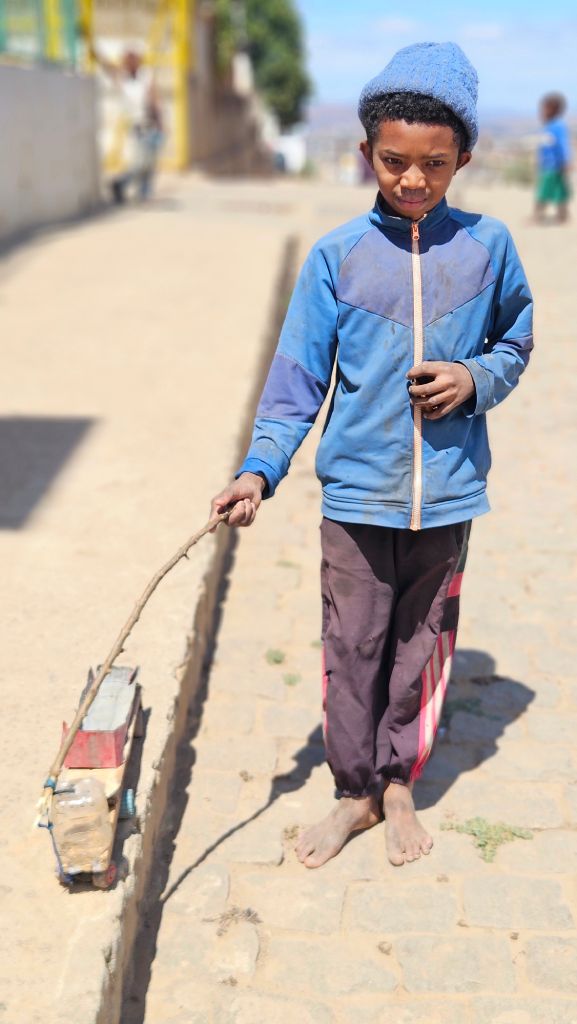
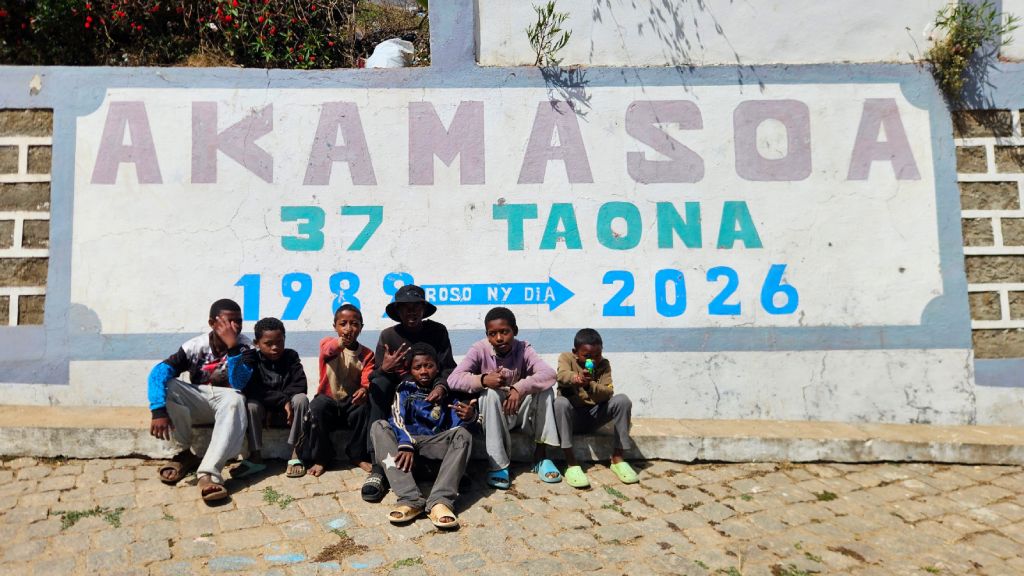
That same year, he created Akamasoa (good friends in Malagasy). The idea was simple: housing, work, education and dignity instead of permanent dependence on aid.
People living on the dump started working in quarries, construction, agriculture and workshops. They made bricks, stones and other building materials and slowly started building their own houses.
Pedro’s legacy during my visit, 35 years later, is impressive.
Akamasoa has built 22 villages, with more than 40,000 people living in over 5,000 houses.
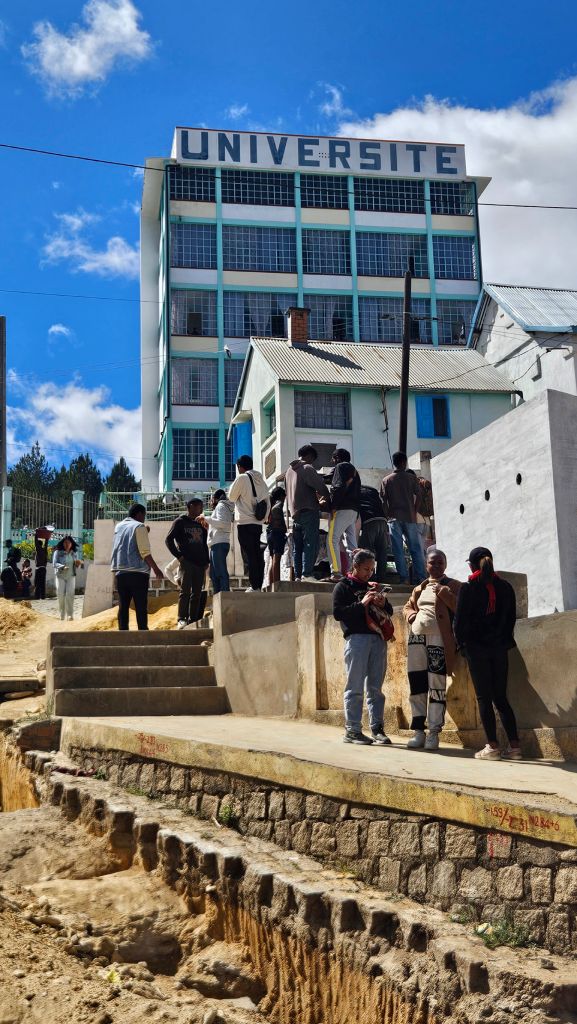
More than 500,000 Malagasy people have received help, while over 21,000 children attended its schools in 2025. They built a real town with a hospital, schools from primary to university, sports facilities and a culture of living together safely.
With the idea of helping people build a better future through work, Akamasoa became much more than a charity. It is a pleasant community with homes, schools, jobs and healthcare.
Life in Akamasoa
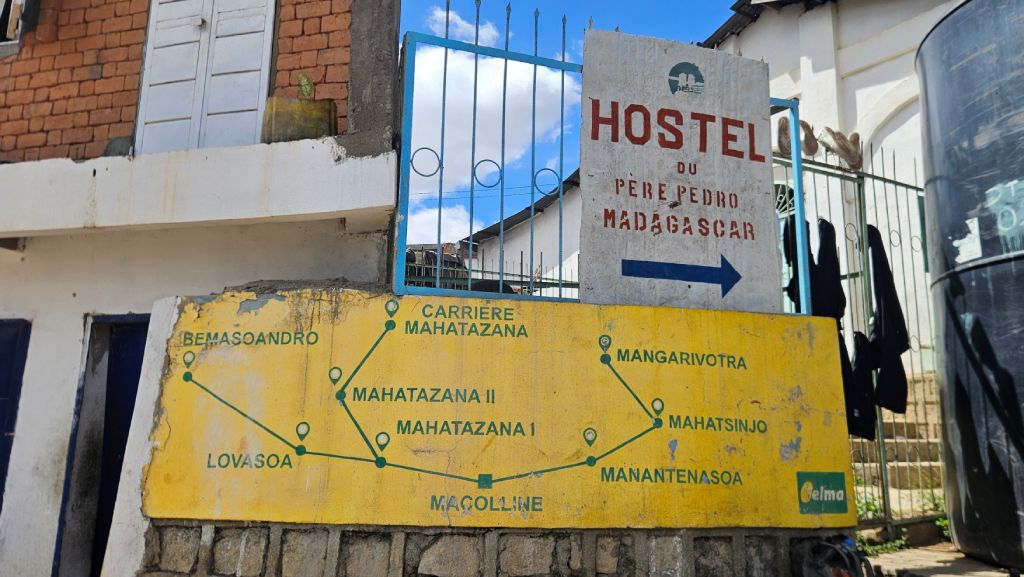
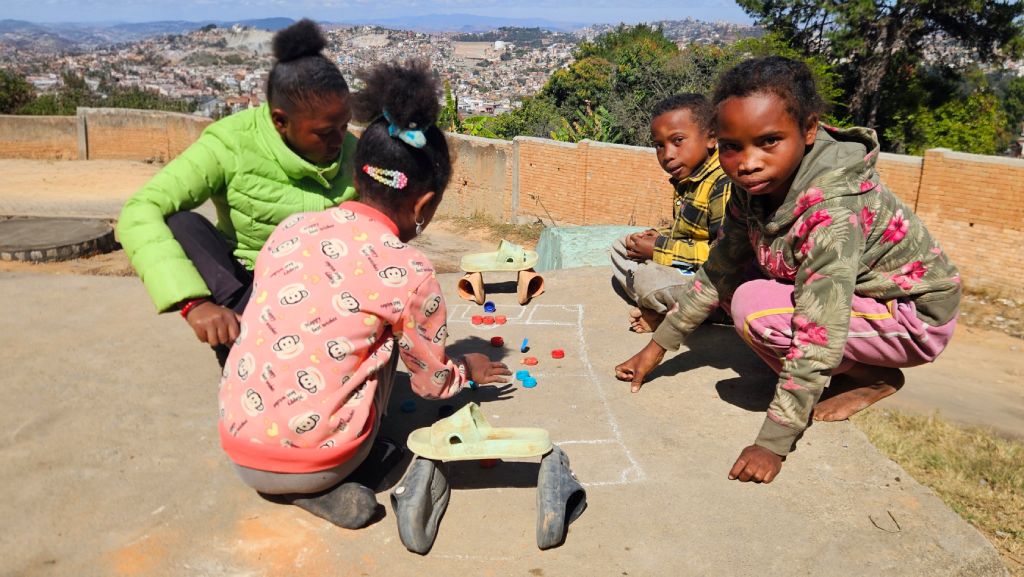
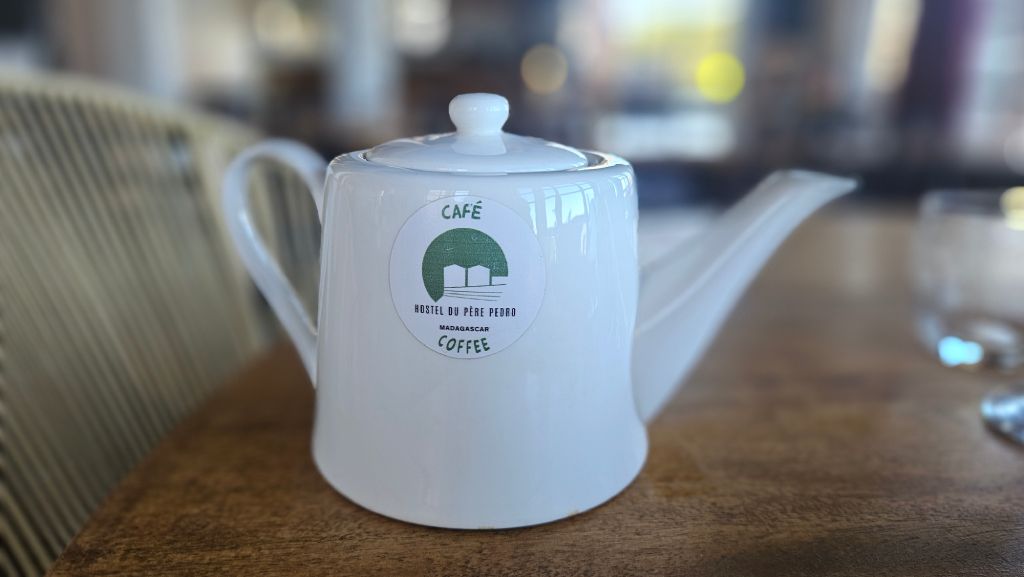
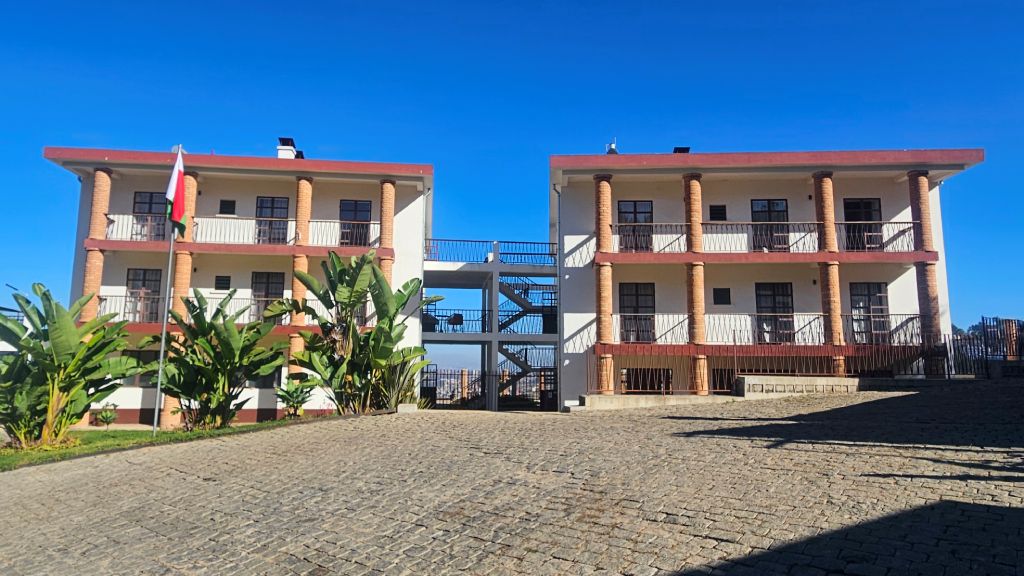
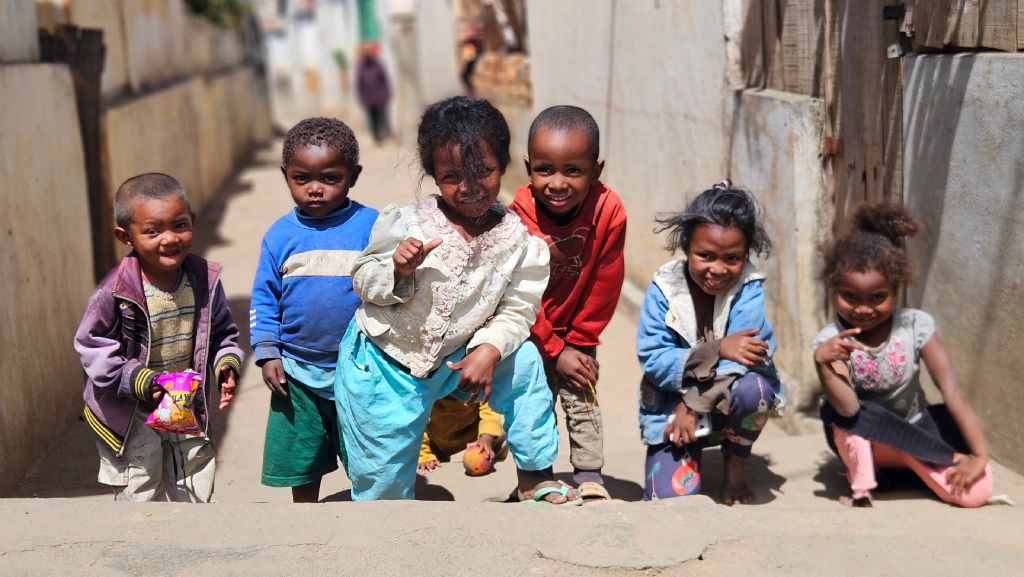
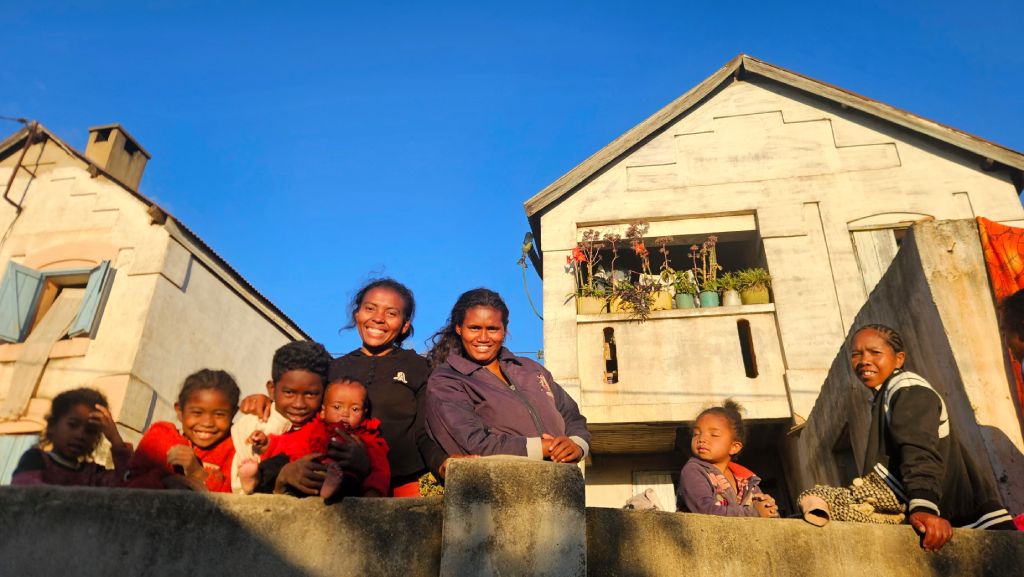
I stayed at the well-kept Hostel du Père Pedro, one of the newer additions, with an excellent city view. Early the next morning, I walked around the neighborhood, enjoying smiling faces, friendly greetings and people willing to talk. Many, including children, do not speak French, but a few basic words were enough to communicate.
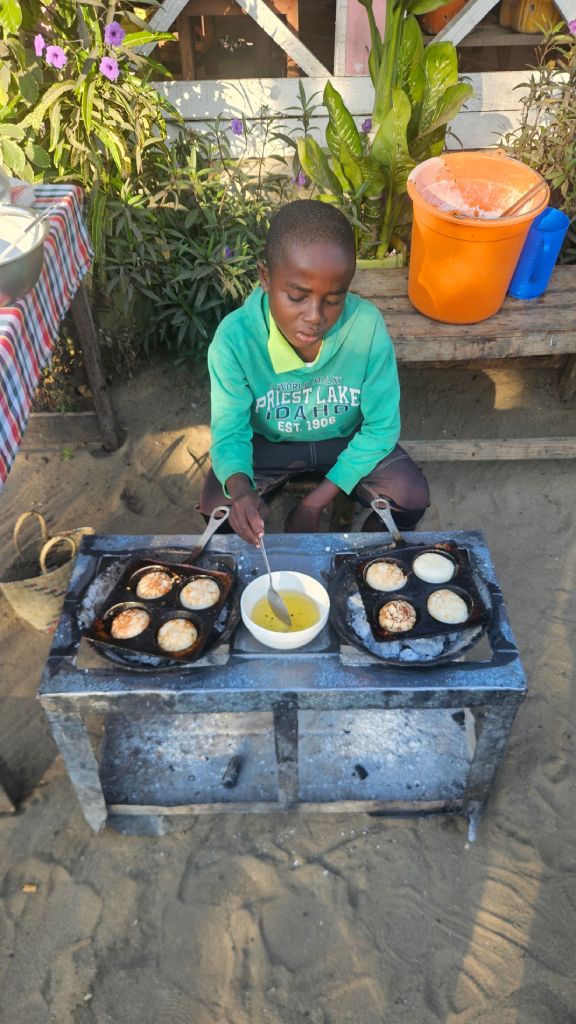
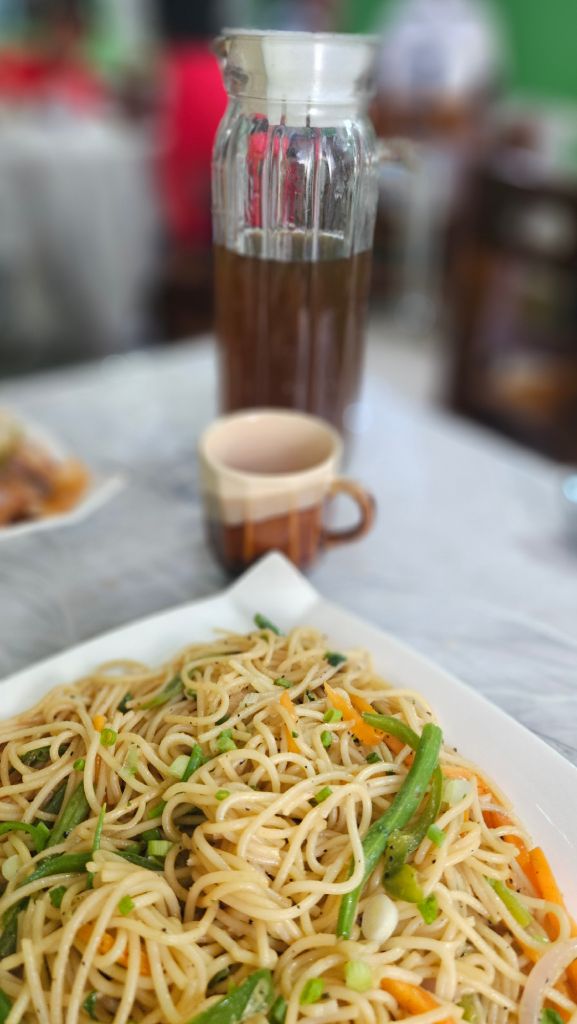
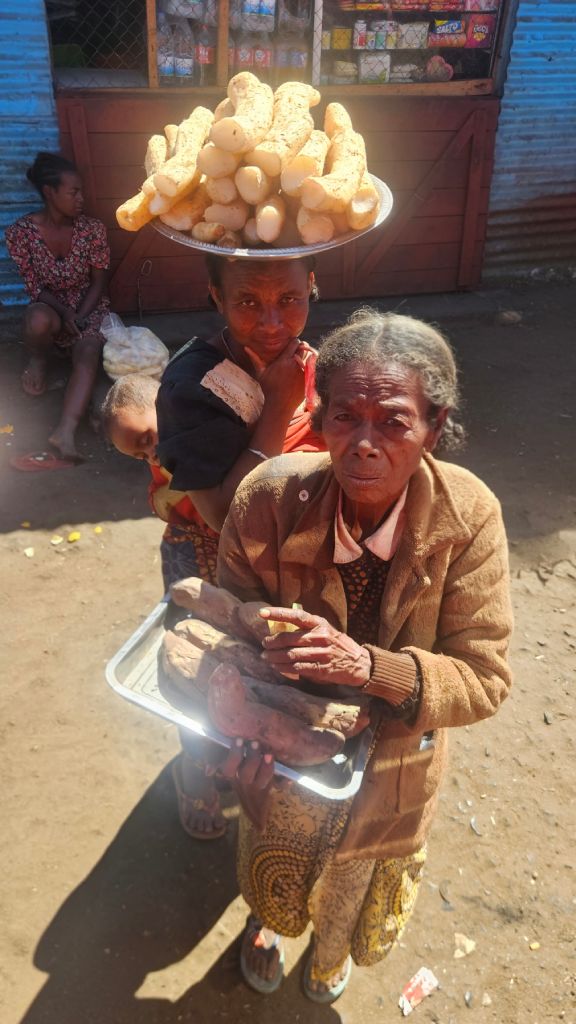
I found a local restaurant, or rather a mobile food stall. The woman selling food could hardly believe I wanted pasta with vegetables and peanut sauce.

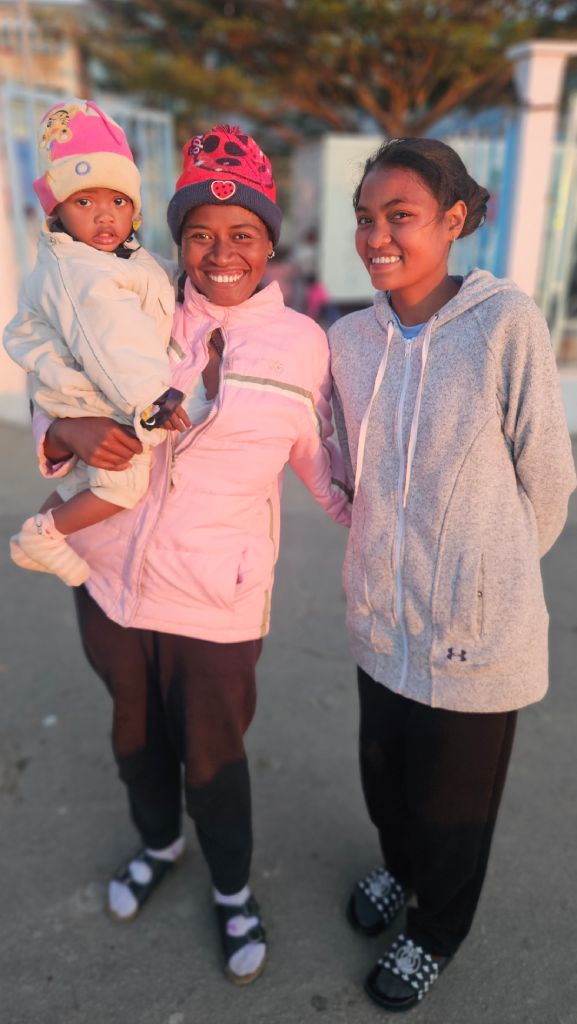
Lovely sisters invited me to see inside their house. The squat toilet was outside, separate from the main two-story brick building, which had no running water and only a few electrical wires. The upper floor is for the parents, while the lower floor is shared by the rest of the family.
I was struck by the poverty. There was a bed, a table, a few chairs and an old TV. Some dishes and clothes, but no cupboards, shoes or personal belongings. They cook outside over charcoal. Nevertheless, solid brick houses are a luxury, as most poor Malagasy families live in simple huts made of wood or corrugated metal.

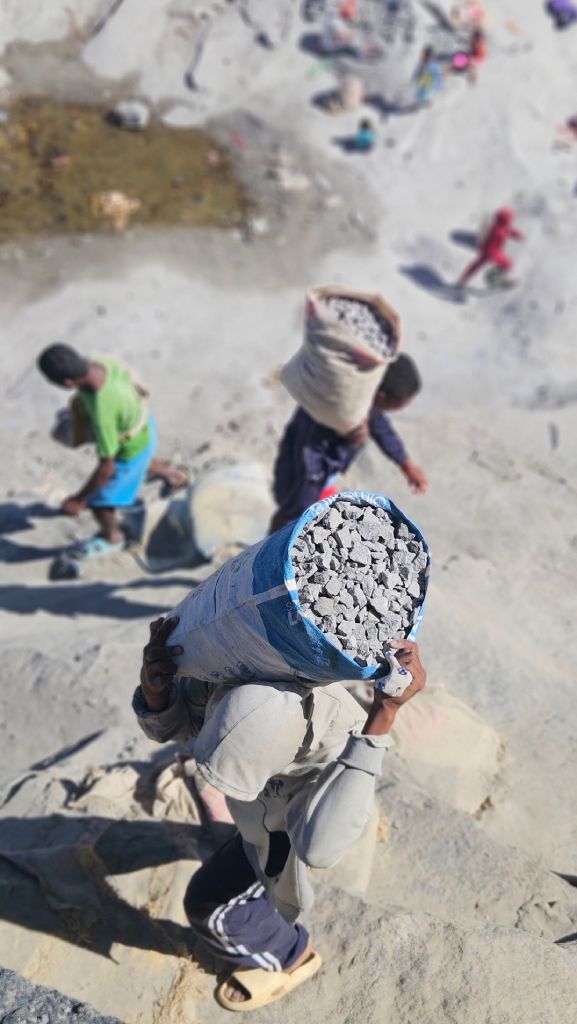
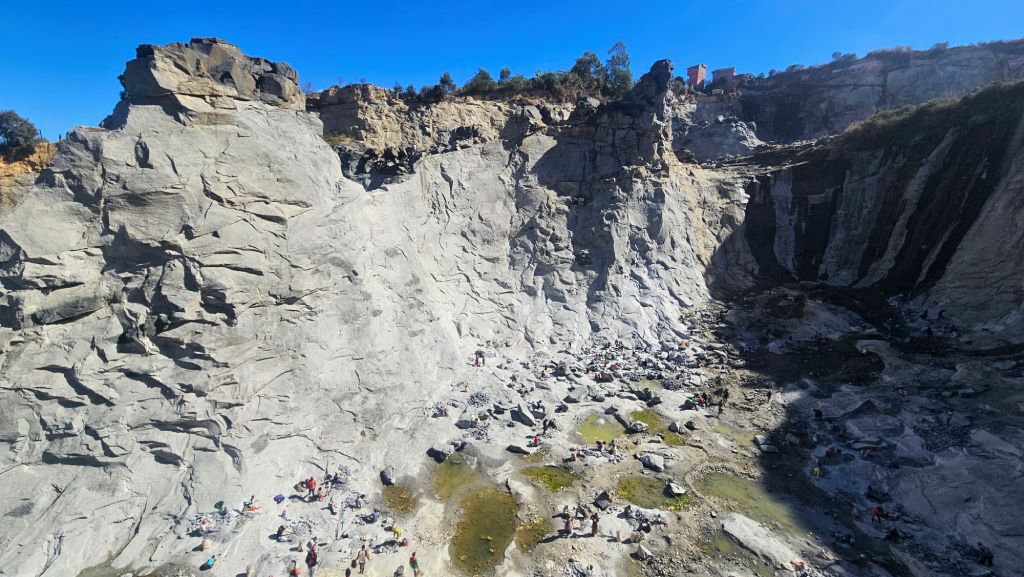
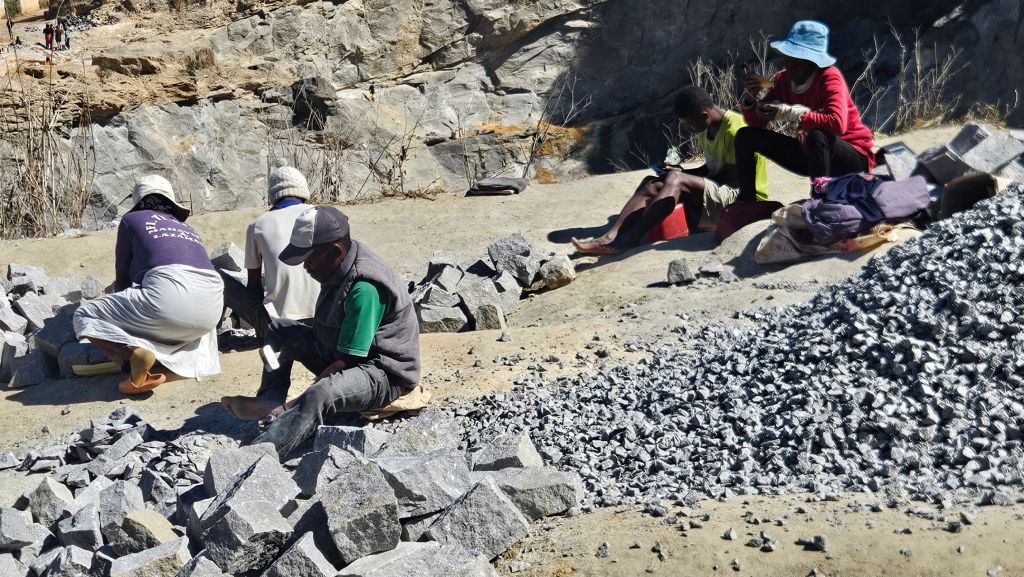
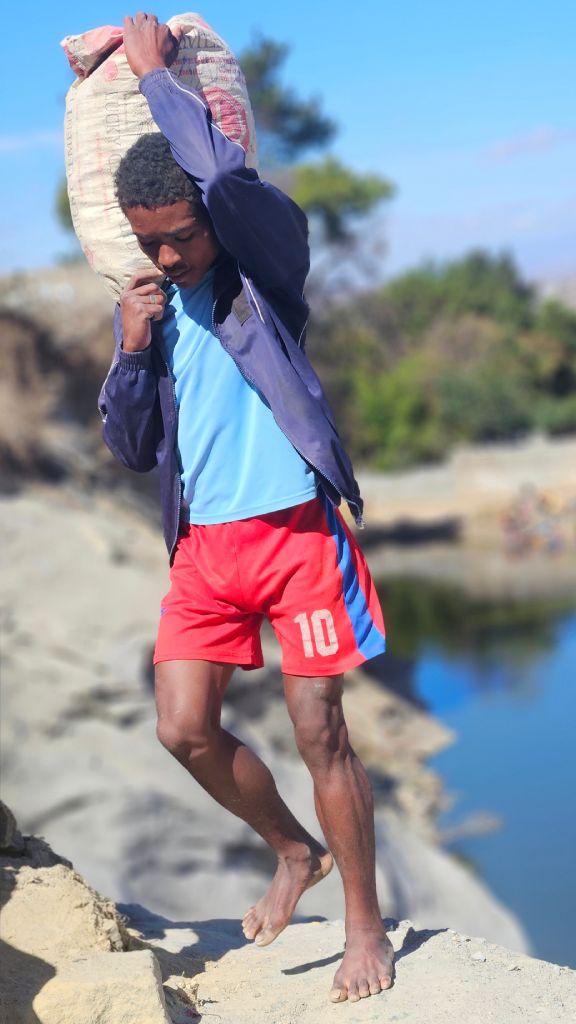
When I found the quarry, I could hardly believe my eyes. I listened to hammers and chisels breaking stones and watched young men carrying heavy bags from the quarry. Men, women and children.
Several hundred men, women and children were digging, breaking and carrying stones and sand by hand before loading them onto a truck.
It felt as if time had stopped here a century ago.
Reflections on my visit to Madagascar
I expected a lot from my Madagascar travel adventure, and the country did not disappoint. Its unique wildlife, challenging travel, Malagasy hospitality, national parks, beaches and markets made a strong impression on me.
Including two domestic flights was a very good decision, considering the endless distances and slow travel. This gave me time to slowly explore parts of the central, southern and western regions of the country; or at least parts of them.
Madagascar was not easy when it came to local transport and eating like the locals.
Poor hygiene and a general lack of concern for cleanliness are probably partly a result of poverty. Despite this, I always felt safe and welcomeI paid the same prices as locals, Malagasy people were helpful, and seemed happy to see me around.
I hope to return to Madagascar one day and discover other treasures the island has to offer.
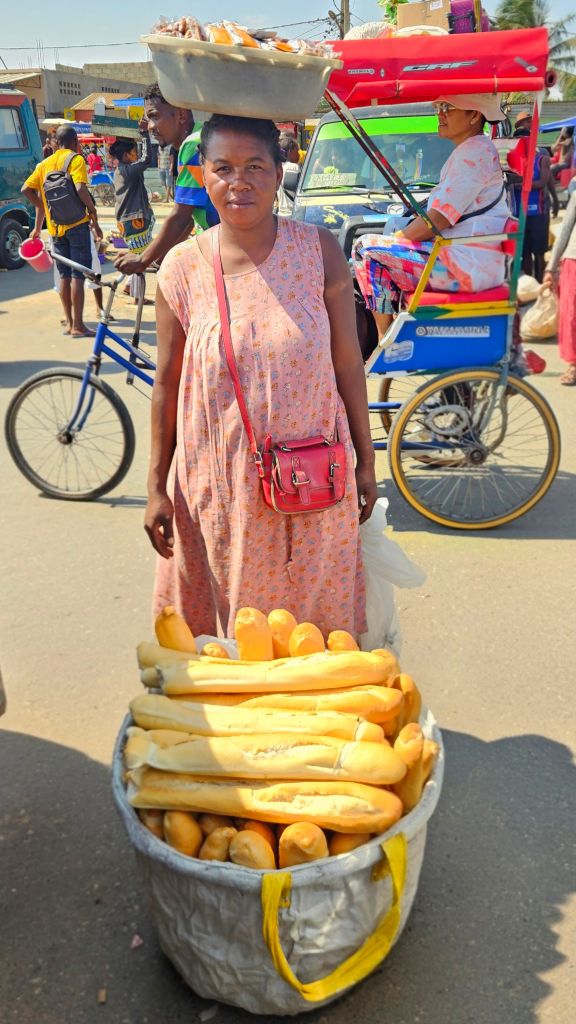
Madagascar Travel Photo Gallery