Visited: January 2000
Duration of visit: 21 days
Capital city: Rangoon (changed to Naypyidaw in 2006)
Population: 45 million (2000)
Myanmar travel blog reading time: 15 minutes
Attractions and places I visited in Myanmar:
- Magnificent Buddhist temples, longy, tenaka cream and incredible friendly people.
- Riding on a cargo-passenger bus loaded with 15 tons of rice and 60 passengers for 24 hours.
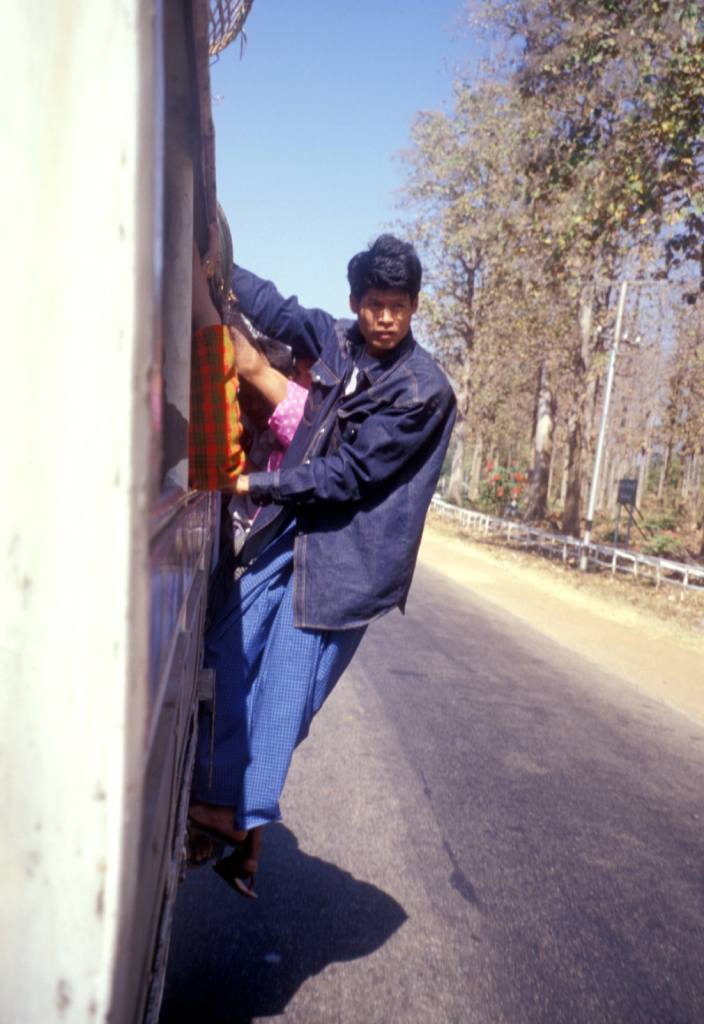
- Holding onto the roof of a pickup truck alongside Buddhist monks.
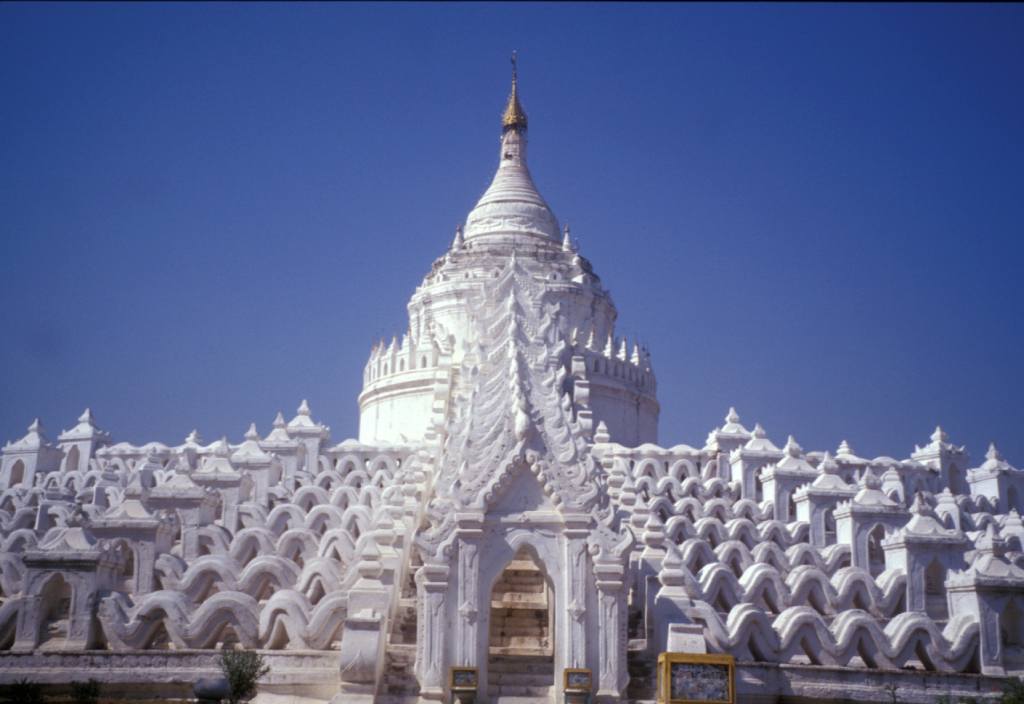
- Country of pagodas – exploring pagodas all over the country.
- Magnificent Buddhist monuments in Bagan.
- The splendor, serenity and spiritual importance of Shwedagon pagoda in Rangoon.
Burma or Myanmar, Rangoon or Yangon – the names have changed, but the story remains the same. Since 1948, the year the country gained independence from the United Kingdom, Myanmar has faced ongoing insurgencies, conflicts, political battles, and constant turmoil.
Ethnic conflicts that escalated into clashes with Myanmar’s armed forces, along with the oppression imposed by the military junta after the 1962 coup, led to the country’s international isolation. The fluctuating status of opening and closing of borders in Southeast Asia’s largest country also adds to the uncertainty of visiting it.
Despite Myanmar changing its policy toward foreigners and opening new areas that were once forbidden, traveling across its land borders remained extremely difficult in 2000. The only exception at that time was the border with China, which allowed limited crossings.
Myanmar was part of the Asian Big Tour from Australia, through Southeast Asia and China to India. During this 15-months long trip I visited most of the countries in the region and spent three weeks travelling around Myanmar before flying to Bangladesh.
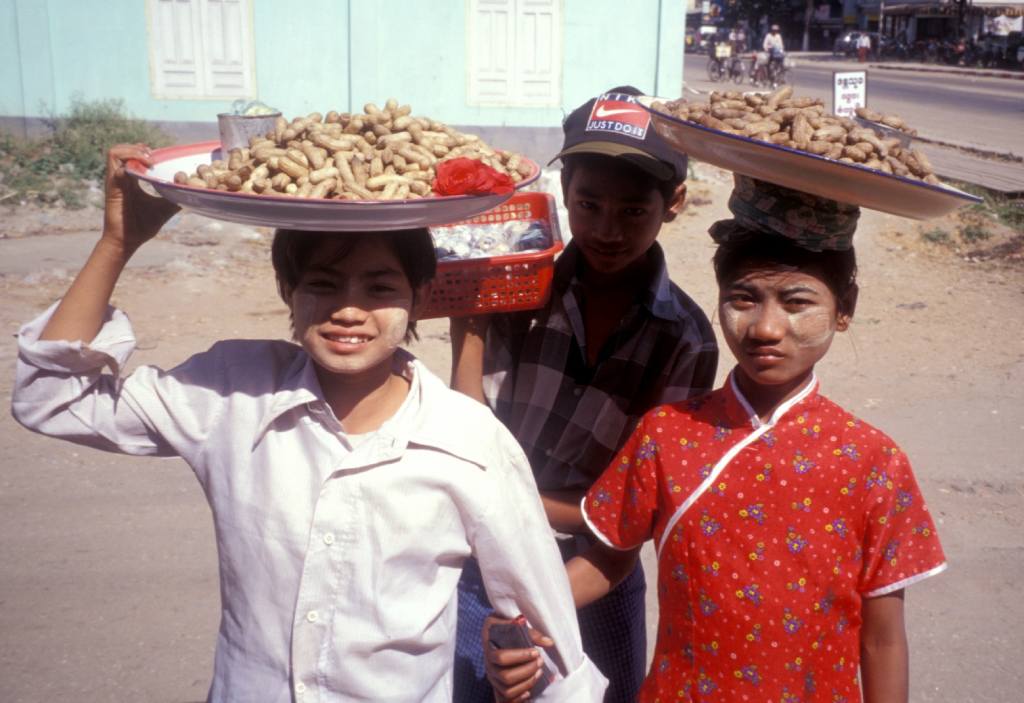
Men wear longyi, women smear with tenaka
My first encounter with the Land of Pagodas at Rangoon Airport fills me with hope that the country remains genuine and unspoiled, just as backpackers wish. The airport bus driver greets us softly, his speech hindered by the red liquid he spits out while chewing green leaves.
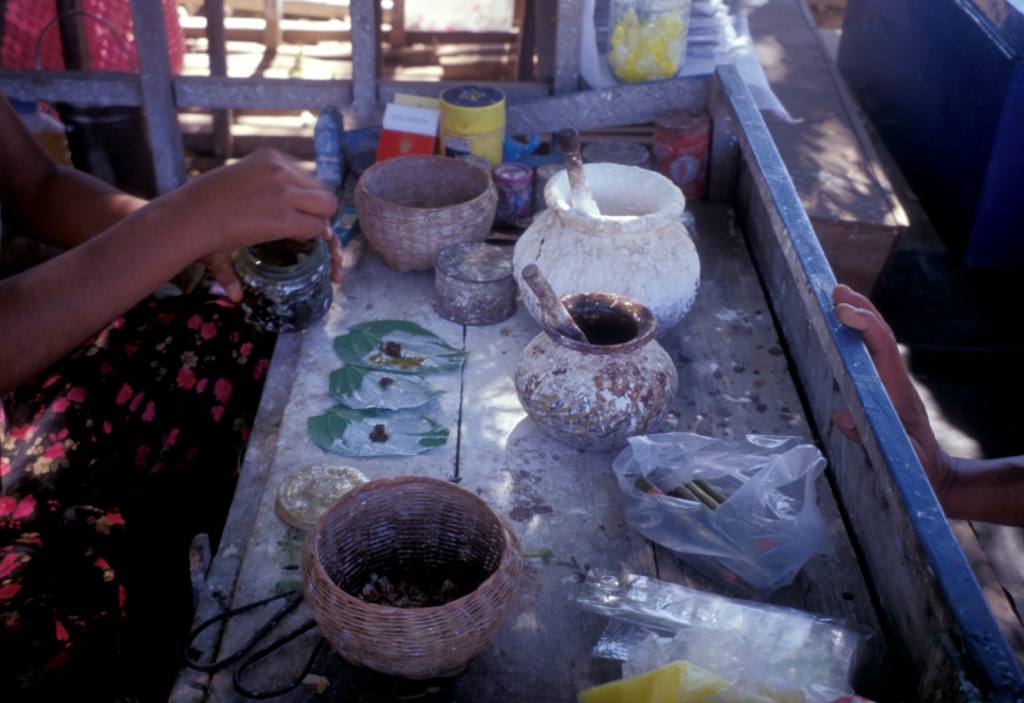
Bethel nuts, enriched with a lime mixture and wrapped in fresh green leaves, are chewed from early morning to the evening. Red masticated leftovers are discharged pretty much everywhere, with the exception of the holiest places inside the temples. Chewing reminds me of coca from South America, but the walnut effect is apparently milder and the residue is repulsive.
The taxi driver politely suggested renting his car for my three-week stay in Myanmar. After I hesitantly explained that I preferred traveling by bus to explore different places to visit and attractions, he gave up and dropped me at the cheapest hotel in Rangoon.
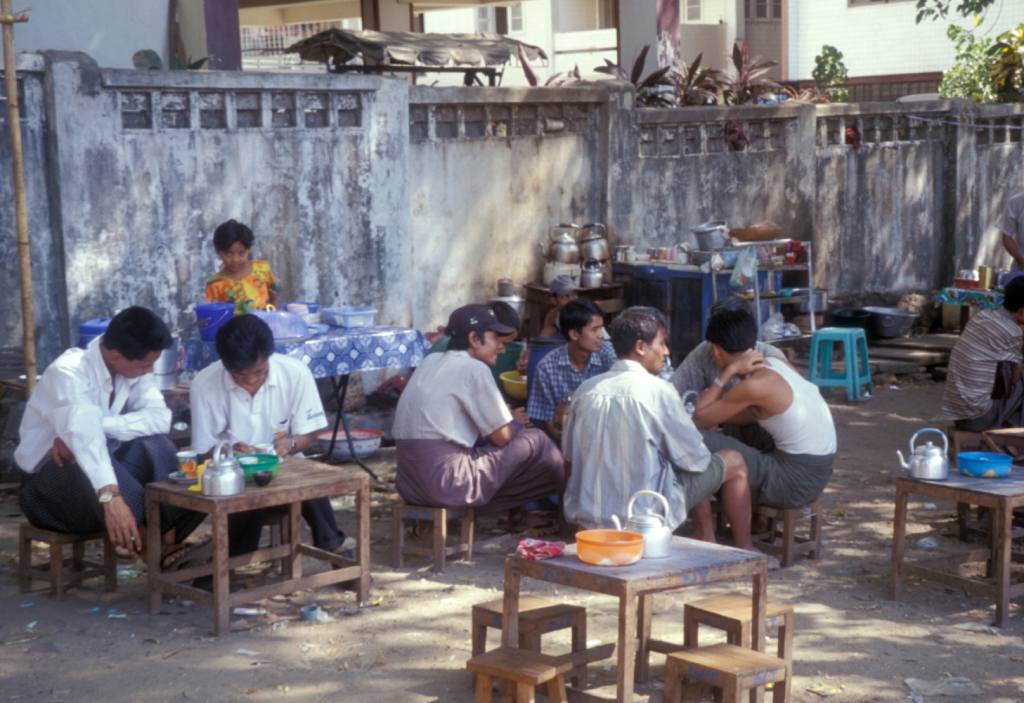
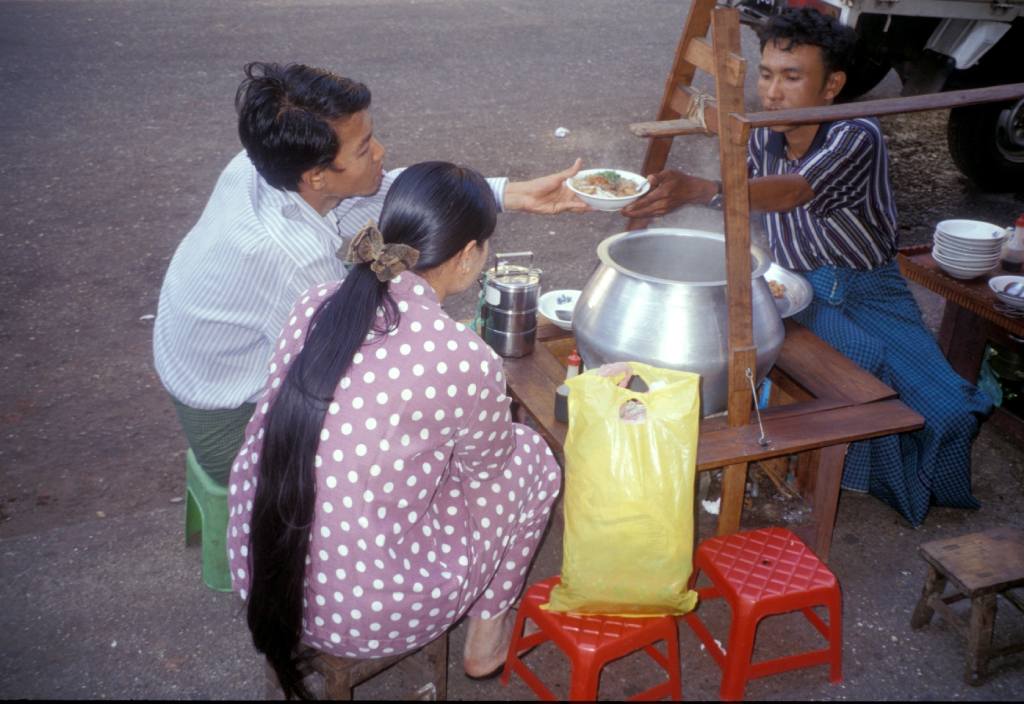
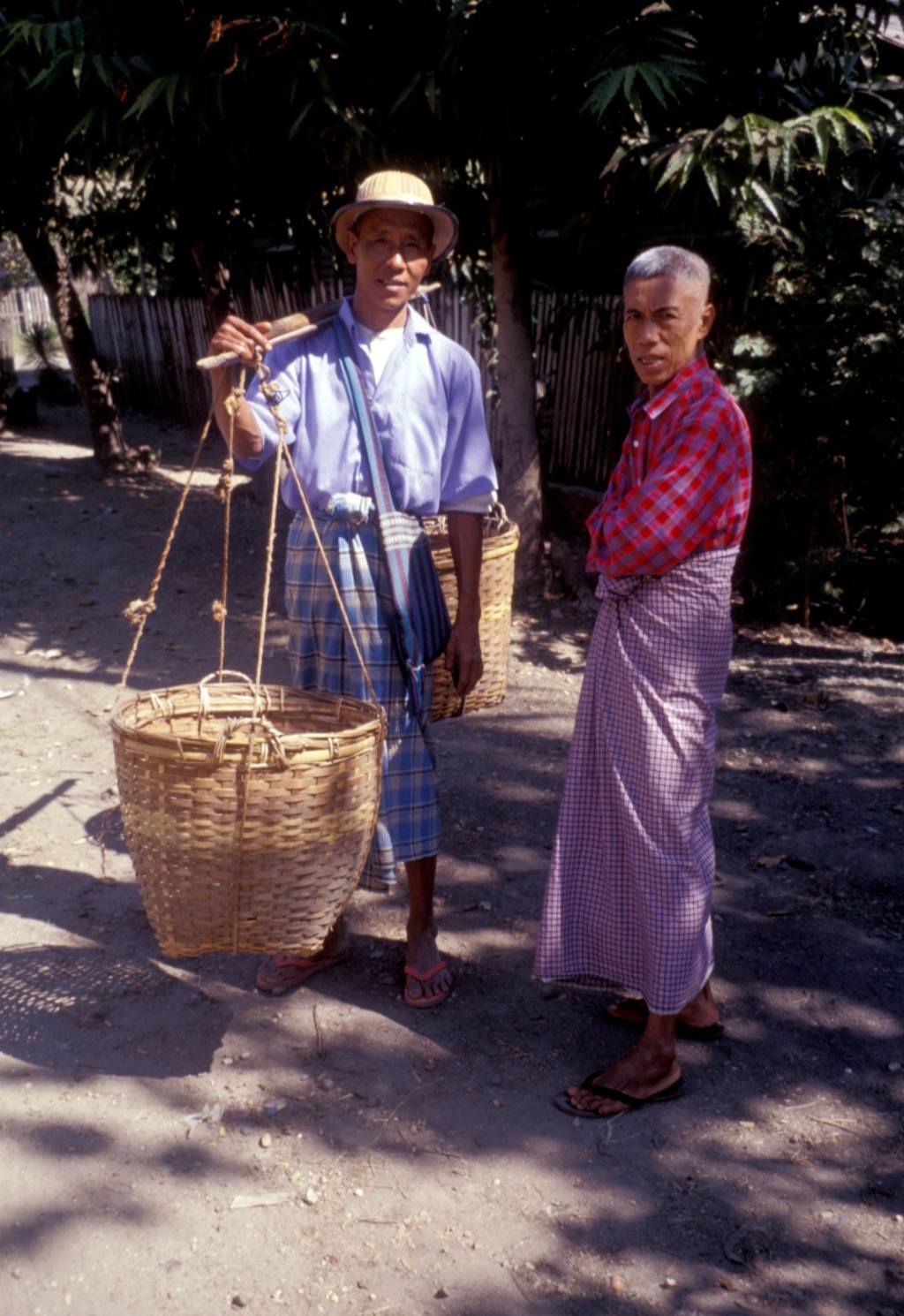
I am surprised seeing men dressed in some strange skirts worn around the waist and extend to the feet, secured in position by the folding of fabric without the use of a knot.
It later turns out that the longyi is worn mainly by men. Pants are seen as too expensive, too Western, and too hot for the climate. The longyi is a traditional garment; about two meters of fabric wrapped around the lower body, similar to a sarong.
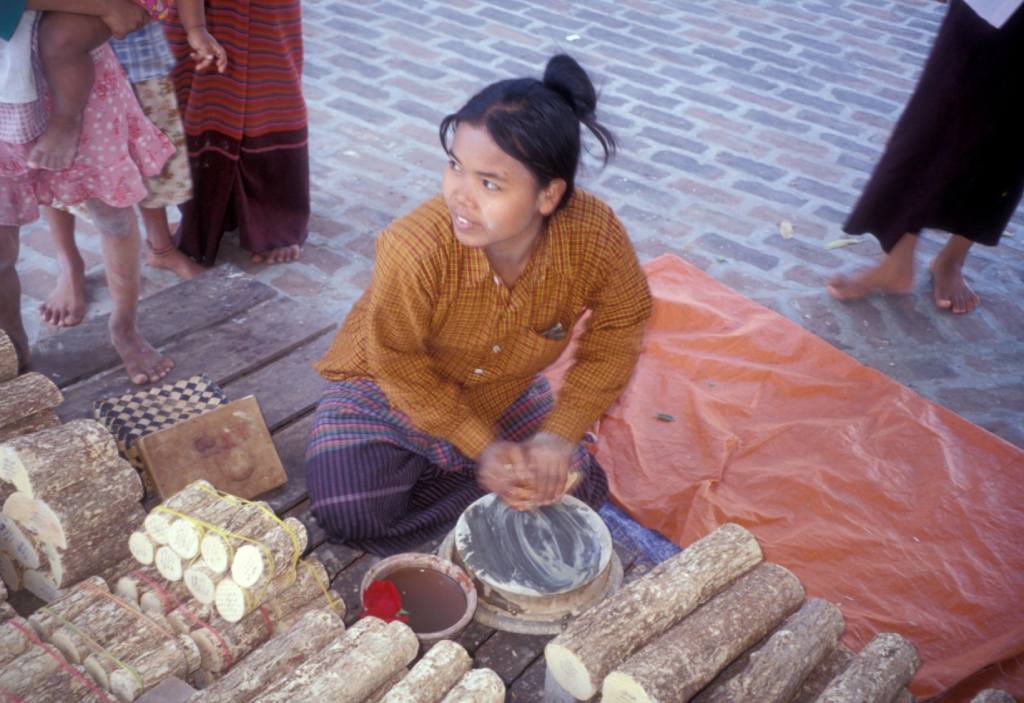
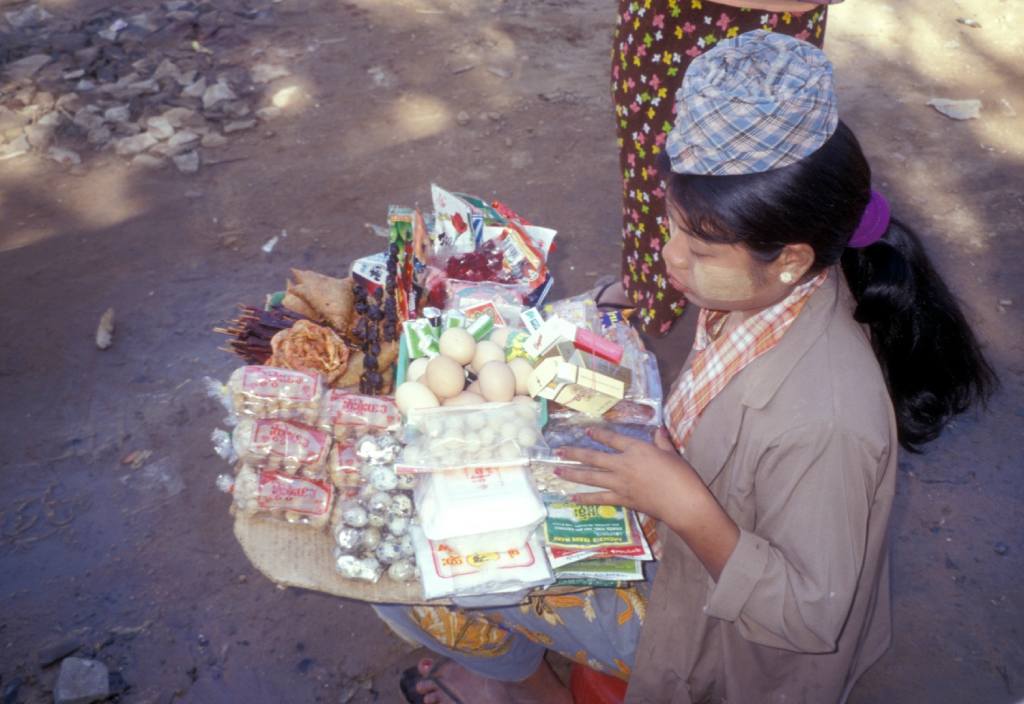
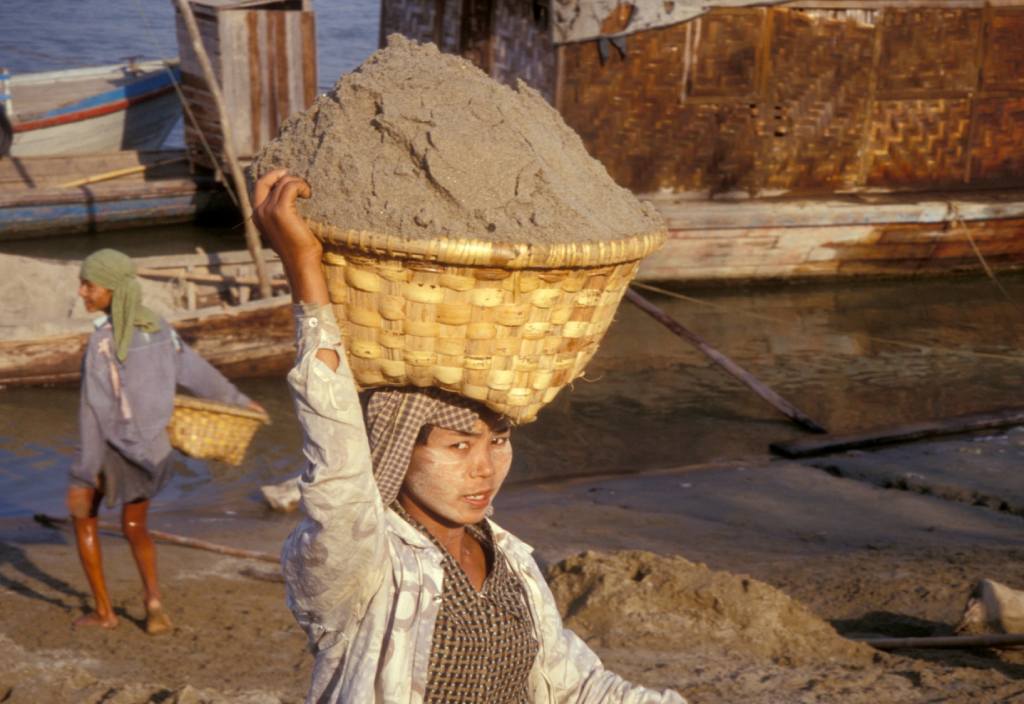
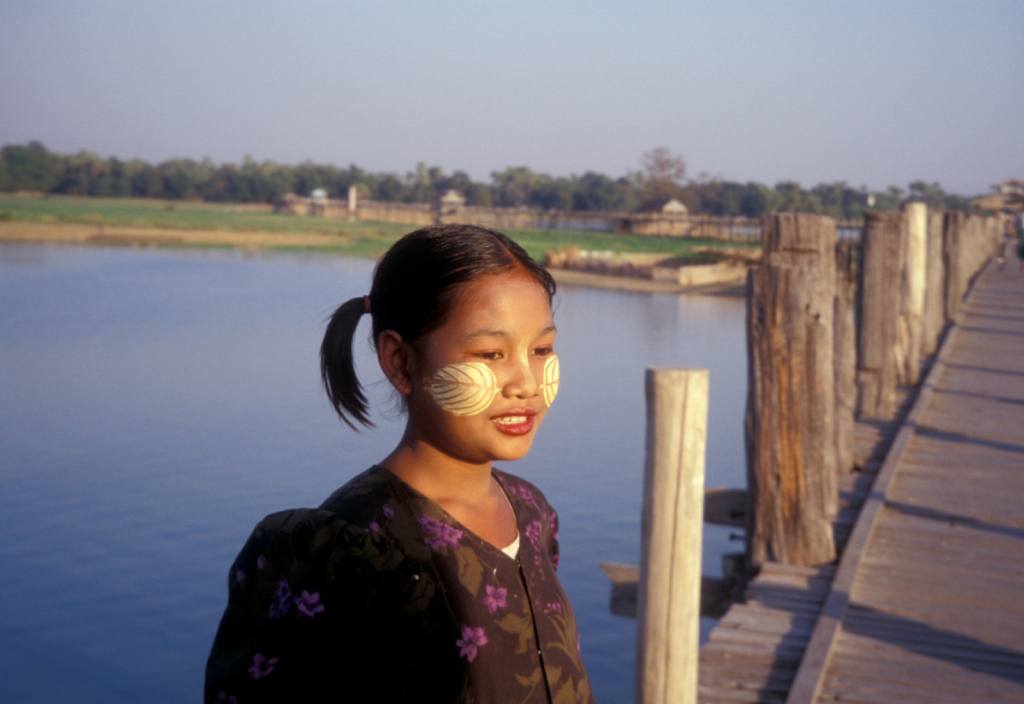
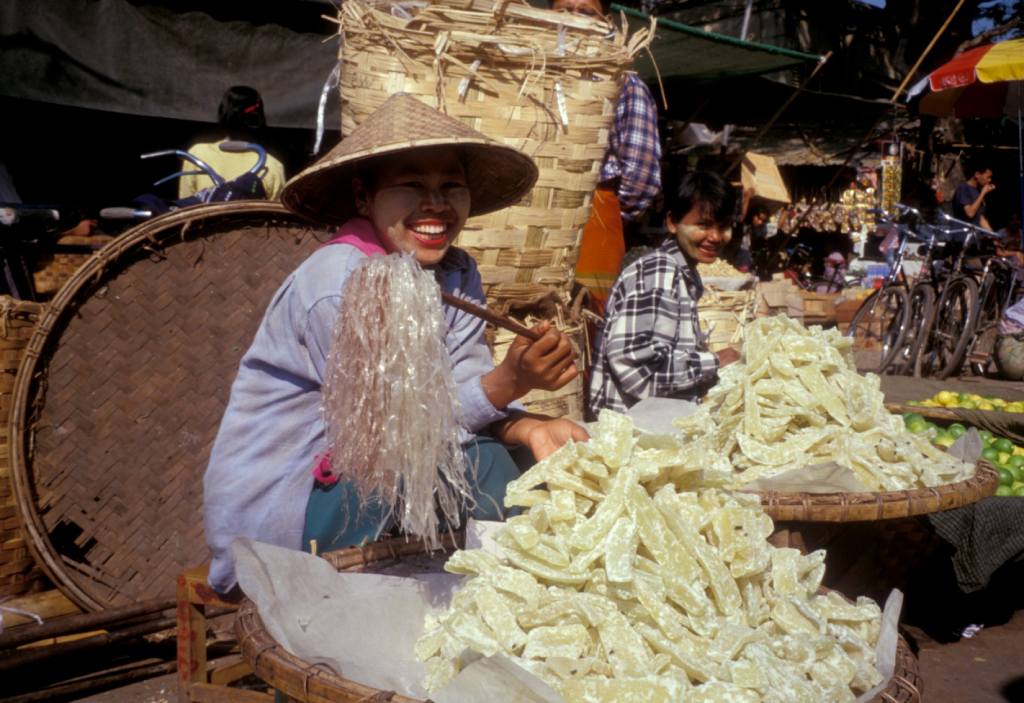
Women have their faces painted with a yellowish thanaka cream. It is obtained by rubbing the trunk of a special type of tree against a concrete stone. Thanaka protects the skin from strong sunlight, on the other hand makes it softer, more youthful and removes annoying rashes.
Travelling by pickup trucks
My first impression while walking through Rangoon is surprisingly positive. Many restored buildings effectively hide the traces of Myanmar’s long isolation. Since 1962, when a military junta seized power and control of the economy, the state has suppressed all democratic movements and placing elected leader Aung San Suu Kyi (Nobel Peace Prize, 1991) under house arrest in 1989.
Pickup trucks are used for city transport instead of buses; passengers are squeezed like sardines, while being transferred through perpendicularly intersecting streets.
I wait at the station and try to decipher a complex system of numbers that is completely different here than anywhere else. I finally manage to jump on the right vehicle and I am already on my way to the most astonishing landmarks in this part of the world – the Shwedagon pagoda.
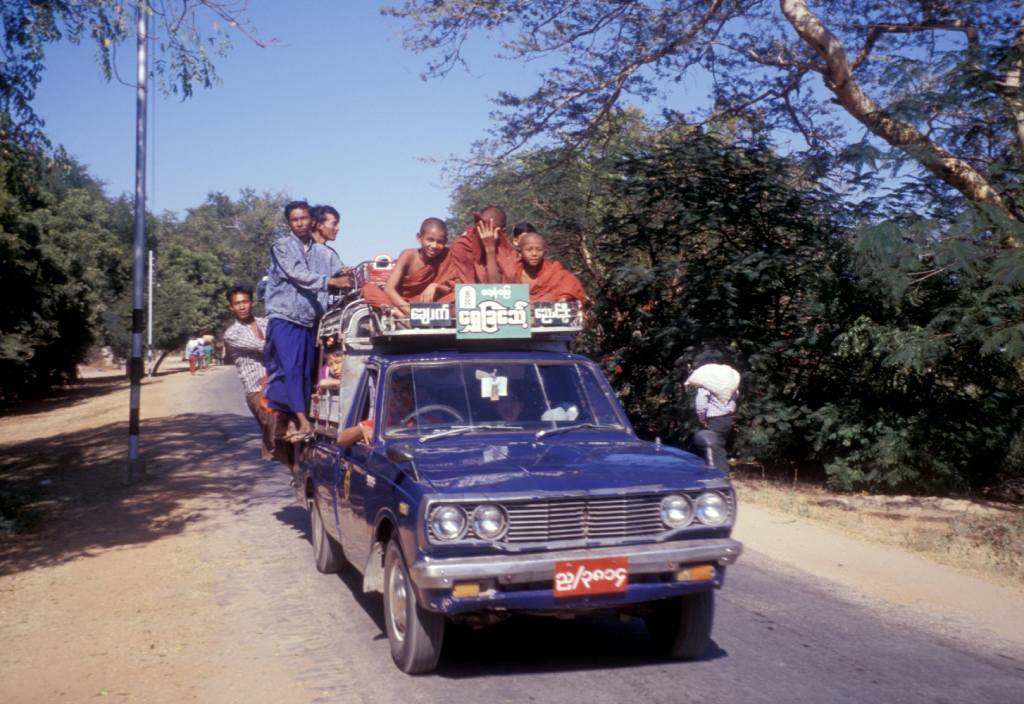
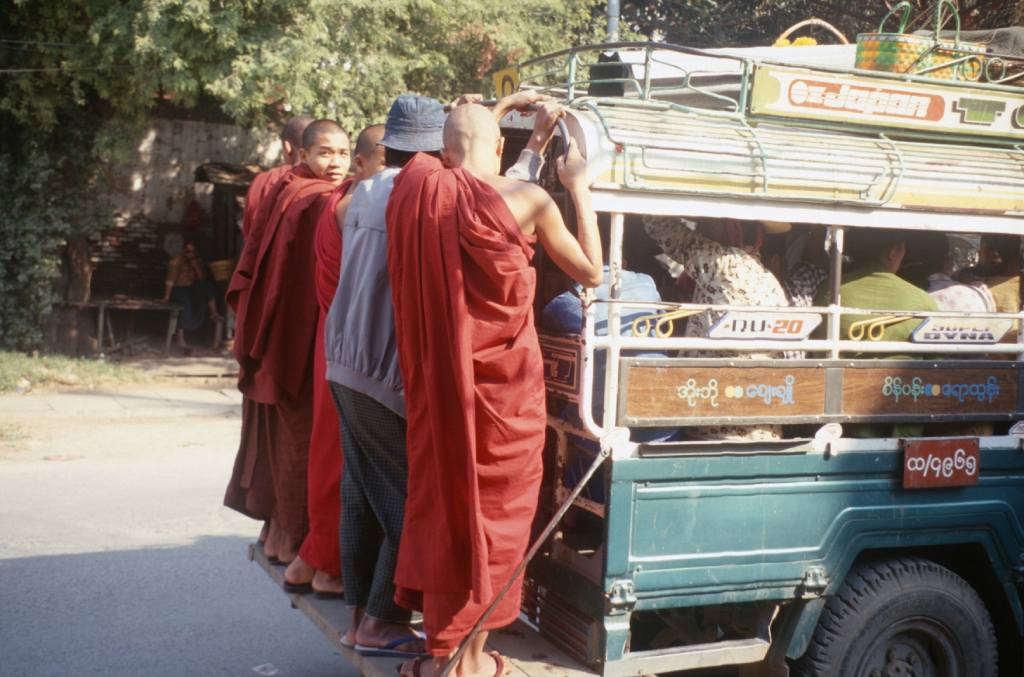
Inside pick-up truck women squeeze on small chairs, men cling to a special metal rod at the back. In the city, only monks are allowed to sit on the roof, in the countryside male passengers can also join them.
Upon leaving, I pay the local price of 10 kyats or 2 cents of US$, which means that Myanmar has become one of the cheapest countries in Asia, if only you can pay in local currency at the local rate.
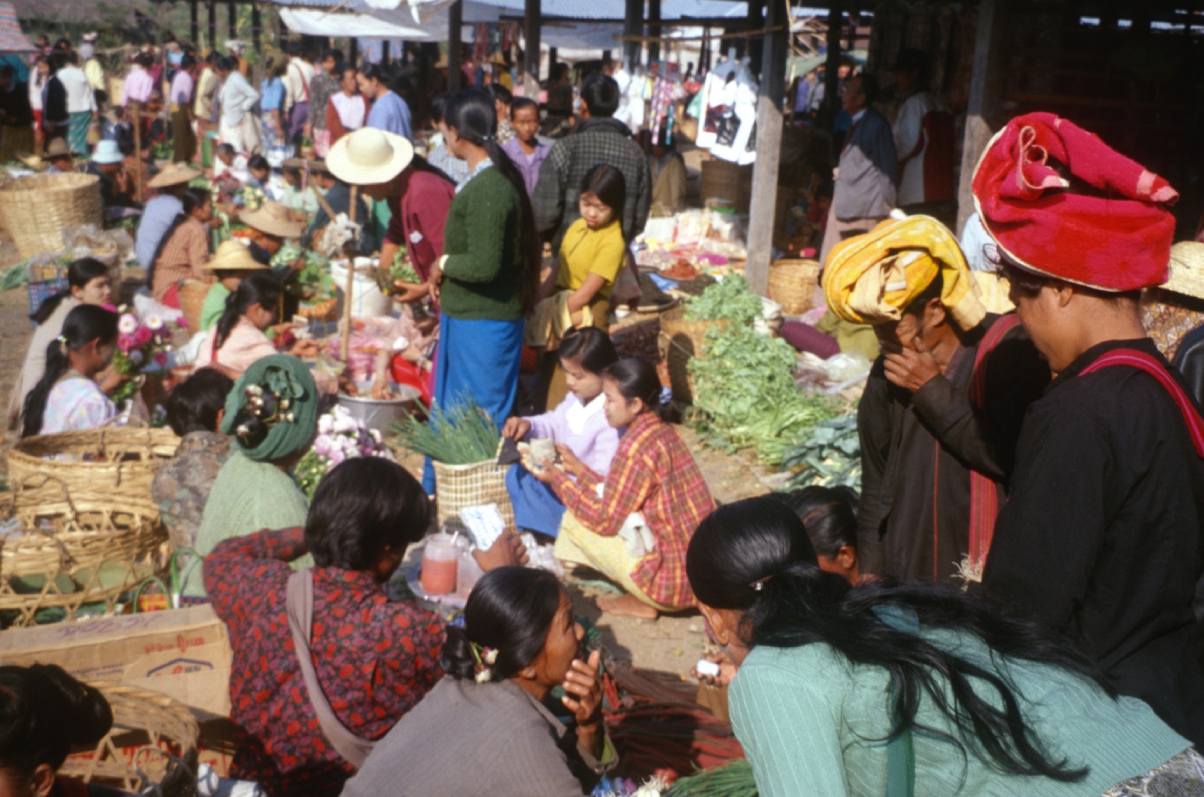
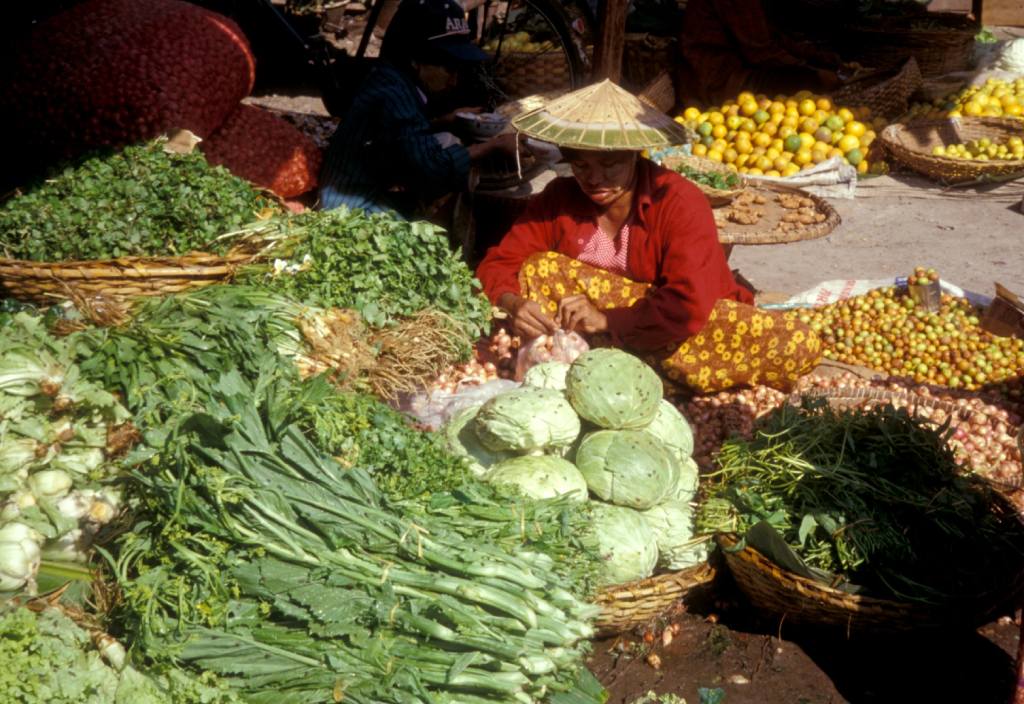
At the central market vendors offer 35 avocados for one US dollar (in kyats), and for the same price I can also buy 100 bananas or seven papayas. It is a paradise for fruit lovers.
Due to the long-standing embargo, Myanmar adapted to the absence of imported goods and started producing copies of many consumer products, including soft drinks such as for example Coca Cola.
I can buy as many as seven Crushers, Stars, or similar drinks for just one dollar. For a buck, it is possible to ride a bus for ten hours.
Nevertheless, to prevent the overall pricing from becoming excessively low, this is ultimately balanced by the admission fees charged at the pagodas. Foreigners must purchase VIP entrance tickets, paid exclusively in dollars or so called FEC, which also applies to hotels.
The magnificent Shwedagon Pagoda
The Shwedagon Pagoda enchanted me with its splendor, architecture, glory, precious roof, serenity and spiritual importance. A pair of leogryphs stand guard at the entrance to the walkway that leads up Singuttara Hill to the pagoda.
One of the world’s most sacred Buddhist temples, built in the 18th century, is covered with 8,000 gold tiles; the dome is adorned with more than 5,000 diamonds and 2,000 other precious stones.
I tried to squeeze in without paying high entrance fee, but there are guards on every step. There are restricted areas where only monks can enter, perform the offering, prayers and meditation.
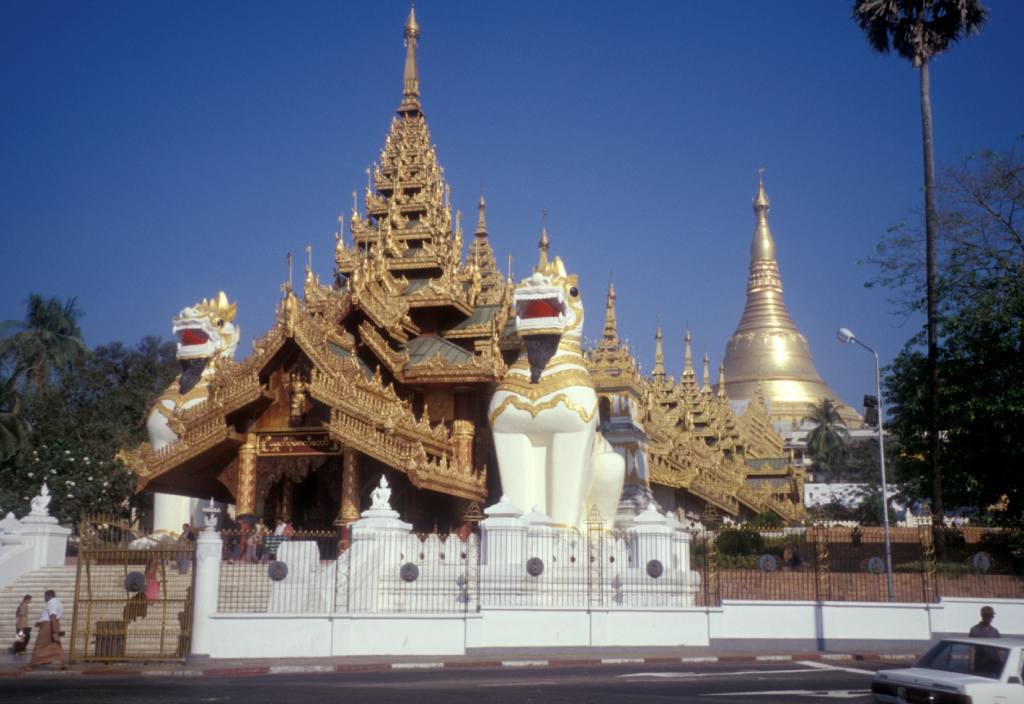
Legend holds that the Shwedagon Pagoda was constructed more than 2,500 years ago, while the Buddha was still alive. If this information is true, it would confirm its status as the oldest Buddhist stupa in the world.
The stupa’s plinth is made of bricks covered with genuine gold plates, attached by traditional rivets. Hundreds of colorful temples, stupas, and statues reflect the architectural era spanning almost 2 and a half millenniums.
Shwedagon pagoda represents the highlight of architecture, sculpture and arts, with an emphasis on religious practices and community engagement. Groups of devotees and monks wash the statues, offer flowers, worship, meditate and enjoy the peace.
With new longyi around my waist and calmness, I quickly adapt to the local customs and try to immerse myself in the Myanmar culture. Serenity, tranquility and splendor views on white and gold surrounding, fulfil me with peace.
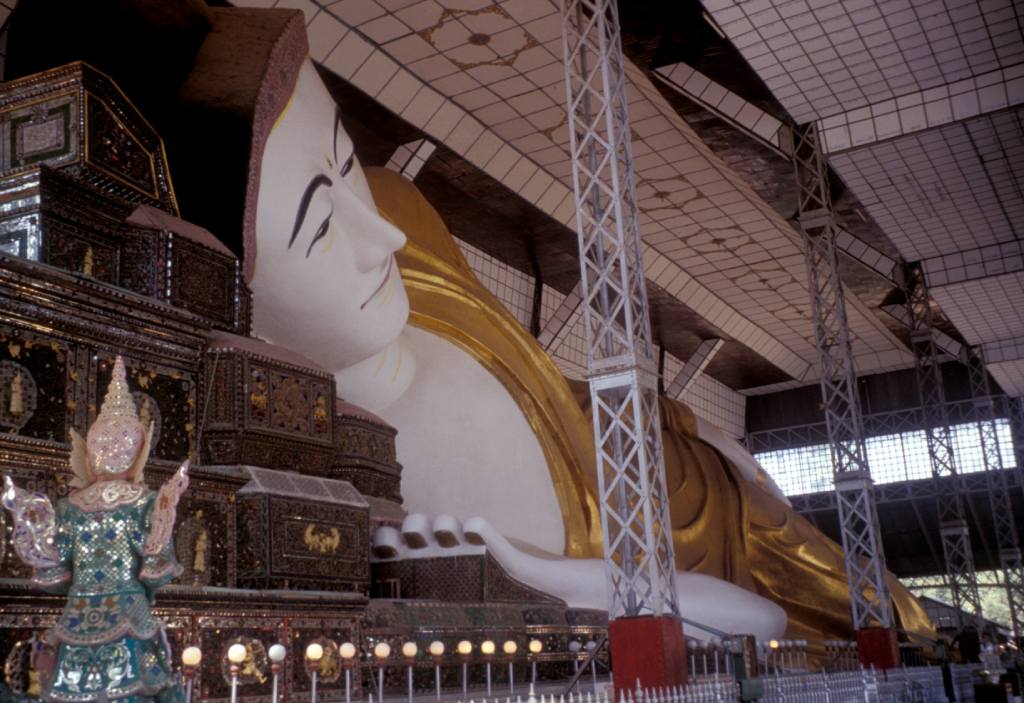
Spectacled Buddha in Pyay
Instead of a long drive to Mandalay, I opt for a stopover in the city of Pyay. The first few hours on a comfortable bus are filled with karaoke in English, which are later replaced by the chatter of most passengers while watching a locally produced comedy.
The roads in Myanmar are only wide enough for one bus, so whenever we meet an oncoming vehicle, we have to slow down and move to the edge of the road, almost coming to a stop.
Pyay embodies the average city with an above-average-sized Shwesandaw Pagoda. It is one of the more important Buddhist pilgrimage locations in Myanmar, believed to contain a couple of the Buddha’s hairs. The upper part of the pagoda is covered with a thin layer of gold.
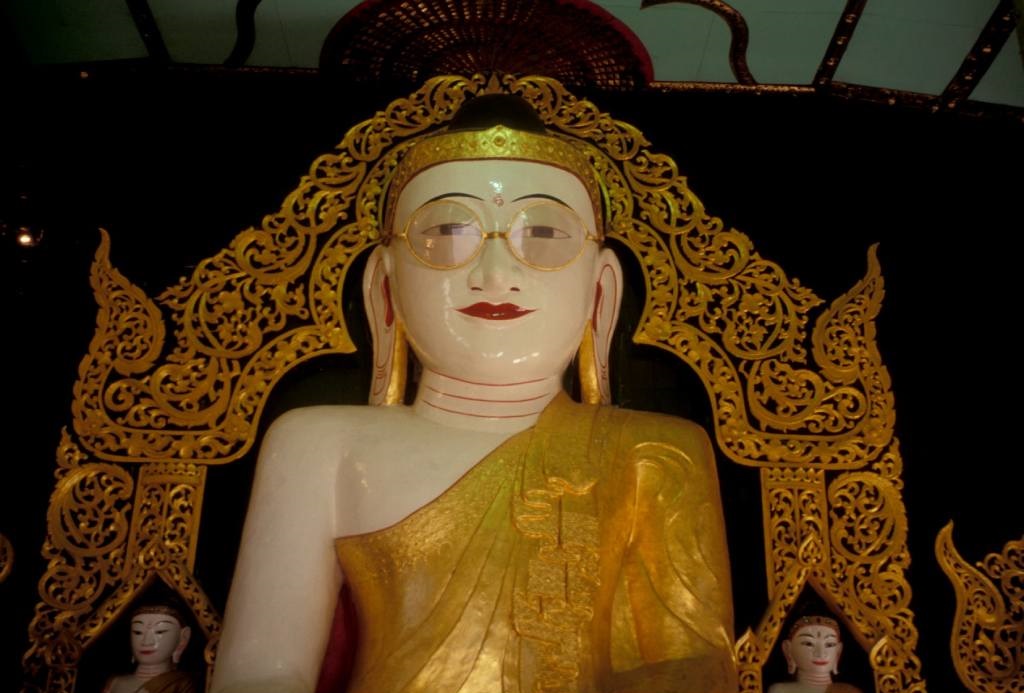
Nearby is a unique Buddha statue, a notable place to visit. The Spectacled Buddha is adorned with gold-rimmed glasses once offered by a near-sighted ruler, hoping to improve Buddha’s vision. Many believe that praying and making offerings to this statue can heal various ailments, especially those related to eyesight.
To the best of my knowledge, this is the only such decorated Buddha monument in the world.
Travelling on a cargo-passenger bus
There are only two buses a day from Pyay to Mandalay. I couldn’t get a seat on the passenger bus; therefore, my only option was to catch a so called a cargo-passenger bus.
»Mengalaba! Do you have a spare seat to Mandalay?” I ask a smiling employee, full of hope.
“Sure, but come and see the bus first!” he replies.
I rarely get a chance to see the bus before I buy a ticket, so it’s worth taking an advantage of the proposal. The chairs are raised over a meter off the floor. When I test if the seats are comfortable, my legs dangle in the air.
“Don’t worry. Before leaving, we will spread the load on the floor all the way to the height of the seats!” says the young boy, whose face is coated with thanaka cream to calm me down.
“And when are we arriving to the city of Mandalay?” I check the last important details.
“Tomorrow morning around seven o’clock.” is the answer after a short consultation with the young driver.
Eager to leave Pyay as soon as possible, I buy a ticket and hope for a smooth ride.
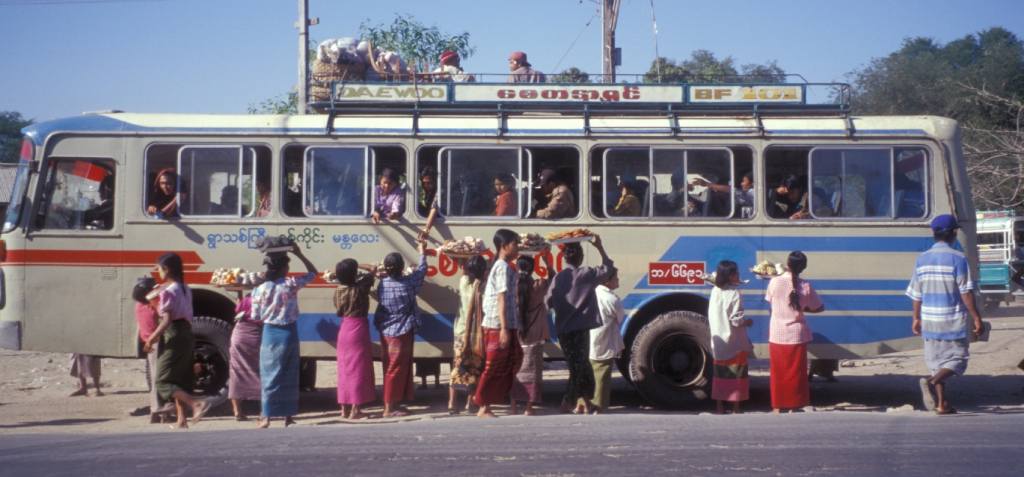
A few minutes past 3:00pm, we embarked on a lengthy expedition toward the north.
Alongside sixty fellow passengers, our bus is carrying approximately 15 tons of rice stored in plastic bags at our feet.
Throughout the night, I find myself constantly shifting on the small, hard seat, in search of a more comfortable position, while lamenting the discomfort caused by the rice.
At 11:00am, when I should have already enjoyed the hotel bed for some hours, the overloaded front wheel axle finally breaks. We are transferred to a local pickup truck, which continues driving until 1:00pm, when we stop for lunch.
Patience is not my friend, fatigue takes its toll, and there are not many things to do.
“Will we ever get to this cursed Mandalay?”
“It’s about two hours away, so you’d better have lunch and a cold drink!” the only English-speaking passenger advices me.
We switch to another vehicle before reaching our final destination. It’s 3:00pm. We are eight hours behind schedule; the trip took 24 hours instead of 16. I’m completely exhausted, but still happy to have arrived safely.
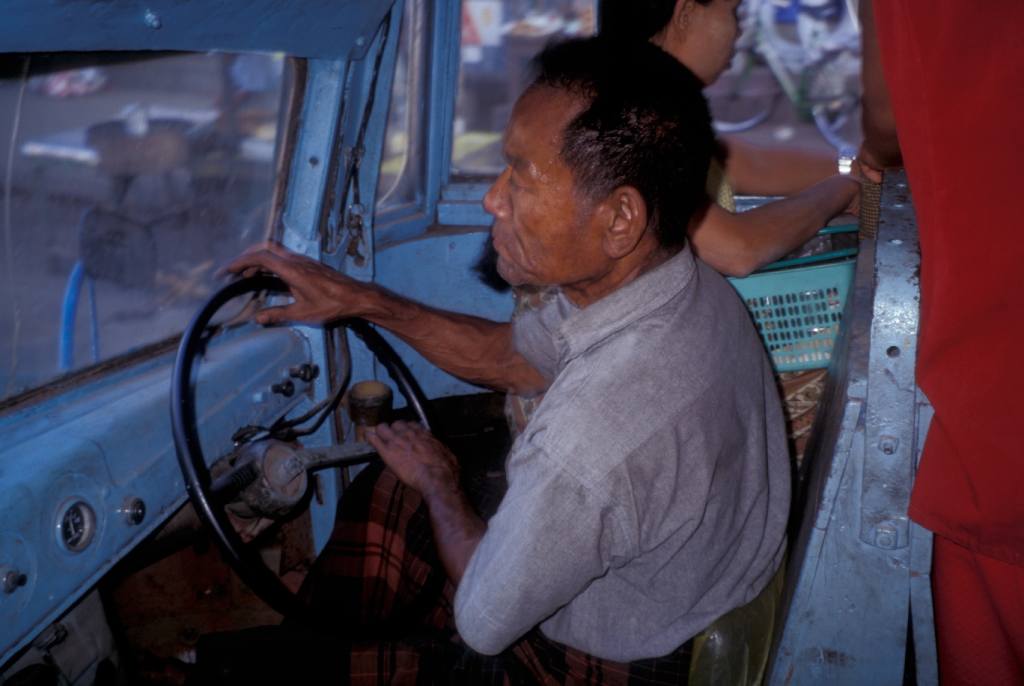
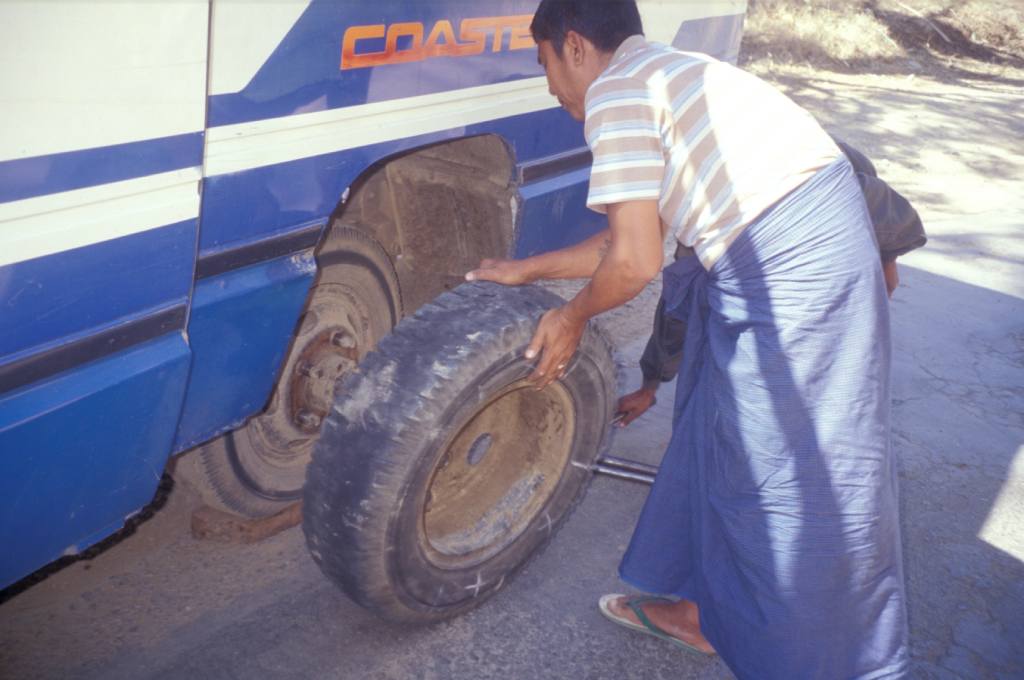
The effects of the demanding trip catch up with me at night, as fever and kidney pain send me to a local hospital the next day. After a quick examination, a kidney infection is confirmed, and antibiotics become part of my routine for the next three days. Rest, hydration, and pain force me to an extended stay in Mandalay.
The fascinating old capital Mandalay
Mandalay was the last capital before the arrival of the British. It is still an important cultural center today, although the most remarkable attractions and landmarks are located in its immediate vicinity. The former royal capital of the country is the second biggest city, home to a number of pagodas, temples, monasteries and other Buddhist establishments.
I haven’t even fully recovered from the exhausting bus trip when I’m already setting off on another adventure. My new American friend convinces me to hire an old taxi and explore the surrounding areas. The decades-old Mazda takes us around the city for just eight dollars for the whole day.
Sagaing Hill is dotted with Buddhist pagodas; modest compared to Bagan, yet enough to show why Myanmar is called the Land of pagodas. The view from the top of the hill to approximately 600 pagodas is breathtaking. One of them has a specific feature that stands out as a highlight.
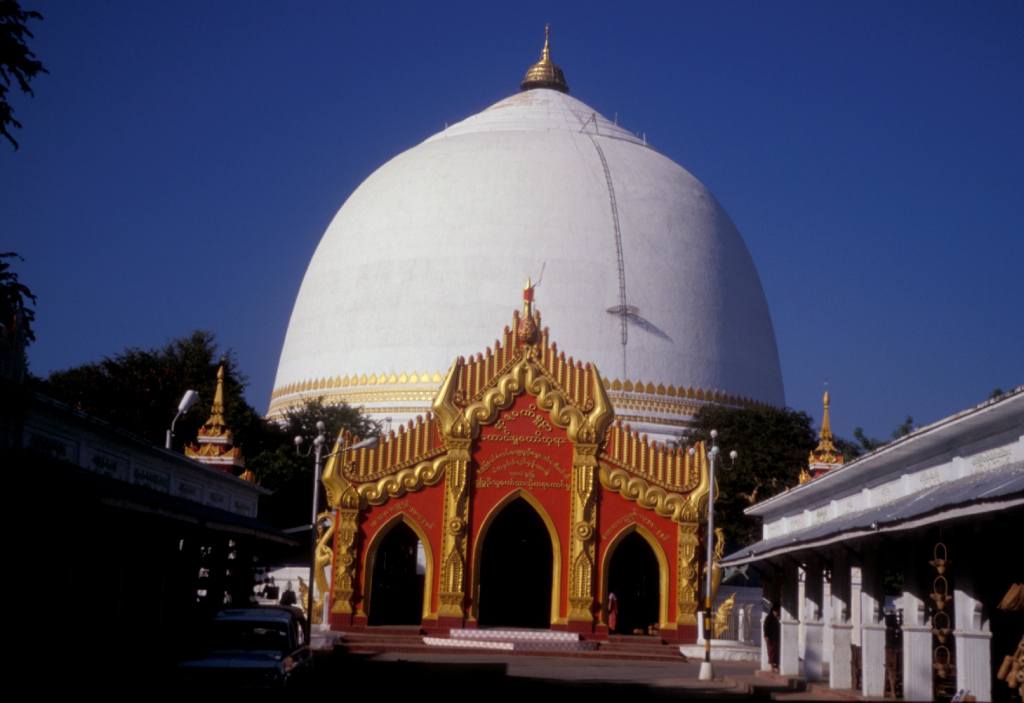
Kaungmudaw Pagoda is unique and famous for being described as breast shaped. The architecture of this pagoda is inspired by the breasts of a queen.
Its egg-shaped design stands out among more traditional-style, pyramid-shaped Burmese pagodas. The shape actually reminded me of a nuclear power plant.
Pleasant conversation with monks
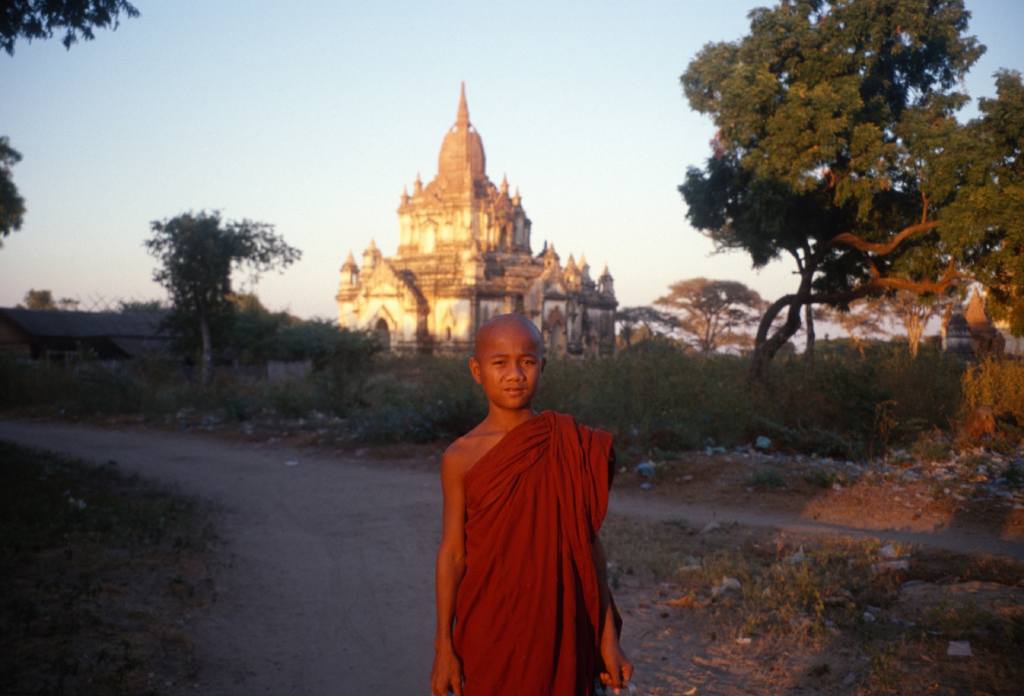
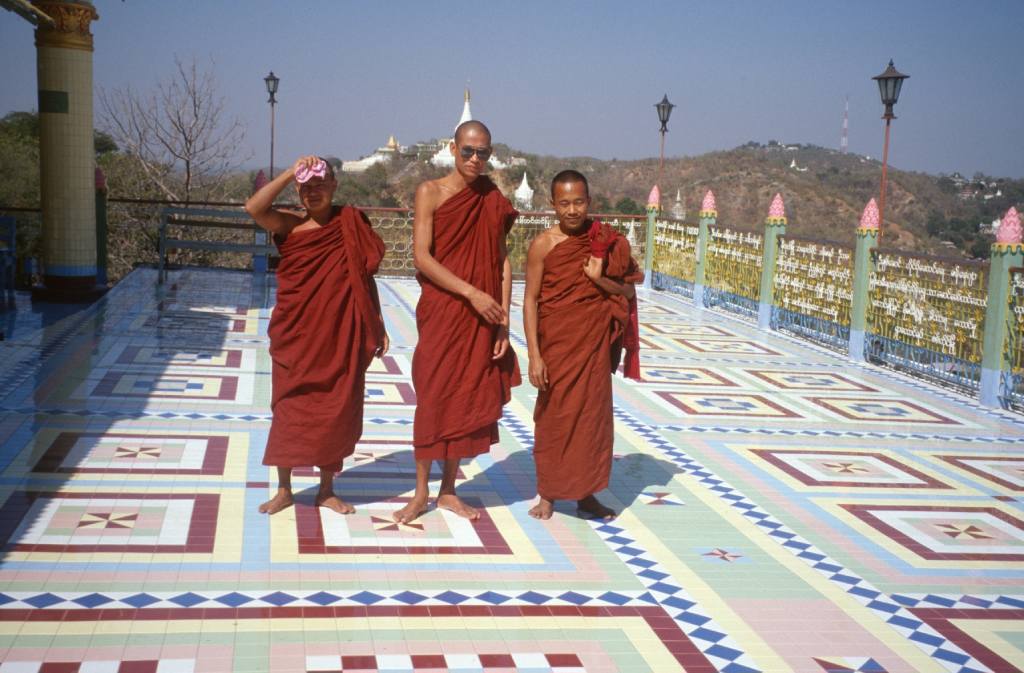
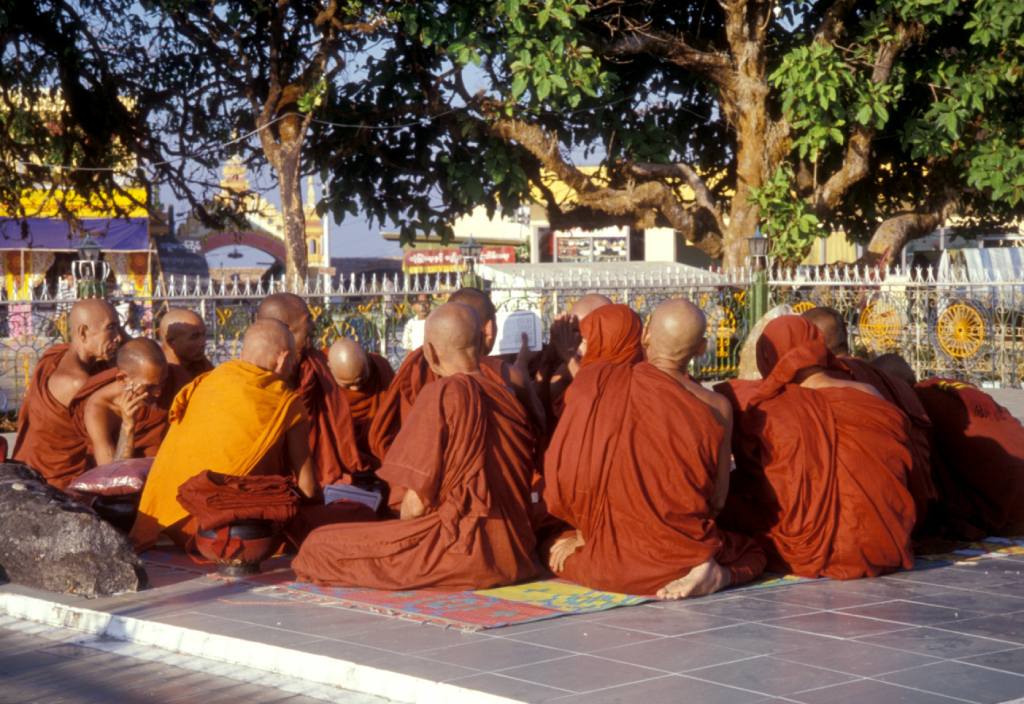
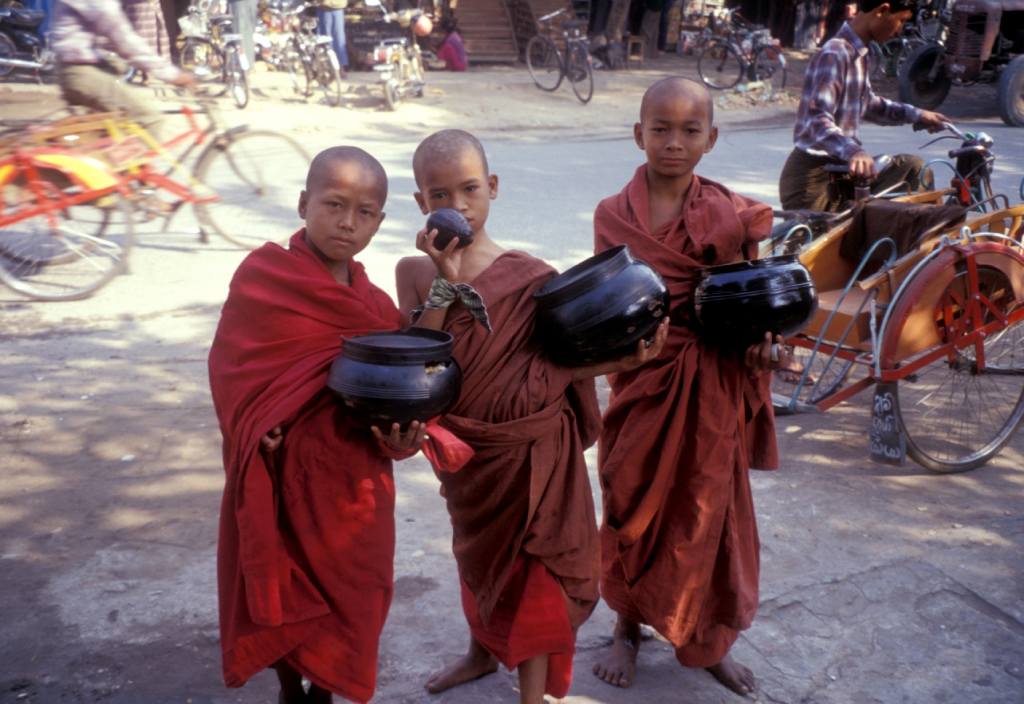
More than 6,000 monks and nuns live in Sagaing Hill. Many of them are eager to communicate in English and stop us whenever we pass by.
“I became a monk so that I could go to school in the first place,” explains a young Buddhist.
“What about faith in Buddhism and its teachings?” I ask, trying to learn more about the spiritual side.
“It came to me later. Now, of course, I’m a true Buddhist and want to stay a monk, but many of us eventually get married and leave the monastic life,” is an answer that explains a liberal combination of religious and private life.
Monks are highly respected, and by tradition, all children spend at least a few months in monastic life, following rules that are somewhat relaxed for adolescents.
“What about your diet and your desire for relationships with the opposite sex?” I asked him, touching on some of the most difficult forbidden aspects of monastic life.
“Food, including meat, may only be eaten in the morning; in the afternoon, only tea or water is allowed. Contact with the opposite sex is strictly forbidden, but if such a need arises, one can ask the chief monk for permission to leave monastic life and return to normal life,” explains an interesting interlocutor with sparkling eyes.
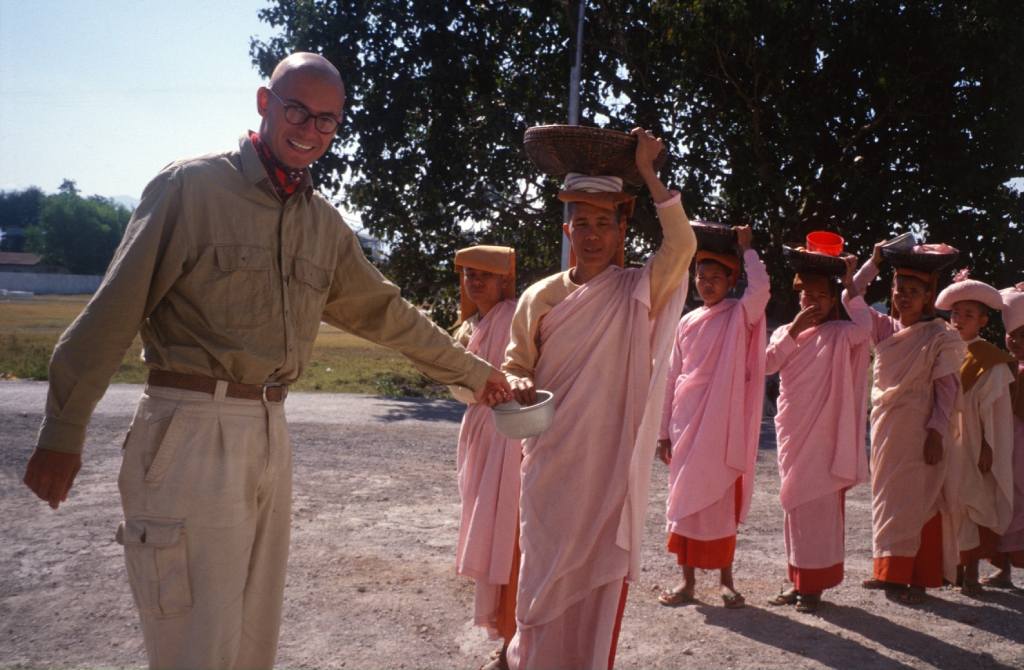
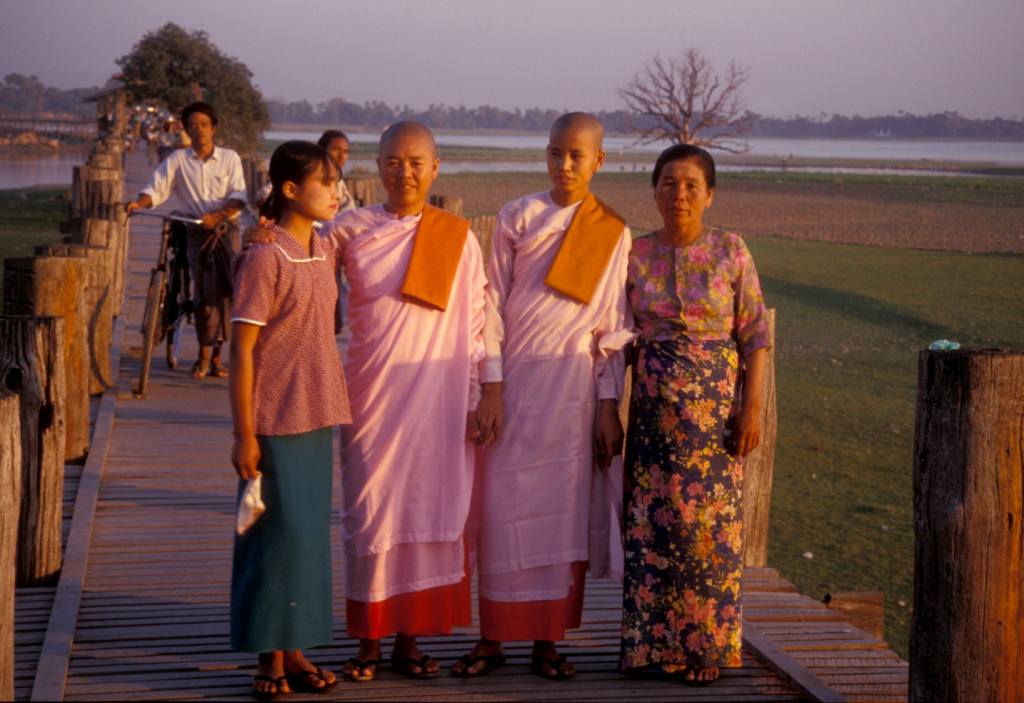
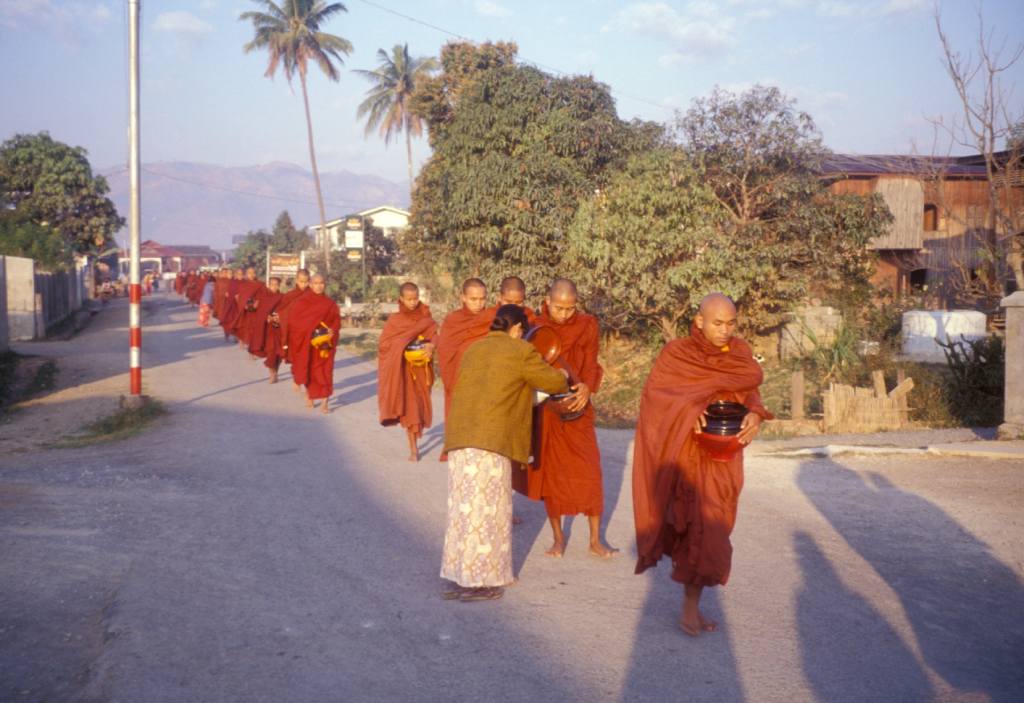
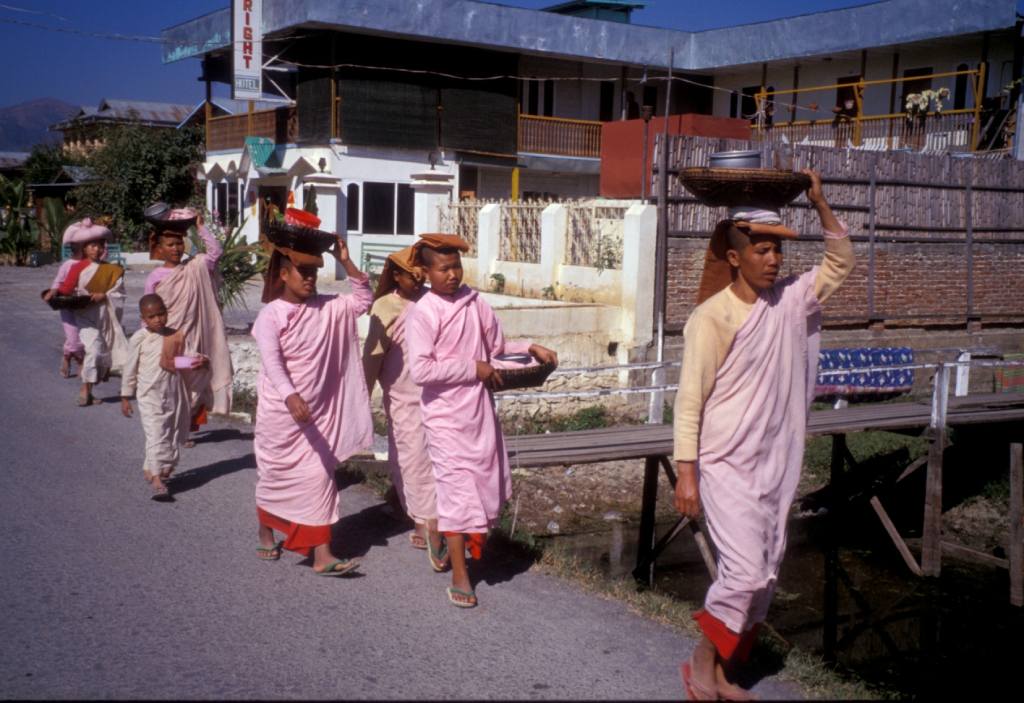
While monks are deeply respected for following over two hundred monastic rules and are generously offered food during their morning processions, the situation is quite different for nuns. In the early morning, dressed in pink robes with shaved heads, they quietly go from house to house, hoping someone will offer them a small portion of rice for lunch. They appear to be far less popular than the monks.
Thousands of monuments in the Old Bagan
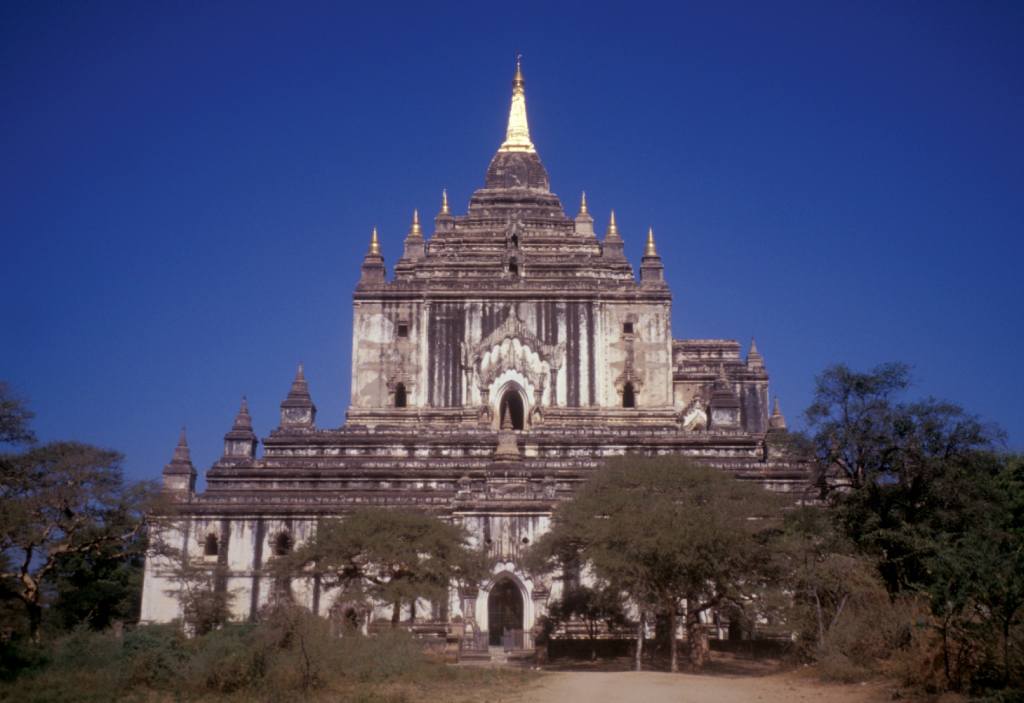
From 9th to 13th centuries, the city of Bagan was the capital of the Bagan Kingdom, the first kingdom that unified the regions that would later constitute Myanmar. The site of thousands of pagodas on the banks of the Ayeyarwady River is one of the wonders of Asia and a must place to visit.
Over the course of 250 years, Bagan’s rulers and their wealthy subjects erected over 10,000 religious’ monuments on an area of 104 km2.
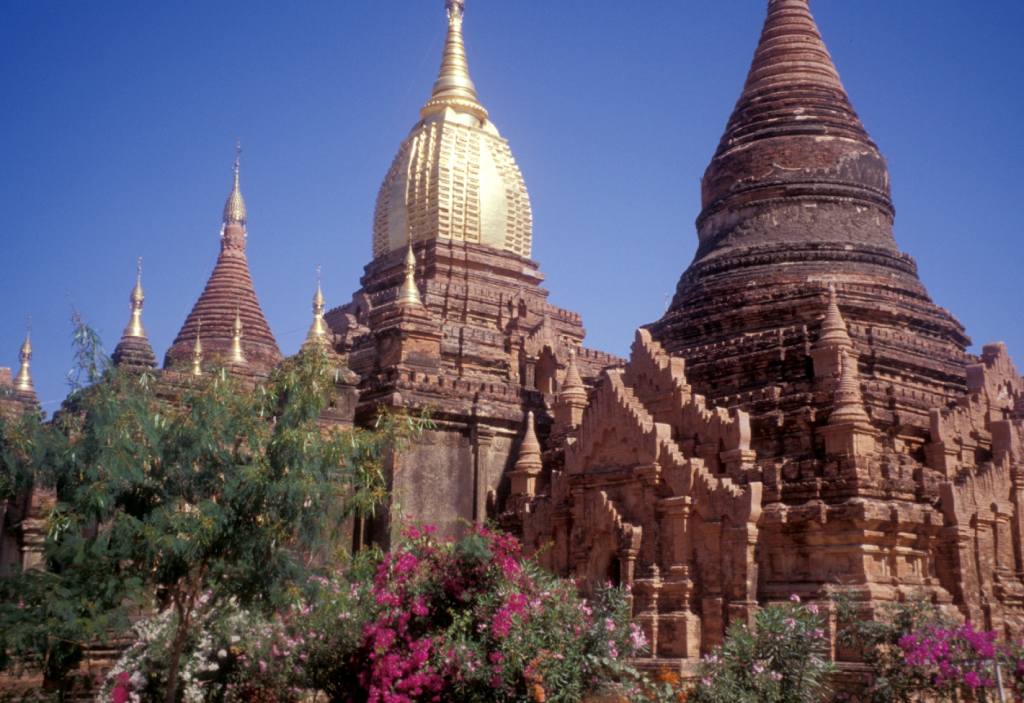
The experience of encountering the true beauty of Old Bagan for the first time is beyond description. Words, illustrations, and narratives fall short of capturing the stunning panorama of the extraordinary Buddhist structures of Bagan.
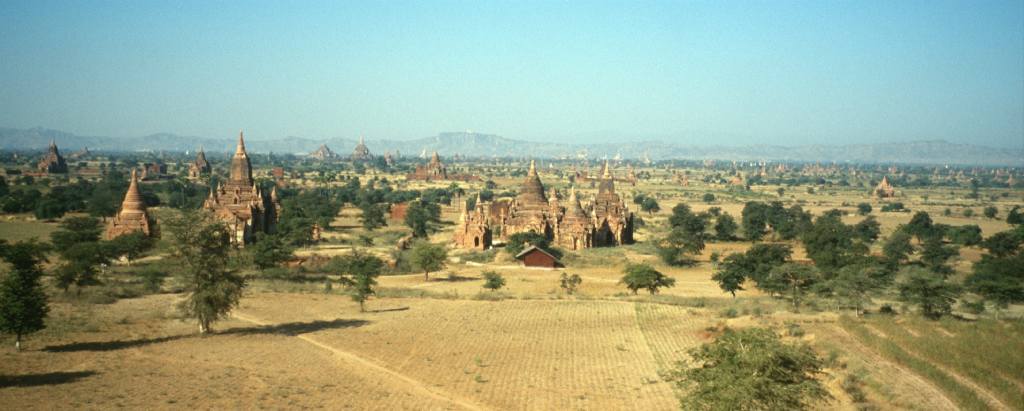
Nearly 2,000 monuments have been restored, after being destroyed by over 400 recorded earthquakes between 1904 and 1975, the strongest one hitting in 1975. Many of these damaged pagodas underwent restorations in the 1990s by the military government, aiming to transform Bagan into a prominent international tourist hub.
For three days, I was discovering the enigmatic creations, which began to culminate in 1057, when King Anawrath brought artisans, artists, monks, and thirty elephants loaded with Buddhist sculptures. All stone blocks are meticulously processed and placed on top of each other with such precision that the bonding concrete is almost invisible.
The main inspiration for the construction of such religious monuments lies in the desire to be reborn in the form of a king of heaven, to approach Mettey, the future Buddha, and to enter nirvana.

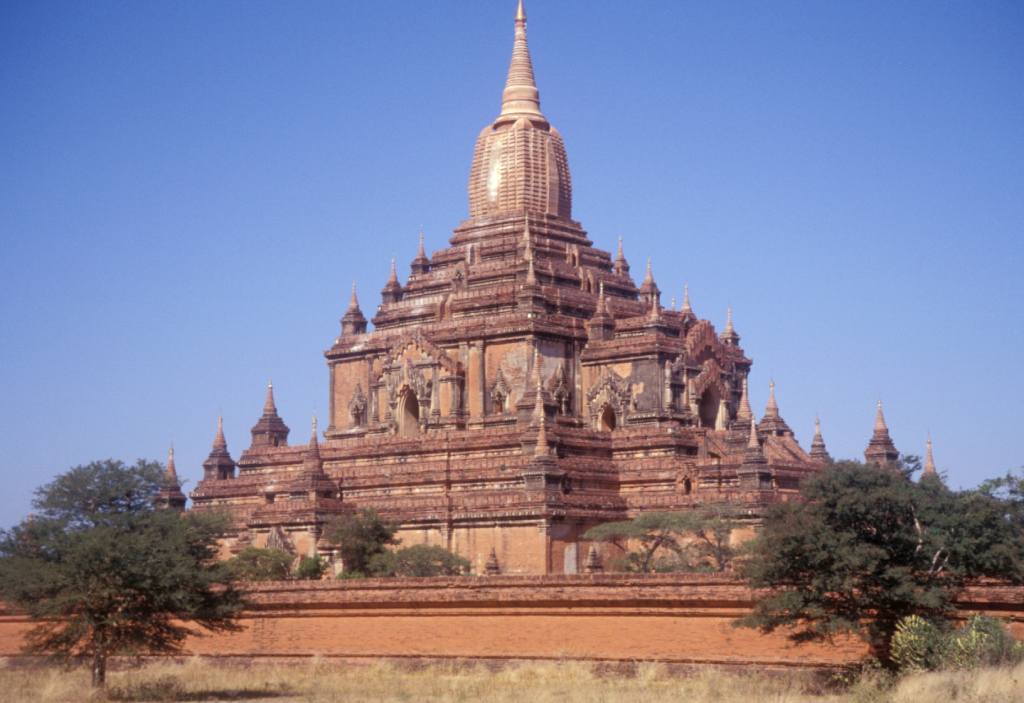
Considering the fact that all the workers were free people and had to be hired and paid by the king, the project costed a fortune.
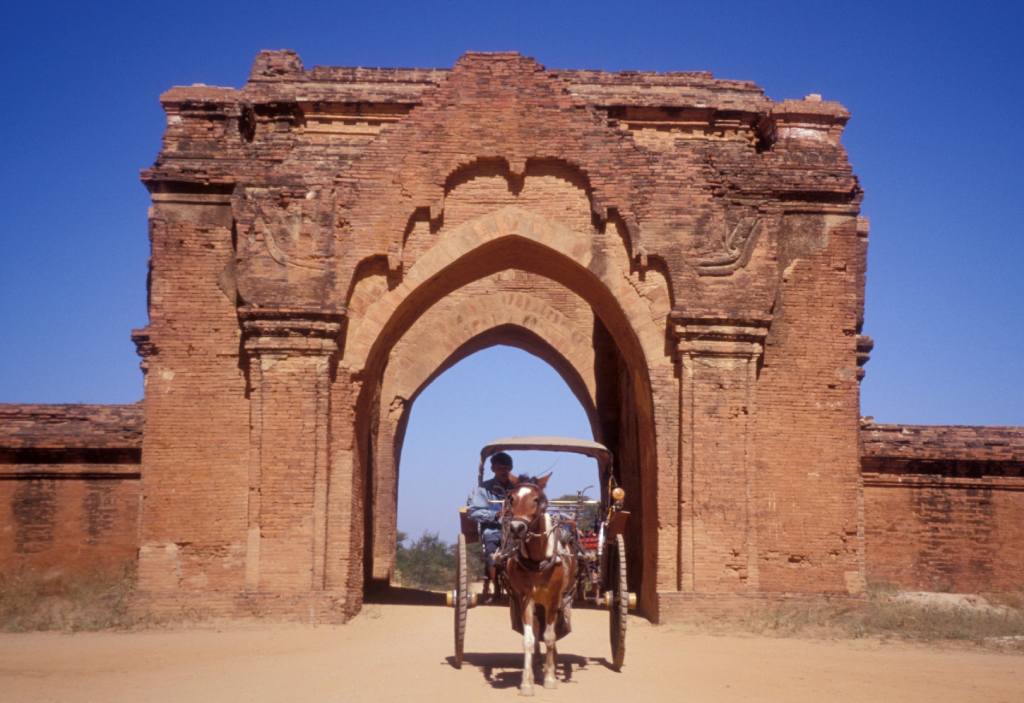
I paid a little over 4.00US$ to rent a carriage that would take me from one shrine to another all day. The coachman showed me some mysterious frescoes inside the temples that I would have surely overlooked. The original yellow, orange, red and brown colors are predominant.
Late in the afternoon, I climbed the Mingalazedi Pagoda, which offers a stunning panoramic view of Bagan’s grandeur. Built of brick with several terraces leading to a central stupa, it resembles many others, but the view from the top is unforgettable.
For the sunset, I retreated far away from the tourist crowds and peacefully transformed into a king who observes the creations of his army of workers and plans new endeavors to honor His Majesty – The Buddha.
If there is any place in the world where people are devoted to their gods with soul and body it is certainly Myanmar.
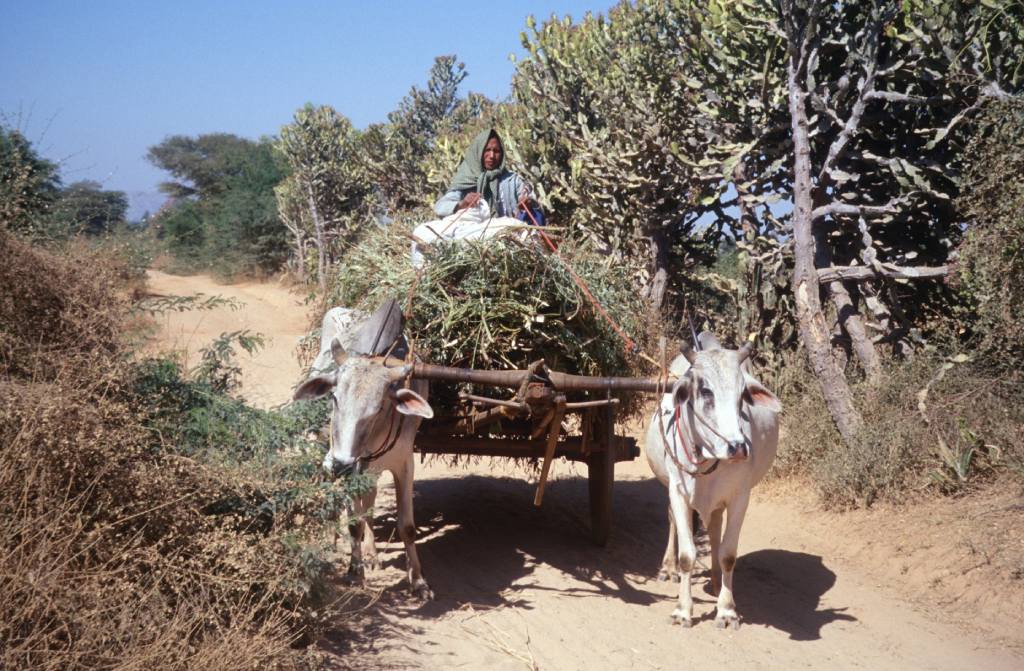
A unique rowing style at Inle Lake
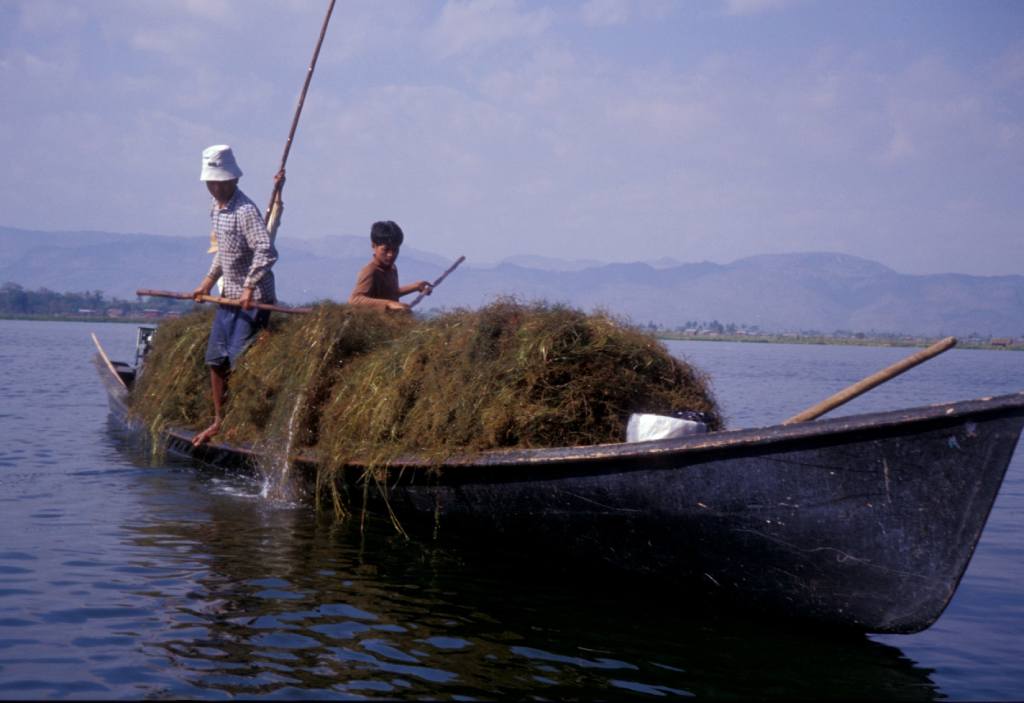
Inle Lake is the second largest lake in Myanmar, known for a special technic of rowing style by local fishermen.
One leg is used to stand at the stern while the other is wrapped around the oar.
Due to the floating plants and reeds covering the lake, which make it challenging to look above them from a sitting position, this unusual form developed out of necessity. The view beyond the reeds is available to the rower when they stand.
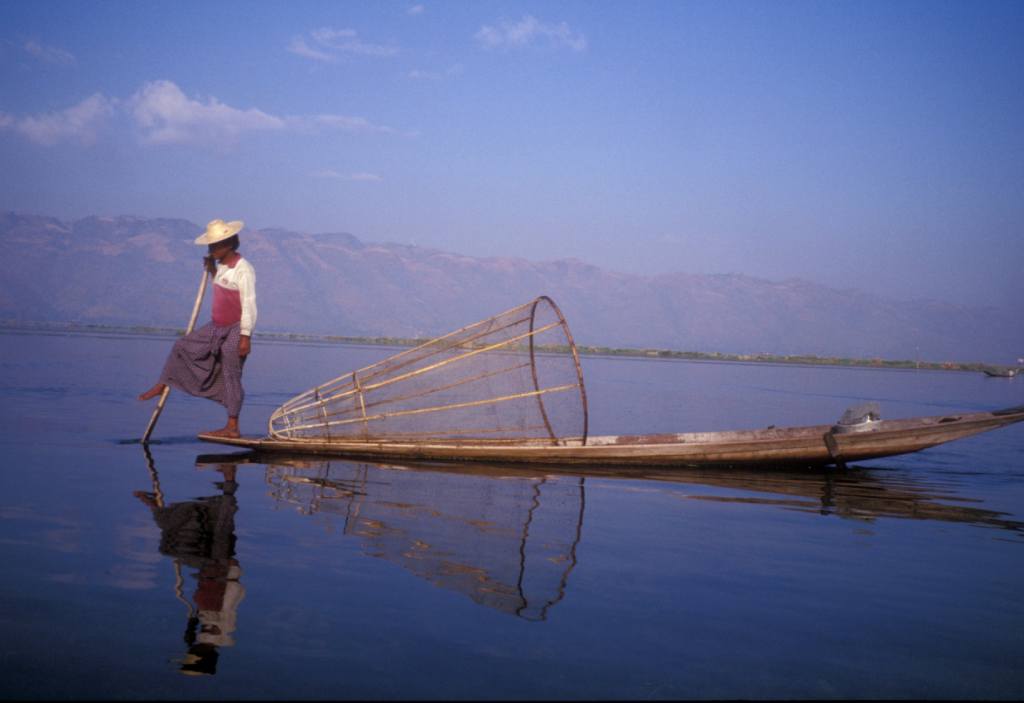
Only men engage in the leg rowing technique. Women row in the traditional manner, sitting cross-legged in the stern and using their hands to propel the oar.
The Golden Rock Pagoda
The last stop in Myanmar was Kyaiktiyo Pagoda, until recently inaccessible to foreigners.
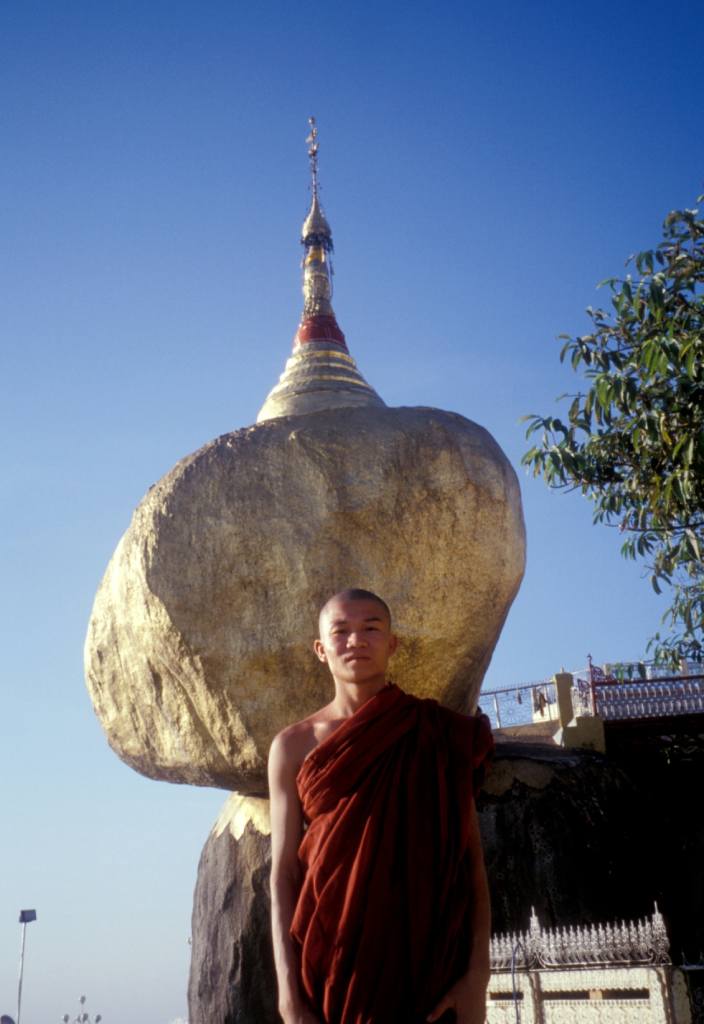
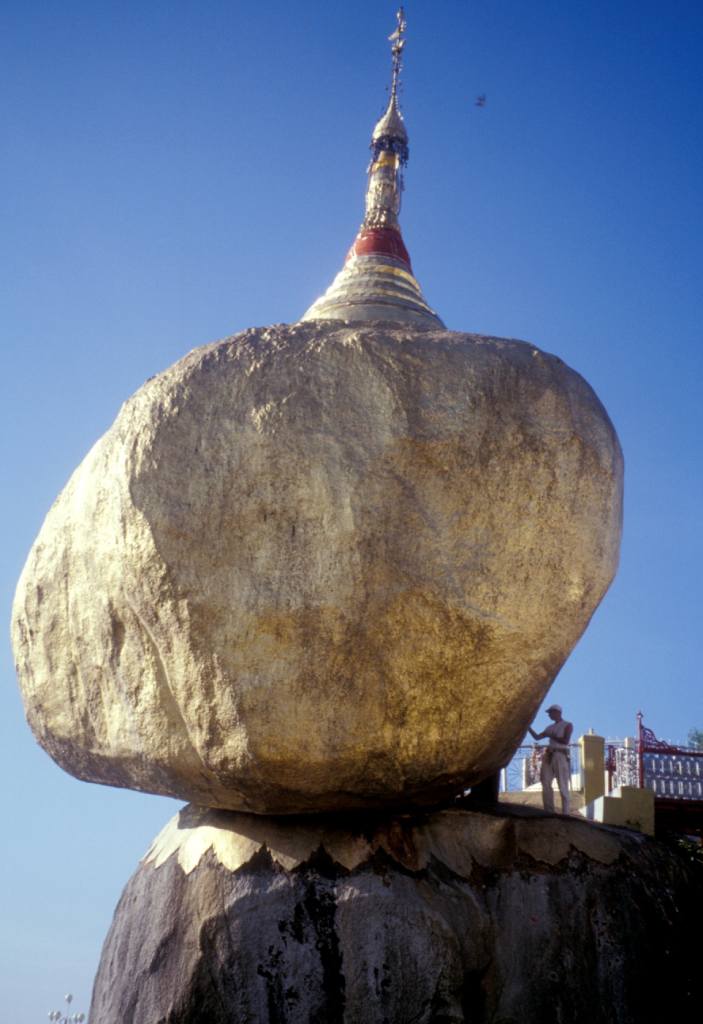
Only seven meters high stupa (Buddhist monument) would be nothing special if it was not placed on the Golden Rock, a mighty round rock balanced on the edge of a cliff at the top of Kyaikto Hill. It gives the casual observer a feeling as if it will plunge into the abyss the very next moment.
Wise men would know that the balance is assured by a single hair from the Buddha himself, placed below a critical point of the rock.
The Golden Rock is an important pilgrimage site for Buddhists, who place small sheets of real gold on it as they pray and make wishes for their dreams to come true. Only men are allowed to touch the rock directly, while women may observe it from a distance.
I was happy to take the advantage of the privileged position and stacked a few gold leaves on the rock wishing a safe travel and fulfillment of secret wishes.
Reflections on my visit to Myanmar
Looking at the Golden Rock Pagoda and many simple Myanmar people, who kindly receive, greet and address me everywhere without seeking anything in return from me, I wonder what their future will be.
Money is significantly less important to them (at least for now) than in some neighboring countries, where foreigners are milked like golden retrievers.
The simple pleasure derived from sitting in street teahouses and talking to friends replace the excitement of Bollywood or Hollywood movies and soap operas.
As soon as the dictatorship falls and democracy reigns, the world’s multinationals will start attacking Myanmar with modern world indispensable consumer products. An evening conversation with a friend will be replaced by a Hollywood movie; instead of Crush, there will be Coke, jeans will replace longies and women will be using imported Thai cream, which turns the skin white, instead of naturally produced tenaka cream.
Thus, Myanmar will probably sooner or later follow other countries in Southeast Asia, where globalization, tourism and tour groups have completely reversed the original values.
Nevertheless, I will consciously remember Myanmar as a land of pagodas, longy, tenaka cream and incredible friendly locals.
Myanmar Travel Photo Gallery